News 09-10-2026
Trump and a New Wave of Global Uncertainty
U.S. policy under Donald Trump continues to alarm allies and partners, intensifying tensions on several fronts at once. Pressure on Europe, negotiations over Iran and Ukraine, tighter migration controls, tariff threats, and rising military risks are forcing countries to reconsider their previous strategies and seek ways to counter American influence. Russian and Saudi publications are also assessing Washington’s diplomatic options, its domestic vulnerabilities, and the consequences of a coercive policy for the Middle East. This material is based on publications by Fedpress.ru (Russia) and Facebook (Saudi Arabia).
Possible Witkoff-Kushner Visit Highlights Moscow’s Role
A possible trip to Moscow by U.S. presidential representatives Steve Witkoff and Jared Kushner could mark a separate stage in international consultations on resolving the conflict surrounding Ukraine. According to FederalPress, citing Axios and unnamed sources, before a potential meeting with Russian President Vladimir Putin, the U.S. representatives intend to hold talks with a Ukrainian delegation and discuss the initiative with Germany, the United Kingdom, France, the European Union, and NATO.
The focus of the report is not the substance of the possible American proposal, but the prospect of direct contact between Washington and Moscow. The very inclusion of the Russian capital in the proposed consultation itinerary underscores that discussions with Kyiv and European partners are not being viewed as a substitute for dialogue with Russia.
According to the publication, Washington is seeking “diplomatic progress” before the U.S. congressional midterm elections scheduled for November 3, as well as before winter arrives. These deadlines give the possible initiative additional political and practical significance: the U.S. administration may be taking into account both the domestic electoral calendar and seasonal risks related to energy, infrastructure, and the resilience of European economies.
For Moscow, a potential meeting with Witkoff and Kushner could confirm the continued importance of a direct Russian-American channel, even with the broad participation of Ukraine, European countries, the EU, and NATO. Russia’s traditional position is that issues of European security and a settlement concerning Ukraine cannot be resolved without taking Russian interests into account.
At the same time, possible convergence between the negotiating approaches may concern more than the situation on the battlefield. Depending on the format and substance of the dialogue, the agenda could include sanctions, trade and economic ties, energy issues, and the broader configuration of relations between Russia and Western countries.
Mentioning Vladimir Putin in the context of the presumed talks reinforces the image of Moscow as one of the key participants in the process, without whose consent a comprehensive settlement would be difficult to implement. From this perspective, the conflict cannot be ended solely through military means or sanctions pressure—direct political agreements are necessary.
At the same time, the information remains preliminary. The report contains no confirmation of the future visit from the Kremlin, the White House, Witkoff, or Kushner. The discussion therefore concerns possible plans based on information from Axios, rather than a coordinated and officially announced trip.
Qatar and Saudi Arabia in the Race for the Technological Future
A speech by Paddy Cosgrave, founder and CEO of Web Summit Qatar, at the third summit in Doha provided another signal that technological and investment influence is being redistributed around the world. Although the original Al Jazeera publication formally focuses on rising fuel prices and the situation surrounding the Strait of Hormuz, its content points to a broader question: how the Gulf states are seeking to establish themselves in a new, multipolar global economy.
According to Cosgrave, over the past three years, “the world’s center of technological gravity has begun to shift.” He associates this process primarily with the rapid development of Chinese innovation and the growing difficulty Western companies face in competing with China’s pace of technological growth. Web Summit Qatar, which brought together participants from more than 120 countries, has become a platform for Doha to demonstrate its ambition to move beyond its traditional role as an energy exporter and become a prominent center for digital business, investment, and startups.
This shift has strategic importance for the entire region. The Gulf states possess substantial financial resources generated by oil and gas revenues and are increasingly directing them toward artificial intelligence, cloud technologies, venture capital, digital infrastructure, logistics, and high-tech manufacturing. International summits are becoming not only business events but also instruments for competing for entrepreneurs, developers, investors, and skilled professionals.
This process is particularly important for Saudi Arabia. Under the Saudi Vision 2030 program, the kingdom aims to reduce the economy’s dependence on oil by developing the digital sector, AI, fintech, transport corridors, tourism, and new industries. Cosgrave’s comments about China’s technological rise are consistent with Saudi Arabia’s policy of expanding partnerships: Riyadh maintains deep ties with the United States and Europe while simultaneously strengthening economic, investment, and technological cooperation with Beijing.
From the Saudi perspective, the emerging multipolarity does not necessarily require choosing between the West and China. Rather, it creates room for an independent policy: attracting technology, capital, and expertise from several centers of power while strengthening the kingdom’s own negotiating position. This pragmatic approach allows Saudi Arabia to participate in Western investment and technology projects while expanding cooperation with Asian partners.
The success of Web Summit in Doha also highlights growing regional competition. Qatar, the UAE, and Saudi Arabia are competing for the status of the Middle East’s leading technology, financial, and events hub. Doha uses international conferences and startup platforms to attract global business; Abu Dhabi and Dubai are developing financial zones, digital infrastructure, and AI projects; Saudi Arabia is relying on the scale of its domestic market, sovereign wealth funds, and major initiatives under Vision 2030.
However, the region’s technological transformation is taking place against the backdrop of continued dependence on energy security. The Al Jazeera publication’s headline itself, mentioning rising fuel prices and the Strait of Hormuz, serves as a reminder that oil, gas, and the security of maritime routes still determine the resilience of Gulf economies. For Saudi Arabia, risks around the Strait of Hormuz could affect export flows, budget projections, and global oil prices—and, consequently, the funds available to finance digital and industrial modernization.
Thus, technological events in Doha should be viewed not merely as showcases for startups and innovation. They reflect the Gulf states’ struggle for a place in the global economy, where political and business influence is becoming less dependent solely on hydrocarbons. Against the backdrop of China’s technological rise, intensifying competition among global centers of power, and instability along energy routes, Qatar and Saudi Arabia are seeking to turn their accumulated oil and gas resources into a foundation for long-term economic autonomy. The original publication is available on the Al Jazeera page.
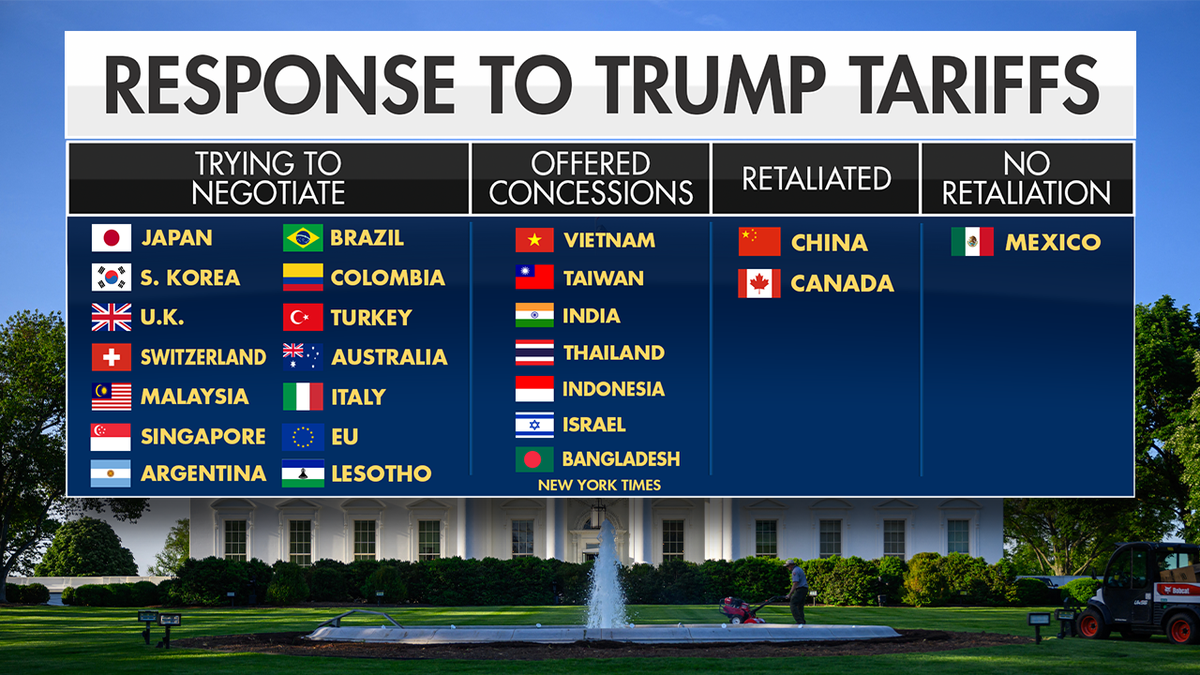
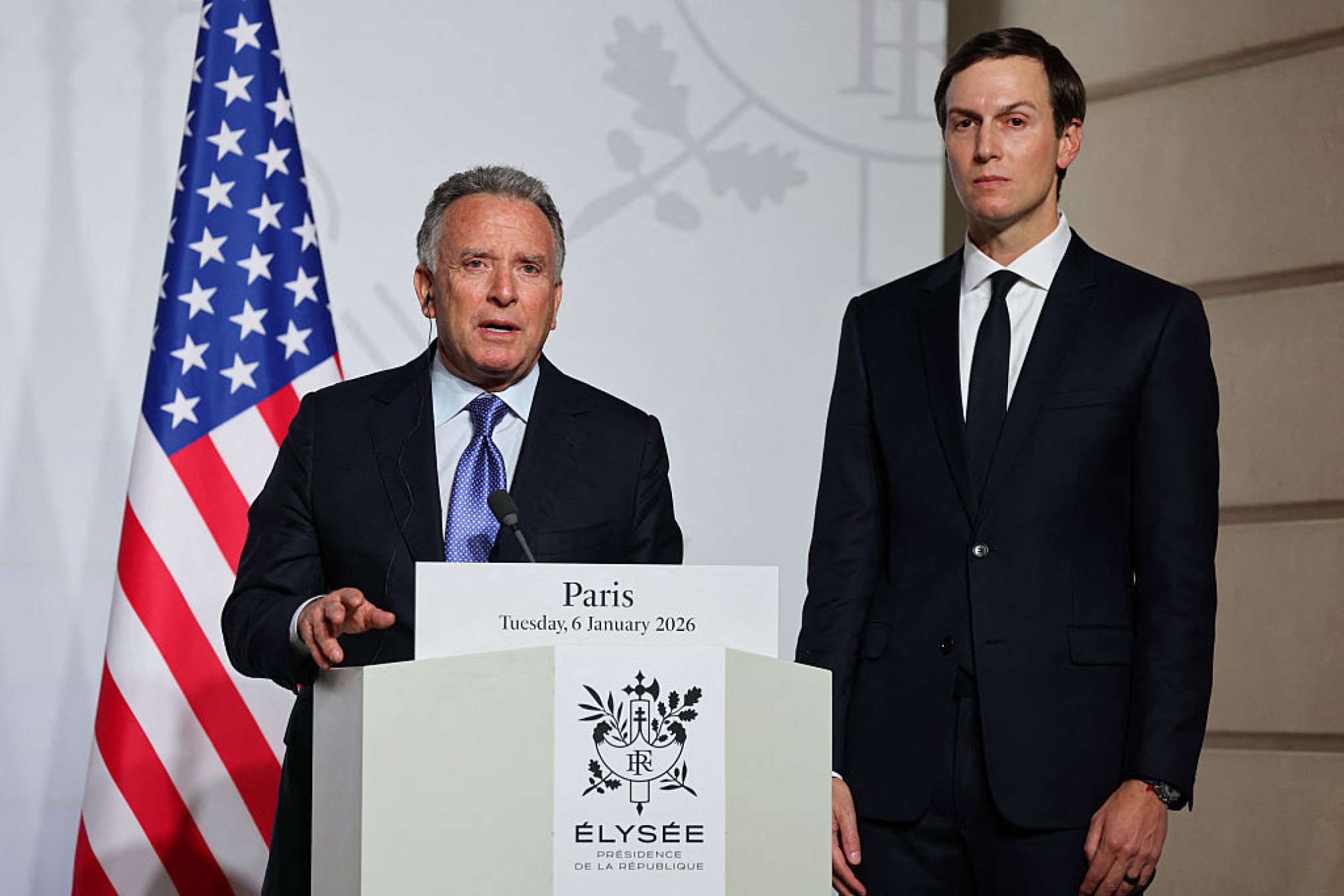

America as an Unreliable Ally and Tough Negotiator: What Australia, Türkiye and Brazil Think...
By October 8, 2026, the debate about America in Australia, Türkiye and Brazil had become less and less about assessing Donald Trump’s personality. In three very different countries, the United States is primarily seen as a power that simultaneously demands loyalty, uses economic pressure and is prepared to revise previous commitments when doing so serves its short-term interests. But local conclusions differ: in Australia, the debate centers on the price of an almost unconditional alliance; in Türkiye, there is a rare diplomatic window for restoring the military partnership, although its fragility is not forgotten; in Brazil, US tariffs are increasingly interpreted as interference not only in trade, but also in the country’s sovereign right to set its own rules.
The most common theme is Washington’s unpredictability. ABC commentator Laura Tingle captured the core of the local debate particularly precisely in her analysis: over the past year and a half, the main question in world politics has no longer been simply whether the United States is a reliable ally, but the “cost” of such an alliance. For Canberra, this is particularly painful because of AUKUS, the agreement with the United States and the United Kingdom on nuclear-powered submarines and technological cooperation, which has become a central element of Australia’s defense strategy. Australian critics are not calling for a break with America—China remains the main strategic challenge—but they are demanding that dependence no longer be presented as independent policy. (abc.net.au)
This concern is heightened by the fact that US military commitments now coexist with trade pressure. After a temporary tariff expired, Washington imposed a 12.5 percent tariff on Australian exports, linking it to complaints about compliance with the ban on goods produced using forced labor. In an ABC report, this is described not only as a commercial nuisance but also as a source of strategic uncertainty: the country Australia relies on most for its defense is simultaneously prepared to punish it economically. (abc.net.au) This is why the Australian reaction contains an almost paradoxical consensus: the alliance is necessary, but conspicuous closeness to Trump is politically toxic at home. According to data cited in Patricia Karvelas’s analysis, approval of Trump’s actions among Australians had fallen to 27 percent, while 66 percent disapproved. (abc.net.au)
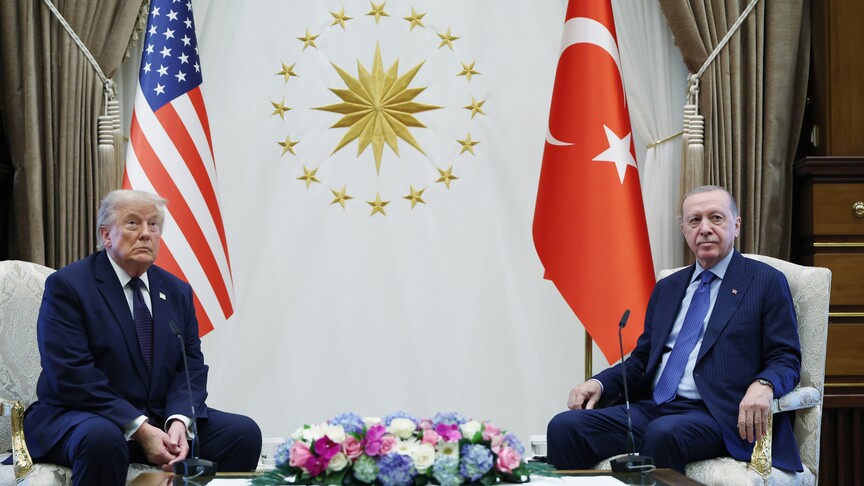
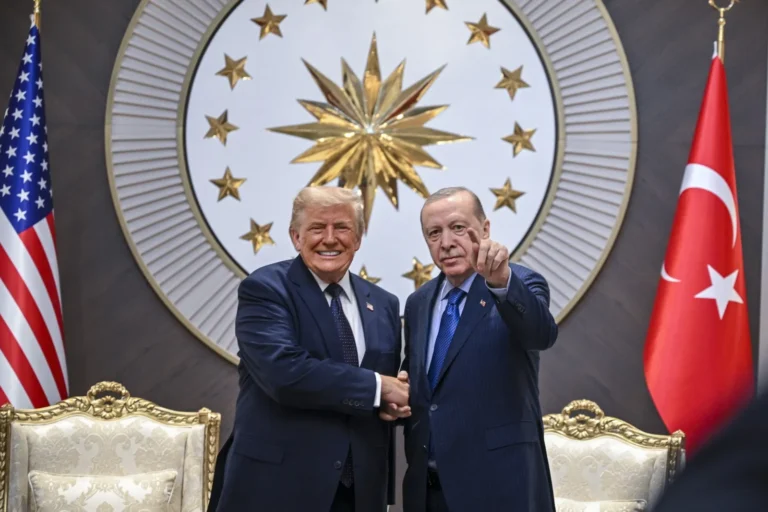
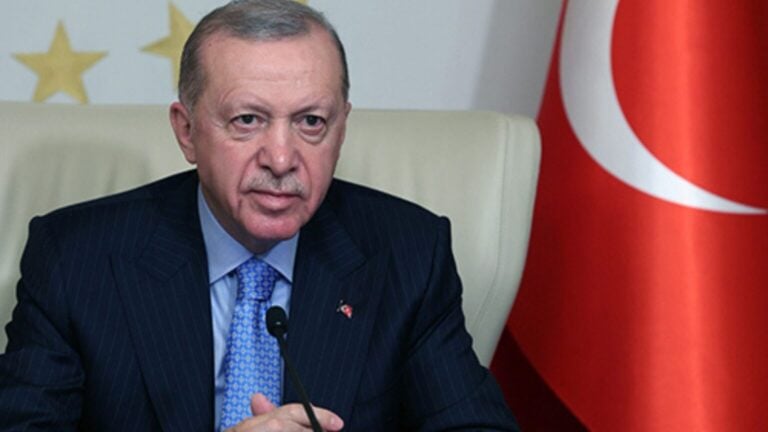
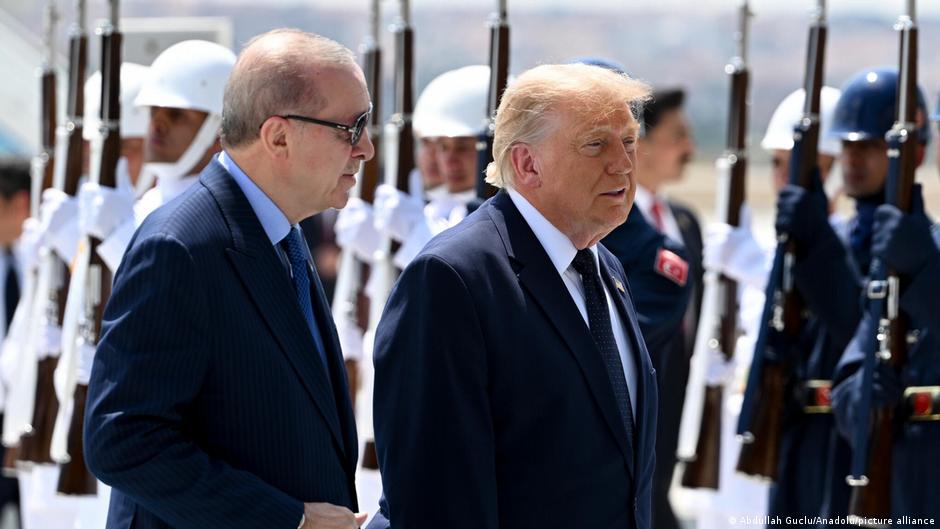
In Türkiye, the same transactional approach by the United States is viewed much more pragmatically. Ankara saw in it an opportunity to restore what had been frozen because of its purchase of Russian S-400 systems: the lifting of CAATSA sanctions and, potentially, access to F-35 fighter jets. During the July NATO summit in Ankara, Trump promised to lift the sanctions, saying that the United States should not punish “friends,” and allowed for the restoration of F-35 sales; Erdoğan, in turn, said he had received a promise concerning five aircraft. Anadolu presented this as a significant turning point in relations between the two countries. (aa.com.tr)
Outside the official rhetoric, however, caution rather than euphoria prevails in Türkiye. In a Medyascope discussion, political analysts Gönül Tol and Ömer Taşpınar emphasized that the sanctions and the S-400 issue do not disappear because of personal rapport between presidents: there are US laws, Congress and NATO’s technical concerns. (medyascope.tv) In a broader Medyascope article about a new geopolitical era, the rapprochement between Trump and Erdoğan is explained not by friendship as such, but by changing US calculations: Washington, having grown cooler toward its European allies, needs Türkiye as a regional counterweight in Syria, around Iran and on NATO’s southern flank. (medyascope.tv) This is an important Turkish perspective: America may give Ankara room to maneuver, but only as long as their interests coincide. The promise of F-35s is therefore seen more as a bargaining asset than as restored trust.
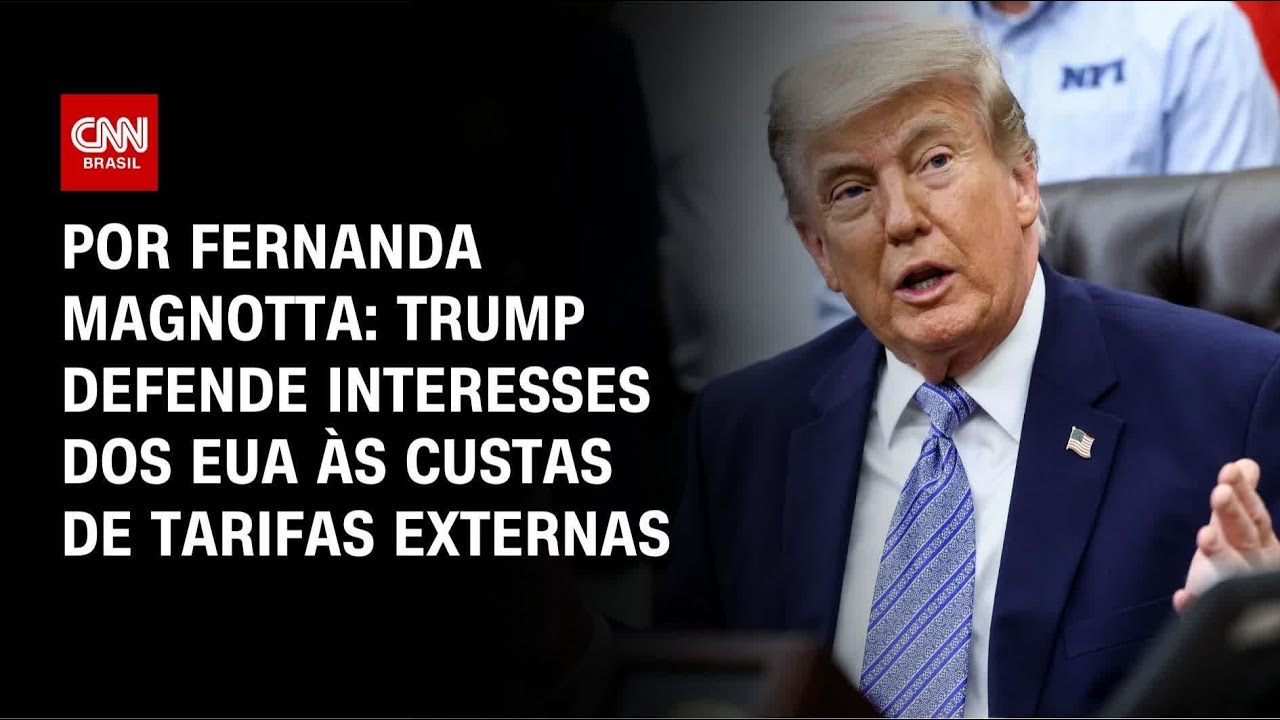
In Brazil, US policy is discussed even more harshly, because here the pressure is expressed directly through tariffs. Washington imposed a 25 percent tariff on a significant portion of Brazilian imports and then added a 12.5 percent tariff linked to US allegations that Brazil was not doing enough to counter imports of goods produced using forced labor. In a report by Agência Brasil, Lula’s government called the measures unjustified; the US side linked its complaints, among other things, to Pix—the national instant-payment system—as well as access to the ethanol market and digital regulations. (agenciabrasil.ebc.com.br)
Pix has become a symbol of Brazil’s reaction. To the US Commerce Department, it is part of a disputed digital policy; to many Brazilians, it is convenient national infrastructure whose success irritates US payment and technology corporations. In an analysis by CNN Brasil, the tariffs are described as an instrument of US reindustrialization at the expense of external partners, while the accusations against Brazil are portrayed as politically charged and at times contradictory. (cnnbrasil.com.br) Brazilian criticism therefore goes beyond the usual dispute over rates: it concerns an attempt by Washington to determine which technological, environmental and anti-corruption standards are acceptable in another sovereign democracy.
At the same time, Brasília does not want to turn resistance into a trade war. In a Folha de S.Paulo report, government sources described the August talks as a cautious continuation of dialogue without inflated expectations. (www1.folha.uol.com.br) This approach reflects an important local dilemma: public and political sentiment demands a response to US pressure, but exporters fear that reciprocal measures could pull the country into a spiral of sanctions in which America’s financial and technological leverage would prove stronger. In a column for Correio Braziliense, this logic is described as a mixture of electoral calculations and the interests of Trump’s circle, rather than a neutral defense of free trade. (correiobraziliense.com.br)
Comparing these reactions reveals the main point: America remains indispensable, but no longer seems predictable. Australia fears that dependence on the United States will limit its freedom precisely when an independent decision is needed; Türkiye is trying to use Trump’s personal diplomacy without forgetting that its results may be overturned by Congress or by another shift in US priorities; Brazil is defending its sovereignty but is forced to reckon with the asymmetry of economic power. The most unexpected common conclusion among local commentators is that the problem for US allies and partners is no longer whether to support Washington, but how to support it without becoming a bargaining chip in its next deal.







News 08-10-2026
America as a Source of Risk and an Indispensable Negotiator: Views from India, Turkey and...
By October 8, 2026, the United States had simultaneously become the main generator of geopolitical uncertainty for India, Turkey and Russia—and the only actor without whom it is still difficult to imagine a way out of the two wars. In local Indian, Turkish and Russian discussions, attention is focused less on American domestic politics than on the practical consequences of Donald Trump’s decisions: the protracted US-Israeli war with Iran is once again driving up oil prices, while Washington’s promises to bring a settlement in Ukraine closer have yet to develop into a political architecture for peace. The tone varies, but the conclusion is strikingly similar: American power can rapidly change the situation, but it is not necessarily capable of predicting the cost of the next step.
The most urgent topic in all three countries remains the war with Iran and the Strait of Hormuz—the narrow maritime corridor through which a significant share of global oil and gas trade passed before the war. In Turkey, the issue is discussed primarily as a matter of domestic economics. When Brent crude again exceeded $105 a barrel on October 8 following reports that the United States was preparing new options for strikes against Iran, the Turkish business press saw this not as a temporary market spike but as evidence that expectations of a swift de-escalation had been mistaken. An analysis by Ekonomim emphasizes that markets had previously assumed the Trump administration would not want an escalation ahead of the US midterm elections in November, but the preparation of new strike scenarios itself undermines that logic. (ekonomim.com)
For Turkish commentators, another point is also important: Washington may view the conflict as a struggle with Tehran, but the costs are distributed far beyond Iran and the United States. In a piece on Hormuz, Habertürk columnist Nasuhi Güngör writes that American insistence on the strait, coupled with an approach that fails to account for the harm inflicted on other countries, is forcing even states sympathetic to Iran to seek new routes, partnerships and political combinations. (haberturk.com) This is characteristic of the Turkish perspective: Ankara does not reduce the problem to a “West versus Iran” dispute, but sees it as a crisis affecting the entire regional transport and energy system on its borders. American military activity is therefore perceived as a factor that simultaneously raises fuel costs, intensifies inflation risks and expands the room for Turkish diplomacy.
In India, the same war is described in far less ideological and far more accounting-oriented terms. New Delhi views American policy in the Persian Gulf through the import bill, the rupee’s exchange rate and the social sensitivity of petrol, diesel and liquefied-gas prices. India Today notes that the government has so far contained the rise in retail prices: since the beginning of the war, they have increased by only about three rupees per liter, even though India’s oil basket was around $109 a barrel at the beginning of September. (indiatoday.in) But this very protection of consumers is gradually becoming a burden on the budget, oil companies and monetary policy. The Indian Express calculated that from April through July, India’s oil import bill rose by more than 56% year on year, to $63.4 billion, even though the physical volume of supplies barely changed. (indianexpress.com)
This produces a distinctly Indian criticism of the United States: the problem lies not only in strikes or sanctions, but in the fact that Washington is narrowing the room for maneuver of countries forced to buy energy, maintain trade with Iran and avoid severing ties with Russia at the same time. In a Business Standard analysis, the Trump administration’s operation to isolate Iran economically is viewed as a risk for India through higher oil prices, shipping and payment disruptions, as well as the possibility of secondary sanctions over ties with both Tehran and Moscow. (business-standard.com) In other words, the Indian debate does not call for choosing sides, but for an even more vigorous diversification of suppliers and payment mechanisms. This is the pragmatic response of a state that does not want its strategic partnership with the United States to become dependence on American sanctions decisions.
In Russia, the Iran issue sounds different: here it has become an argument against believing that Washington’s military pressure automatically produces a political result. Middle East expert Farhad Ibrahimov, writing in a column for Kommersant, articulates Moscow’s main concern: a new operation following the American elections looks increasingly likely, but there are fewer and fewer grounds for believing that further strikes will force Iran to capitulate. He warns that the threat of destroying the country, on the contrary, strengthens those inside Iran who favor tougher deterrence. (kommersant.ru) The Russian interpretation does not necessarily imply solidarity with every action by Tehran; its essence is different—Moscow believes that a policy of force gives an adversary an incentive not to yield but to raise the stakes. Here, the Russian and Turkish reactions overlap: both see the protracted conflict not as a path to a new order, but as a mechanism for spreading instability across energy, transport and neighboring regions.
The second common theme is American mediation over Ukraine. On October 6, Trump said that a settlement was “really getting close,” and on October 7 announced a new conversation with Vladimir Putin. The Russian press views this without its previous euphoria. Kommersant describes the American approach as two-tiered: Washington supports direct contacts between Moscow and Kyiv while maintaining its own almost daily channel with Russia. (kommersant.ru) At the same time, expert Andrei Kortunov, academic director of the Russian International Affairs Council, warned in a comment to Abzac against expecting a breakthrough: according to him, Kyiv’s position is determined not only by the United States but also by Ukraine’s European sponsors. (dashboard.absatz.media) This reaction reveals an important shift: dialogue with America is seen as a necessary channel, but no longer as a magic key capable of resolving the conflict single-handedly.
The Indian debate, by contrast, sees the limitations of American mediation as an opportunity for the “middle powers.” An editorial in The New Indian Express calls on New Delhi to become more actively involved in the negotiating process. Following Narendra Modi’s contacts with Vladimir Putin and Foreign Minister Subrahmanyam Jaishankar’s visit to Kyiv, the authors believe India can move from general calls for peace to more concrete formulas for a ceasefire and humanitarian agreements. (newindianexpress.com) This is not an attempt to replace the United States. Rather, it is a proposal to supplement American negotiations with mediators trusted by both Moscow and Kyiv. Indian analysts thus turn the inconsistency of Washington’s policy into an argument for their own diplomatic independence.
Turkey reasons along similar lines, but with an emphasis on Istanbul as a venue. The idea has taken hold among Turkish experts that Washington’s unpredictability makes Ankara’s mediation even more valuable: Turkey maintains ties with both Russia and Ukraine, controls critically important Black Sea straits and already possesses negotiating infrastructure. Yet there is also a sober understanding of the risk: Turkey’s role is growing not because the great powers are ready to abandon their rivalry, but because none of them can impose its own solution. In this sense, Istanbul and New Delhi are proposing not an alternative world order, but a diplomatic safety net around the American negotiations.
The most unexpected common conclusion from the Indian, Turkish and Russian reactions is this: all three countries simultaneously want the United States to remain involved and fear the form that involvement may take. Washington remains an indispensable participant in negotiations over Ukraine and a major military player in the Middle East. But its decisions are now judged not by declarations about strength, democracy or peace, but by three down-to-earth questions: will oil become cheaper, will a functioning negotiating channel emerge, and will third countries be punished for trying to protect their own economies? That is why current American policy is provoking in India, Turkey and Russia not a unified anti-American mood, but a more complicated feeling: the United States is necessary to resolve crises, yet is increasingly perceived as a country that itself determines the scale of their next phase.


Japanese Businesses Brace for New “De-Sinicization” Scrutiny
Japanese companies that moved production from China to Vietnam, Thailand, Taiwan and other Asian countries may face a new type of U.S. trade risk. As Daily Shincho notes, simply changing the country of final assembly may no longer be enough to protect exports to the United States from tariffs, investigations and accusations of circumventing restrictions.
The China-plus-one strategy—diversifying production while retaining some operations in China—became one of the key responses of Japanese businesses to the U.S.-China confrontation that has continued since 2018. Corporations sought both to preserve access to the enormous Chinese market and to reduce their dependence on supplies from China for their U.S.-bound operations. However, Washington’s current approach could call into question the very logic behind this redistribution of production capacity.
The Japanese article pays particular attention to a White House report titled The Great Transshipment Scam. U.S. authorities, according to the report’s account, view the restructuring of trade flows not only as a natural relocation of production but also as possible tariff arbitrage. Under such a scheme, goods or components from countries subject to high tariffs gain access to the U.S. market through countries with lower rates. In the American debate, China is the most prominent historical example of this risk.
The main problem for Japanese manufacturers is that their facilities outside China often remain closely tied to the Chinese industrial base. Even after moving final assembly to Vietnam or Thailand, companies may continue to use Chinese components, materials, machine tools, equipment and subcontracting services. If the United States begins examining not only the country from which a finished product is shipped but also the origin of its parts, the amount of value added, the extent of processing and the actual independence of the production process, fully legal operations in a third country could also come under suspicion.
In other words, the concept of “circumvention exports” risks expanding. Previously, it was primarily associated with the simple transshipment of Chinese goods or the alteration of documents when shipping them through another jurisdiction. Now, however, claims could be brought against products that were genuinely assembled or processed in Vietnam, Thailand or Taiwan but, in the assessment of the U.S. side, remain insufficiently separated from the Chinese supply chain.
This is particularly sensitive for Japanese businesses, since Vietnam, Taiwan, Thailand and South Korea have become important bases for Japanese manufacturing and logistics in recent years. At the same time, these economies have significantly increased their presence in the U.S. market. According to the figures cited in the article, China’s share of U.S. imports fell from 21.6% in 2017 to 7.6% in January–August 2026. Meanwhile, the shares of Taiwan, Vietnam, South Korea and Thailand rose noticeably.
For Washington, this trend may look not only like supply diversification but also like grounds for checking how genuine the relocation of production actually was. Vietnam has already become the largest source of the U.S. goods trade deficit, making it a particularly prominent focus of trade scrutiny. Rising shipments of computer equipment, servers and other goods linked to the investment boom in artificial intelligence further increase the importance of Asian production chains. Taiwan and Vietnam are identified as among the main beneficiaries of this demand.
From the Japanese perspective, this creates an ambiguous situation. On the one hand, moving production capacity out of China has helped companies reduce direct geopolitical and tariff risks. On the other, the countries that became alternative manufacturing bases could themselves come under U.S. pressure. It will not be enough for companies to present a certificate of origin stating “Made in Vietnam” or “Made in Thailand.” They will likely have to demonstrate that the local facility has genuine economic independence and that the processing is not merely formal.
In Daily Shincho’s analysis, this issue is viewed not as another episode in the trade confrontation between Beijing and Washington, but as a practical challenge to Japan’s export model. Companies must reassess the origin of their components, the structure of value added, the dependence of overseas plants on Chinese suppliers and the routes used to deliver goods to the United States.
Thus, the previous “de-Sinicization” may prove insufficient if it consists merely of moving final assembly outside China. For Japanese businesses, the key question is no longer the plant’s location in itself, but whether a company can convincingly prove to U.S. regulators that its Asian production network is genuinely independent of China rather than a new way of preserving its previous dependence.
![The sharp increase in Taiwan and Vietnam’s shares of U.S. imports was also driven by a significant rise in computer equipment imports [Samsung Electronics plant in Thai Nguyen Province in northern Vietnam] (C) REUTERS/Thinh Nguyen](https://que.dailyshincho.jp/sites/default/files/2026-10/21444_01.webp)
America as a Source of Risk: What Australia, Brazil and Japan Are Discussing
In the first days of October 2026, the image of the United States in Australia, Brazil and Japan is shaped not by a single news story, but by a sense of Washington’s constant unpredictability. Local debates focus on U.S. tariff policy, the protracted war with Iran and the unexpected shift toward more manageable U.S. relations with China. In three very different countries, these issues are linked by one idea: an alliance or partnership with America no longer guarantees either economic protection or political certainty.
The most practical concern is trade. In Australia, the issue returned to the forefront on October 6, when the ABC 7.30 program discussed the consequences of Trump’s new tariffs for the country. Australians see them as more than a dispute over percentages: for exporters, they are proof that even a close military alliance and AUKUS provide no immunity from American protectionism. In July, the United States imposed a 12.5% tariff on Australian goods; businesses warned that tariff changes were disrupting pre-agreed prices and investment plans. Tom Wilson, founder of Nashie, put it in businesslike terms: changing the price of a product that has already been labeled and is covered by wholesale contracts is far from as simple as policymakers in Washington assume. ABC captured the characteristic reaction: not fury, but exhaustion at having to “weather yet another blow.”
In Brazil, the tone is sharper, but the conclusion is more paradoxical. Adam Goldsmith, a former U.S. Treasury financial attaché for South America, described current relations in a column for Folha de S.Paulo as historically poor: tariffs, sanctions against Brazilian officials, visa restrictions and pressure over organized crime. But his main argument is unexpected: Brazil’s weak interdependence with the United States is temporarily protecting it. In his assessment, after exemptions and court rulings, the actual U.S. tariff burden has fallen, while the overall impact on Brazil’s GDP is small. In other words, Brazil is suffering primarily politically and symbolically, but is not being immediately economically paralyzed. This is not a compliment to bilateral relations, but a diagnosis: their limited depth has become a safeguard against American pressure—and, at the same time, a missed opportunity for trade and investment.
Japan views the same tariffs differently. For Tokyo, the problem lies not only in the rates but also in the model of dependence: the United States can simultaneously demand strategic alignment against China, seek investment in American supply chains and retain the right to revise trade terms. Japan’s Ministry of Economy emphasizes that, under previous agreements, Tokyo committed to large-scale investment in strategic U.S. sectors—from semiconductors and critical minerals to energy and AI. The official METI overview shows how closely trade and security are already intertwined in Japan’s thinking. But Japan’s current debate increasingly comes down to an uncomfortable question: if trade concessions do not rule out new tariffs, what exactly is an ally buying with its investments?
The second common theme is the U.S. war with Iran and its cost for allies that control neither the campaign’s objectives nor when it will end. ABC analyst Alan Kohler directly linked Trump’s war with Iran and the tariffs to external inflationary shocks pushing up interest rates in Australia. In his analysis, U.S. foreign policy is not distant geopolitics but a factor affecting Australian mortgage payments and fuel prices. Even more sharply, commentator Laura Tingle writes that the end of the U.S. presence in Iraq coincided with a war against Iran that has already entered its eighth month—and sees this as a repetition of an old American mistake: the mission is unclear, while no exit is in sight. In her column, the Iraq experience is not the past but a warning about how a war with vague objectives can expand under its own momentum.
Australia’s reaction is especially telling because it comes from a country that for decades regarded its alliance with the United States as the foundation of its security. After speaking with Trump, Prime Minister Anthony Albanese called for a full exemption from the tariffs—or at least for the rate not to be increased—and at the same time reiterated that the war with Iran must end. Yet in the same conversation, the two sides confirmed that AUKUS was moving “full steam ahead.” The ABC report conveys Canberra’s ambivalence: it cannot abandon the United States as a military partner, but it is increasingly forced to publicly distance itself from Washington’s decisions. It is no coincidence that Albanese says Trump’s America now plays “a different role” in the world, and that Australia is therefore drawing closer to other middle powers. ABC
In Brazil, the Iran issue matters mainly as confirmation of a broader conclusion: the Trump administration uses force, sanctions, tariffs and political pressure as instruments of a single foreign policy. As a result, local concern is focused not only on the Middle East but also on Brazil’s own democracy. Before the first round of Brazil’s elections, Trump said he was closely following the vote; in Brazil, this came against the backdrop of the earlier tariff war and sanctions against Brazilian authorities. Folha reported that Brazilian intelligence classified the likelihood of external U.S. interference in the election as highly critical. After the first round, the international press was already describing the success of right-wing forces as a potential “missing trophy” for Trump, which only intensified a concern in Brazil itself: that the United States sees Latin America’s largest country not as an independent partner but as an arena for ideological competition. Folha
The most subtle and perhaps most important debate is taking place in Japan after Trump and Xi Jinping’s September meeting in Washington. What worries Tokyo is not the trade war itself, but the possibility that the United States and China will manage their rivalry through a bilateral deal, leaving allies’ interests secondary. Shinji Yamaguchi, a senior researcher at Japan’s National Institute for Defense Studies, wrote in a commentary published on October 6 that Beijing seeks to establish a formula of “constructive strategic-stability relations” with America, in which respect for China’s “core interests”—above all, on Taiwan—becomes a condition for stability. His warning is distinctly Japanese in its implications: if China concludes that Washington is willing to accept this logic, it could give Beijing excessive confidence and make it tougher toward its neighbors, including Japan.
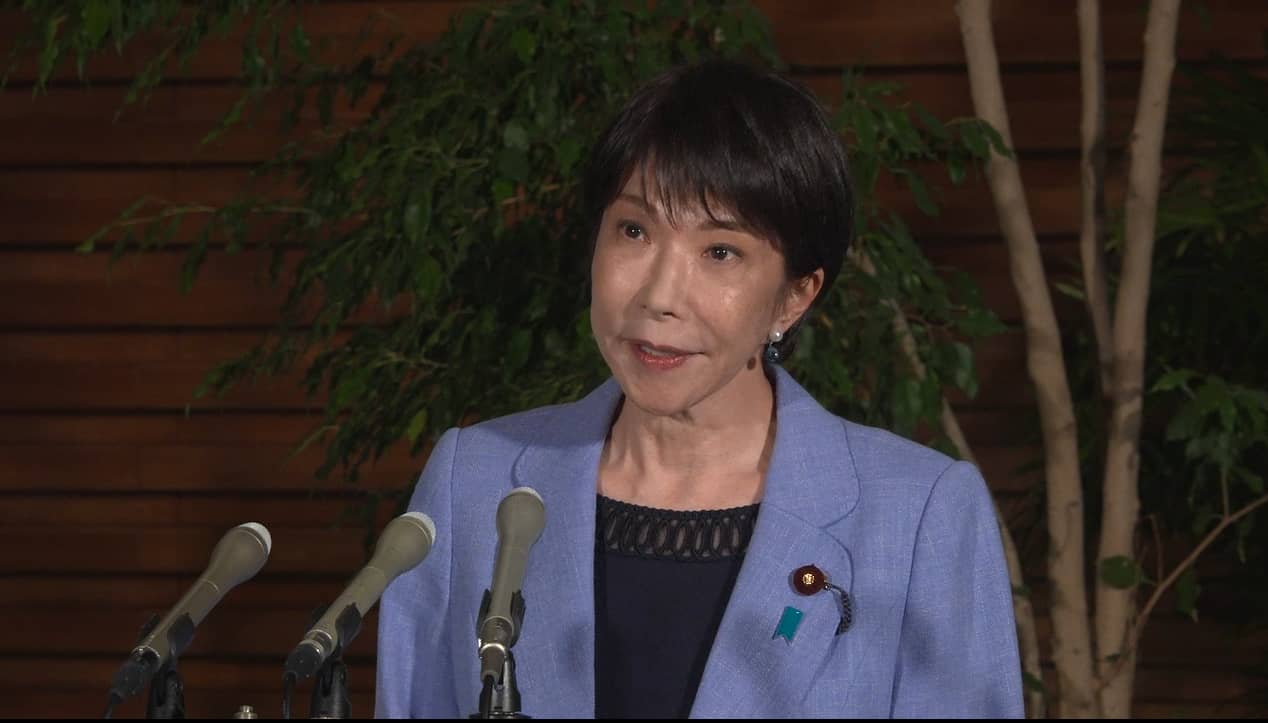
This explains Tokyo’s nervous reaction to the summit’s language. The Japan Research Institute interprets the meeting as an extension of the trade truce, but stresses the need to prepare for changes in U.S.-China negotiations rather than regard their stabilization as final. The Japan Research Institute advises taking advantage of the benefits of reduced tensions while avoiding policies based on the assumption that the United States will consistently defend Japan’s priorities. After speaking with Trump, the government of Sanae Takaichi sought publicly to refocus attention on the reliability of the Japan-U.S. alliance: the prime minister said that the two countries had “become allies who trust each other more than anyone else,” and confirmed their intention to jointly uphold the regional order. The Prime Minister’s Office Nevertheless, the very need for such emphasis reveals the scale of the concern.
The broader international view of the United States today cannot be reduced to anti-Americanism. Australia is not prepared to abandon AUKUS, Japan is not turning away from its alliance, and Brazil does not regard an economic break with America as beneficial. But in each of these countries, the United States is increasingly seen as a country against which one must hedge. Australians are hedging through ties with middle powers and efforts to limit their involvement in American wars; the Japanese through their own rearmament, economic security and wariness of U.S.-China deals; and Brazilians through relative autonomy and protection of the electoral process. The most unexpected conclusion they share is this: the problem for allies and partners is no longer whether America is strong enough, but whether it is possible to predict how exactly it will use its power tomorrow.




News 07-10-2026
America as a Source of Risk: Why Turkey, South Korea and India Trust “Special Relations” Less and...
In Turkey, South Korea and India, discussion of the United States in early October 2026 is no longer focused on the familiar question of how close relations with Washington are, but on another: how long can American promises be relied upon? Three very different countries share the same impression: Donald Trump’s administration has turned trade, security, energy and even alliance commitments into a single set of pressure levers. Their responses, however, differ. Seoul is trying to buy predictability through major investments in America; New Delhi is demanding that the terms of any deal be fixed in a way that cannot be overturned by another White House decision; and Ankara is seeking to use Erdoğan’s personal contact with Trump to lift sanctions and return to the F-35 program—while remembering that decisions in the United States are not made by the president alone.
The most vivid common theme is trade, which from the local perspective has ceased to be an economic technicality and become a test of political sovereignty. This is especially clear in India: negotiations on an agreement with the United States have once again reached an impasse, even though the two sides announced a framework agreement back in February. Finance Minister Nirmala Sitharaman described the situation as a “plateau,” while U.S. Trade Representative Jamieson Greer said that a final deal “is not imminent.” For Indian author Soumya Bhowmick, the most important cost of American tariffs is not the rate itself but the “confusion”: businesses do not know what regime will be in place tomorrow or whether any concession reached will disappear because of a new investigation, sanctions law or court ruling. In his column for The Indian Express, he urges New Delhi to seek not an attractive tariff figure but conditions that are “harder to reverse.” This is a characteristic Indian view: a dispute with the United States is not a reason to sever ties, but neither is it an ordinary negotiation over market access; it is a test of whether India can preserve its strategic autonomy while purchasing American energy, technology and weapons.
The South Korean debate is even more practical and тревожный. Seoul is already linking lower American tariffs to a package of strategic investments in the United States: the first project announced is the construction and operation of a gas-fired power plant in Texas, while eight major nuclear power plants and an Alaskan LNG project are also under discussion. A Yonhap timeline shows that this arrangement grew out of a deal under which South Korea agreed to invest $350 billion in exchange for a reduction in tariffs from 25% to 15%. In the Korean press, however, this is increasingly viewed not as a voluntary industrial strategy but as the price of a temporary reprieve. Commenting on American pressure to build semiconductor plants in the United States, the editorial board of Hankyoreh urges the government to negotiate while “holding the leverage.” The underlying concern is that Washington wants not merely investment, but the transfer to America of the production expertise on which South Korea’s export model rests.
Turkey’s discussion of tariffs is less institutionally structured, but no less emotionally charged. Local economic commentators associate the new American measures with a double blow: customs barriers are hurting textiles and finished clothing, while the conflict involving Iran is driving up energy costs. An Ekonomim article emphasizes that Turkey has been included among the countries that could face an additional duty of 10–12.5%; another column in the same publication calls the decision on textiles a blow to a sector that was already in serious difficulty. Turkey’s response therefore differs from India’s: New Delhi is thinking about the rules governing a major power, while Ankara is also concerned with the direct social impact on vulnerable exporters and domestic inflation.
The second common thread is distrust of American military policy in the Middle East and an unwillingness to pay for it with their own resources. Trump’s statement that the United States could expand strikes against Iran after the midterm elections was not perceived in South Korea as a distant Middle Eastern story. It overlapped with an already sensitive question: should an ally assist America in an operation that has no direct connection to the security of the Korean Peninsula? An Hankyoreh editorial endorsed President Lee Jae-myung’s statement that “we will not send troops,” interpreting it as a refusal not only to dispatch a contingent but also to participate indirectly—through patrol aircraft or demining teams. This marks an important shift: even a country where the alliance with the United States remains the foundation of national defense is drawing a line between alliance commitments and involvement in an American war.
For India and Turkey, the Iranian crisis looks even more immediate. The Indian editorial position is not limited to anti-war rhetoric: after Indian sailors were killed in American strikes in the Persian Gulf, New Delhi was forced to make its red lines explicit to Washington. The Indian Express presents the dilemma rather bluntly: India must preserve its partnership with the United States, but neither open confrontation nor submission will work. For a country with a vast seafarer diaspora, dependence on maritime trade and longstanding ties with Russia and Iran, American military policy poses a simultaneous risk to people, energy supplies and its freedom of maneuver.
In Turkey, geography adds to the problem. Rising oil prices and tensions around the Strait of Hormuz are seen as an immediate threat to the balance of payments and inflation. But Turkish commentary also contains a broader idea: U.S. military activity does not strengthen American leadership; it undermines it, because allies are refusing to follow Washington automatically. The sharpest voices in the Turkish spectrum see this as evidence of the decline of American hegemony; more moderate authors speak not of decline but of the need for Turkey to avoid building its policy around expectations of Trump’s next personal gesture.
Personal diplomacy is the third theme linking all three countries, although it is especially pronounced in Ankara. After the NATO summit in Ankara in July, Trump promised to work on lifting the CAATSA sanctions imposed on Turkey after its purchase of Russian S-400 systems, and sent a positive signal regarding the F-35. Turkish Deputy Foreign Minister Berat Gümrükçü said that the sides had created political and military working groups and that “this time we really feel that we are closer” to a settlement, as reported by Ekonomim. Yet even in Turkey’s business press and publications close to the pragmatic center, this optimism is accompanied by a significant caveat. An Ekonomim columnist warns that a foreign policy based solely on Trump is vulnerable because the United States has Congress, lobbies, the bureaucracy and public opinion. This is perhaps the most precise local conclusion: the president’s personal goodwill may open a door, but it does not override American institutions.
In South Korea, similar dependence on a single administration is expressed differently. Conservative professor Kim Young-soo writes in a Chosun Ilbo column about the need to survive in a “world without America”: in his view, Trump treats alliances as deals and international rules as expendable material. But the author does not reach an anti-American conclusion. On the contrary, he believes that South Korea cannot replace the United States in deterring China and must therefore strengthen its own defense while preserving the alliance. This is the key Korean difference from the Indian and Turkish approaches: fear of China and North Korea limits Seoul’s freedom to maneuver against the United States more strongly than irritation over trade pressure.
Indian authors, by contrast, are increasingly questioning the very formula of “special relations.” Former foreign minister and parliamentarian Shashi Tharoor calls the main source of the crisis the “radical unpredictability” of MAGA’s transactional policy in an article for The Indian Express. In his assessment, India is no longer seen in Washington primarily as a counterweight to China; it is increasingly viewed as a market for American goods, energy, technology and weapons. Kanthi Bajpai puts it even more bluntly in his column: “special relations” have given way to cold transactionalism. This is painful for the Indian elite not because it expected altruism from the United States, but because the previous arrangement appeared mutually beneficial: America helped strengthen India in Asia, while India helped contain China. Now tariffs, pressure over Russian oil and the possibility of a U.S.–China rapprochement are calling into question the very strategic logic of that exchange.
What is particularly notable is that in all three countries, criticism of America does not turn into a call to reject it completely. In India, people speak of diversification and “red lines,” but not a rupture. In South Korea, they demand that the country not participate in an American war against Iran, but do not question the defense alliance itself. In Turkey, they are skeptical of Washington’s promises, but at the same time want CAATSA lifted and access to the F-35. The common denominator is not anti-Americanism but a new diplomatic realism: the United States remains too important to ignore, but too unpredictable to trust without safeguards.
This view from Ankara, Seoul and New Delhi reveals a shift that is easy to underestimate when reading American debates. For allies and partners, the problem with Trump is not only the harshness of his demands. More important is that every agreement—on tariffs, energy, military affairs or technology—is perceived as a temporary pause before the next round of pressure. Thus, the main international response to America is becoming neither a choice between loyalty and rupture nor an attempt to break away, but a search for ways to make relations with Washington less personal, less one-sided and, ultimately, more reversible for America itself.





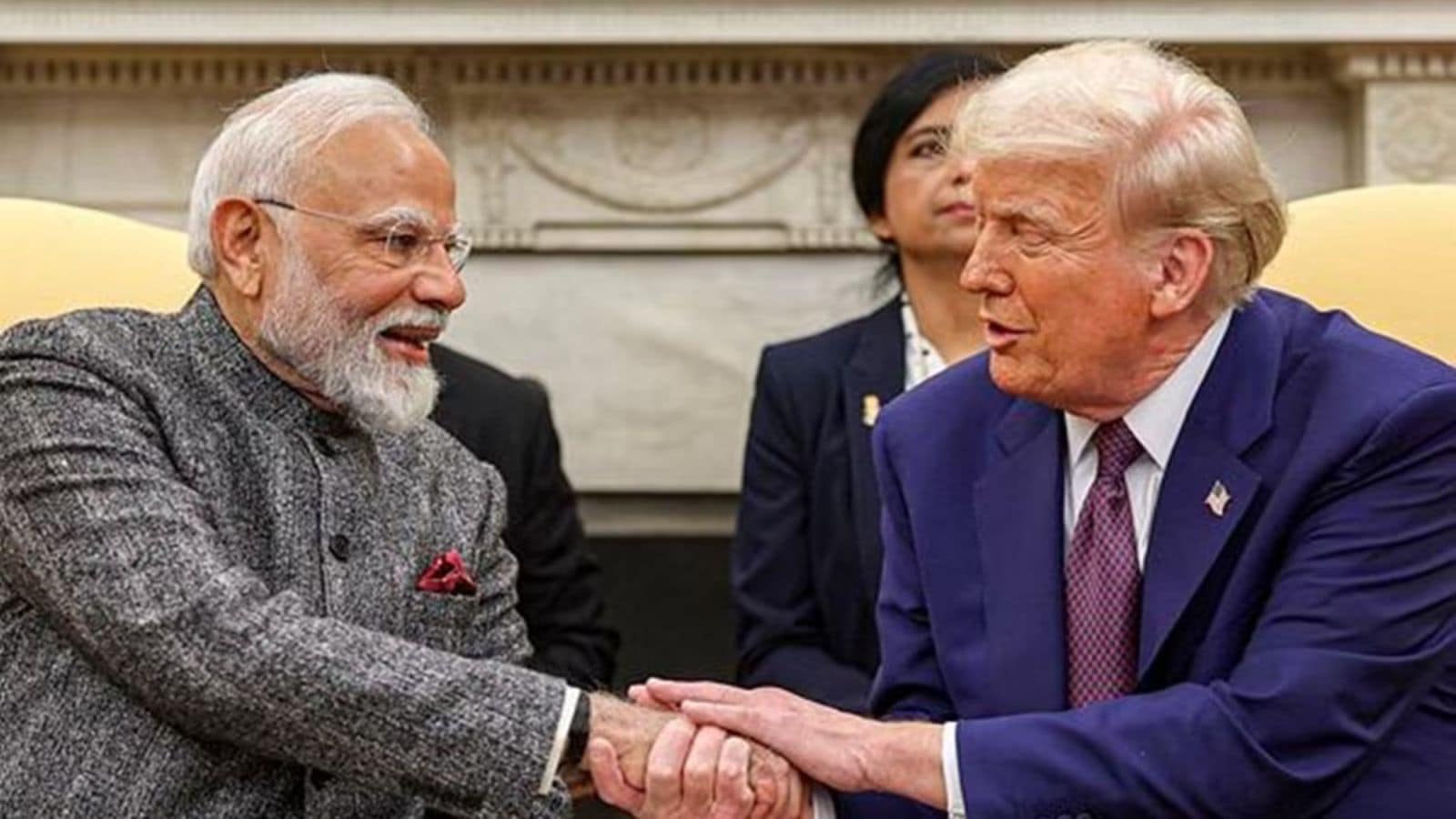
America as a Source of Pressure, Not Order: Views from Brazil, Türkiye and Russia
In Brazil, Türkiye and Russia, attention to the United States in the first days of October has focused not on any single statement by Donald Trump, but on a broader and more troubling pattern: Washington is increasingly perceived as a power that simultaneously bargains, threatens and interferes—from the Strait of Hormuz to the election campaigns of allies and partners. The common thread in the debate is that U.S. policy appears increasingly unpredictable, while its foreign-policy moves are ever more clearly subordinated to domestic electoral considerations ahead of the U.S. congressional midterm elections on November 3. (kommersant.ru)
The main common theme has been U.S. policy toward Iran. In Turkish expert circles, it is viewed less as another turn in the familiar U.S.-Iran conflict than as a dangerous game involving regional communications, one that directly affects Türkiye. Serhan Afacan, president of the Center for Iranian Studies in Türkiye, emphasizes in his column for İRAM that tensions could produce new limited clashes, but that a full-scale war is not inevitable. This is an important qualification to the alarmist tone: Ankara sees room for mediation, but believes the central problem is the inconsistent signals from the United States, which oscillate between discussions of specific points of dispute and threats to destroy the Iranian regime. (iramcenter.org)
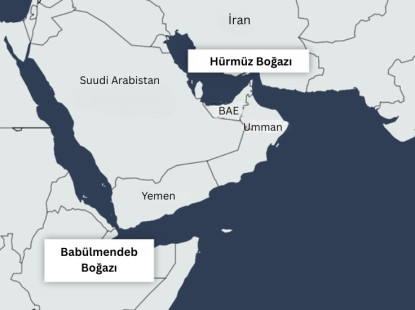
The Turkish perspective is particularly practical. For Türkiye, Hormuz is not an abstract oil artery, but the starting point of a chain reaction affecting trade, borders and security. Afacan notes that Iran’s attempts to offset maritime restrictions with overland routes are already causing congestion along routes through Pakistan, Afghanistan, Türkiye and Turkmenistan. In other words, Turkish discussions of American pressure on Tehran focus not only on the nuclear program or the balance of power with Israel, but also on the risk of turning the country into a transit valve for a regional crisis—with queues at the borders, rising costs and new threats along its southeastern frontier. (iramcenter.org)
In Russia, the same issue is viewed much more harshly: not as the risk of an uncontrollable war, but as evidence that Washington has failed to formulate a political objective that can be achieved through military force. In a comment for Kommersant, Iran expert Farhad Ibragimov points to a fundamental contradiction in Trump’s rhetoric: if Iran has already been defeated, as the White House claims, why does the United States need additional forces and Tehran’s acceptance of American terms? His conclusion is even more telling: a new operation appears more likely after the U.S. elections, but there is no reason to believe that further destruction will force Iran to accept a deal. (kommersant.ru)
Russian commentators also see an economic calculation in the wavering policy toward Iran. In a Kommersant analysis, American policy is described as managing oil-market expectations: when it is necessary to ease price pressures, officials speak of negotiations; when greater pressure is needed, threats of strikes return. Under this interpretation, instability in the Middle East becomes not merely a problem for the United States, but a resource—a way to push energy buyers toward American suppliers while also constraining China’s energy space. This does not necessarily mean that Moscow believes Washington wants a war; rather, the Russian debate assumes that the U.S. administration has learned to extract political and market dividends from an unresolved conflict. (kommersant.ru)
Brazil’s reaction transfers the same logic—pressure for political ends—to the Western Hemisphere. But here the concern is not Hormuz, but electoral sovereignty. After the first round of the presidential election on October 4, the Brazilian press has extensively discussed Trump’s previous support for Flávio Bolsonaro, his statement that he was following the election “very closely,” and the combination of diplomatic demarches, tariffs and pressure on Brazilian institutions. In a Folha de S.Paulo article, Trump’s failure to comment immediately after the vote is itself interpreted against the backdrop of accumulated fears of foreign interference, rather than as evidence of neutrality. (www1.folha.uol.com.br)
It is especially telling that the Brazilian debate links American influence not only to Trump’s ideological affinity with the Bolsonaro family. Adam Goldsmith, a former U.S. Treasury financial attaché for South America, lists a whole set of interconnected levers in an article for Folha: tariffs, sanctions against Brazilian officials, visa restrictions and the inclusion of major criminal groups on U.S. terrorist lists. His paradoxical conclusion is that Brazil’s relatively weak economic ties with the United States partly protect the country from immediate damage, while simultaneously highlighting the scale of the opportunities missed in bilateral relations. (www1.folha.uol.com.br)
The most unexpected common theme linking Brazil with Türkiye and Russia is not anti-Americanism as such. In all three countries, the United States is still recognized as a power with which it is necessary to negotiate. But perceptions of American reliability are changing. In Brazil, there are fears that Washington wants to restore Latin America to its own sphere of political influence and force Brazil to distance itself from China, including on infrastructure and critical minerals. In Türkiye, the recent U.S.-China trade truce is viewed as a tactical pause rather than the end of strategic rivalry. In an analysis for Anadolu Ajansı, Kürşat Korkmaz, a lecturer at the Gendarmerie and Coast Guard Academy, notes that the agreements merely reduce economic tensions temporarily without resolving the underlying contradictions. (www1.folha.uol.com.br)
A common picture thus emerges. For Brazil, the United States is now a potential arbiter capable of becoming a participant in domestic political struggles. For Türkiye, it is a military superpower whose actions against Iran could affect its borders, trade and regional stability. For Russia, it is an actor that uses conflict, sanctions and threats as interchangeable instruments of influence. Interests and sympathies differ, but the conclusion is increasingly similar: Trump’s America is perceived not as a guarantor of clear, predictable rules, but as a powerful, situational and electorally motivated negotiator, with whom any agreement may prove to be merely a pause before the next round of pressure.


News 06-10-2026
America as a Source of Instability: Why Turkey, France and Saudi Arabia Are No Longer Debating...
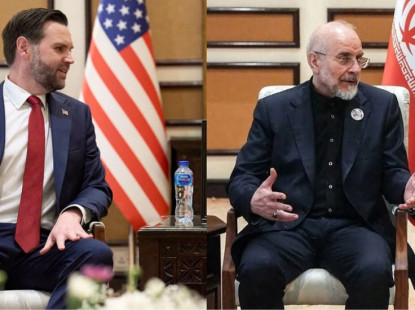
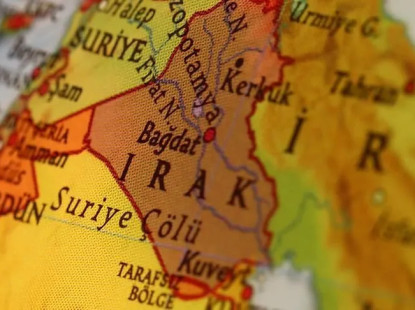
The main American issue now prompting the most substantive reactions in Turkey, France and Saudi Arabia is not Washington’s internal struggle as such, but the consequences of the US war with Iran and the Donald Trump administration’s attempts to turn the Strait of Hormuz into an instrument of pressure on Tehran. In all three countries, one idea is being voiced almost simultaneously: the United States still possesses enormous military and financial power, but can no longer set the rules of the regional order single-handedly—especially where the cost of an American decision is immediately paid by Iran’s neighbors, energy importers and European consumers.
For Turkey, Hormuz is primarily not an abstract question of maritime strategy, but one of regional sovereignty and economic vulnerability. In Turkish analytical circles, the war is increasingly described as a struggle not only over Iran’s nuclear program, but also over who will establish the rules governing passage through the world’s most important energy artery. In an analysis by Anadolu Ajansı, political scientist Oral Toğa frames the question in stark terms: the decisive indicator will be “whose rules” govern the restoration of regular shipping. If passage depends on Tehran’s permission, Iran turns its military losses into a political resource; if an American corridor becomes entrenched, Washington strips Iran of its principal lever.
But Ankara is also debating another side of this logic. American pressure on Iran is not an isolated sanctions campaign: it affects Turkish banks, trade routes, energy transactions and Turkey’s ability to maintain functioning ties with its neighbor. Following Trump’s threats to impose severe consequences on countries that maintain economic relations with Tehran, the Turkish press explicitly noted that Turkey continues to have substantial trade with Iran. In a report by DW Türkçe, the American strategy is perceived as a risk of extraterritorial punishment for third countries—in other words, as Washington’s familiar habit of extending its own jurisdiction far beyond the United States. It was therefore no coincidence that President Recep Tayyip Erdoğan, in a conversation with Trump in August, urged him not to end dialogue with Iran and stressed Turkey’s readiness to support peace efforts, as reported by DW Türkçe. Behind this appeal lies not pacifism as an abstraction, but Turkey’s concern that a prolonged US-Iranian confrontation will ultimately destroy predictability along its eastern and southern borders.
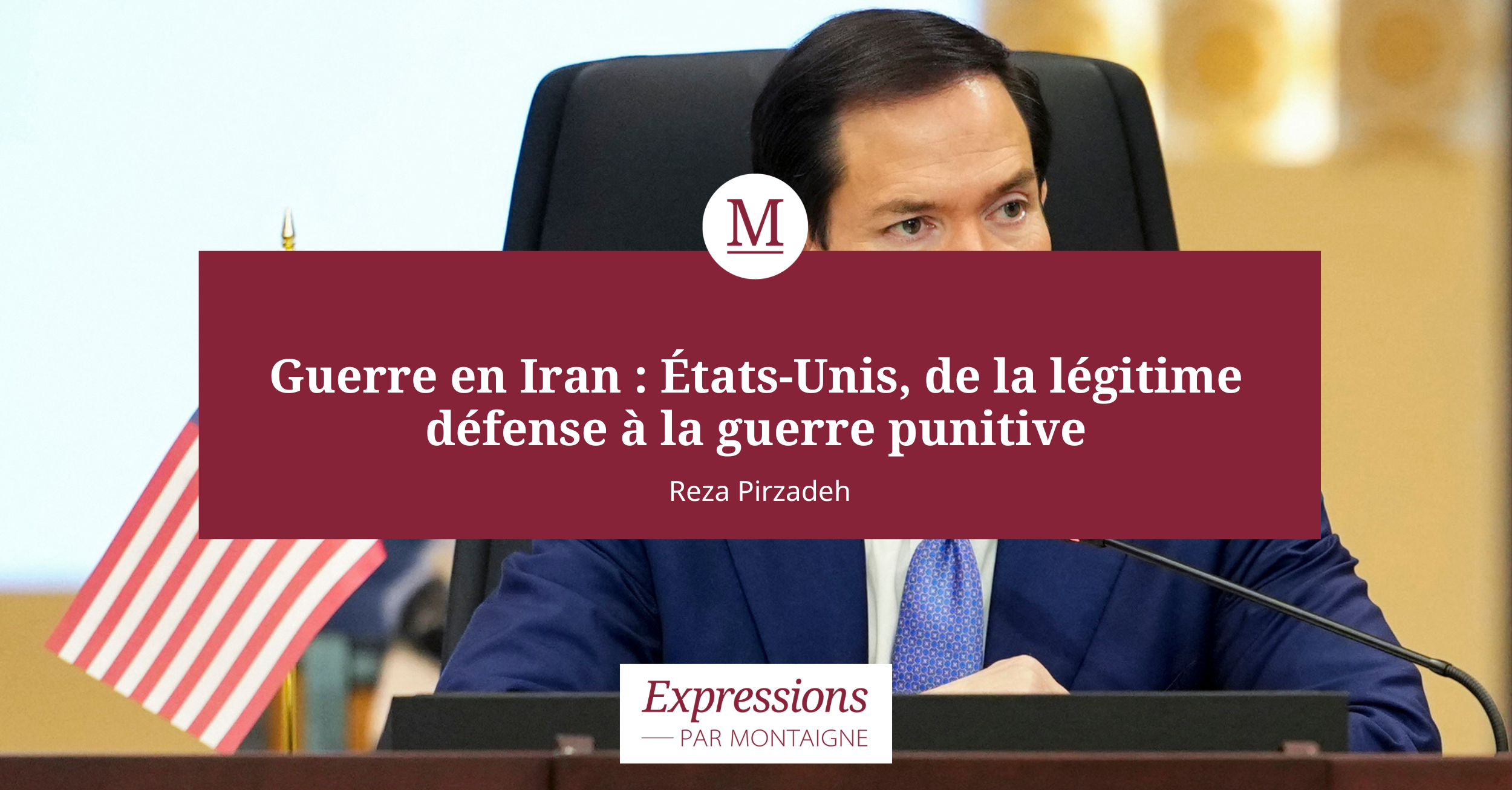
The French reaction places greater emphasis on law and strategic rationality. In France, there is growing irritation that the American operation, launched in response to threats to security and shipping, is taking on the characteristics of a war without a clear political end goal. In an analysis by the Institut Montaigne, the American campaign is described as a shift “from self-defense to punitive war”: the authors argue that Washington risks replacing the task of protecting navigation with a broader punishment of Iran—questionable both under international law and in terms of effectiveness. This is an important French nuance: Paris does not deny the threat posed by Iranian missiles, proxy groups and pressure on maritime routes, but it does not automatically accept the American definition of which means are permissible to eliminate it.
France’s perception of Trump himself is also telling. In a Le Monde analysis, his campaign activity ahead of the November 3 midterm elections is read as an attempt to impose his own version of reality on voters—despite Americans’ concerns over the cost of living and the war. For French observers, this explains the nervousness of the American line in the Middle East: foreign policy is becoming subordinate not only to long-term strategy, but also to the president’s need to demonstrate resolve to his electorate. An earlier article in the same newspaper emphasized that only 31% of Americans supported military action against Iran, while Trump’s promises to lower the cost of living and end expensive foreign wars had gone unfulfilled. This assessment is especially important for Europe: US allies see that foreign escalation may become a domestic political liability for Washington—and, consequently, a factor in its unpredictability.
In Saudi Arabia, the tone is different: there are fewer illusions that the problem can be solved with a single diplomatic appeal, but more attention to the practical architecture of security. Saudi authors do not conceal the fact that Iran is using Hormuz as leverage over the entire region. In a column by Jason Greenblatt for Arab News, it is argued that Tehran does not necessarily intend to shut the strait completely, but rather to make passage so dangerous and expensive that insurers, markets and governments begin demanding concessions from the United States. This logic is close to the official Saudi perception of the threat: the security of shipping is not an American service, but a vital condition for the Gulf states and the global economy.
At the same time, a much more critical conclusion regarding Washington is being voiced in Riyadh. In an article by Ramzy Baroud, the American operation is described as the result of the arrogant belief that the United States can impose an outdated model of dominance on the region. Meanwhile, Saudi analyst Abdel Aziz Aluwaisheg, in another Arab News column, describes the war as a dangerous dead end: the United States has intensified the blockade and sanctions pressure, but failed to restore normal shipping through Hormuz, leaving Iran with its most valuable strategic asset. This is not simply an anti-American position. Rather, it is a demand that the United States be not merely a strong ally, but a predictable architect of a viable order.
This is where the Turkish, French and Saudi perspectives intersect. All three countries reject the idea that Hormuz’s future should be determined by a bilateral deal between Washington and Tehran. Turkey fears that such a deal would bypass the interests of regional states and create new sanctions risks. France sees it as a threat to international law and yet another example of American military power replacing political settlement. Saudi Arabia insists that the security of maritime routes must depend neither on Iranian blackmail nor on Washington’s unilateral right to appoint itself the guarantor of the region.
Particularly noteworthy is the Saudi idea expressed by journalist Osama Al-Sharif in his column: Hormuz is not Iran’s property, to be closed in response to US pressure, but neither is it a space where Washington has the right to impose the terms of passage unilaterally. The strait should be removed from the US-Iranian bargaining process and placed within an international legal framework involving genuine regional participation. This is perhaps the most important local idea that is easy to miss when following only debates in the United States: the countries of the region do not want to choose between American control and Iranian coercion, but to reduce their dependence on both.
The US midterm elections add further urgency to this dispute. The Saudi newspaper Al Riyadh, in an analysis of the American campaign, warns against the temptation to explain every delay or initiative by Washington solely through the elections: wars, markets and security crises have an inertia of their own. But the very need for such a warning shows how widespread the perception has become that the White House is now acting with November 3 in mind. Outside the United States, this is viewed with concern: for the American voter, the war may be one campaign issue among others, but for Turkey, France and Saudi Arabia it remains a question of energy prices, border security, maritime trade and the stability of the entire regional order.









America as a Source of Risk: Why Australia, Germany and Saudi Arabia Are Arguing Not About US Strength,...
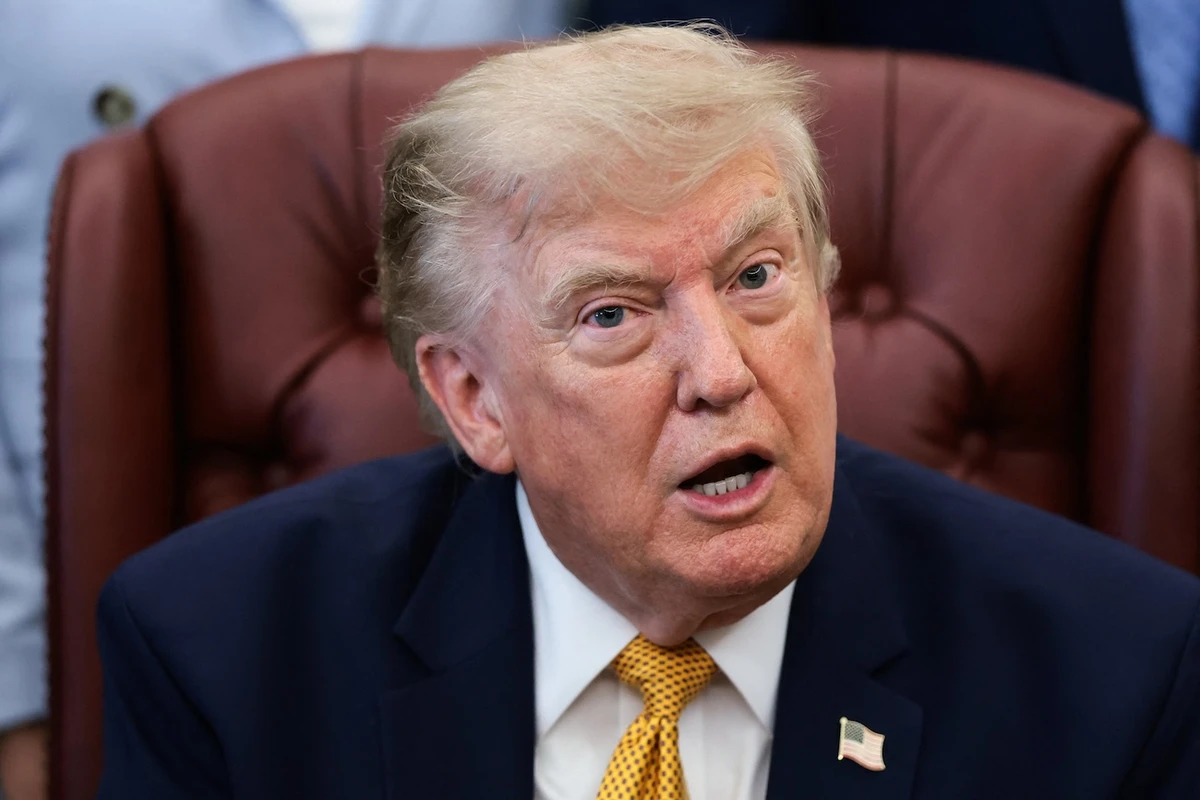
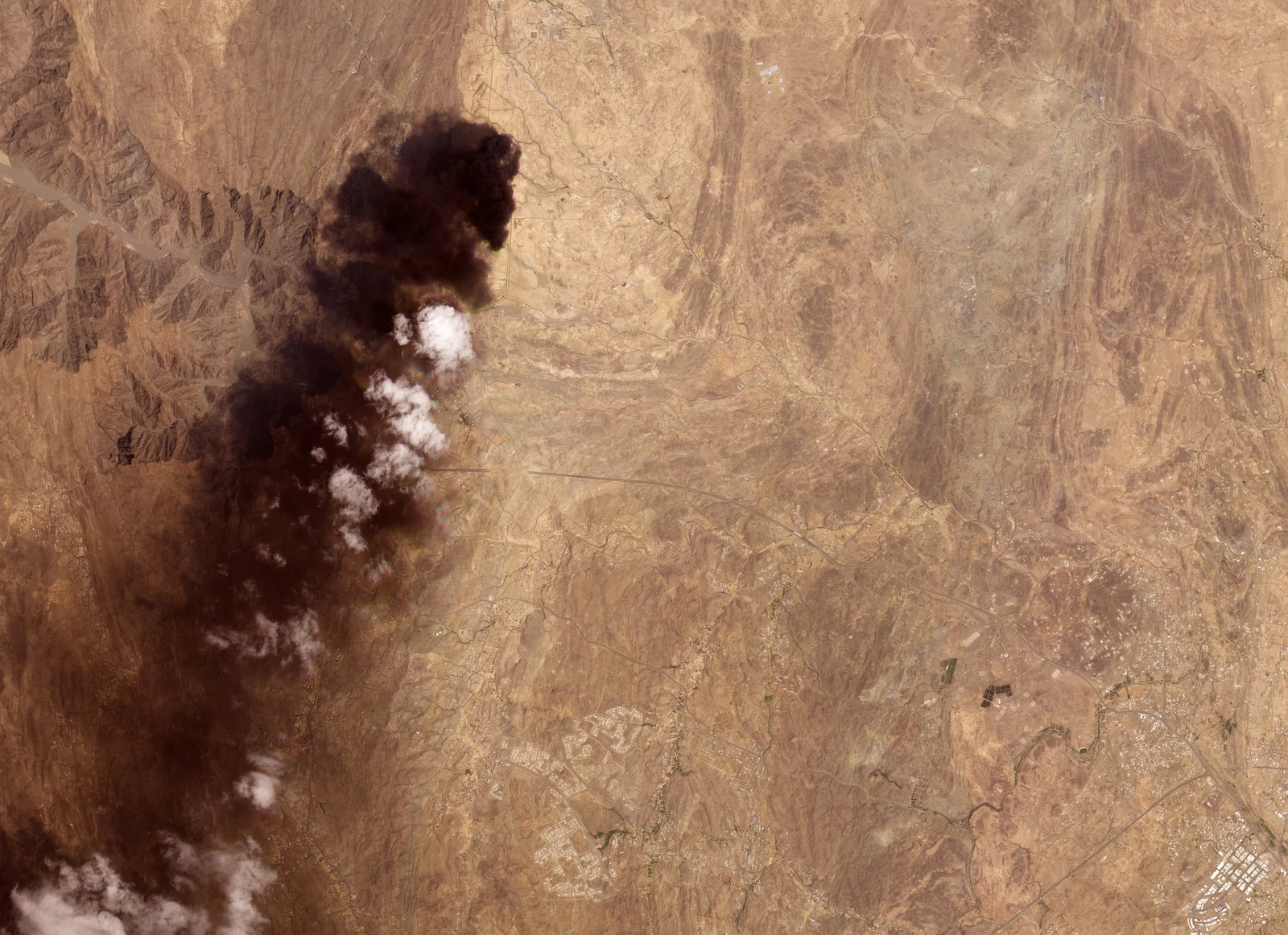
In the first days of October, the main American story outside the United States was not yet another domestic Washington quarrel, but the export of the consequences of America’s war with Iran. The Donald Trump administration’s pressure on its G7 partners to release strategic diesel and oil reserves, concerns over maritime routes, and renewed debate about how capable allies are of relying on Washington brought together countries that otherwise have little in common. Australia, Germany and Saudi Arabia, however, are reading this story through entirely different fears: Canberra sees the risk of political humiliation in an overly close alliance, Berlin sees a threat to the economy and European autonomy, while Riyadh sees the vulnerability of its own security and oil infrastructure.
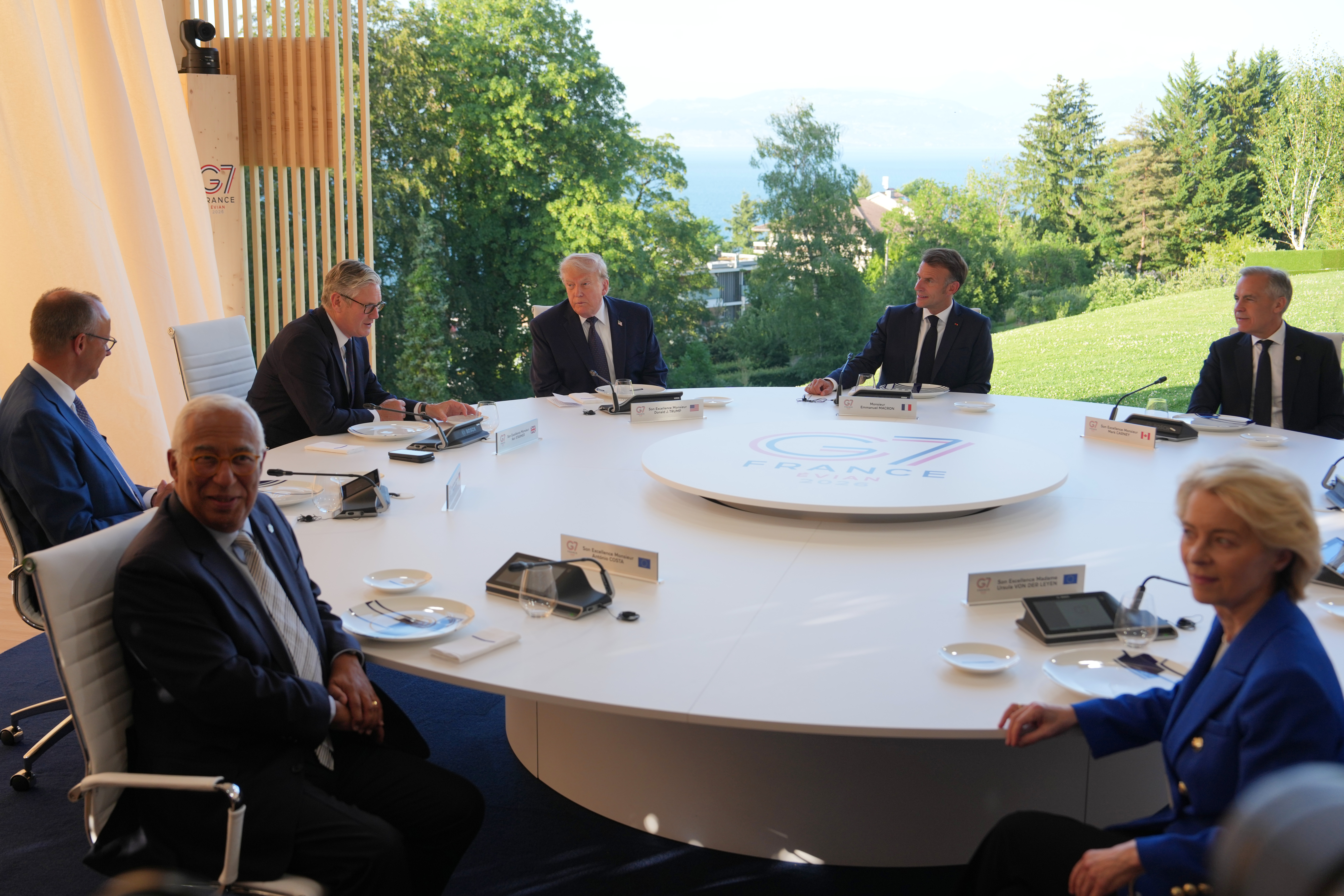
The immediate trigger for the latest wave of debate was the G7 countries’ decision to release 100 million barrels of diesel and oil from emergency reserves following pressure from the United States. Saudi Arabia’s Arab News quoted a characteristic assessment by Energy Aspects analysts: this was more likely a political gesture intended to persuade Trump not to impose a ban on diesel exports than a firm, technically developed commitment. This wording captures the broader international perception of America: partners are no longer discussing a joint strategy as equal participants, but are instead trying to prevent yet another unilateral decision by the White House.
For Germany, this is particularly painful. Berlin sees the fuel dispute not simply as another energy shock, but as a vivid example of how American domestic politics shifts the costs onto Europe. The German-language edition of Deutsche Welle notes that Trump first threatened to halt diesel exports if allies did not release their reserves, and then said he had not seriously intended such a measure. But for European governments, the threat itself was enough: it showed how quickly energy interdependence can become an instrument of coercion. A DW report from October 3 captures this almost Kafkaesque situation: Europe is forced to respond to a threat whose author then declares it was not serious.
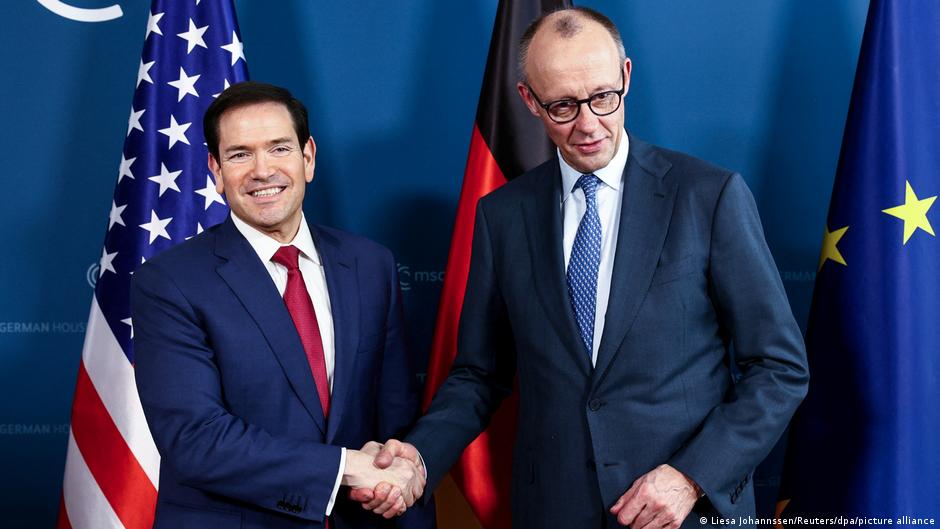
The German reaction therefore goes beyond the question of diesel. The conviction is growing in the country that Trump’s America remains a necessary ally while also becoming a source of systemic unpredictability. Back in February, Chancellor Friedrich Merz publicly drew an ideological line between Berlin and Washington, saying at the Munich Security Conference: “The MAGA culture war is not ours,” while also stressing his commitment to free trade rather than protectionism. As a Deutsche Welle analysis emphasized, this was not a rejection of the transatlantic alliance, but an attempt to turn it into an “equal partnership.” The current fuel dispute, however, makes this formula increasingly unconvincing: equality is difficult to reconcile with a situation in which one side can threaten export restrictions at any moment for the sake of its midterm elections.
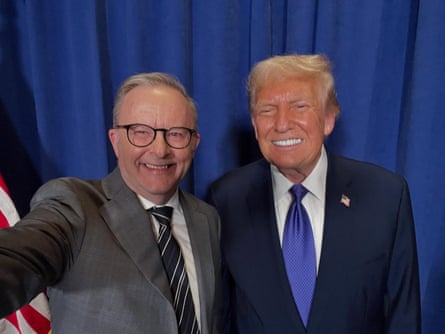
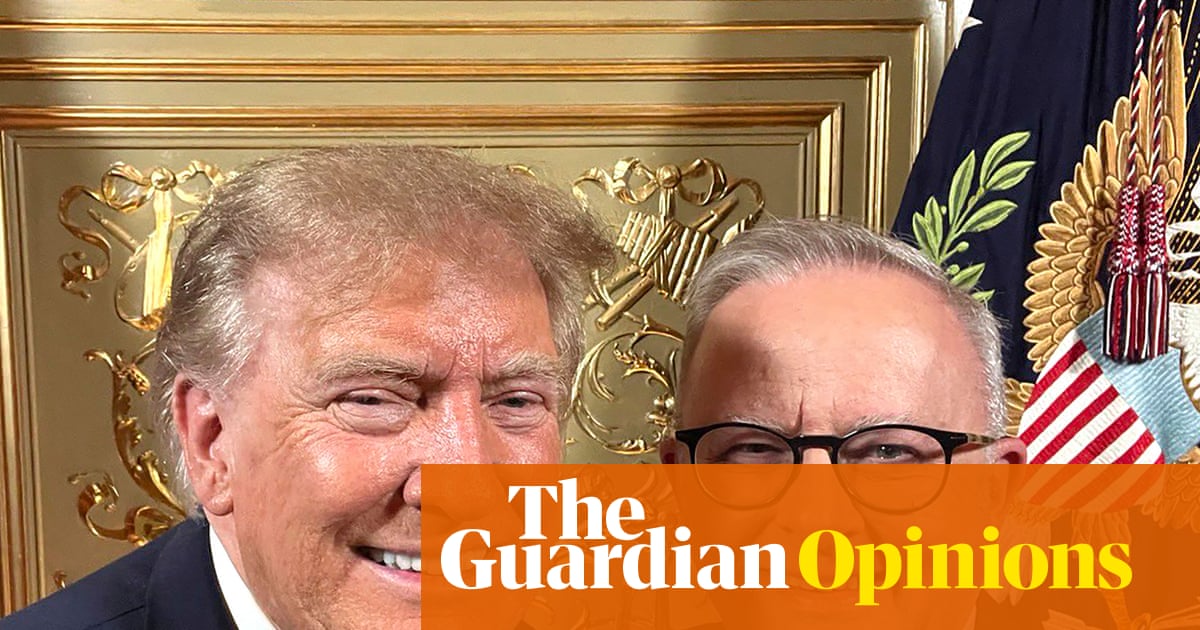
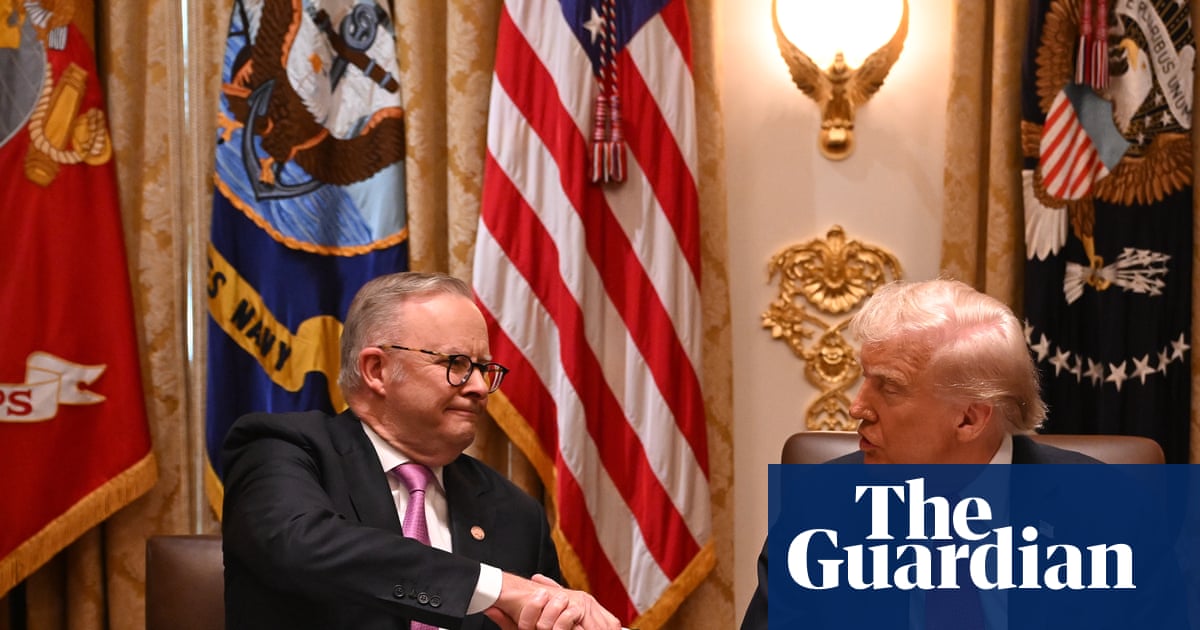
Australian irritation has a different, more political character. The debate there is less about whether the American alliance should be preserved than about the price Prime Minister Anthony Albanese is paying for his public closeness to Trump. In a Guardian Australia column, political editor Tom McIlroy drew attention to the controversy surrounding a joint selfie of Albanese and the US president: to critics, it was not an innocuous diplomatic photograph, but a visual symbol of ingratiation toward an American leader who is deeply unpopular in Australia. What matters here is not the photograph itself, but the gap between government calculations and public sentiment: the government considers relations with the United States the foundation of its foreign policy and a safeguard for projects such as AUKUS, while a significant part of society sees Trump as a source of military and economic instability.
The war with Iran has deepened this divide in Australia. Albanese had previously tried not to respond to American provocations in order to avoid jeopardizing the alliance and defense cooperation. But when Trump suggested mass strikes on Iran’s civilian infrastructure, the Australian prime minister called it an “extraordinary statement.” An Australian analysis by the Guardian saw these words as a rare moment when the tactic of “not agreeing enthusiastically, but not snapping back either” stopped working. In German debates, this sounds like an argument for European independence; in Australia, it is a warning that even the most disciplined ally eventually reaches the limits of political silence.
The Saudi perspective is both more pragmatic and more alarming. Riyadh cannot afford to view the American-Iranian confrontation as distant geopolitics: it directly affects oil exports, tanker security, insurance costs and the vulnerability of Saudi infrastructure. The latest data published by Arab News on October 5 show that markets are already factoring in a partial recovery in Middle Eastern supplies and increased Saudi exports, although these shipments are traveling along more expensive and less efficient routes. For the United States, this is a way to soften a pre-election price spike; for Saudi Arabia, it is a reminder that its oil has become an element in someone else’s domestic political struggle.
That is why Saudi Arabia’s reaction cannot be reduced either to support for Washington or to criticism of Washington. The kingdom’s official language consistently emphasizes freedom of navigation, regional stability and the protection of sovereignty. In a joint statement by the United States and the Gulf Cooperation Council published in June by the Saudi Press Agency, the parties described reopening the Strait of Hormuz and ensuring unhindered transit as critically important to regional and global security. But Riyadh’s current steps also reveal a second line of thinking: a desire not to depend entirely on an American guarantee. The SPA statement published on October 5 concerning an emergency meeting between Saudi Arabia, Pakistan and Turkey refers to the practical strengthening of joint defense mechanisms. This is not an announcement of a break with the United States, but an important indirect signal: the kingdom is seeking to build its security on several pillars rather than on Washington alone.
The most unexpected common feature of these three reactions is the disappearance of the old, simple formula: “America protects, allies support.” Germany wants the United States to remain in NATO, but not to be able to turn tariffs, energy and troops into instruments of punishment. Australia needs the American military umbrella in the Indo-Pacific, but is increasingly aware of the domestic political cost of displaying closeness to Trump. Saudi Arabia is interested in American deterrence against Iran, but is also forced to hedge against the consequences of an American escalation that makes its own territory and export routes potential targets for retaliation.
Today’s international debate about America, therefore, is not a conversation about its decline. It is, rather, a conversation about a new form of American power: it remains capable of forcing the G7 to open its reserves and influencing oil routes, but it increasingly prompts even close partners to create contingency plans. In Berlin, these are called European responsibility; in Canberra, cautious diplomacy without illusions; in Riyadh, regional resilience. The meaning is the same: an alliance with the United States is no longer perceived as ready-made insurance. It is now seen as a risk that must be managed.




News 05-10-2026
America as an Unpredictable Partner: Moscow Awaits a Deal, Tokyo Fears a “G2,” Jerusalem Counts the...
In Russian, Japanese, and Israeli discussions about the United States during the first days of October 2026, one common mood stands out: America is no longer viewed as a power whose actions are determined solely by alliance commitments or immutable principles. The focus is on the Donald Trump administration’s ability to negotiate with China, pressure Iran, promise talks with Moscow, and reconcile all of this with its own domestic political calendar ahead of the November 3 congressional elections. Yet the conclusions drawn in the three countries are almost diametrically opposed. Russia sees this volatility as an opening for a pragmatic deal; Japan sees the risk of being sacrificed in a major U.S.-China détente; and Israel fears that Washington will settle for a compromise before the threat from Iran has been eliminated.
The most widely discussed topic in Japan was Xi Jinping’s September visit to Washington and his meeting with Trump on September 24. For Japanese commentators, the concern is not so much the fact of contact between the two superpowers as its symbolism and lack of clarity. An analysis by the Itochu Research Institute emphasizes that the Chinese leader received a state reception, while no breakthrough was achieved on key issues ranging from Taiwan and artificial intelligence to trade. Tokyo reads this in two ways: the absence of an agreement does not mean that Japan’s interests are securely protected by the United States; rather, it may mean that they can be included in the next deal.
Japan is particularly troubled by the fact that the final language of the meeting left Taiwan on the periphery, while the historical formula describing the United States and China as allies during World War II was used without regard to its political effect in Japan. The Japanese Strategic and Defense Research Center drew attention specifically to this asymmetry: Taiwan was not mentioned in the document, while a reference to the U.S.-China wartime alliance was included. For Tokyo, this is not a matter of philological nitpicking. In Japanese strategic thinking, Taiwan is not an abstract issue but a potential flashpoint through which a U.S.-China conflict could directly affect the Japanese islands, maritime communications, and American bases in the country.
This gives rise to a characteristic Japanese anxiety: the strength of the American alliance is no longer considered a sufficient guarantee against decisions being made “over an ally’s head.” JB Press puts it bluntly: military strength alone is not enough to prevent Japan from being left on the sidelines when artificial intelligence, semiconductors, critical minerals, and trade concessions become bargaining chips. This is an important local argument that is rarely heard in American debates. Japanese authors are not calling for a break with Washington; on the contrary, they are effectively demanding that the military alliance be supplemented by technological, industrial, and diplomatic autonomy. In their view, American unpredictability is not a reason for anti-Americanism but an argument for ceasing to be merely a “reliable ally” and becoming an indispensable participant in negotiations.
In Russia, the same American transactionalism is viewed with less anxiety and more expectation. The main issue there is linking possible economic recovery to a settlement of the war in Ukraine. On October 1, Kremlin spokesman Dmitry Peskov said that the United States was ready to discuss joint projects only after a political settlement; Moscow, he said, was proposing to work “in its own interest right now.” This is how his words were conveyed by Kommersant. This is not simply a diplomatic disagreement over the sequence of steps. The Russian interpretation is based on the idea that business and economic interests should become instruments for reducing confrontation, whereas Washington continues to use them as a reward for political concessions.
However, Russia’s reaction is far from being limited to optimism about a possible “grand bargain” with Trump. In an RBC report, Peskov describes bilateral relations as “not in the best shape,” while Russian official assessments increasingly combine hopes for working-level contacts with distrust of American inconsistency. Moscow’s discussion is based on the assumption that the United States can send signals favoring negotiations while continuing to support Kyiv, speak about the economy while intensifying pressure, and promise political contact while postponing it because of the Ukraine issue.
In this sense, Russian commentators see American domestic politics not as a secondary backdrop but as an independent source of instability. In a Vedomosti analysis, Vladimir Vasiliev, chief research fellow at the Institute for the U.S. and Canadian Studies of the Russian Academy of Sciences, links the administration’s actions concerning the security of the November elections to the risk of a severe domestic political crisis. His formulation—“the American political system is on the threshold of its most serious test”—reflects a widespread Russian view: Trump’s foreign policy will increasingly be subordinated not to a stable strategy but to his personal struggle for control over Congress and the Republican coalition. For Moscow, this means that dialogue is useful, but any promises from Washington should be considered reversible.
The Israeli view of American policy is the sharpest because here the cost of American inconsistency is measured not in trade terms or diplomatic status but in the threat of a new war with Iran. In Israeli analysis, the main issue remains Washington’s shift from extensive military pressure to a long-term strategy of economically isolating Tehran. In a September analysis by the Institute for National Security Studies, INSS authors Yoel Guzansky, Eldad Shavit, and Ari Heistein describe the new American phase as an attempt to shift the center of gravity “from military force to economic isolation.” In their assessment, the problem is that six months into the confrontation, shipping through the Strait of Hormuz has not returned to normal, and the nuclear issue remains unresolved.
For Jerusalem, this does not look like an unequivocal success. Israeli experts fear that Trump wants to turn a limited military result into a politically convenient image of victory without taking on the costs of a prolonged campaign. An INSS assessment dated September 10 highlights the American dilemma: the closer the elections approach and the higher the energy and domestic political costs become, the harder it is for Washington to impose terms for ending the crisis on Iran. It also warns that a new surge in Iranian nuclear activity or an escalation in the Strait of Hormuz could not bring a deal closer but instead derail Trump’s effort to achieve a controlled de-escalation.
This produces a rare combination of dependence and distrust in Israel. The Israeli public still views the United States as an indispensable ally, but is increasingly uncertain that the American president is prepared to place Israeli interests above his own desire to bring the conflict to a swift close. According to an INSS poll conducted in June, 66% of respondents considered U.S.-Iranian agreements bad for Israel, while only 12% believed that Trump was “very committed” to protecting Israeli interests. At the same time, 58% of those surveyed acknowledged that, in the event of disagreement with Washington, Israel could act independently only to a limited extent or not at all. This is perhaps the most important Israeli conclusion: distrust of the American approach does not translate into confidence in Israel’s own freedom of action.
The Russian, Japanese, and Israeli reactions converge in viewing the United States as a country that prefers to negotiate from a position of strength but increasingly uses force to secure a better deal rather than to resolve a problem once and for all. The difference is that Moscow hopes to use this logic to thaw relations, Tokyo is trying not to become a bargaining chip in a U.S.-China trade-off, and Jerusalem fears that a deal with Iran could come too early and be too lenient.
The most unexpected common feature of these three debates is that they are not about whether America is powerful. No one seriously doubts its military, financial, or technological strength. The dispute concerns something else: whether the U.S. administration can turn that power into a predictable order. In Moscow, the answer is: there is no predictability, but one can patiently wait for an opportunity. In Tokyo: there is no predictability, so Japan must urgently increase its own weight. In Jerusalem: there is no predictability, and therefore even the closest alliance does not eliminate the need to prepare for the moment when Washington decides that the war has already become too costly.



Allies Reassess the Reliability of U.S. Military Leadership
Israeli and German publications are examining how Washington’s actions and commitments are increasing strategic uncertainty for its partners. According to these assessments, the United States is seeking to prevent the war in Yemen from expanding, redeploying military resources amid the Iranian threat, exposing British bases to the risk of regional attacks, and forcing Japan to reassess the political and military cost of its alliance with America. Particular attention is being paid to the shift toward drone warfare and the need for allies to adapt to new conditions. This material is based on publications by Kikar (Israel) and the Frankfurter Allgemeine Zeitung (Germany).
U.S. Returns B-1Bs from Britain Amid Iran-Related Threat
The United States evacuated all B-1B Lancer strategic bombers from the British air base at Fairford and returned them to American territory after receiving intelligence about a possible threat. According to the Israeli publication Kikar HaShabbat, the suspected operation may have been linked to Iran and involved the use of drones against the base, which was used by American long-range aviation.
According to the report, the redeployment was carried out urgently. Some crews took off before preparations for the tanker aircraft needed to support the long-range flights had been fully completed. The U.S. Department of Defense confirmed that all B-1Bs stationed at Fairford had returned to the United States, but declined to disclose details about the move. The Pentagon explained that “operational security considerations” prevented it from reporting force movements in real time.
British Prime Minister Andy Burnham said there were “strong indications” of Iranian involvement in the threat. Tehran, for its part, denied any connection with the events. The report focuses in particular on the possible role of the Islamic Revolutionary Guard Corps, which is regarded in the West and in Israel as a key element of Iran’s network of external operations, missile programs, drone aviation, and support for allied armed groups.
For Israeli readers, the incident in Britain is seen not merely as an episode affecting the security of an American base. It forms part of the broader conflict surrounding Iran and its ability to pressure the United States and its allies far beyond the Middle East. The use of drones, sabotage tactics, clandestine networks, and threats against military infrastructure is consistent with what Israel regards as Iran’s strategy of asymmetric deterrence.
The B-1B Lancer holds a special place in American military aviation. The aircraft can carry the largest conventional payload of any U.S. Air Force bomber and is one of the main components of America’s long-range strike capabilities. Its withdrawal from the British base therefore attracted heightened attention: Fairford has traditionally been viewed as an important staging point for U.S. operations in Europe, the Middle East, and neighboring regions.
At the same time, the evacuation does not mean a reduction in America’s strike capability. The Pentagon emphasizes that the bombers remain fully ready to carry out missions directly from U.S. territory. For Israel, this is an important signal: a change in the force-deployment pattern may indicate the vulnerability of overseas bases to attack, but it does not eliminate Washington’s ability to launch a retaliatory strike.
As Kikar HaShabbat notes, the story took on a dramatic tone in the British media, with talk of “panic” and an “urgent evacuation.” In the Israeli interpretation, however, the incident’s main significance lies elsewhere: it demonstrates how seriously the United States and Britain take intelligence about possible Iranian actions, and how far Tehran’s confrontation with Western states may extend.
The Moses Family Story: A German Perspective on the Tragedy of the Gaza War
The Frankfurter Allgemeine Zeitung’s international liveblog on the war in the Middle East presents the conflict primarily through the human tragedy of hostages and their families. One report focuses on the fate of 83-year-old Gadi Moses, a German-Israeli citizen abducted by Hamas militants on October 7, 2023, from Kibbutz Nir Oz. The full liveblog is available on the FAZ website.
The story of the Moses family shifts the war from the language of military reports, casualty figures, and diplomatic statements to the realm of personal loss, deception, and a long recovery. Gadi Moses’s niece, Machikava, said that his abductors gave him false information about the fate of his wife and daughter. He later learned of his wife’s death by radio. “He was completely broken,” the relative said, describing his reaction.
The story’s particular significance for German readers stems from the fact that Gadi Moses and his former wife, Margalit, were German-Israelis. Their fate is a reminder that the Hamas attack and the ensuing war in Gaza affected not only residents of Israel and the Palestinian territories, but also families connected to Germany. In Germany, Israel’s security is traditionally viewed as part of the country’s state responsibility—Staatsräson—while society is also acutely responsive to the scale of Palestinian deaths and humanitarian suffering.
The Moses family’s story also contains a painful moral paradox. Before the attack, he taught Palestinians agricultural techniques, and he and Margalit supported the idea of peaceful coexistence with the people of Gaza. According to Machikava, the terrorists on October 7 “particularly harmed those who had helped the Palestinians the most.” This episode offers a different perspective on the familiar opposition between solidarity with Israel and compassion for the Palestinian population: support for Israel’s security and a desire for dialogue with Palestinians do not necessarily contradict each other.
The family has also expressed dissatisfaction with the actions of the Israeli authorities. Relatives believe that the country’s leadership has still not begun an official investigation into the circumstances surrounding the failure of October 7 or accepted responsibility toward those affected. In the report, this criticism does not call into question the severity of the Hamas attack; rather, it is presented as a demand for justice, acknowledgment of the state’s mistakes, and the conditions victims need in order to recover.
FAZ places the family’s story within the broader context of the war. Approximately 1,200 people were killed in Israel in the October 7 attack, and more than 250 were abducted. In Gaza, around 74,000 Palestinians have been killed, according to the Hamas-controlled Ministry of Health. The ministry does not distinguish between civilians and members of armed formations in its statistics, however, a limitation the publication notes as important when assessing the figures.
Thus, the German perspective on the war in this report is shaped not only by military strategy or diplomacy. It combines the memory of the Hamas attack, the suffering of Israeli hostages, concern over the humanitarian catastrophe in Gaza, and demands for political accountability. The story of Gadi Moses shows how war destroys families and relationships, but does not necessarily extinguish faith in the possibility of peaceful coexistence.
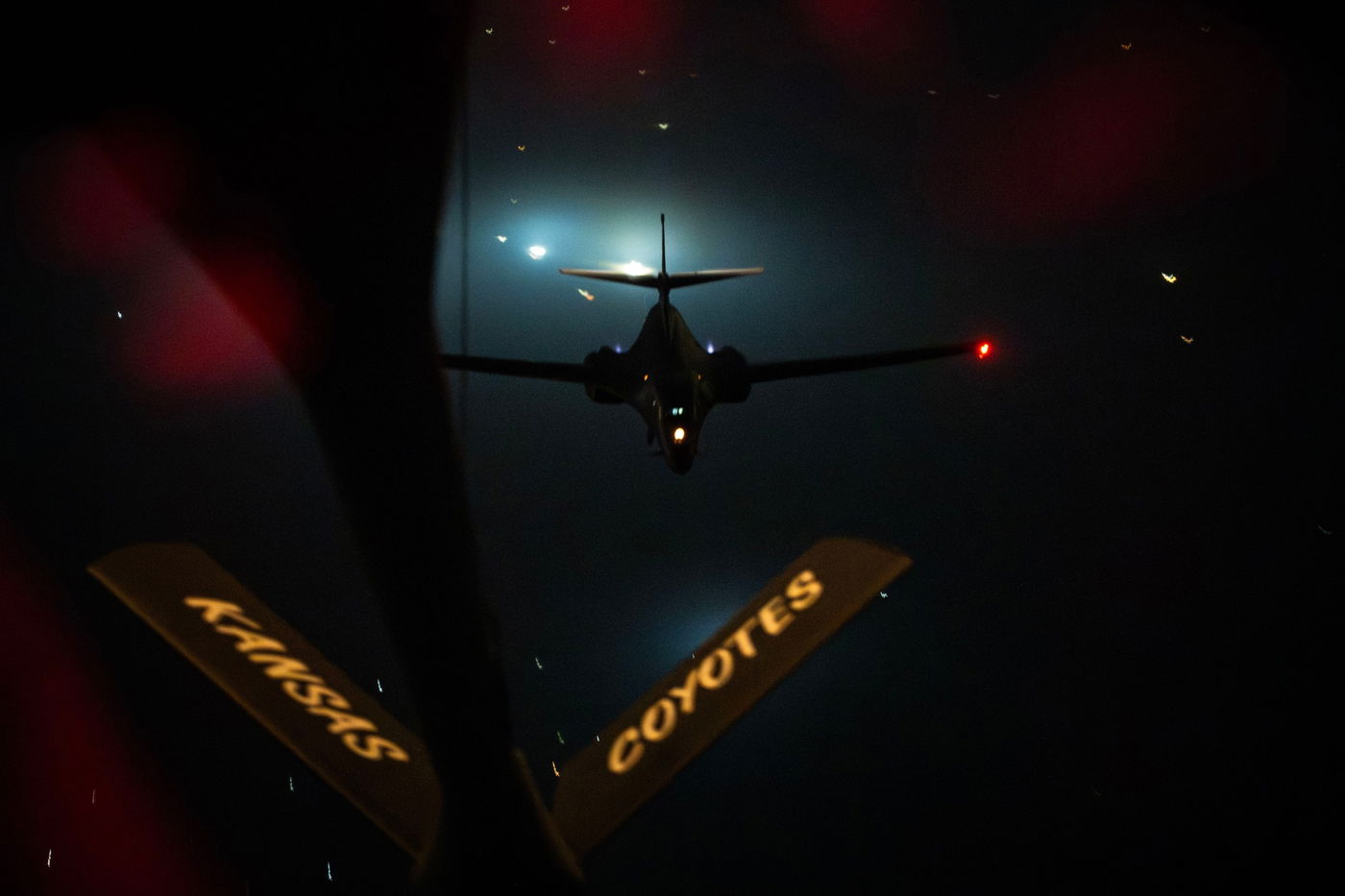
America as an Unpredictable Partner: Why Moscow, Tel Aviv and Paris Read the New Policy...
By October 4, 2026, the main subject of international disputes over the United States was no longer any single White House initiative, but the style of American policy itself: Washington is conducting a dialogue with Moscow, trying to stabilize relations with Beijing after Xi Jinping’s September 23–25 visit, and remaining deeply involved in the conflict with Iran. In Russia, Israel and France, this prompts different emotions, but the overall conclusion is remarkably similar: American power has not disappeared, yet its use is increasingly determined by short-term bargaining, domestic politics and Donald Trump’s personal logic—not by the former system of alliances and predictable commitments.
The most prominent theme in the French debate is the impression that China has learned to benefit from American nervousness. In Le Monde’s analysis of Xi’s visit to Washington, the meeting is described almost as a reversal of the customary hierarchy: it is not China making concessions to the United States, but the White House seeking to “stabilize” relations with a rival that has successfully withstood tariff escalation and is using its control over rare earths, the soybean market and ties with Iran. French authors are particularly sensitive to the contrast between Beijing’s firmness and the Europeans’ caution: in their view, China has shown that with Trump it is more advantageous to resist pressure first and then offer him a politically flattering picture. (lemonde.fr)
This gives rise to a broader French fear: Trump’s America may itself be accelerating China’s rise. Paris commentators see Chinese diplomacy not as an alternative bloc with firm obligations, but as a network of flexible ties with countries of the Global South—trade, infrastructure, arms, technological standards and a promise not to interfere in internal affairs. In a Le Monde column on China’s strategy, this model is contrasted with American military operations and alliances that require political solidarity. From the French perspective, it is particularly important that Beijing does not have to “replace” Washington throughout the world: it is enough for China to appear a calmer, more consistent and less costly partner. (lemonde.fr)
In Israel, the reaction to the same American unpredictability is far more anxious, because it is measured not in prestige but in security. After the war with Iran, Trump’s former image as an unconditionally pro-Israel president has noticeably faded. According to a June survey by the Institute for National Security Studies (INSS), 57% of Israelis believe that Trump supports Israel only as long as it serves his own interests, while just 12% describe him as a leader deeply committed to protecting Israeli interests. This is a striking shift: skepticism is widespread among both coalition voters and opposition supporters. (inss.org.il)
Israeli analysts explain this shift not as anti-Americanism, but as the painful experience of dependence. An INSS analysis of the war with Iran and American policy emphasizes that competing interpretations of Israel’s role have emerged within the U.S. administration itself: some see it as an effective ally and a “force multiplier,” while others see Israel as a country that dragged America into an undesirable conflict. For Tel Aviv, the danger lies not only in criticism, but also in the fact that such interpretations can change rapidly depending on U.S. gasoline prices, the approaching midterm elections and the mood of the Republican electorate. (inss.org.il)
This is precisely where the French and Israeli assessments converge. In France, many believe that Trump changes strategic priorities too easily—from confronting China to conflicts with Iran or Canada. In Israel, there is concern that the same flexibility could one day turn the country’s security from a principle of American policy into a bargaining chip. Both countries observe that the White House is increasingly focused on short-term domestic effects. The French analysis directly links the softer tone toward Beijing to the desire to reduce energy and inflation risks ahead of congressional elections. (lemonde.fr)
The Russian debate is structured differently. In Moscow, today’s America is perceived less as a declining power than as a state with which it is once again possible to speak directly—but only in a pragmatic and conditional language. It is telling that, in the Russian agenda at the beginning of October, an invitation to Vladimir Putin to attend the G20 summit in Miami, meetings between Russian and American representatives, and constant reminders that economic normalization will not happen automatically all exist side by side. In a Vedomosti report published on October 2, Kirill Dmitriev’s and Maksim Reshetnikov’s visits to the United States are described as part of a series of contacts against the backdrop of the American fuel crisis and Trump’s efforts to contain it; at the same time, the Russian side publicly denies that substantive negotiations on lifting sanctions or economic cooperation are already underway. (vedomosti.ru)
The Kremlin’s formula is even clearer: as Dmitry Peskov reported, the United States is linking the resumption of projects with Russia to a settlement in Ukraine. In a Vedomosti report dated October 4, this appears not as a return to prewar normality, but as a negotiating package in which diplomacy, sanctions, energy and the war in Ukraine are traded together. (vedomosti.ru) The Russian view is therefore less romantic than it may appear from the outside: contact with Trump is valuable, but it is not regarded as a guarantee of strategic détente. Moscow sees the United States as a partner willing to make deals, but not one that has abandoned its levers of pressure.
This is the most important difference among the three countries. France sees the weakening of American strategic consistency as an opportunity for China and as an argument for European strategic autonomy. Israel sees it as a risk that the most important security guarantee could become situational. Russia sees a window of opportunity for bilateral bargaining—one that could close just as quickly if Washington decides that the price of an agreement is too high. Yet all three reactions share one idea: today, the allies, rivals and adversaries of the United States must take into account not only America’s power, but also the volatility of its political will. This volatility—more than tariffs, sanctions or individual summits—is becoming Washington’s main export product.

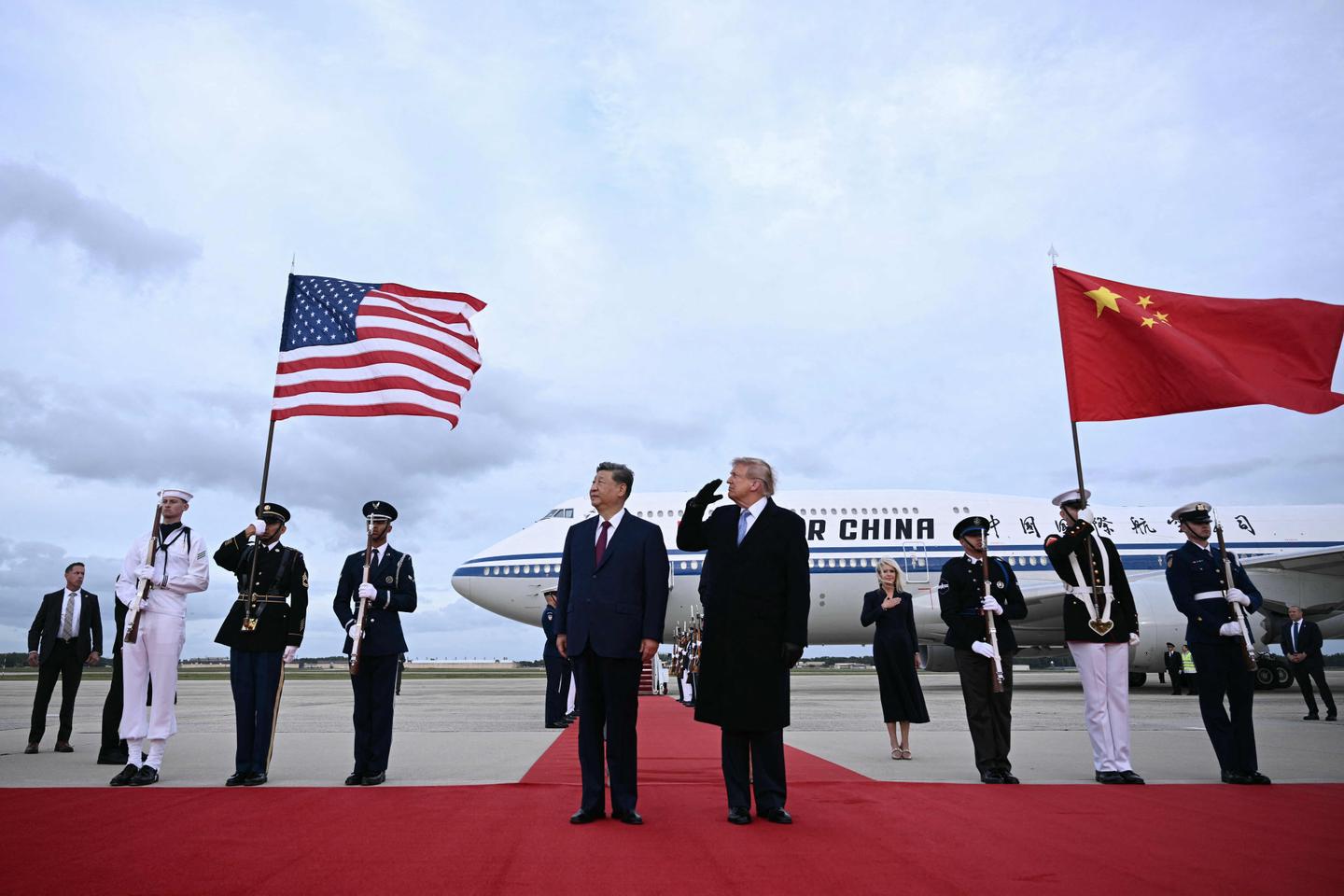

News 04-10-2026
America as an Unreliable Ally: Why France, Israel and Germany Debate the Cost...
In the first days of October 2026, the United States is being discussed in France, Israel and Germany not as a distant superpower, but as a direct source of strategic uncertainty. At the center of attention are Donald Trump’s attempts to find a way out of the war with Iran, his increasingly selective attitude toward allies, pressure on Europe over Greenland and tariffs, and the noticeable intrusion of American politics into partners’ domestic campaigns. The common thread of these debates is simple: Washington remains indispensable, but is no longer seen as a predictable guarantor of order.
The most painful issue for all three countries is the Middle East, although the nature of their concerns differs. In Germany, the main focus is the risk of Europe being drawn into a war that Washington began with maximalist rhetoric but is now trying to end without a clear political result. In a Tagesschau commentary, ARD correspondent Martin Ganslmaier argued that Trump’s more restrained September speech at the UN reflected not diplomatic maturity, but pressure from American voters angered by the war with Iran, rising energy prices and the White House’s foreign-policy chaos. His description of the president as seeking a way out of a “dead end” precisely captures the German perception: the danger lies not only in escalation, but also in the possibility that the United States has no convincing plan for ending the conflict. (tagesschau.de)
In France, the criticism is more normative. Paris is irritated that American policy combines the use of force with disregard for international institutions, while leaving allies to deal with the consequences. French sensitivity is especially evident on the Palestinian issue. In a joint statement with the United Kingdom and Canada on September 8, the Élysée Palace called the expansion of Israeli settlements and settler violence a direct threat to a two-state solution, and announced plans to restrict imports from settlements and impose targeted sanctions. This is not merely a dispute with Israel; it is also a demonstration of an independent policy line against the backdrop of American diplomacy, which, in the French view, sometimes shields Israel and at other times abruptly distances itself from it, depending on Trump’s latest deal. (elysee.fr)
The Israeli reaction is the most paradoxical. Israeli commentators have no doubt that American military and political support remains critically important; what they question is whether a national strategy can be built on the personal closeness between Benjamin Netanyahu and Trump. In a column for Ynet, this calculation is described almost as a roulette loss: Netanyahu, the author argues, placed everything on Trump for too long and discovered that the US president might prefer a compromise with Iran to Israel’s expectation of Tehran’s complete defeat. The most important Israeli conclusion is this: the problem is not the disappearance of the US-Israeli alliance, but its transformation from a stable institution into a variable dependent on one person’s mood and priorities. (ynet.co.il)
This concern is intensified by the situation in the Red Sea. In the Israeli press, American restraint toward the Houthis is being read not as an isolated episode in the war in Yemen, but as a test of the reliability of the entire regional deterrence system. Ynet writes of the risk that the Houthis, by controlling the Bab el-Mandeb Strait, could turn it into leverage against both Israel and global trade. Israel is therefore debating more than missiles or shipping routes: it is trying to determine whether America is truly prepared to defend the established regional order—or whether it prefers to negotiate with those it promised to deter only yesterday. (ynet.co.il)
The second common thread is disappointment with the American alliance as a system of rules. This issue is especially close to the French and Germans because of the January crisis over Greenland, when Trump linked territorial claims with tariff pressure on Europeans. Even after the September agreement between the United States, Denmark and Greenland, the concern has not disappeared: the American side spoke of permanent control over the island’s security, while Copenhagen and Nuuk emphasized the preservation of sovereignty and Greenlanders’ right to self-determination. For Berlin, this became not an exotic North Atlantic story, but a lesson that NATO no longer guarantees an automatic convergence of interests on both sides of the Atlantic. (amp.dw.com)
German debates are therefore increasingly framed not around the traditional question of “how to preserve transatlantic unity,” but around a much tougher one: how to reduce Germany’s vulnerability to American economic and political coercion. In a January analysis for Die Zeit, tariffs against Germany were directly linked to the Greenland dispute; the automotive, engineering and chemical industries were identified as particularly vulnerable. A later assessment by Tagesschau was more measured: some German companies adapted by localizing production in the United States. But that is precisely the unpleasant political result for Berlin: even if an export catastrophe did not occur, American tariffs still force German businesses to move decisions, investments and supply chains wherever Washington directs. (zeit.de)
The French reaction is more emotional and political. Paris sees today’s America not simply as a partner with different interests, but as a power prepared to punish even close allies for publicly disagreeing with it. The story of the French ambassador in Washington became symbolic. As Le Monde reported, the United States delayed the appointment of a new French envoy after a critical French message about Washington’s vote on the mandate of the UN High Commissioner for Human Rights. Paris had to issue what was effectively a conciliatory statement. To the French elite, this is humiliating not because diplomats are incapable of smoothing over conflicts, but because Washington used a routine personnel matter to discipline an ally. (lemonde.fr)
This is where the French and German emphases diverge. In Germany, pragmatic concern prevails: America cannot be replaced quickly, so Europe needs stronger defenses, a unified trade policy and the ability to avoid panicking in response to every American impulse. In France, the language of political dignity and “strategic autonomy” is heard much more often. Former French Foreign Minister Dominique de Villepin, in an assessment cited by Le Monde, framed this as a need for clarity: Europe risks losing its very political essence if it accepts the new American “grammar” of force and coercion. (lemonde.fr)
The third theme is the transformation of American domestic politics into a factor in the domestic politics of its allies. In France, Trump has become not only a foreign-policy problem, but also a mirror for the upcoming 2027 presidential campaign. In a February column for Le Monde, journalist Solenn de Royer noted that his policies—tariff blackmail, claims on Greenland and tough immigration measures—are forcing French parties to take positions not in an abstract debate about “Trumpism,” but on the rule of law, migration and attitudes toward state power. The American example functions in France both as a temptation for some on the right and as a warning to centrists and the left. (lemonde.fr)
In Israel, American influence is even more direct: it is woven into the election campaign ahead of the Knesset elections on October 27, 2026. Trump recently refused to publicly support Netanyahu, saying that he did not know whom he would find it easier to work with, and separately rejected claims that the Israeli prime minister had received advance warning of the Hamas attack on October 7, 2023. In the Israeli reading, this is not neutrality, but a signal: the White House does not want to tie itself unconditionally to a candidate whose political future has become uncertain. (mako.co.il)
The most unexpected local observation comes from Israel itself. A poll by the Israel Democracy Institute shows that only 41% of Jewish respondents believe Israel’s security is an important consideration for Trump, compared with 64% in March. This does not mean that sympathy toward the United States has disappeared; it means that the belief that even a friendly president will necessarily act primarily in Israel’s interests is eroding. (idi.org.il)
A new international picture is taking shape. France responds to America in the language of sovereignty and law, Germany in the language of reducing dependence and institutional safeguards, and Israel in the language of existential necessity mixed with bitter distrust of personal diplomacy. But all three countries agree on the essential point: Trump’s United States remains too powerful to ignore and too unpredictable to rely on unconditionally.
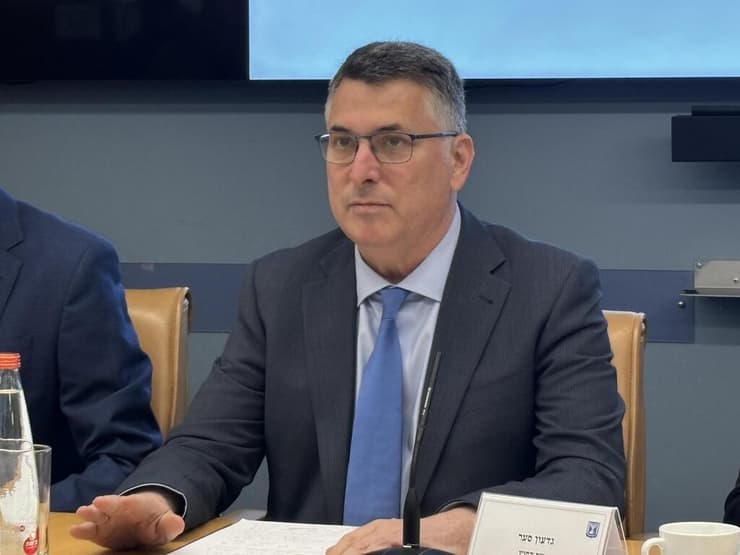
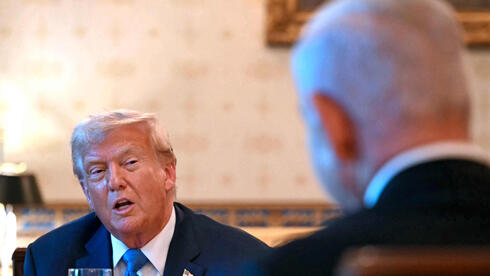
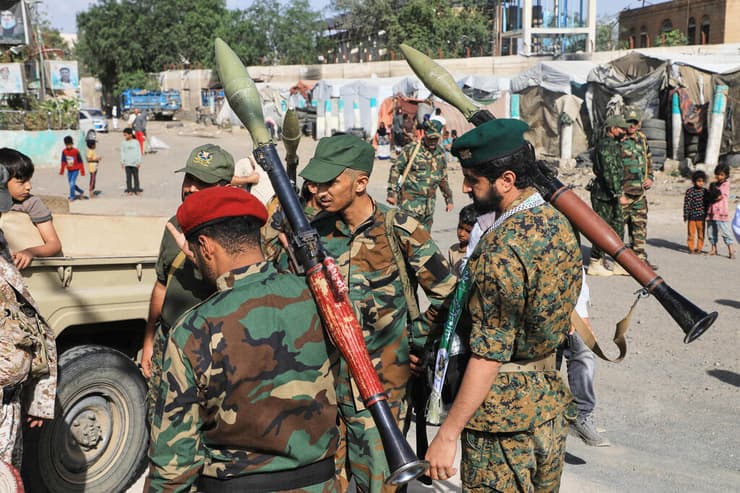
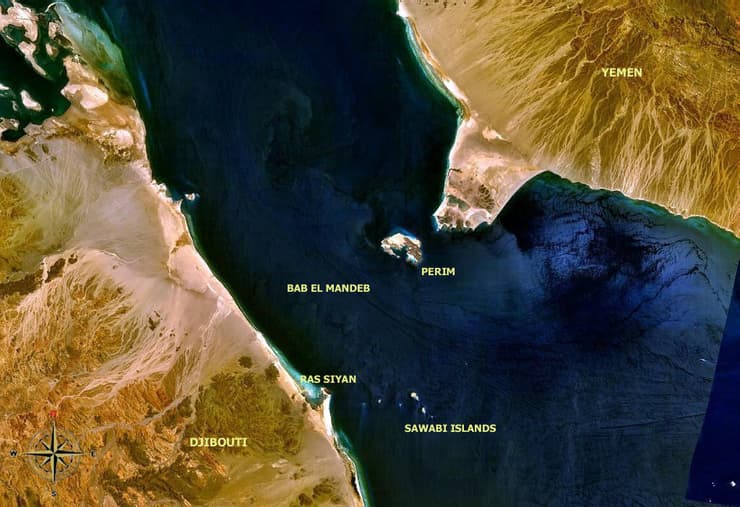
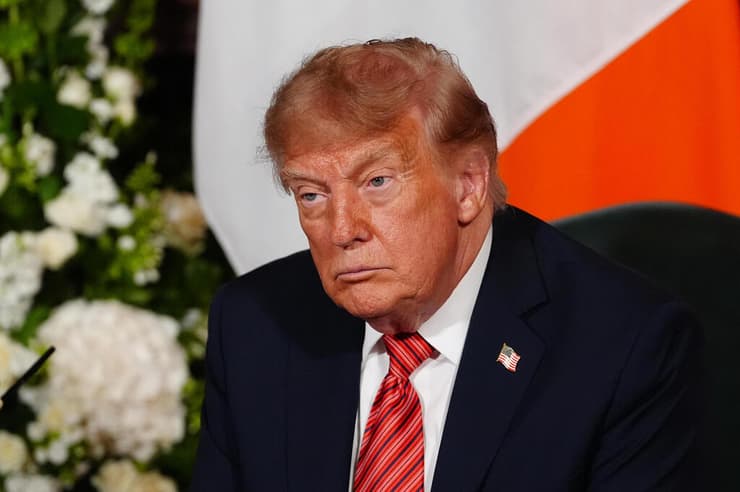
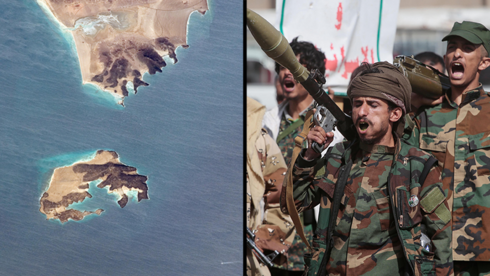
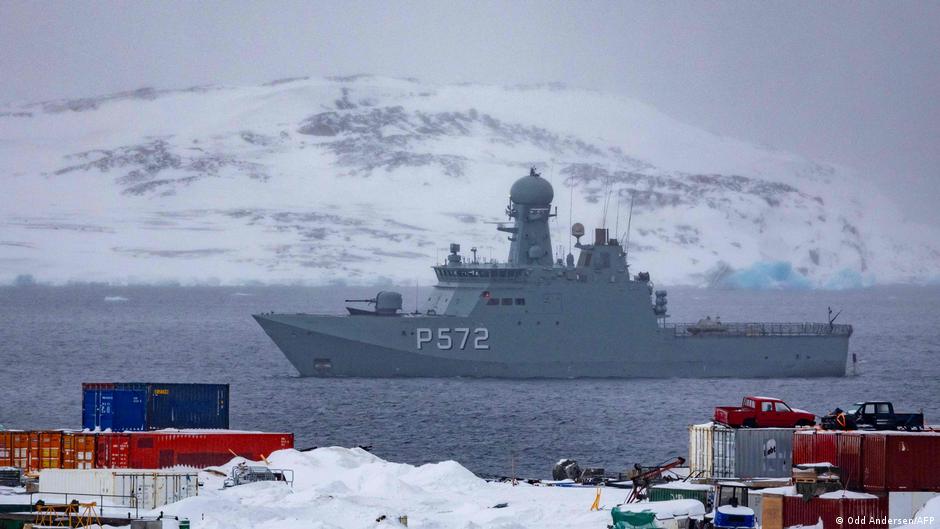


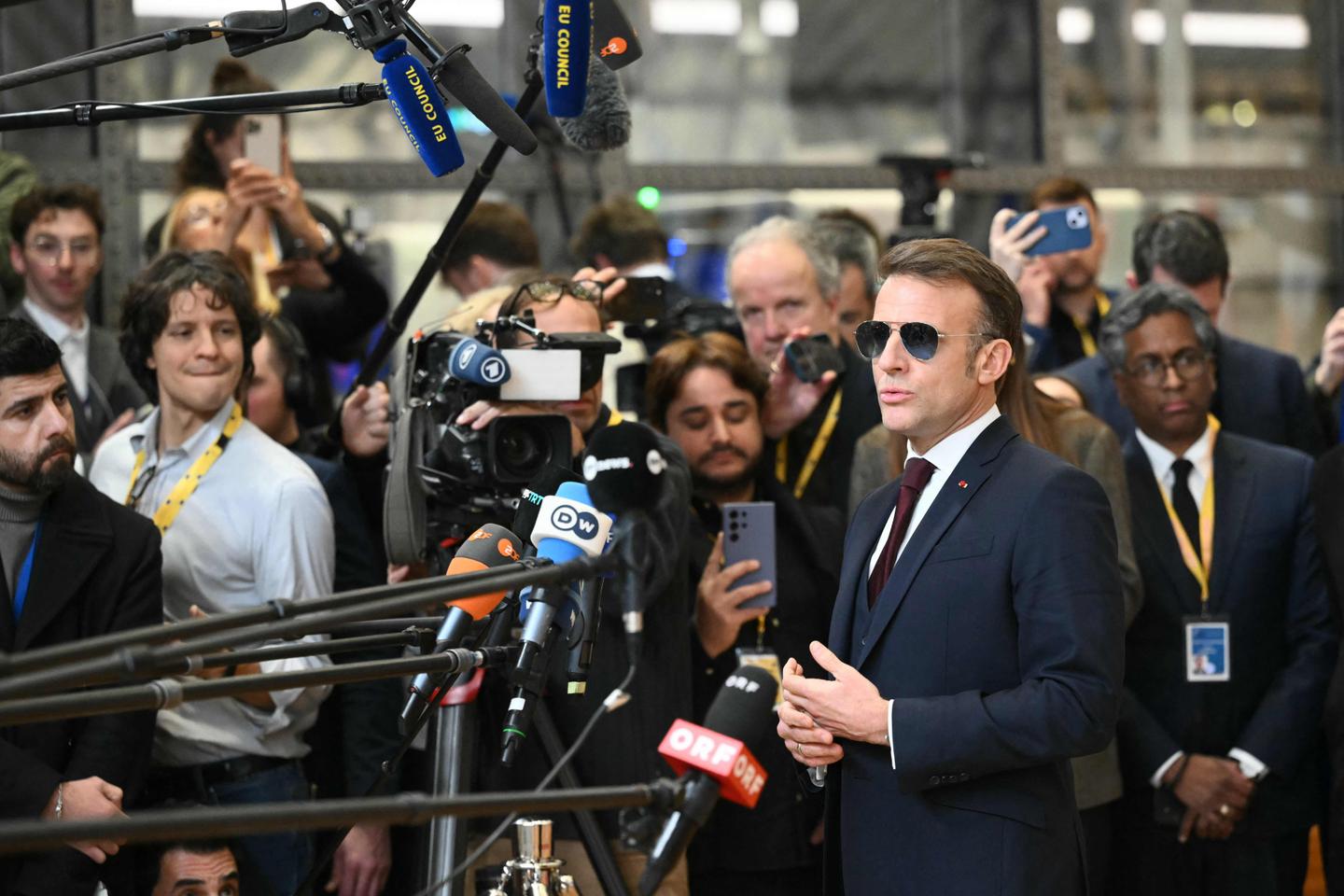
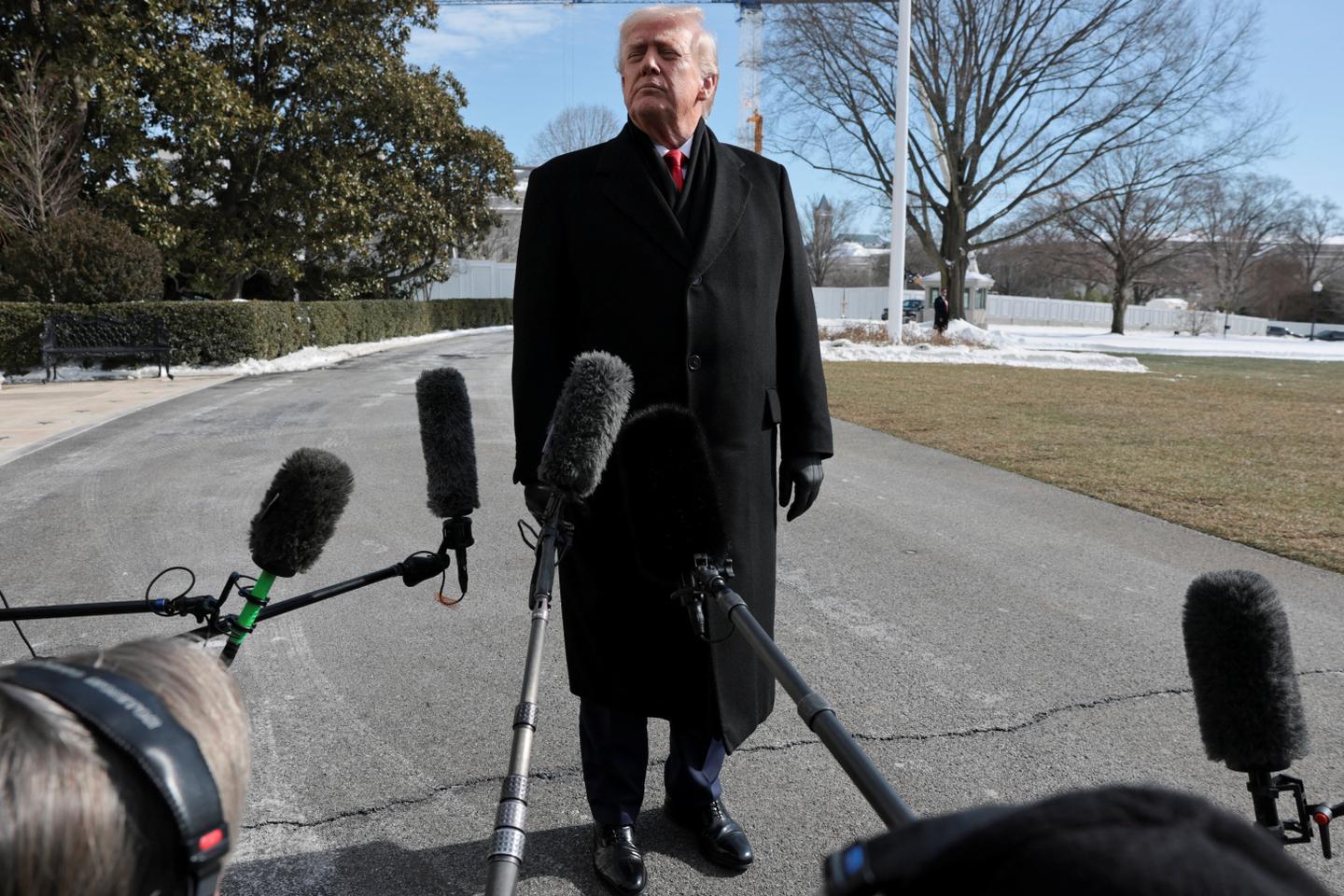
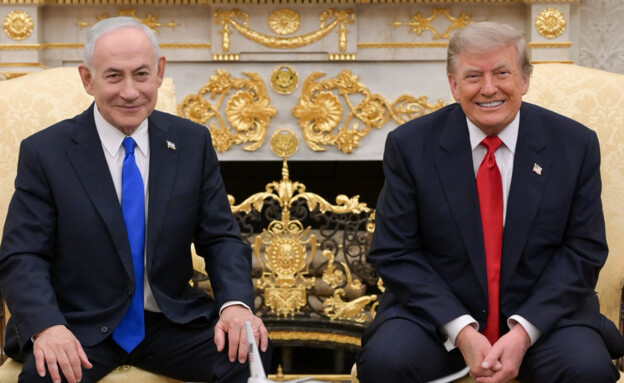
The United States and Middle East Crises
Turkish media view Washington’s policy as a key, though not always reliable, factor in Middle Eastern conflicts. According to these reports, Israel may need to revise its strategy if American support weakens, while the Houthis are seen as an Iranian tool in negotiations with the United States. At the same time, there are concerns that Washington’s close alliance with Tel Aviv could create political costs for other countries. The German press reports a practical response to U.S. pressure: G7 countries have reportedly agreed to release oil reserves. This overview is based on materials from Yeni Şafak (Turkey) and Süddeutsche Zeitung (Germany).
U.S. Policy on Israel Could Hurt Republicans
Support for Israel and Washington’s involvement in the conflict with Iran could become a serious domestic political risk for the Republican Party ahead of the November 3 elections. This is the conclusion reached by columnist Abdullah Muradoğlu in a column for the Turkish newspaper Yeni Şafak, which examines U.S. Middle East policy through the lens of its cost to American voters.
The author argues that Donald Trump’s administration has gone far beyond diplomatic, financial, and political support for Israel. In his assessment, the United States has effectively assumed the military, economic, and political consequences of a conflict described in the article as “Israel’s war.” Muradoğlu believes this situation is provoking irritation not only among independent voters but also among part of the traditional Republican electorate.
As a historical parallel, the article cites the 2006 midterm elections. At the time, Republicans suffered losses amid the Iraq War and a sharp rise in fuel prices. The author quotes Republican Senator Steve Daines, known for his support of Israel: “Back then, six out of 10 Americans opposed the Iraq War. Gas prices doubled. Sound familiar? In the end, we lost six seats.”
For a Turkish audience, the parallel with Iraq carries particular significance. In Turkey, the U.S. invasion of that country is often viewed as one of the key sources of regional destabilization: it was accompanied by the destruction of a neighboring state, waves of refugees, heightened security threats, and long-term consequences for the entire Middle East. Against this backdrop, the current escalation around Iran is seen not as a distant crisis but as a factor directly affecting Turkey’s border security, energy markets, and the state of the regional economy.
Muradoğlu also points to the gap between Trump’s campaign rhetoric and his current foreign-policy course. Trump came to power as a “peace president,” criticized neoconservatives, opposed costly overseas interventions, and said he intended to focus U.S. policy on the Western Hemisphere. However, according to the author, by starting a war with Iran, he chose the exact opposite path.
This assessment fits with widespread criticism of American interventionism in Turkey. From this perspective, Washington’s decisions in the Middle East are explained less by the defense of the international order or U.S. national interests than by Israel’s influence and that of pro-Israel political circles in the U.S. capital. The author insists that dependence on this course is forcing the United States to bear the costs of conflicts from which Israel benefits above all.
According to the column, dissatisfaction with the war is supported by an AP/NORC poll. The figures cited indicate that 71% of Americans disapprove of the way Trump is conducting the war against Iran together with Israel, while 69% believe the war was not worth the costs incurred. At the same time, more than half of respondents, according to the article, report that the overall economic situation, as well as the condition of the national and local economies, has worsened since Trump took office.
The combination of military conflict, fuel costs, and voters’ everyday well-being is becoming crucial to the Republicans’ political prospects. Rising energy prices and a sense of economic instability could make foreign policy part of the domestic electoral agenda—just as happened in 2006.
The author sees a separate contradiction in the actions of pro-Israel Republicans. Even while warning of possible electoral losses, politicians such as Daines continue to support legislative and political initiatives aimed at protecting Israel. In Muradoğlu’s view, Democrats may exploit this inconsistency during the campaign, portraying Republicans as a force willing to place foreign commitments above the economic and political interests of their own voters.
The Yeni Şafak column does not claim to offer a neutral news analysis of the U.S. elections. It is a political interpretation reflecting a critical Turkish view of the U.S.-Israeli alliance. It presents a possible Republican defeat as the price of ignoring public dissatisfaction with the war, rising costs, and Washington’s involvement in yet another Middle Eastern conflict.
G7 to Release 100 Million Barrels of Fuel Amid Iran War
G7 countries have agreed to release 100 million barrels of oil and diesel fuel from strategic reserves in an attempt to contain the effects of the war with Iran on the global energy market. According to Süddeutsche Zeitung, the decision was made amid “unprecedented volatility in oil markets” and a sharp rise in fuel prices.
Supplies are to begin immediately and continue for four months. Particularly large volumes of diesel are planned to be released onto the market during the program’s first 20 days. Coordination will be carried out through the International Energy Agency, which should prevent fragmented national measures and preserve the principle of collective energy security.
The current release of reserves follows a record intervention in March, when countries had already sent 400 million barrels onto the market in response to the consequences of the war with Iran. The new step shows that previous measures were insufficient to bring about a sustained reduction in tensions: the risks of supply disruptions and price spikes remain high.
The decision is especially significant for Germany. Europe’s largest industrial economy is particularly vulnerable to shortages and rising diesel prices, as road freight, logistics, agriculture, and parts of industrial production depend on the fuel. For Berlin, this is not only an expression of allied solidarity but also an attempt to protect the domestic economy from a new energy shock after the painful experience of dependence on Russian gas and the price instability of recent years.
The political context of the decision is also linked to pressure from the United States. President Donald Trump welcomed the agreement, saying that Europe had agreed to immediately release substantial volumes from its “well-stocked” diesel reserves. For Washington, lower fuel prices also have domestic significance: they could affect voter sentiment ahead of the congressional elections scheduled for November 3.
For European countries, including Germany, the situation highlights the contradiction between their own needs and those of their ally. Lower fuel prices serve the interests of European industry and consumers, but the use of strategic reserves amid U.S. political pressure raises questions about the limits of American influence over European energy policy.
Reserves can ease short-term shortages and curb price increases, but they cannot eliminate the root cause of the crisis—the military conflict and the uncertainty surrounding oil supplies. The G7 decision is therefore both an emergency crisis-management measure and a signal of how limited Western countries’ ability is to offset the consequences of a prolonged war using strategic reserves alone.
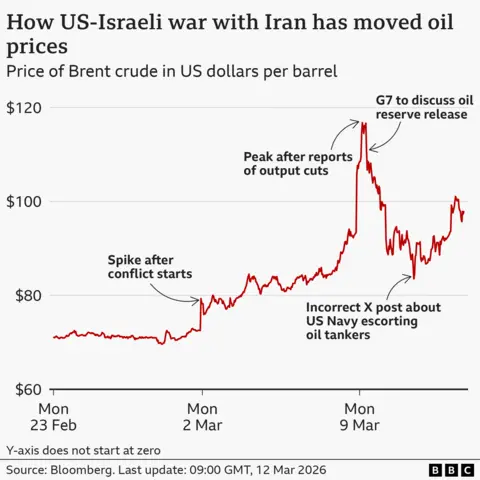


America at War and Bargaining: How Australia, Germany, and Israel Read the October Strategy
As of October 3, 2026, the main American story in Australia, Germany, and Israel is no longer a single statement by Donald Trump or yet another diplomatic gesture from Washington. In the local press, the United States appears to be a power simultaneously trying to wind down the old war in Iraq, keep its new war with Iran under control, and prevent foreign-policy chaos from completely undermining the president’s standing ahead of the November 3 midterm elections. All three countries are debating the same question: does Washington have a strategy—or is it replacing one with a cycle of threats, strikes, and negotiations?
The most prominent common theme is Iran. The Australian reaction is particularly painful because, for Canberra, the conflict ceased long ago to be a distant Middle Eastern drama. In an analysis for ABC, Laura Tingle compares the American withdrawal from Iraq with the current war against Iran and sees an almost mocking historical symmetry. Trump calls the Iraq campaign an “expensive excursion into hell,” yet he himself is waging a conflict that, in her assessment, has already entered its eighth month without a clear end goal. Australia’s concern is not only moral. High fuel prices, growing inflationary pressure, and the risk of further turmoil in energy markets turn America’s military policy into an issue for Australia’s domestic economy. In a September analysis, ABC columnist Alan Kohler directly links Trump’s war with Iran and US tariff policy to short-term inflationary shocks, calling a diplomatic exit the only realistic alternative to further escalation.
Behind this lies a deeper Australian concern: the alliance with the United States, once seen as insurance, is becoming a mechanism for entrapment. Lachlan Strahan, Australia’s former high commissioner to the United Kingdom, expressed the mood in particularly stark terms in The Guardian Australia: traditional allies are “uncomfortable” because Trump launched the war without a clearly defined destination and did not brief his partners on his plans. For Australia, this is not an abstraction. AUKUS, the US military presence, intelligence infrastructure, and deepening operational interoperability make the question not “should Australia support the United States?” but “can Canberra say ‘no’ to the United States at all?” This is what makes the Australian perspective unique: it criticizes not only the war, but also the dependence that makes disagreement with Washington politically and militarily almost impractical.
In Germany, the tone is different, but the diagnosis is similar. German commentators are far less concerned with Berlin’s direct involvement and much more with the collapse of predictability in American policy. The war with Iran is seen as a test for the international order on which Germany depends more than many other countries: for a middle power, rules, institutions, and law are not rhetorical embellishments but compensation for its own limited strength. That is why German discussion is particularly irritated by the difficulty of separating Trump’s military and negotiating tracks. When the president rejects an Iranian proposal, leaves open the possibility of new bombings after the elections, and at the same time speaks of a possible deal, it looks less like flexible diplomacy than the absence of a consistent political objective.
Germany is also closely watching how the war with Iran is returning to American domestic politics. Tagesschau writes about Republican candidates who are beginning to distance themselves from Trump a month before the election. In the German reading, the midterms are becoming not merely a vote on prices and US social policy, but a referendum on the president’s model of power. In a Deutschlandfunk commentary, journalist Anne Reidt calls the very idea of turning the campaign into a plebiscite on Trump risky: the president is not formally running, but he is asking voters to cast their ballots as though his name were on them. For Berlin, this is an important signal: a weakened Trump after the election may be less able to impose his will on allies, but also more inclined toward sharp, demonstrative moves in foreign policy.
The Israeli debate differs because no one here doubts the centrality of American power—the dispute is over whose interests Trump is serving with it and what final configuration he is seeking. Israeli analysts do not automatically regard American threats against Iran as a guarantee of Israeli security. In a Ynet commentary, Eldad Shavit, a former senior member of Israel’s defense establishment, describes the White House’s approach as a combination of military pressure, economic coercion, and negotiations: Trump wants to force Tehran into a deal while avoiding an open-ended war. But Shavit emphasizes the fundamental difference in interests: ending a war does not mean eliminating a threat. For Israel, what matters is not only a ceasefire and freedom of navigation in the Strait of Hormuz, but verifiable restrictions on Iran’s nuclear, missile, and proxy infrastructure.
This explains the most characteristic skepticism in the Israeli press: Washington may regard as a victory an outcome that Israel would see as merely a pause. In another Ynet analysis, Shavit notes that the American president needs a “big,” marketable success, whereas Israel requires a much deeper change in the strategic reality. The divergence matters: the more Trump focuses on the domestic political effect ahead of the election, the greater the risk of an agreement that can be presented to American voters as peace but that Jerusalem would regard as incomplete and potentially dangerous.
The second Israeli story is equally revealing: Trump’s unusual restraint toward Benjamin Netanyahu ahead of Israel’s October 27 election. In a Ynet report on Trump’s interview with Time, the president declined to publicly endorse Netanyahu, saying that he does not interfere in Israeli politics. In a country where the American president has traditionally been capable of becoming almost a domestic political factor, this is perceived as more than a neutral formality. It is a reminder that the alliance with the United States under Trump is personalized but not guaranteed: close relations between leaders do not change the fact that the White House acts primarily according to its own electoral and negotiating timetable.
The withdrawal of American troops from Iraq adds another paradox to the picture. The Australian press sees it as a warning: the United States can declare the end of a “quagmire” without resolving the consequences of its own presence. Germany reads it as a symptom of American weariness with long-term commitments. Israel, meanwhile, views it through the prism of Iran’s allies in Iraq and the possibility of a security vacuum. Trump himself is trying to present the troop withdrawal as proof of strength and as a correction of the mistakes of previous administrations, but placing this decision alongside the deployment of additional forces to the Middle East undermines the image of consistent isolationism. America is not leaving the region; it is changing the form of its presence—from a long-term mission to more abrupt, less predictable, and more politically theatrical interventions.
This produces a common Australian-German-Israeli conclusion, although each country reaches it for its own reasons. In Canberra, there is fear of losing sovereign choice within an alliance that has become too close. In Berlin, there is concern that American improvisation is weakening the order on which Europe’s security rests. In Israel, there is concern that America’s search for a quick political result will not align with the need for the long-term containment of Iran. The United States remains an indispensable player for all three countries, but it no longer appears to be a predictable leader. This duality—the necessity of America and growing distrust of the way it applies its power—is today the main international response to Washington.



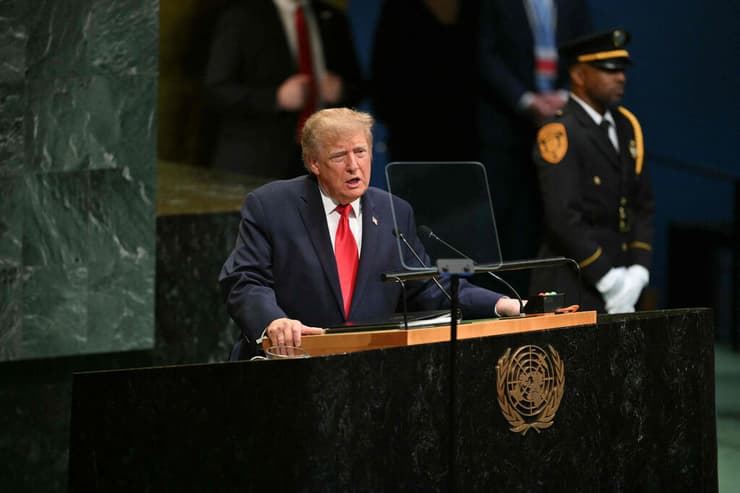
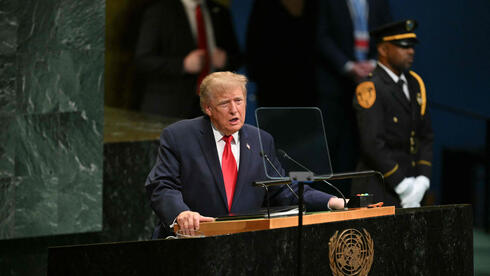

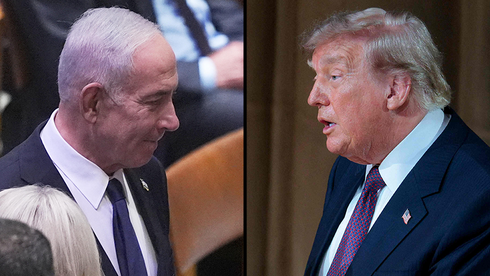
News 03-10-2026
America as a Source of Conditions: Why South Africa, India and Germany Are Increasingly Talking Not...
By October 3, 2026, discussion of the United States in South Africa, India and Germany has been united not by a single event, but by a single sentiment: Washington is increasingly seen as a partner that offers negotiations and applies pressure at the same time, changing the rules depending on the deal at hand. In India, this is particularly evident against the backdrop of a US law allowing tariffs of up to 100% on major buyers of Russian energy; in South Africa, because of visa restrictions, tariffs and a political dispute over land reform; and in Germany, following Donald Trump’s conspicuous intervention in the issue of the AfD’s success and growing concern that the fate of the European economy once again depends on US-China bargaining. It is not anti-Americanism as such, but distrust of America’s unpredictability that has become the common thread running through these reactions. (mg.co.za)
The main theme shared by all three countries is the transformation of trade and access to the US market into instruments of foreign-policy coercion. In India’s debate, the new sanctions law is read not simply as punishment for Russia, but as an attempt to force New Delhi to choose between energy security and exports to the United States. The Indian Express analysis highlights a paradox: the US-China truce has been extended, but India remains under threat of tariffs because of its purchases of Russian oil. This is particularly painful for New Delhi amid a tight global energy market: quickly replacing large volumes of inexpensive crude would mean higher domestic costs and greater economic vulnerability. India’s view is therefore noticeably more pragmatic than the rhetoric of a “values-based partnership”: an alliance with the United States is needed to balance China, but it must not mean giving up the right to choose energy suppliers independently. (indianexpress.com)
South Africa’s reaction is sharper still, because its dispute with the United States concerns not only tariffs but also the country’s painful domestic history. Pretoria sees US pressure as an attempt to link trade and visa measures to abandoning policies of economic redress after apartheid, land reform and South Africa’s position in the genocide case concerning Gaza at the International Court of Justice. In an interview with Mail & Guardian, International Relations Minister Ronald Lamola described what is happening as effectively a “diplomatic war” built on “fabrications and outright lies.” This is not merely a diplomatic outburst: in the South African interpretation, the US program to accept white Afrikaners as refugees turns the country’s old racial trauma into an instrument of external pressure. (mg.co.za)
This gives rise to a distinctly South African argument that is almost absent from American debates: the issue is not whether ANC reforms are useful, but whether a foreign power can determine how the country should remedy the consequences of colonialism and apartheid. The Thabo Mbeki Foundation warns that abandoning redress policies—that is, measures aimed at overcoming historically created racial and economic inequality—could deepen rather than ease social divisions. Thus, in the South African perception, American criticism of land reform becomes not a defense of property rights but interference in an unfinished national compromise. (mg.co.za)
In Germany, the American factor is discussed differently, but the logic is the same: concern is driven by the mixing of foreign policy, commerce and ideological pressure. After the AfD’s victory in elections in Saxony-Anhalt, Trump publicly congratulated the party and accompanied his message with the slogan “MGGA”—“Make Germany Great Again.” Chancellor Friedrich Merz replied that interference in German affairs was unacceptable. As ZDF notes, for Berlin this was not simply an eccentric message from the US president, but an unpleasant signal: the White House is prepared to publicly encourage forces that challenge Germany’s postwar political consensus. (zdfheute.de)
But German anxiety is not limited to domestic politics. The Trump–Xi Jinping summit in Washington became a symbol in Germany of a world in which key decisions are made by two superpowers while Europeans pay the price for the consequences. In a Handelsblatt commentary, the meeting is interpreted as posing a risk of a new escalation in trade confrontation, while economists and industrialists fear not so much an immediate rupture as chronic uncertainty: German exports and production chains are deeply connected to both the US and Chinese markets. The state agency Germany Trade & Invest had previously stated explicitly that US-China relations mean no relief for logistics and supply chains for German businesses, even when the leaders display conciliatory symbolism. (gtai.de)
India’s assessment of the same summit is particularly revealing. New Delhi saw plenty of ceremony—the meeting with Xi at the foot of the aircraft stairs, the state banquet and talk of “friendship”—but few guarantees for countries located near the arena of rivalry. Extending the US-China trade truce until January 2027 gives the two giants time to maneuver, but does not eliminate the risks surrounding Taiwan, technology, rare-earth metals and sanctions policy. Indian authors draw attention to the asymmetry: China negotiates with Washington as a rival of comparable scale, while India is simultaneously needed by the United States as a strategic counterweight to the PRC and subjected to American tariff pressure. (indianexpress.com)
This is where the three local perspectives converge. South Africa wants external partnerships not to turn into control over its domestic order; India wants strategic cooperation not to require surrendering its energy sovereignty; and Germany wants the transatlantic alliance not to become a channel for pressure on its democratic politics and industrial model. Their responses differ: Pretoria speaks the language of anticolonial autonomy, New Delhi that of multi-aligned pragmatism, and Berlin that of European self-reliance. But the conclusion is the same: America remains too important to distance oneself from, and too unpredictable to rely on without a safety net.
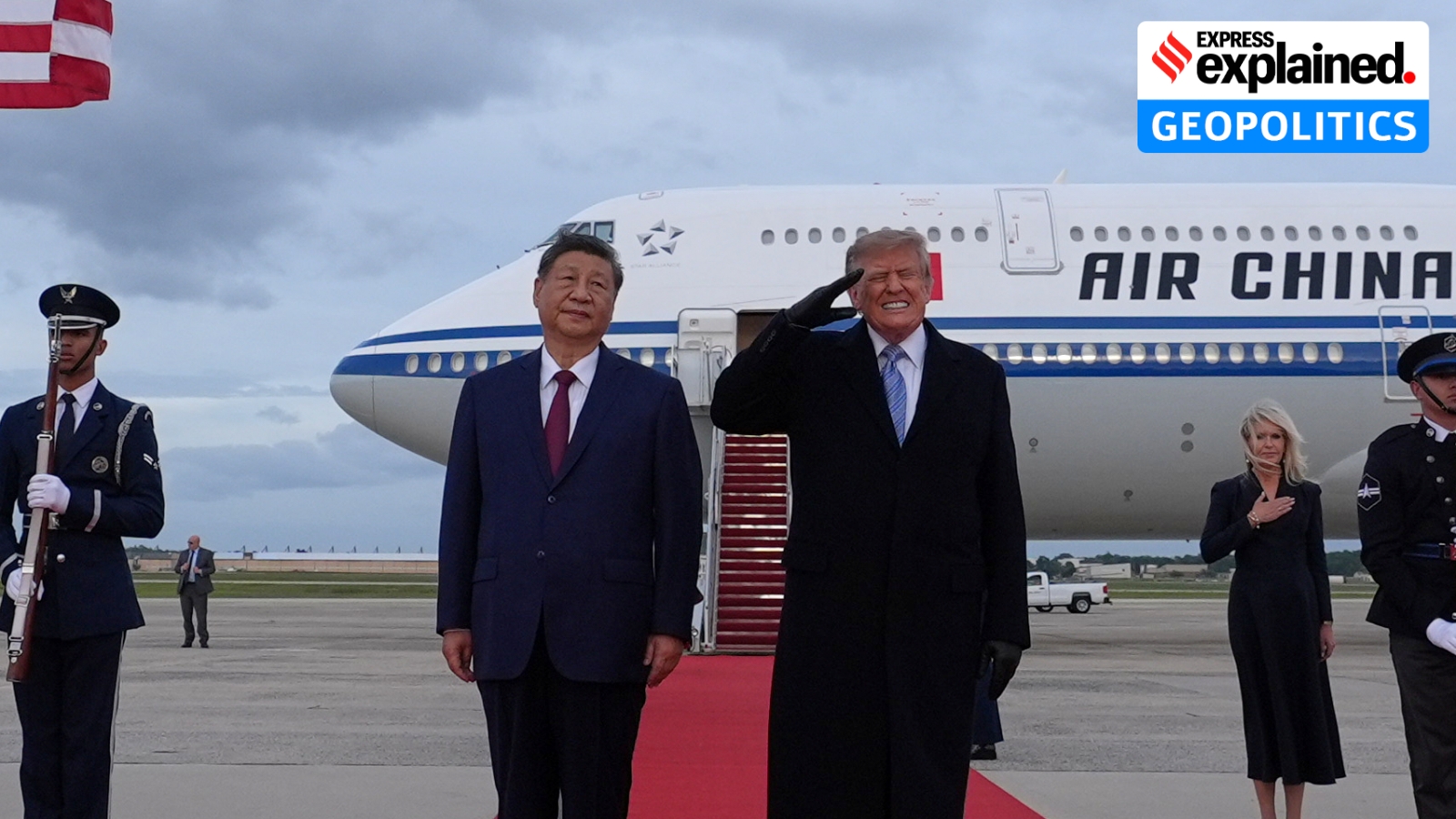

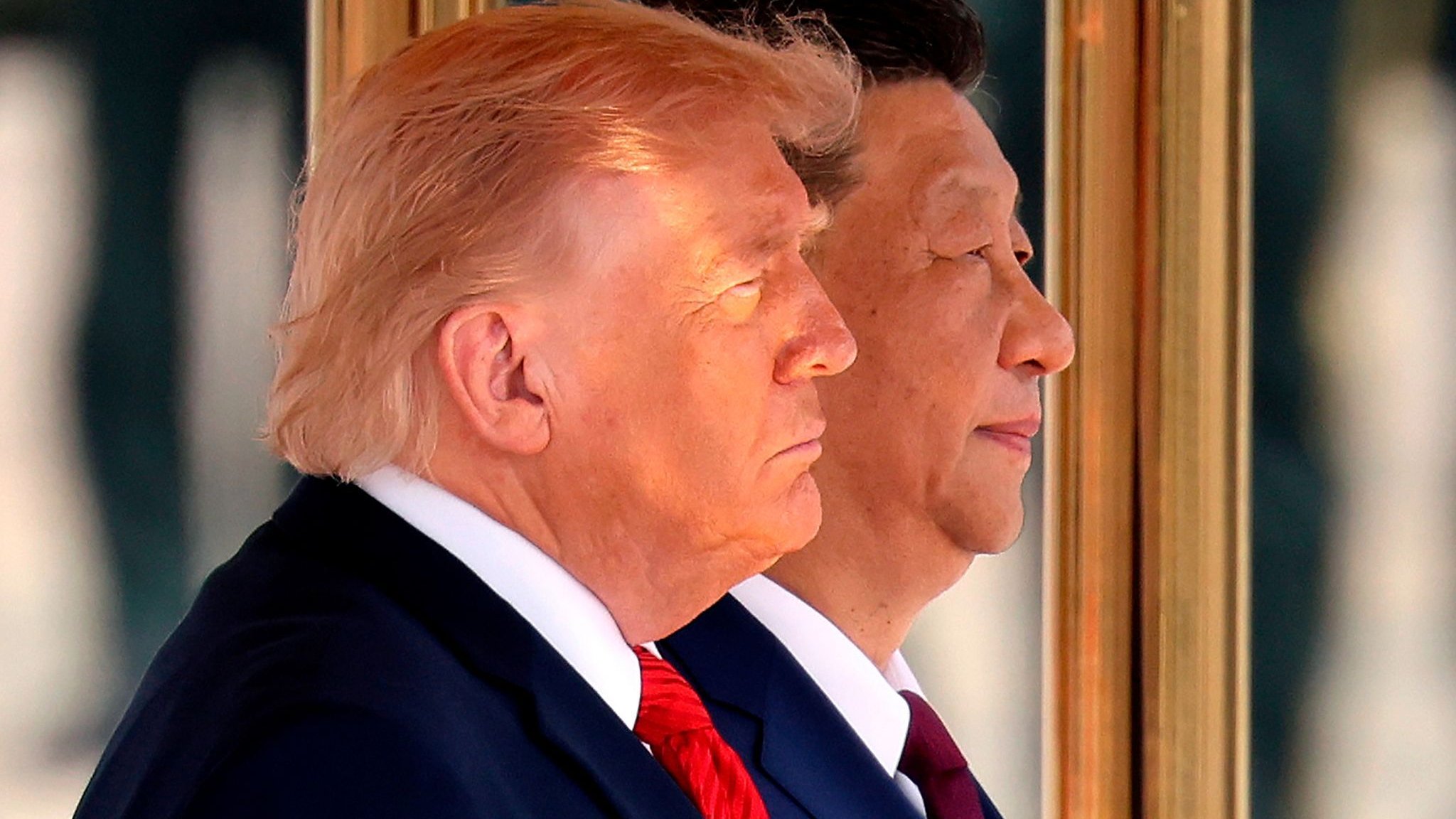
America as a Source of Uncertainty: What Russia, Ukraine and France Think About the New...
At the turn of September and October 2026, the United States is being discussed outside its own borders not so much as the familiar guarantor of the Western order, but as a power simultaneously waging war on Iran, bargaining over Ukraine’s future, and redefining the limits of what is acceptable within NATO. In Russian, Ukrainian and French commentary, the subjects differ in their immediate importance, but they share one perception: Washington’s decisions have become less predictable, and the cost of that unpredictability now falls on allies, opponents and global markets.
The broadest common theme is the American campaign against Iran and the blockade around the Strait of Hormuz. In France, it is described above all as a strategic impasse for the United States. In a Le Monde analysis, Trump’s policy is reduced to a formula of “neither war nor peace”: Washington has achieved neither regime change nor a clear agreement, but is shifting the conflict into the economic sphere—sanctions, pressure on trade and threats to energy markets. The French perspective is characteristic here: what matters is not only Iran, but also the erosion of rules. The Paris press sees American power unsupported by a diplomatic objective not as a solution to the problem, but as a mechanism for perpetuating it.
This is particularly evident in assessments of American public rhetoric. An editorial analysis by Le Monde of Trump’s first 100 days of statements records a constant shifting of goals—from destroying Iran’s nuclear program to hints of regime change and then back to negotiations. Columnist Gilles Paris speaks of “an element of improvisation” masking strategic dead ends. French concern, therefore, is not reducible to pacifism: it is the concern of an ally for whom American leadership is becoming synonymous with political risk. It is no coincidence that France is simultaneously joining the United States, Britain and Germany in pressuring Iran through the IAEA, while French commentators doubt that Washington’s military and sanctions policy can produce a lasting result.
In the Russian-speaking expert community, the same war generates an almost opposite, but no less skeptical, calculation. In Nikita Smagin’s commentary for Carnegie Politika, the US strike on Iran is interpreted as a demonstration of “might makes right,” which at the same time destroys the Kremlin’s hopes for a fundamentally different, more negotiable Trump world. In practical terms, however, Moscow benefits from prolonged uncertainty: high oil prices support the budget, Western attention is diverted from Ukraine, and an isolated Tehran becomes even more dependent on Russia. In a later assessment, Smagin explicitly calls the smoldering US-Iranian conflict the optimal scenario for the Kremlin: a full peace would lower oil prices and weaken Russian influence in Iran, while a major war would carry too many risks. This duality is one of the important Russian perspectives rarely visible in the American debate: Moscow benefits neither from an Iranian victory nor from a US defeat, but from a manageable crisis between them.
For Ukraine, the Iran issue matters in a different way. Kyiv does not view it as a separate Middle Eastern drama: it is another test of whether the United States can avoid dispersing its resources and political attention at a time when the war in Ukraine remains unresolved. That is why Ukrainian reactions to American foreign policy in recent weeks have focused not on Trump’s grand statements, but on concrete guarantees—air defense, weapons production and diplomatic pressure on Russia. Following talks between Zelensky and Trump in New York, Kyiv officially emphasized work on launching production of Patriot interceptor missiles in Ukraine, as stated in a statement from the Office of the President of Ukraine. The choice of emphasis is telling: the Ukrainian side measures the quality of its relationship with Washington not by declarations about peace, but by whether protection for its cities will be available before winter.
Ukrainian commentators assess the current “warming” of relations with cautious optimism. European Pravda writes that the meeting gave Kyiv a diplomatic advantage: Trump did not announce new restrictions on strikes against Russian infrastructure, and the tone of the American administration became less hostile. However, this has not turned into trust. Behind the outward improvement in relations lies an uncomfortable fact for Ukraine: the White House continues to view the war as a problem to be settled between leaders, while Kyiv demands a peace that rules out a repeat of Russia’s attack. The Ukrainian perspective is the most down-to-earth of the three: not “what world order is Trump building?” but “will his desire for a quick deal create a pause followed by another war?”
French commentators, by contrast, link the Ukrainian issue to a broader critique of Trump’s personal diplomacy. In Alain Frachon’s column, the paradox is formulated as follows: the US president treats traditional allies more harshly than authoritarian leaders whom he calls friends. For a French audience, this is not merely a psychological portrait of Trump. It explains why Europeans have to rely on their own strategic agency: Washington’s personal closeness with Moscow means neither peace in Ukraine nor greater security for Europe.
A third line, especially visible in Russia and France, concerns Greenland and the Arctic. The agreement signed by the United States, Denmark and Greenland on September 22 removed the immediate threat of an open conflict within NATO, but did not resolve the question of what price an ally may pay to pursue strategic control. In France, this is viewed as a troubling precedent. Le Monde notes that the agreement was concluded through a more traditional diplomatic process, but French authors warn that Greenland’s ability to choose industrial and financial partners now depends to a considerable extent on Washington’s consent. In other words, abandoning direct annexation does not mean abandoning asymmetric control.
Russia’s official reaction has been demonstrably more restrained. Dmitry Peskov said that interaction between Russia and the United States in the Arctic was not on the agenda, as reported by Vedomosti. Russian analytical texts, however, interpret the agreement as an expansion of American military and intelligence capabilities near Russia’s northern borders. Here Moscow faces an uncomfortable reality: publicly, it can portray the dispute over Greenland as evidence of a split in the West, but the practical result is a denser American presence in the Arctic and the closure of the island to military infrastructure belonging to countries outside NATO.
An unusual international picture is thus taking shape. France sees the United States as an ally undermining confidence in its own alliances; Ukraine sees it as an indispensable partner whose promises must be turned into Patriot missiles and genuine commitments; Russian observers see both tactical benefits and a long-term threat in America’s crises. The common conclusion is not that America is “withdrawing” from the world. On the contrary, it is too actively present in it—but increasingly through pressure, personal deals and abrupt shifts. That is why Paris speaks of the need for European autonomy, Kyiv demands verifiable guarantees, and Moscow prefers American conflicts to continue long enough to yield benefits, but not so long that they slip out of control.


News 02-10-2026
America’s Ultimatum to Europe and Israel’s Anxiety: How Germany, Russia and Israel Read the New...
Over the past two days, the image of the United States in German, Israeli and Russian discussions has taken shape around the same cluster of issues: the war and uncertainty surrounding Iran, the shipping crisis in the Strait of Hormuz, expensive diesel and Washington’s willingness to shift the costs of its policies onto its allies. In Germany, this is seen primarily as a test of economic resilience and the reliability of transatlantic commitments. In Israel, it is viewed as a dangerous moment in which Donald Trump’s desire for a “deal” may conflict with Israel’s demand for irreversible restrictions on Iran. In Russia, it is seen as evidence that American foreign policy is increasingly subordinated to domestic fuel prices and bargaining across a broad range of issues, from the Middle East to Ukraine.
The most resonant story is the US demand that Germany and France release emergency diesel reserves. According to German media reports, the Trump administration has made it clear that if Europe does not send more reserves to the market, Washington may restrict American diesel exports. A Deutschlandfunk report explicitly links this to the White House’s desire to sharply reduce fuel prices in the United States ahead of the November midterm elections. In German public discourse, this is already being described not as allied coordination, but as pressure: t-online used the word Erpressung—“blackmail”—in its headline.
The German reaction is especially painful because Berlin itself is experiencing fuel stress. According to Tagesschau, on October 1, a liter of diesel in Germany cost an average of €2.39, compared with €1.75 before the start of the war with Iran. For Germany, diesel is not merely a motor fuel: it is critical to logistics, industry and some heating systems. The government’s decision to subsidize gasoline and diesel again through a “tank discount” is therefore seen as a forced defensive measure rather than an energy strategy. Monika Schnitzer, an economist and member of the Council of Economic Experts advising the government, called the measure “an expression of political desperation” in an ARD analysis. (tagesschau.de)
Behind the dispute over reserves lies a deeper German anxiety: the United States, on which Europe depends as a supplier of fuel and military power, is now using that dependence as a negotiating tool. A geo-economic analysis by Süddeutsche Zeitung notes that Berlin, Paris, London and the European Commission are already coordinating their response, while Brussels is trying to persuade the United States to act jointly rather than through threats. This is an important shift: the German debate is not limited to whether the reserves should be released. It is about whether Europe has the right to preserve strategic reserves for an even worse crisis—or is obliged to spend them for the sake of the American president’s pre-election stability. (sueddeutsche.de)
In Israel, the same crisis looks entirely different. The main concern there is not diesel, but the political cost of a possible US-Iran agreement. Israeli analyst Eldad Shavit, a former military intelligence officer and senior researcher at INSS, stated the dilemma clearly in a column for ynet: Trump needs an agreement that would allow the war to end, while Israel needs an agreement that would prevent Iran from restoring its nuclear program, missile infrastructure and military capabilities. His conclusion—that ending the fighting by itself does not eliminate the threat—reflects significant distrust of diplomacy unless it is accompanied by verifiable restrictions and an enforcement mechanism.
This anxiety is intensifying amid new signs that the United States is preparing for a military scenario. Israeli media reported on October 1 that the aircraft carrier Theodore Roosevelt and an additional Marine unit were being sent to the region, while Trump was considering resuming large-scale operations against Iran as early as next month. At the same time, the US president himself called Iran’s conditions for reopening the Strait of Hormuz “not good enough” and, when asked about possible escalation after the elections, replied: “possibly.” (ynet.co.il)
However, there is also a paradox in Israel’s view of Washington. The United States remains Israel’s indispensable military backer, but its desire to avoid becoming bogged down in another major war creates the risk of a deal that Jerusalem would consider premature. Shavit stresses that, for the White House, military threats, economic pressure and negotiations are elements of a single strategy; for the Israeli establishment, this could mean that American pressure will be used not to eliminate the threat completely, but to reach a politically advantageous compromise. (ynet.co.il)
The Russian reaction focuses on another aspect of the same picture: energy is turning international conflict into a bargaining arena in which the United States is acting not as a selfless coalition leader, but as a country protecting its own market. In an analysis by Vedomosti, Alexey Belogoryev, director of research at the Institute for Energy and Finance, notes that the United States accounts for a significant share of global diesel exports, while restrictions on supplies would hit the already undersupplied European market first. The Russian view is therefore less sympathetic toward the Europeans: Moscow sees the diesel dispute as confirmation of its long-standing argument that American guarantees are unreliable and that the West’s sanctions and energy architecture can turn against the Europeans themselves. (vedomosti.ru)
At the same time, the Kremlin is trying to separate relations with the United States from a settlement in Ukraine. On October 1, Dmitry Peskov said that Moscow would prefer not to wait for the conflict in Ukraine to end before resuming economic cooperation with America: according to him, major joint projects would benefit “both Russia and America.” In an Interfax report, this position is presented as a practical response to Washington’s linking of business and politics. The Russian official line is notable here: it does not imply any imminent trust in Washington, but offers the United States the logic of a deal—cooperation wherever it produces benefits, even while fundamental disagreements over Ukraine remain. (interfax.ru)
It is precisely at this intersection that the difference between the three countries becomes especially clear. Germany is asking whether its alliance with the United States is becoming an economic vulnerability. Israel fears that, in order to exit the war, America may agree to an insufficiently strict compromise with Iran. Russia, by contrast, reads the same events as proof that Washington is prepared to bargain when domestic pressure becomes strong enough. But the overall conclusion is the same: US policy is currently perceived not as a unified, long-term strategy, but as a constant balancing act between war, fuel prices, elections and negotiations.
The most unexpected local conclusion comes from Germany. There, the diesel crisis is increasingly being viewed not as a temporary energy disruption, but as an argument for Europe’s ability to independently protect critical infrastructure, reserves and industry. The Israeli debate adds a warning: independence from the United States is impossible in the short term, but unconditional trust in the American political cycle is also dangerous. The Russian debate, meanwhile, sees an opening for pragmatic contacts with Washington—not because the conflict is disappearing, but because American foreign policy is becoming ever more tightly tied to the domestic political cost of every barrel and every gallon.








America as a Source of Risk, Not Support: What India, Brazil and Japan Say About Washington
By early October 2026, discussion of the US in India, Brazil and Japan is united not by admiration for American power, but by concern over its unpredictable use. In local columns, expert debates and official statements, the US is increasingly described as a power that turns trade, sanctions and military alliances into instruments of situational pressure. The reasons for concern differ, however: for India, it is the risk of being punished for buying Russian oil and Washington’s attempt to dictate its energy choices; for Brazil, the fear that Donald Trump’s administration is interfering in its electoral contest; and for Japan, the concern that the White House may bargain with China over Taiwan without regard for its ally’s interests.
The sharpest common theme is the transformation of the economy into an extension of geopolitics. In India, the new US law imposing sanctions on Russia and Iran is viewed not as an abstract act of solidarity with Ukraine, but as a potential threat to national energy security. The law, signed by Trump on September 18, allows tariffs of up to 100% to be imposed on major buyers of Russian oil and gas. Indian commentators point out that, given the country’s heavy dependence on hydrocarbon imports, such a measure effectively demands that New Delhi abandon an independent assessment of its own interests. In an analysis by The Indian Express, political thinker Pratap Bhanu Mehta calls this logic “selective international morality”: Washington holds India and China responsible for the war in Ukraine while showing no comparable willingness to stop its own war with Iran. This is not simply anti-American rhetoric. In India’s view, the issue is the contradiction between America’s appeal to “values” and a practice in which allies are asked to pay for US strategic decisions.
India, however, is in no hurry to turn its irritation into a rupture. Narendra Modi’s telephone conversation with Trump on September 30, amid threats of new sanctions, focused on trade, defense, energy and critical technologies. As Business Standard notes, New Delhi is trying to preserve a multilayered partnership even as it becomes politically toxic. This is a key Indian characteristic: the US remains an indispensable market, technology partner and counterweight to China, but it is no longer seen as a country whose demands automatically merit compliance. Energy autonomy is becoming part of a broader principle of strategic autonomy.
In Brazil, US pressure is discussed even more directly—as an attempt to turn foreign policy into a factor in the domestic electoral struggle. In the pages of Folha de S.Paulo, Adam Goldsmith, a former US Treasury financial attaché for South America, lists a whole chain of steps taken by Washington: 50% tariffs on Brazilian exports, Section 301 measures, Magnitsky sanctions against Supreme Court Justice Alexandre de Moraes, visa restrictions and the cancellation of the visa of Brazilian Ambassador Maria Luiza Viotti. His paradoxical conclusion is that Brazil’s weak economic ties with the US protect it from serious damage: after exemptions and court rulings, the effective tariff blow, in his assessment, has fallen to 17% and has barely changed the macroeconomic picture. But the political damage from the campaign is far greater than the economic harm.
Brazil’s reaction is especially noteworthy because Trump is viewed not only as Lula’s foreign opponent, but also as a possible gift to his campaign. A Folha editorial caustically remarks that, through his attacks on the Brazilian population and companies, the Republican is becoming a “luxury campaigner” for Lula’s reelection. The familiar Latin American rally-round-the-flag effect is at work here: the more openly a foreign power tries to lecture Brazil, the easier it is for the government to portray the election as a matter of sovereignty. Reports that, during tariff negotiations, the US administration demanded that “political dissidents” be allowed to participate in the election only reinforced this perspective; a Folha investigation made American interference a subject not only of diplomatic, but also constitutional debate.
For the Japanese, the main problem is not that America is too distant, but that it may change the rules too quickly for its closest ally. Ahead of the US-China meeting on September 24, one question dominated the Japanese press and government sources: would Taiwan become a bargaining chip in a deal between Trump and Xi Jinping? In a Newsweek Japan report, government and party sources spoke openly of fears that, in exchange for Chinese purchases of American goods or other commercial concessions, the US president might soften his position on Taiwan. For Japan, this is not an abstract dispute over diplomatic wording: a possible conflict over Taiwan would affect its maritime communications, the country’s southwestern islands, military logistics and semiconductor supplies.
After the summit, the anxiety did not disappear; it merely changed form. According to nippon.com, the Japanese government viewed Trump’s unusual use of the word “ally” in reference to China with apprehension and urgently began analyzing the outcome of the talks. After a telephone conversation with Trump on September 26, Prime Minister Sanae Takaichi publicly emphasized that Japan and the US are “the allies who trust each other most” and that they had confirmed their shared responsibility for peace and stability in the region, according to the Prime Minister’s Office transcript. Yet behind this emphatic language of trust lies a need for guarantees: Tokyo wants not merely to hear assurances of alliance loyalty, but to ensure that it will not be confronted with a fait accompli resulting from a US-China deal.
Japanese analysts see this as a structural problem of Trumpist diplomacy: alliance commitments exist, but constantly compete with the president’s desire to quickly secure a deal he can present to American voters. In an analysis by the Japan Research Institute, the meeting in Washington is described as “managing the confrontation”—an extension of the trade truce while preparing for long-term competition. For Tokyo, this is a cautiously encouraging but insufficient formula: a trade truce does not answer what will happen if Beijing once again makes Taiwan a central condition of its relations with the US.
India and Japan also converge in their assessment of the US war with Iran, although they express it in different terms. In New Delhi, the primary concern is the danger to oil prices and energy access; in Tokyo, it is the risk to maritime routes through the Strait of Hormuz, which is vital to Japanese imports. Japanese criticism, however, often goes deeper than economic calculations. An essay on nippon.com about the first six months of the war in Iran emphasizes that the Takaichi government is forced to refrain from openly criticizing the US because of the alliance’s central role, but that the erosion of the rule of law through American actions ultimately harms Japan’s own interests as well. This is a rare idea for an allied country: dependence on American protection does not change the fact that Washington’s unpredictability weakens the international environment on which Japanese security rests.
The Brazilian press expresses the same concern much more sharply. In a recent Folha editorial, Trump’s refusal to accept a new Iranian settlement plan is presented as a decision condemning the world to a protracted war that has already pushed oil prices above $100 a barrel. For Brazilian observers, the war in the Persian Gulf is yet another confirmation that today’s Washington prefers pressure and displays of force to a policy of negotiation. In the Indian interpretation, this confirms the double standard of sanctions policy; in the Japanese one, it demonstrates the vulnerability of an alliance when an ally can drag the region into the consequences of its own escalation; in the Brazilian view, it recalls the familiar Latin American story of a great power acting without sufficient constraints.
The most unexpected aspect of these three reactions is not their shared irritation with America, but the absence of any desire to build an anti-American bloc. India is still trying to reach agreements with the US and expand technological cooperation. Japan is emphasizing its alliance loyalty even more strongly, while demanding more predictable behavior. Even Brazil, where the tone is harshest, is discussing not an inevitable rupture but the cost of a missed opportunity to build mature and mutually beneficial relations. Yet America’s image has changed: instead of a guarantor of order, it is increasingly becoming a source of risk. In Delhi, Brasília and Tokyo alike, the question now being discussed is not how to move closer to Washington, but how to preserve room for maneuver when White House decisions can simultaneously affect oil, tariffs, elections and security in Asia.
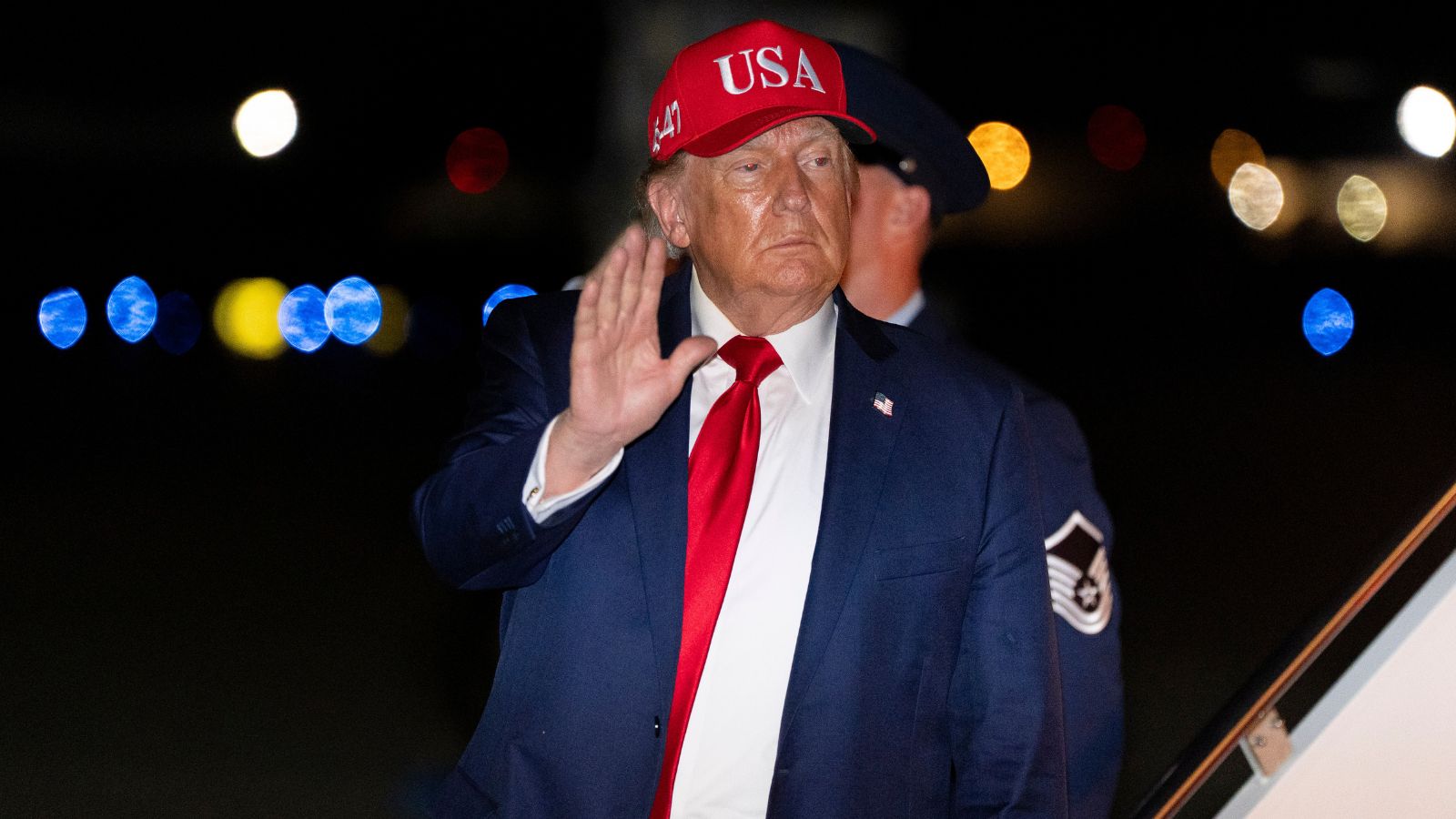


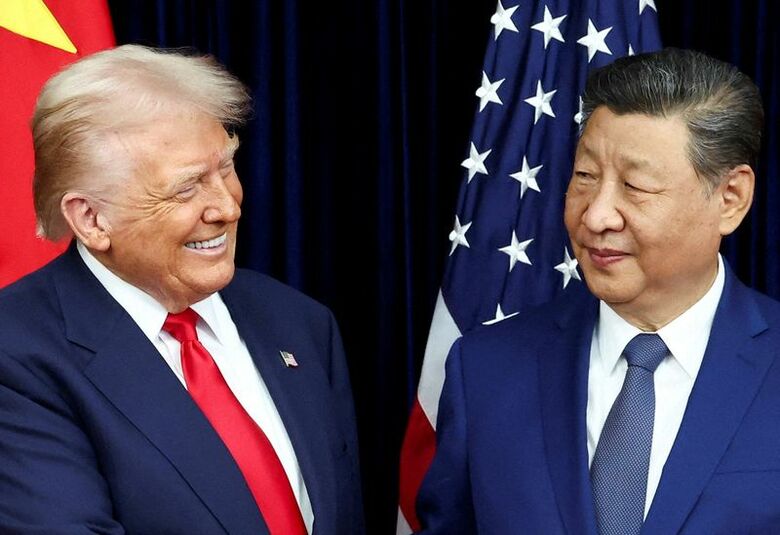
![John Geddie, Tamiyuki Kihara, Yukiko Toyoda, Ben Blanchard [Tokyo/Taipei, Reuters] — Ahead of the US-China summit on the 24th, the US ally Japan](https://newsweekjapan.ismcdn.jp/mwimgs/7/7/1200x/img_77b3485607894b5fad4ff154daa650d467830.jpg)

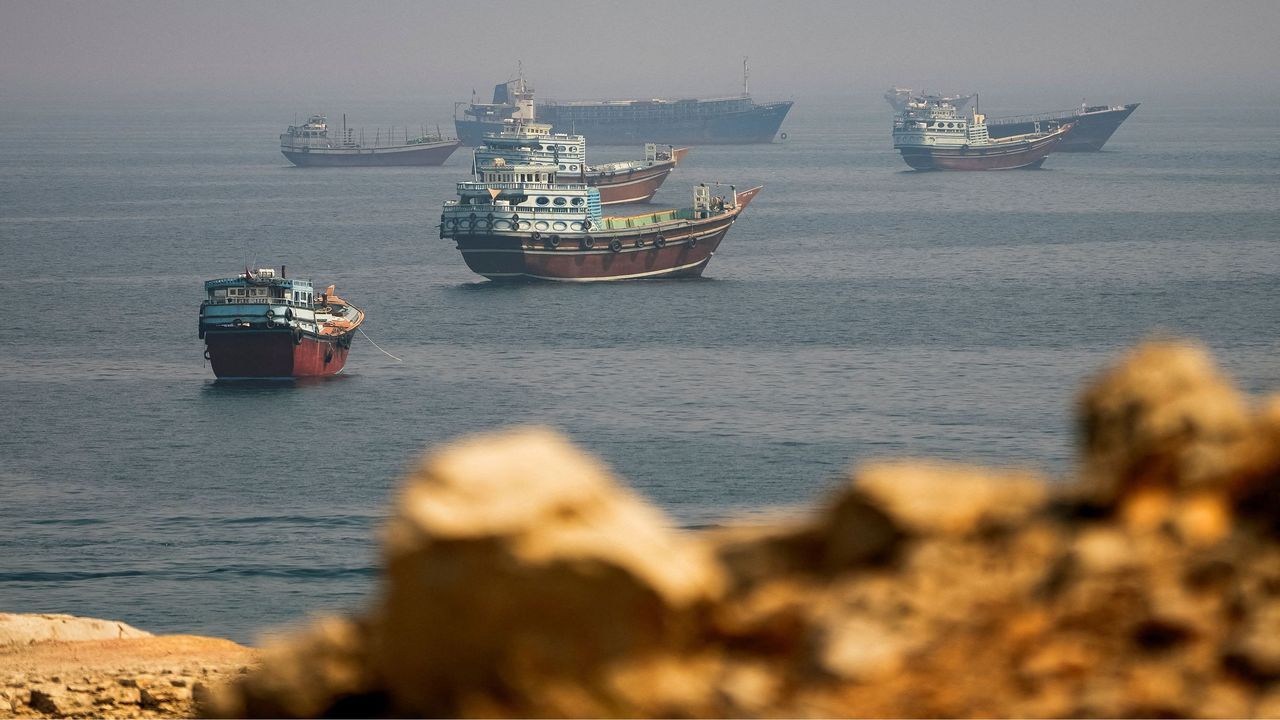

News 01-10-2026
America as Negotiator, Investor and Source of Uncertainty: Russia, Ukraine and South Korea...
In the final days of September 2026, the United States became more than just a foreign-policy factor for Russia, Ukraine and South Korea—it became a source of one shared concern: how durable are Washington’s commitments if American policy is increasingly subordinated to short-term deals, fuel prices, investment and the domestic political calendar? Local discussions revolve around different issues—the attempt by Donald Trump to launch a limited “energy truce” in the Russian-Ukrainian war, his willingness to scale back exercises with Seoul in exchange for contact with Kim Jong Un, and demands that South Korea accelerate multibillion-dollar investments in the U.S. economy. Yet in all three countries, America is perceived above all as a power that translates security into the language of benefits, production capacity and electoral expediency.
The most acute issue is U.S. mediation over Ukraine. In the Russian interpretation, it looks like Washington’s return to shuttle diplomacy, but not like a rejection of Russia’s basic demands. Russian commentators and official sources emphasize that after the September visits by Steve Witkoff and Jared Kushner to Moscow and Kyiv, the negotiating process once again became trilateral in form. Moscow, however, still links a settlement to territorial conditions, Ukraine’s neutral status and the absence of NATO forces on its territory. A RBC analysis stated this directly: America’s return to mediation does not cancel Russia’s previous negotiating position. (rbc.ru)
Particular attention in Russia focused on Trump’s public demand that Kyiv stop striking Russian oil-refining facilities, linking the issue to rising diesel prices. The Kremlin welcomed this framing: the Russian press described it as a rare instance in which the American president had effectively acknowledged the vulnerability of Russia’s fuel infrastructure while also making its protection part of his own domestic political interests. Reports of an alleged mutual agreement not to strike energy facilities were viewed in Russia less as a humanitarian initiative than as an attempt by Washington to stabilize the fuel market ahead of the U.S. midterm elections. (rbc.ru) In this logic, American mediation is useful to Moscow only as long as it limits Ukrainian strikes and does not demand political concessions from Russia.
In Ukraine, the same American activity is interpreted almost as a mirror image—as diplomacy in which Kyiv risks becoming the object of a deal. Ukrainska Pravda called the September 22 meeting between Zelenskyy and Trump “empty,” linking the White House’s interest in an energy truce primarily to American fuel prices rather than to Ukraine’s security needs. (pravda.com.ua) Kushner’s statement that an agreement would already exist if Ukraine agreed to surrender the territories demanded by Moscow was particularly painful in Kyiv. For Ukrainian audiences, this was not merely an unfortunate formulation by a negotiator, but evidence that in Washington peace may still be understood as an exchange of Ukrainian territory for a U.S. foreign-policy success. (pravda.com.ua)
The Ukrainian debate, however, is not limited to disappointment. It also reflects an attempt to adapt to Trump’s transactional style: Ukraine is being urged to become not a petitioner, but an American military-industrial partner. American political strategist Yuri Vanetik, in a column for Ukrainska Pravda, advises Kyiv to “read the law, not the handshakes”—to focus not on the warm tone of meetings, but on concrete decisions, including promised licenses to produce Patriot missiles and congressional pressure on the administration. (pravda.com.ua) This marks an important change in the Ukrainian view of the United States: Washington’s value is now measured not by promises of “support,” but by access to technology, contracts and joint production. Under this model, Ukraine may be useful to America as a holder of unique combat experience and drone technologies, but that usefulness does not yet amount to guaranteed protection. (pravda.com.ua)
South Korea’s response centers on the same problem of predictability, but in a more direct form: can an ally demand money, reduce joint exercises and seek a separate deal with North Korea at the same time? Trump’s decision in August to sharply scale back the Ulchi Freedom Shield exercises, explained by his “very good relationship” with Kim Jong Un, was perceived in Seoul as an unmistakable signal of his desire to resume direct U.S.-North Korean dialogue. Hankyoreh stressed that the instruction was issued immediately before the drills began, placing a political gesture above the alliance’s established military procedures. (hani.co.kr)
South Korean expert Andrei Lankov, in a column for Maeil Business Newspaper, warns that a possible Trump-Kim meeting could be driven by the U.S. president’s personal ambitions and his pre-election need for a striking foreign-policy result. His main fear is that Washington could offer Pyongyang too much—for example, easing pressure or further reducing exercises—without receiving genuine nuclear disarmament in return. (mk.co.kr) This perspective is especially revealing: for Seoul, the very fact of American dialogue with North Korea is not the problem. The problem is a negotiating style in which the interests of the main ally may become secondary to a spectacular bilateral deal.
At the same time, the South Korean press is increasingly linking military dependence on the United States to economic dependence. In September, it became known that Washington was seeking tougher terms for Seoul’s investments in the U.S. economy: Hankyoreh reported that the United States had revised one of the mechanisms protecting the return of funds under a $200 billion investment agreement. (hani.co.kr) As a result, Presidents Lee Jae Myung and Trump’s talks in New York on a nuclear submarine fleet, nuclear-fuel reprocessing, shipbuilding and the transfer of operational control were perceived in Korea not as a collection of unrelated topics, but as a single bargain: investment and industrial cooperation in exchange for greater strategic autonomy and more reliable guarantees. (mk.co.kr)
Unexpectedly, it is the South Korean debate that formulates most precisely the broader conclusion relevant to both Moscow and Kyiv. Professor Won Dong-wook, in an article for Pressian, proposes that Korea stop asking who will win the U.S.-China rivalry and instead determine what choices remain available to Korea itself in the new order of great powers. (pressian.com) The same applies to Russia’s war against Ukraine. Russia seeks to use America’s appetite for a quick deal to entrench its conditions; Ukraine is trying to turn its defense industry into an argument that cannot be ignored; and South Korea is looking for a way not to pay for the alliance through endless investments and unilateral concessions.
The principal international image of the United States today is not that of a declining superpower, but of a superpower that is increasingly open about putting a price on its involvement. For Russia, this creates an opportunity for negotiations in which American economic interests may limit pressure on Moscow. For Ukraine, it creates the risk of a peace measured by a map of territorial concessions, but also an opportunity to establish a foothold in the American defense industry. For South Korea, it is a reminder that even a longstanding military alliance does not eliminate the need to constantly prove its commercial and strategic value to Washington.

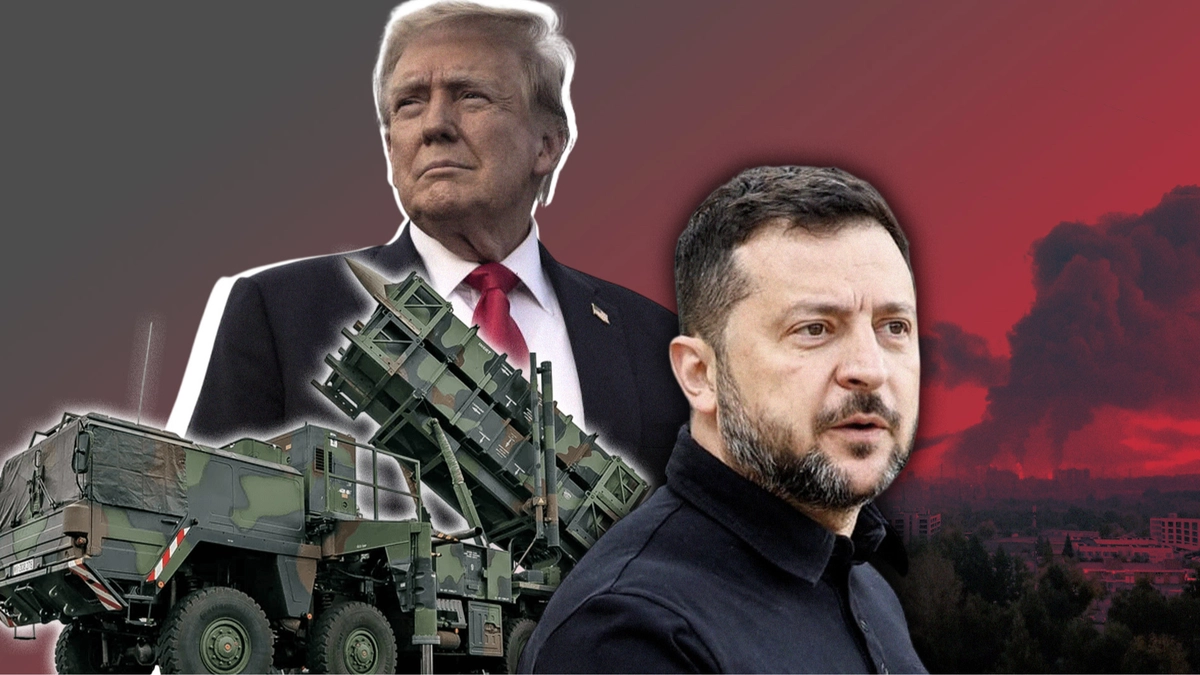
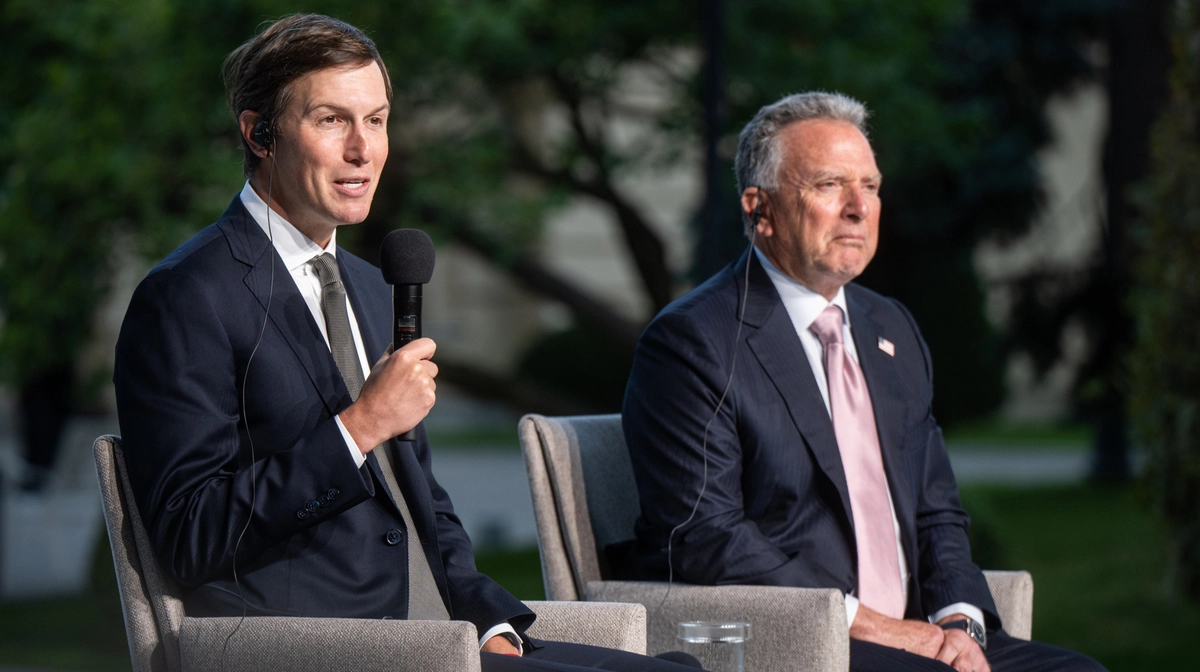
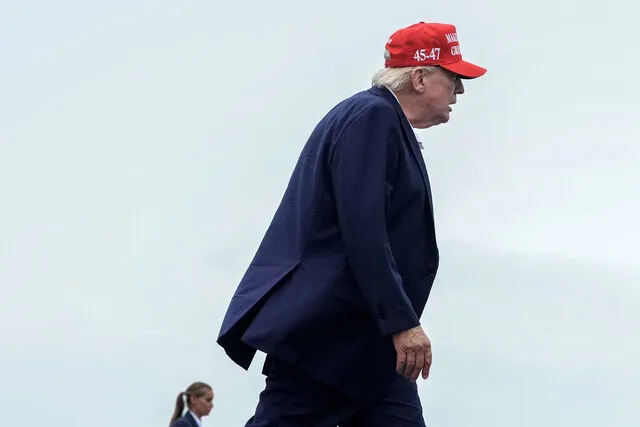


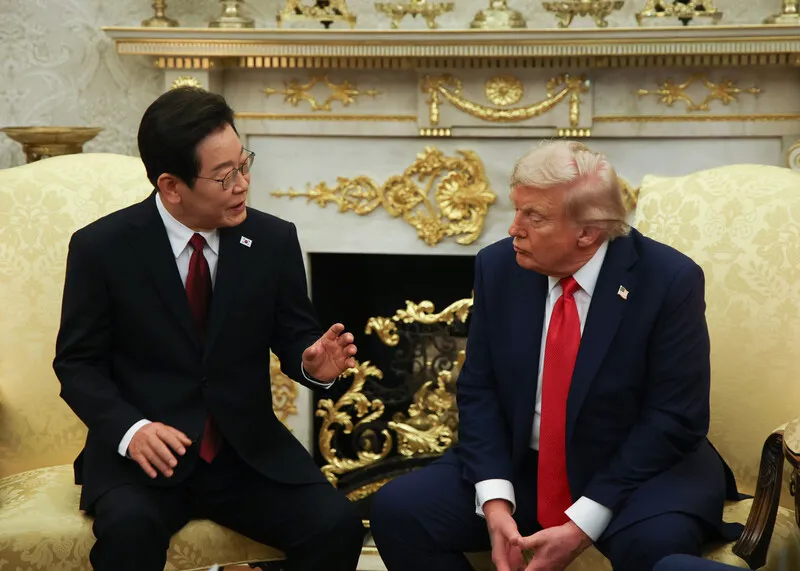


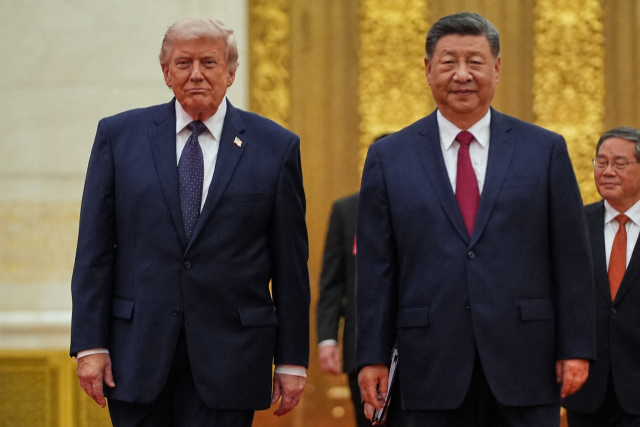
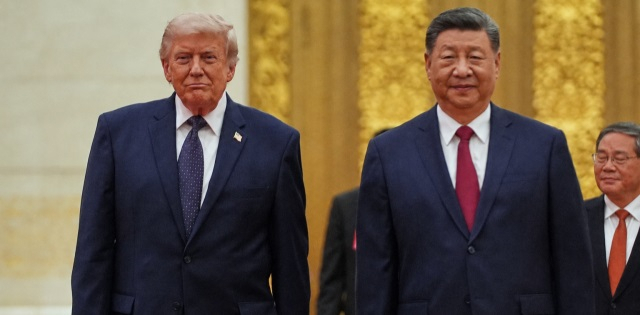
Fairford Base Incident Heightens Tensions Over Iran
The foiled incident near the British RAF Fairford air base, which is also used by the U.S. Air Force, has become a new source of tension in Iran’s relations with Britain and the United States. As Ynet writes, the story is important for Israel not only as a British criminal investigation, but also as a possible signal that Tehran’s confrontation with the West is expanding beyond the Middle East.
British Prime Minister Andy Burnham said there were “strong indicators” of a possible Iranian role in what happened. However, he stressed that the investigation is ongoing and that no public evidence of a direct link between the detainees and Tehran has yet been presented. This caveat remains crucial: the allegations against Iran have not been established by a court or confirmed by published investigative materials.
According to the publication, three vans were stopped near the air base. No explosive devices were found inside—only gasoline. Five British citizens were subsequently released on bail, although the investigation is continuing. The possibilities being considered include intelligence activity, security testing as part of a possible “dry run,” or a political action without any immediate intention of attacking the facility.
Nevertheless, the choice of location gives the case international significance. Fairford is linked not only to British infrastructure but also to the U.S. military presence. Therefore, any possible preparations for action near the base could be perceived by Washington as a challenge directed at both Britain and the United States.
President Donald Trump said the United States was examining the matter “very seriously” and would respond soon. Ynet views his statements about Iran—“they have no money,” “the economy is dead,” and “they have no army”—as a sign that the administration may be ready to use the alleged incident to exert further pressure on Tehran.
The story is unfolding against the backdrop of already unsuccessful contacts between the United States and Iran. According to Axios, Secretary of State Marco Rubio demanded that the Iranian delegation leave New York after unsuccessful talks on the sidelines of the UN General Assembly. In this context, the investigation in Britain could become an additional argument for supporters of a hard line against Iran.
Tehran rejects the allegations. Iranian Foreign Minister Abbas Araghchi sarcastically advised British authorities not to jump to conclusions, saying they were “barking up the wrong tree.” His reaction reflects the Iranian position: in Tehran’s view, London and Washington are trying to link Iran to an episode for which direct evidence has yet to be presented.
For Israel, the situation has a direct strategic dimension. Israeli authorities have traditionally viewed Iran as the main source of regional threats because of its nuclear program, missile arsenal, and support for allied armed groups. Therefore, a possible operation against a facility linked to U.S. forces—even if it was not carried out and remains under investigation—fits Israel’s perception of a broader pattern: Tehran is capable of acting through indirect, covert, and difficult-to-prove means far beyond the Middle East.
Thus, the episode near Fairford remains legally unclear but has already acquired political weight. It lies at the intersection of a British investigation, the U.S.-Iran diplomatic crisis, and Israeli concerns about further escalation. The main question now is whether the United States and Britain will consider the available information sufficient to publicly accuse Iran—and whether the incident will trigger a new round of pressure on Tehran.


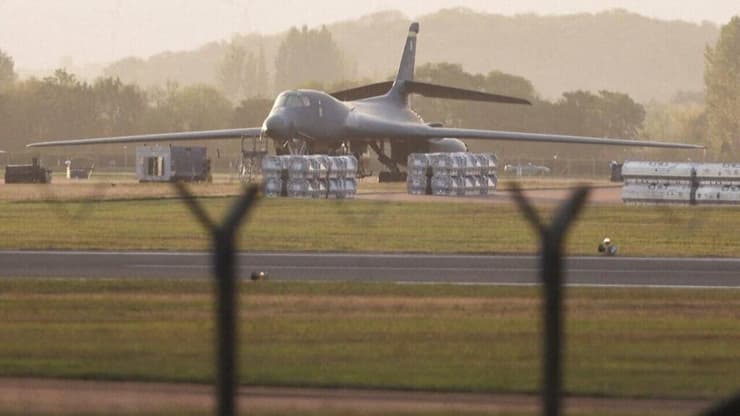
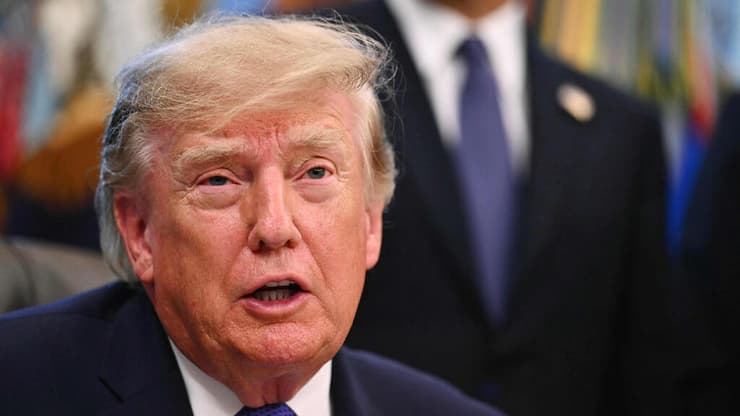
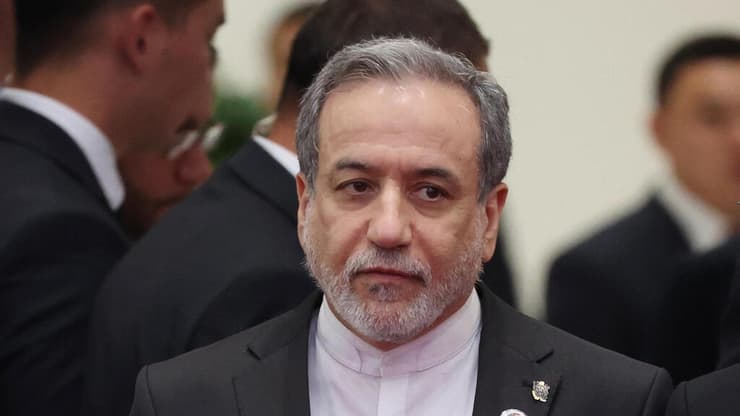
America as a Source of Risk, Not Support: What South Korea, India and...
In the final days of September 2026, the United States simultaneously became more than just a foreign-policy partner for South Korea, India and Brazil: it became a factor capable of changing oil prices, access to technology, export markets and even the domestic political climate with a single decision. Yet the local reaction in these three countries cannot be reduced to familiar anti-Americanism. The central concern is different: under Donald Trump, Washington is increasingly seen as a power that translates matters of security, trade, migration and diplomacy into the language of unilateral pressure—and forces its partners to seek ways of preserving room for maneuver.
The sharpest common issue is the transformation of US tariffs and sanctions into tools of coercion. In India, this is being discussed almost as a test of national sovereignty. In an editorial published on September 17, the Indian newspaper Hindustan called possible 100 percent tariffs on countries purchasing Russian energy unfair and warned that Washington could use the tariff threat to force New Delhi not only to abandon Russian oil but also to accept an unfavorable trade deal. (livehindustan.com) For Indian commentators, this is not an abstract dispute about Russia. Russian oil is viewed primarily as a tool for containing domestic fuel prices—and therefore inflation and social discontent.
In an editorial by Deshdoot, this point is made even more forcefully: American pressure is simultaneously affecting energy security, consumer prices and the talent pool of the technology sector. (deshdoot.com) India was particularly alarmed by the extension of restrictions on H-1B visas: a $100,000 fee for some new applicants effectively makes hiring Indian specialists in the United States far more expensive. For a country where employment in the US technology industry remains an important part of the career path of the educated urban middle class, this is seen as a blow not only to IT companies but also to the idea of mutually beneficial globalization. Notably, Indian frustration has not turned into calls to break relations with America. On the contrary, after Narendra Modi and Trump spoke by phone on September 30, New Delhi reaffirmed its commitment to the strategic partnership while discussing trade, defense, energy and critical technologies. (indianexpress.com) India’s formula at present is as follows: cooperation with the United States is necessary, but the partnership must not become a system of unilateral concessions.
Indian analyst Pramit Pal Chaudhuri, head of the South Asia practice at the Eurasia Group, put it particularly precisely in an interview with StratNews Global: in his view, Trump has “no vision of India”—the US president sees it primarily through tariffs, market access and the trade balance, rather than as a central element of an Asian strategy against China. (stratnewsglobal.com) This is an important local observation. In India’s debate, the previous confidence that India’s geopolitical value would automatically shield it from American protectionism is fading.
In Brazil, the same logic of pressure is perceived not only as an economic issue but also as a political one. In recent months, relations with the United States have been burdened by 50 percent tariffs on Brazilian exports, additional measures under Section 301, visa restrictions and sanctions affecting representatives of Brazilian institutions. Adam Goldsmith, a former US Treasury financial attaché for South America, acknowledges the aggressive nature of the current American course in a column for Folha de S.Paulo, but draws an unexpected conclusion: the relatively limited role of the United States in Brazil’s foreign trade is currently partially protecting the country from the shock. (www1.folha.uol.com.br)
This is not optimism but a sober assessment: weak interdependence reduces vulnerability to Washington, but at the same time means missed opportunities for investment, technology and growth. Brazil’s response therefore has two layers. The center-left and nationally oriented camp speaks of the return of the “Monroe Doctrine” and an attempt by the United States to treat Latin America as a zone of political control. More pragmatic commentators acknowledge that conflict with the world’s largest economy is not, in itself, a victory: Brazil would benefit not from isolation from the United States, but from restoring ties on a more equal footing.
A particular source of concern in Brazil is the risk of American influence on elections. Here, the issue of tariffs is almost inseparable from the question of national autonomy. On September 18, the editorial board of Folha compared Trump’s rhetoric to the behavior of a “banana republic caudillo,” pointing to his promise to pay Americans $5,000 if Republicans win the midterm elections. (www1.folha.uol.com.br) For Brazilian audiences, this criticism is not merely a comment on American domestic politics: it also reflects concern that the White House’s unpredictable, personalist style could easily spill over into foreign policy—through sanctions, visas, public signals of support for individual political forces and pressure on institutions.
South Korea views America differently: not through a dispute over trade sovereignty, but through the fear of becoming hostage to deals between superpowers. In Seoul, the main event of recent weeks was the Trump–Xi Jinping meeting in Washington on September 24. Korean markets saw it not as a distant diplomatic ceremony, but as an event capable of directly changing the position of Korean manufacturers of memory chips, HBM chips, automobiles, batteries and energy equipment. As Hana Securities analyst Kim Doo-on noted, according to a report by the Maeil Business Newspaper, US–China talks could probably extend the trade truce and improve supplies of rare-earth metals, but US export controls on advanced semiconductors to China are likely to remain a separate security barrier. (stock.mk.co.kr)
This is what makes South Korea’s anxiety distinctive. Easing the US–China confrontation benefits Korean supply chains and the market, but opening the US market too widely to Chinese cars and batteries could reduce Seoul’s competitive advantage. South Korea wants neither a new technological Cold War nor a Washington–Beijing deal in which the interests of third countries are sacrificed for short-term stability. American policy is perceived here not as an unchanging security guarantee, but as a variable that must be monitored almost in real time, like a stock-market terminal.
This anxiety is even more pronounced on the Korean Peninsula. On September 1, South Korea’s National Intelligence Service told parliament that a US–North Korea summit could take place “at any time,” although no confirmed direct contacts have yet taken place. At the same time, Seoul noted signs that Washington was prepared to discuss relations with Pyongyang without making denuclearization the top priority, while reducing the scale of joint exercises. (mk.co.kr) To American audiences, this may look like Trump’s diplomatic flexibility; to Koreans, it looks like the risk that momentous decisions about the nuclear threat and the security of the peninsula will once again be made according to the logic of a personal deal between leaders.
Finally, the US war with Iran and the struggle to secure shipping in the Strait of Hormuz connect all three countries, although each is responding in its own way. For India, this is a question of oil and the cost of living; for South Korea, it is a question of maritime logistics and alliance commitments; for Brazil, it is further evidence that American power is increasingly being used without sufficient grounding in multilateral rules. After Trump criticized South Korea for providing insufficient assistance on the Iran issue, Seoul said it continued to discuss with the United States and the international community measures to ensure freedom of navigation and normalize maritime transport. (mk.co.kr) This cautious wording is characteristic: the ally does not want a public break with Washington, but neither does it seek to become automatically drawn into someone else’s war.
The overall conclusion emerging from the Korean, Indian and Brazilian reactions is strikingly similar. No one considers the United States an insignificant power, and no one is ready to easily give up access to the American market, technology or security. But America’s image as a predictable architect of order is clearly weakening. India is demanding strategic autonomy, Brazil respect for sovereignty and noninterference, and South Korea guarantees that deals with China or North Korea will not be made over the ally’s head. Washington remains a necessary partner—but is increasingly seen as a partner that cannot be trusted unconditionally.


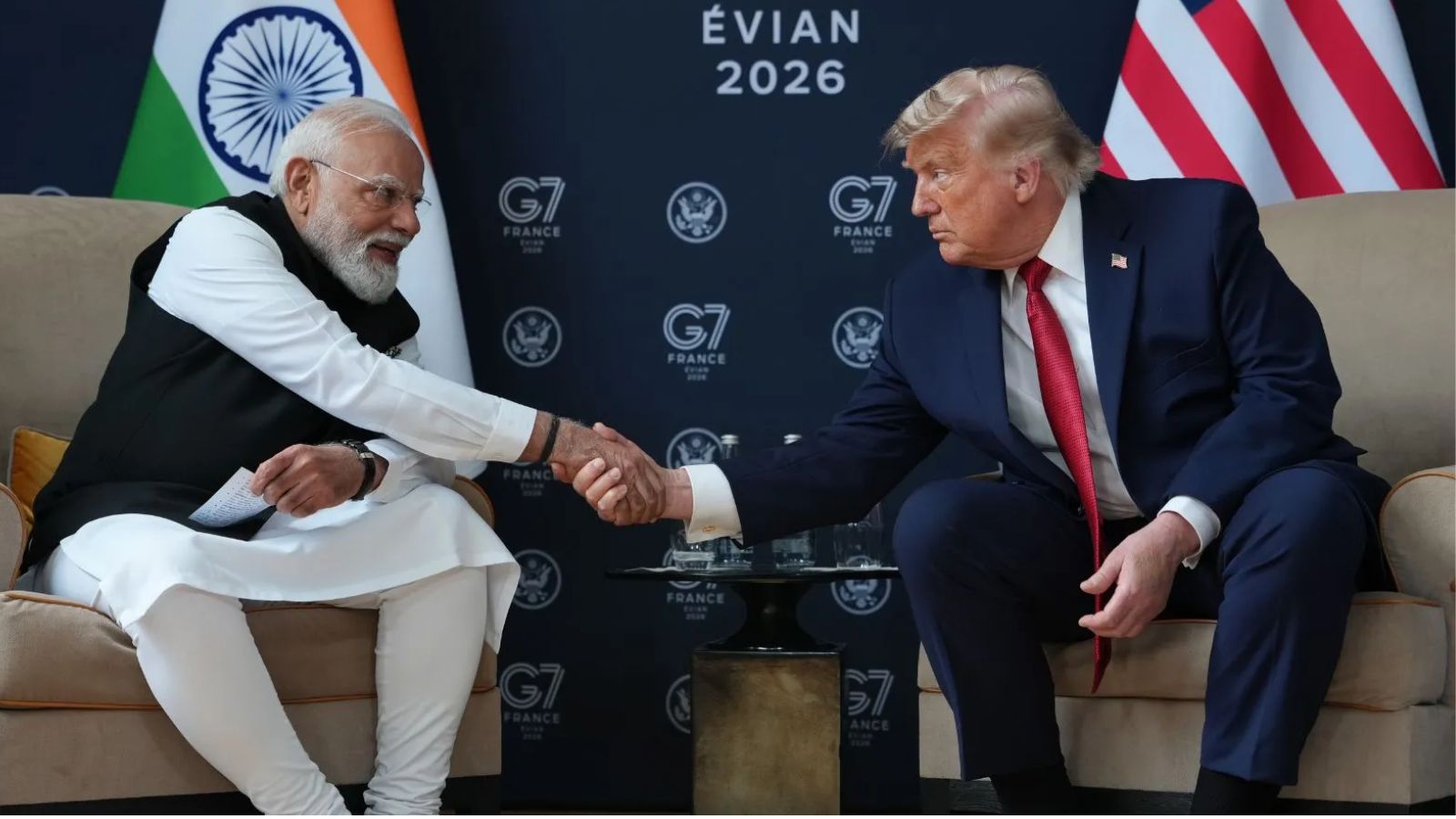


![Chinese President Xi Jinping (left) and US President Donald Trump (right) [AP Yonhap file photo. Resale and database use prohibited]](https://stock.mk.co.kr/photos/20260921/PAP20260919071901009_P4.jpg)
![Workers assembling vehicle bodies at Li Auto, an electric-vehicle manufacturer in Jiangsu Province, China [AP Yonhap file photo. Resale and database use prohibited]](https://stock.mk.co.kr/photos/20260921/PAP20240514188301009_P4.jpg)


News 30-09-2026
America as Ally, Arbitrator and Source of Risk: What Saudi Arabia, Japan and Brazil Discuss About the...
By the end of September 2026, the United States had simultaneously assumed three very different but closely connected roles: security guarantor in the Middle East, negotiator with China on issues vital to Japan, and a state prepared to turn trade and financial pressure into a tool of political influence over Brazil. In Riyadh, Tokyo and Brasília, people are discussing more than Donald Trump’s latest statements. The deeper question is this: how reliable is American support if Washington increasingly acts according to the logic of immediate gain and bilateral deals?
The sharpest test of this issue is taking place in Saudi Arabia. Intensifying Houthi attacks and threats to shipping near the Bab el-Mandeb Strait have turned American promises into a matter of practical survival rather than diplomatic rhetoric. Saudi researcher Abdelaziz Sager, founder of the Gulf Research Center, articulated the local expectation in highly concrete terms: for Riyadh, the value of Washington’s promises is measured in arms deliveries, operational expertise and intelligence. In an analysis by Arab News, he stressed that these three components must turn the alliance into genuine deterrence. This is a characteristic Saudi response: less talk of “eternal friendship,” and more demands regarding the speed, scale and practical applicability of American assistance.
The kingdom’s official line, meanwhile, remains emphatically positive. The Saudi Embassy in Washington called the F-35 agreement evidence of the “depth of the strategic partnership” and linked defense cooperation to regional stability, according to the newspaper Okaz. But there is visible tension between the official optimism and the analytical tone. The Saudi debate starts from the premise that the alliance with the United States remains indispensable, but must not be the only safety net. That is why regional formats and ties with Turkey and Pakistan are being strengthened in parallel, while Saudi Arabia itself seeks to act not as a dependent client but as an organizer of the regional balance. In an Arab News column, this new logic is stated directly: America wants to see partners in the region, not dependents. For Riyadh, this is not a rejection of the United States, but an attempt to reduce the cost of American unpredictability.
In Japan, American unpredictability is perceived differently—not through Houthi missiles, but through fears that momentous decisions on China and Taiwan could be made without fully taking Japanese interests into account. After Trump and Xi Jinping met in Washington on September 24, Japanese observers watched warily to see whether Taiwan might become a bargaining chip in a more advantageous US-China deal on trade, technology or resources. The Japanese government publicly indicated that Prime Minister Sanae Takaichi had conveyed Tokyo’s position to the American side, without disclosing details. On September 26, Takaichi received a direct explanation from Trump of the outcome of his talks with Xi and confirmed the need for coordination on defense and economic security, nippon.com reported.
Yet the very need to seek clarification is more important than the diplomatic formulas. It shows that Tokyo no longer considers the automatic nature of American guarantees sufficient protection. Particular irritation was caused by an episode in which Trump described the United States and China as allies during World War II: Japanese officials urgently began analyzing the political meaning of the phrase, concerned that the White House might want to demonstrate to Beijing its readiness for broader détente. Japanese reports noted unease over the possibility of concessions to China on Taiwan amid Trump’s declining approval ratings and his desire to achieve a quick foreign-policy result before the US elections. The Japanese perspective is especially revealing in this respect: the alliance with the United States remains the foundation of security, but the ally now has to be constantly informed, pressed and restrained from making compromises that are too convenient for it.
Tokyo’s reaction is not limited to Asia. Value-based criticism of American policy is also growing in the Japanese press. An editorial in Asahi Weekly, following Takaichi’s address to the UN, asked whether Japan could genuinely defend international law if Trump is simultaneously increasing pressure on the International Criminal Court and calling on countries to leave it. For Japan, this is not an abstract dispute over international institutions. Tokyo sees law and rules as protection for middle powers against the dictates of larger ones: if the United States itself begins treating rules as bargaining chips, Japanese diplomacy must choose between loyalty to the alliance and loyalty to its own publicly declared model of international order.
The economic dimension of American influence is particularly visible in Japanese debates over the yen’s exchange rate. According to local assessments, Washington is increasingly linking the currency issue to Japan’s fiscal and monetary policies. Takahide Kiuchi, an economist at the Nomura Research Institute, warned in an analysis dated September 28 that after currency coordination, the United States could intensify its influence over Japan’s economic policy; in his view, the market is already pricing in the possibility of larger-scale joint action to support the yen. Here, Japanese concerns echo those of Saudi Arabia: Washington’s support is useful, but it comes with Washington’s right to interfere in a partner’s priorities. In Saudi Arabia, the issue is the structure of defense; in Japan, it is the cost of money, government spending and the national currency’s exchange rate.
In Brazil, this same American approach operates not as the uncomfortable supervision of an ally, but as overt foreign pressure. In the final days of September, Brazilian debate focused on the combination of tariffs, visa restrictions, sanctions policy and American assessments of the country’s domestic politics. In a column for Folha de S.Paulo, former US Treasury financial attaché for South America Adam Goldsmith called the Trump administration’s foreign policy toward Brazil “clumsy and aggressive.” He listed 50 percent tariffs, Section 301 surcharges, sanctions under the “Magnitsky Act,” visa restrictions and the revocation of the visa of Brazil’s ambassador in Washington, Maria Luiza Viotti.
But Goldsmith’s conclusion is the most interesting: the weakness of bilateral ties protects Brazil in the short term. He estimates the actual damage from the current 17 percent tariff at roughly 0.1 percentage point of GDP and remarks with biting irony that the main result of many of the measures has been that some Brazilian officials can no longer go to Disneyland. This does not mean Brazilians consider the pressure harmless. Rather, a dual view has taken shape in Brazil: America can be an irritating and dangerous political factor, but it is not yet so deeply embedded in Brazil’s economy and security that it can unilaterally dictate the country’s direction of development.
This is where the key difference between the three countries becomes apparent. Saudi Arabia wants more reliable American engagement because the cost of its absence is measured in the security of its territory and maritime communications. Japan wants greater predictability and transparency because it fears being presented with faits accomplis in US negotiations with China. Brazil, by contrast, is seeking room for distance because it sees American activity as interference in sovereign political processes. But the underlying motive is the same: in all three societies, the United States is no longer viewed as a neutral provider of protection, markets or rules. America is perceived as a power that offers resources—arms, intelligence, market access, currency coordination and diplomatic backing—while simultaneously demanding a political price.
The unexpected conclusion from these national reactions is that American power has not disappeared at all; on the contrary, it is too tangible. That is precisely why Riyadh is building additional defense frameworks, Tokyo is demanding explanations after US talks with China, and Brasília is trying to prove to itself that it can withstand American displeasure. In September 2026, the dispute is not about whether the world needs Washington. It is about whether it is possible to plan for the future when Washington is simultaneously an ally, a negotiator and a source of pressure.
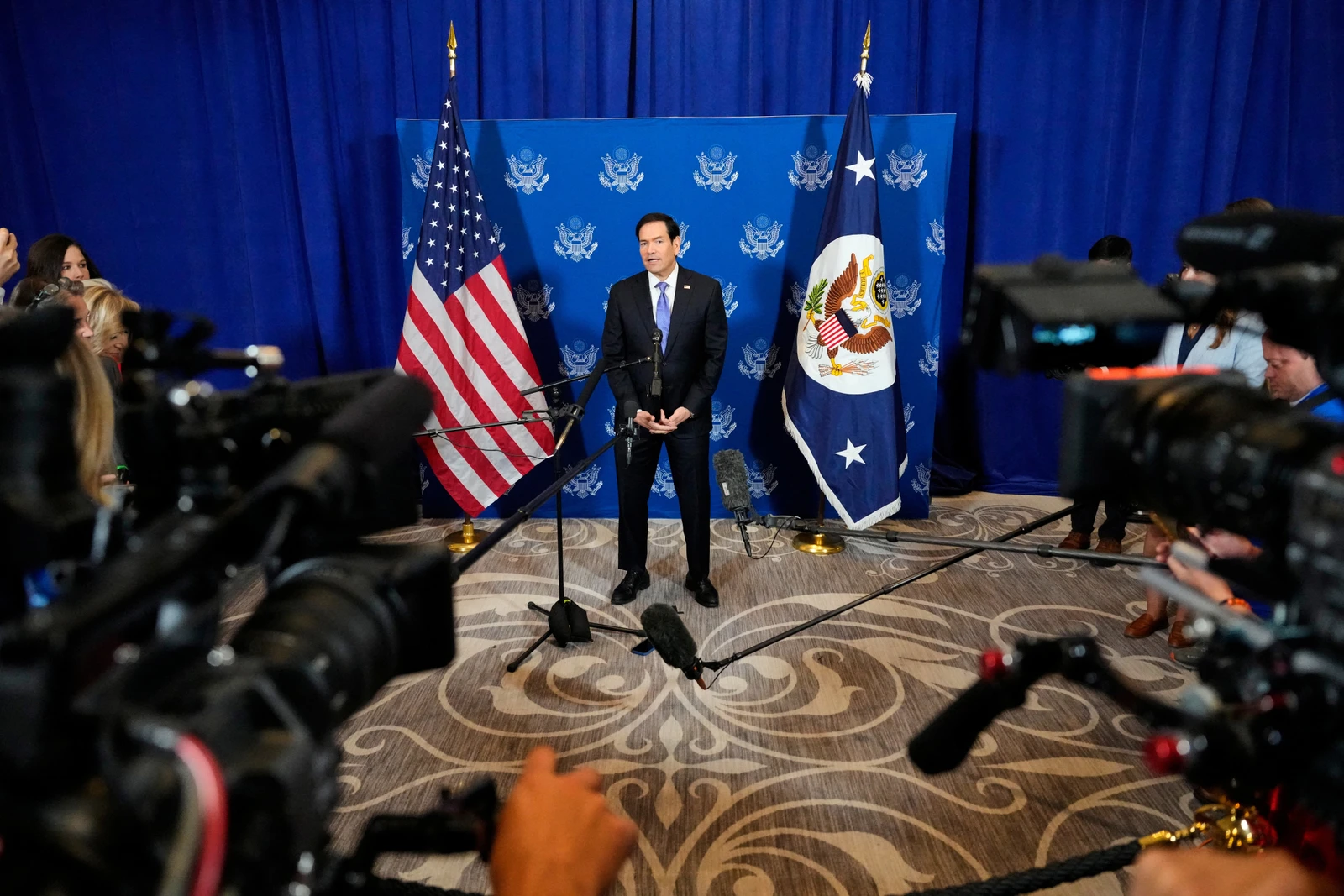
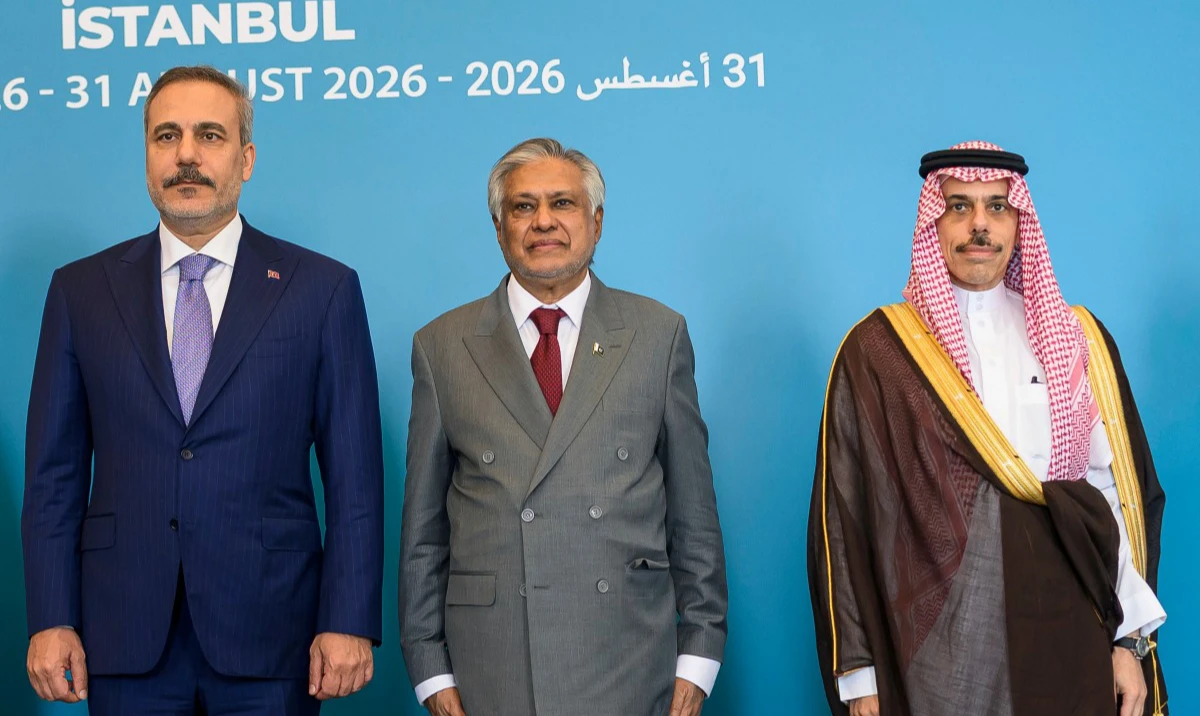

America as an Unreliable Guarantor: Why Israel, Ukraine and Saudi Arabia Are Increasingly...
By September 29, 2026, the main issue in American politics discussed in Israel, Ukraine and Saudi Arabia was no longer simply U.S. power, but the practical reliability of its commitments. Each of the three countries is focused on different developments: Washington’s negotiations with Iran, the U.S. attempt to mediate Russia’s war against Ukraine, and the Saudi-American nuclear agreement. Yet they all come down to one question: is America prepared to defend its partners when the cost of doing so becomes high, or is it primarily seeking a diplomatic deal that can be quickly sold?
This concern is especially clear in reactions to the U.S.-Iranian crisis. The Israeli perspective is that negotiations with Tehran can be useful only as a means of applying pressure, but become dangerous if they turn into an end in themselves. In a commentary for N12, Sima Shine, former head of the Iran Program at Israel’s Institute for National Security Studies, describes the renewed indirect contacts between the United States and Iran as evidence not of rapprochement, but of the “depth of mistrust” between the sides. Her conclusion is characteristic of the current Israeli debate: the stronger Washington’s sanctions pressure and threats, the more likely Tehran is to seek not compromise, but a sharp military escalation to improve its negotiating position. (mako.co.il)
For Israeli observers, this is not an academic dilemma. The issue is the risk of attacks on regional energy and water infrastructure, the possible expansion of the conflict through Iran’s allies, and Tehran’s nuclear trajectory. Shine explicitly points out that Iranian threats affect infrastructure across the region, while diplomatic deadlock is pushing the regime toward a choice between an agreement on American terms and an attempt to change the situation by force. In other words, Israel views the United States not as a neutral mediator, but as the only external power whose decisions immediately alter Israel’s own risk calculations. (mako.co.il)
The Saudi response to the same crisis is structured differently. Riyadh is far less interested in the logic of a “decisive strike” and more concerned with not becoming the arena in which the United States and Iran wage war by proxy. Saudi columnist Sobhi Shabbana, writing in Al Jazirah, formulates this position almost as a doctrine: a state’s strength is measured not by the number of weapons it possesses, but by its ability to prevent war from spreading. He stresses that, for the kingdom, the security of the Persian Gulf, freedom of navigation in the Strait of Hormuz and energy stability are not foreign-policy abstractions, but elements of national security. (al-jazirah.com)
This represents an important divergence from the Israeli approach. Israel’s public debate demands that Washington not ease pressure until the threat has been eliminated; Saudi Arabia’s demands that Washington not turn pressure into an endless conflict for which the Gulf states will pay. Yet both positions stem from the same distrust of the durability of American strategy. Regional analyst Michael Young, in an Arabic-language Carnegie column, explains why this skepticism is so strong in Saudi Arabia: after the attacks on Aramco facilities in Abqaiq and Khurais in September 2019, Riyadh concluded that, at a critical moment, it would have to rely primarily on itself. (carnegieendowment.org)
This brings us to the second major issue—the U.S.-Saudi cooperation on peaceful nuclear energy. Saudi media present it not as a concession to Washington, but as evidence of the kingdom’s new negotiating independence. In an Al Watan article, the advancement of nuclear cooperation with the United States without an immediate link to normalization with Israel is described as a diplomatic success: according to the paper, Riyadh managed to separate its strategic and technological partnership from political demands while preserving its condition that there be a genuine path toward a Palestinian state within the 1967 borders. (alwatan.com.sa)
This is particularly sensitive for Israel. In the Israeli press, discussion of the agreement is not limited to the issue of civilian energy; it is assessed in terms of the risk of future uranium enrichment and a possible shift in the regional military balance. Even when Israeli commentators acknowledge the value of a close U.S.-Saudi alliance, they see it as a potential price Washington may pay for influence in Riyadh. In other words, for Saudi Arabia the American deal symbolizes sovereignty and the diversification of partnerships; for Israel, it is a test of whether America is prepared to relax previous restrictions in exchange for a short-term geopolitical gain. (alwatan.com.sa)
Ukraine views the same American problem through a completely different, but even more painful, lens: is an agreement possible that will stop the war without making a new war inevitable? Following Donald Trump’s and Volodymyr Zelensky’s September contacts, the Ukrainian debate has become notably skeptical of declarations about a swift peace. Ukrainska Pravda called the meeting in New York “empty” and described irritation within the Ukrainian president’s circle over the lack of concrete American security proposals. One source told the publication in particularly stark terms that, in his view, the Americans were offering neither a strategy for victory nor even a “decent defeat,” but concessions to Russia in exchange for promises of subsequent financial support. (pravda.com.ua)
At the same time, Kyiv is not rejecting U.S. mediation. The Ukrainian position is considerably more nuanced: diplomacy is acceptable if it reduces immediate threats to the population and does not impose one-sided restrictions on the victim of aggression. Responding to American calls for de-escalation, Zelensky said that Ukraine was ready to discuss halting attacks, but only on the condition that Russia stop attacking Ukrainian energy facilities, critical infrastructure and food exports. “Solutions are possible,” he stressed, but de-escalation must be mutual. Ukrainska Pravda reports this. (pravda.com.ua)
Here, an unexpected common thread emerges linking Kyiv with Riyadh. Ukraine and Saudi Arabia are not demanding the same policy from the United States, but both countries refuse to become objects of a deal between larger powers. Saudi Arabia does not want to pay for the U.S.-Iranian confrontation with its security; Ukraine does not want to pay for America’s need to demonstrate diplomatic success with territory and vulnerable energy infrastructure. In both cases, the local response increasingly resembles not the traditional expectation of American leadership, but an attempt to negotiate clear, verifiable conditions.
Israel occupies a special place in this trio. There is still stronger faith there in the necessity of American power, but fears are also growing that Washington may use that power inconsistently—sharply raising the stakes against Iran and then seeking a compromise that leaves regional allies to deal with the consequences. Ukrainians fear peace without guarantees; the Saudis fear war without limits; Israelis fear negotiations that give their adversary time to recover. Different formulations express the same reality: American policy is perceived not as a stable architecture, but as a series of transactions, each capable of quickly changing the regional balance.
That is why the international response to the United States today cannot be reduced to anti-Americanism or the familiar debate over Trump. In Israel, Ukraine and Saudi Arabia, Washington is still considered an indispensable player. But its indispensability no longer means unconditional trust. The louder the United States speaks about negotiations, deterrence and major deals, the more insistently its partners demand an answer to one practical question: who will ensure their security, and by what means, on the day American diplomacy declares success and moves on to the next crisis?
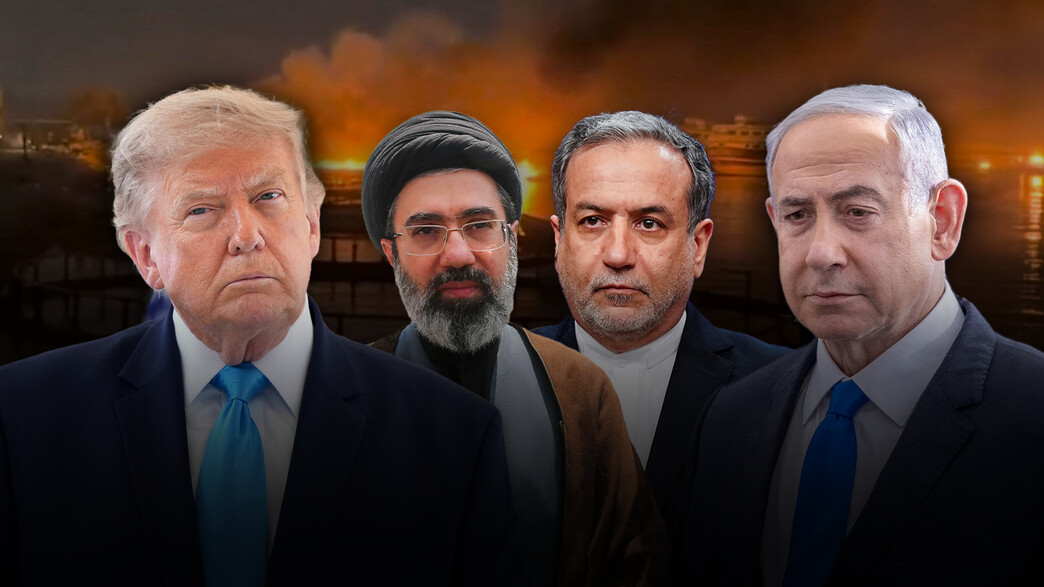
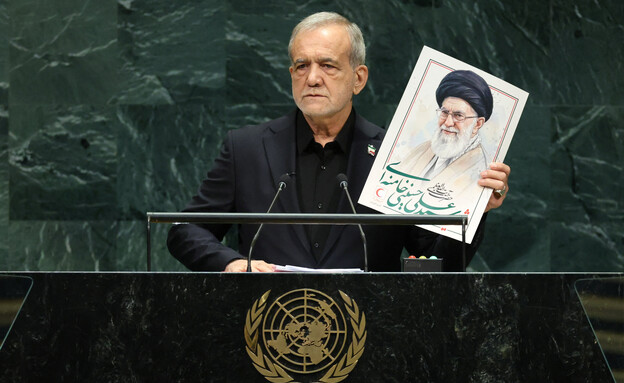
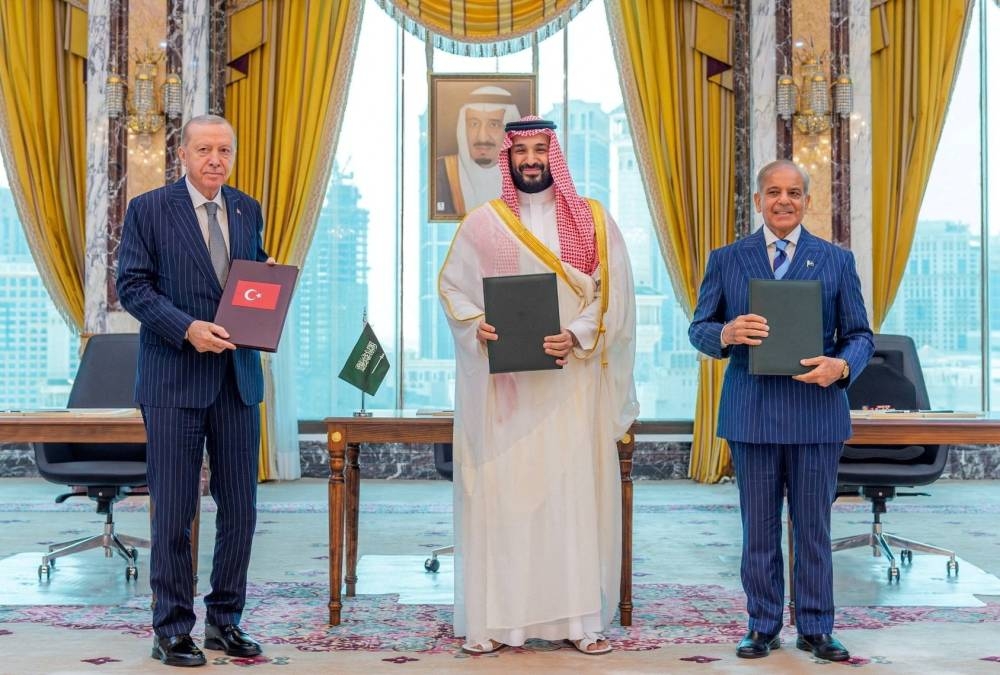
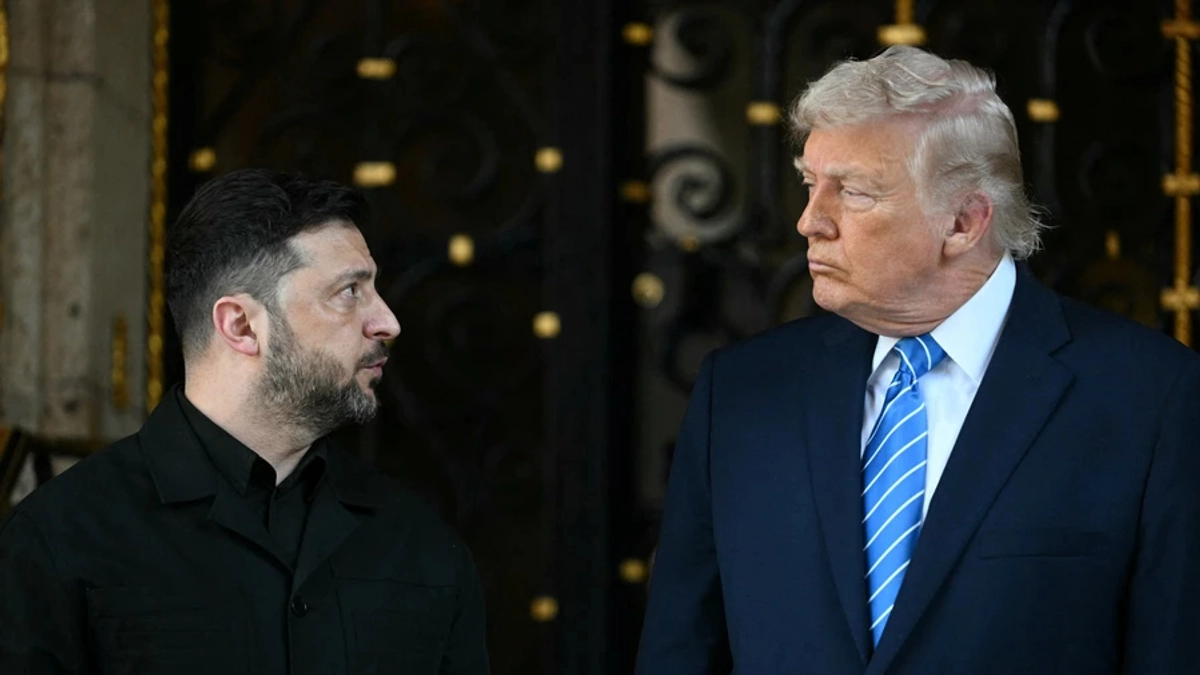
News 29-09-2026
America as a Source of Risk: Why South Africa, Brazil and Ukraine Trust It Less...
At the end of September 2026, the United States is being discussed in South Africa, Brazil and Ukraine not as a single “superpower ally” or “superpower adversary,” but as a force capable of imposing tariffs, demanding political loyalty, entering negotiations and then immediately revising their terms. In South Africa, the immediate irritant has been U.S. visa restrictions linked to land-reform policies and Black Economic Empowerment programs; in Brazil, it is the tariff war, pressure over critical minerals and, especially, the disturbing Venezuelan precedent; in Ukraine, it is the sudden “thaw” between Donald Trump and Volodymyr Zelenskyy, viewed more as a window of opportunity than as a security guarantee. The common thread in local discussions is simple: Washington is increasingly acting transactionally, and its partners must learn to benefit from American attention without mistaking it for a lasting commitment.
The sharpest issue is the transformation of other countries’ domestic policies into an instrument of American coercion. In South Africa, this is felt particularly acutely because the dispute touches on the unfinished legacy of apartheid. After the United States introduced visa measures against individuals whom Washington associates with “racial discrimination,” uncompensated land expropriation and incitement to violence, International Relations Minister Ronald Lamola said that overcoming the country’s historic racial divide was a constitutional obligation. In the local press, the conflict is being interpreted not as a dispute over the technical details of legislation, but as an attempt by an outside power to determine which social-justice tools are permissible in South African democracy. President Cyril Ramaphosa put the response especially precisely: Pretoria is ready to continue the dialogue, but will do so “with dignity” and “sovereignty,” without bowing its head. (iol.co.za)
South African commentators see an irony here: an administration building its own policy around “America First,” tariffs and protectionist redistribution in favor of U.S. producers is accusing Pretoria of pursuing an unacceptable policy of preferential treatment. In an IOL column, Shabodien Rumanay directly compares MAGA to “BEE in reverse”: in both cases, the state deliberately adjusts economic outcomes, yet Washington considers such intervention legitimate for America and suspect when practiced by a country trying to correct structural inequality after apartheid. This does not mean that local authors idealize BEE: they acknowledge its bureaucratization, corruption risks and the limited effectiveness of some mechanisms. But they draw a fundamental distinction between internal criticism of the reform and a foreign state’s right to dictate its abolition. (iol.co.za)
At the same time, a more cool-headed, economic perspective is evident in South Africa. Donald MacKay, founder of XA Global Trade Advisors, argues in an IOL analysis that political noise should not be confused with trade realities: the United States is unlikely to stop purchasing South African gold and platinum, which together account for more than half of the country’s exports to the U.S. His point is important: Washington can use visas, diplomatic pressure and symbolic punishments, but the dependence of American industry on strategic raw materials places limits on escalation. For Pretoria, this is an argument for restraint—not to take the bait, not to turn the dispute into an emotional duel, but also not to change its domestic course to avert every new threat. (iol.co.za)
In Brazil, the same American unpredictability is perceived through the language of economics and regional sovereignty. Brazilian commentators spend less time debating who is right in America’s culture wars and more time considering how tariffs and the ideologization of trade are turning Latin America’s largest economy into an object of pressure. A Folha de S.Paulo report conveys concerns within Lula’s circle that, if the current tariffs become entrenched, they could outlast even a change of administration in Washington—as has already happened with barriers on steel and aluminum. Brazil therefore continues negotiations with the United States, but its previous confidence that a trade conflict could be resolved through ordinary political bargaining has noticeably weakened. (www1.folha.uol.com.br)
Venezuela has an even stronger influence on Brazil’s reaction. For local audiences, U.S. control over part of Venezuela’s oil resources following military intervention looks not like a fight against authoritarianism, but like a return to an old model of resource politics in the Western Hemisphere. Folha describes this policy as combining three elements: oil, the fight against drug trafficking and political influence over the region. In a commentary by Martin Wolf republished by the newspaper, the new Venezuelan agreement is called an almost textbook manifestation of 19th-century colonialism: Venezuelans could have hoped for liberation from dictatorship, but instead risk acquiring a new external master over their oil wealth. (www1.folha.uol.com.br)
In Brazil, this regional concern merges with broader doubts about the durability of the American financial and political model. An editorial in Folha de S.Paulo on Trump’s proposal to pay Americans $5,000 from tariff revenue portrays the U.S. president as a “banana-republic caudillo”—not as an insult directed at the periphery, but as an indication that the very center of the world system is now displaying signs of fiscal populism and personalist rule. From the Brazilian perspective, this has practical significance: if the White House is willing to subordinate tariffs to the electoral cycle and foreign policy to quick domestic political victories, then any deal with it requires safeguards, market diversification and an end to one-sided dependence. (www1.folha.uol.com.br)
The Ukrainian debate is structured differently: for Kyiv, Washington’s inconsistency is not an abstract risk to trade, but a factor in war and survival. Nevertheless, the reaction to the September meeting between Zelenskyy and Trump in New York was cautiously positive. In an analysis by European Pravda, Serhii Sydorenko draws attention to an important shift: after the talks, Trump did not publicly object to Ukrainian strikes on Russian oil-refining facilities. This matters to Ukrainian audiences not because it means complete freedom of action, but because a previous public signal has disappeared—that Kyiv should limit its own defense efforts for the sake of American fuel prices. (eurointegration.com.ua)
But there is no euphoria in Kyiv. Ukrainska Pravda describes the meeting as “empty” and warns that talk of ending the war quickly could conceal preparations for a limited energy truce during the winter. Temporarily reducing strikes on energy infrastructure is logical from a humanitarian perspective, but Ukrainian analysts fear it would allow Moscow to regroup without resolving the central issue: ending the aggression and restoring Ukraine’s security. Even the positive change in Trump’s tone is interpreted as a consequence of circumstances—pressure from the war, U.S. domestic political calculations, fuel prices and the White House’s need to demonstrate a diplomatic result—rather than as a definitive change in American strategy. (pravda.com.ua)
This is where the most unexpected similarity among the three countries emerges. South Africa does not want Washington to determine the limits of its post-apartheid reforms; Brazil does not want to find itself in a Latin America where access to resources becomes the price of American favor; Ukraine does not want its defense to become a bargaining chip in American electoral or pricing politics. Yet none of the three countries is choosing to break with the United States. Pretoria is safeguarding exports and channels of dialogue, Brasília is continuing tariff negotiations, and Kyiv is using every improvement in contact with the White House to strengthen its position. This is not anti-Americanism, but a new diplomatic realism: America remains too important to ignore and too changeable to make its words the foundation of an entire national strategy.


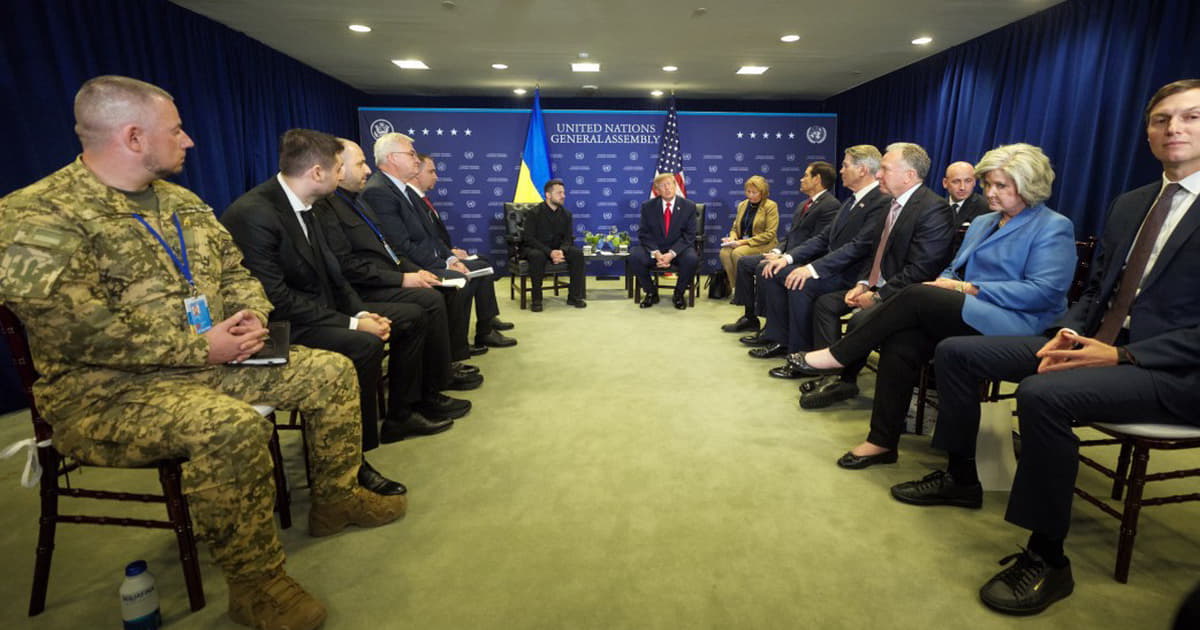
America Bargains with the World: How Israel, Turkey and South Korea Read Trump’s New Diplomacy
In recent days, the United States has simultaneously found itself at the center of three crises: Washington rejected Iran’s plan to reopen the Strait of Hormuz, Donald Trump held a high-profile but largely substantive-free meeting with Xi Jinping, and Seoul once again began discussing the price of American security guarantees—from investment in U.S. industry to the prospect of nuclear-powered submarines. In Israel, Turkey and South Korea, these events are not viewed as isolated news stories. The local debate boils down to one question: does America remain an ally with predictable commitments—or is it becoming a superpower that offers protection, markets and negotiations only as elements of an ever-changing deal?
The most acute issue is Iran and Hormuz. On September 26, Trump publicly rejected the “seven-day plan” conveyed by Tehran: Iran proposed reopening the strait and returning to negotiations if the United States eased its naval blockade and sanctions on oil exports and unfroze Iranian assets. In Israel’s N12, the decision is read primarily through the lens of a possible military resolution: according to reports from Washington, the U.S. president is considering resuming strikes after the November midterm elections. Israel’s concern is not that Trump is too uncompromising toward Iran, but that his intransigence may prove to be a negotiating posture followed by an incomplete agreement.
This logic is expressed particularly clearly in an analysis by Sima Shine, a former senior member of Israel’s intelligence community, for the Institute for National Security Studies (INSS). She warns that Israel is now more dependent than ever on the United States in its confrontation with Iran, while having less influence over the shaping of American policy. For Israel’s expert community, this is a painful reversal of roles: Jerusalem was accustomed not only to receiving American support, but also to being a partner capable of setting red lines. The main fear now is that Washington could declare victory over an agreement that gives Tehran a respite, resources and the opportunity to rebuild its nuclear and missile infrastructure. Israel is therefore calling not for general promises, but for a verifiable timetable to reduce enriched-uranium stockpiles, restrictions on future enrichment and automatic consequences for violating the deal. (inss.org.il)
The Turkish view of the same situation is almost a mirror image. In Ankara, the American blockade and rejection of Iran’s proposal are seen not as necessary toughness for the sake of regional security, but as an attempt to turn diplomacy into an instrument of unilateral control. A June study by ANKASAM described the U.S.-Iran talks as a mechanism not for normalization, but for the controlled limitation of Iranian power—a kind of geopolitical engineering. The current dispute over Hormuz reinforces this interpretation: Turkish commentators see the United States as demanding freedom of navigation while retaining the right to determine which sanctions, routes and political concessions are acceptable.
The Turkish debate, however, is not reducible to anti-Americanism. A column on the Trump-Xi summit in Yeni Birlik emphasizes that even the absence of major agreements can be politically significant: the ceremony, personal contact and preservation of a détente atmosphere can themselves reduce the risk of uncontrolled escalation. This is a characteristically pragmatic Turkish tone. Ankara does not expect America to offer a consistent system of rules, but believes that in a world of personalized diplomacy, its own role as a mediator and regional player may grow. For Turkey, the United States is simultaneously a source of pressure, a necessary security partner and a party with which it must know how to bargain without illusions.
In South Korea, the American rejection of Iran’s proposal is viewed far less ideologically and much more materially. The Korean newspaper Hankyung assesses Trump’s decision through the prism of oil, maritime transport and the risk of another surge in energy prices. For an export economy deeply embedded in global production chains, Hormuz is not only a distant war but also a question of industrial costs, inflation and supply stability. South Korea’s reaction reveals an important feature: Seoul cannot afford the luxury of choosing between the “American camp” and neutrality. It depends on the American military umbrella, but it is equally dependent on stable access to Middle Eastern energy and the Chinese market.
That is why the meeting between Trump and Xi Jinping in Washington became a second shared point of tension for all three countries. Israeli analysts saw it as an attempt to manage the rivalry rather than eliminate it. Reserve Brigadier General Assaf Orion, who heads the INSS program on Israel’s China policy, told Globes that the summit should stabilize relations between the two powers and help them manage their competition, but not resolve it. This is an important distinction for Israel: a détente between Washington and Beijing does not mean that the United States will stop demanding that its partners exercise caution in their technological ties with China.
Turkish observers likewise saw the summit not as a resolution, but as a pause. In their assessment, Trump and Xi gained politically from demonstrating contact, extending the trade truce and keeping channels open on artificial intelligence, rare-earth metals and investment. But the sides did not remove the fundamental conflict over control of technology, supply chains and the rules governing market access. (setadc.org)
For South Korea, the most troubling aspect was not the list of agreements, but the absence of one issue. Korean commentators noted that North Korea was mentioned in the current American readout of the meeting, but the formula referring to the joint goal of denuclearizing North Korea—which had appeared after the May contacts—had disappeared. This is highlighted in an analysis by Stockhub: Pyongyang turned out to be not the center, but the periphery of the U.S.-China dialogue. For Seoul, this is a dangerous signal. When Washington and Beijing focus on trade, rare-earth metals and AI, Korean security risks becoming a secondary issue. (stockhub.kr)
Against this backdrop, the South Korean story about Lee Jae-myung’s meeting with Trump in New York is particularly revealing. The Korean press describes the talks as a package in which strategic investment, American shipbuilding, increased defense spending, the transfer of operational control and the prospect of nuclear-powered submarines are all linked. According to a JoongAng Ilbo report, Lee proposed accelerating the issue of nuclear-powered submarines in exchange for strengthening South Korea’s defense contribution, while Trump showed particular interest in cooperation to revive American shipbuilding. This is not simply a bilateral deal: it shows how an alliance with America is increasingly acquiring a commercial and industrial price tag. (joongang.co.kr)
This is where the Israeli, Turkish and Korean reactions converge. Israel fears that America will trade long-term deterrence against Iran for short-term diplomatic success. Turkey is trying to use American inconsistency to expand the space for an independent regional policy. South Korea is seeking to pay for guarantees in a way that will simultaneously provide greater autonomy in defense and industry. All three countries see the same America, but read it differently: Israel sees an increasingly uncontrollable patron, Turkey sees a power that must be balanced, and South Korea sees an ally whose protection is increasingly presented as a bill to be paid.
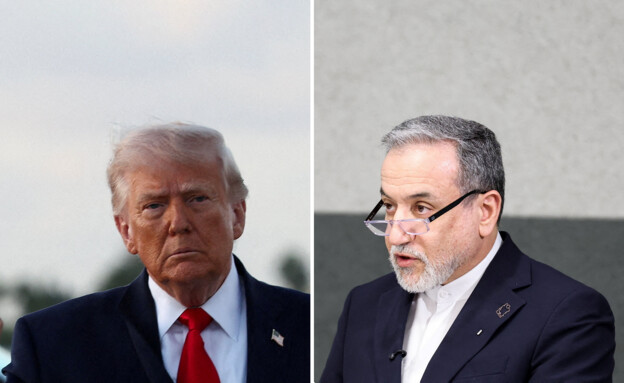


News 28-09-2026
America as a Source of Risk: How Israel, Russia and Germany View Trump’s Policies
By late September 2026, the United States is being discussed in Israel, Russia and Germany less as the familiar center of Western power than as an unpredictable player whose decisions simultaneously shape the course of wars, energy prices, access to weapons and the stability of alliances. The main focus of the debate is the protracted US-Israeli war with Iran and its consequences—from the Strait of Hormuz to Europe’s stockpiles of Patriot missiles. The second issue is Washington’s return to mediation efforts over Ukraine. The third is the gradual transformation of American leadership from an institutional commitment into the more personal and transactional policy of Donald Trump. All three countries are concerned, but for different reasons: Israel fears that American support may prove politically conditional; Germany fears that the United States is weakening European security while demanding an ever-higher price for it; and Russia believes that Washington is still capable of changing the balance of power but does not itself understand how to end the crises it has begun.
The war with Iran has become the point at which these views converge most clearly. In Germany, it is increasingly described not as a demonstration of American power but as its squandering. In a commentary for Tagesschau, ARD Washington correspondent Carsten Küntopp argues that Trump has “lost” the conflict in strategic terms: Iran has not been forced to surrender, the Strait of Hormuz has become a source of prolonged instability, and US allies in the Middle East are being forced to seek additional security guarantees. It is particularly telling that German criticism assesses the war not only in humanitarian or legal terms but also through its direct cost to Europe: a shortage of American air-defense systems means fewer capabilities for Ukraine and greater risks for NATO’s eastern flank. (tagesschau.de)
Russian expert debate views the same crisis differently, but reaches a similar conclusion about Washington’s inconsistency. Middle East expert Farhad Ibragimov described the situation in a column for Kommersant as “neither peace nor war”: the White House alternately promises an imminent resolution, rules out rushing into negotiations, and speaks of restoring normal shipping even as attacks and risks in the region continue. For Russian audiences, this is not simply a criticism of Trump; it is an argument in the broader debate over the fact that American pressure does not necessarily produce a political result. Another Kommersant writer, Oleg Akulinichev, emphasizes in his analysis that the initial expectation of Iran’s swift defeat has given way to a protracted conflict, with Washington’s and Israel’s objectives beginning to diverge: the United States is increasingly concerned with inflation, oil and the November midterm elections, while for Israel the Iranian military threat cannot be postponed until a convenient electoral timetable. (kommersant.ru)
It is this divergence that is being discussed most acutely in Israel. Israeli commentators no longer assume an automatic alignment of interests between Jerusalem and Washington. Former Israeli Air Defense commander Zvika Haimovich wrote in Israel Hayom that Iran is operating in the narrow space between a real regional threat and Trump’s reluctance to resume a major war. In this logic, Tehran does not need to defeat the United States or Israel militarily: it is enough to raise the cost of the conflict, put pressure on American domestic politics and secure negotiations on more favorable terms. An Israeli source familiar with the assessments of the situation put the concern even more directly in Ynet: Iran may escalate in the hope of “wearing Trump down” before the midterm elections. (israelhayom.co.il)
This has produced Israel’s most unusual theme: America is perceived not merely as an ally but as a domestic political factor in Israel over which Israelis themselves have no control. Economic commentator Adrian Pilot called Trump “the most influential person no one in Israel elected” in Calcalist. His point goes beyond the usual discussion of military assistance: a single statement about tariffs, interest rates, sanctions or war can move the shekel, the Tel Aviv Stock Exchange, Finance Ministry calculations and the government’s strategic expectations. Israel’s anxiety is therefore twofold. On the one hand, the country depends on American military, intelligence and diplomatic infrastructure. On the other, the personalized nature of Trump’s decision-making makes that dependence less predictable. (calcalist.co.il)
The feeling was reinforced by remarks from Vice President JD Vance that were widely discussed in the Israeli press. As Ynet reported, Vance emphasized that Israel remains an important partner in military technology and intelligence, but said that American policy “cannot be subordinate” to Israel. In the American context, this is an attempt to defend the principle of Washington’s independence; in Israel, it is a painful reminder that an alliance no longer guarantees automatic support for every Israeli strategy. At the same time, Israeli writers are noting the deterioration in American public attitudes toward Israel. For Jerusalem, this is no longer an abstract reputational problem but a potential constraint on the next American administration’s freedom of action. (ynet.co.il)
Germany sees the same American volatility through the prism of Europe’s dependence on the United States. Berlin has not abandoned its desire to maintain close defense ties with Washington: Defense Minister Boris Pistorius and his American counterpart Pete Hegseth agreed to develop military-technical cooperation, while Germany continues to purchase American F-35s and hopes to acquire Tomahawks. That is precisely why the German debate is becoming increasingly tense. Tagesschau notes the paradox: Berlin is seeking closer military integration with the United States at the very moment when the war with Iran has revealed shortages of American ammunition and air-defense missiles. In other words, Germany is deepening its dependence on a supplier that has itself become embroiled in war and may direct its limited resources anywhere—to the Middle East, Asia or domestic needs. (tagesschau.de)
This fear became especially pronounced after Trump demanded reimbursement for previous US spending on Ukraine. The German reaction was not only outrage over the amount but also an awareness of a new principle: even already established allied commitments can be retroactively turned into a bill. Tagesschau links this rhetoric to Trump’s broader attempt to present European security as a service for which Europe must pay separately and immediately. For Germany, where talk of “strategic autonomy” had for years remained more of a political slogan, this is becoming a practical problem—from ammunition stockpiles to the ability to support Ukraine without guaranteed American participation. (tagesschau.de)
The Ukrainian issue shows how differently the three countries interpret American mediation. In Germany, the resumption of Steve Witkoff’s and Jared Kushner’s trips to Moscow and Kyiv was greeted with caution: the participation of German, French and British advisers in some consultations indicates that Europe does not want Washington and Moscow to reach an agreement over the heads of Kyiv and the Europeans. A German Tagesschau analysis emphasizes that American diplomacy returned to the Ukraine issue only after a pause, when the White House’s attention had been absorbed by Iran. For Berlin, this is a symptom: Europe’s war depends on how closely it aligns with the American president’s current political priorities. (tagesschau.de)
In Russia, by contrast, the very fact of renewed American contact is seen as confirmation that a settlement is impossible without direct dialogue with Moscow. Russian publications pay little attention to the European demand for full participation in the negotiations and much more to the conditions Moscow regards as the basis for a deal: the situation at the front, Ukraine’s neutral status, sanctions and the territorial issue. But Russian optimism is restrained: American sanctions initiatives and negotiating signals are proceeding in parallel, creating the impression that Washington is trying both to pressure and to negotiate at the same time. In the Russian reading, this is not necessarily a contradiction but rather a familiar American bargaining style. In Germany, however, it looks like dangerous uncertainty: it is impossible to build Europe’s long-term defense if it is unclear when Trump’s negotiating logic will prevail over the logic of deterrence. (rbc.ru)
The most important point of convergence among Israel, Russia and Germany is that none of these countries still perceives American policy as a stable system of rules. Israel fears that American war-weariness and domestic electoral incentives will lead Washington to favor a short-term deal over the long-term containment of Iran. Germany fears that wars begun by the United States will deplete NATO’s shared resources and force Europe to pay more for less predictability. Russia sees an opportunity to exploit American inconsistency but simultaneously doubts Trump’s ability to turn grand statements into a sustainable architecture of peace. This is the United States’ new international reputation: not a disappearing superpower, but a superpower whose influence remains enormous precisely because no one knows where it will be directed tomorrow.

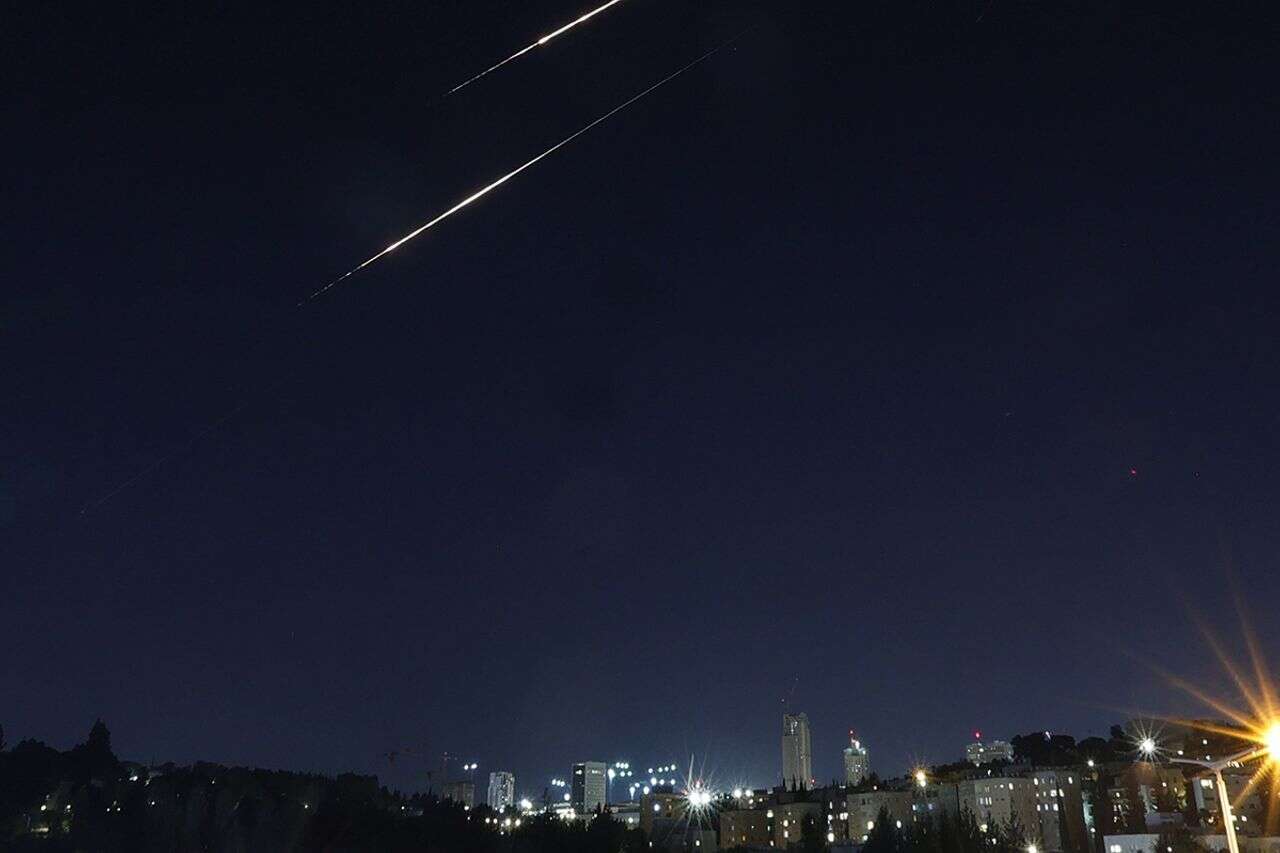
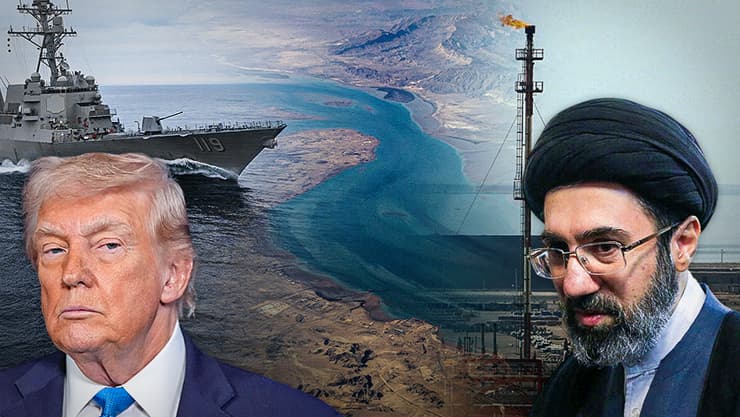
Washington’s Spectacle for Two Superpowers: How Germany, Russia and China Read the Trump–Xi...
The main American story to draw a noticeable reaction in Germany, Russia and China in recent days was not any individual tariff or diplomatic spat, but the very format of Donald Trump and Xi Jinping’s September meeting in Washington. After several years in which U.S.–China relations were described almost exclusively in the language of containment, sanctions and the risk of conflict, the White House gave the Chinese leader a reception of rare state-pageantry proportions: a personal meeting with Trump at an air base, military honors, a banquet and deliberately friendly rhetoric. Yet it was precisely the gap between the lavish staging and the modesty of the practical results that became the main subject of foreign commentary.
In Germany, the meeting is seen above all as a troubling example of Trump’s personalized diplomacy. Tagesschau described the summit with the formula “fanfares, an honor guard, a banquet—but almost no decisions”: Washington and Beijing presented no major agreement on artificial intelligence, Taiwan or technology restrictions. The German debate therefore does not boil down to the question of whether the United States and China have “made up.” Far more important is whether U.S. foreign policy is turning into a series of personal deals between leaders, with allies and partners learning the rules only after the two largest powers have agreed on a temporary pause.
This concern is particularly visible in a commentary by RND correspondent Christian Fahrenbach, who called Xi’s visit “much pomp, no objectives.” For German observers, the problem is not Washington’s contact with Beijing itself—Berlin has an interest in predictable trade and in reducing the risk of a major war—but the fact that demonstrative respect for Xi is not accompanied by a clear strategy. Germany finds itself in an uncomfortable position: its export economy depends on the Chinese market, its security depends on the United States, while technological competition between the two forces European companies to choose sides. That is why German coverage reads the summit not as a signal of a new world, but as an indication of how fragile the old Western order may be.
Also telling is the more severe conclusion by MERICS analyst Abhishek Insisa, cited by Deutsche Welle: behind the ceremony, Beijing made no significant concessions to Trump, while the current course of bilateral relations is, for the time being, working more in China’s favor. This assessment reflects a specifically German concern: the United States still possesses enormous military and financial power, but China has learned to derive political dividends from the mere recognition of its equal status. If the American president demonstrates that he needs a personal agreement with Beijing, China receives confirmation of its central place in world politics—even without signing a major treaty.
The Russian reaction to the same story is noticeably less emotional and more geopolitical. Russian commentators saw Xi’s reception not as American weakness in the direct sense, but as recognition that Washington can no longer speak to China from a position of unconditional superiority. The newspaper Vedomosti put “the Thucydides Trap” in its headline—the popular theory that a rising power and the ruling power are almost inevitably headed for confrontation. Yet the point of the article is precisely that the leaders are trying to postpone this logic: the trade truce is being extended, while the risk of direct escalation over technological and military issues is temporarily being contained.
Dmitry Kochegurov, a researcher at the Institute for the Study of Contemporary International Relations and Regional Problems (ISKRA), articulated the Russian view particularly clearly in an interview with Vedomosti: Trump sees Xi as an equal and treats him with respect not because he officially recognizes China as equal to the United States, but because he sees him as a leader “with whom one can do business.” In the Russian interpretation, this matters more than specific declarations. An international system in which Washington could impose conditions simultaneously on Moscow, Beijing and its European allies looks increasingly unrealistic; in its place, a system of bargaining among centers of power is emerging.
At the same time, Russian authors are not inclined to mistake the warm images from Washington for a strategic U.S.–China alliance. Kommersant, summarizing the international reaction, noted that Xi gained the most important thing—confirmation of his status as an equal interlocutor—while Trump was left with few tangible breakthroughs to show. But Moscow understands well that the disputes over chips, rare-earth metals, artificial intelligence, Taiwan and China’s ties with Iran have not disappeared. Russia benefits from the very manageability of U.S.–China rivalry: it reduces the risk of a world war and preserves room for maneuver. However, an excessively deep rapprochement between Washington and Beijing would theoretically reduce Russia’s value as an independent pole. The Russian reaction therefore combines satisfaction at the dismantling of American exceptionalism with caution about a possible new “grand bargain” between the superpowers.
In China, the tone is fundamentally different. There, the Washington meeting is presented neither as a U.S. concession nor as a victory over the United States, but as proof that the course toward “constructive strategic stability” is correct. On the eve of the visit, an official commentary by “Zhongsheng” in the People’s Daily called on the United States and China to “meet each other halfway” and described leader-level diplomacy as a “compass” for bilateral relations. This is characteristic of Chinese political discourse: Beijing seeks not so much to record a one-off deal as to establish the principle that two great powers must maintain communication at the highest level and not allow individual conflicts to destroy the overall framework of their relationship.
After the summit, Chinese official media emphasized predictability. In a People’s Daily report, Stephen Orlins, president of the National Committee on U.S.–China Relations, called predictability a “global public good,” while business representatives stressed that companies need stable, institutionalized contacts more than high-profile political gestures. This is one of the most important Chinese interpretations of American policy: the United States is portrayed not as an unchanging adversary, but as a country with which rules of coexistence can and should be built if Washington abandons unilateral pressure.
But China’s public line is not based on naïve détente. A Global Times editorial on the resumption of U.S.–China security contacts welcomed dialogue while warning that Washington sometimes understands “crisis management” as the right to test China’s red lines and then demand restraint from Beijing. In other words, in Chinese discourse, compromise is acceptable only as interaction between equals. That is precisely why Xi’s state visit to Washington matters disproportionately to the absence of signed breakthrough agreements: it visually reinforces the image of China as a power with which America is forced to negotiate.
Thus, an unusual convergence emerges among three very different perspectives. Germany sees the summit as a risk that Trump is resolving global issues through personal diplomacy, leaving Europe in the role of an observer. Russia views it as a symptom of the transition from American unipolarity to tough but necessary bargaining among the great powers. China uses the same meeting to advance the idea of equal and manageable rivalry. All three reactions converge on one point: the era when Washington could pressure Beijing, reassure its allies and set the rules of global trade single-handedly is coming to an end.
The most unexpected development here is not the absence of a new Cold War, but the emergence of its peculiar diplomatic opposite: rivals retain sanctions, tariffs and military mistrust, yet increasingly need ceremonies of mutual recognition. For Trump, personal closeness with Xi must turn into a political result. For Xi, the reception itself has already become the result. For Germany, it is a warning that Europe may find itself caught between two giants negotiating with each other. For Russia, it is evidence of a new multipolarity. And for China, it confirms that its status is no longer under discussion; only the terms on which Washington will recognize that status remain to be negotiated.
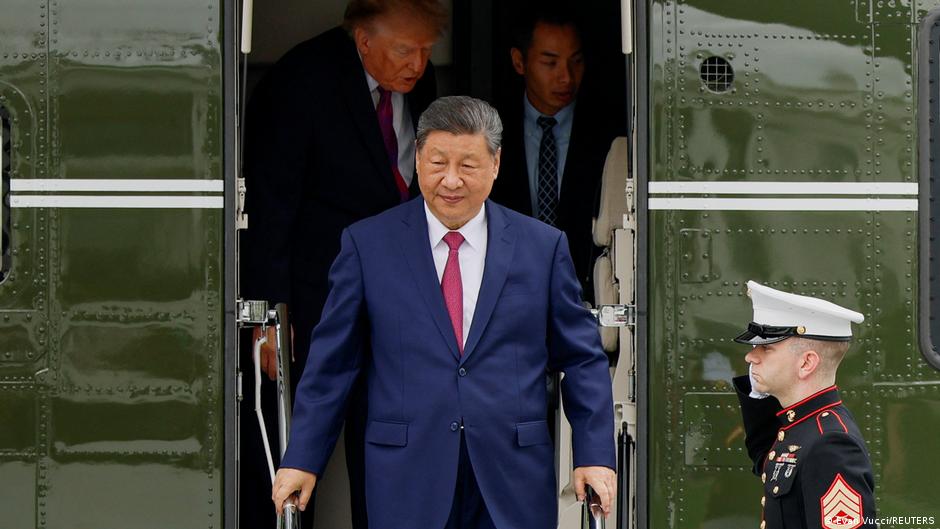
News 27-09-2026
America as a Source of Risk: Views of Trump’s Policies in South Africa, Israel and Germany
By September 27, 2026, discussion of America in South Africa, Israel and Germany had unexpectedly shifted away from the familiar question of U.S. power toward the price of that power for allies, trading partners and countries seeking to preserve their independence. The main issues are the U.S. and Israeli war with Iran, Washington’s threats to impose new tariffs on Europe, and increasingly intense pressure on Pretoria over its domestic and foreign policies. These issues are perceived differently in each of the three countries, but local commentators share a clear conclusion: under Donald Trump, American policy has become less predictable and therefore requires not loyalty, but safeguards against Washington.
The most acute issue is Iran. In Israel, American involvement is still viewed primarily through the lens of security: the ability of the United States to deter Tehran, prevent it from acquiring nuclear weapons and maintain pressure in the Strait of Hormuz. The Israeli press is discussing in detail Trump’s rejection of Tehran’s proposed seven-day pause. According to Israel Hayom, the U.S. administration prefers to continue economically strangling Iran and has not ruled out a new broad campaign of strikes after the U.S. midterm elections in November. For a significant part of the Israeli discourse, this appears to confirm that Washington is unwilling to trade its strategic objective—the weakening of Iran’s military machine—for short-term de-escalation. (israelhayom.co.il)
But this is precisely where a more alarming view is gaining ground in Israel: American resolve is not the same as a sustainable strategy. Israeli analysts have long warned that Trump remains both Israel’s primary external resource and a politician whose decisions depend on his personal image, domestic political pressure and his desire to declare a conflict over on terms favorable to himself. An analysis published by Israel’s Institute for National Security Studies emphasized that Jerusalem must operate in a zone of uncertainty: inflict maximum damage on Iran’s capabilities while not losing access to American support. This formula is particularly important now, when the question is no longer whether the United States will support Israel, but how long and at what cost it is prepared to support its chosen course. (inss.org.il)
In Germany, the same war provokes an almost opposite reaction. Here, the American operation is perceived not as a distant display of force, but as a direct source of energy and industrial risk. On September 23, German government spokesman Stefan Kornelius explicitly linked the need for diplomacy to how “enormously significant” the conflict is for Germany in energy terms, and said that the war must end “as soon as possible.” Berlin is simultaneously calling for Iran to return to negotiations and for the blockade of the Strait of Hormuz to end—but the local debate is increasingly noting a contradiction: Germany is calling for diplomacy while remaining politically aligned with the U.S.-Israeli course. (auswaertiges-amt.de)
German media are developing this criticism even more sharply. A Deutsche Welle analysis describes the possible American model as “mowing the lawn”: the United States regularly destroys Iran’s recovering radars, missiles and maritime infrastructure without promising a final victory. The problem is that such a tactic could turn the conflict into an endless cycle of strikes and subsequent reconstruction. Experts warn that if Tehran concludes that constant American attacks are inevitable, the pursuit of nuclear weapons could become an even more attractive means of deterrence. For Germany, this is not an abstract military dilemma, but a scenario of constant pressure on oil markets, transportation and the European economy. (amp.dw.com)
South Africa views America through a different, but no less painful, experience: Washington’s attempt to turn differences over values into an instrument of direct political coercion. In Pretoria, the discussion is not about the Strait of Hormuz, but about U.S. visa restrictions against individuals whom the Trump administration considers responsible for racial discrimination, uncompensated land reform and policies toward minorities. The South African government rejects this interpretation, saying that measures to correct the legacy of apartheid are a constitutional duty of the state. International Relations Minister Ronald Lamola urged the country to prepare for the “worst-case scenario” because, in his words, the United States is demanding a de facto surrender of sovereignty on issues including black economic empowerment, land policy and foreign-policy direction. (mg.co.za)
The South African story produces perhaps the most unusual local conclusion: the dispute with America is increasingly interpreted not as an ordinary diplomatic conflict, but as a dispute over who has the right to define the meaning of democracy and equality after apartheid. Former U.S. ambassador Leo Brent Bozell III was even drawn into a controversy surrounding possible mediation by former President Thabo Mbeki. The South African side considered the very idea of imposing an external negotiator on the country humiliating; Clayson Monyela, head of public diplomacy, sarcastically suggested imagining the reverse situation—if Pretoria tried to “appoint” Barack Obama as a negotiator for the current American president. (mg.co.za)
Trump’s trade policy creates another common thread between Berlin and Pretoria. Germany sees it as a threat to Europe’s economic autonomy, while South Africa sees it as proof that access to the world’s largest market can be made conditional on political obedience. Germany was particularly irritated by Trump’s reaction to closer ties between the EU and Canada: he called possible Canadian associate membership in the European Union a “hostile act” and threatened high tariffs or restrictions on trade with Europe. For German audiences, this became more than another flare-up in the tariff conflict; it became an argument for a more independent Europe capable of building ties with Canada and other partners without American permission. (tagesschau.de)
Finally, another reaction to the United States is especially noticeable in Germany: interest in domestic American resistance to Trump. In an editorial comment, Der Spiegel journalist Britta Kollenbroich suggests that Germany should view American civil society not as a victim of an authoritarian shift, but as an example of the ability to defend institutions and rights. This is an important shift: America remains both a source of external instability and an internal example of democratic resistance to it. (spiegel.de)
Ultimately, Israel wants America not to waver in confronting Iran, but fears its political inconsistency; Germany wants the war stopped and its dependence on American economic dictates reduced; South Africa sees Washington’s pressure as an attempt to revise its post-apartheid social contract. The international reaction is not reducible to anti-Americanism. Rather, it reflects a more sober view of the United States: an alliance with Washington remains valuable, but fewer and fewer countries see it as a guarantee of predictability.

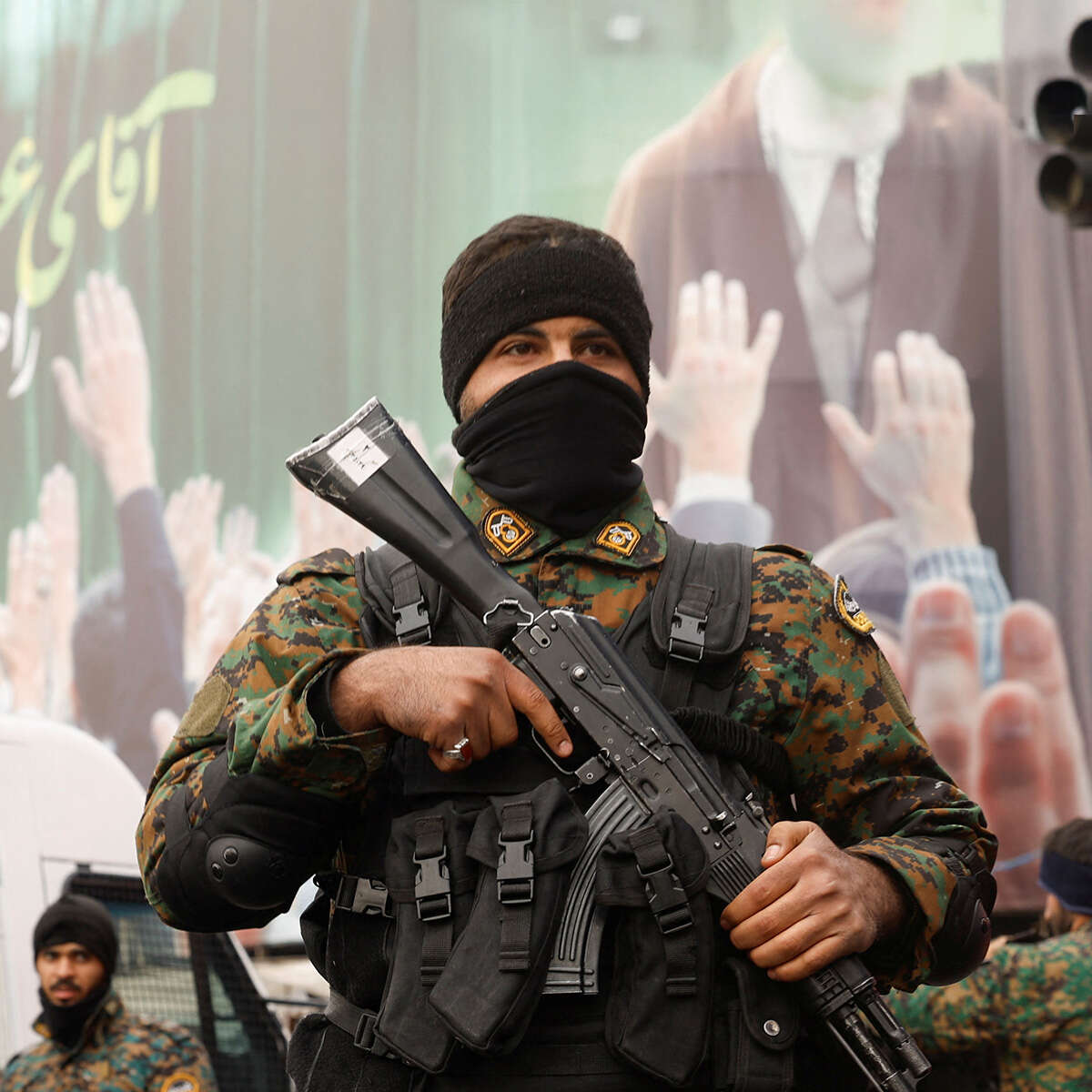


The United States at the Center of Diplomacy and Global Security
This new overview examines key decisions and signals from Washington that are influencing the development of international crises. Iran is being urged to move toward negotiations with the United States, Donald Trump allows for the possibility of a nonmilitary agreement with Cuba, while American support for Ukraine and European security remains a crucial factor in discussions of possible peace terms. The focus is on U.S. diplomatic influence, the reliability of its guarantees, and the consequences of foreign-policy decisions for ongoing conflicts. The materials are based on publications by nv.ua and glavred.net (Ukraine).
Ukraine Seeks Peace Without Giving Up Sovereignty and Defense
Two approaches are increasingly coming into conflict in Ukraine’s debate over a possible end to the war. The first proceeds from the need to stop the destruction, economic exhaustion, and risks of another winter under Russian attacks as soon as possible—even if this requires painful compromises. The second insists that diplomacy is possible only if Ukraine retains its right to self-defense, internationally recognized borders, and effective security guarantees. Both positions share the understanding that statements from allies alone are insufficient: the country needs air-defense missiles, protection for its energy sector, functioning export routes, weapons production, and real pressure on Moscow.
In an interview with NV recorded in Kyiv during the YES conference, British historian Niall Ferguson offers an argument in favor of rapid negotiations that is uncomfortable for a significant part of Ukrainian society. His position is based on an assessment of the military and economic balance: Russia is also paying a high price for the war, including because of Ukrainian attacks on its economic and strategic facilities. However, the resources of the two sides are not comparable, and a prolonged conflict is particularly dangerous for Ukraine’s economy.
Ferguson draws attention to the threat to Black Sea trade. “For Ukraine, this is a matter of survival because of the halt in Ukrainian exports,” he says. In his view, the budget deficit, debt burden, and continuation of the war for another year could push the Ukrainian economy into “a very alarming state of weakness.” From this, he concludes that a negotiated agreement must be sought as soon as possible, even if it involves territorial compromises, primarily concerning Donbas.
The historian urges Kyiv to consider “soberly and impartially” whether it is worth “sacrificing several square miles of territory” to end the war and begin reconstruction. In the Ukrainian context, however, this formula provokes fundamental rejection. The issue is not lines on a map, but civilians under occupation, destroyed cities, deportations, violence, and Russia’s attempts to deprive the country of its statehood. The question of territory is therefore closely linked not only to military expediency, but also to sovereignty, people’s rights, and the state’s responsibility toward them.
Ferguson’s interlocutor directly questions the assumption that Washington will be able to force Russia into an acceptable agreement. By her reasoning, it may be easier for the U.S. administration to pressure the victim of aggression—Ukraine—than the Kremlin. Moreover, the problem is not limited to Vladimir Putin: even his possible departure would not automatically mean the disappearance of Russian imperialism.
Ferguson sharply assesses Europe’s capabilities. In his words, European states have not created enough military strength to alter the Kremlin’s calculations, while Germany’s rearmament is proceeding too slowly. Political cycles in Germany, France, and Italy, he believes, make continued support for Kyiv less predictable. “Europe has failed to achieve peace because it does not have sufficient strength,” the historian says.
At the same time, he considers the United States an indispensable diplomatic center and envisions negotiations involving Ukraine, Russia, the United States, the United Kingdom, France, and Germany. For Kyiv, this prospect is ambivalent: American influence is necessary for security and pressure on Moscow, but Washington’s mediation also raises concerns that unequal terms could be imposed on Ukraine.
As a possible model, Ferguson cites Korea. There is no formal peace treaty between North and South Korea, but South Korea has been able to build a strong economy under the protection of a stable deterrence system. In his view, Ukraine should turn its wartime achievements into a long-term advantage by developing defense technologies, engineering expertise, and domestic production. “Ukraine has surpassed the United States militarily,” he claims, describing Ukrainian achievements as “military-technological miracles.” In this logic, the country’s future depends less on the “territories around Luhansk” than on its ability to become a technological military power.
Yet this is precisely where the central conflict in Ukraine’s debate becomes apparent. Technological modernization and economic recovery are essential, but they do not cancel the demand to restore the occupied territories and protect the people who remain under Russian control. For Ukraine, reliance on technology cannot replace sovereignty.
The practical dimension of this dilemma was demonstrated by Volodymyr Zelensky’s trip to the UN General Assembly. As a Glavred analytical article notes, Kyiv assesses the outcome of the visit not by the number of meetings and public promises, but by whether additional interceptor missiles, air-defense systems, production licenses, mechanisms to protect the energy sector, and tools to pressure Russia appear in practice.
The central issue is preparation for another winter and the risk of new Russian attacks on energy infrastructure. The United States proposed the idea of an “energy truce,” and Ukraine declared its readiness to support it only on the condition of full reciprocity. Zelensky put the position this way: “We are ready for any format of an energy truce.” But Ukraine is prepared to refrain from striking Russian energy facilities only if Russia stops attacking the Ukrainian power system.
For Kyiv, this is not an abstract humanitarian initiative, but a question of heating, electricity, the operation of businesses, hospitals, and transport, and the survival of civilians. At the same time, no agreement has been signed: there is an American proposal that Ukraine accepts provided Moscow undertakes reciprocal obligations. This approach reflects distrust of unilateral restrictions after years of Russian violations of agreements and systematic attacks on civilian infrastructure.
The issue of Patriot systems is particularly important. Zelensky emphasizes that against ballistic threats, “the only things currently working are interceptors for Patriot systems, which are needed practically every day.” A possible U.S. license to produce Patriot missiles in Ukraine is viewed as an opportunity to reduce dependence on external supplies and strengthen the national defense-industrial complex. However, the timing, scale, and parameters of the possible program remain unknown, so the political signal does not yet mean that real production capacity will emerge.
Ukraine’s security is directly linked to exports through the Black Sea. Restoring the grain corridor is important not only for global food security, but also for the operation of Ukrainian ports, foreign-currency revenues, and economic resilience. Zelensky has stressed that Ukrainian food is needed by countries “on every continent,” but full-scale trade is impossible without protecting shipping and port infrastructure and ending Russian strikes.
Serhii Sydorenko, editor of European Pravda, assesses Zelensky’s talks with Donald Trump through the changing nature of relations between Kyiv and Washington. Before the trip, there were concerns that the United States might demand that Ukraine stop striking Russian energy facilities, partly because of possible effects on the American fuel market. But according to Sydorenko, the meeting included “no tough demands” and “no accusations.”
This enabled Kyiv to avoid an “image trap”: Ukraine does not appear to be rejecting diplomacy, while at the same time it refuses to accept unilateral self-restraint as long as Russia continues the war. Sydorenko believes that no major formal agreements were reached: sanctions pressure, details of the Patriot license, and other issues remained unresolved. Nevertheless, in his assessment, relations with the United States have moved onto “a more or less stable positive track.”
Expert Taras Zahorodnyi, for his part, believes Ukraine’s negotiating position is stronger than it may appear from diplomatic rhetoric. Ukraine’s ability to strike military and economic targets on Russian territory gives Kyiv an additional resource. In his view, if Trump wants to demonstrate progress toward a settlement, Washington must not only talk about negotiations, but also provide Ukraine with weapons and use real levers of pressure against Moscow.
Zahorodnyi separately emphasizes the risk to sovereignty. Any agreement restricting strikes must clearly define the legal status of Crimea and other temporarily occupied territories. His question—“What is the legal status of Crimea and the other temporarily occupied territories?”—concerns a fundamental problem: if a ban on strikes extends to lands that Moscow declares Russian, it could be interpreted as de facto recognition of the annexation. Ukraine’s renunciation of strikes on Crimea or Donbas, the expert warns, could create the impression that these are “not our territories”—a scenario Kyiv considers unacceptable.
Ukraine’s strategy is therefore not built around the United States alone. Agreements with Australia, Finland, France, the United Kingdom, Türkiye, and NATO are viewed as elements of a resilience system. Australia promises to continue military and financial assistance, training Ukrainian service members, and cooperation in weapons production. Finland is joining the Drone Deal initiative. Talks with France cover SAMP/T systems, missiles, and the localization of production, while the United Kingdom links its support to energy protection and more affordable air-defense technology solutions.
This diversification is important for Ukraine because it reduces critical dependence on a single partner while also developing its own defense industry. But Ukrainian analysts stress that statements and agreements must be backed by concrete deliveries, production lines, sanctions, and mechanisms for monitoring the fulfillment of obligations.
Ukraine’s debate over peace, therefore, cannot be reduced to a choice between war and negotiations. Kyiv is ready to use diplomacy—including a reciprocal energy truce and international negotiation formats—but insists that any agreements be based on reciprocity, international law, forcing Russia to fulfill its obligations, and preserving Ukraine’s right to defend itself.
The country is simultaneously preparing for winter attacks, seeking Patriot interceptors, protecting maritime exports, localizing weapons production, and maintaining the international coalition. Under these conditions, calls to sacrifice territory for a quick agreement remain extremely painful: for Ukraine, peace without guarantees, without a clear status for Crimea and Donbas, and without the ability to repel a new attack risks becoming not the end of the war, but a pause before its continuation.


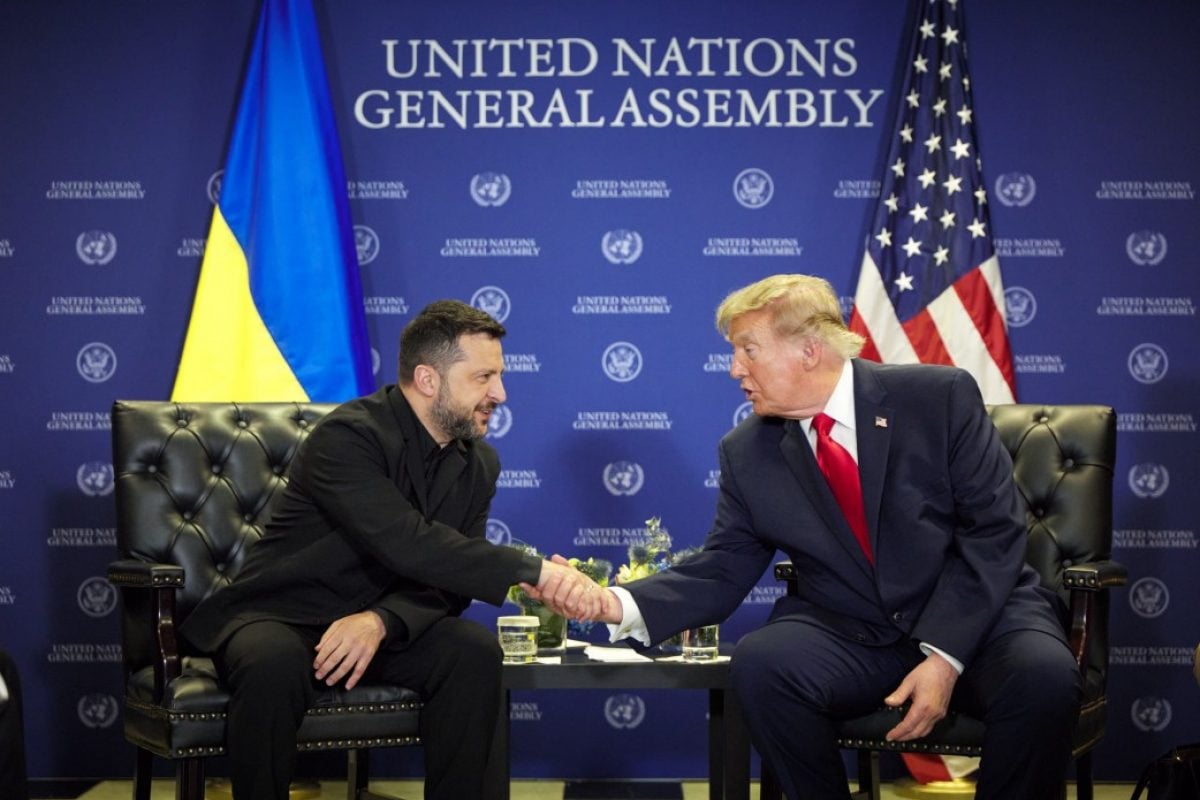
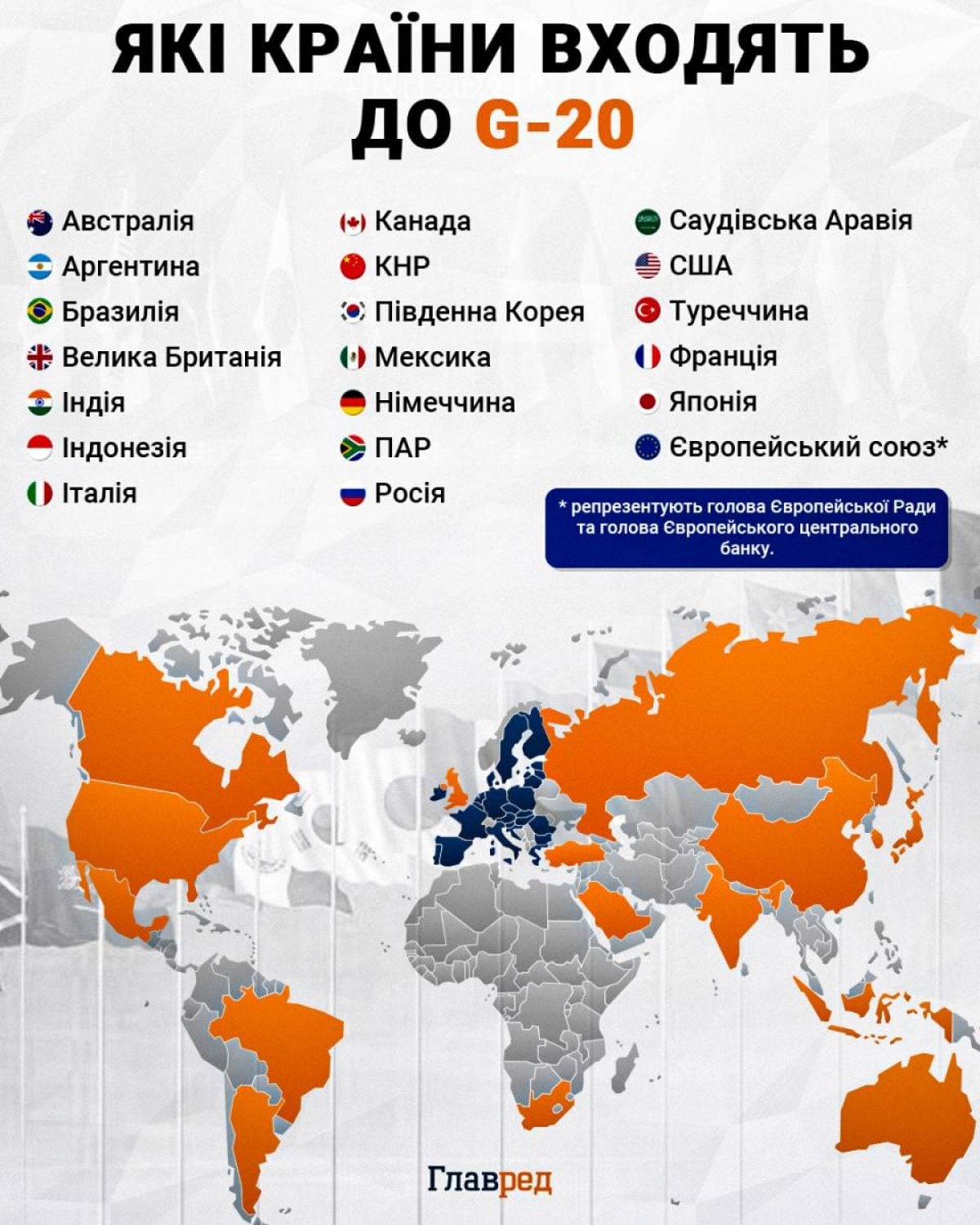
America as Negotiator, Patron and Source of Risk: What Ukraine, Saudi Arabia and Turkey...
The final days of September 2026 showed that the United States had once again become the main subject of foreign-policy discussions in Kyiv, Riyadh and Ankara at the same time—but by no means as an unconditional guarantor of order. In local Ukrainian, Saudi and Turkish debates, Donald Trump’s America appears to be a power that retains enormous military and economic strength but applies it situationally: threatening Iran and immediately talking about a deal; promising to support its allies while urging them to assume a larger share of the costs and risks; conducting peace talks on Ukraine without yet turning them into a mechanism for exerting real pressure on Moscow.
The main common theme is the search for an acceptable way out of the war between the United States, Israel and Iran. At a September 22 meeting in New York, Trump brought together the leaders of the Gulf states, Turkey and several Arab countries, saying that US-Iranian contacts were “gaining momentum.” But for regional capitals, the White House’s rhetoric matters less than tangible issues: the security of oil infrastructure, shipping through the Strait of Hormuz and Bab el-Mandeb, and the risk of strikes on their territory. Saudi Arab News writes about this directly: for the Gulf states, the priorities are ending the conflict, restoring energy security and protecting sea routes. Saudi commentator Abdulrahman al-Qahtani formulated the local “red line” especially clearly: no country can be allowed to hold Hormuz and Bab el-Mandeb “hostage.” (arabnews.com)
This substantially changes the meaning of the Saudi-American partnership. Riyadh does not view American pressure on Iran as an end in itself or a demonstration of strength: the desired outcome is not another strike, but an agreement that would deprive Tehran of the ability to threaten trade and energy exports. This is why the Saudi press shows an ambivalent attitude toward Trump. On the one hand, the newspaper Okaz reports in detail on his optimism after three hours of contacts between American representatives and Iranian intermediaries: according to the US president, the conversation was “very good and very productive.” On the other hand, the sequence of events itself—when Washington was still talking about new strikes in early September but was already promoting negotiations by September 23—only underscores, for Saudi Arabia, the unpredictability of the American course. (okaz.com.sa)
Turkey’s reaction to the same developments is noticeably less defensive and more geopolitical. In Ankara, American policy is interpreted not only through the lens of Iran but also as an attempt to shift responsibility for managing the regional order onto local powers. In an analysis by the Anadolu Agency, lecturer Yusuf Bahadır Keskin notes that Saudi Arabia, the UAE and Qatar sought to persuade Trump to postpone new strikes not because they sympathize with Iran, but because they themselves would pay for an escalation—with attacks on bases, ports and oil facilities, as well as rising transport and insurance costs. In this interpretation, the United States is not so much leaving the region as offering its allies a reality in which American power is available but will not necessarily be used first or in full. (aa.com.tr)
For Turkey, this creates room for ambition. The presence of Recep Tayyip Erdoğan at the New York meeting with Trump and the Gulf states is presented in Turkey’s official media sphere as recognition that Ankara is an essential participant in a Middle Eastern settlement. TRT Haber placed at the center of its coverage US Ambassador Thomas Barrack’s statement that there was “harmony” between Erdoğan and Trump and that relations between the two countries had “never been this good.” This is more than a compliment: in the Turkish reading, the personal channel between the two presidents is an asset that can be converted into influence over the Syrian front, the Iranian crisis and the expansion of trade with the United States. (trthaber.com)
But the Turkish debate is not limited to celebrating closer ties. It also contains a cautious understanding that American praise is simultaneously an invitation to take on greater responsibility. In an Anadolu article, analyst Orhan Karaoğlu offers a broader framework: Washington’s campaign against Iran is not an isolated Middle Eastern crisis but part of a cautious rivalry between the United States and China. For Ankara, this means its role will grow, but also that regional instability may result from a global game whose objectives are determined far from Turkey. (aa.com.tr)
Ukraine’s response to America during these days revolves around a different form of the same problem—the gap between diplomatic access to Trump and practical results. After Volodymyr Zelensky’s meeting with the US president on September 22, the Ukrainian publication European Pravda saw the key positive not in signed agreements, of which there were none, but in a change of atmosphere: Washington did not demand unilateral concessions from Kyiv to Russia and did not object to Ukrainian strikes on Russian territory. For a country that until recently feared renewed American pressure, this is already considered a diplomatic achievement. (eurointegration.com.ua)
However, a much sharper tone can be heard in an analysis by Ukrainska Pravda. The authors call the meeting essentially fruitless: it produced neither a strong sanctions lever against the Kremlin, nor clear defense decisions, nor a workable format for the peace process. Ukraine’s wariness toward the idea of an “energy truce” is especially telling. Kyiv is prepared to discuss halting attacks on energy infrastructure only on the condition that the truce is complete and unconditional—in other words, Russia must not be able to continue attacking Ukraine’s power system while declaring it connected to defense. (pravda.com.ua)
This leads to a conclusion shared by all three countries—one rarely expressed so directly in American political discourse. Ukraine, Saudi Arabia and Turkey are not expecting the United States to make a simple choice between intervention and withdrawal. They are trying to adapt to an America that simultaneously pressures, bargains, mediates and demands greater self-reliance from its partners. Kyiv wants to ensure that the American negotiating process does not become synonymous with concessions to Moscow; Riyadh wants Washington’s struggle with Tehran not to turn the Gulf into a theater of retaliatory strikes; and Ankara wants America’s new need for regional mediators to establish Turkey as a co-author, rather than an object, of the Middle Eastern order.
This is the most important shift in local perceptions of the United States: none of these players is abandoning its ties with Washington. But all three are increasingly unwilling to build their security on the assumption that American will is constant and American promises are automatically equivalent to American action.
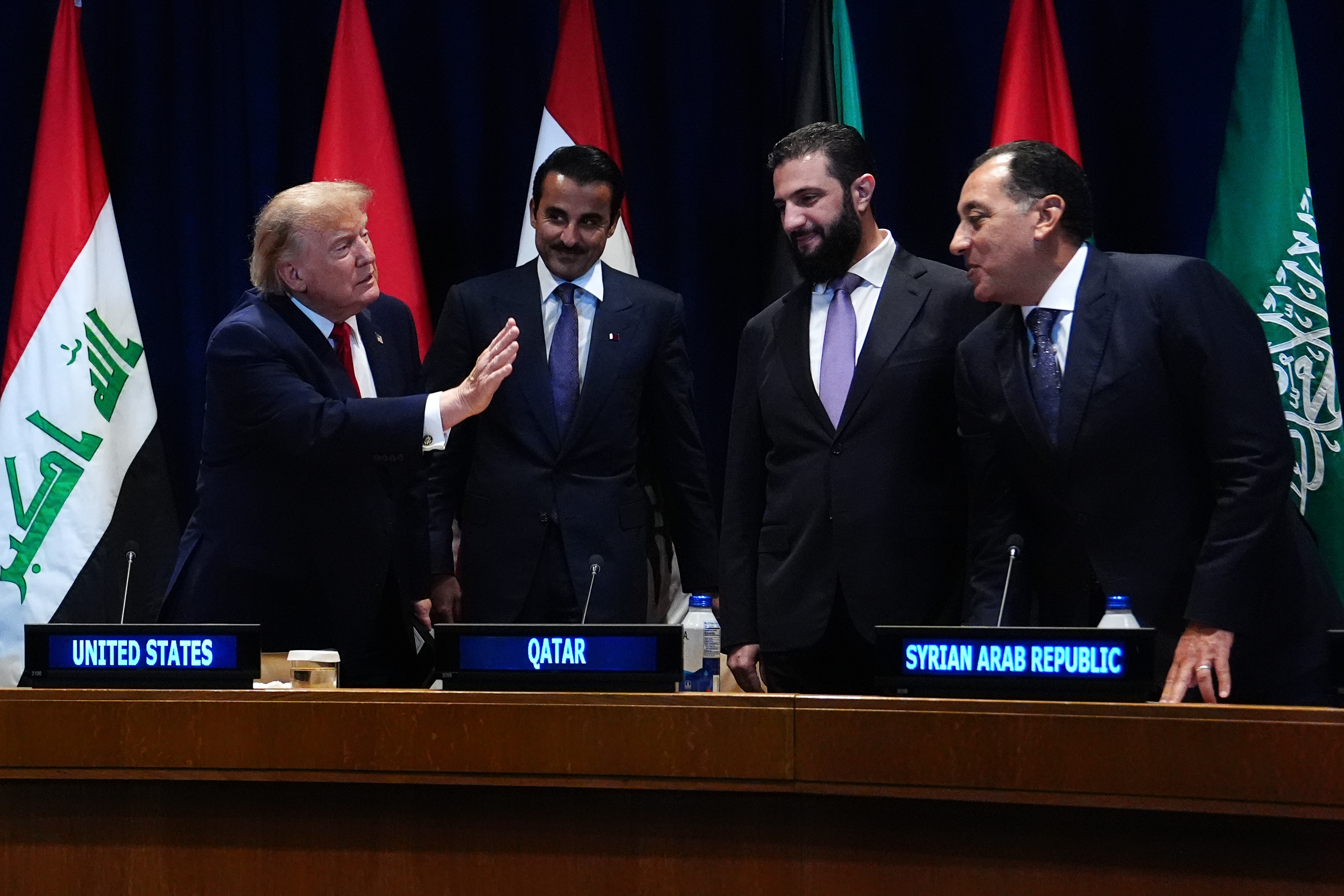


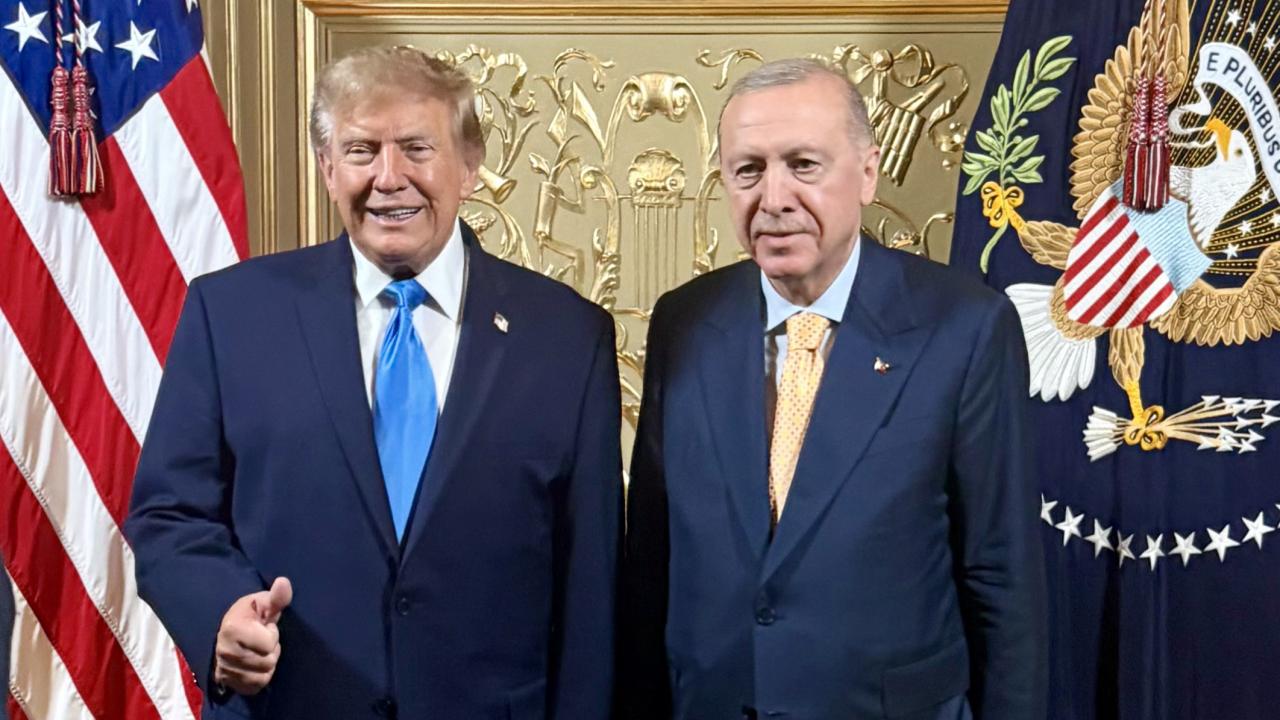
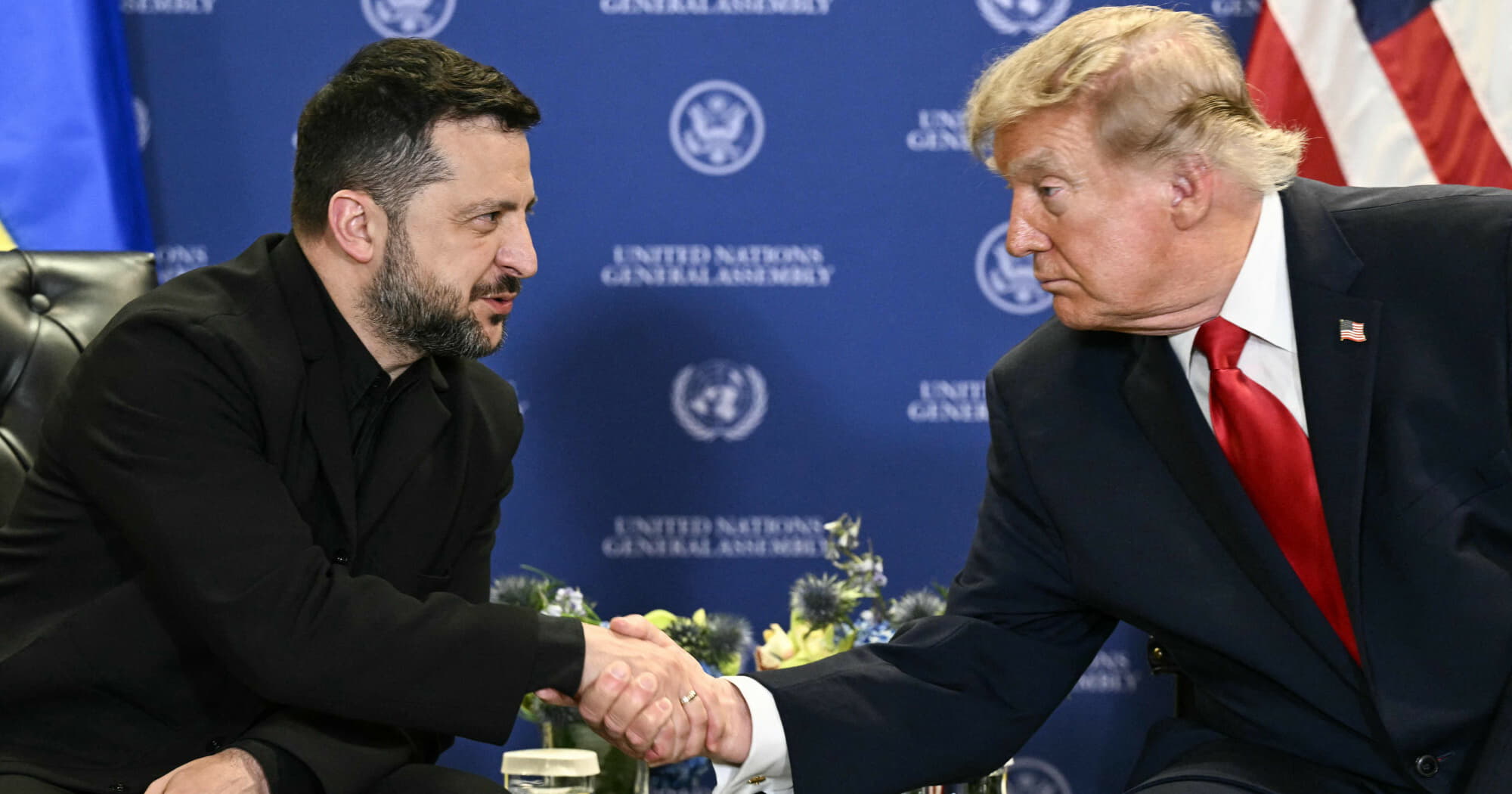
News 26-09-2026
America as Mediator, Sanctions Enforcer and Source of Uncertainty
By September 26, the main topic of conversations about the United States in Ukraine, India and Russia was not any single initiative by Donald Trump, but a new style of American policy: Washington is simultaneously offering itself as a mediator in the war, using tariffs to pressure partners and emphasizing its right to act by its own rules. In Kyiv, this is viewed primarily through the question of surviving the winter and securing air-defense supplies; in New Delhi, through the threat of punishment for buying Russian oil; and in Moscow, through the possibility of resuming dialogue with the White House without compromising its own terms for a settlement.
The Ukrainian reaction to the September 22 meeting between Zelenskyy and Trump in New York was noticeably more cautious than the usual diplomatic optimism. Serhiy Sydorenko, editor of European Pravda, saw it not as a breakthrough but as a return of relations with the United States to a “more or less stable positive track”: for Kyiv, the mere absence of public pressure and demands for an immediate halt to strikes on Russian oil-refining facilities was already important. (eurointegration.com.ua) This is telling: the American tone has become a political resource in its own right, since Trump had previously linked Ukrainian strikes on Russia’s energy sector to rising fuel prices in the United States.
However, the Ukrainian press does not regard the change in tone as a guarantee of a strategic shift. In an analysis by Ukrainska Pravda, the current American policy is described as an attempt to secure an energy truce—a mutual halt to strikes on energy infrastructure—but without a clear answer to the key question for Ukraine: what, specifically, will force Russia to comply with the agreement? The authors stress that Washington has stopped responding with an unequivocal “no” to requests to sell Patriot missiles and license their production, but just as unequivocal a “yes” has not been heard either. (pravda.com.ua)
Patriot has become a symbol of how Ukrainians now view the United States: not only as a weapons supplier, but also as a potential partner in building the country’s own defense industry. Trump publicly confirmed that licensing the production of interceptor missiles in Ukraine was being discussed with Zelenskyy. Ukrainska Pravda notes that the White House had previously cited U.S. needs and urged caution over transferring the technology. (pravda.com.ua) Thus, hope in Kyiv is tempered by an understanding of technological realities: as Valeriy Zarubin, head of BlueBird Tec, explains in his column, years of work, complex supply chains and access to critical electronics lie between receiving a license and producing the first missile in series. (pravda.com.ua) For Ukraine, American support is becoming less valuable as one-off assistance and increasingly valuable as access to the ability to produce weapons independently.
The Russian view of American mediation is different. Moscow welcomes the very fact that contacts with the Trump administration have intensified, but it does not see Washington as an arbitrator capable of imposing a compromise. Rather, it sees it as a channel through which Kyiv and Europe should accept Russia’s interpretation of a political settlement. In Sergey Strokan’s analysis for Kommersant, the disagreement is formulated in particularly stark terms: “Kyiv expects a truce from the talks, not peace.” In Russian public debate, “peace” implies not merely a pause in hostilities but a resolution of questions concerning territory, Ukraine’s status and sanctions; from this perspective, an energy truce may be useful, but remains a secondary episode. (kommersant.ru)
In this sense, Russia’s reaction to Trump combines hope with distrust. After the telephone conversation between Putin and Trump, Kommersant FM political commentator Dmitry Drize wrote that the chances for negotiations remained, but urged against rushing to conclusions: a strong view in Russia’s public discourse holds that a substantive conversation will be possible only after another winter campaign and a change in the military situation. (kommersant.ru) Following Trump’s speech at the United Nations, Drize separately noted that Ukraine had been “relegated to the background” for the American president compared with Iran and other crises. (kommersant.ru) For Moscow, this is an important signal: the United States may retain a negotiating role, but its attention is limited, meaning that American pressure will not necessarily be constant or consistent.
India views the same American policy primarily through the lens of economic security and sovereignty. The U.S. decision to give the president the authority to impose tariffs of up to 100% on major buyers of Russian oil and gas became in New Delhi an almost textbook example of how the war in Ukraine is spilling over into third countries’ relations with America. In an editorial in The Indian Express, this approach is called a “reckless and blunt instrument”: the newspaper argues that India created neither the war in Ukraine nor the crisis in the Middle East, but risks paying for them through increased external pressure. (indianexpress.com)
Sanjaya Baru, a former adviser to Prime Minister Manmohan Singh, formulates India’s response particularly clearly in a column for The Indian Express: New Delhi will not “sever ties,” but will reduce its dependence-related risks with respect to America, China and Russia simultaneously. (indianexpress.com) This is not an anti-American position. India remains interested in trade, technology, investment and defense cooperation with the United States. But the threat of secondary tariffs turns Washington from a desirable strategic partner into an unpredictable source of geoeconomic risk. In New Delhi, the American demand to abandon Russian oil is perceived not as a request from an ally, but as an attempt to restrict India’s right to choose the most advantageous energy-supply terms.
This concern extends beyond the oil issue. Indian expert Harsh V. Pant, in an editorial for Dainik Jagran, saw Trump’s September 22 address to the UN General Assembly as an effort to reassert American dominance: the “America First” slogan is combined with a willingness to pressure both rivals and friends. (org432akamprepod.jagran.com) For Ukrainians, this means that security depends on the White House’s current calculations; for Russians, that negotiations with the United States may be accompanied by the threat of new sanctions; and for Indians, that even a partnership with Washington does not protect them from punishment for pursuing an independent foreign policy.
The most unexpected common conclusion from the Ukrainian, Russian and Indian reactions is that none of them sees the United States as a neutral guarantor of order. Kyiv relies on American power but fears American impulsiveness. Moscow values direct contact with Trump but is convinced that his mediation will depend on U.S. domestic priorities. New Delhi wants to maintain its strategic rapprochement with America but is responding to tariff pressure with the principle of “strategic autonomy.” America remains the central power for all three countries—but that is precisely why its policy is increasingly perceived not as a source of stability, but as a variable to which they must urgently adapt.
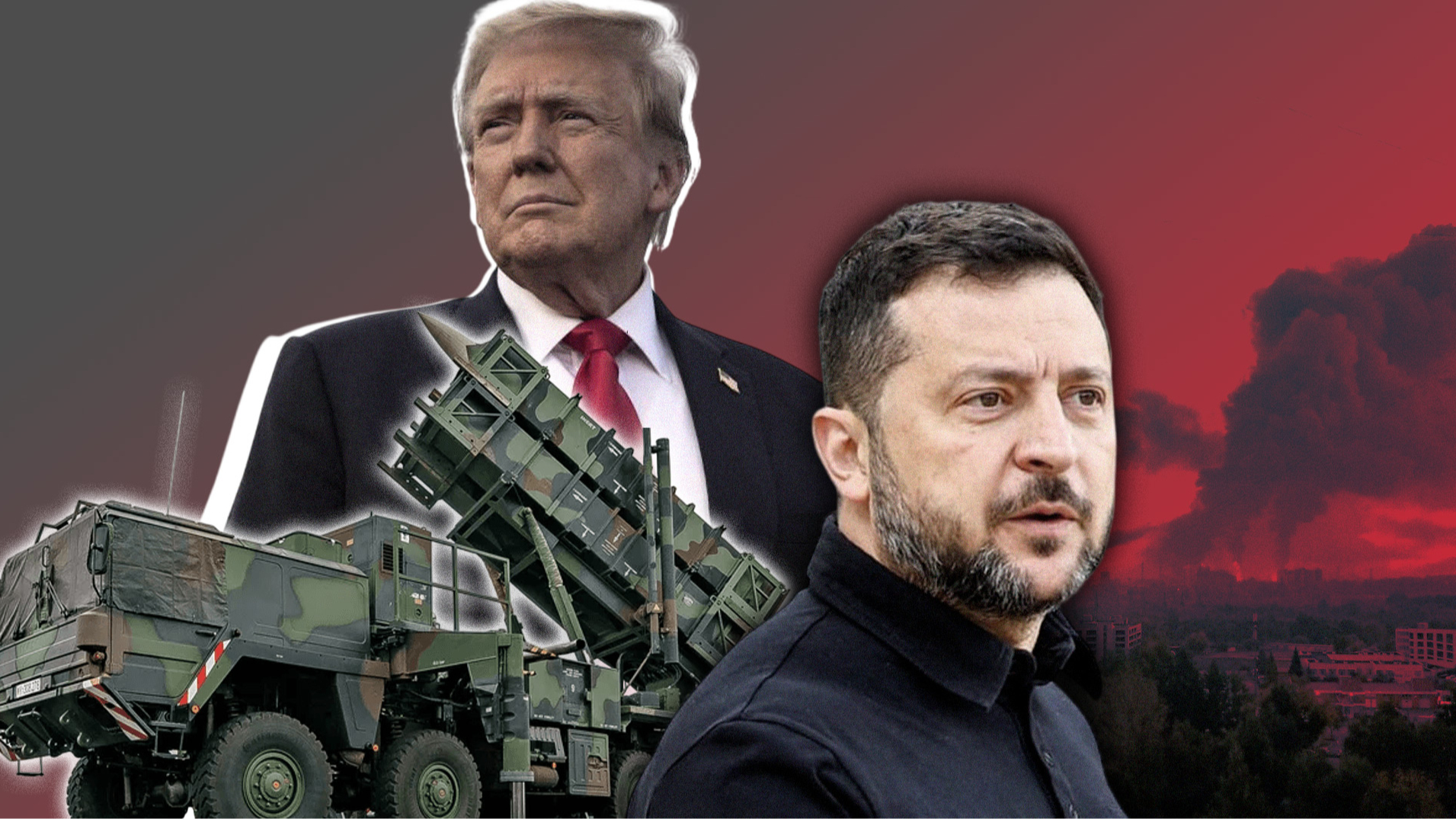
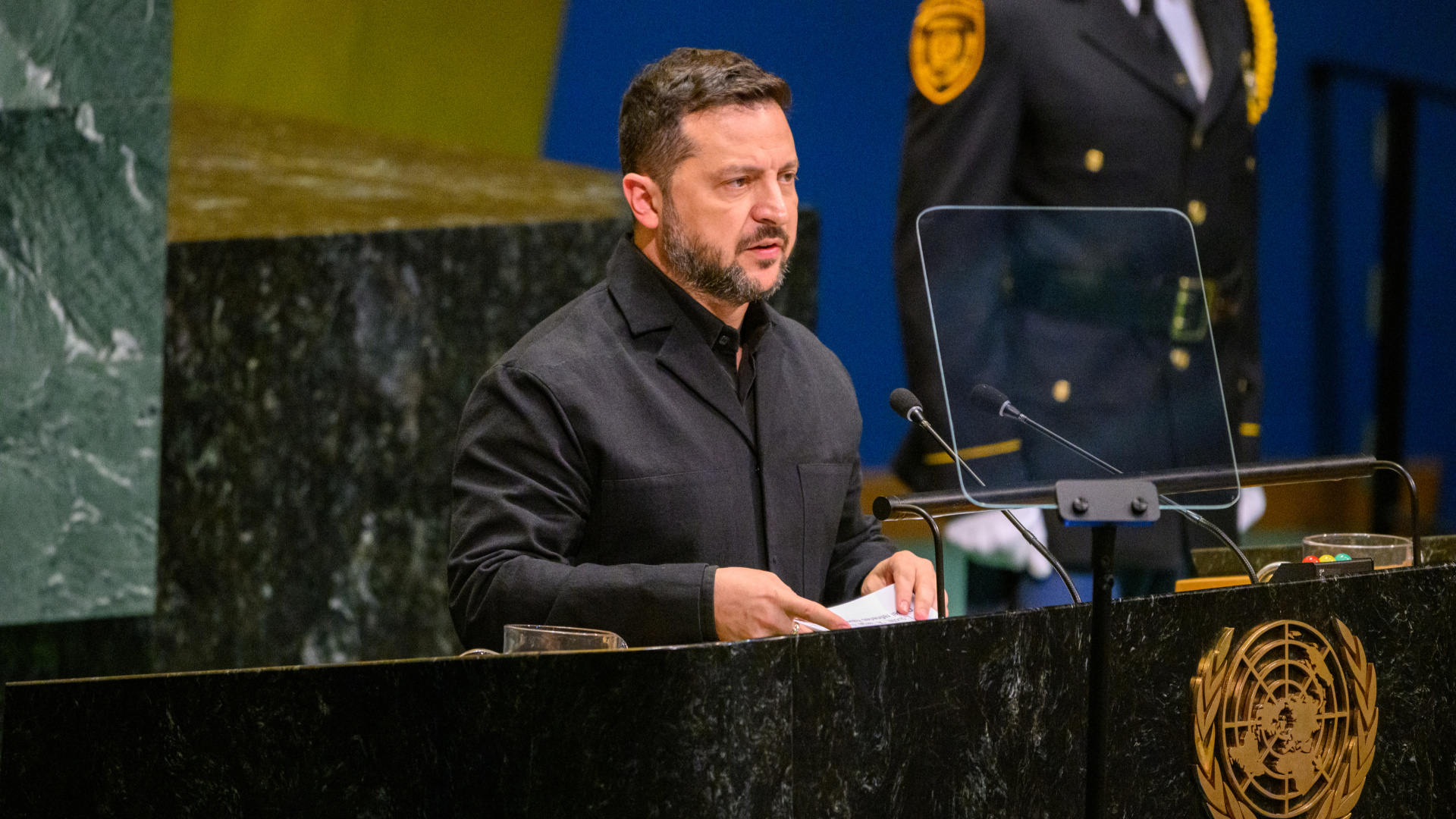
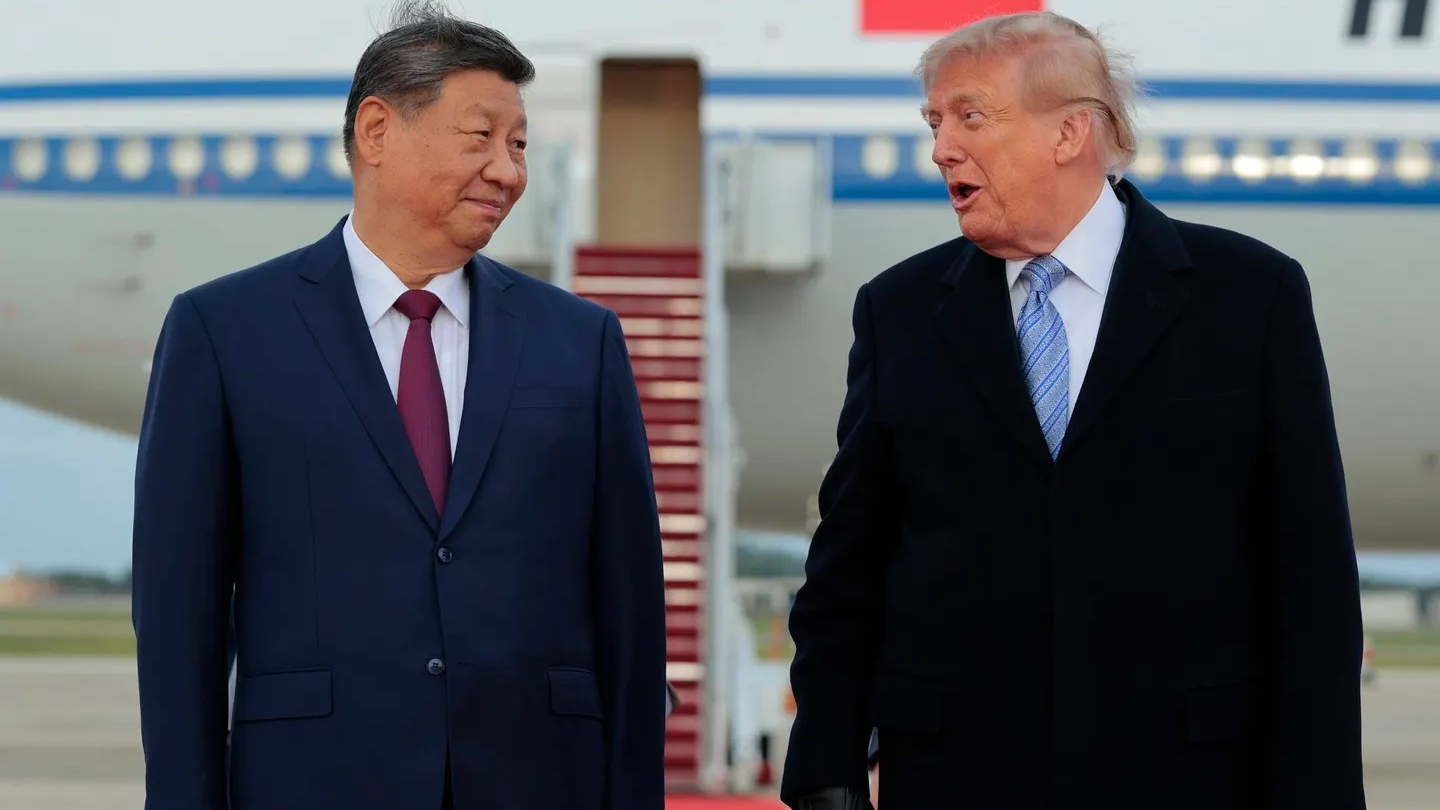

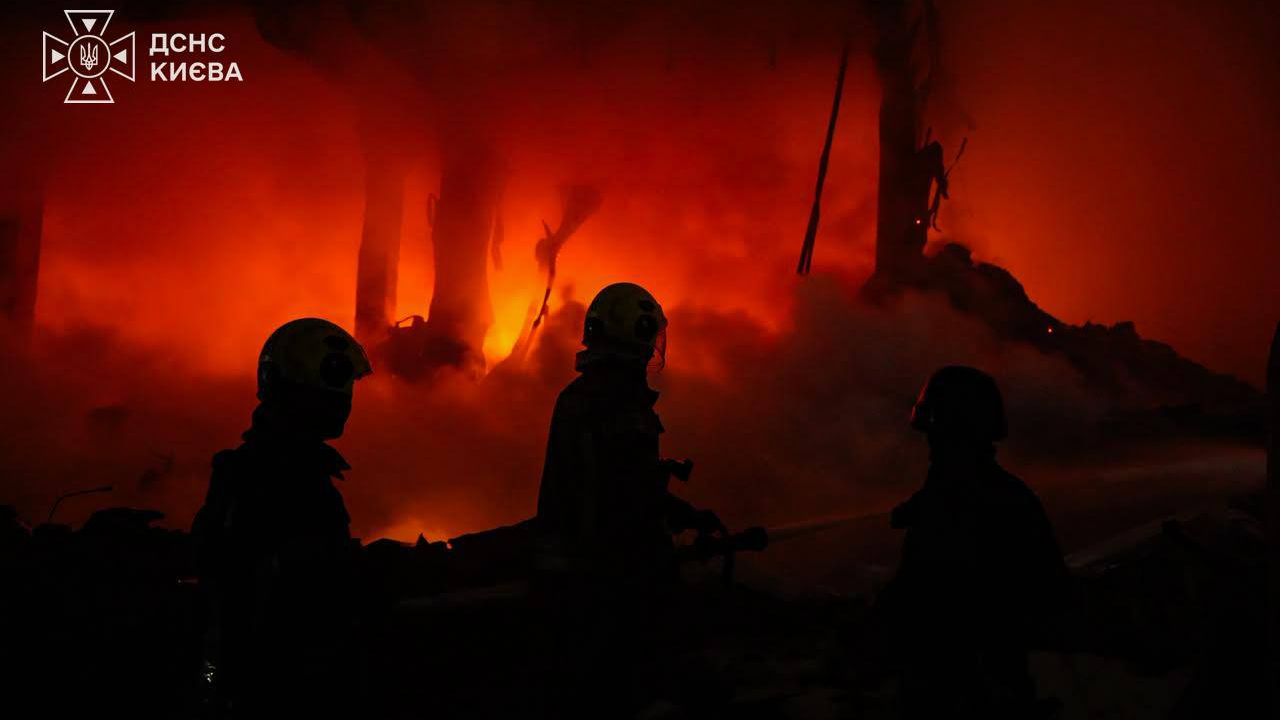
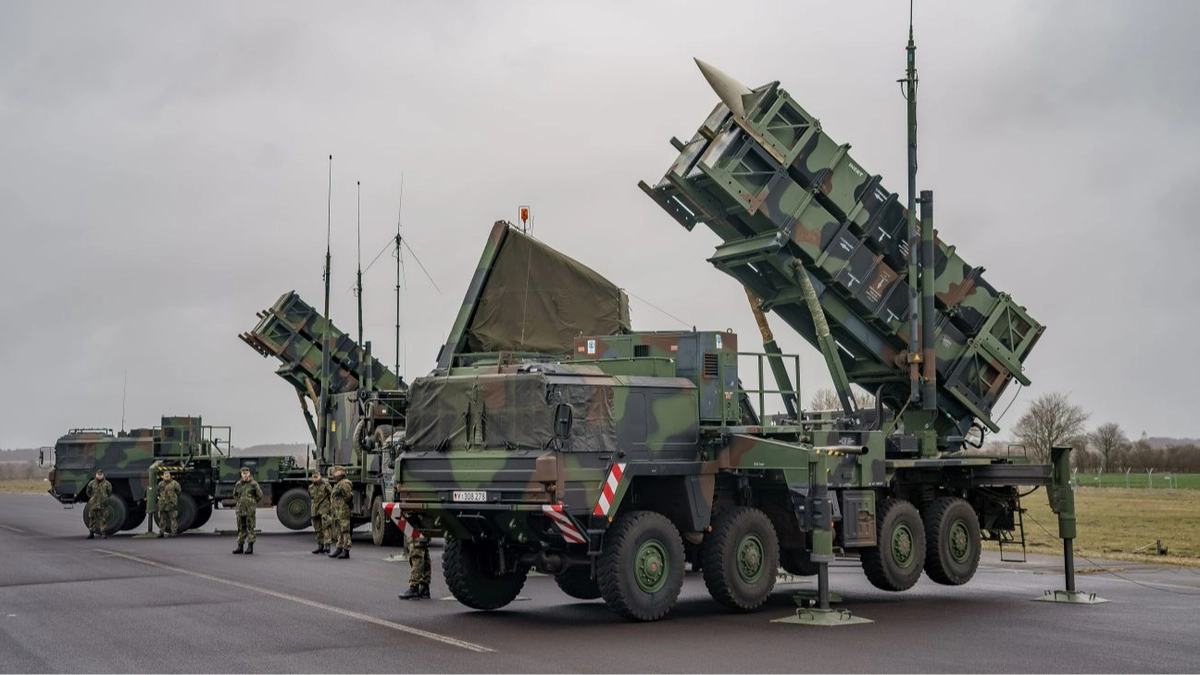



America as a Source of Uncertainty: Turkey, Brazil and Japan Read Trump’s Signals...
By the end of September 2026, the United States had become in Turkey, Brazil and Japan not merely a subject of foreign-policy reporting, but a factor forcing them to recalculate their own risks. Three parallel storylines are driving this: the war and sanctions pressure surrounding Iran, Washington’s conspicuously tough line in the Western Hemisphere, and Donald Trump’s meeting with Xi Jinping, from which Tokyo expects an answer to the key question: will Taiwan become a bargaining chip in a deal between the two superpowers? In all three countries, the United States is no longer seen as a predictable guarantor of order, but as a power whose decisions increasingly depend on short-term bargaining, the president’s personal diplomacy, and a willingness to use economic or military coercion.
In Turkey, the most painful issue remains American policy toward Iran. For Ankara, this is not an abstract rivalry between Washington and Tehran: it is linked to energy supplies, border security, Syria, Iraq and the threat of a new wave of regional destabilization. In Murat Yetkin’s analysis, the disappointment that an expected one-on-one meeting between Recep Tayyip Erdoğan and Trump on the sidelines of the UN General Assembly never took place is especially telling. The symbolic lack of contact mattered precisely at a moment when Turkey had begun implementing sanctions restrictions against Iran. Yetkin ironically interprets the duality of the American attitude: Trump calls Erdoğan a “tough man,” while simultaneously emphasizing his personal fondness for him—in other words, sanctions and personal diplomacy are proceeding hand in hand. (yetkinreport.com)
The Turkish debate, however, is not limited to anti-American rhetoric. Expert Bilgehan Alagöz, in an analysis for Anadolu Ajansı, describes the current phase as “controlled escalation”: in his assessment, neither the United States nor Iran is seeking an unlimited war, but the very logic of retaliatory strikes could easily undermine that calculation. For Turkish observers, the idea that Washington combines military actions with diplomatic signals—and thus keeps its partners in a state of constant uncertainty—is particularly important. (aa.com.tr) The paradox of the local reaction is that Turkey wants neither a rupture with the United States nor to become a conduit for American pressure on neighboring Iran. Hence the increasingly prominent language of “strategic autonomy”: not a rejection of NATO, but an attempt to prevent an American crisis from becoming a Turkish crisis.
In Brazil, the American issue is even more direct—as a dispute over sovereignty and the permissible limits of interference. Trump’s speech at the UN, in which he discussed the possible use of force in pursuit of US interests in Latin America and justified American actions against Venezuela, was understood not only through the lens of Venezuela or Cuba. (tvbrasil.ebc.com.br) Brazilian commentators saw in it Washington’s claim to return to a “backyard” policy. In a Correio Braziliense analysis, the clash between the two speeches at the UN is described as an exchange of deliberately calibrated messages: Lula stated that “Brazil does not fit into anyone’s backyard,” while Trump emphasized the United States’ readiness to defend its interests in the Western Hemisphere by force. (correiobraziliense.com.br)
This sensitivity has been heightened by Brasilia’s specific grievances over American pressure. According to Folha de S.Paulo, during negotiations over 50 percent US tariffs, the Trump administration demanded that unnamed “political dissidents” be allowed to participate in Brazil’s 2026 presidential election. In Brazil, this was read as interference in the electoral process and as a continuation of American political support for Bolsonaro’s circle. (www1.folha.uol.com.br) Even Trump’s statement about combating the Brazilian criminal groups PCC and Comando Vermelho provoked irritation in the official response: the Justice Ministry pointed to tens of thousands of operations and a national program to combat organized crime, rejecting the American portrayal of Brazil as incapable of controlling its own security. (agenciabrasil.ebc.com.br) The local conclusion here is unusually harsh: trade tariffs, sanctions, talk of criminality and support for “dissidents” are perceived not as separate policy directions, but as a single set of instruments of pressure.
In Japan, the focus of the debate is different: Tokyo fears not a conflict with Washington, but that its interests may become secondary in a US-China deal. Following Prime Minister Sanae Takaichi’s meeting with Trump on September 22, the Japanese government emphasized the success of coordination on economic security and the Indo-Pacific. Foreign Minister Motegi called it especially important that the conversation took place immediately before the US-China summit and made it possible to reaffirm the strength of the alliance. The JETRO report records precisely this official line: Japan is seeking to incorporate issues involving technology, supply chains and regional security into its bilateral alliance with the United States. (jetro.go.jp)
At the same time, however, concern is growing in the Japanese media that Trump could trade strategic positions for immediate economic concessions from Beijing. On TV Asahi, the Japanese concern was stated directly: the US president could halt arms sales to Taiwan in exchange for economic compensation from China. (news.tv-asahi.co.jp) Former Justice Minister Keisuke Suzuki, by contrast, considers the Takaichi–Trump meeting a successful attempt to navigate a “very narrow path”: keeping the United States engaged in Asia while not giving China an unnecessary pretext for escalation. (fnn.jp) This is Japan’s dilemma: the alliance with America remains indispensable, but the alliance’s reliability is now measured not by treaty formulas, but by how personally interested Trump is at any given moment in taking Tokyo’s interests into account.
The common thread in the Turkish, Brazilian and Japanese reactions is not so much rejection of America as distrust of its new way of acting. Ankara fears being drawn into an Iranian war and sanctions regime; Brasilia resists turning domestic politics into an object of American control; Tokyo worries that security around Taiwan could become a bargaining chip in US-China negotiations. The United States remains too powerful to ignore, but increasingly unpredictable to simply follow. That is why one practical idea is gaining strength in three very different countries: ties with Washington must be maintained, while room for independent maneuver must be expanded—in regional diplomacy, trade, defense and relations with China.
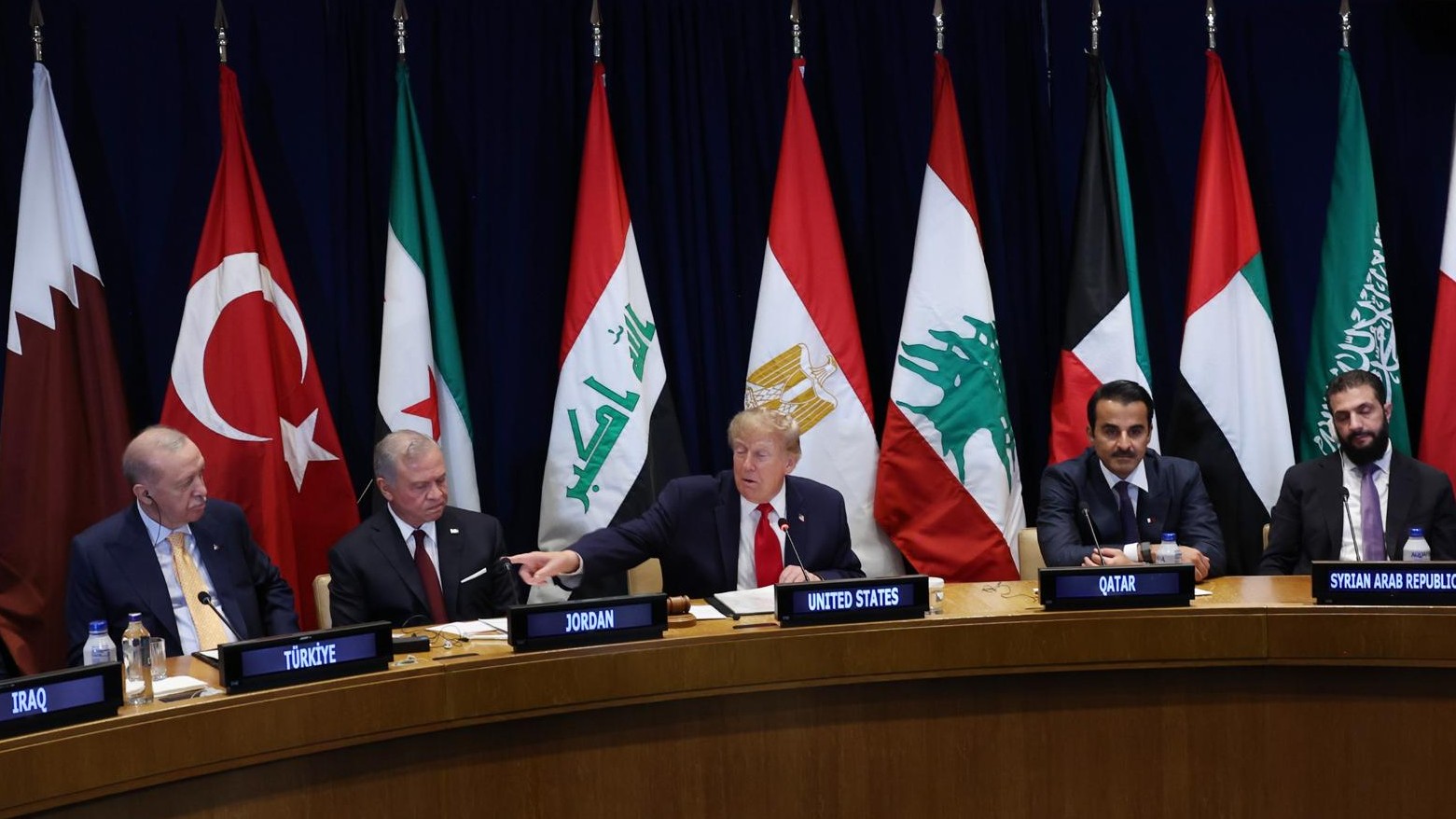



News 25-09-2026
America as an Ally on Condition: France, Israel and Germany Debate the Cost of Trump’s War...
By September 25, the main American story provoking not merely interest but an anxious local debate in Paris, Berlin and Israel was no longer another declaration from Washington, but the consequences of the protracted US-Israeli war with Iran. The issue is no longer limited to Tehran’s nuclear program. Three interconnected questions have moved to the forefront: can Donald Trump actually bring the war he started to an end; how reliable are US military guarantees and supplies; and is America prepared to turn its own domestic political deadlines—above all, the November 3 congressional elections—into a timetable for international security?
The immediate catalyst was Trump’s September 22 speech at the UN. He said he expected to reach a deal with Iran immediately after the midterm elections, while at the same time leaving open the threat of a new and destructive escalation. In a Tagesschau analysis, this sounds almost like a formula for the current American approach: negotiations are under way, but their political meaning is being deferred until a convenient moment at home. This logic is particularly irritating for France. Paris sees the war as a direct source of energy and trade instability: the de facto blockade of the Strait of Hormuz has already hit maritime shipping and fuel prices. At a meeting with Trump in New York, Emmanuel Macron explicitly reminded him that he had considered the strikes on Iran a mistake from the outset. As Le Monde reports, the French president is simultaneously demanding results on Hormuz and promoting a UN Security Council resolution on freedom of navigation.
This is an important French distinction: Paris does not reduce the problem to the question of whether “the US will defeat Iran.” French debate views the war as an example of how military force without a clear political objective can produce the opposite result. A Le Monde analysis emphasizes that, rather than weakening the Islamic Republic as expected, the war has strengthened its hard-line core and expanded the scope for domestic repression. In a September article, the newspaper records an even more troubling conclusion for the West: Tehran is using American economic pressure and the approaching US elections as an incentive to intensify the pressure, believing that time is on its side. This assessment differs radically from the White House rhetoric of controlled success. The French view is not pacifist in any simplistic sense: Paris is prepared to defend energy infrastructure and shipping, but pointedly does not want to become a party to a new regional war. It is relying on international rules as a way to restrain the logic of mutual coercion between the US and Iran.
In Germany, the tone is different, but the diagnosis is similar: the key phrase here is strategic unpredictability. Berlin depends on the United States for the deterrence of Russia while being forced to watch that same America spend ammunition and political attention in the Middle East. Political scientist Sasha Lomann of the Berlin-based SWP foundation called Trump’s Iran policy “devoid of strategy”—a sharp characterization cited in a Tagesschau interview. German commentators link this not only to Trump’s contradictory statements but also to material consequences. When Defense Minister Boris Pistorius traveled to Washington to discuss expanding defense cooperation, it emerged that an independent US oversight body had identified a serious shortage of weapons and ammunition—including Patriot and Tomahawk missiles—caused by the war with Iran. Tagesschau reports on this in detail.
For Germany, this is almost a perfect illustration of a painful contradiction. Berlin wants to purchase American Tomahawks and has already committed to the F-35, but at the same time it is receiving proof that the US arsenal is not limitless and that Washington’s priorities can change quickly. In other words, the German reaction is not a rejection of the alliance, but an accelerated demand that Europe produce more of its own weapons. In the German view, the war with Iran is ceasing to be a “distant conflict”: it affects the availability of air-defense systems for Europe, support for Ukraine, energy prices and trust in US commitments. Hence the broader drive toward strategic autonomy—not as a break with America, but as insurance against its impulsiveness.
In Israel, the debate is the most paradoxical. The United States remains an indispensable ally, and the recent news of a major American delivery—“60,000 bombs on their way to Israel”, as Globes put it—is seen as confirmation of the depth of the military partnership. Yet it is also in Israel that the risk is being discussed most intensely that Trump could agree to a deal allowing him to declare victory without eliminating the long-term threat to Israel. Part of the Israeli expert community sees possible agreements with Tehran as a dangerous respite: Iran could gain time and resources to rebuild without abandoning its key military capabilities.
At the same time, it is telling that a significant part of the Israeli debate tries to explain American restraint not as “betrayal.” Eyal Tzir Cohen, former head of the Mossad’s International Relations Division, offers a more sober reading in a column for N12: Israel is thinking about how to push the Iranian threat as far into the future as possible, while the United States is asking whether it will then have to manage the consequences of the collapse of the Iranian regime for the next 20 years. This gap bears the imprint of Iraq and Afghanistan, competition with China and America’s fear of another endless war. “The problem has not been solved,” but Washington, according to this logic, is seeking not to defeat Iran definitively, but to prevent Iran from consuming America’s strategy.
This is where the French, German and Israeli reactions converge. France fears that the military campaign is destroying diplomacy and the global order; Germany fears that it is draining resources and making alliance commitments unreliable; Israel fears that America’s desire to leave the war will leave it alone with a revived threat. Yet all three societies are increasingly less inclined to see the United States as a power capable of simply imposing an outcome. America remains the center of power, a source of weapons, sanctions and diplomatic decisions. But its partners are seeing another America ever more clearly: a country whose foreign policy is tied to gasoline prices, Patriot stockpiles, voter sentiment and the president’s personal desire to quickly label any outcome a victory.



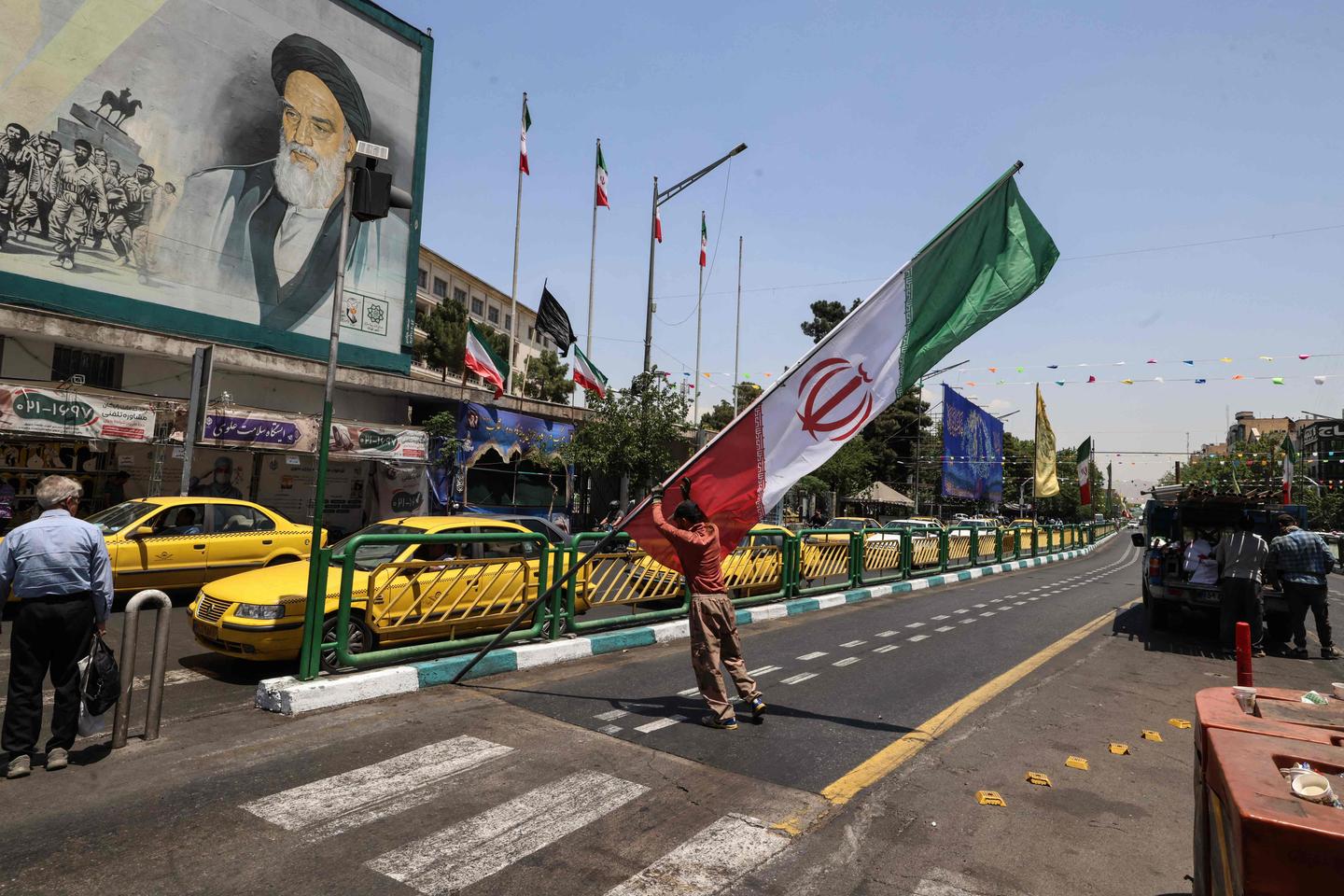

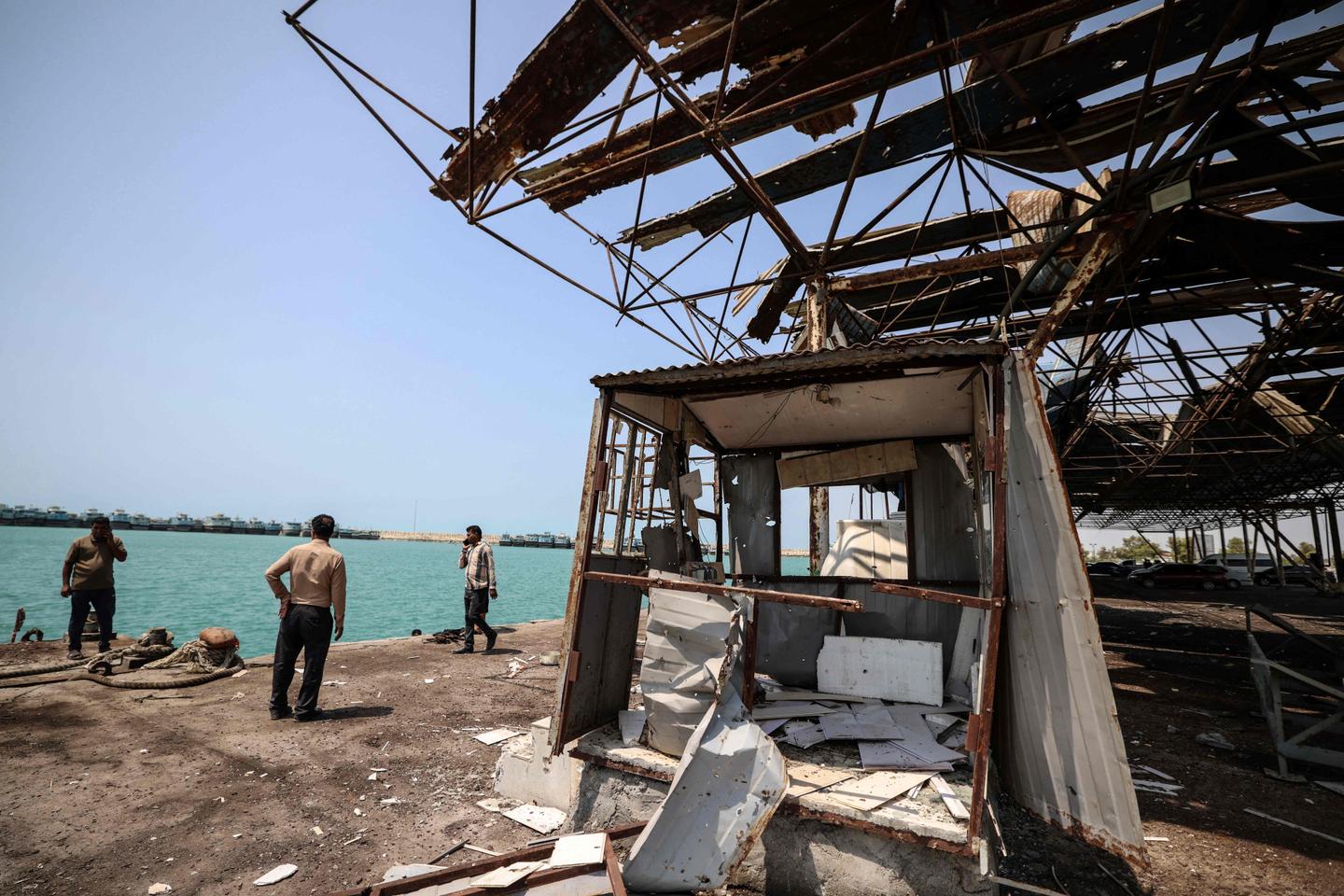
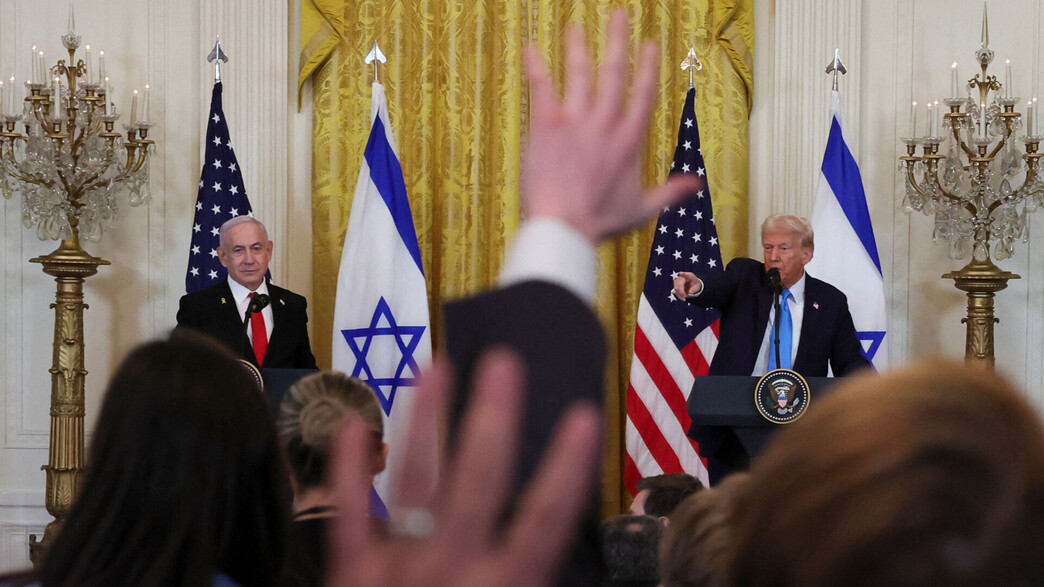
America Loses Its Monopoly on Order: How France, Saudi Arabia and Israel Read Trump’s New...
The main American issue currently drawing the most lively reaction in France, Saudi Arabia and Israel is no longer the mere fact of the US confrontation with Iran, but whether Washington’s policy is capable of turning military pressure into a lasting order. On the sidelines of the UN General Assembly on September 22–23, Donald Trump spoke of “significant momentum” toward an agreement with Tehran following contacts between US representatives and Iranian intermediaries. But in Paris, Riyadh and Jerusalem, this formula is perceived in entirely different ways: for some, it is a belated attempt to escape a dangerous war; for others, a risk of concessions to Iran; and for still others, another test of the real value of American guarantees. The Israeli publication Globes reported Trump’s comments about “movement” toward a deal alongside his threat to Iran, neatly capturing the tension of the current situation: diplomacy is taking place not instead of pressure, but within it. (globes.co.il)
The French reaction is the most skeptical of the American strategy itself. The Paris press views the conflict through its consequences for the international order, the oil market and European security. Le Monde columnist Gilles Paris writes that the Houthi offensive has delivered another blow to the “fragile house of cards” of US Middle East policy: in his assessment, Trump has not only failed to ensure stability since the war with Iran began, but has also left Saudi Arabia alone to face the threat from Yemeni forces. Particularly telling is the claim, according to this interpretation, that the Americans held contacts with the Houthis in Oman, signaling that they did not want to become involved in the Saudi conflict. In his column for Le Monde, Paris explicitly calls this a wedge that the Houthis have managed to drive between the US and its main Arab ally. (lemonde.fr)
Behind France’s irritation lies more than an anti-adventurist reflex. France sees the protracted crisis around the Strait of Hormuz as proof that the American superpower can launch a campaign without calculating the political cost of continuing it. At the beginning of September, Le Monde expressed the idea bluntly: the United States had proved incapable of quickly changing Iran’s behavior, protecting the Gulf states from retaliatory strikes, or restoring normal shipping through Hormuz. From this perspective, Washington’s statements about a future deal sound not like a diplomatic breakthrough, but like a search for a way out of a strategic deadlock. A French editorial assessment even argues that the US voice in the region has lost its former centrality. (lemonde.fr)
The Saudi perspective is notably less ideological and far more practical. For Riyadh, the question of whether Trump is a strong or unpredictable leader is secondary to three measurable issues: whether Saudi cities and energy facilities are protected, whether the maritime export route remains open, and whether America is ready to honor its promises when an attack occurs. In the Saudi English-language press, the US war with Iran is described as a conflict in which Tehran retains its strongest lever—the ability to disrupt traffic through Hormuz and operate through allied armed groups. Dr. Abdel Aziz Aluwaisheg, assistant secretary-general for negotiations and strategic planning at the Cooperation Council for the Arab States of the Gulf, wrote in Arab News that Iran had exposed cracks in the opposing camp: France, Germany and Japan are not participating in the war, while the US has still been unable to achieve the full reopening of the strait. (arabnews.com)
This explains the Saudi ambivalence. Riyadh has no interest in an Iranian victory and does not consider Washington’s endless oscillation between blockade, strikes and negotiations acceptable. But it also does not want Washington to once again build a regional architecture without taking the interests of the Arab states themselves into account. Commentator Osama Al-Sharif, in Arab News, criticizes the American postwar scheme, based on containing Iran and expanding Arab-Israeli normalization: in his view, a repetition of prewar formulas will not bring stability, because those formulas already failed to prevent the current regional catastrophe. (arabnews.com) The Saudi reaction, therefore, does not amount to rejecting the US: it is a demand to replace general assurances with concrete protection and to recognize that Gulf security cannot be designed unilaterally in Washington.
The Israeli debate, by contrast, focuses on whether America’s drive for a deal could turn into a strategic respite for Tehran. In Israeli analysis, Trump appears neither as a peacemaker nor as an unreliable ally in the abstract, but as a politician constrained by US elections, energy prices and a desire to avoid another major war. In a Ynet commentary, Itamar Eichner characterizes the American strikes and pressure as a way to force Iran to accelerate negotiations, rather than as preparations for a full-scale war; the author emphasizes that rising oil prices and the approaching US midterm elections are pushing Trump toward limited, controlled escalation. (ynet.co.il)
But it is precisely this manageability that worries many in Israel. Globes analyst Dean Shmuel Elmas previously expressed the suspicion in exceptionally stark terms: Trump began the campaign by promising unprecedented pressure, but the risk of a global energy crisis then changed his priorities; Israel, according to this logic, is a useful partner as long as it helps pressure Iran, but not necessarily a participant in decisions about a compromise. In his analysis for Globes, a possible deal is portrayed as an agreement that could give Iran economic breathing room without easing Israeli concerns about its long-term military potential. (globes.co.il)
The paradox of the current international reaction to America is that France, Saudi Arabia and Israel assess the desired outcome differently, yet agree on one thing: the old formula of American leadership is no longer enough. France demands multilateralism and predictability; Saudi Arabia, material guarantees and infrastructure protection; Israel, an agreement that will not look like merely postponing the next Iranian crisis. For all three, Hormuz has become not merely a geographical chokepoint, but a symbol of a broader question: can America still serve as a guarantor of security if its partners are forced to hedge simultaneously through Europe, Turkey, Pakistan, China or their own military strength?
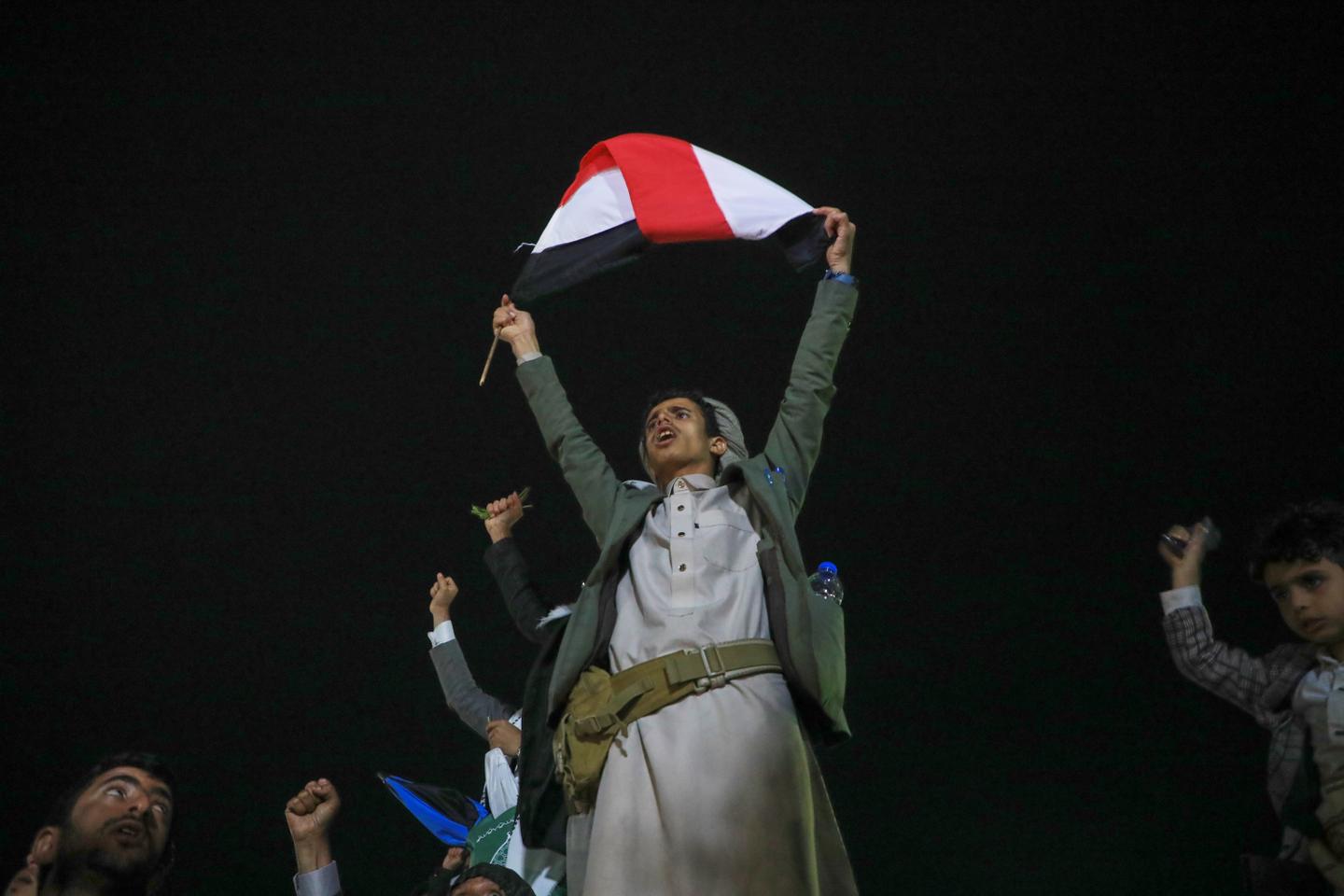
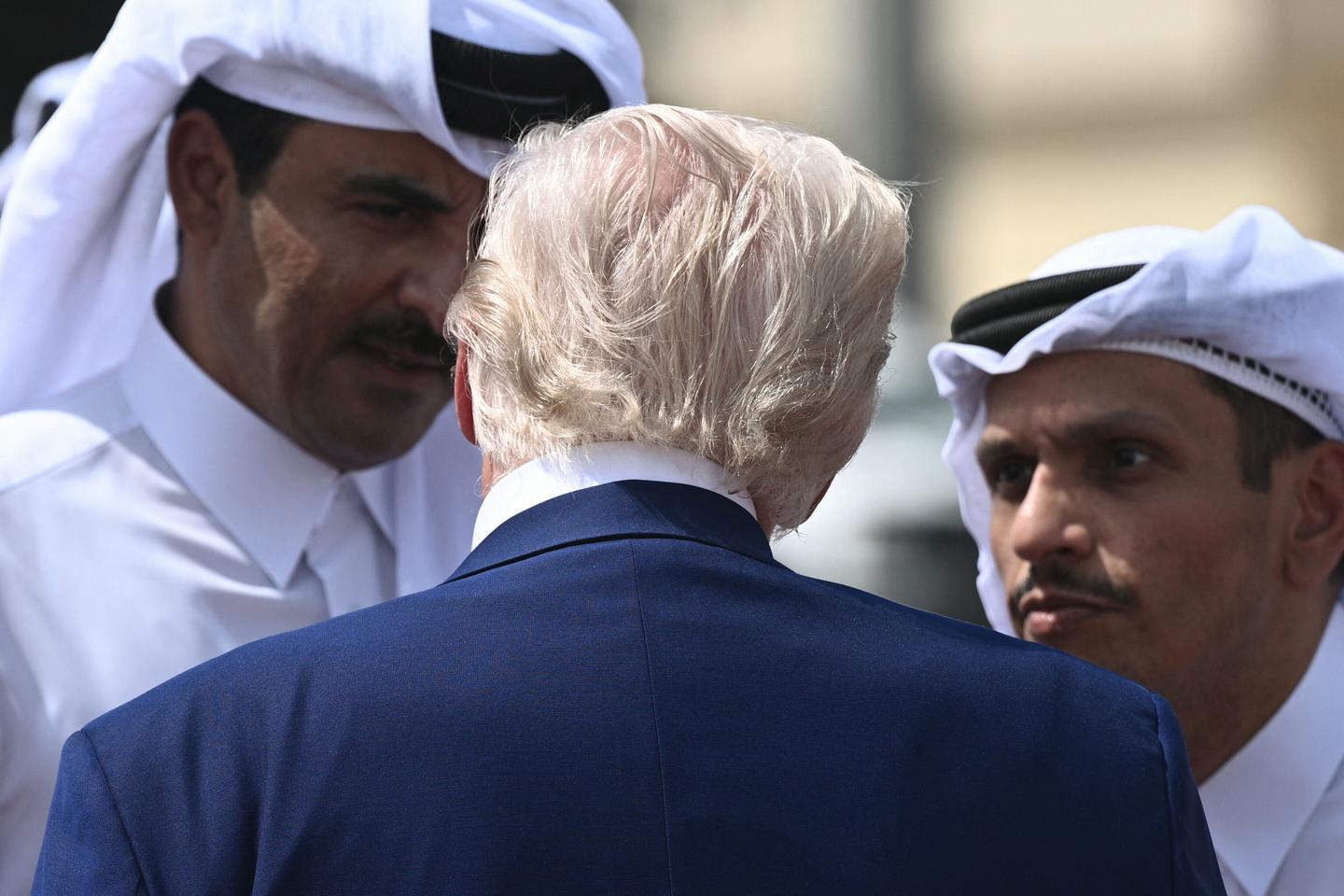

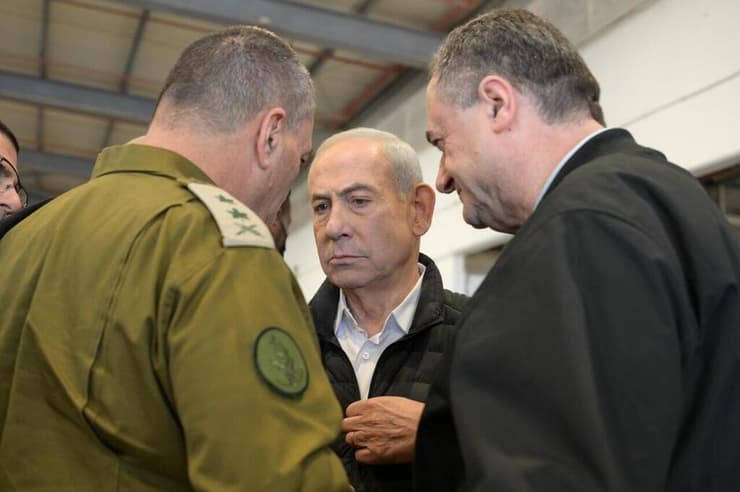
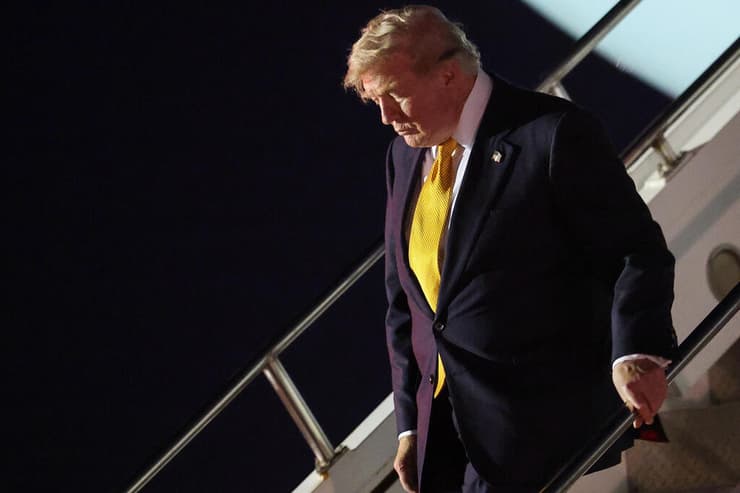
News 24-09-2026
America: A Power Others Negotiate With but Trust Less
The main picture emerging from Chinese, Turkish, and Brazilian discussions on September 22–24, 2026, is not simply a reaction to Washington’s latest statements. The United States is simultaneously seen as an indispensable negotiator, a source of military and economic risk, and a power increasingly willing to assert its right to set the rules in “its” regions. In China, attention is focused on Xi Jinping’s visit to the United States and the attempt to turn rivalry into manageable stability. In Turkey, the debate centers on whether Recep Tayyip Erdoğan’s personal ties with Donald Trump can finally resolve long-standing defense and Syrian disputes. In Brazil, meanwhile, U.S. policy has become part of an almost existential argument over sovereignty and whether Latin America is returning to the status of Washington’s “backyard.”
The most prominent common theme is the clash between two visions of the international order. At the UN General Assembly on September 22, Brazilian President Luiz Inácio Lula da Silva put it bluntly: “Brazil does not fit in anyone’s backyard.” In Agência Brasil’s official report, the phrase is presented as a defense of the country’s independence; Brazilian commentators saw it as a response to Trump, who at almost the same time was speaking about the United States’ readiness to use force to defend its interests in the Western Hemisphere. Analyst Fernanda Magnotta, writing in CNN Brasil, notes that for Brazil, sovereignty is not an abstract slogan but protection against an imbalance of power. From this perspective, the issue is not merely a bilateral quarrel with the United States, but also the right of a middle power to trade, choose its partners, and hold elections without external political pressure.
This issue has become especially sensitive because Brazil’s public debate links the American line to a revival of the Monroe Doctrine—the idea of a special U.S. role in the Americas. Folha de S.Paulo writes that fears of outside interference are already becoming a factor in the campaign ahead of the 2026 elections. The domestic reaction, however, is far from uniform: some see Lula’s tough position as necessary consolidation around the flag, while others believe the president is using the UN as an electoral platform. This divide was on display in the televised debate reported by CNN Brasil: former Justice Minister José Eduardo Cardozo defended the emphasis on sovereignty, while former Senator Ana Amélia Lemos viewed Lula’s formulation as a convenient campaign slogan. Yet the dispute itself is revealing: even Lula’s critics are forced to discuss relations with the United States in the language of national autonomy, rather than unconditional alliance.
China’s reaction to America is currently less emotional, but no less principled. Beijing’s official line surrounding Xi’s visit to the United States is built around the formula of “constructive strategic stability.” An article in the People’s Daily, published on the day the visit began, speaks of the need to pursue “the right path of coexistence between major powers” and highlights expanding contacts ranging from trade to artificial intelligence and biomedicine. This is not rhetoric expressing trust in Washington; rather, it is an attempt to establish a principle: competition must not turn into the destruction of communication channels. For Chinese audiences, stability primarily means buying time—for the economy, technological development, and the strengthening of China’s diplomatic network outside the American orbit.
Behind the official restraint, however, lies deep caution. A researcher at Fudan University’s Center for American Studies, in a commentary on the leaders’ meeting, calls Taiwan a “stress test” for the current rapprochement: a warm ceremony and trade agreements can coexist with a fundamental dispute over U.S. arms supplies to Taipei. Chinese analysts also view tariffs, export restrictions, and technology policy not as separate issues but as one system of American pressure. Beijing is therefore interested not in a romantic “reset,” but in a limited deal: reducing the risk of a trade or military breakdown without conceding issues of sovereignty and technological standing.
In Brazil, the Chinese-American summit is viewed from a different angle: as an indication of how inconsistent Trump’s foreign policy can be. CNN Brasil draws attention to the contrast between Xi’s lavish reception and the modest expectations for substantive agreements. For Brazilian observers, this offers an important lesson: Washington can simultaneously pressure countries in the region over trade, digital regulation, or domestic politics while conspicuously seeking compromise with its main systemic rival, China. Brazil’s conclusion is therefore that national strategy cannot be built on the assumption that U.S. policy will be consistent; ties must be diversified, and neither the United States nor China should become the sole center of gravity.
The Turkish debate is even more pragmatic. Ankara does not dispute U.S. global leadership in the same terms as Brazil, nor does it compete with Washington globally as China does. But it is increasingly separating personal diplomacy from structural interests. On September 23, President Erdoğan told a meeting with American business leaders that strategic cooperation with the United States was developing “in all areas,” presenting Turkey as a reliable manufacturing and logistics hub for supply chains undergoing restructuring; Anadolu Ajansı reported his remarks. Turkish commentators, however, are not taking this optimism at face value. A DW Türkçe analysis stresses that even with Trump’s political sympathy for Erdoğan, the CAATSA sanctions, Turkey’s return to the F-35 program, F-16 deliveries, and the consequences of the war surrounding Iran remain unresolved.
Iran is precisely what turns U.S.-Turkish relations from a bilateral bargaining process into a matter of Turkey’s national security. Turkish audiences view American pressure on Tehran not through an abstract debate about democracy or the nuclear program, but through the risk of new chaos along the border: migration, rising energy prices, the strengthening of armed non-state groups, and a new redrawing of Syria and Iraq. In a DW Türkçe report on Ankara’s role in the ceasefire, Turkey’s position is described as “active neutrality”—not a rejection of ties with the United States, but an attempt to act as a mediator and avoid becoming a party to someone else’s war. Turkey’s fear is not so much that Washington will necessarily attack Turkey itself, but that American actions will create a vacuum and a new balance of power whose consequences Iran’s neighbors will have to bear.
This is where an unexpected similarity emerges between Ankara, Brasília, and Beijing. All three capitals want to talk to the United States, benefit from trade, and avoid direct confrontation. But all three also see danger in America’s tendency to change the rules depending on the region and the balance of power. Brazil responds in the language of anti-colonial sovereignty, China with the formula of managed strategic stability, and Turkey through bargaining over security, arms, and its mediating role. The difference matters: China seeks to consolidate a balance between two superpowers, Brazil defends its right not to become an object of American hemispheric policy, and Turkey seeks to turn its geographic indispensability into a diplomatic asset.
Taken together, these reactions offer a more complex image of the United States than either the familiar notion of a simple “decline in influence” or that of unconditional American dominance. Washington remains the center around which other countries make their calculations: Xi travels for talks, Erdoğan seeks a deal, and Lula responds from the UN podium. But the United States is increasingly less often seen as a neutral guarantor of the rules. In Chinese texts, it is a competitor whose risks must be contained; in Turkey, an ally whose promises require verification; and in Brazil, a great power whose return to the language of spheres of influence must be politically restrained. This combination of dependence, pragmatism, and distrust best explains how America is perceived internationally today.

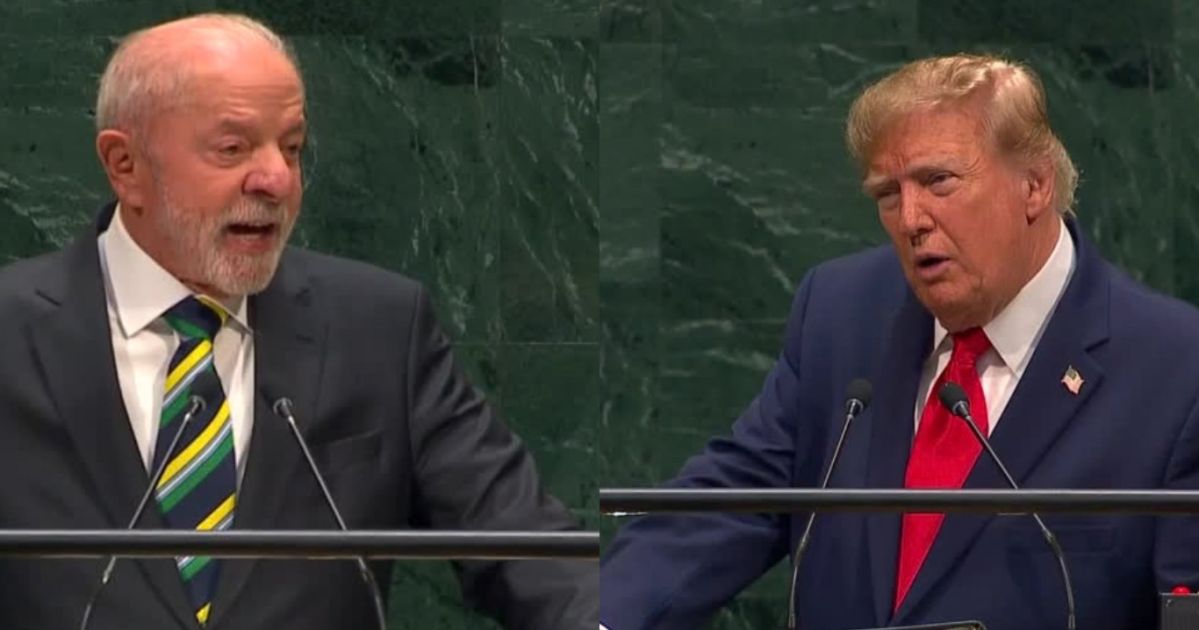


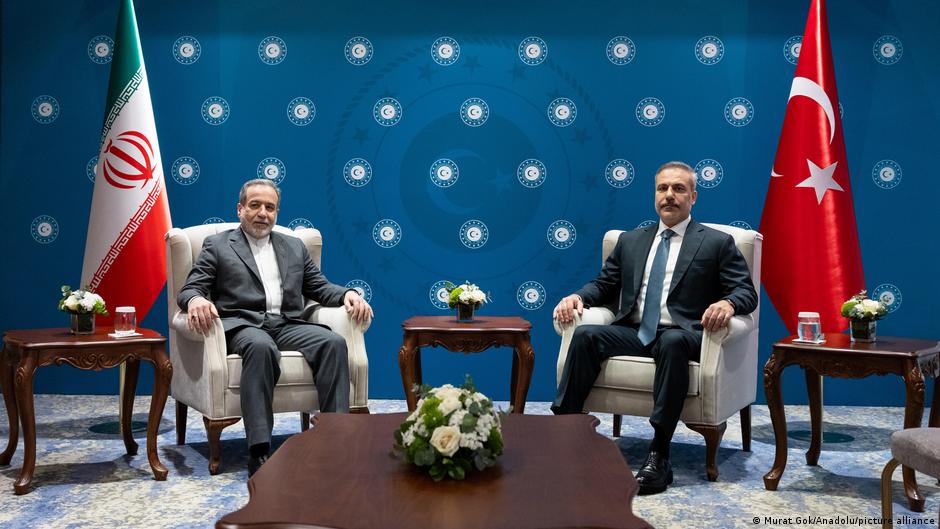
America as a Source of Risk: Why India, Brazil and Japan Increasingly Talk Not About Alliance with the...
As of September 23, 2026, the image of the United States in Indian, Brazilian and Japanese discussions is shaped not by a single news story, but by a combination of three concerns: the protracted US war with Iran, Washington’s increasingly forceful use of trade and sanctions leverage, and doubts about how predictable American commitments to its partners really are. Each of the three countries discusses these issues in its own terms and through the lens of its own vulnerabilities—energy prices in India and Japan, sovereignty and elections in Brazil, and security around China and Taiwan in Japan. But a common conclusion is evident: America remains an indispensable power, yet it is no longer seen as an automatically stabilizing force.
The sharpest common issue is the US-Iran confrontation and the fate of the Strait of Hormuz. For India, this is not primarily an abstract conflict in the Middle East, but a threat to the energy security and economy of a country dependent on imported oil. The editorial board of The Indian Express put the problem in stark terms: until there is a durable agreement on how to manage the strait, the world will keep returning to military strikes and economic escalation. The newspaper notes that Washington is trying to combine military pressure with secondary sanctions, but is running up against reality: China buys most of Iran’s oil, making it impossible to punish all of Tehran’s trading partners without triggering another major conflict. In an editorial, the conflict is described as a trap in which military deterrence and the oil market are inseparable. (indianexpress.com)
Indian authors go beyond the usual criticism of the war. Political scientist Sankalp Gurjar, in a column for The Indian Express, calls US policy a “shadow” that has shaped India’s choice among suppliers from Iran, Venezuela and Russia for two decades. His conclusion is not anti-American but pragmatic: for an import-dependent country, diversifying suppliers is the only viable solution. (indianexpress.com) Former prime ministerial adviser Sanjaya Baru, in another column, offers an even more precise formula: India should not “break relations” with America, but reduce the risks of dependence on both the US and China. (indianexpress.com) In the Indian interpretation, Washington increasingly appears not as a partner expanding New Delhi’s room for maneuver, but as a player whose sanctions are narrowing it.
In Japan, the same conflict is viewed through a much more immediate everyday and industrial concern: oil, inflation and the vulnerability of maritime communications. Nobuhide Kiuchi, an economist at the NRI research institute, warns in an analysis published September 2 that even additional US oil supplies cannot fully replace volumes from the Middle East, and that dependence on decisions made in Washington is itself becoming a constraint. (nri.com) Japan’s state-backed organization JOGMEC notes that in August and September, US-Iran exchanges of fire, attacks on Saudi energy infrastructure and tensions around Yemen pushed oil prices to their highest level since May. (journal.jogmec.go.jp) For Tokyo, therefore, the issue is not only who is right in the conflict. More important is whether the American strategy can ensure stable shipping without turning Asia into a hostage of Middle Eastern escalation.
In Brazil, the tone is less connected to a physical energy shortage, but no less critical of the American approach. Brazilian analysis by CNN Brasil describes the naval blockade and the combination of sanctions with strikes as actions that do not bring negotiations closer, but instead push Tehran toward further military escalation. (cnnbrasil.com.br) A characteristic intuition of Brazil’s foreign-policy culture is evident here: a superpower’s pressure is judged not by its declared objective, but by whether it expands the war and undermines international rules.
The second common concern is the feeling that US domestic politics is beginning to export financial instability. This is discussed particularly openly in Brazil. In a piece about Donald Trump’s proposal to pay Americans $5,000 if Republicans win the midterm elections, the editorial board of Folha de S.Paulo calls such a policy fiscally irresponsible and argues that it undermines confidence not only in the White House, but also in the dollar. (www1.folha.uol.com.br) The comparison itself is especially revealing: the Brazilian newspaper likens the world’s leading power to the populist “caudillo of a banana republic.” This is not merely an emotional insult, but a sign of a profound shift in Latin American perceptions: US fiscal discipline is no longer taken for granted.
India’s reaction is less caustic, but similar in substance. American sanctions laws, tariffs and pressure over purchases of Russian or Iranian oil are seen there as an attempt by Washington to shift the cost of its geopolitics onto developing economies. India’s important distinction is that it is not seeking a symbolic break with the US. New Delhi is trying to build a system of safeguards—more energy sources, more settlement and trade options, and greater freedom of maneuver. Brazil, too, is discussing alternatives to the dollar-based system: a Folha article directly links doubts about US debt, sanctions and the rule of law to countries’ search for alternative payment and reserve mechanisms. (c-level.folha.uol.com.br)
Japan, by contrast, speaks more cautiously, but its concern may be the most strategic. Japanese commentators see a risk in America simultaneously spending resources in Iran, facing rising financial costs and beginning to treat Asia according to the logic of a short-term deal. In an analysis by nippon.com, the war with Iran is linked to a decline in US stocks of interceptor missiles and, consequently, to a possible weakening of deterrence in the Indo-Pacific. The authors call this the spread of “distrust in the United States,” and clearly state Japan’s main fear: the prolonged deployment of American forces to the Middle East could weaken defenses near Taiwan. (nippon.com)
That is why the scheduled September 24 meeting between Donald Trump and Xi Jinping is causing unease in Japan. In a television analysis by TV Asahi, experts suggest that Trump’s priority may be securing US access to China’s rare-earth metals, while Japan fears a deal in which economic gains would be purchased through concessions on Taiwan, including the issue of US arms deliveries to the island. (news.tv-asahi.co.jp) This is perhaps the most specifically Japanese view of today’s America: the ally remains essential, but cannot simply be trusted—it is necessary to agree on red lines in advance, because Washington may trade away part of the regional security architecture in exchange for an advantageous domestic political outcome.
Brazil’s distinctive concern is even more closely tied to domestic politics. There, the United States is discussed not only as a source of sanctions or trade tariffs, but also as a possible participant in the electoral struggle. CNN Brasil reports that Lula’s government sees a risk of US interference in the 2026 campaign that could benefit Flávio Bolsonaro. (cnnbrasil.com.br) And in a Folha essay, this danger is placed in a broader Latin American context: the new American policy is interpreted as the White House’s willingness to influence electoral outcomes in the Western Hemisphere. (www1.folha.uol.com.br) The paradox for Brazil’s right is that an overly conspicuous closeness to Trump could give Lula a powerful political resource—the opportunity to speak in the name of national sovereignty.
A single, though far from uniform, picture thus emerges. India responds to American pressure with strategic diversification. Brazil uses the language of sovereignty, democratic protection and financial distrust. Japan responds with the anxiety of an ally that fears not so much an American withdrawal as a sudden American deal made behind its back. These three reactions are not simple anti-Americanism. Rather, they reflect a new diplomatic caution: cooperation with America remains necessary, but policymakers increasingly have to act as though the main risk comes not from the absence of the United States, but from its unpredictable presence.

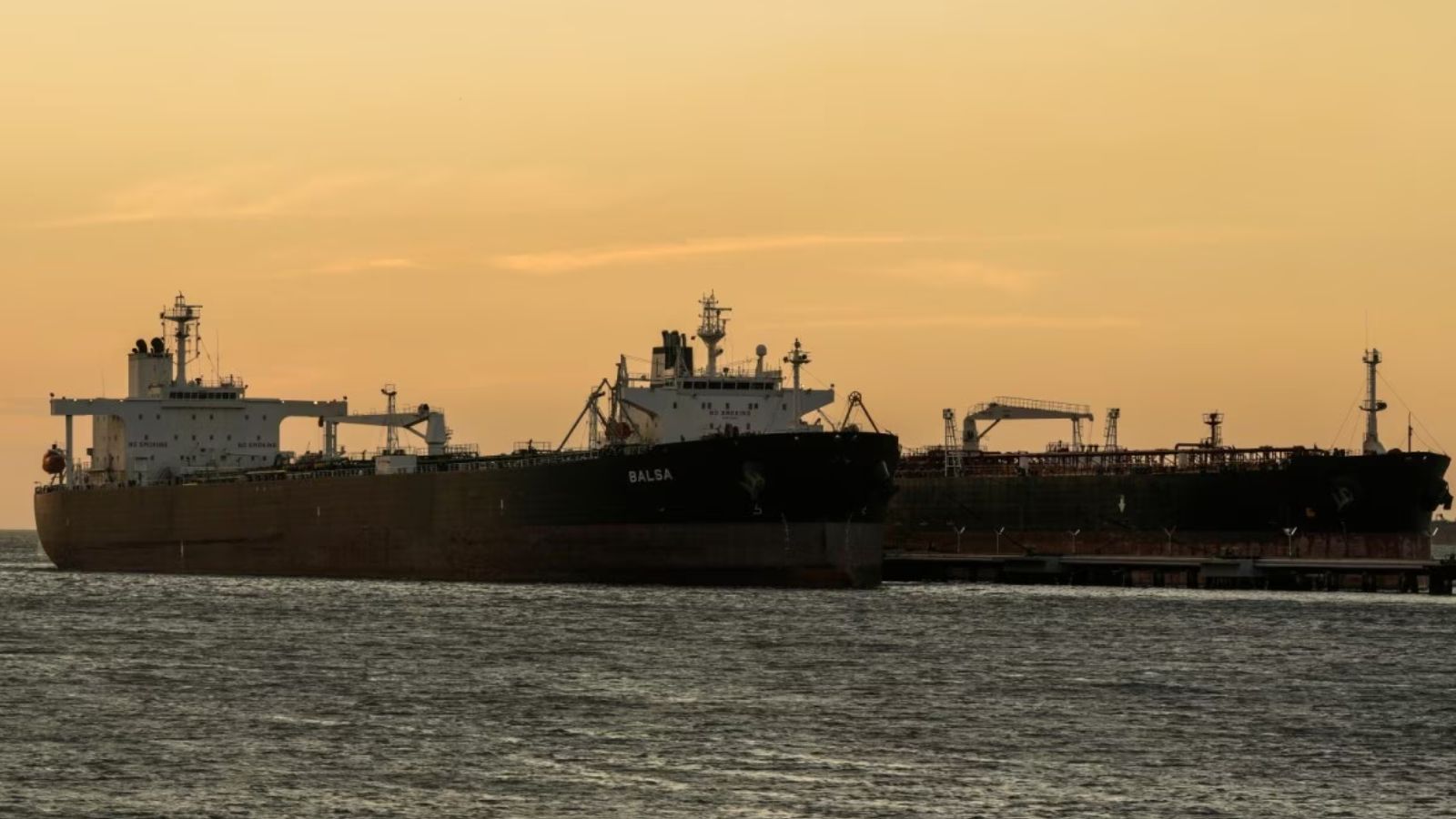


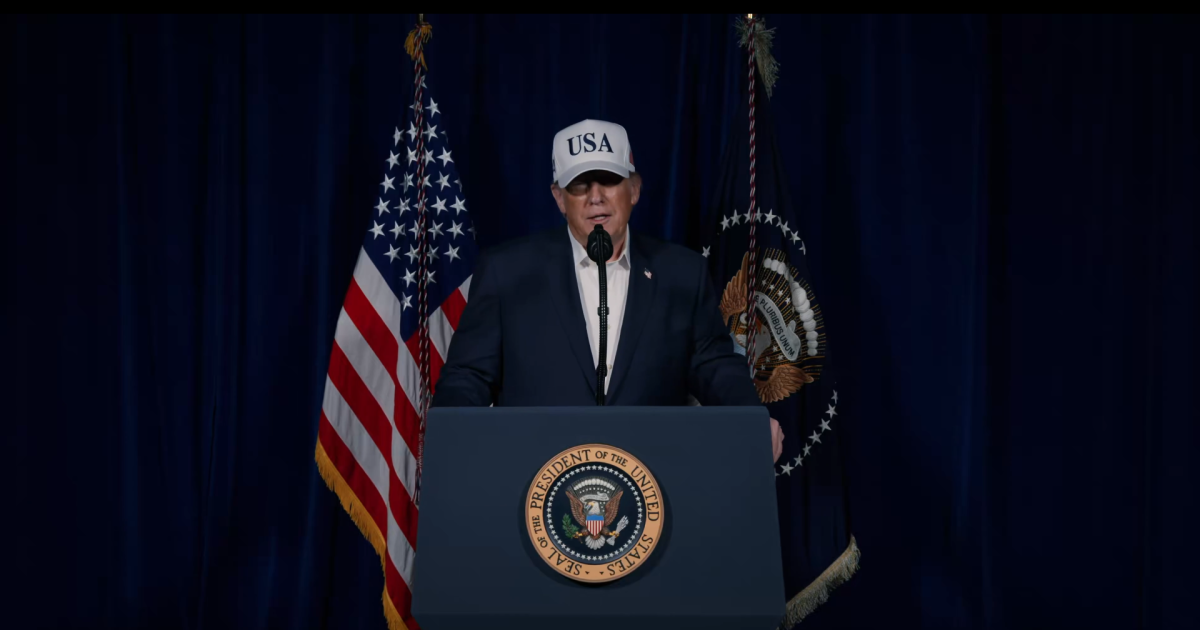
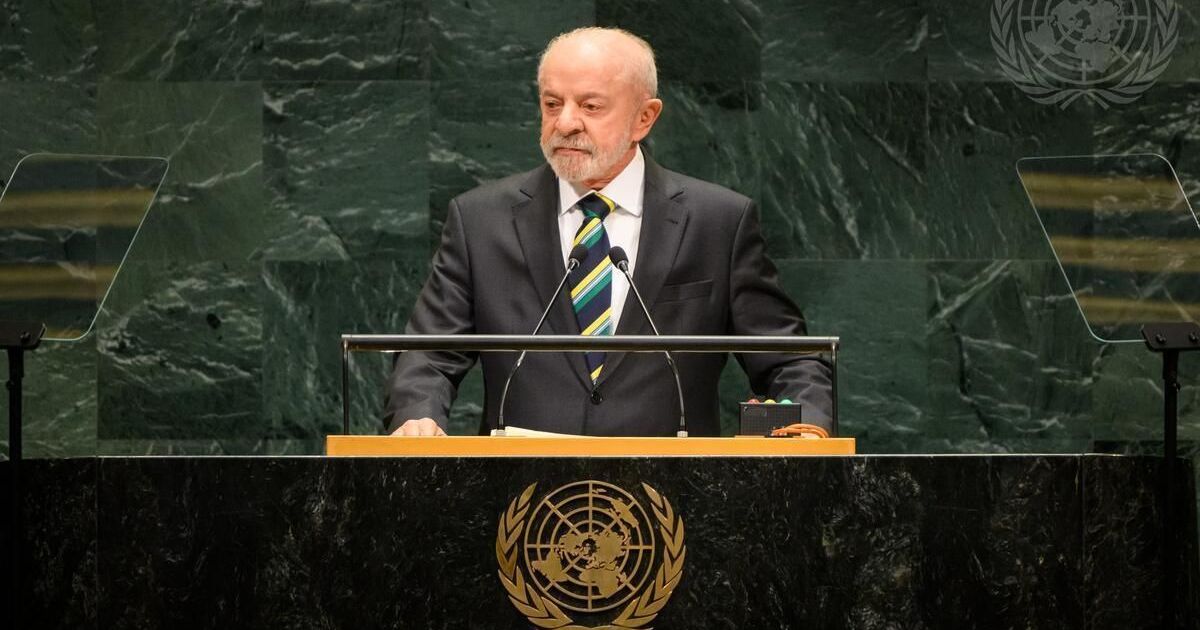
News 23-09-2026
America Between Threats and Bargaining: How Israel, Germany and China Read Trump’s UN Turn
The main theme uniting Israeli, German and Chinese reactions to the United States on September 22–23, 2026, was not simply Donald Trump’s speech at the UN General Assembly, but the formula for American policy that he demonstrated: Iran is being offered either a deal or the “destruction” of the Islamic Republic. Behind this stark alternative, observers in all three countries see the same contradiction: Washington wants to appear absolutely strong while simultaneously seeking a way out of a war that has lasted nearly seven months, is putting pressure on global energy markets and increasingly tying US foreign policy to the American electoral calendar. (thepaper.cn)
In Israel, this duality is perceived primarily through the lens of immediate security. Israeli media identify two parallel developments: the White House is conducting lengthy contacts with an Iranian delegation in New York through intermediaries, while Trump is simultaneously warning of possible new strikes on the underground nuclear facility at Mount Kuh-e-Mosh and speaking of “significant momentum” toward an agreement. A report by Israel Hayom describes this as an almost three-hour diplomatic contact followed by a threat to use force. For Israeli audiences, this is not diplomatic flexibility but a source of anxiety: negotiations could reduce the risk of immediate escalation, but they could also produce an agreement that leaves Iran room to rebuild its military capabilities. (israelhayom.co.il)
This concern is clearly visible in an analysis by N12, in which former Israeli military intelligence chief Amos Yadlin warns of an “agreement trap”: in his assessment, a bad deal would turn the tactical military successes of the United States and Israel into a strategic advantage for Tehran. Significantly, the issue is not limited to Iran’s nuclear program. Israeli debate demands that any American agreement also address ballistic missiles, regional proxy groups and Iran’s ability to threaten shipping. More right-wing commentators, such as Mati Tuchfeld in Walla, by contrast, see an achievement in the fact that American demands have nearly converged with Israel’s. Yet even this optimistic view rests on one condition: the United States must not make concessions when the pressure of war and oil prices pushes Trump toward a quick political result. (mako.co.il)
In Germany, the American dilemma is interpreted differently—not as a question of whether a deal is sufficiently tough, but as the risk of a war without a clear political conclusion. Germany’s Deutsche Welle quotes Iran expert Faten Aman, who says Trump is seeking to end the war in a way that would allow him to declare that Iran’s nuclear and military capabilities had been weakened, freedom of navigation restored and Tehran returned to the negotiating table. But the article emphasizes that Washington, Tehran and the Gulf states have different ideas about how the conflict should end. For German readers, this is particularly troubling because of maritime logistics and energy: tensions are spreading beyond the Strait of Hormuz to routes through the Red Sea, meaning the American operation is no longer a distant Middle Eastern crisis. (amp.dw.com)
German commentary on Trump’s UN speech also notes a striking change in tone. In Tagesschau, Martin Ganslmeier writes of a Trump who is “more statesmanlike and less confrontational,” but explains this restraint not as a change in convictions, but as the result of domestic pressure and a search for a way out. His key conclusion is that even a military superpower cannot resolve the crises in Gaza and the Strait of Hormuz on its own. In the German view, this is the main lesson of recent months: unilateral American pressure creates problems faster than it builds a lasting coalition to solve them. Trump’s return to the language of the UN is therefore interpreted not as a renewed faith in multilateralism, but as a forced acknowledgment of the limits of American power. (tagesschau.de)
China’s reaction links the Iran issue to a broader dispute over the kind of world order America is proposing. The Paper describes Trump’s speech as distinctly domestic and almost campaign-like: threats against Iran, attacks on the International Criminal Court and discussion of overseas conflicts are presented as a package of achievements ahead of the midterm elections. The Chinese presentation particularly highlights the contradiction between threatening to destroy another state and the principles of the UN Charter, which prohibit the threat or use of force. Chinese commentators see this less as a problem with Trump personally than as a symptom of American policy, in which international rules are considered useful only when they do not constrain Washington. (thepaper.cn)
Yet against the backdrop of this criticism, a second, more pragmatic theme is also apparent in China: Xi Jinping’s visit to the United States on September 23–25. Official and state-affiliated media are forcefully promoting the formula of “constructive strategic stability.” In a Global Times editorial, relations between the two countries are presented not as a matter of bilateral courtesy, but of global predictability: the United States and China must interact on the basis of equality, respect and mutual benefit. However, another editorial in the newspaper accompanies this aspiration with a firm caveat: dialogue does not mean accepting rules established by the United States, and American military pressure cannot force Beijing to retreat on issues China considers its core interests. (globaltimes.cn)
This is where the three countries’ unexpectedly shared mood lies. Israel wants America not to trade security for a hasty deal; Germany wants America not to turn threats into an endless war with global economic consequences; China wants America to stop confusing strategic stability with the right to dictate terms. All three reactions, in different ways, question America’s ability to combine strength, diplomacy and domestic politics. Israel fears a lack of American resolve, Germany fears an excess of it, and China fears its unilateralism. But their overall conclusion sounds similar: after Trump’s UN speech, Washington appears not as the unquestioned arbiter of the world order, but as a power simultaneously trying to end the conflict, save face and prove to its voters that it still has complete control over events.
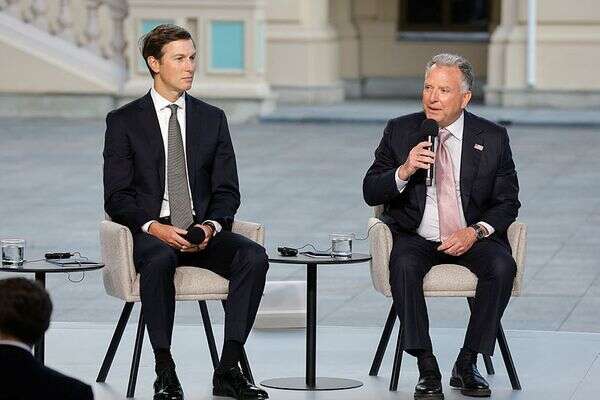
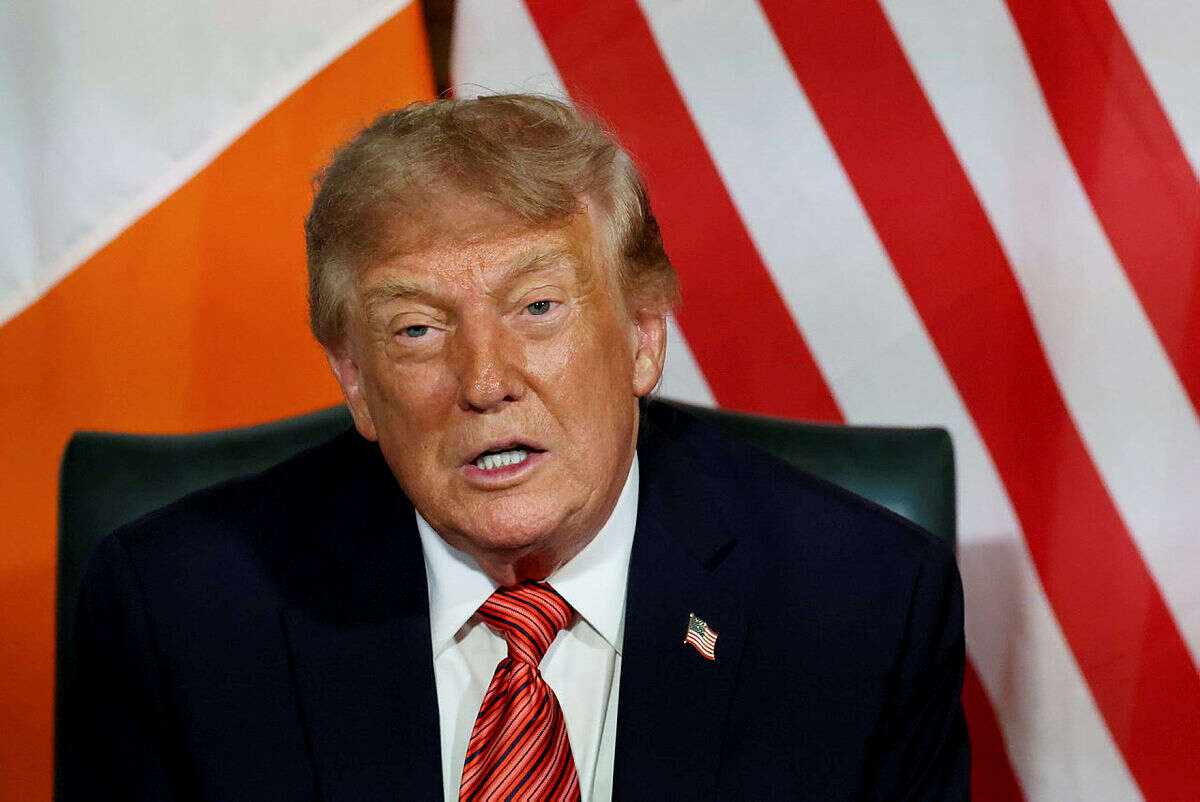
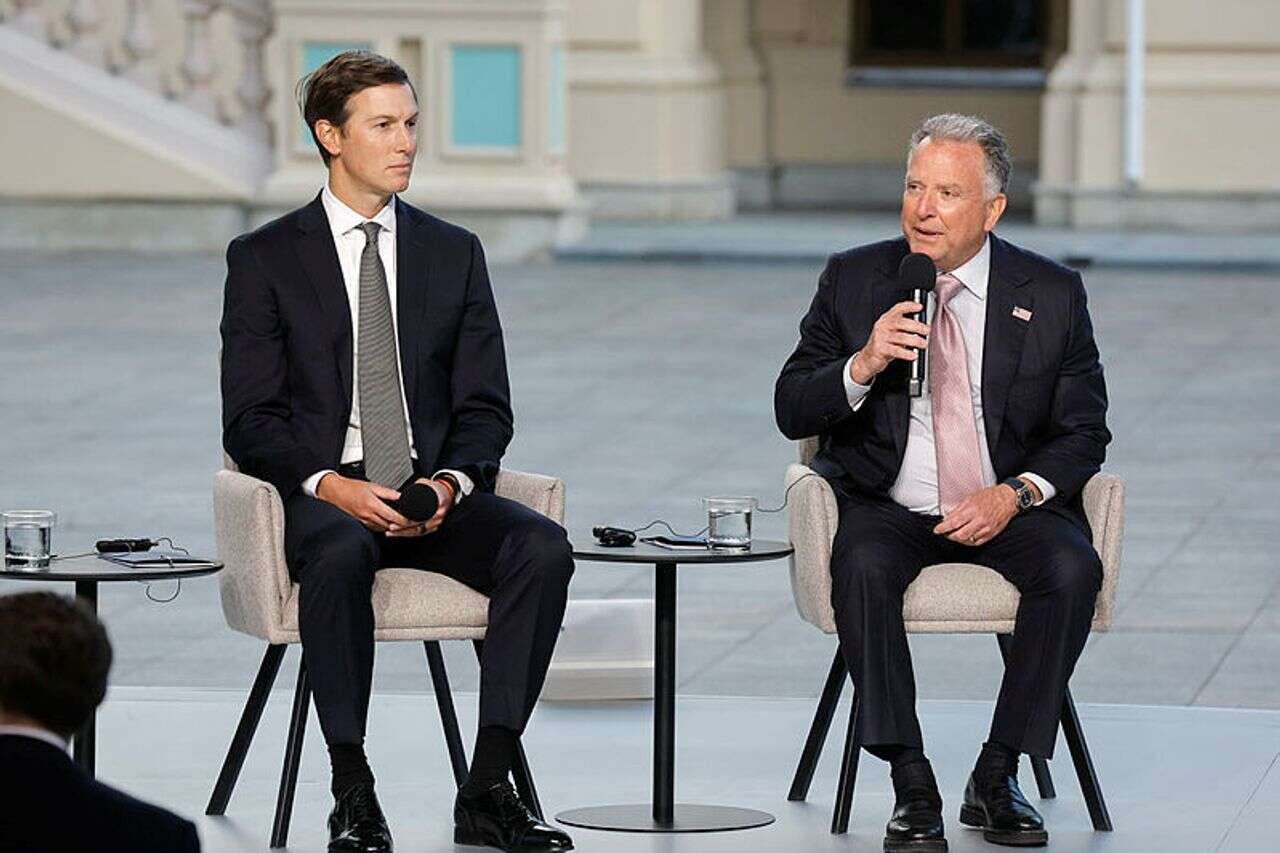
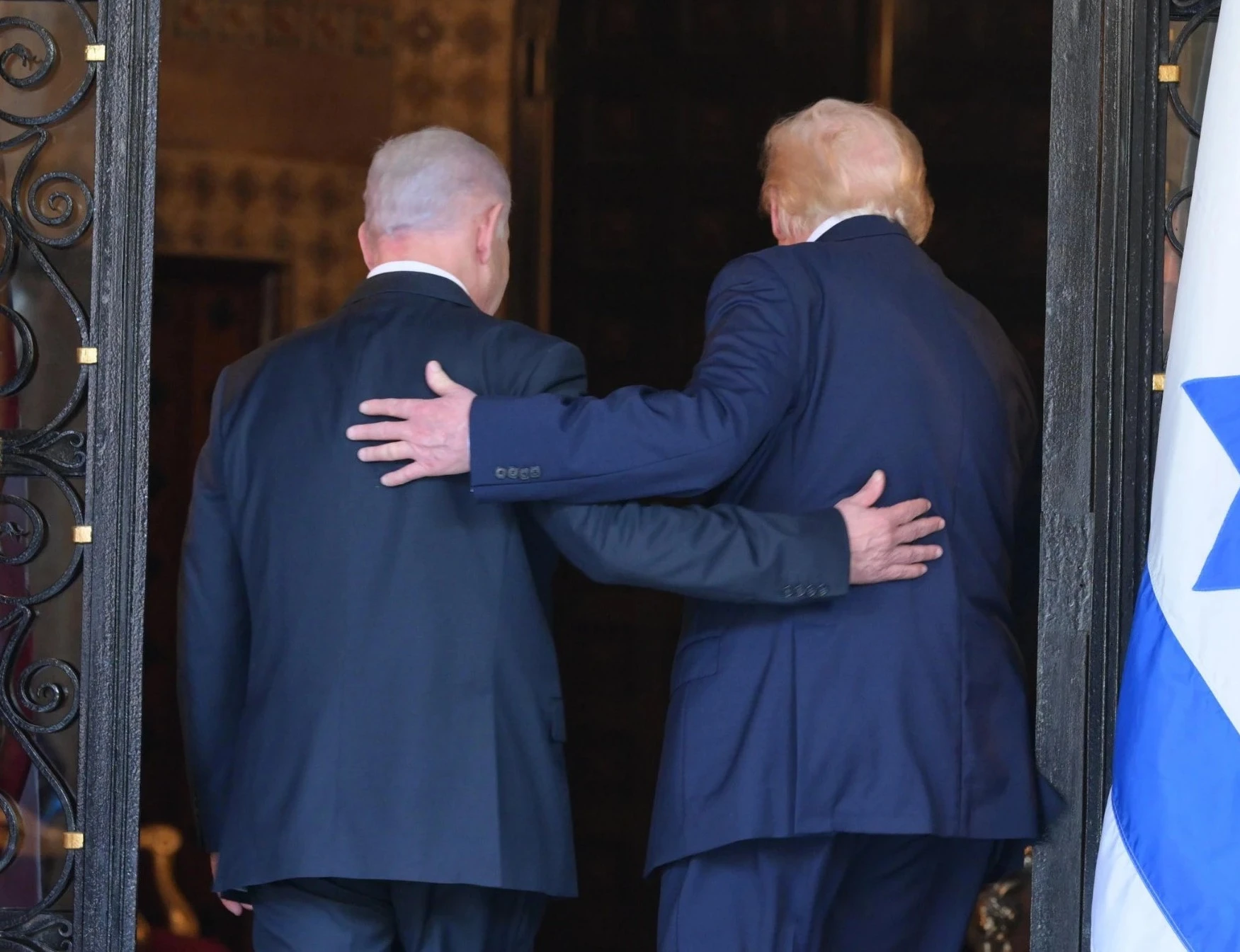
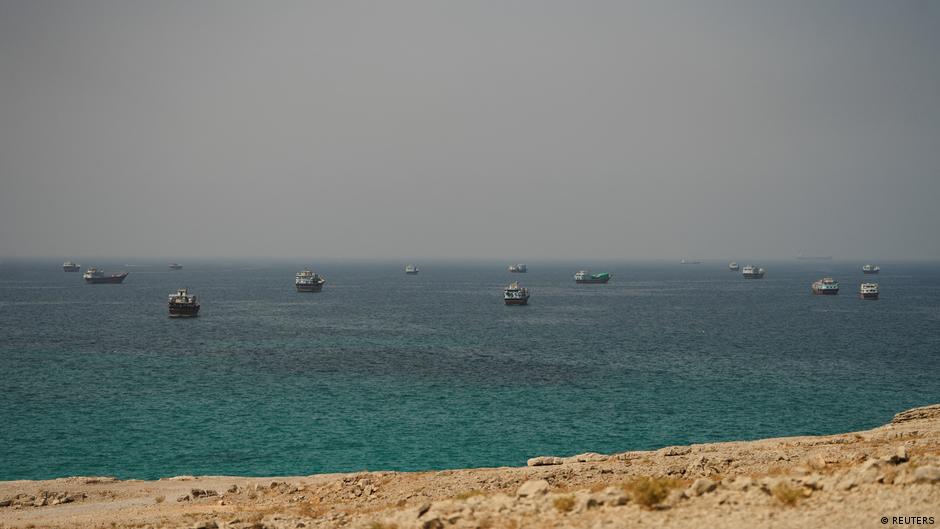
America as a Source of Risk and Bargaining: How Russia, Turkey and Ukraine Read Trump’s New...
In recent days, the United States has been discussed in Russia, Turkey and Ukraine not so much as a single geopolitical player as a country whose foreign policy increasingly depends on domestic electoral arithmetic, tariffs and the White House’s ability to turn sanctions into a negotiating tool. The immediate trigger was Donald Trump’s signing on September 19 of a law imposing new restrictions on Russia and Iran. It opens the way for sanctions against Russian entities and secondary tariffs on major buyers of Russian energy. But local reactions show that the same decision is perceived very differently in the three countries—as a threat, an opportunity and the subject of complex bargaining.
In the Russian debate, the central question is not “How harsh is the law?” but “Will Trump decide to use it?” In The Bell’s analysis, the new law is described as a mechanism requiring the president to take measures within 30 days while making them more difficult to repeal. At the same time, however, it presents a pragmatic counterargument: the White House may try to suspend the most painful steps until the November 3 midterm elections, fearing a rise in fuel prices. The Russian perspective, therefore, is not limited to the familiar denial of sanctions’ impact. It rests on the assumption that Trump will primarily measure any escalation in foreign policy by its cost to American voters.
This represents an important change in tone. Even in the relatively restrained review by Kommersant, the law is referred to as U.S. “hell sanctions”—an event of the week that cannot be dismissed as routine Washington anti-Russian policy. Russian commentators, however, see it less as America’s return to a consistent strategy of containment than as another example of U.S. unpredictability: Trump’s previous willingness to make deals and seek contacts with Moscow is now combined with pressure, while the outcome will depend on what is more advantageous to the U.S. president at any given moment.
Ukraine’s reaction is outwardly far more optimistic, but it too is far from unreservedly enthusiastic. In a detailed analysis by European Pravda, the law’s adoption is portrayed as a rare moment when Congress created a real lever of pressure on Russia for Kyiv: the sanctions could affect not only Moscow but also countries helping it maintain energy-export revenues. It is particularly important for Ukraine that this is not merely another statement of support, but a legal framework limiting the White House’s own room for maneuver.
At the same time, Ukrainian authors warn that the law does not amount to America’s strategic return to its former role. In a column for Ukrainska Pravda, some Democrats’ vote for the sanctions is explained not by a sudden consensus on Ukraine, but by institutional, electoral and intra-party considerations. The author draws a conclusion unpleasant for Kyiv: the long-term security of Europe and Ukraine’s very survival are no longer viewed by a significant part of the American political elite as unconditional priorities. In other words, Ukraine’s hopes are tied not to trust in Trump but to an attempt to exploit disagreements between Congress and the White House, making aid and pressure on Russia more difficult to reverse.
The perspective of Ukrainian financial expert Oleksii Kushch is particularly revealing. In his column for Glavkom, the sanctions law is interpreted primarily through the lens of the U.S. domestic economy. In his view, Trump is “packaging” tariff policy in a sanctions framework to secure bipartisan support and use external pressure to address his own budgetary and industrial objectives. For a Ukrainian audience, this is a sobering explanation: Washington may act against Russia, but the motive will not necessarily be solidarity with Ukraine—it will more likely involve American deficits, trade policy and competition with China.
In Turkey, the sanctions law is provoking an entirely different set of concerns. The main issue here is not the fate of the Russian economy as such, but the risk that secondary U.S. tariffs could hit Turkish trade and energy security. Dünya Gazetesi writes directly about the possibility of additional duties of up to 100% on buyers of Russian oil and gas, emphasizing that the 30-day period now under way is critical for Ankara, as Washington decides how to use the powers it has obtained. In Turkey, the U.S. decision is perceived as a potential threat not to an abstract “third world,” but to Turkish exports, the banking system and energy prices.
This explains Turkey’s distinctive ambivalence. Ankara wants to preserve relations with Washington and make progress on CAATSA and the F-35 program, but it also cannot easily abandon its energy and trade ties with Russia. In a review by Ekonomim, a possible meeting between Erdoğan and Trump in New York is described as negotiations on several interconnected issues at once: sanctions, the S-400s, the F-35, the war involving Iran and economic risks. U.S. Ambassador Tom Barrack, for his part, said that the dispute over the Russian S-400s “will be resolved,” but added the telling phrase that “the ball is in many courts,” acknowledging that the problem involves both U.S. legislation and questions concerning the systems’ operation or future. Anadolu Ajansı reported these remarks.
The Iranian issue reinforces Turkey’s sense that the United States creates crises while simultaneously using them as negotiating leverage. During Trump’s meeting with the leaders of the Persian Gulf states and Erdoğan, the U.S. president reportedly expressed the view that the crisis with Iran would end after the November 3 U.S. midterm elections, according to Anadolu Ajansı. To a Turkish observer, this amounts almost to an open admission that the regional war is tied to the calendar of American domestic politics. Ankara is especially vulnerable to this: any disruption to shipping and any increase in oil prices quickly turn into inflation and pressure on Turkey’s balance of payments.
The common denominator in the Russian, Ukrainian and Turkish reactions is not faith in America’s unchanging power, but doubt about its predictability. In Moscow, people believe that a sanctions strike could become a bargaining chip. In Kyiv, there is hope that Congress will be able to tie the White House’s hands, but no certainty that this will last. In Ankara, there is concern about becoming collateral damage from American pressure on Russia and Iran, while simultaneously trying to convert the Erdoğan–Trump personal channel into concessions on defense and trade.
The most unexpected conclusion from this three-way picture is that America is now perceived not as an arbiter setting the rules, but as a variable. In Russia, Ukraine and Turkey, its sanctions, military decisions and diplomatic promises are all read through the same question: what will Trump need before November 3—a reduction in prices, a high-profile deal, a show of strength or an opportunity to postpone the conflict?
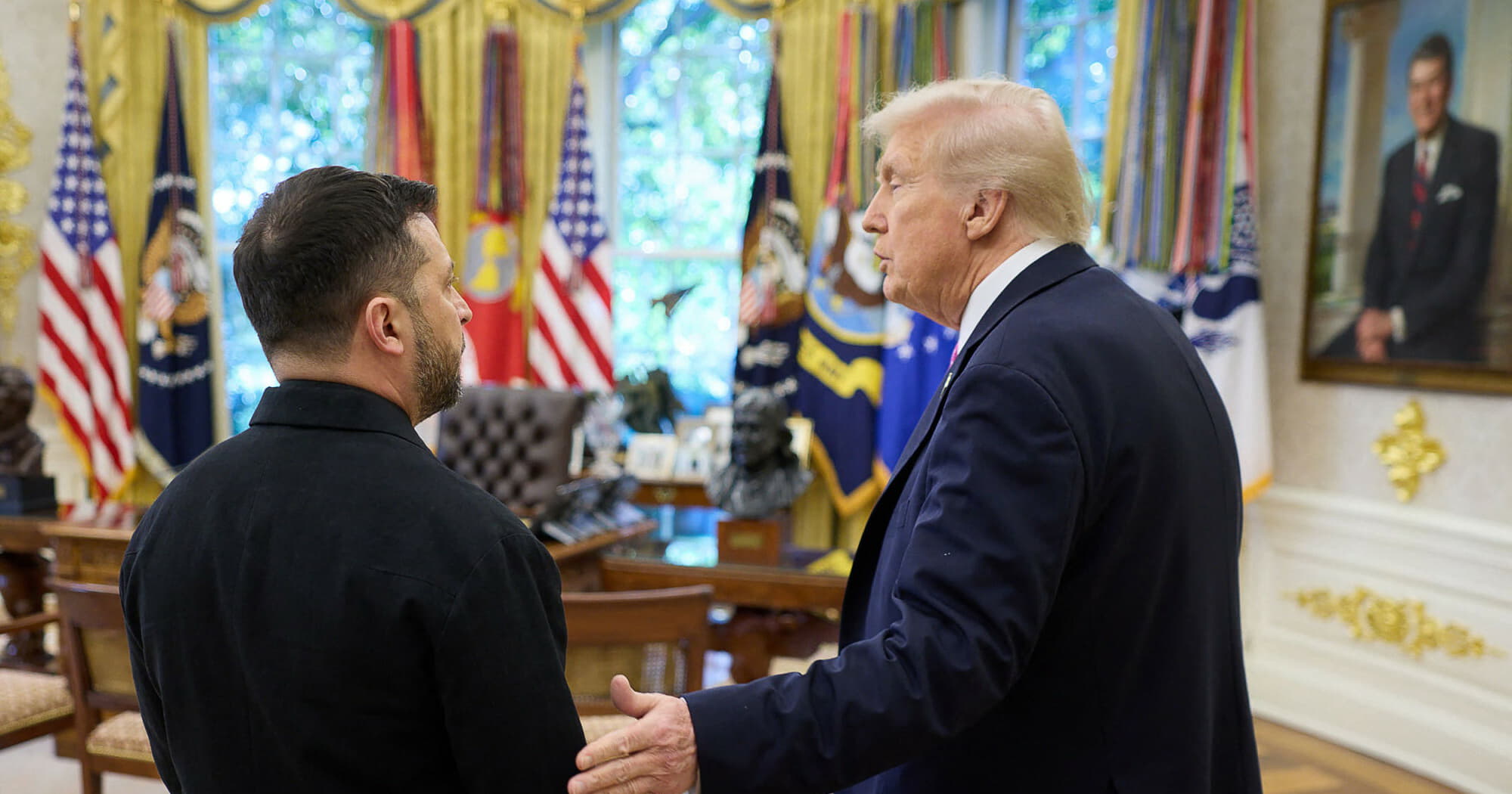



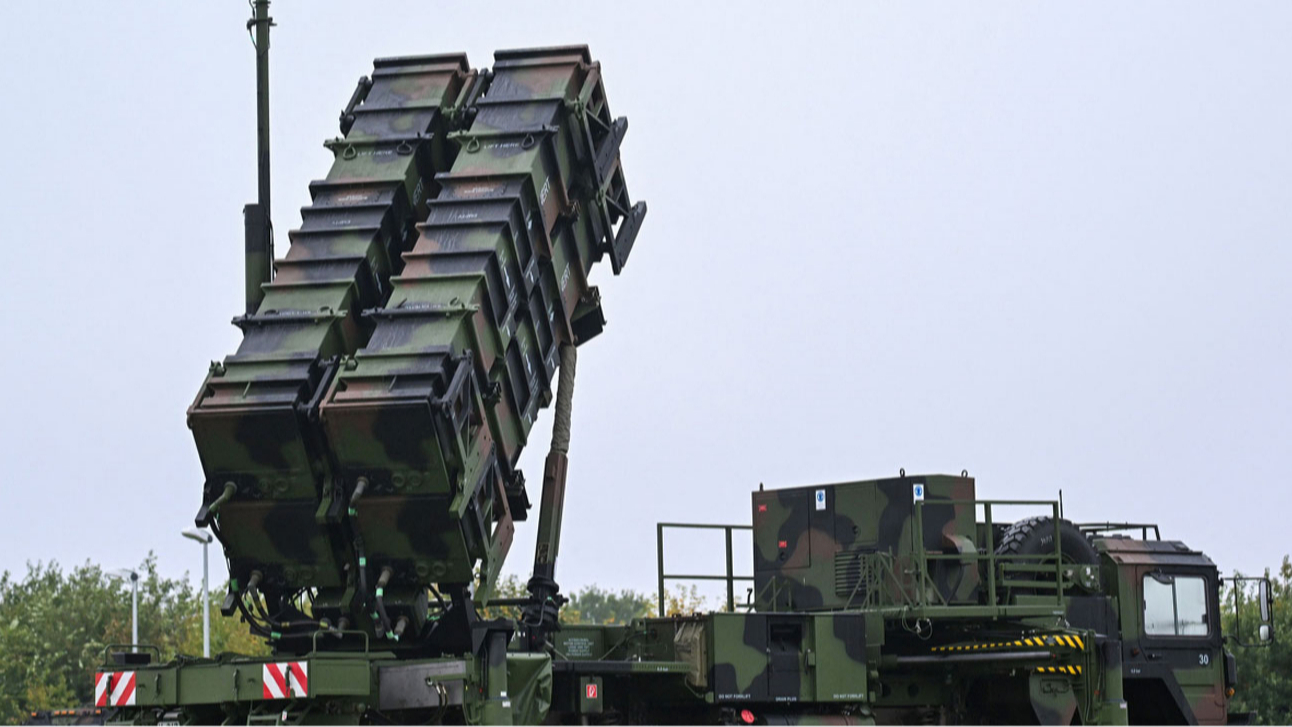

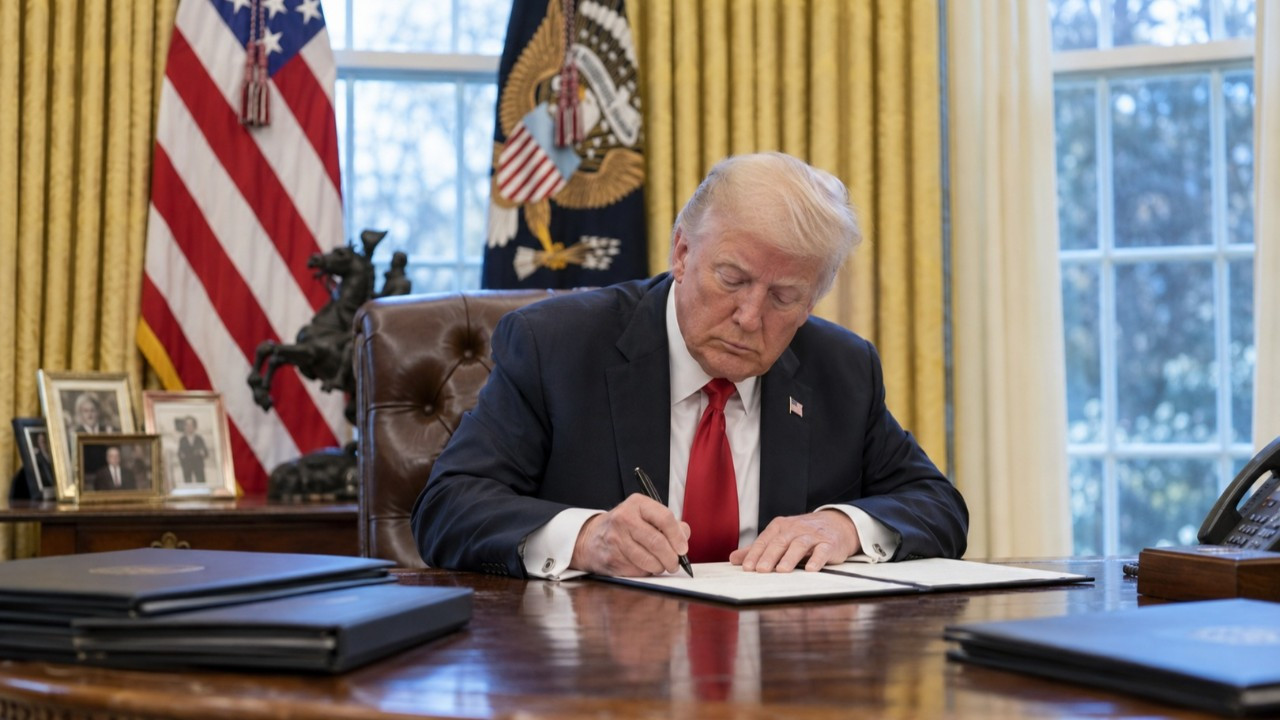
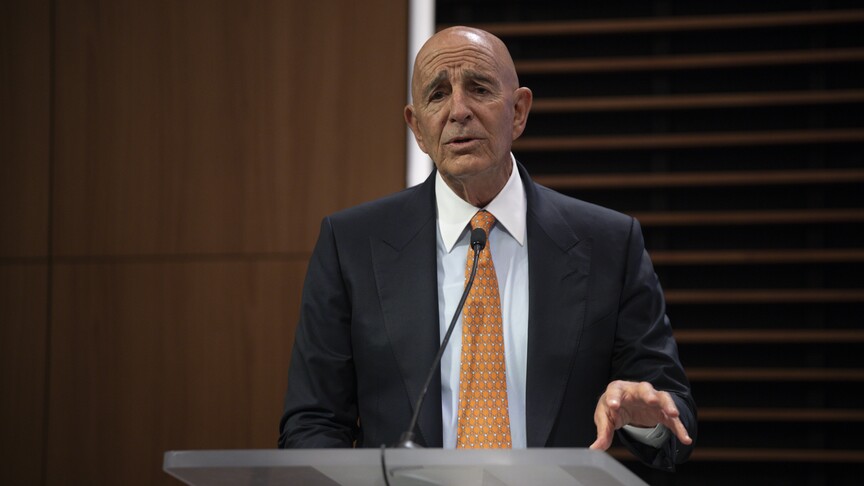
News 22-09-2026
America as a Source of Risk and Dependence: What South Korea, Brazil and Ukraine Are Saying...
In South Korea, Brazil and Ukraine, the United States has been discussed in recent days not as a distant superpower, but as an immediate factor in domestic politics, economic resilience and military security. The focus is on America’s war with Iran, Washington’s trade pressure and the Donald Trump administration’s attempts to accelerate negotiations on Ukraine. The common thread running through these discussions is that U.S. allies and partners are increasingly trying to understand not only America’s goals, but also how dependent those goals are on Washington’s domestic political calendar—above all, the midterm elections to Congress in November 2026.
This is especially evident in Ukraine. Kyiv’s discussion of the recent trip by U.S. envoys Steve Witkoff and Jared Kushner to Moscow and Kyiv is far from euphoric. In an analysis by Ukrainska Pravda, an Americanist directly warns that the visit may have only a limited effect, because only Trump himself is capable of becoming truly involved in the settlement, while his attention has already been consumed by the elections. Ukraine’s response is pragmatic: Washington is still viewed as an indispensable participant in any potential agreement, but its mediation is judged by results—fewer Russian strikes and deliveries of air-defense equipment—not by the number of diplomatic missions. It is no coincidence that Ukrainian authors link talk of “progress by winter” to the chronic shortage of Patriot interceptor missiles.
The U.S. war with Iran is intensifying these concerns. A February review by the Razumkov Centre articulates Ukraine’s key fear: American military and diplomatic resources are shifting toward a theater that Trump considers a higher priority, threatening to reduce assistance to Ukraine, above all in air defense. There is also a bitter paradox here. A weakening of Iran could potentially complicate Russia’s position, since Moscow has long used Iranian technology and connections. But Ukrainian analysts do not consider this an automatic benefit: Russia could turn the Middle Eastern crisis into a new bargaining chip with the United States and Europe, offering mediation, oil or gas in exchange for political concessions. For Kyiv, American power is important, but the unpredictable use of that power may prove no less dangerous than its absence.
In South Korea, American policy is also viewed through the lens of dependence—but a different kind: energy, military and technological dependence. The ongoing conflict with Iran is causing concern over the Strait of Hormuz, energy prices and the possibility that Seoul will be pressured to expand its role in ensuring freedom of navigation. Korean commentator Moon Hee-jeong, speaking on Kyunghyang, links the protracted U.S.-Iranian confrontation specifically to the possibility of pressure on South Korea to send forces to the Hormuz region. For a country that remains a U.S. ally amid the North Korean threat, this is not an abstract dispute over the international order, but a question of where an ally’s obligations end and unacceptable risks begin.
At the same time, Seoul is seeking not to oppose Washington, but to expand its room for maneuver. Ahead of President Lee Jae-myung’s trip to the UN General Assembly, National Security Adviser Wi Sung-lac spoke about contacts with American leaders and cooperation in energy, semiconductors and technology, while also emphasizing a policy of “practical diplomacy oriented toward national interests.” This is the logic of South Korea’s response: the alliance with the United States remains the foundation of security, but U.S. economic policy is now perceived as an independent threat. Industry Minister Kim Jung-kwan said Seoul was seeking to ensure that American tariffs on Korean chips did not put the country at a disadvantage compared with its competitors; Washington is discussing tariffs not only on semiconductors, but also on finished electronics. This is turning South Korean investment in the United States from a symbol of the alliance into an object of constant bargaining. (admin.korea.kr)
Brazil views the same American trend even more harshly: not as an awkward negotiation between allies, but as the return of spheres-of-influence politics. The main topic of Brazil’s debate is concern over U.S. interference in the 2026 presidential election. According to Agência Brasil, a report by Brazil’s intelligence agency Abin, sent to the president, the electoral court and the Justice Ministry, raised the risk of American influence on the campaign to the level of a critical threat. In Brazil’s perception, this is not an isolated diplomatic episode: tariffs, pressure over social-media regulation, sanctions, disputes over criminal groups and contacts between U.S. authorities and Bolsonaro-aligned circles combine into a single picture of external pressure.
Particularly controversial was a report by Folha de S.Paulo about a draft U.S. demand to allow “political dissidents” to participate in the election. President Luiz Inácio Lula da Silva called the document a “dead file” for his government and responded in the most sovereignist terms possible: Brazil’s critical minerals belong to Brazil, just as its elections do. This statement matters as more than campaign rhetoric. In Brazil, two issues that are often handled separately in American policy are converging: control over strategic resources and control over the country’s political direction. As a result, American pressure is perceived not as an ordinary trade conflict, but as a dispute over Brazil’s right to choose its economic partners and political model independently. (www1.folha.uol.com.br)
This is where the differences among the three countries are most revealing. Ukraine fears that the United States will withdraw from its war too far or too soon; South Korea fears that Washington will drag it into someone else’s conflict while also exploiting its trade dependence; Brazil fears that the American administration will try to influence the very mechanism by which power changes hands. Yet all three responses converge on one point: the old formula under which closeness to the United States automatically meant predictability no longer works.
The most unexpected common feature is not anti-Americanism. Neither Seoul nor Kyiv, nor even Brasília, sees a realistic alternative to engagement with the United States. South Korea continues to discuss chips, investment and security with America; Ukraine regards Washington as a key player in any peace; and despite the conflict, Lula has maintained a channel of personal communication with Trump. But the relationships are becoming increasingly less ideological. Their new formula is this: cooperation is necessary, but every American promise is now assessed through its concrete cost—Patriot missiles, tariffs on chips, election security, control over resources and the right not to become a participant in a war they did not choose themselves.
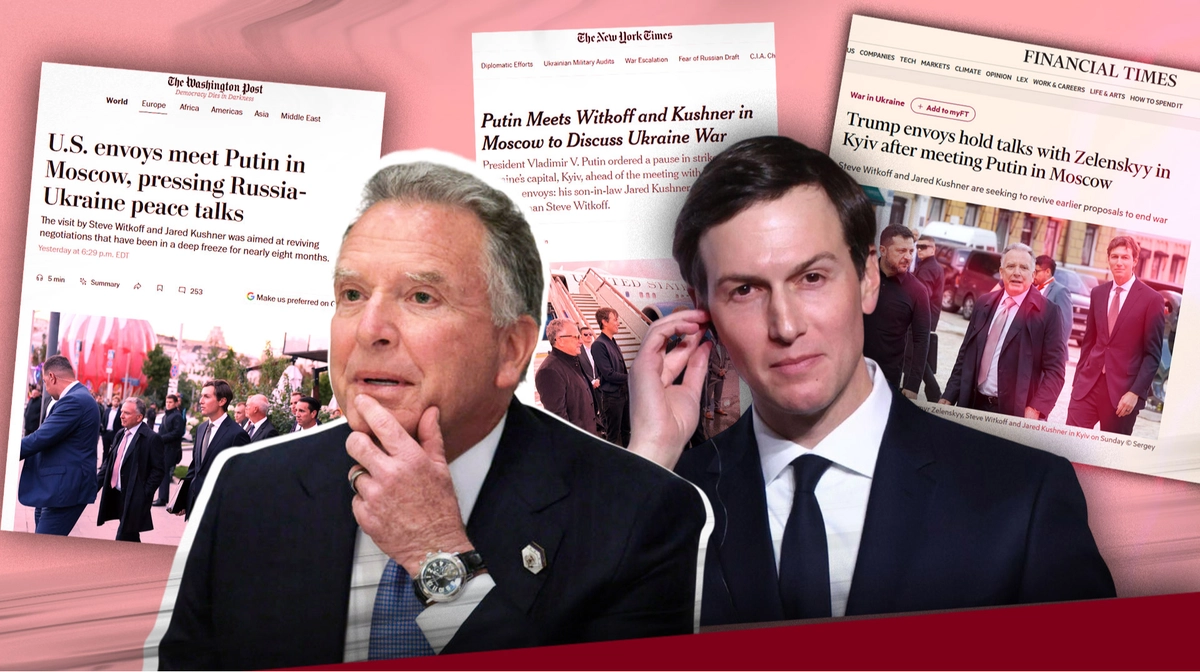



America as a Source of Risk: Why Paris, Tokyo and Seoul Are Increasingly Discussing Not U.S
By September 21, 2026, discussions of America in France, Japan and South Korea have come to share not one sensational story, but a common perception: under Donald Trump, Washington’s policy has become simultaneously more belligerent, more personalized and less predictable for its allies. At the forefront are the protracted U.S. war with Iran, the sudden reduction of U.S.–South Korean military exercises, and the transformation of trade and investment issues into instruments of political pressure. In local debates, the United States is no longer seen simply as a guarantor of order. Increasingly, it is viewed as a partner whose decisions can instantly alter the military balance, oil prices and the conditions for access to the American market. (lemonde.fr)
The most painful issue they share is the war with Iran, because it is forcing allies to question America’s ability to manage the Middle East while simultaneously deterring threats in Asia. In the French press, the concern is framed primarily as a question of Washington’s strategic capacity. In a Le Monde article, the Trump administration’s unpredictability is presented not as an episode of diplomatic eccentricity, but as a factor forcing Asian allies to reconsider their entire security architecture. The French perspective is characteristic: it focuses less on whether the United States will win a particular campaign and more on whether America’s very way of waging war is undermining trust in alliances and international rules.
Japan’s reaction is even more concrete. In an analysis by Nippon.com, the war with Iran is described as a source of American distrust that Washington is “spreading itself.” For Tokyo, the main risk lies not only in oil and shipping through the Strait of Hormuz. If U.S. aircraft carriers and other forces remain tied down in the Middle East for an extended period, deterrence in the Indo-Pacific will weaken—above all in a potential crisis around Taiwan. This is an important Japanese qualification to the American agenda: in Washington, Iran is often treated as a separate theater, while in Tokyo it is seen as an event that directly changes the calculations of Beijing, Pyongyang and Moscow.
In South Korea, the Iranian issue is also heard as an economic and political threat. Korean commentators note that Trump has publicly promised to end the war after the November midterm elections, linking the end of the conflict to falling oil prices. The Hankyoreh interpreted this as an attempt to reassure voters alarmed by the prolonged war and high energy prices. But for Seoul, the very linkage is troubling: the security of a crucial oil route and the fate of the conflict appear to depend on the U.S. domestic political calendar. And when Trump said on September 18 that a “serious decision” was approaching—whether to resume major strikes against Iran—Korean newspapers read it as a signal that the scale of escalation is still determined by the president’s personal choice rather than by a stable allied strategy. (mk.co.kr)
The second issue is the price of the American alliance. This became particularly acute after Trump’s August 17 order to sharply reduce joint U.S.–South Korean exercises, citing his “excellent relationship” with Kim Jong Un. The conservative South Korean newspaper Dong-A Ilbo expressed the fear in stark terms: a unilateral reduction in exercises casts the shadow of a “Korea without Korea”—that is, the risk of a direct Washington–Pyongyang deal made over Seoul’s head. In this view, the problem is not simply the number of days of exercises; it is that the ally does not know whether its defense might become a bargaining chip in the U.S. president’s personal diplomacy.
There is, however, another, more pragmatic view in Korea. Lee Sang-shin, director of the Unification Policy Department at the Korea Institute for National Unification, argues in an institute analysis that reducing the exercises could potentially be compatible with Seoul’s policy of “responsible peaceful coexistence” with the North. In his assessment, the theory that Korea was being punished for refusing to participate in the Iranian operation should not be overemphasized. More important is to use the opening to resume U.S.–North Korean dialogue—while ensuring that Seoul is not excluded from it. This is the distinctly Korean duality: concern over American unreliability coexists with the hope that the same unpredictability could open a path toward easing tensions on the peninsula.
Japanese analysts view this as a redistribution of responsibilities throughout the American alliance system. In an East Asia Institute report, the simultaneous expansion of the Japan–U.S.–Australia Oriental Shield 26 exercises and reduction of the U.S.–Korean program are described as an asymmetric restructuring: the burden is increasing along the Japan–Australia–India axis while weakening along the U.S.–Korea axis. This leads to an unusually sober Japanese conclusion: Tokyo should not automatically interpret the reduction in exercises as an American withdrawal, but it must prepare for Washington to demand ever more insistently that allies bear the costs and risks of regional deterrence themselves. (global.eai.or.kr)
The French view overlaps with the Japanese one, but leads to a different political instinct. For Paris, the instability of American commitments is another argument in favor of European strategic autonomy. French observers see Trump’s conduct as more than an Asian problem: it demonstrates how dangerous it is to build security on the assumption that the U.S. president will consistently follow established alliance practices. Paris is therefore more focused on Europe’s ability to act independently, while Tokyo is concerned with strengthening the network of alliances around Japan, and Seoul with avoiding becoming an object of negotiations between great powers.
The third common thread is the merging of economics and security. Trump is pressuring the Federal Reserve, threatening to halt trade with countries that run trade surpluses with the United States, and making no secret of his willingness to use tariffs as a personal lever. As Le Monde notes, this approach is not reducing uncertainty but expanding it: tariffs fuel inflation, while political pressure on the Fed calls into question the predictability of U.S. economic policy. For France, this is above all a warning about the vulnerability of European exporters to bilateral threats from Washington.
For South Korea, economic pressure is already inseparable from alliance issues. The Korean newspaper Hankyoreh cites Andrew Yeo, a Korean affairs specialist at the Brookings Institution, as saying that accumulated disagreements over investment in the United States could damage relations between the two countries, with security and economics in the Trump administration potentially ending up “on the same table.” This is especially revealing: Seoul’s investments, participation in U.S. projects, shipbuilding, technology and possible support in the Strait of Hormuz are all becoming elements of a single bargain. Even tariffs on specific Korean goods, including solar-energy and drone components, are perceived not as ordinary commercial measures but as part of this new negotiating environment. (hani.co.kr)
This is where the French, Japanese and Korean reactions converge. They do not share an identical assessment of Trump: in France, concern is stronger over international law and European autonomy; in Japan, over a military vacuum in Asia; and in Korea, over the risk of being bypassed in negotiations with the North. But all three countries reach the same conclusion: America remains an indispensable power, yet the old formula of trust in it no longer works automatically. An alliance with Washington now requires not only loyalty but also constant hedging—with national military capabilities, diversified economic ties and readiness for the next American turn to be announced on social media before allied capitals even hear about it.

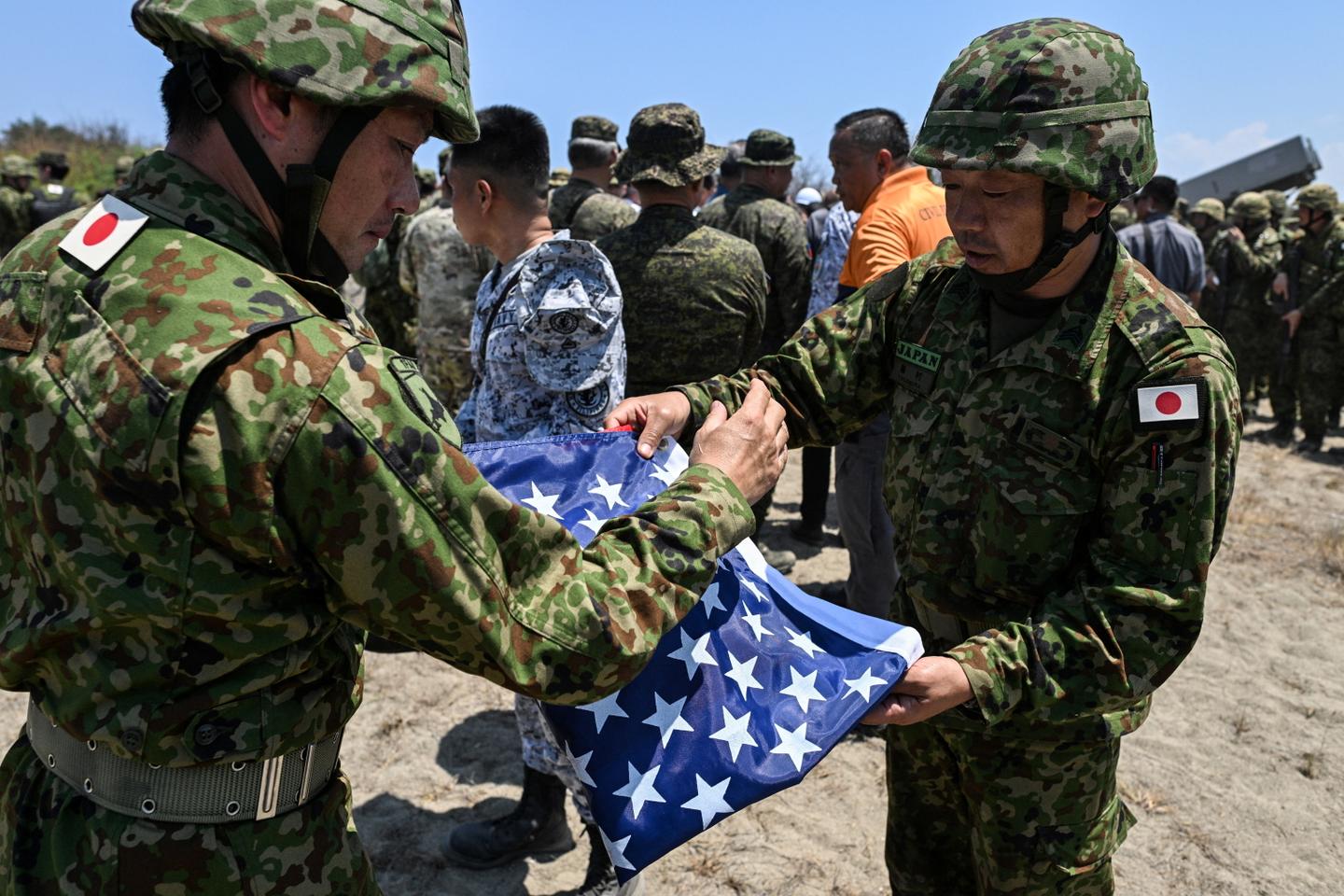

![President Trump. [Yonhap News]](https://wimg.mk.co.kr/news/cms/202609/18/news-p.v1.20260918.cd984b7ed2b243ea896504ad901ded13_P1.jpg)




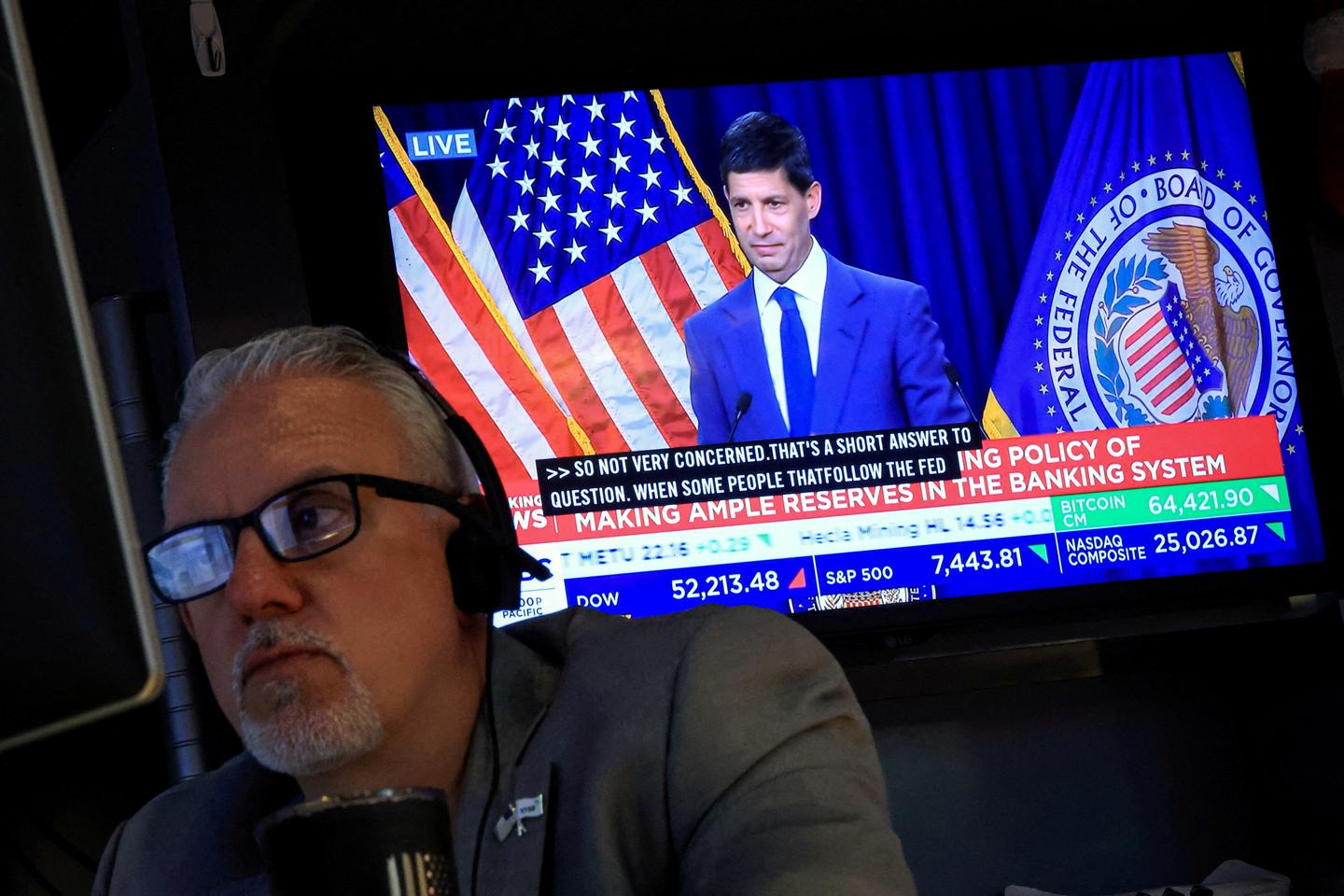


News 21-09-2026
America as a Source of Risk, Not Support: What Germany, France and Turkey Say Today
Discussions of the United States in Germany, France and Turkey as of September 21, 2026, are dominated not by individual statements from Donald Trump, but by a sense that American policy is simultaneously changing the rules of security, trade and domestic European politics. The focus is on the protracted US war with Iran and instability around the Strait of Hormuz, American tariff pressure on European exports, and Trump’s openly ideological sympathy for Europe’s right-wing populists. However, the overall conclusion differs in the three countries: Paris and Berlin are increasingly speaking of the need to protect European agency from American unpredictability; Ankara, by contrast, is trying to turn its personal channel with Trump into practical concessions, while remaining skeptical of Washington’s declarations.
The most difficult issue is Iran. The German reaction is particularly sharp: in a commentary by ARD correspondent Carsten Küntopp, titled “Trump Has Squandered American Power”, the war is presented not as a demonstration of strength, but as the self-weakening of the United States, whose consequences are already affecting Europe as well. From this perspective, Washington is losing on two fronts at once: it is diverting resources needed to deter other threats and forcing its allies to live with energy, logistical and military risks they did not choose. This marks an important shift in the German debate: the question is no longer whether the United States is being decisive enough, but whether it has become the main generator of strategic instability for its own partners. (tagesschau.de)
In France, the same war is viewed through the lens of America’s economic vulnerability and the danger of an internal political breakdown. Le Monde links the Federal Reserve’s rate hike on September 16—made despite Trump’s demands—to the inflationary effects of both the military campaign against Iran and the trade war. To French observers, this amounts to an almost mirror-image refutation of Trump’s promise: a president who came to power pledging to reduce the cost of living and avoid expensive foreign wars has become entangled in a conflict that is raising fuel prices, putting pressure on debt and turning the US economy into a source of external shock. (lemonde.fr)
The Turkish debate is less moralizing and considerably more practical. For Ankara, the war in Iran is not a distant crisis, but a security factor on its own borders, a threat to trade with Iran and a potential bargaining chip with the United States. Political scientist Necmettin Acar, in an Anadolu Ajansı analysis, emphasizes that Trump’s hard line grew out of a long-standing anti-Iran consensus among the American elite, but that this consensus is no longer as firmly rooted in American society. From Turkey, this is read as a sign that Washington’s current policy may be loud, but not necessarily sustainable. Ankara is therefore interested not in choosing a side in the US-Iran confrontation, but in avoiding the secondary economic and political consequences of the conflict. (aa.com.tr)
It is here that the most distinctive Turkish reaction to America becomes apparent: the closeness between Erdoğan and Trump is viewed as a useful but highly unreliable asset. In an article published today by DW Türkçe, the leaders’ expected meeting on the sidelines of the UN General Assembly is linked not to rhetoric about friendship, but to concrete unresolved dossiers—CAATSA sanctions, the F-35 program and the war in Iran; at the time of publication, neither the format nor the exact timing of the talks had been confirmed. In his column, journalist Murat Yetkin ironically questions US Ambassador Tom Barrack’s claim that relations between the two countries are supposedly at their best in history. Turkey’s conclusion is straightforward: warm personal relations may open a door, but they do not eliminate American sanctions mechanisms, disagreements over Syria or Washington’s dependence on its own Middle East strategy. (amp.dw.com)
The second major line of dispute concerns tariffs. In France, this is no longer an abstract debate about free trade, but an assessment of damage by sector. In a September study, the French Treasury states that after the alignment of US tariffs for different partners, the EU has found itself in a less favorable position than Canada, Mexico and the United Kingdom; competitive pressure is increasing most sharply on European machinery, chemicals, agriculture, steel, electronics and automobiles. French Customs separately notes that the additional Section 301 regime for imports from the EU has been in effect since July 24, while a number of metal-containing goods face much higher rates. (tresor.economie.gouv.fr)
In German and French perceptions, the tariffs have become proof that Trump’s economic nationalism cannot be separated from his geopolitics. The United States demands European solidarity on security issues, while simultaneously restructuring the market so that European manufacturers either move production to America or lose their competitiveness. As a result, what is growing is not so much old-style anti-Americanism as a demand for European protection against the United States: an independent industrial policy, less vulnerable supply chains and the ability to act without automatically relying on Washington. For France, this continues the familiar language of “strategic autonomy”; for Germany, which built its prosperity over many years on exports and the transatlantic market, it represents a far more painful rethinking.
Finally, the most politically explosive issue is the transfer of the Trumpist model to Europe. Following the AfD’s success in Saxony-Anhalt, Trump publicly welcomed the result, ending his message with the formula “MGGA”—an obvious imitation of MAGA. In a Deutschlandfunk analysis, historian Volker Depkat advises against reducing the AfD to a German version of Trumpism, but acknowledges a deep ideological and stylistic affinity: anti-elite mobilization, a hard-line migration agenda, distrust of institutional constraints and a politics of permanent conflict. For many Germans, American support for the AfD looks not like ordinary sympathy for an ideologically similar party, but like interference by an ally in Germany’s extremely sensitive history. (deutschlandfunk.de)
In France, the reaction to the same episode is more mixed. In a tribune for Le Monde, historian Frédéric Bozo warns that the breakthrough of the far right in Germany could strengthen existing French Euroskepticism, because Germany is ceasing to appear an unquestioned model of a stable European democracy. But France’s far-right political landscape reacted unevenly: Reconquête welcomed the AfD’s success, while Rassemblement National preferred cautious silence, aware of the toxicity of too close an association with the German party, particularly over the issue of “remigration.” (lemonde.fr)
An unexpected common picture thus emerges. Germany sees today’s America as a risk to its democracy and security; France sees it as a risk to European economic and political sovereignty; Turkey sees it as a risk that can be partially converted into deals, but cannot be taken on trust. Trump remains the most influential external actor for all three countries, but the image of the United States as a predictable guarantor of order is giving way to that of a power with which they must negotiate, hedge against and account for its impact on their own domestic politics.
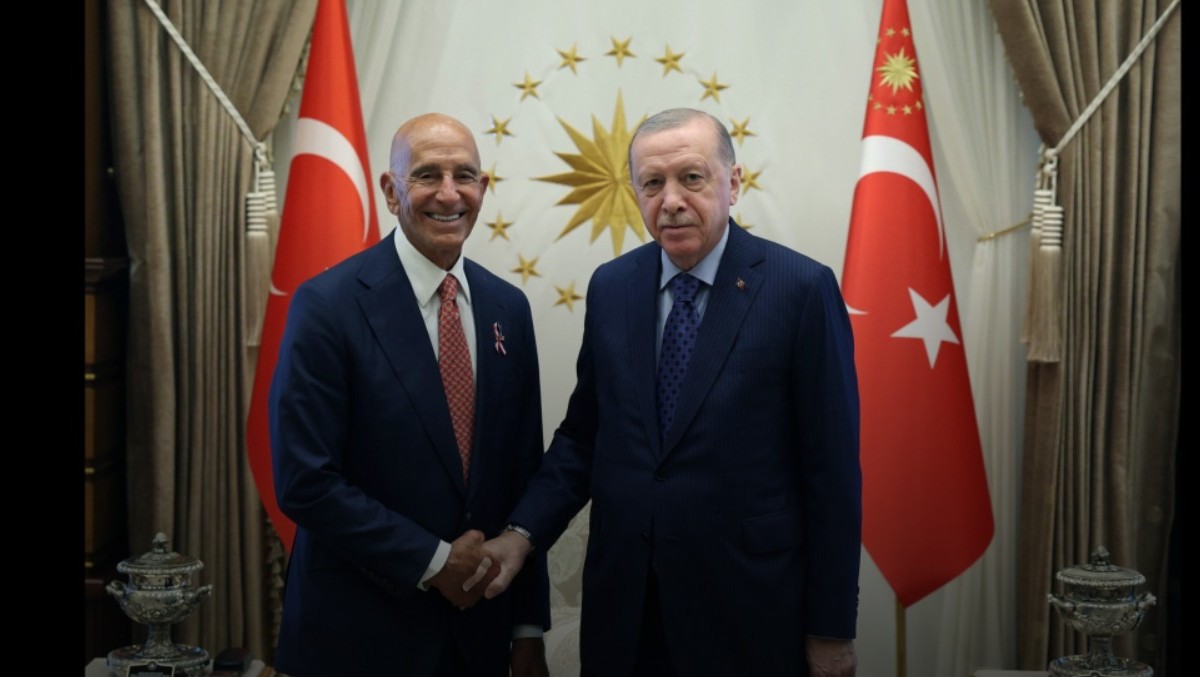

America as a Tool of Pressure: Why Russia, India and South Africa Are Debating More Than Trump
By September 20, 2026, discussion of the United States in Russia, India and South Africa had converged around one shared concern: Washington is increasingly openly combining trade barriers, visa restrictions and military force into a single set of foreign-policy tools. Several events in recent days provided the immediate impetus. On September 18, Donald Trump signed a law expanding sanctions against Russia and giving the White House the authority to impose tariffs of up to 100% on major buyers of Russian oil and gas. At the same time, the U.S. administration announced visa restrictions on South Africans it considers involved in discrimination against the white minority and the expropriation of land without compensation. Meanwhile, the ongoing U.S. campaign against Iran is keeping global oil prices at levels where every new sanctions decision becomes a matter not only of diplomacy, but also of the cost of gasoline, food and industrial production. (rbc.ru)
The sanctions law signed by Trump became the central issue in discussions in Moscow and New Delhi. In the Russian interpretation, this is not merely another round of restrictions against Russia itself, but an attempt to punish its entire foreign-trade infrastructure—banks, ships, suppliers and, above all, buyers of its energy resources. As RBC reported, the document allows for secondary tariffs of up to 100% on the largest importers of Russian oil and gas; India and China are among the obvious potential targets. Russian presidential spokesman Dmitry Peskov described such steps as “unfriendly actions” that would complicate the search for a peaceful settlement in Ukraine. This is an important detail: Russia’s response is based less on a promise of an immediate countermeasure than on the argument that the United States is declaring itself a mediator while simultaneously expanding its economic war. (rbc.ru)
In India, the issue is viewed in even more practical terms—as a threat to national energy security. An editorial in Jansatta describes the situation as pressure that forces New Delhi to choose between cheap oil, the stability of the domestic market and access for Indian goods to the U.S. market. The Indian press emphasizes that this is not yet an automatically imposed 100% tariff, but rather the transfer to Trump of the power to threaten or impose one. It is precisely this uncertainty that causes the greatest irritation: trade rules are becoming a matter of presidential discretion. (jansatta.com)
The tone of Dainik Jagran is particularly telling: the newspaper writes that an arbitrary increase in tariffs against India would be an expression of American “ego.” But the Indian view is not reducible to emotional anti-Americanism. Local economists are discussing a calculated dilemma: Russian oil provides a price cushion, but losing the U.S. market would hurt exports of mobile phones, engineering products, textiles and leather. In an editorial, Amrit Vichar suggests that the law should be seen primarily as a negotiating weapon—not necessarily as an immediate economic attack, but as an opportunity to demand concessions first and then offer a lower rate. (jagran.com)
This is where the Russian and Indian narratives unexpectedly coincide. In Moscow, secondary sanctions are viewed as an attempt to cut Russia off from its export markets. In India, they are seen as an attempt to force a third country to pay for the U.S. strategy toward Russia. In both cases, the United States appears not as a partner offering alternatives, but as a state attempting to change another country’s economic behavior by threatening to restrict access to its market. Indian expert Ajay Srivastava, founder of the Global Trade Research Initiative, stated this logic directly: the United States could first threaten a 100% rate and then offer a lower tariff as the subject of a deal. (hindi.business-standard.com)
In South Africa, however, the same American method appears differently—not through oil, but through history, race and sovereignty. Washington’s decision to restrict visas for South African officials whom the United States considers responsible for racial discrimination, a policy of expropriating land without compensation or incitement to violence triggered an especially painful reaction in Pretoria. The South African government rejected the U.S. allegations as distortions spread by fringe groups. (aljazeera.com)
South Africa’s public debate is therefore not centered on whether people in the country sympathize with the United States, but on the question: who has the right to define the meaning of post-apartheid land redistribution? In an IOL column, new measures by Secretary of State Marco Rubio are described as an attempt to impose a “racial veto” on post-apartheid restitution policies. The author sees the U.S. intervention not as the protection of minorities, but as an effort to portray any demands for historical justice as racism against whites. This sharply conflicts with the position of Afrikaner groups lobbying for their agenda in the United States, but it shows why the conflict with Washington is perceived within South Africa as a dispute over national dignity, rather than as a technical visa issue. (iol.co.za)
There is also a more pragmatic South African interpretation of events. International-affairs correspondent Peter Fabricius, writing for Eyewitness News, notes that the immediate reason for the new pressure remains unclear and suggests it may be connected to Pretoria’s relations with Tehran. This turns the dispute over the status of Afrikaners into a possible lever in a broader geopolitical deal: Washington may be using South Africa’s internal disagreements to influence its foreign-policy autonomy and its ties through BRICS. (ewn.co.za)
It is precisely the U.S. war with Iran that links the reactions of all three countries into a single story. For India, it means higher oil prices and risks to maritime routes through the Strait of Hormuz; for Russia, a more complicated global oil market amid sanctions pressure; and for South Africa, confirmation of concerns that international law is applied selectively. Back in March, the South African government officially condemned the U.S. and Israeli strikes on Iran as violations of the prohibition on the use of force enshrined in the UN Charter. (gov.za)
Russian commentators emphasize the inconsistency of the American approach. In Kommersant, Orientalist Farhad Ibrahimov noted that Trump initially spoke of a swift end to the Iranian conflict and then suggested that negotiations were not an urgent priority; meanwhile, the Strait of Hormuz remains a source of risk for global trade. For India, this creates an almost paradoxical problem: the United States demands that it reduce purchases of Russian oil, while its own military policy in the Middle East makes alternative supplies more expensive and less predictable. (kommersant.ru)
The main conclusion from the reactions of Russia, India and South Africa is that Trump’s U.S. policy is perceived not as a series of isolated episodes—sanctions against Moscow, tariffs against New Delhi, visa restrictions against Pretoria or an operation against Iran. It is seen as a single model: the United States uses dependence on its market, the dollar, visas and security to demand political loyalty. Only the vulnerabilities of the countries differ. Russia is defending the resilience of its exports, India the right to choose an energy supplier for 1.4 billion people, and South Africa the right to decide for itself how to address the legacy of apartheid. But the common response is becoming increasingly clear: not a break with America, but the search for such diversification of trade, energy and diplomatic ties that threats from Washington will no longer be tantamount to orders.
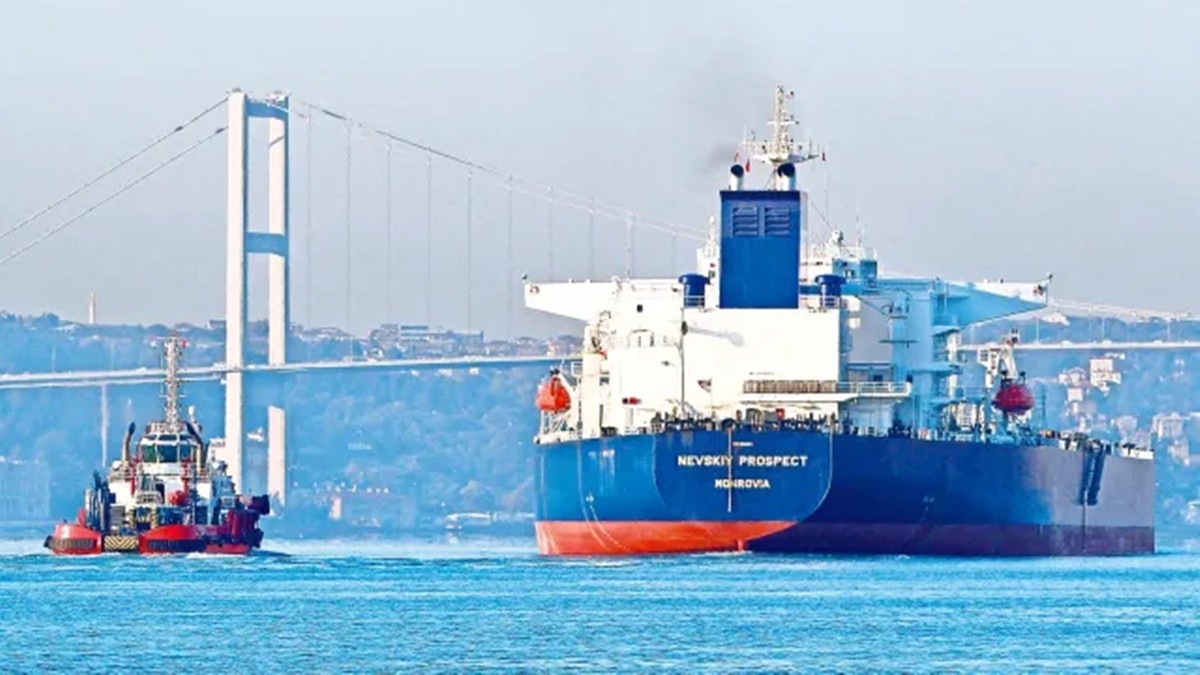
-1789668585736.webp)


![South African Minister for International Relations and Cooperation Ronald Lamola [File: Luba Lesolle/Gallo Images via Getty Images]](https://www.aljazeera.com/wp-content/uploads/2026/09/GettyImages-2289917250-1789645088.jpg?resize=770%2C513&quality=80)

News 20-09-2026
America as a Source of Risk: Why India, South Africa and South Korea Are Increasingly Talking About...
Events in recent days—above all, the law signed by Donald Trump on September 18 allowing tariffs of up to 100% on major buyers of Russian energy, a new wave of pressure on Pretoria, and continuing uncertainty surrounding US tariffs on semiconductors—have prompted a similar feeling in India, South Africa and South Korea: Washington is increasingly turning access to its market, investment and visas into a tool of coercion. Local reactions, however, differ markedly. In India, this is seen as an attempt to force the country to choose between energy security and its strategic partnership with the United States; in South Africa, as interference in painful domestic disputes over racial inequality and land reform; and in South Korea, as a demand to pay for security and trade access with ever-new investment commitments.
The Indian debate now revolves less around the immediate imposition of a 100% tariff than around the White House’s very right to apply it at its political discretion. The law is aimed at Russia’s revenues from oil and gas exports, but its potential victims are primarily India and China. In an editorial titled “American Arbitrariness” in Dainik Jagran, this approach is described as American arbitrariness: New Delhi, the publication stresses, cannot silently accept punishment for buying oil essential to its economy. The logic of local commentators is simple: for India, Russian oil is not an ideological gesture in Moscow’s favor, but insurance against price spikes for a country of 1.4 billion people.
It is particularly telling that India also views the American threat as potentially damaging to the United States itself. In an editorial comment by Jansatta, the paper warns that if India sharply reduces its purchases of cheap crude, the global oil market will become even tighter, driving prices higher far beyond South Asia. Ajay Srivastava, founder of the Global Trade Research Initiative, told Navbharat Times that India should not alter its long-term energy strategy in exchange for uncertain tariff concessions: in his assessment, Russian oil has already reduced India’s import bill. This does not mean Indian commentators underestimate the threat. On the contrary, many consider it serious precisely because it affects exports—from textiles and pharmaceuticals to engineering products. But the prevailing response is not fear, but a demand for reciprocity: friendship with the United States should not mean abandoning the independent definition of national interests. The law does give the president broad discretion to decide whom to punish and by how much, turning it into an instrument not only of sanctions policy but also of negotiations. (ogj.com)
In South Africa, US pressure has taken on an even more politically charged character. Washington links new visa restrictions against South African officials to allegations of discrimination against white citizens and to the country’s land-expropriation law; Pretoria rejects these accusations. International analyst Kingsley Makhubela, speaking to eNCA, saw the campaign as preparation for a “broader attack on the legitimacy” of the South African government. This is an important local perspective: for many, the dispute is not limited to visas. It concerns whether a foreign power will be granted the right to assess and effectively reshape policies on affirmative action, land reform and economic transformation—measures inseparable in South Africa from the legacy of apartheid. (enca.com)
At the same time, South African commentators are not calling for a romantic break with America. Their concern is pragmatic: political grievances may be followed by trade consequences—new tariffs, investment restrictions or pressure through AGOA, the US program granting African goods preferential access to the American market. In a conversation with Moneyweb, there was concern that AGOA could become Washington’s “stick” in its dispute with Pretoria. The editorial board of Financial Mail welcomed the program’s extension through the end of 2028, but stressed its ambiguity: preferential treatment has been preserved, yet tariffs have already undermined its practical value, while South Africa’s membership remains politically conditional. Economists Jing Chien and Lawrence Edwards wrote in Business Day that the average tariff burden on South Africa’s non-commodity exports remains far higher than it was at the beginning of 2025. As a result, the most characteristic South African response is not a call for retaliatory sanctions, but an accelerated search for alternative markets through the African Continental Free Trade Area, BRICS and Asian destinations. (businessday.co.za)
South Korea views the same American policy through an entirely different lens—technological and alliance-based. Washington is not accusing Seoul of ideological disloyalty, but US tariff threats involving chips, drones and industrial products are perceived as a test of the military-political alliance’s real value. Industry Minister Kim Jung-kwan said negotiations over semiconductor tariffs should proceed according to the principle that Korea must not be placed in a worse position than its competitors. But the very need to seek such a commitment reveals Seoul’s anxiety: for a country where semiconductors are the foundation of exports and a source of strategic influence, “no worse than others” no longer looks like a guarantee, but merely the minimum result of bargaining. (yna.co.kr)
The Korean press describes this bargaining almost as an exchange of market access for capital investment. A Newsis analysis links a possible announcement of South Korea’s first major investment project in the United States to an attempt to untangle the issue of semiconductor tariffs and Washington’s other trade demands. For India, American pressure means “do not buy this oil”; for South Africa, “change your domestic political framework”; and for South Korea, “invest in American manufacturing to preserve predictable market access.” The mechanism differs, but the underlying principle is the same: the United States is offering its partners not so much stable rules as individual deals in which economic concessions become the price of political security.
This unpredictability is the main common theme in the local reactions. Indian commentators fear that sanctions against Russia will become a pretext for pressuring New Delhi’s autonomous foreign policy. South African commentators fear that trade and visas are turning into levers for influencing the internal structure of a post-apartheid state. South Korean commentators fear that even a longstanding alliance with the United States does not protect critical industries from having their terms revised. In all three countries, the desire to cooperate with America has not disappeared; what is disappearing is the confidence that cooperation is based on rules that will apply tomorrow as they do today.


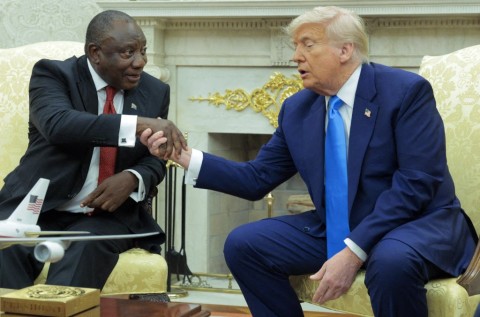


![South Korean Industry Minister Kim Jung-kwan answers questions from reporters in Washington, DC, on September 3 (local time). 2026.9.4. nari@yna.co.kr [Redistribution and database use prohibited]](https://img8.yna.co.kr/etc/inner/KR/2026/09/04/AKR20260904006600071_01_i_P4.jpg)
![Investment declaration ceremony for the United States hosted by the Ministry of Trade, Industry and Energy and KOTRA. Industry Minister Kim Jung-kwan poses for a photo at the ceremony in Washington, DC, on September 3 (local time). 2026.9.4. nari@yna.co.kr [Redistribution and database use prohibited]](https://img7.yna.co.kr/etc/inner/KR/2026/09/04/AKR20260904006600071_02_i_P4.jpg)

Sovereignty and Dialogue with the United States
Washington’s international partners seek to build relations based on respect for sovereignty, mutual trust, and consideration of national interests. Denmark and Greenland emphasize the need for autonomy in any arrangements with the United States, Vietnam focuses on strengthening trust, while Turkey is preparing for a diplomatic agenda involving the UN and contacts in America. The materials reflect a cautious and pragmatic approach to U.S. influence—without abandoning dialogue, but with a clear defense of their own interests. This overview is based on material from Yeni Akit (Turkey).
Erdoğan Heads to New York for Dialogue with Trump
Turkish President Recep Tayyip Erdoğan is traveling to New York to attend the 81st session of the UN General Assembly. In the Turkish press, the trip is viewed not simply as another speech on the international stage, but as an important stage in Ankara’s diplomatic activity and a possible opportunity for direct contact with U.S. President Donald Trump.
As Yeni Akit notes, a possible meeting between the two leaders is at the center of the visit’s agenda. For Ankara, a direct channel of communication with Washington is particularly important against the backdrop of numerous regional and international challenges: the conflict in the Middle East, the situation in Syria, security issues in the Black Sea, and Turkey’s complicated relations with its Western partners.
A Haber correspondent İrfan Sapmaz emphasizes the political symbolism of Erdoğan and Trump appearing at the same venue. “One of the most notable diplomatic contacts on the first day will undoubtedly be the interaction between Turkey and the United States,” he said. According to the preliminary schedule, Trump is expected to be the second speaker and Erdoğan the fourth during the same morning session of the General Assembly.
In the Turkish interpretation, this order of speeches and the possible communication between the leaders are intended to demonstrate that Ankara is at the center of global diplomacy. The trip is presented as part of a broader policy of an independent foreign policy, under which Turkey seeks to discuss key issues directly with the world’s major powers, without limiting itself to mediation formats or the framework of traditional alliances.
The Turkish president’s place of residence is also considered significant. During the visit, Erdoğan will stay at the Turkish House—Türkevi—located opposite the UN headquarters. In Turkey’s political discourse, the building has become a symbol of the country’s prominent and independent presence in the United States. Mentioning it underscores Ankara’s intention to rely on its own institutions and promote national interests directly in global decision-making centers.
The Yeni Akit article uses a tone characteristic of pro-government Turkish media: the visit is described as a diplomatic offensive and Erdoğan’s “landing” in New York. Behind this rhetoric lies the idea of equal dialogue with the United States—without dependence on Western capitals and with an emphasis on Turkey’s independent role in regional and international security.
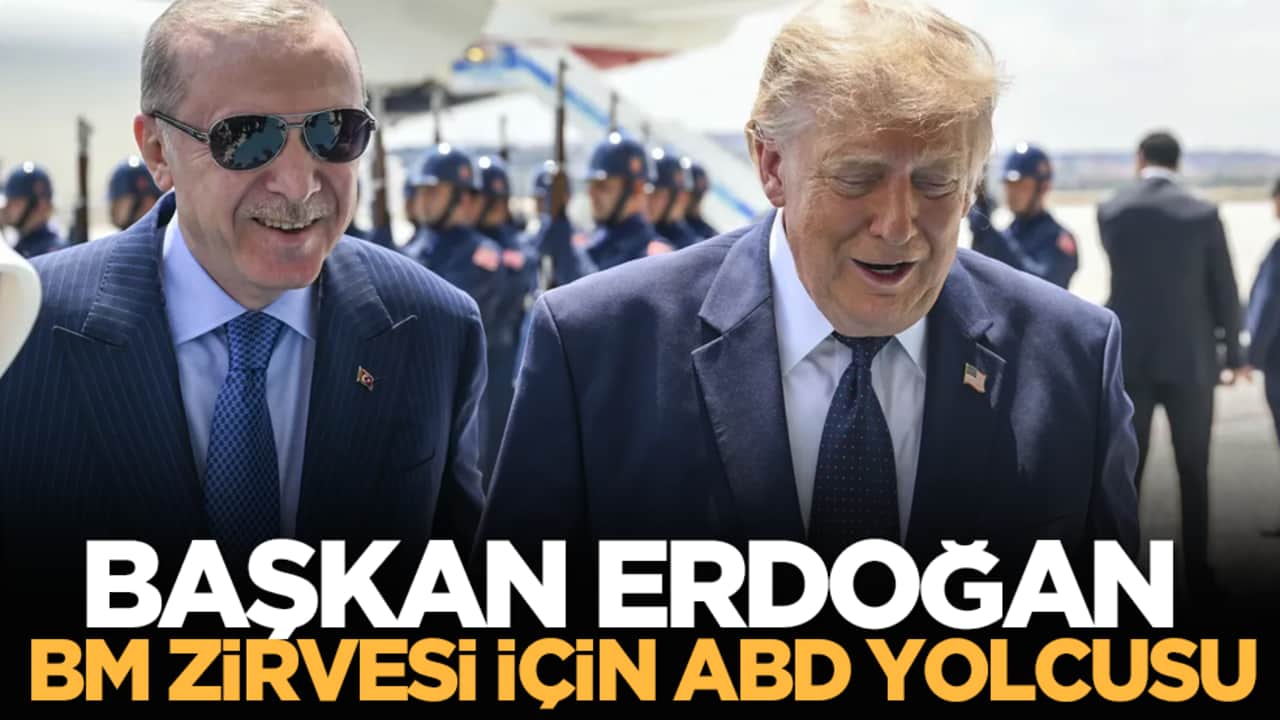
America as a Source of Risk, Not Support: Views of Washington in Germany, China and India...
In Germany, China and India, discussion of America in recent days has unexpectedly converged not around the usual rivalry between great powers, but around a more specific question: is Donald Trump’s administration capable of bringing crises it has itself exacerbated to an end without shifting the cost onto allies and trading partners? Three themes dominate the local debate: the possibility of a new escalation in the US war with Iran, Washington’s use of tariffs and secondary sanctions as a foreign-policy weapon, and America’s increasingly evident unreliability—even for those that formally remain its partners.
The broadest concern is Iran. China’s reaction is the most forceful in its wording and, at the same time, the most institutional. Beijing is not merely calling for de-escalation; it is constructing a legal argument that the current crisis resulted from the United States’ withdrawal from the nuclear deal, its “maximum pressure” policy and strikes on Iranian facilities under IAEA safeguards. Fu Cong, China’s permanent representative to the UN, said that military methods and sanctions pressure “do not help solve the problem,” and that the only way forward is equal-footing negotiations. In a statement by China’s Foreign Ministry dated September 17, this argument developed into a direct accusation that the United States had created the roots of the current crisis. China’s position thus turns the war in Iran into evidence of a broader thesis advanced by Beijing: Washington is replacing international law with unilateral coercion.
Yet even in China’s official analysis, the focus is not solely ideological criticism but also a calculated interest in US weaknesses. In a CCTV report circulated on September 18, the central question was framed not as “Will America launch another strike?” but as “How does the United States intend to end the war at all?” It listed factors constraining the White House: dwindling ammunition supplies, rising military spending, threats to the Gulf states’ oil infrastructure, pressure from fuel prices ahead of the midterm elections, and the absence of a clear political objective. This Chinese assessment is particularly revealing: Beijing portrays American power not as an unlimited resource, but as a force that becomes strategically vulnerable when a military campaign has no clear exit.
The tone in Germany is different: there is less satisfaction at America’s difficulties and more concern that the cost of US inconsistency will inevitably reach Europe—through oil, logistics, security and domestic political divisions. German commentators have long feared that the Iranian campaign could become an “endless war,” in which destroyed facilities are rebuilt and the United States launches new strikes. In a Deutsche Welle analysis, this logic is described as a self-perpetuating spiral: the American strategy of preventing Iran from rebuilding its capabilities could turn a permanent military presence in the region from an exception into the norm. For Berlin, this is not an abstract moral dilemma. Germany depends on safe shipping and predictable energy prices, but does not want to be drawn into an operation that Washington could sharply expand or wind down according to its own political calculations.
India views the same crisis through the lens of everyday economic security. For New Delhi, a war in West Asia poses risks to oil supplies, vessel insurance, maritime routes, Indian seafarers and the millions of Indian citizens working in the region. India’s response is particularly interesting, however, because it does not separate the war from US sanctions policy. On September 18, India’s Foreign Ministry said that attacks threatening shipping in the Bab el-Mandeb Strait were unacceptable, while also emphasizing that New Delhi would protect its trade and economic interests amid a US law giving the president the power to impose tariffs of up to 100% on major buyers of Russian oil. As Business Standard reports, Foreign Ministry spokesperson Randhir Jaiswal explicitly linked potential sanctions not only to damage to bilateral trade, but also to the global energy market.
This gives rise to a theme shared by China and India, and perceived in Germany through the experience of Trump’s trade threats: the United States is increasingly using access to its own market and dollar infrastructure not as instruments of economic policy, but as tools for disciplining other countries. For Beijing, this confirms the long-familiar picture of “sanctions hegemonism.” For India, it is a painful test of the concept of strategic autonomy. New Delhi does not want to abandon its partnership with Washington, but it is not prepared to let America determine whom a country of 1.4 billion people may buy energy from. India’s formula is therefore highly practical: diversify supplies, continue negotiations with the United States, but do not compromise on energy security. The threat of US tariffs is being added to an already existing physical shortage of crude: according to Business Standard, Indian refiners are now concerned less about the price of oil than about the availability of shipments from Russia and the Middle East.
Germany’s deepest concern, however, concerns not Iran or tariffs, but the political nature of its relationship with America. Chancellor Friedrich Merz’s statement that the era of “unconditional transatlantic friendship” had probably come to an end for a long time was more than an emotional remark. It came after another cooling in relations, including Trump’s endorsement of the electoral success of the Alternative for Germany in Saxony-Anhalt. A Deutschlandfunk report noted that Berlin had criticized this interference and that a planned conversation between the leaders had been postponed. In the German view, the problem is no longer limited to Trump’s abrasive style: America remains an essential security guarantor while simultaneously behaving like a power prepared to pressure Europe with tariffs, interfere in its political symbolism and make its alliance commitments dependent on personal loyalty.
This is where the reactions of the three countries diverge. China sees the weakening of the Western coalition as an opportunity for a more multipolar order. India sees a warning: vital supply chains cannot be built on the assumption that American rules will remain unchanged. Germany, meanwhile, is experiencing the loss of its old confidence most painfully because, for it, the United States was not merely a market or a situational partner, but the foundation of the postwar security architecture. The paradox of the current debate is that none of the three considers a break with America realistic. Yet all three—for different reasons—regard America as increasingly unpredictable. If China’s formula sounds like a call to limit American pressure, and India’s like a demand for the right to make its own economic choices, Germany’s boils down to a more troubling conclusion: dependence on Washington persists precisely when trust in Washington is running out fastest.


News 19-09-2026
An America Distracted: How Japan, France, and Germany Read the Current Crisis of U.S
By September 19, 2026, the discussion of America in Japan, France, and Germany is no longer focused primarily on yet another provocative statement by Donald Trump. Instead, it revolves around a more troubling question: can Washington simultaneously wage war, maintain its technological lead over China, preserve its allies’ trust, and avoid destroying its own institutions? Local commentary from Tokyo, Paris, and Berlin presents a remarkably consistent picture. The United States still possesses enormous military, financial, and innovative power, but its ability to turn that power into lasting influence is increasingly being called into question.
The most acute issue is the protracted American campaign against Iran. In Germany, it is discussed primarily as a risk of strategic exhaustion. In an analysis by Deutsche Welle, Andreas Noll describes the new logic of the war as a potentially endless cycle: Iran restores its radars, air defenses, and infrastructure; the United States launches another strike; and then faces retaliatory missile and drone attacks. This is not a scenario of decisive victory, but a strategy of continuously “mowing the grass”—an expensive effort to prevent the adversary from recovering without any clear political exit.
For German audiences, the issue is not limited to the Middle East. The war is seen as a test of whether American involvement is consuming resources that previously served European and Asian security. This perspective is particularly sensitive in a country where military dependence on the United States remains substantial, while fatigue with American unpredictability is also growing. In a broader DW analysis of the end of the era of multilateralism, this concern is framed even more broadly: Trump’s policies are viewed not simply as a reaction to the collapse of the old order, but as one of the forces accelerating its destruction. For Berlin, this creates an unpleasant dilemma: Europe needs to prepare for greater autonomy, but it must do so precisely at a time when its trade, technological, and military ties with America remain critical.
In France, the war with Iran is viewed through the lens of U.S.-China rivalry. Parisian commentators are less concerned with debating the tactics of the strikes than with asking who benefits from the fact that the United States has become bogged down in the conflict. In his column, Le Monde columnist Alain Frachon reaches an almost provocative conclusion: in the current confrontation, Trump is, at least for now, unintentionally serving China’s interests. His argument is not that Beijing is directly “defeating” the United States, but that the war with Iran exposes the limits of American military effectiveness and forces Washington to reduce its focus on the Pacific.
This is particularly important ahead of Xi Jinping’s visit to Washington, scheduled for September 24. The French perspective differs noticeably from the American language of “strategic competition.” Frachon sees the problem in the fact that Trump is more inclined to think in terms of personal relationships with “strong leaders” and spheres of influence than in terms of alliances, norms, and the protection of small states. In this view, allies become not partners but countries expected to make concessions—commercial, financial, or political. For France, traditionally protective of the idea of European “strategic autonomy,” this is not an abstract moral complaint. It is a warning: if America simultaneously pressures its allies with tariffs and seeks deals with its rivals, Europeans cannot regard American guarantees as an unchanging given.
Japan views the same problem less ideologically, but perhaps even more concretely. In Tokyo, the central issue is not only the upcoming Trump-Xi meeting, but also the competition over artificial intelligence, chips, computing capacity, and technological standards. A Japan Research Institute study published on September 18 emphasizes that China has nearly eliminated the gap with the United States in the quality of advanced AI models: according to data from the Stanford AI Index cited in the report, the best American model’s lead was only 2.7% in March 2026. At the same time, the United States retains stronger positions in investment and data centers.
The Japanese analysis is notable for refusing to treat American export controls on China as a magic solution. Another recent report by the same institute says that controls on supplies of advanced chips, memory, semiconductor-manufacturing equipment, and cloud computing can slow China’s progress and make it more expensive, but cannot stop it permanently. China has a vast market, skilled personnel, state investment, its own manufacturing base, and the ability to compensate for hardware shortages through more efficient algorithms and software methods.
This leads to a distinctly Japanese recommendation: rather than simply following the American line automatically, Japan should identify its own technological “bottlenecks”—areas in which Japanese companies are strong in equipment, materials, measurement technology, and precision processing. For Tokyo, the issue is not reducible to loyalty to Washington or distance from Beijing. It is about avoiding a situation in which Japan becomes a passive platform where the two superpowers determine the rules governing access to the technologies of the future.
The paradox of the current moment is that both the American and Chinese sides acknowledge the risks of AI, yet neither is prepared to slow the race. Japanese experts note that Washington and Beijing agreed to begin an intergovernmental dialogue on AI after the leaders’ meeting in May, but by mid-September even the format of the future discussions was still being negotiated. In other words, security is recognized as a shared problem, but each side fears that security rules would merely cement its rival’s advantage. In the European view, this looks like yet another indication of the crisis of multilateralism; in the Japanese view, it is a practical risk that the world will split into incompatible technological ecosystems.
Finally, Japan, France, and Germany are showing growing interest in the domestic side of American instability. In Japanese coverage, Trump’s September 18 decision to bar CNN, MS NOW, and Politico from operating in the White House under the pretext of combating “fake news” was directly linked to the threat to press freedom and the First Amendment, as reported by TBS Cross Dig. In France, the move fits an already established image of a president who responds to political failures by attacking the intermediaries between government and society. In Germany, it reinforces a broader fear: if a country claiming the role of defender of the liberal order weakens its own independent institutions, its foreign commitments become less credible.
This is the most unexpected common conclusion among the three countries. They do not believe that America has suddenly become “weak,” or that China has already replaced it as the leading global power. On the contrary, the United States remains an indispensable center of power. But in Tokyo, Paris, and Berlin, the distinction between power and reliability is becoming increasingly clear. The war with Iran, negotiations with China, the AI race, and pressure on the press are seen as parts of a single problem: the United States can still force the world to respond to it, but it is becoming less and less able to convince the world that it can safely be relied upon.
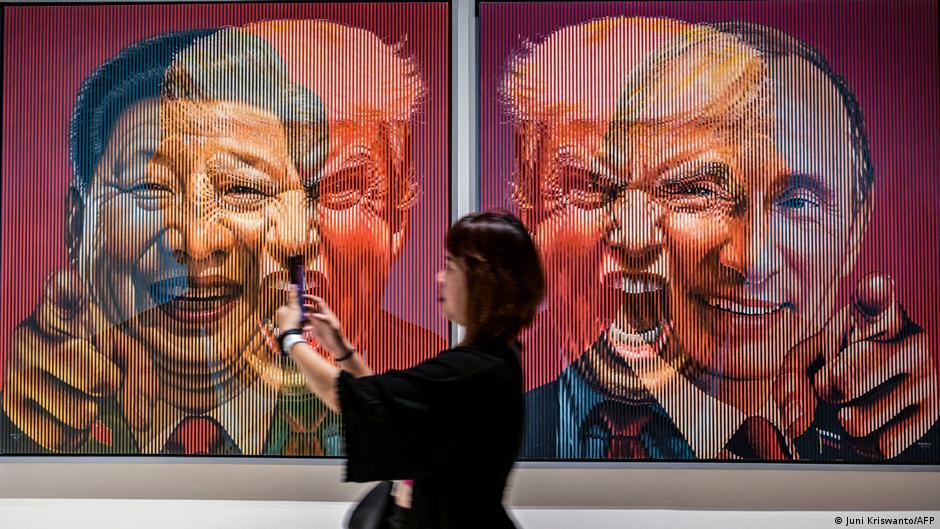
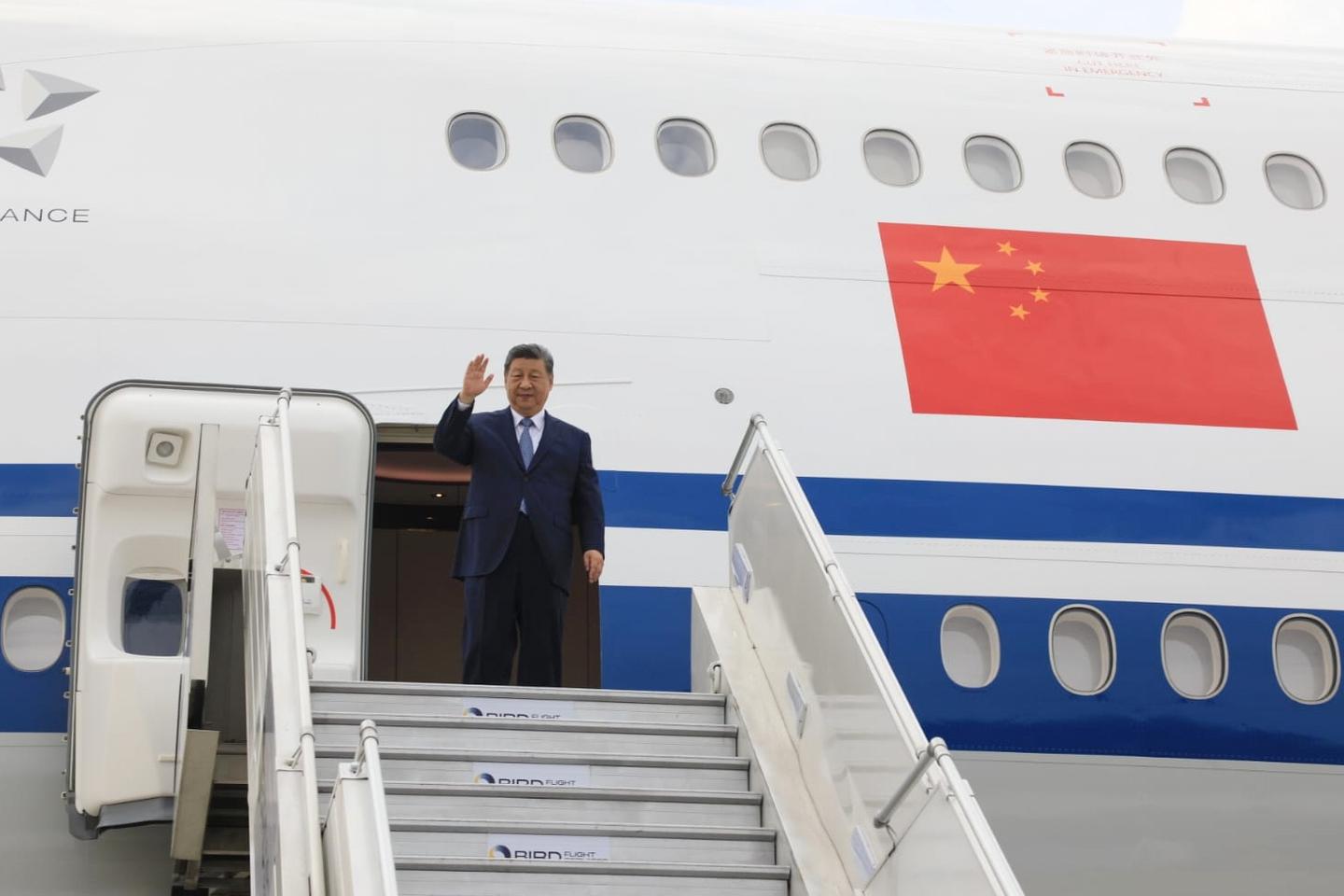
Trump: Pressure on Security, Trade and Politics
The international reaction to Donald Trump’s policies consists of disparate but interconnected developments. In reports related to Venezuela, attention is focused on U.S. security agreements, military activity in Colombia, threats to exercise veto power, and alleged interference in Brazil’s elections—signs of growing regional concern about American influence. The South Korean agenda adds reports of Trump’s tariff threats against Canada and the EU, tensions surrounding Iran, and discontent within the Republican Party. Ultimately, Washington’s policy appears both as an instrument of external pressure and a source of domestic instability. This material is based on reports by the BBC (South Korea) and the American Chamber of Commerce in Colombia (Venezuela).
Lee Jae-myung Seeks to Restore Trust Amid Crisis
The press conference held by Republic of Korea President Lee Jae-myung was not only a platform for statements on foreign policy and reforms, but also an attempt to restore public trust amid falling approval ratings, personnel scandals, and disputes over proposed changes. As BBC Korea notes, the speech focused on concerns that are particularly sensitive in South Korean society: the security of maritime trade routes, the risk of being excluded from negotiations on North Korea, fears about the concentration of power, and dissatisfaction with socioeconomic policy.
In foreign policy, Lee Jae-myung ruled out sending combat units to the Strait of Hormuz. “There will be no troop deployment connected with participation in or intervention in the war,” he said. At the same time, Seoul does not intend to distance itself completely from protecting shipping. The president allowed for the strengthening of the existing Cheonghae Unit in the region if this is needed to protect Korean commercial vessels, oil routes, and civilians.
This formula reflects South Korea’s complex dilemma. The country is highly dependent on energy imports and export trade, so disruptions along routes through the Red Sea, the Strait of Hormuz, and the Middle East immediately affect fuel prices, industrial supplies, and the domestic economy. Lee recalled that at the start of the conflict, Korean vessels avoided entering the Red Sea, creating problems with oil supplies. In his view, halting transport when the threat level is relatively low could cause excessive damage to the economy. Seoul is therefore attempting to protect its trade interests without turning the mission to ensure freedom of navigation into direct participation in the war.
Another key issue was the possible resumption of contacts between the United States and North Korea. South Korea has traditionally feared a “Korea exclusion” scenario in which Washington and Pyongyang discuss the nuclear issue without Seoul’s full participation. Lee urged citizens “not to worry,” while acknowledging that South Korea could initially find itself somewhat sidelined in the negotiating process.
The president believes that restarting dialogue between the United States and North Korea will be easier than establishing direct inter-Korean contacts. If U.S.–North Korean talks produce results, this could also create conditions for dialogue between Seoul and Pyongyang. Lee said he was continuing preparatory work for a possible meeting between Donald Trump and Kim Jong Un. For South Korea, this is not a matter of diplomatic image: any decisions concerning North Korea’s nuclear and military threats directly affect the security of millions of people in the country.
In domestic policy, the president separately sought to dispel suspicions that constitutional reform could be used to extend his own time in office. “I have absolutely no intention of running for re-election,” Lee said, calling the 1987 Constitution “clothing that no longer fits the Republic of Korea.”
This wording is especially sensitive in the Korean context. The 1987 Constitution was adopted during the country’s democratic transition after authoritarian rule and is viewed as a crucial safeguard against excessive concentrations of power. As a result, any initiative to change the presidential system inevitably triggers concern: society fears that political reform could weaken democratic checks and balances.
Lee also reaffirmed his commitment to “irreversible prosecutorial reform.” The issue remains one of the country’s most polarizing. Supporters of the changes believe it is necessary to limit the prosecution’s enormous powers, including its influence over political investigations. Critics, however, warn that reducing investigative powers could weaken the fight against crime and increase the politicization of law enforcement agencies.
The president acknowledged the risk of gaps emerging after the prosecution service loses the right to conduct additional investigations. He promised to establish oversight mechanisms for the police so that the reform would not result in another powerful institution operating without accountability. Lee is thus attempting to show that the changes do not simply amount to transferring powers from one agency to another.
The most notable part of the speech was his public acknowledgment of his own mistakes. Against the backdrop of falling support, Lee Jae-myung said that he himself bore primary responsibility: “I lacked tact; I lacked communication.” He acknowledged that he may not have sufficiently taken into account the objections of people harmed by certain government decisions, and concluded that he had failed to show citizens enough respect.
In South Korean politics, where presidential approval ratings depend heavily on perceptions of fairness, the quality of personnel appointments, and the response to public dissatisfaction, such words carry particular weight. They represent an attempt to regain the moral initiative and demonstrate a willingness to adjust his governing style without abandoning his reform agenda.
The president also addressed divisions within his own progressive camp. He said that supporters of democratic reform “are all supporters of Moon Jae-in, Roh Moo-hyun, Kim Dae-jung, and comrades of Lee Jae-myung.” The phrase is intended to link the current administration to the legacy of liberal-democratic presidents and ease tensions among various factions, which have intensified over personnel policy and the pace of reforms.
Among his domestic priorities, Lee also named stabilizing housing prices and developing Sejong as the administrative capital. Expensive real estate remains a chronic source of dissatisfaction, particularly among young people and residents of the capital region. The plan to divide functions between Seoul as the “economic capital” and Sejong as the administrative center continues the longstanding strategy of reducing the excessive concentration of population, capital, and government institutions in the capital.
As a result, Lee Jae-myung’s speech offered a portrait of contemporary South Korea’s political anxieties. External security is inseparable from the vulnerability of trade routes and the risk of being excluded from negotiations over the peninsula’s future. Domestic reforms, meanwhile, are assessed through trust in the authorities, fears of increased presidential control, and everyday problems—from housing to fairness in the law-enforcement system. As the BBC Korea analysis indicates, the president is trying simultaneously to convince society of his restraint abroad and prove at home that the government is capable of listening to citizens.
Colombia and the United States Discuss an Agenda of Regional Importance
The American Chamber of Commerce in Colombia announced an event devoted to updating the bilateral agenda between Bogotá and Washington. Although the program contains no statements by Venezuelan authorities, sources from Venezuela, or assessments by local experts, it is of interest to a Venezuelan audience as an indication of strengthening strategic ties between Colombia and the United States in the areas of security, combating drug trafficking, migration, trade, and investment.
The central theme of the discussions will be a reconsideration of Colombian-American relations against the backdrop of trade protectionism, the restructuring of global supply chains, and geopolitical competition. The program lists Colombia’s Defense Minister Pedro Sánchez, Justice Minister Ángela Buitrago, former President Juan Manuel Santos, U.S. Chargé d’Affaires John McNamara, Colombia’s ambassador to the United States Daniel García-Peña, as well as representatives of business and parliamentary circles.
Security will be one of the key areas. The program specifically includes a discussion of the United States’ “strategy to prevent Colombia from being decertified,” as well as cooperation in combating drug trafficking. This agenda is particularly sensitive for Venezuela: the countries share a lengthy border, armed groups operate in border areas, and cross-border crime regularly becomes the subject of mutual accusations. Deeper security cooperation between Bogotá and Washington could cause concern in Caracas, especially given Venezuela’s longstanding political confrontation with the United States.
The migration issue, identified by the organizers as “migration and bilateral cooperation,” is no less important. Colombia remains one of the main host countries for Venezuelan citizens, so decisions that may arise from U.S.–Colombian coordination have direct implications for millions of Venezuelan migrants. They could involve humanitarian assistance, resettlement mechanisms, the regulation of foreigners’ legal status, border controls, and joint aid programs.
The conference’s economic agenda addresses Colombia’s dependence on the U.S. market, tariff policy, nearshoring, reindustrialization, competition from China, and the attraction of investment. The very wording of the question about trade with the United States is telling: “dependence or strategy?” For Bogotá, this is a debate over how to diversify its foreign economic ties while maintaining a partnership with its main market and investor. For Venezuelan observers, the discussion may serve as a reminder of the consequences of foreign-policy isolation and limited access to financial and trade markets.
The topics of coffee, logistics, outsourcing, flower exports, industrial development, and investment show that Colombia seeks to turn its relationship with the United States into more than a mechanism for ensuring security. It also aims to use it as a tool for regional development, job creation, and integration into new production chains. Against the backdrop of Venezuela’s sanctions restrictions and weaker integration into foreign trade, Colombia’s strategy appears to be an attempt to use its geographic proximity to the United States to expand exports and industrial cooperation.
At the same time, the AmCham Colombia program is neither a report on agreements reached nor a reflection of Caracas’s official position. It is an announcement of a business and political conference outlining the issues, participants, and priorities of the Colombian-American elite. The Venezuelan dimension emerges only indirectly—through the shared border, migration flows, regional security, and competition for investment.

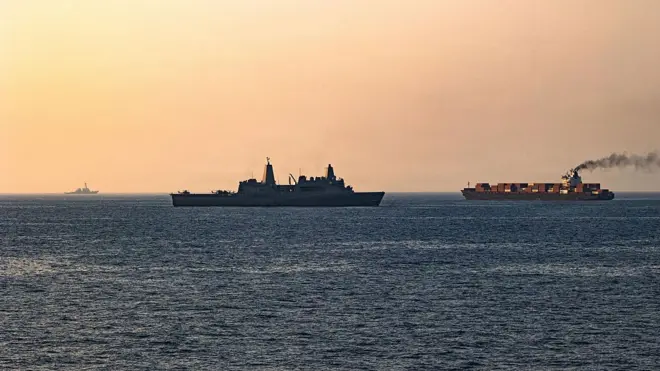

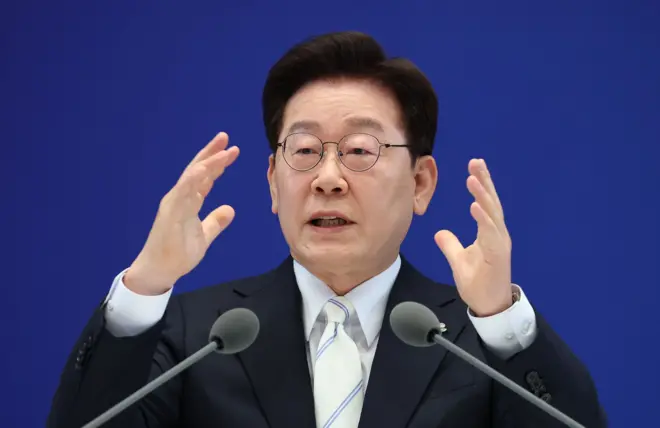
America Returns to the Talks—but Moscow, Kyiv and Berlin Read the Signal Differently
In mid-September, the main American story for Russia, Ukraine and Germany was neither another summit nor a new sanctions package, but Washington’s attempt to reclaim its role as mediator in Russia’s war against Ukraine. Steve Witkoff and Jared Kushner’s visits to Moscow on September 5 and Kyiv on September 6 revived talk of a trilateral U.S.–Russia–Ukraine format, but almost nowhere did they create illusions of imminent peace. In Moscow, the visits are seen primarily as recognition that the conflict cannot be ended without taking Russian conditions into account; in Kyiv, as a necessary but potentially dangerous return by the United States to bargaining over territory; and in Germany, as a test of European security, transatlantic loyalty and domestic political stability all at once. (kommersant.ru)
The most significant divergence concerns what exactly should be considered “progress.” Following Putin’s meeting with the American envoys, Russia’s official line was notably positive: presidential aide Yuri Ushakov described the conversation as “substantive and constructive,” saying that Moscow had presented the Americans with its assessment of the military situation and the need to eliminate the “root causes” of the conflict. As Meduza reported it, this does not sound like a readiness for compromise, but rather like the Kremlin’s confidence that diplomacy should formalize what Moscow considers its advantage on the battlefield. Even the more cautious Kommersant analysis notes that the United States may bring negotiators to the same table, but cannot resolve the central disagreements on its own—over territory, an international military presence in Ukraine and security guarantees. (meduza.io)
Ukraine’s reaction to the same American activity is considerably more ambivalent. The very fact that Witkoff and Kushner made their first full-fledged visit to Kyiv is viewed there as an important signal: the United States is once again speaking not only with the Kremlin but directly with the Ukrainian side, with representatives of Germany, France and the United Kingdom also taking part in the consultations. Yet optimism ends where the details begin. In a Ukrainian-language DW report, Ukrainian political analyst Petro Buryachenko described the American mission in notably sober terms: to revive the process, obtain publicly positive assessments from both sides and create a convincing picture of diplomatic movement for Washington. In this interpretation, the talks are needed by the Trump administration not only as an instrument of peace, but also as a political asset ahead of the U.S. midterm elections. (amp.dw.com)
Ukraine reacted particularly sharply to Kushner’s statement that an agreement could be reached if Kyiv agreed to give up the territories within the boundaries demanded by Putin. Ukrainska Pravda conveyed the statement without diplomatic softening: the American mediator had effectively identified a territorial concession as the last obstacle to a deal. For Ukrainian audiences, this is not an offer of compromise but the risk that the American formula for “peace” will boil down to a demand that the consequences of the war be formalized politically. Local commentators therefore do not reject U.S. involvement—in fact, they consider Washington indispensable for arms supplies, air defense and future guarantees—but they are not prepared to view the resumption of talks as an achievement in itself. As DW noted, the American team itself acknowledges that Moscow and Kyiv have no common vision of the desired outcome, while the territorial issue remains the most difficult one. (pravda.com.ua)
This also gives rise to an unexpectedly shared concern in Kyiv and Berlin: Europe cannot simply be a spectator to an American–Russian conversation. Ukrainian analysts stress that the participation of Germany, France and the United Kingdom in contacts with the Americans is not merely a matter of protocol. Germany remains a key European supplier of military aid, while Paris and London are associated with discussions of postwar security guarantees. A Ukrainian DW analysis describes this as the Europeans’ effort to prevent a future settlement framework from becoming a deal agreed over their heads. (amp.dw.com)
In Germany, the American issue has also taken on a domestic dimension. Donald Trump congratulated the “populist party” on the success of the Alternative for Germany in Saxony-Anhalt and ended his message with the slogan “MGGA”—Make Germany Great Again. For Berlin, this was not an innocuous online gesture by an ally, but an intervention in the country’s political nerve center. As Tagesschau reports, Chancellor Friedrich Merz postponed a scheduled phone call with Trump, while the government’s coordinator for transatlantic relations, Metin Hakverdi, responded unequivocally: Germans decide for themselves how to vote and how to shape migration policy. German anxiety is particularly apparent here: Washington is simultaneously demanding greater independence and defense spending from Europe, while the U.S. president publicly sympathizes with a force skeptical of support for Ukraine and of the established architecture of Euro-Atlantic policy. (tagesschau.de)
This anxiety is not limited to irritation among the elites. A September Infratest dimap poll for ARD shows German society divided: more than half of respondents consider Russia a threat to Germany’s security, but two-thirds of AfD supporters rate the threat as low; the country is also split over military support for Ukraine. Thus, American diplomacy is viewed in Germany through the prism of trust: will Washington consistently defend European security, or will it use talks with Moscow and support for right-wing populists as leverage against European governments? (infratest-dimap.de)
This is the main difference among local views of the United States. Moscow sees the White House’s renewed activity as an opportunity to shift the conversation from Russia’s isolation toward negotiating the terms of a deal. Kyiv sees a vital partner capable of helping it get through the winter and hold the front line, but one that may try to accelerate peace at the cost of Ukrainian concessions. Berlin sees an ally without whom European defense remains unimaginable for now, but whose unpredictability is forcing Europe to become self-reliant more quickly. The conclusion shared, surprisingly, by Russia, Ukraine and Germany is strikingly similar: America has once again become the central player, but its return has not reduced uncertainty—it has merely shifted the main dispute to the question of who will determine the postwar peace, and on what terms.
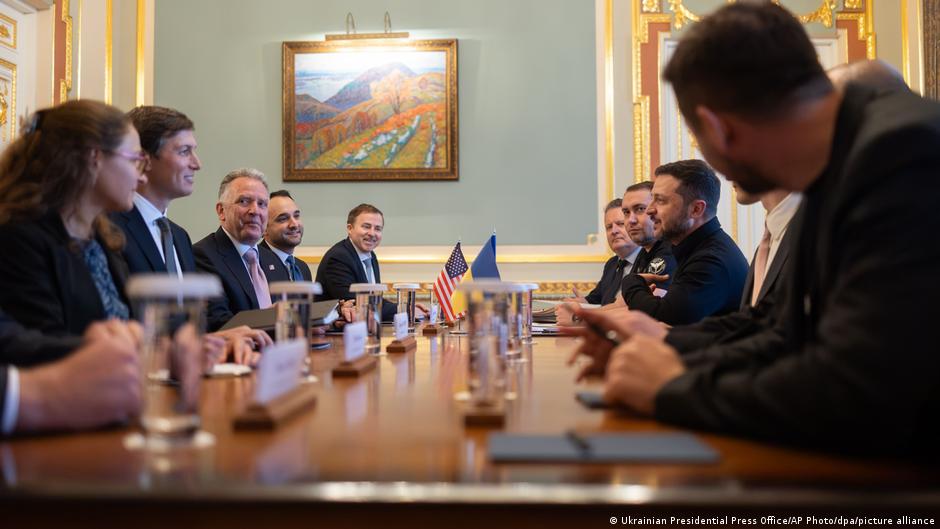
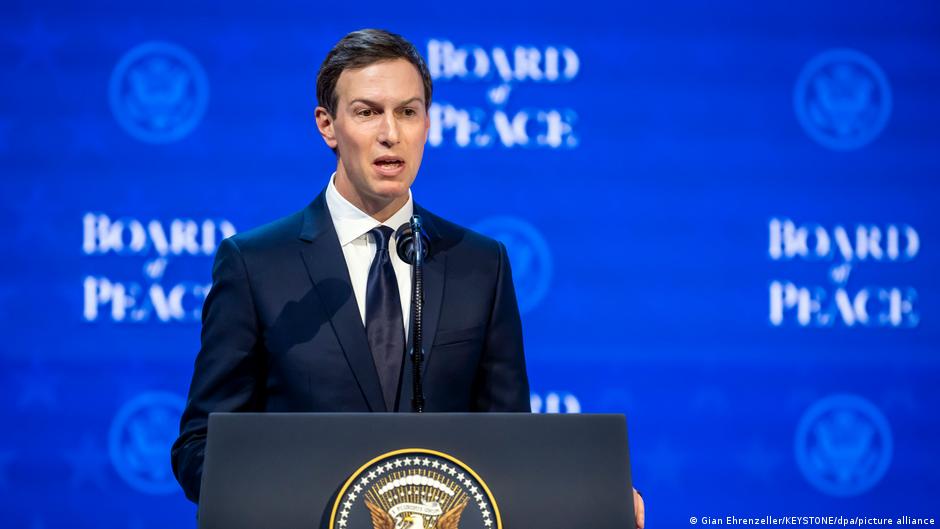
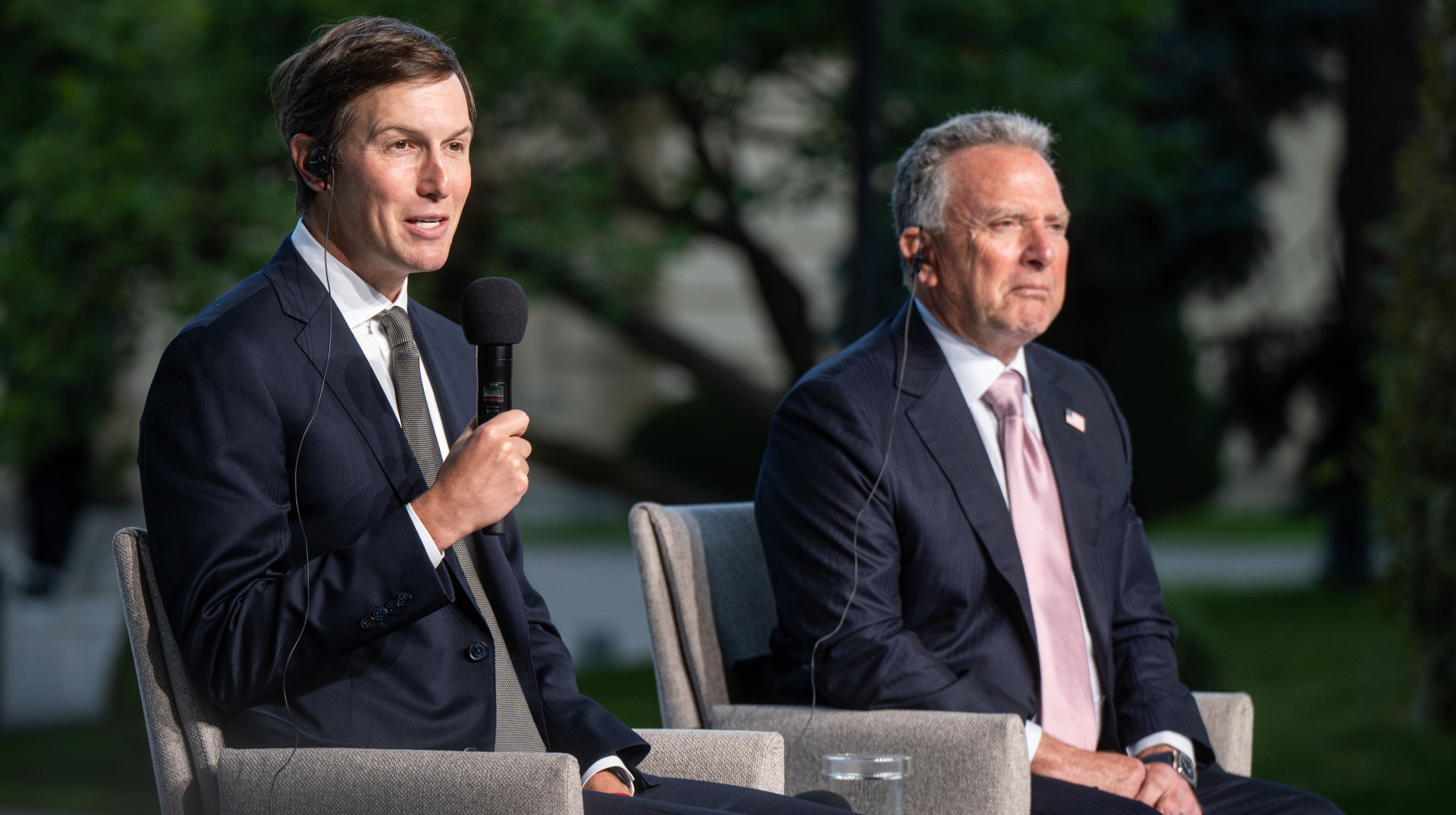
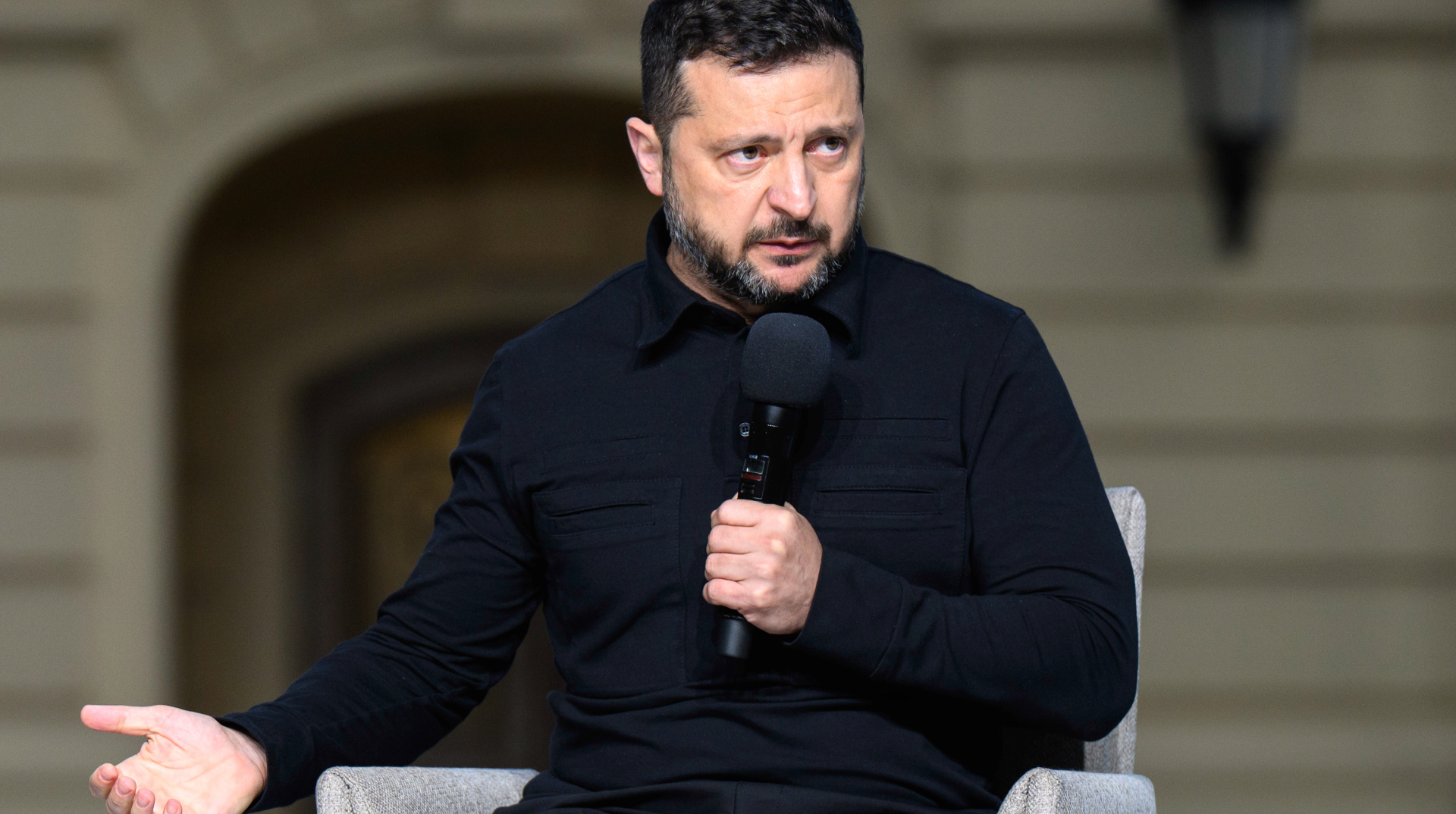
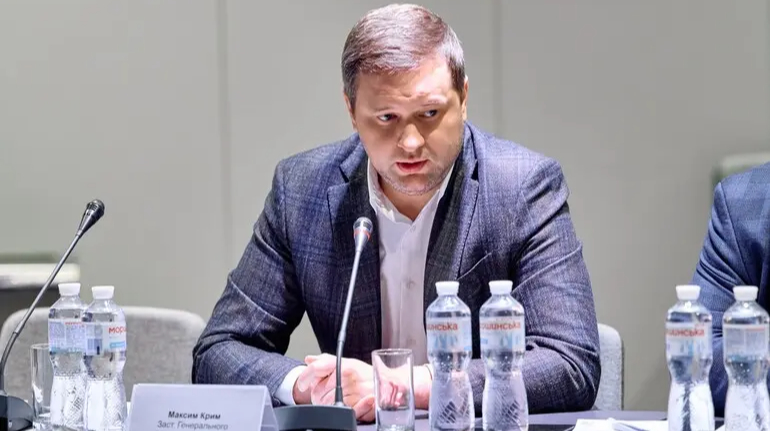
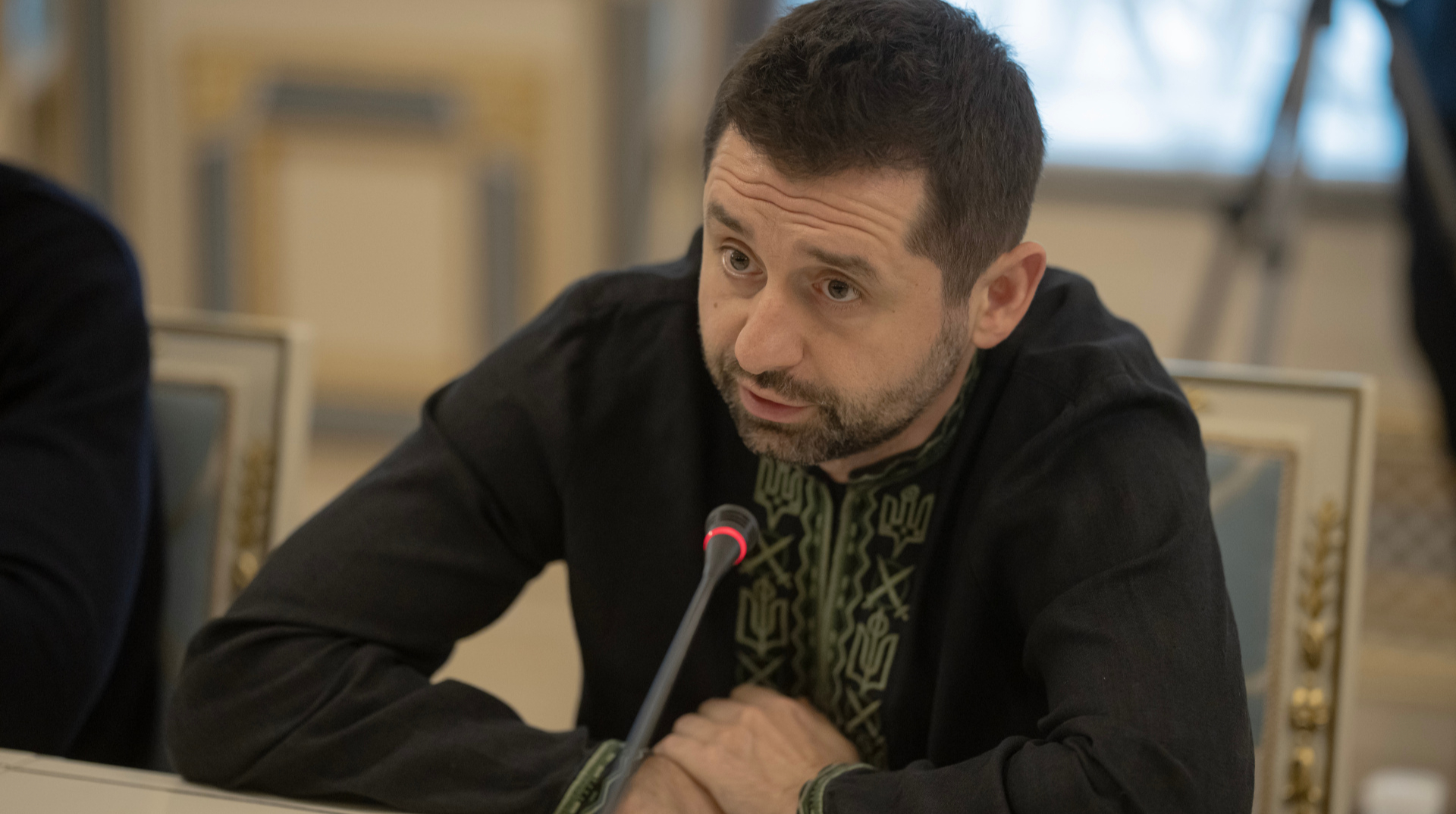
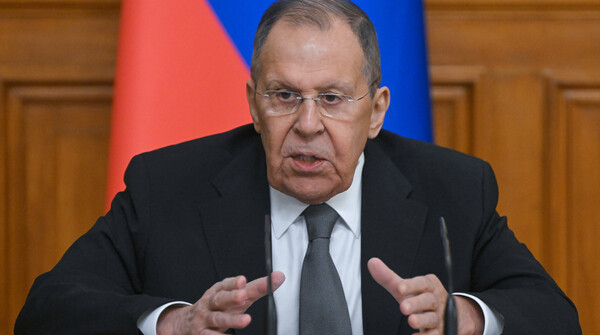
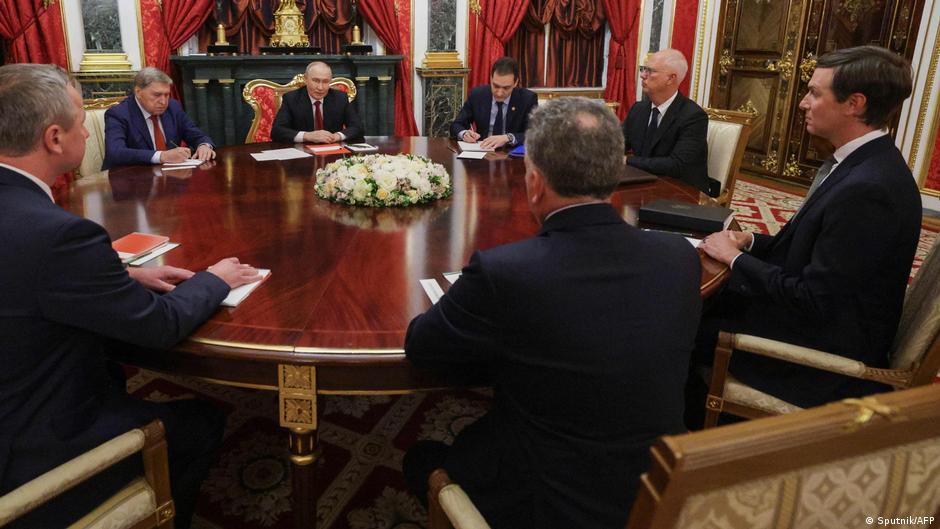

News 18-09-2026
America as a Conditional Partner: Why Brazil, India and Australia Are Increasingly Asking...
As of September 18, 2026, the United States is prompting not so much the familiar debate over whether people in Brazil, India and Australia like or dislike America, but a more practical and troubling question: how should they deal with an ally, market and military superpower that is increasingly tying cooperation to political concessions? Three storylines converge in the local debate: US tariffs and trade bargaining, Washington’s intervention in sensitive domestic-policy issues in partner countries, and the price of the security offered by the United States. But while in Brazil this has already become a debate about the independence of elections, in India it is about preserving strategic autonomy, and in Australia about whether a defensive alliance is turning into one-sided dependence.
The sharpest Brazilian issue in recent days is not the trade restrictions themselves, but the publication of information that, during negotiations over the first 50% tariff, Donald Trump’s administration demanded that Brazil guarantee the participation of “political dissidents” in the 2026 presidential election. A Folha de S.Paulo report quotes a draft provision under which Brazil was supposed to pledge not to detain or restrict political opponents. In the Brazilian context, this is inevitably read as pressure over the fate of the Bolsonaro camp and as an attempt to recast US foreign policy in the language of another country’s domestic electoral struggle. It is no coincidence that political scientist Peter Birle, in an interview published by Folha, describes tariffs, sanctions and visa measures as forms of pressure more likely to provoke resistance than the result Washington wants. (www1.folha.uol.com.br)
For Brazil, it is particularly painful that US demands are now also linked to security. On September 17, Washington included the country in a report on drug trafficking, claiming that its efforts to combat the PCC and Comando Vermelho—the largest Brazilian criminal groups—were inadequate. Brazilian commentators saw this as more than a dispute over criminal policy: as analyst Clarissa Oliveira noted in a CNN Brasil analysis, such language effectively places Brazil in the same category as countries where drug cartels supplant the state. This heightens fears that security is becoming another lever of political influence. (cnnbrasil.com.br) At the same time, part of Brazil’s business and foreign-policy community is urging the government not to respond to pressure through pure confrontation: José Pimenta, Fiesp’s director of international trade, argues in his column that the US return to Latin America—through agreements on minerals, energy and security with Brazil’s neighbors—is also a signal that Brasília should not drop out of the region’s economic game. (cnnbrasil.com.br)
India’s reaction to America is less emotional, but no less wary. New Delhi continues to negotiate a bilateral trade agreement, but its tone is fundamentally different: the US is needed as a market, a source of technology and a counterweight to China, but not as an arbiter of Indian energy or foreign policy. In February, the White House announced a reduction of India’s “reciprocal” tariff to 18% after India committed to cutting purchases of Russian oil and expanding access for US goods to the Indian market. (whitehouse.gov) However, in September, Commerce Minister Piyush Goyal indicated that a final agreement would be made public only if India received a tariff rate more favorable than those offered to its competitors; his position was stated plainly: national interests cannot be compromised, as Aaj Tak reported. (aajtak.in)
Indian analysts draw a broader conclusion from this: the “special relationship” with the US has given way to a cold, transactional exchange of benefits. Professor Kanti Bajpai writes in The Indian Express that Washington now sees India not as a power to be strengthened for the sake of balancing China, but primarily as a market for US goods, investment and weapons. (indianexpress.com) Even where interests coincide—in the Indo-Pacific, technology and containing China—the Indian debate increasingly proceeds from the principle of “multi-alignment”: maintaining ties with the US without severing relations with Russia, the Gulf states and other centers of power. A study by the Indian foundation VIF describes this not as a relic of nonalignment, but as an active foreign-policy instrument: selective rapprochement while preserving room for maneuver. (vifindia.org)
Australia’s debate reveals a third dimension of the same problem. Here, the US is not an external economic partner but the foundation of the defense architecture through AUKUS. That is precisely why concerns about dependence are stronger. ABC chief international affairs editor Laura Tingle notes in her analysis that most countries are reassessing their ties with the US because of Trump’s unpredictability and wars affecting American allies, while Canberra is avoiding a fundamental debate. She is particularly concerned by the new interpretation of AUKUS: Australia is not gaining independent capabilities; rather, the US Navy is gaining more days of presence in the Indian Ocean through Australian infrastructure. (abc.net.au)
In this debate, former Prime Minister Paul Keating has advanced an unusually sharp argument: he compares Trump’s view of the division of spheres of influence among great powers to the logic of mafia “territories.” But his more important warning is that Australia risks becoming embedded in the US strategy of containing China without having a decisive say in how and when that strategy could lead to a crisis. At the same time, the government is facing more immediate US pressure over plans to require digital platforms to protect children from harmful content and allow users to disable recommendation algorithms. When the White House called possible fines on US technology companies a form of “extortion,” Communications Minister Anika Wells responded in The Guardian Australia: “We are a sovereign country” and have the right to protect parents and children. (theguardian.com)
It is precisely in this convergence—from Brazilian elections to Indian tariffs and Australian submarines and digital platforms—that the main international reaction to today’s America can be seen. Brazil fears that trade and security are becoming tools for influencing its democratic process. India accepts deals but refuses to turn them into dependence on American conditions regarding Russia, markets and geopolitics. Australia, the closest military partner of the three to the US, is beginning to argue not about whether it needs the alliance, but about whether it remains an alliance of equals. In these countries, the US is still viewed as an indispensable power, but no longer as an automatically reliable leader. The new formula among local elites sounds almost identical everywhere: cooperation with Washington is necessary—but submission to its political priorities is not.



America as a Source of Strategic Uncertainty: Views in Turkey, China and France on the War
As of September 17, 2026, the United States is prompting not so much the familiar debate over “Western leadership” in Turkey, China and France as a more troubling discussion about the unpredictability of American power. Several interconnected issues are at the center of attention: the protracted US war with Iran and the fate of the Strait of Hormuz, Xi Jinping’s scheduled visit to Washington on September 24, and the domestic economic constraints increasingly hampering Donald Trump’s administration. The overall conclusion in these countries differs in tone but is essentially the same: Washington is still capable of imposing crises on the entire world, but is becoming less and less able to control their cost, duration and political consequences.
The most acute issue is Iran. For Turkey’s public debate, this is not a distant conflict but a test of the entire regional architecture on which energy routes, the security of the Black Sea and the Caucasus, Turkey’s trade with the Middle East and its role as a mediator all depend. In an analysis published on September 16 by Anadolu Ajansı, international relations specialist Orhan Karaoğlu suggests viewing the war not as a bilateral confrontation between the United States and Iran, but as a “quiet strategic struggle” between Washington and Beijing. His central point is particularly characteristic of the Turkish perspective: the issue is not who is formally stronger, but whether the constant use of force is destroying the system on which that power rests.
This represents an important shift in perspective. In Turkish commentary, the American campaign against Iran is being read not as a demonstration of resolve, but as a costly strategic trap. The United States is becoming embroiled in a struggle for freedom of navigation in the Strait of Hormuz, while simultaneously being forced to spend the ammunition, attention and political capital it needs for its competition with China. Karaoğlu directly links the Iranian theater to the Chinese front: Tehran is not an end in itself, but an element of a larger contest. For Ankara, this means that a crisis on its southern periphery could be prolonged not by regional logic, but by global US-China competition.
China’s official language is noticeably more cautious, but its meaning is no less critical of the American course. At a meeting with Iranian Foreign Minister Abbas Araghchi on September 16, Chinese Foreign Minister Wang Yi said that the ongoing US-Iran war “does not serve the common interests” of either side or the international community, and called for the negotiating mechanism to be restored as soon as possible. In a statement by China’s Foreign Ministry published by The Paper, Beijing simultaneously demanded that the Strait of Hormuz be opened, international shipping routes be secured and energy supply chains stabilized. This is a typical Chinese formula: not solidarity with Iran as a belligerent, but a presentation of itself as a power interested in order, trade and predictability.
Yet behind this diplomatic restraint lies a quite specific assessment of the United States. Chinese state analysts increasingly portray Washington as a power caught between military ambitions and domestic constraints. In an Xinhua analysis, the American strategy is described as an attempt to achieve an “honorable exit” from a war that has produced neither a lasting agreement nor a solution to the Strait of Hormuz issue. For Chinese audiences, this is not merely a story about an adversary’s failure: it is evidence that even technological superiority cannot substitute for political compromise. Beijing particularly emphasizes the divergence between America’s objectives: Washington wants both to avoid becoming bogged down in war and to avoid appearing to have yielded to Iran ahead of the midterm elections. In the Chinese interpretation, it is precisely this domestic political logic that makes American diplomacy nervous and inconsistent.
The French reaction to the same war is far less focused on the military balance and much more on the question of trust in the United States as an ally. In a column for Le Monde, columnist Alain Frachon advances a blunt argument: Trump’s current policy is effectively helping China because it is undermining the confidence of America’s traditional allies—in Asia, Europe and beyond. The French concern extends well beyond Iran. Paris sees the American war diverting US resources from the Pacific, while Washington’s trade pressure and dismissive tone are alienating Europe and Canada. In other words, America’s power remains immense, but its alliance network is becoming less reliable.
This point is especially important on the eve of Xi Jinping’s arrival in Washington on September 24. In Turkey, the anticipated meeting is viewed pragmatically: it may show whether the two superpowers can at least contain mutual risks without resolving their fundamental differences over Taiwan, technology, tariffs and Iran. The Turkish ANKASAM center draws attention to an increasingly unusual form of competition: major corporations and technology executives are becoming part of leader-level diplomacy. This is a characteristic feature of the Turkish interpretation: economic elites are no longer merely supporting foreign policy, but are becoming an independent instrument of it. The summit is not expected to produce a historic reconciliation, but agreements on investment, trade and export controls—in other words, a pause rather than a resolution.
China views the meeting in even more instrumental terms. Beijing is not abandoning tough competition, but is seeking to turn US vulnerability in the Middle East into a diplomatic resource. By calling for rationality and the swift resumption of negotiations with Iran, Wang Yi is effectively offering China the role of an indispensable mediator where Washington lacks sufficient trust. At the same time, China’s approach is not limited to anti-American rhetoric: an open Strait of Hormuz and stable energy supplies are vital to the PRC itself. Beijing is therefore interested not in endlessly humiliating the United States, but in a de-escalation that would allow it to present itself as a more stable and less impulsive center of power.
In the French interpretation, the Trump-Xi summit looks almost like a mirror image of Europe’s problem. Frachon writes of a world in which the American president treats major authoritarian powers as equals, while treating allies as dependent partners who can be subjected to tariffs and pressured into concessions. Hence the French fear is not of US-China dialogue itself, but of the logic that may underlie it: if great powers reach agreements on spheres of influence, the interests of smaller states and Europe’s agency become bargaining chips. The sharpest French conclusion is that US unreliability does not automatically make China attractive, but it considerably eases Beijing’s task of presenting itself as an acceptable alternative.
The third common thread is the American domestic economy. Abroad, it is increasingly seen not as an internal US matter, but as a factor in international security. The Federal Reserve’s decision on September 16 to raise its rate to 3.75–4 percent, despite Trump’s demand that it be cut to 1 percent or lower, became a symbolic episode. As Le Monde notes, rising energy prices, expensive borrowing and concern over US debt are turning the White House’s foreign-policy decisions into a domestic problem for voters. The war in Iran is driving up fuel costs, tariff conflicts are fueling inflation, and the approaching elections are pushing the administration toward loud promises of quick results.
For China, this is evidence that the United States is constrained not only by resistance from its rivals, but also by its own markets, budget and electoral cycle. For Turkey, it is a warning that American policy can export economic instability through oil, the dollar and trade barriers. For France, it is another argument in favor of greater European autonomy: an ally whose strategy depends on fluctuations in gasoline prices and an election campaign cannot be the continent’s sole security anchor.
What is particularly striking is that in all three countries, the debate about America is no longer reduced to the familiar formula of “US decline.” No one seriously believes that Washington has ceased to be the leading military, financial and technological power. Turkish analysts speak of the redistribution of American resources, Chinese analysts of the limits of coercive pressure, and French analysts of the erosion of allied trust. These are different diagnoses of the same illness: American power remains colossal, but its political conversion into results is becoming increasingly ineffective.
That is why the upcoming Trump-Xi meeting matters far beyond bilateral relations. For Ankara, it will indicate whether the rivalry between the great powers can be prevented from triggering a new wave of pressure on regional states. For Beijing, it will be an opportunity to consolidate its image as a power that speaks the language of trade and mediation while the United States spends resources on war. For Paris, it will be yet another reminder that Europe needs to strengthen its ability to act independently. America remains the world’s main generator of events; however, in Turkey, China and France, the discussion is increasingly shifting from whether it can act to whether it understands the consequences of its own actions.
![Chinese President Xi Jinping is reportedly preparing to travel to the United States with a large delegation of corporate executives. It is unusual for Xi to take part in overseas visits with a major business delegation. Moreover, these preparations come as Chinese companies face increasing investment and security scrutiny in the United States, while Beijing in recent years has placed the private sector under […]](https://www.ankasam.org/wp-content/uploads/2026/09/image-43.png)
News 17-09-2026
Hormuz as a Test of American Power: Why Israel, France and Russia Are Debating Not US Victory,...
The main topic in recent days in Israeli, French and Russian discussions of the United States has been the war with Iran—but not in the familiar framework of “Washington versus Tehran.” Following Donald Trump’s statements on September 14 about a possible willingness to return to negotiations, it has become clear that local commentators primarily view the American strategy as a crisis of governance: the United States is trying simultaneously to maintain military pressure, secure shipping in the Strait of Hormuz, protect its allies and avoid paying for this with a political defeat on the eve of the US elections on November 3. Kommersant noted that Trump reserved the decision on whether to enter negotiations, while Tehran, through intermediaries, put forward conditions for the full reopening of the strait. (kommersant.ru)
All three countries share a common conclusion: US superiority in weapons has not translated into the ability to impose a political outcome. But the meaning of this conclusion differs. In the French interpretation, it is above all a warning to Europe about the cost of American improvisation. Experts at the French Institute of International Relations write that six months after the war began, none of Washington’s widely proclaimed goals has been achieved: Iran’s regime has survived, the nuclear issue has not disappeared, Iran’s regional allies continue to operate, and Hormuz remains a dangerous artery of global trade. The authors call this an expression of “new American impotence”: enormous military power is being displayed, but it is not creating a stable order. The IFRI analysis emphasizes a particularly French detail: Paris views the conflict not only through the prism of Israel’s security or the containment of Iran, but also through the vulnerability of the European economy—gas, oil, shipping insurance and inflation. (ifri.org)
That is why the French reaction is noticeably less triumphalist than the American rhetoric about control of the strait. Economist Patrick Artus, in a column for Le Point, explicitly includes a protracted US-Iran conflict accompanied by a prolonged disruption of shipping through Hormuz among the three main risks of accelerating inflation, alongside semiconductor shortages and climate shocks. (lepoint.fr) To a French observer, the American policy of “maximum pressure” looks less like resolve than an attempt to replace an unattainable military resolution with financial strangulation. Reporter Armin Arefi, in an analysis for Le Point, assesses this strategy as unlikely to be effective in the short term: sanctions may weaken Iran, but they guarantee neither capitulation nor the restoration of trust in negotiations. (lepoint.fr)
In Israel, the same American hesitation provokes an almost opposite emotion—not fear of inflation, but anxiety that a US deal with Iran could be concluded behind the back of a key regional ally. Israeli researchers are increasingly discussing not merely the fate of Iran’s nuclear program, but the limits of dependence on Washington. Dr. Shai Har-Zvi of Reichman University warns in his September review that disagreements between Israel and the United States are widening simultaneously at the governmental level and in American public opinion. He links this to differences over Gaza’s reconstruction, regional agreements, Washington’s relations with Turkey and US arms sales to Middle Eastern states. (runi.ac.il)
The Israeli perspective is therefore far more hostile to a possible US-Iran compromise. Local analysis raises a question that is secondary in France: what exactly is the United States prepared to regard as a sufficient victory? If the White House agrees to a partial restoration of shipping and a temporary easing of tensions, while leaving Iran with the capacity to rebuild militarily and nuclearly, Israel will view this not as de-escalation, but as postponing the threat. An INSS analysis notes that declining support for Israel in the United States now extends beyond Democrats to young Republicans as well; consequently, Jerusalem cannot indefinitely assume that American backing will be unconditional and enduring. (inss.org.il) The paradox of Israel’s reaction is that it simultaneously demands greater firmness from the United States toward Iran and increasingly doubts that American domestic politics will allow such firmness to be sustained.
The Russian debate emphasizes something else: Hormuz is interpreted as the place where the United States has encountered the limits of power based on sanctions, airstrikes and control of maritime communications. In an RBC article about Iran’s seven conditions for reopening the strait, the juxtaposition of two incompatible claims is particularly telling: Tehran says that it determines the conditions for passage, while Trump declares that the strait is controlled by the United States. (rbc.ru) For Russian authors, this gap between declared and actual power is the story itself, rather than mere diplomatic background. Military expert Yuri Knutov, in a comment to Argumenty i Fakty, argues that Washington needs not so much Iran’s conditions as regime change and control over oil flows; from this, he concludes that the White House faces an impasse between making concessions and triggering a dangerous escalation. (aif.ru)
This Russian narrative is, of course, politically motivated: it emphasizes the weakening of American hegemony and serves the broader argument that a multipolar order is taking shape. But it cannot be reduced to propaganda alone. Russian experts are identifying a real problem that French researchers also acknowledge: Washington can inflict enormous damage on its adversary, but that does not mean it can quickly reopen a trade route, create an acceptable postwar architecture and retain the loyalty of all its partners. PIR Center consultant Leonid Tsukanov, speaking on RBC, predicted as early as this summer that the conflict would be protracted and that reconciliation was not foreseeable, while Alexander Shpunt, director of the Institute for Political Analysis Tools, pointed out that Tehran is turning control over shipping risks into leverage, primarily against insurers and trading companies. (amp.rbc.ru)
The most unexpected aspect of comparing these three reactions is that no one sees Hormuz as merely a geographical point. For France, it is an indicator of the extent to which American military policy shifts costs onto European consumers. For Israel, it is a test of whether Washington will trade an ally’s long-term security for short-term de-escalation. For Russia, it is proof that control over global trade cannot be secured by declarations of superiority alone. In all three cases, Trump finds himself trapped by a double logic: he needs to demonstrate strength to voters, but every new strike raises the price of gasoline, expands the risk of a regional war and makes a diplomatic exit look like a retreat.
That is why current foreign discussions of the United States least resemble a debate over whether America is “winning.” In Israel, France and Russia, they are discussing a more fundamental question: can Washington still be a guarantor of order if its decisions increasingly look like a sequence of abrupt shifts between force, sanctions and negotiations? For now, the answer differs in its political sympathies across the three countries, but is similar in substance: American power remains enormous, yet its ability to turn military pressure into a predictable peace has been seriously called into question.

America as an Ally—with Caveats: What Germany, South Korea and Israel Say About Trump’s War and Its...
In mid-September 2026, the United States is discussing the midterm elections, but outside America the main source of concern is a different question: how far Donald Trump is prepared to go in the war with Iran—and what allies will have to give up in return for his protection. In Germany, South Korea and Israel, the issue is framed differently, but the underlying concern is the same: Washington remains an indispensable center of power, yet its policy is increasingly seen as personalized, transactional and subordinate to the domestic electoral calendar.
The clearest common theme is the United States’ protracted campaign against Iran. The German debate views it as a risk that another “forever war” could emerge—one that America itself had previously promised to leave behind. An analysis by Deutsche Welle describes a cycle of repeated strikes as Tehran rebuilds its radar systems, air defenses and naval capabilities in the area of the Strait of Hormuz. German observers are particularly skeptical of this model: it may destroy individual targets, but it does not eliminate the adversary’s knowledge or industrial base. The authors effectively see a trap: the United States can choose the scale of the next strike, but cannot control Iran’s response in advance.
In Berlin, this is seen as more than a Middle Eastern problem. Hormuz is an artery of the global energy system, meaning that the war can quickly turn into European inflation, pressure on industry and a new test of transatlantic solidarity. German anxiety is especially evident in comparisons between the current American strategy and Israel’s practice of “mowing the lawn”—regularly weakening an adversary without promising a final victory. For Germany, the metaphor itself sounds like an admission that there is no political endgame: military activity is replacing diplomacy, while temporary control of the crisis is being presented as a strategy.
South Korea views the same war much more pragmatically—through the lens of oil prices, maritime trade and fears that American resources are being diverted from the Korean Peninsula. In an editorial published on September 11, ChosunBiz warned that oil had already risen above $100 a barrel, while rising yields on U.S. bonds and external instability were being transmitted to the South Korean economy through currency and debt markets. From this perspective, Iran is not a distant war but a threat to an export model dependent both on energy imports and uninterrupted maritime logistics.
In Seoul, however, American policy is also causing irritation because Washington is perceived as trying to turn military solidarity into a bargaining chip. A report by Chung Jae-sung, president of the East Asia Institute, and researcher Park Ji-eun for EAI Global states directly that after Trump publicly recalled South Korea’s refusal to support the Iranian campaign, he may demand compensation in negotiations over trade or the allocation of defense costs. The authors suggest that Seoul should prepare limited forms of rear-area assistance—for example, logistics vessels or naval aviation—but postpone a public decision for as long as possible. This is a distinctly Korean formula: do not quarrel with America, but do not allow the country to be drawn into a conflict that could worsen relations with China and leave the peninsula less protected.
This is where the war with Iran merges with the second major theme—the unexpected softening of Trump’s stance toward Kim Jong Un and the scaling back of U.S.-South Korean exercises. For German commentators, this is another example of the president’s personal diplomacy being placed above the alliance architecture. A DW report notes that Trump justified the reduction in exercises by citing their cost and his “very good” relationship with the North Korean leader. Pyongyang, however, did not reciprocate the concession: its missile programs continue, while Kim now has stronger ties with Moscow and Beijing.
In South Korea, the fear of this approach is described as the danger of “bypassing Seoul.” Yonsei University professor Yang Seung-ham put it bluntly in an analysis for NewsPim: Trump is handling the North Korean issue not as a relationship with an ally, but through his own personal connection with Kim Jong Un; South Korea, he said, must acknowledge that it is already being “bypassed.” Another Korean expert, Kim Yong-yoon, offers the opposite response in a column for Aju Business Daily: rather than wait for the United States and North Korea to reach an agreement over Seoul’s head, South Korea should seek to become the “architect” of a new order on the peninsula. This is an important difference from the European reaction. Germany is primarily looking for ways to limit the consequences of American unpredictability; Seoul is trying to turn that unpredictability into an argument for greater agency of its own.
In Israel, attitudes toward the United States are even more complicated. American military power remains critically important there for deterring Iran, and some analysts view the current pressure on Tehran as a strategic achievement. Eyal Tzir Cohen, former head of the Mossad’s Tevel unit, writes in a commentary for N12 that the United States has at least temporarily weakened one of Tehran’s main levers—the ability to turn the Strait of Hormuz into a threat to the global economy. His conclusion is not triumphalist: the improvement remains “far from ideal,” but in regional strategy, even a partial weakening of Iran is highly significant.
At the same time, however, Israel’s expert community increasingly doubts that American commitments are unconditional. A June poll by the Institute for National Security Studies found that only 12% of Israelis believe Trump is strongly committed to protecting Israel’s interests; 57% think he supports the country only where it serves his own interests. The figures are cited in an INSS publication. Notably, this distrust is not limited to the opposition: among both coalition supporters and its opponents, the prevailing view is that Washington’s support is conditional rather than automatic.
Dr. Shai Har-Zvi of Reichman University calls the widening cracks between Israel and the United States a “red flag” in a September review. He points not only to Iran but also to the Trump administration’s desire to independently promote Gaza’s reconstruction, contacts between Israel and Syria, and deals with Saudi Arabia and Turkey. For the Israeli strategist, the problem is not that America has ceased to be an ally; it is that America, as an ally, is increasingly acting as an independent regional broker whose priorities may not coincide with Israel’s.
This leads to a common conclusion across the three countries. Germany fears that America is creating an endless conflict without a convincing political exit. South Korea worries that the United States is simultaneously demanding assistance in the Persian Gulf and weakening security guarantees where that security is vital—against North Korea. Israel sees American power as a key resource, but increasingly regards Trump’s support as a contract with changing terms. In all three cases, this is no longer about traditional anti-Americanism. On the contrary, local debates begin from the assumption that the United States is too important to allow the luxury of a complete break. That is precisely why calls for independent plans are growing louder—in case decisions in Washington are made primarily for the sake of war, a deal or elections in America itself.

![[Seoul = Newspim] President Lee Jae-myung is delivering remarks of encouragement at a policy dialogue on peaceful coexistence during the Americas regional meeting of the 22nd National Unification Advisory Council, held at the Inspire Resort in Incheon on September 2. [Photo: Blue House] 2026.09.02](https://img.newspim.com/news/2026/09/03/2609031456358790.jpg)
![President Lee Jae-myung is chairing the 38th Cabinet meeting at the main building of the Blue House on September 1 and delivering opening remarks. 2026.09.01 [Photo: Blue House]](https://img.newspim.com/news/2026/09/02/2609021145540341.jpg)
![[Seoul = Newspim] Reporter Park Chan-je — President Lee Jae-myung stressed that he would mediate to build trust and resume dialogue between the United States and North Korea. As South Korea is a party directly concerned with peace on the Korean Peninsula, it has stepped forward as a mediator for the resumption of U.S.-North Korean dialogue. However, U.S. President Donald Trump, in connection with the war with Iran](https://img.newspim.com/news/2026/09/02/2609021619351600_t1.jpg)
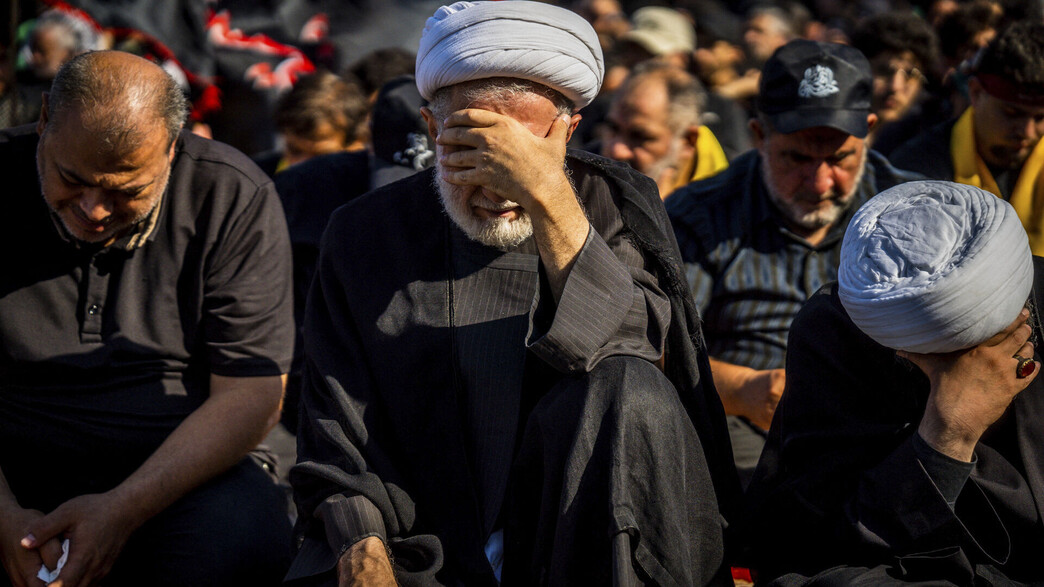
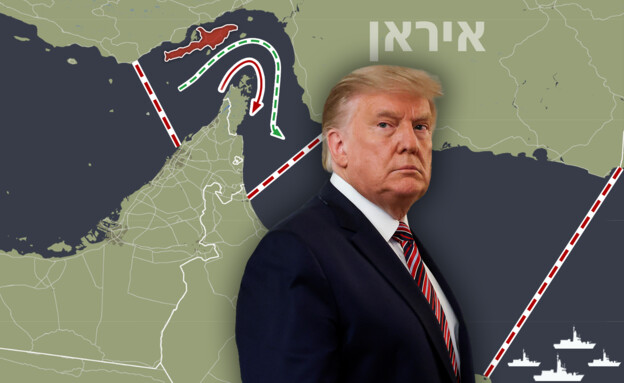

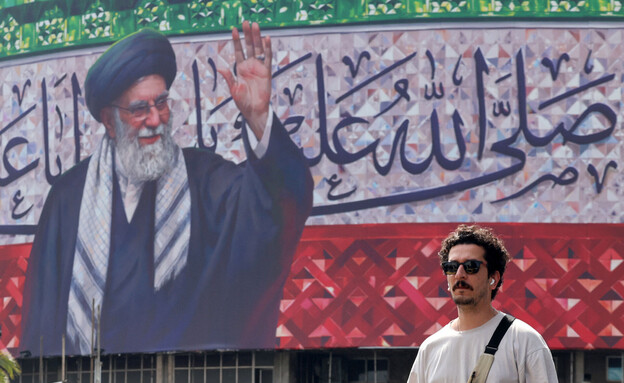
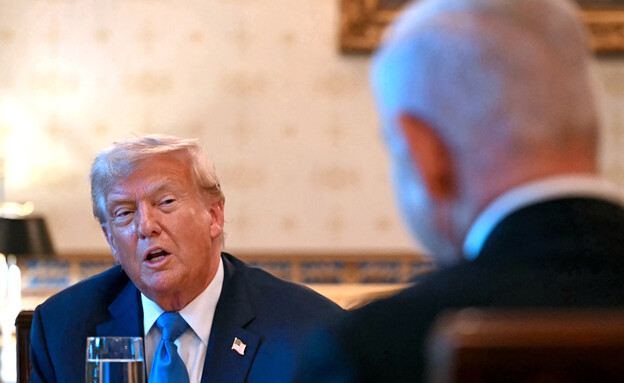
News 16-09-2026
America as a Source of Risk: Why South Africa, Brazil and Japan Are Increasingly Talking About More Than...
As of September 16, 2026, the United States evokes not one shared emotion in South Africa, Brazil and Japan, but a similar strategic concern. The triggers are different: US visa restrictions and political demands directed at Pretoria, tariff pressure on Brazil, the protracted US war with Iran and its consequences for Japan. But local debates converge on one point: Washington is increasingly seen not as a predictable center of rules, but as a power that bundles trade, security, domestic politics and geopolitical loyalty into a single package of pressure. (opeb.org)
The sharpest example is South Africa, where the current dispute has long gone beyond disagreements over trade. The Trump administration is imposing visa restrictions on South African officials, citing alleged discrimination against white citizens and the Expropriation Act; Pretoria rejects these accusations. South African media interpret this as an attempt to turn sensitive domestic issues—land reform, farmers’ security and Black Economic Empowerment policy—into instruments of external coercion. International relations analyst Kingsley Makhubela told eNCA that the Trump administration was “preparing a much broader attack on the legitimacy of the South African government”; in his assessment, pressure through AGOA trade preferences could follow the visa measures. His less obvious point is also important: the country’s position along the route around the Cape of Good Hope increases its significance amid instability on Middle Eastern sea routes. In other words, US pressure is seen here not only as an ideological conflict over race, but also as a struggle over the geography of trade. (enca.com)
It is particularly revealing that Washington is linking its relationship with Pretoria to five conditions at once: protecting farmers, recognizing the slogan “Kill the Boer” as hate speech, rejecting expropriation without compensation, revising requirements for the participation of Black South Africans in company ownership, and distancing itself from US adversaries, including Iran. As journalist Peter Fabricius notes in a Daily Maverick article, Pretoria is not facing merely a diplomatic response: aid, export access and AGOA status may depend on it. South Africa’s new ambassador to the United States, Rulph Meyer, puts it cautiously: “We will have to… look at how we can maneuver.” The phrase accurately captures the local mood: neither capitulation nor an open rupture, but a search for room to maneuver before a state capable of changing trade and political conditions simultaneously. (dailymaverick.co.za)
In Brazil, US tariffs are discussed even more openly—as a question of sovereignty. The authors of an analysis by Brazil’s Observatório de Política Externa e da Inserção Internacional do Brasil state directly that US measures under Section 301 and the accompanying duties can no longer be explained solely as an attempt to correct trade imbalances. In their interpretation, they constitute a “mechanism of political coercion”: through tariffs, Washington is seeking to influence not only exports, but also the regulation of digital platforms, Brazil’s Pix instant-payment system, environmental rules, market access and Brazil’s strategic rapprochement with China. The authors emphasize the paradox: the pressure is producing the opposite of the effect officially sought by the United States. While Brazilian exports to the United States are declining, ties with China are expanding; consequently, the attempt to slow Chinese influence is merely accelerating Brazil’s diversification. (opeb.org)
The South African and Brazilian reactions are nearly mirror images. Neither country believes the answer should be a symmetrical tariff war with a larger economy. But both increasingly see their previous dependence on the US market as dangerous. In a Business Day column, researcher Lubabalo Cengani describes this as the rational choice of a third path: neither yielding to unilateral demands nor responding with destructive escalation, but diversifying markets and logistics corridors. For South Africa, this means focusing on the African Continental Free Trade Area, Asian markets and the processing of critical minerals; for Brazil, closer trade and technology ties with China and reliance on multilateral mechanisms. The most important feature of these local assessments is the disappearance of the illusion that returning to the old normal with the United States is a realistic strategy. (businessday.co.za)
Japan views the same problem from a different angle—not so much as an exporter subjected to pressure, but as an ally concerned about a shortage of American attention and military resources. A Japanese analysis by Nippon.com describes the protracted war with Iran as a source of “distrust in the United States,” which Washington is spreading through its own actions. Tokyo is concerned about the cost of the war, the depletion of US Patriot and THAAD missiles, and above all the risk that the long-term presence of US aircraft carriers in the Middle East will weaken deterrence in the Indo-Pacific, including the Taiwan Strait. For Japanese audiences, this is not an abstract dispute about the Middle East: if America becomes bogged down near the Strait of Hormuz, the price of this war may be paid in East Asia—in the form of diminished credibility of US security guarantees.
The Japanese perspective most clearly shows why the current anxiety is broader than anti-Americanism. Tokyo is not proposing to distance itself from the United States: the US-Japan alliance remains the foundation of Japan’s defense. But Japanese commentators are asking an uncomfortable question: can an ally be reliable if it starts a war without sufficient coordination with its partners, simultaneously clashes with them over tariffs and undermines the institutions on which they rely? The Nippon.com authors also point to US sanctions against International Criminal Court President Tomoko Akane: for Japan, which publicly links its foreign policy to the “rule of law,” such steps place allied loyalty in direct conflict with its own principles. (nippon.com)
This produces an unusual international picture. In South Africa, the United States is seen as a power prepared to use racial issues and trade preferences to discipline an inconvenient partner. In Brazil, it is seen as a power turning tariffs into leverage against an autonomous economic and technological policy. In Japan, it is viewed as an indispensable but increasingly unpredictable ally whose war in the Middle East could weaken Asian security. The stakes, tone and political sympathies differ, but a common conclusion is growing louder: for states dependent on the United States, the main task is no longer choosing between Washington and its rivals, but creating protection against American unpredictability.


Ukraine’s Anxiety Over Trump’s Course
Ukrainian commentators assess Donald Trump’s foreign policy as a factor capable of affecting Russia’s wars against Ukraine and the confrontation surrounding Iran. At the center of attention are fears that the U.S. president’s political instincts and decisions could intensify crises, make American support less predictable, and alter Moscow’s and Tehran’s calculations. At the same time, observers are discussing whether pressure from Washington, its policy of deterrence, and Trump’s personal leadership can secure real concessions from the opponents. The material is based on reports by RBC-Ukraine (Ukraine) and RFI (Ukraine).
Zelensky: Concessions to Russia Will Not Bring Ukraine Lasting Peace
Ukraine does not view its war with Russia as a dispute that can be resolved through limited territorial concessions or a “mutually beneficial” agreement. President Volodymyr Zelensky insists that the Kremlin’s goal goes far beyond control over individual regions and is aimed at depriving the country of its independence. In an RBC-Ukraine report, his position is stated unequivocally: Vladimir Putin seeks to obtain “all of Ukraine as part of Russia.”
Zelensky called the idea that Moscow might be satisfied with the territories it has already seized a “crazy idea.” For Kyiv, such assessments are particularly dangerous given the experience of the annexation of Crimea, the war in Donbas, and the full-scale invasion of 2022. Ukrainian officials believe that the expectation that concessions would stop Russia has repeatedly proved mistaken and merely created conditions for further escalation.
For this reason, the president also rejects the concept of a win-win outcome in relations between Ukraine and Russia. “There can be no win-win in this war. Because of so many human losses, it stopped being about victory for both sides on the very first day,” Zelensky said. In his view, the realistic task should be to stop the killing and save lives, rather than seek a formula that would bring equal benefit to the aggressor and the state under attack.
This logic also determines Kyiv’s position in its dialogue with the United States. Zelensky has spoken of constant contacts with Washington and preparations for a meeting with Donald Trump in New York at the end of September. At the same time, Ukraine expects tougher measures against Russia: in the president’s view, sanctions should not be limited to expressing disapproval but should “completely destroy” Moscow’s ability to continue the war. Kyiv fears that pressure without tangible economic and military-political consequences would allow the Kremlin to buy time, rebuild its forces, and prepare for new attacks.
In an interview with CBS News, as reported by RFI Zelensky also described how Russian attacks affect everyday life in the country. According to him, Russia has changed its tactics: after large-scale nighttime strikes, it sends small groups of drones every 30–60 minutes. The Ukrainian president believes this approach is intended not only to inflict military damage but also to create constant tension—to disrupt the work of schools, transportation systems, and businesses, deprive people of sleep, and undermine society’s psychological resilience.
“Create chaos, exhaust society, and make normal life as difficult as possible”—this is how Zelensky described the presumed aim of the tactic. He links the strikes to an attempt by Moscow to test Europe and demonstrate that aggression can go unpunished. In particular, the president said that Russian drones had twice endangered his aircraft by passing through Moldovan airspace. He also suggested that a strike near a diplomatic train may have been an intentional signal to European and American delegations.
Zelensky separately addressed the idea of an “energy truce.” According to him, Moscow and Kyiv attach different meanings to the term. For Russia, energy primarily means oil and gas exports, while for Ukraine it means electricity, heating, and gas for the population. Kyiv is ready to discuss a pause only if attacks on energy infrastructure cease completely—not an agreement that would primarily protect Russia’s export revenues. “If the Russians are ready for an energy truce, that must mean a complete absence of attacks on energy infrastructure by any means,” the president stressed.
Ukrainian officials also do not regard defensive actions as an obstacle to peace. “Putin does not respect the weak… He will simply eat us. That is why we respond. We never attack first,” Zelensky said. This formula reflects Kyiv’s position that Ukraine’s ability to launch retaliatory strikes and defend its infrastructure is necessary to deter Russia, not to prolong the war.
In assessing the Kremlin’s motives, Zelensky rejected the claim that Putin is genuinely interested in a swift peace agreement. According to him, the Russian leadership benefits from escalation, divisions within Ukrainian society, disagreements within the European Union and Europe, and worsening relations between Kyiv and the Trump administration. The president also links Moscow’s unwillingness to end the war to internal risks for the Russian regime: the return of large numbers of disillusioned soldiers could threaten the authorities in a way comparable to the Wagner mutiny, but on a much larger scale.
Kyiv takes an especially hard line on Donbas. Zelensky warns that Ukraine’s withdrawal from the region would not be a technical concession made in exchange for a ceasefire but would have serious political and military consequences. “If we withdraw from Donbas, we will immediately lose unity within the country, because the military and the army will oppose it,” he said. Ukraine regards Donbas as an important defensive line. In Kyiv’s view, handing it over to Russia would not guarantee peace but would give Moscow additional opportunities for a future offensive.
Zelensky explains his distrust of Russian promises by pointing to the experience of a country subjected to regular attacks and destruction. He compared Ukraine’s condition with the aftermath of the September 11 terrorist attacks in the United States, saying that Ukrainians live “inside such destroyed towers,” only the destruction is not confined to one place but is spread across the country—in homes, schools, and cities. Responding to Jared Kushner’s statement that Putin wants to make peace, Zelensky said: “Putin has been lying for 30 years.”
Kyiv also links the issue of holding elections to security and equal participation by citizens. The president said he was ready to hold a vote after a ceasefire, but noted that millions of Ukrainians are abroad, territories are occupied, Russian troops remain present, and it is impossible to organize a normal campaign while children cannot regularly attend school. In his view, this is not merely about formally following a procedure but about the legitimacy of the elections and the ability of all citizens to vote safely.
In the longer term, Zelensky again called Ukraine’s accession to NATO a key element of European security. He presents the country’s membership in the alliance not only as a request for protection but also as Kyiv’s contribution to the continent’s common defense. “The strongest army in Europe today is the Ukrainian army,” the president said.
Thus, the Ukrainian position is that ending the war cannot be secured through diplomatic wording or territorial compromises alone. Kyiv considers real security guarantees, stronger sanctions, the preservation of its defensive capabilities, and partners’ rejection of the notion that Russian promises can replace deterrence mechanisms to be essential. For Ukraine, concessions without such conditions would mean not a path to peace but the risk of a new attack, further destruction, migration, and a threat to the state’s very existence.
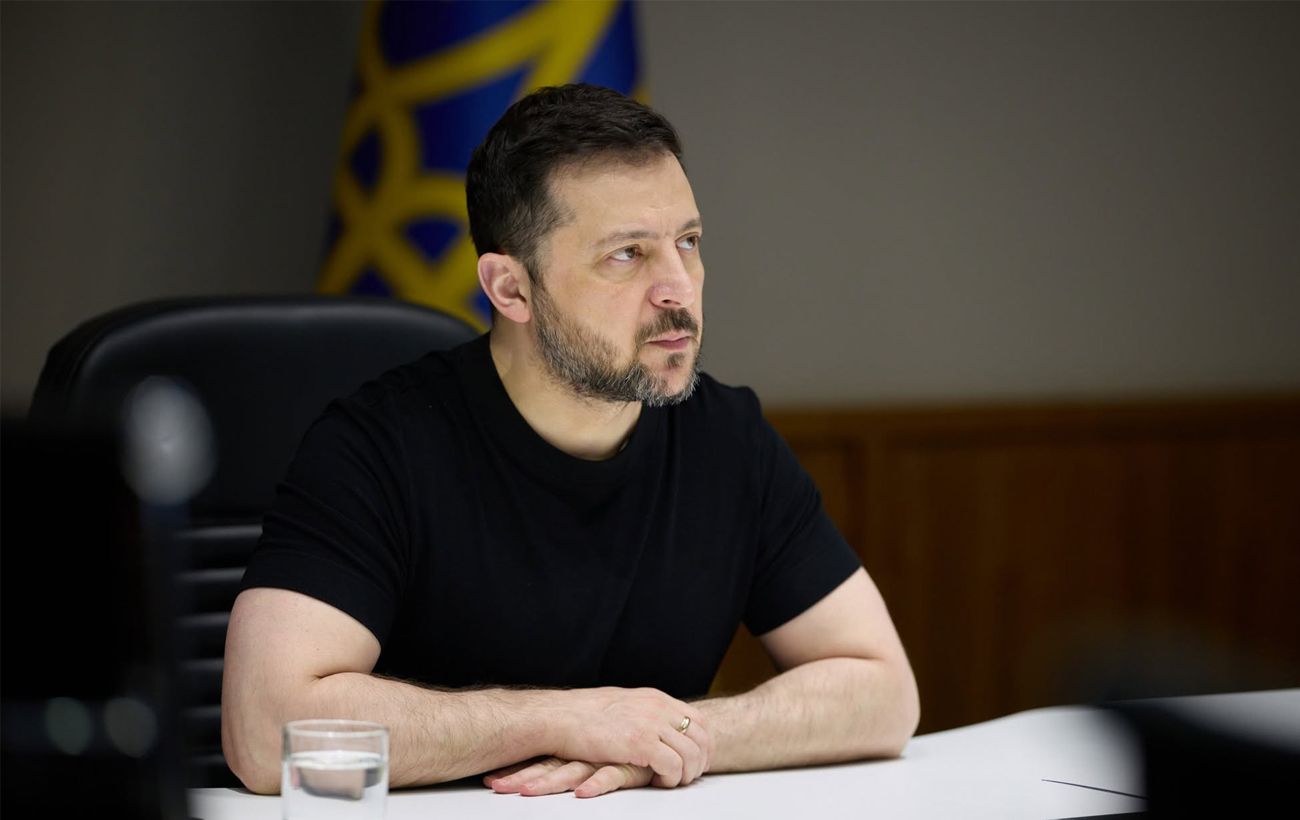

Oil, Refineries and the Price of the American “Deal”: How Riyadh, Kyiv and Ankara Read the New...
By September 15, 2026, the United States had become the subject of particularly tense discussions in three countries at once—Saudi Arabia, Ukraine and Turkey. The reason was not a single diplomatic initiative, but the overlap of two wars with the global energy market. Donald Trump’s administration is simultaneously demonstrating its willingness to continue exerting military pressure on Iran while demanding that Kyiv stop striking Russian oil refineries, explaining this by citing a global diesel shortage. To Riyadh, Ankara and Kyiv, this looks like the same American rule: support for partners’ security lasts only until it comes into conflict with energy prices, U.S. domestic politics and the president’s personal negotiating style. (aa.com.tr)
The broadest common thread in local reactions is distrust of the American separation of crises. Trump publicly linked high diesel prices specifically to Ukrainian attacks on Russian refineries and said he had asked Volodymyr Zelenskyy not to strike facilities producing diesel. Yet the Ukrainian reaction centers on a contradiction obvious to Kyiv: the Middle East is already experiencing the consequences of the U.S.-Iranian conflict, including risks to oil routes, while Washington is proposing that Ukrainian strikes on the aggressor’s infrastructure be viewed as the decisive factor. As Ukrinform reports, an unnamed Ukrainian official called this logic absurd: the White House had previously emphasized that America itself was capable of supplying the market with the necessary volumes of oil. (ukrinform.ua)
For Ukrainian audiences, the dispute over refineries is not a technical matter of global trade, but a dispute over the right to self-defense. Russia’s oil-refining capacity is seen as part of the country’s war economy: it supplies the army with fuel, generates export revenue and ensures Moscow’s ability to continue the war. Washington’s request to refrain from attacks is therefore read not as a step toward a symmetrical peace, but as an attempt to restrict one of Kyiv’s few remaining tools for putting pressure on the enemy’s rear. Even the neutral-toned Ukrainska Pravda notes that this is not Trump’s first such demand; earlier, he described Ukrainian strikes on refineries as an escalation. (pravda.com.ua)
From the Saudi perspective, the same story is reversed: the central issue is not Ukrainian military logic, but the vulnerability of the Persian Gulf’s oil architecture itself. Attacks and threats targeting export routes, as well as the closure of Saudi Arabia’s East–West Pipeline following a strike from Iraq, made the issue concrete rather than abstract: the route was an alternative to the Strait of Hormuz and could carry millions of barrels a day. The Turkish Anadolu agency directly describes the possible effect as millions of barrels of supply disappearing from the market. (aa.com.tr)
The Saudi reaction is noticeably more cautious than the Ukrainian one. It involves less public opposition to Washington and more of a pragmatic question: can America simultaneously be a security guarantor, a participant in a war with Iran and an arbiter of the oil market? In an article titled “Policeman of Two Straits?”, Saudi journalist and editor-in-chief of Asharq Al-Awsat Ghassan Charbel observes that the U.S.-Iranian memorandum increasingly resembles not an understanding, but a “memorandum of misunderstanding.” His key point is that even if the military campaign has slowed Iran’s nuclear program, it has not dismantled the regional network of Iranian influence—and therefore has not removed the threat to sea lanes, oil infrastructure and U.S. allies in the Gulf. (elaphmorocco.com)
That is why the American line is perceived in Riyadh in two different ways. On the one hand, the United States remains an indispensable supplier of weapons and an external power capable of deterring Iran. On the other, Trump’s statements that countries allegedly failing to help the United States should compensate Washington for the cost of protecting oil shipping make that protection resemble a commercial contract whose terms can change in the middle of a crisis. On September 14, Trump said that large quantities of American weapons were being supplied to U.S. forces in the Middle East, while simultaneously linking the protection of oil flows to future compensation from other countries. (aa.com.tr)
The Turkish debate combines both of these fears but adds a third: the fear of becoming not a subject of diplomacy, but a transit platform for decisions made by great powers. In Ankara, American policy is assessed not only through the prism of Iran and energy prices, but also in terms of Turkey’s ability to derive political capital from its position between NATO, the Middle East, the Black Sea and the Caucasus. In Anadolu reports from early September, the conflict over Hormuz is described not simply as a struggle for freedom of navigation, but as a struggle over who has the right to set the rules for passage: if control becomes entrenched with Iran, Tehran’s military losses could turn into political influence; if an American corridor becomes permanent, Iran would lose that resource. (f.aa.com.tr)
This also explains Turkey’s characteristic duality. Ankara is interested neither in an Iranian victory over the United States nor in an endless American military campaign that drives up energy costs, increases instability along its borders and narrows the space for independent mediation. But it sees an opportunity to increase its own weight through American inconsistency. When Trump praised Turkey in Ankara in July as a militarily powerful country, spoke of a possible review of sanctions restrictions and promised to consider the issue of F-35s, the Turkish government presented this as confirmation of a special channel between Erdoğan and the White House. (aljazeera.net)
In recent days, the Turkish view has become more sober: personal closeness between leaders is useful, but it does not replace institutional guarantees. This is also evident in the emphasis on regional security mechanisms. Anadolu analyst Gökhan Ereli, assessing the Istanbul meeting on the Mecca Defense Alliance involving Turkey, Saudi Arabia and Pakistan, wrote that it demonstrated the three countries’ readiness to assume responsibility for regional peace and security. In the context of the U.S.-Iranian confrontation, this can be read as an implicit but important signal: Washington remains a necessary partner, but the region does not want to depend on whichever deal formula suits the American president today. (f.aa.com.tr)
The most unexpected similarity between the Saudi, Ukrainian and Turkish reactions is that in all three countries the United States is now perceived primarily as a power managing interconnected risk markets. For Kyiv, America’s priority of keeping diesel prices down could constrain the war against Russia. For Riyadh, the American war with Iran could itself threaten the oil exports that the United States promises to protect. For Ankara, the same instability is both an economic blow and a diplomatic window of opportunity.
Only the conclusions differ. Ukraine is increasingly arriving at the view that military resilience requires less dependence on Washington’s shifting political mood. Saudi Arabia is not abandoning the American security umbrella, but is seeking to supplement it with regional ties and its own security routes. Turkey, meanwhile, is trying to turn the instability of American policy into an argument for a multi-vector approach: remain in NATO and negotiate with the United States, but not allow Washington, Tehran or Moscow to determine its role on their own. In this sense, the current discussion about the United States is not simply a reaction to Trump. It is a debate over whether an ally can simultaneously be a protector, a participant in a conflict, a trading partner and a tough negotiator—and how much independence countries closest to the front line are willing to sacrifice for such protection.
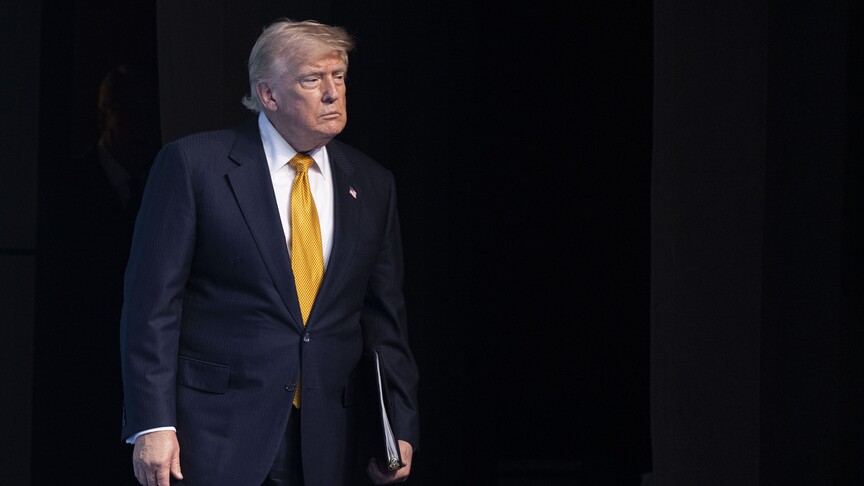
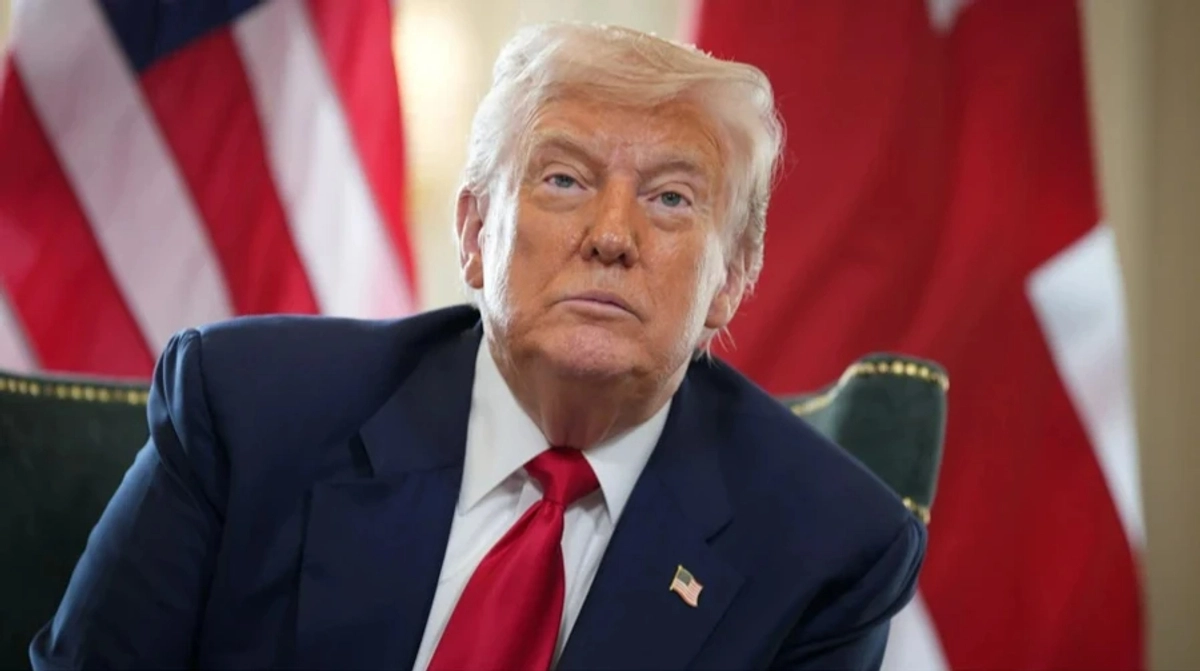


News 15-09-2026
America as a Source of Risk: Why India, France and Ukraine Increasingly Distrust “Managed...
By September 15, 2026, discussions of the United States in India, France and Ukraine have come to revolve not around any single crisis, but around a sense that American policy is overextended. The focus is on the US war with Iran and the blockade of the Strait of Hormuz, Washington’s latest attempt to advance Ukrainian-Russian negotiations, and the increasingly overtly transactional style of Donald Trump’s administration—even in its relations with formal allies. Local commentators assess America’s motives differently, but agree on the central point: the problem is no longer simply that Washington uses force or pressure. It is that its partners find it increasingly difficult to understand the limits of that power, the value of American promises and the rules that will apply tomorrow.
The most immediately painful issue for India is Hormuz. From the Indian perspective, the American campaign against Iran ceased long ago to be a distant Middle Eastern war: it is affecting shipping, energy supplies, Indian sailors and millions of Indian workers in the Gulf states. At a meeting with Iranian President Masoud Pezeshkian on September 11, Prime Minister Narendra Modi spoke of “lasting peace” and freedom of navigation and trade—a deliberately diplomatic formula, but one directed in substance at both sides of the conflict. For New Delhi, freedom of passage through Hormuz is not an abstract principle of international law but a condition of economic security. (theprint.in)
The editorial board of The Indian Express draws an extremely stark local conclusion: until a lasting agreement emerges on the management of the Strait of Hormuz, military strikes and economic escalation will resume. Indian debate shows particular irritation at the fact that both Tehran, which uses the strait as a lever of pressure, and Washington, which responds with blockade, sanctions and military force, are turning an international route into an instrument of their own struggle. An earlier editorial in the same newspaper called the situation a trap between Iranian blackmail and unilateral American pressure; its human dimension is the death and disappearance of Indian tanker crew members. (indianexpress.com)
The French view of the same war is less personal, but no less тревожен. French media are primarily following how the escalation in the Middle East is changing the global balance of power, oil markets and Europe’s ability to act independently. In a Le Monde analysis, the Houthis’ successes along the Red Sea coast are described as strengthening Iran’s negotiating position vis-à-vis the United States: Tehran is gaining the ability to exert pressure simultaneously on two key maritime corridors—Hormuz and Bab el-Mandeb. The French concern here is that the American military campaign is not isolating the conflict but expanding the number of points where regional actors can dictate terms to global trade. (lemonde.fr)
Indian criticism goes deeper than simple pacifism. In Amitabh Mattoo’s column, a painful point for New Delhi comes through: proximity to Washington does not equal influence over Washington. Mattoo writes that a pause in the war or negotiations could give markets some respite, but would not eliminate the causes of the crisis—Iran’s regional policy, Israel’s problems, the Gulf’s vulnerability and, as he puts it, Trump’s “hubris.” More important is something else: India is discovering that its economic interests and the safety of its citizens may become secondary when America determines the negotiating parties and the structure of a deal. This represents an unexpectedly sharp reassessment of relations that New Delhi until recently often described as a strategic rapprochement. (indianexpress.com)
In Ukraine, the irritant is different, but the logic of how the United States is perceived is similar: Washington is essential, yet its mediation increasingly appears to be a source of dangerous oversimplification. Following Steve Witkoff and Jared Kushner’s visits to Moscow and Kyiv, the Ukrainian agenda focused on a statement Kushner made on September 12 at the YES forum in Kyiv. He effectively said that an agreement could already be ready if Ukraine agreed to withdraw to the line of Vladimir Putin’s territorial demands. Ukrainska Pravda conveyed the reaction without diplomatic softening: the American envoy made the delay in the deal conditional on Kyiv’s unwillingness to make territorial concessions and proposed linking the question of borders to the situation on the battlefield. (pravda.com.ua)
For Ukrainian audiences, this is not simply an ill-judged remark by a mediator. It is perceived as an attempt to replace the question of aggression with a question about the mechanics of compromise. The publication also noted that Kushner avoided speaking about Russia’s genocide in Ukraine and used symmetrical language about the suffering of both sides. It was especially symbolic that an air-raid alert sounded in Kyiv as he discussed Russia’s readiness for a settlement. This produces a fundamental Ukrainian counterargument: surrendering territory under the threat of continued violence cannot be treated as negotiating “flexibility.” (pravda.com.ua)
In Ukrainska Pravda’s analysis, the visit by the American representatives is called an attempt to restart negotiations that had reached a dead end, but without expectations of a rapid breakthrough. Ukrainian sources quoted by the publication emphasize the asymmetry of the diplomatic process: Witkoff had previously visited Putin six times and Kushner twice, whereas their September trip was their first visit to Kyiv; at the same time, the American delegation was not given the opportunity to visit Bucha and Irpin. In the Ukrainian reading, this is not a matter of protocol but a sign that Moscow still knows how to set the framework for negotiations. (pravda.com.ua)
France occupies an intermediate position in the Ukrainian story, between Kyiv’s concerns and the need to preserve a channel for negotiations. French representatives took part in meetings with the American delegation in Kyiv alongside their British and German counterparts. But the French press noted the absence of a diplomatic breakthrough and the parties’ caution regarding their next steps. (lemonde.fr) For Paris, American mediation remains indispensable, since it is difficult to imagine credible security guarantees or pressure on Moscow without the United States. Yet the participation of France and other European countries is also an attempt to prevent Ukraine’s fate from being discussed solely through a Washington-Moscow bilateral framework, in which European security becomes an adjunct to a broader American deal.
These two crises give rise to a common theme—the erosion of trust in the United States as a predictable ally. In France, it has found almost literal expression in gold. Le Monde economic columnist Isabelle Chaperon described the Netherlands’ transfer of part of its gold reserves from the United States to London as central banks “voting with their bars” against the unreliability of the American ally. This does not mean an immediate break with the dollar system. But the gesture itself shows that European distrust of Trump’s policies has become so strong that it is penetrating an area where decisions are usually made for decades. (lemonde.fr)
An episode involving the French ambassador in Washington is even more telling. According to Le Monde, Paris had to publicly express “regret” over its own July statement on human rights in order to lift the American blockade of the appointment of a new ambassador. France’s formula—that disagreements over a vote do not cancel the historic alliance and close dialogue—testifies to the nervousness of the moment: the alliance has to be specifically reaffirmed precisely because it is no longer perceived as automatic. (lemonde.fr)
India sees the same problem through trade. In trade expert Ajay Srivastava’s column, American tariff policy is described as an increasingly permanent, multilayered and unpredictable system in which tariffs have become an instrument not only of trade but also of foreign policy. The author advises New Delhi not to yield under pressure, to strengthen its competitiveness, diversify its markets and preserve its policy autonomy. This is an important shift: the United States remains a critical partner for India in the Indo-Pacific, but is increasingly viewed not as a guarantor of strategic support, but as a market and negotiating partner capable of changing the rules at any moment. (indianexpress.com)
A paradoxical international picture is taking shape. Ukraine cannot do without America’s military and diplomatic role, but fears that Trump’s desire to end the conflict quickly will turn its sovereignty into a bargaining chip. France still needs the United States for European security, but is responding to American unpredictability by seeking strategic and financial autonomy. India cooperates with Washington to contain China, yet the experience of Hormuz and tariff threats is leading it to conclude that the partnership must be less emotional and more calculating.
The main local realization is not that America has become weaker. Rather, India, France and Ukraine are increasingly seeing a different America: a country that retains enormous capacity to change the course of wars, markets and negotiations, but is becoming less and less able to convince its partners that this power will be used according to stable rules. That is why reactions to the United States today sound not like anti-Americanism, but like a demand for insurance against American policy—in supply routes, gold reserves, European participation in negotiations and trade diversification.
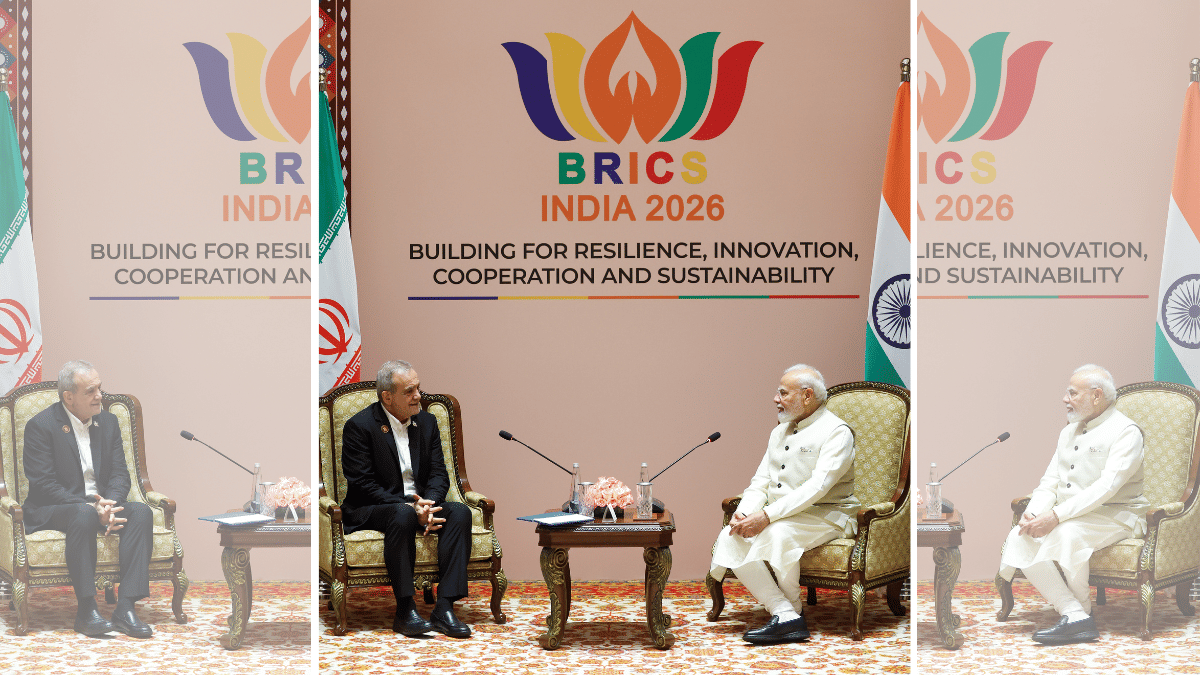
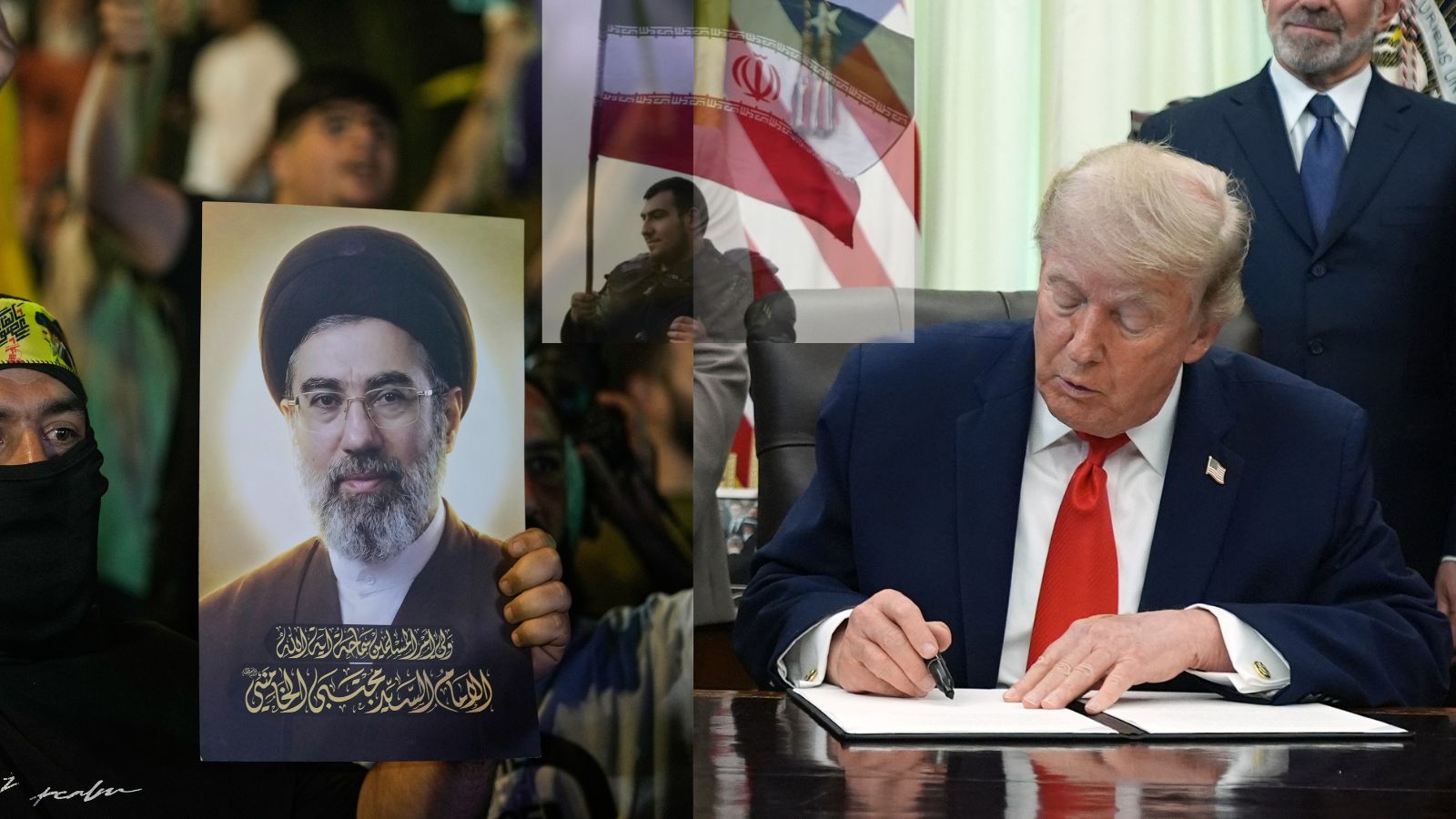

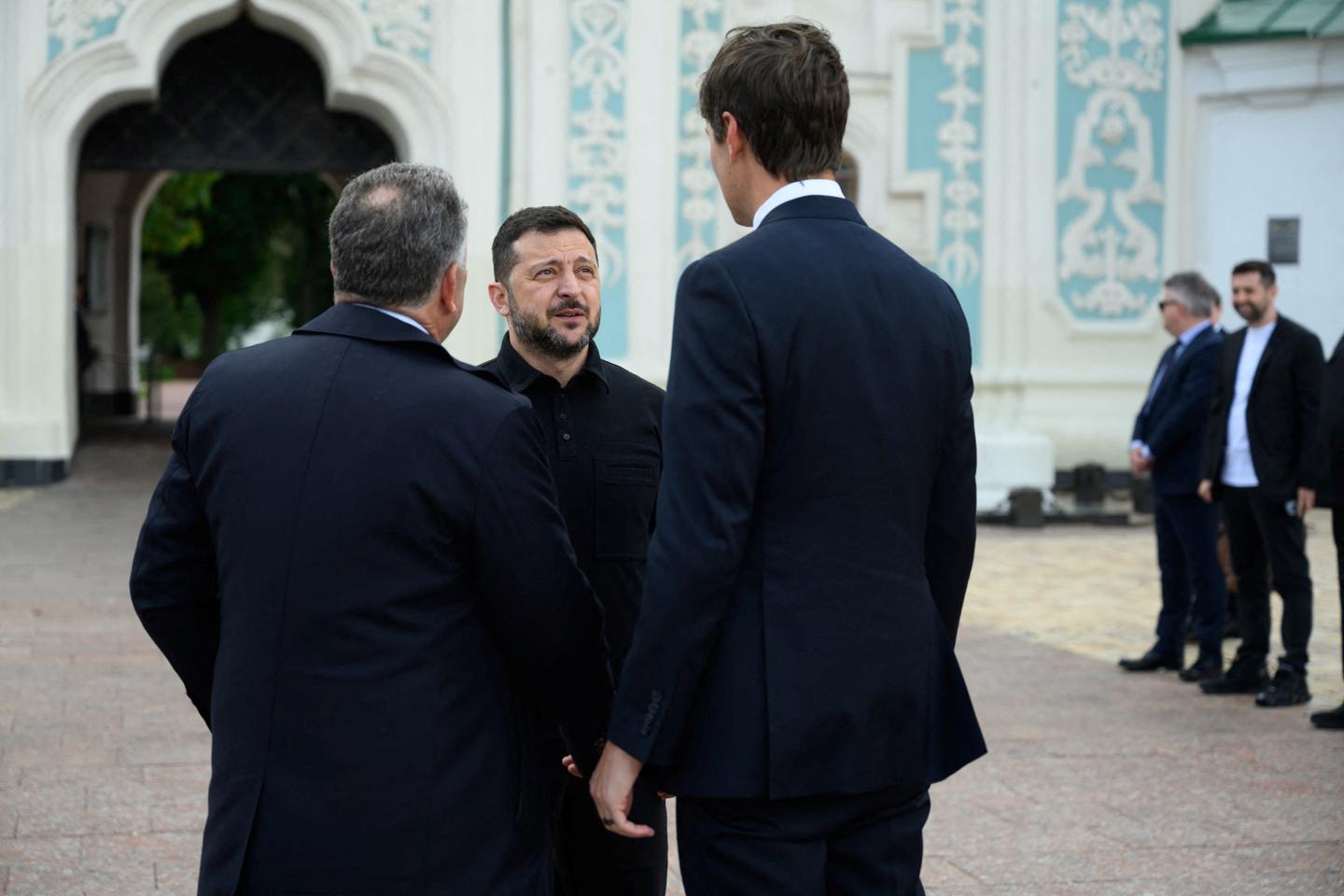

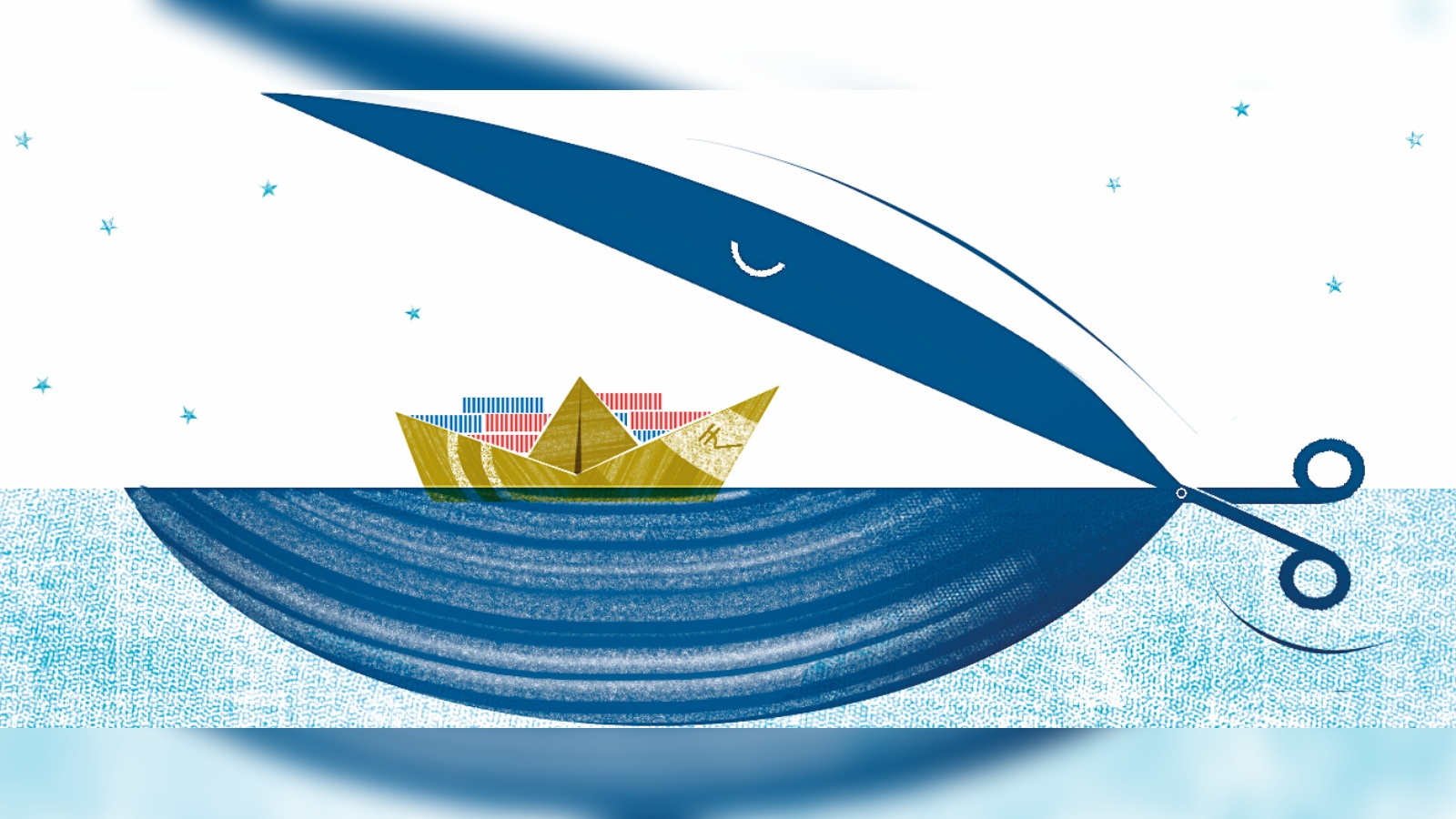
Trump and Global Instability
Donald Trump’s decisions and foreign-policy course continue to cause concern far beyond the United States. Legal resistance to his restrictions, possible agreements with Russia, pressure on Ukraine, diplomacy toward Iran, and sanctions policy are increasing uncertainty surrounding America’s commitments. Against this backdrop, concerns are growing about new confrontations with China and Russia, as well as the consequences of Washington’s decisions for global security. This material is based on publications by 24tv.ua (Ukraine) and elpais.com (Venezuela).
Ukraine on the War: Technology, Resilience, and the Cost of Resistance
For Ukraine, the war is not an abstract geopolitical dispute but a daily reality in which the front line is increasingly penetrating the lives of cities far from the battlefield. In an interview with 24 Kanal, American intelligence officer and Marine Matthew Sampson, who has served in Ukraine’s Defense Forces since 2022, discusses the technological transformation of warfare, the prospects for negotiations with Moscow, NATO security, and the Ukrainian experience that could become a resource for its allies.
However, questions from the journalist from Zaporizhzhia give the conversation a more personal dimension. She notes that the city has recently become more dangerous than it was in 2024: drones can reach the city center, anti-drone nets cover some districts, and her family continues to live there. Behind the widespread admiration for Ukrainian resilience, the journalist emphasizes, it is impossible to ignore the real price: “These Ukrainians are truly resilient, but they are paying an enormous price for it.”
This is especially acute in Kherson, where FPV-drone attacks on civilians are described as a “human safari.” In the Ukrainian view, such strikes are not an inevitable side effect of hostilities but a deliberate campaign of terror against the civilian population. The constant threat, deaths, and chronic psychological strain have become part of life in cities near the front line.
At the same time, Sampson believes that Ukraine is already significantly changing the very nature of modern warfare. According to him, on the Zaporizhzhia front, ground-based robotic systems deliver ammunition, water, food, and medical supplies to forward positions. In some units, such systems account for up to 90% of supplies. In his assessment, robotic logistics not only increases the military’s effectiveness but also reduces risks to service members, including those evacuating the wounded.
Artificial intelligence is also taking on particular importance. Sampson spoke about using AI to process intercepted communications and identify targets, while stressing that the final decision to use weapons remains with a human. Ukraine, forced to adapt rapidly to Russian military pressure, is turning that adaptation into a technological advantage of its own.
In Sampson’s view, the country can no longer be regarded solely as a recipient of Western aid. In 2022–2023, Ukraine, as he put it, “imported security,” turning to partners for weapons, ammunition, and air-defense systems. It is now gradually beginning to “export security” by sharing combat experience, technological solutions, and approaches to military training with its allies.
From this perspective, investment in Ukrainian drone production, the creation of joint U.S.-Ukrainian funds, and military-cooperation programs should be seen not as charity but as an investment in the security of Europe and the United States. Ukraine is seeking to establish itself not as the West’s peripheral front but as one of its important defense and technology partners.
Sampson is also skeptical of attempts to reach a political agreement with the Kremlin without applying serious pressure. He believes Moscow will agree only to terms involving the transfer of Ukrainian territory. “Russia is losing this war… The only question is when you decide to surrender,” he said, comparing Vladimir Putin’s position with that of Adolf Hitler at the final stage of World War II.
For Ukrainian audiences, this comparison reflects a widespread belief: an aggressor cannot be stopped through concessions because it sees compromise not as a path to peace but as a sign of the opponent’s weakness. That is why negotiations without military, political, and economic pressure on Russia are considered largely ineffective in Kyiv.
The interview also presents the war in Ukraine as part of a broader threat to NATO. Sampson warns that Russian hybrid operations in Germany, the United Kingdom, and other countries could develop into a direct confrontation if the Kremlin concludes that the Alliance is unwilling to respond. In response, the journalist expresses an idea important to Ukraine’s debate about the future: Kyiv may not need to passively wait to join NATO “in 10–15 years,” but should already be strengthening a regional security system with Poland, the Baltic states, Romania, the Scandinavian countries, the United Kingdom, and Germany.
This approach assumes that Ukraine can be not only an object of collective defense but also one of its pillars. Its combat experience, advanced drone industry, and ability to resist the Russian army are viewed as assets capable of strengthening European security.
Sampson also discusses the role of Russian propaganda and, in his view, the Kremlin’s systematic underestimation of Ukraine. He believes that Russia’s leadership and part of its society exist within a fictional narrative in which the invasion is presented as “liberation.” As an example, he cites accounts from Ukrainians who experienced occupation: Russian soldiers sincerely asked local residents whether they were happy that the troops had arrived.
For Ukraine, this confirms that the war is based not only on government decisions and military orders but also on a deeply rooted imperial ideology. References to the Chernobyl disaster, the sinking of the Kursk submarine, and the collapse of the Soviet Union in 1991 are used in the conversation to characterize a political culture associated with secrecy, lies, and an unwillingness to acknowledge its own failures.
At the same time, Sampson does not deny Ukraine’s own problems, particularly corruption. He acknowledges that it makes it harder to explain the need to support Kyiv to an American audience. But, he says, there is a fundamental difference between concealing abuses and fighting them publicly. Ukraine investigates corruption cases, detains suspects, strengthens oversight of Western aid, and expands the digitalization of public services.
For Kyiv, this is not only a matter of its reputation with partners. A state seeking weapons, investment, technological cooperation, and a central role in Europe’s security architecture must demonstrate its ability to ensure transparency, pursue reforms, and govern effectively.
The main conclusion of the interview is that Ukrainian resistance cannot be reduced to a slogan about indomitability. Behind the successes in drone warfare, robotic logistics, and international cooperation lie exhaustion, trauma, civilian deaths, and daily risks for military personnel. Ukraine insists that its survival has become part of the security of the entire West, while also reminding the world that the country’s resilience does not erase the high price people are paying for it.
U.S. Court Temporarily Blocks Trump’s Mail-Voting Restrictions
The U.S. Supreme Court temporarily blocked Donald Trump’s initiative to standardize and tighten mail-voting rules ahead of the midterm elections. As EL PAÍS reports, the key argument was that states and local authorities were not prepared to implement the new requirements quickly without risking the disenfranchisement of millions of voters.
Justice Brett Kavanaugh stated that “state and local election officials do not have sufficient time to reasonably implement the rule before the election.” Thus, the court’s decision became a temporary barrier against changing the procedure at a time when any technical error or administrative delay could directly affect voter participation.
Possible disruptions to the work of the U.S. Postal Service caused particular concern. One of its employees warned of the risk of a “catastrophic failure”: errors in barcodes or an inadequately prepared digital system could have resulted in entire batches of ballots not being delivered on time. In an election, such a problem would mean not merely logistical inconvenience but the potential loss of votes belonging to thousands or millions of people.
Trump justified the need for the changes by citing the fight against fraud. However, the publication notes that he continues to make such claims without evidence following his defeat in the 2020 election. Democratic Senator Chuck Schumer called the initiative an attempt to “make voting more difficult” and said it was “clearly unconstitutional.”
The dispute is especially important for Latino communities, including Venezuelans living in the United States following the large-scale migration of recent years. For many workers with long hours, unstable employment, or limited mobility, voting by mail remains one of the few realistic ways to participate in elections. Restricting this mechanism would have affected most severely those who find it difficult to take a day off or reach a polling place in person.
For a Venezuelan audience, the story may appear to be a telling example of the importance of independent institutions. In a society where voter registration, access to voting, ballot counting, and the legitimacy of results have long been sources of mistrust and political controversy, the American legal conflict is not perceived as a technical debate. It serves as a reminder that election rules can change the real balance of political participation.
At the center of the situation is the question of who has the authority to determine electoral procedures and whether it is permissible to change them shortly before voting, when such steps could affect the composition of the electorate and the outcome of a campaign. The Supreme Court’s decision does not resolve the dispute, but it shows that the executive branch may face limits if its actions threaten citizens’ access to the ballot.
This is the main conclusion that can be drawn from the EL PAÍS publication: the resilience of democracy is determined not only by holding elections but also by the ability of judicial, electoral, and administrative institutions to prevent in time measures capable of depriving citizens of their right to vote.
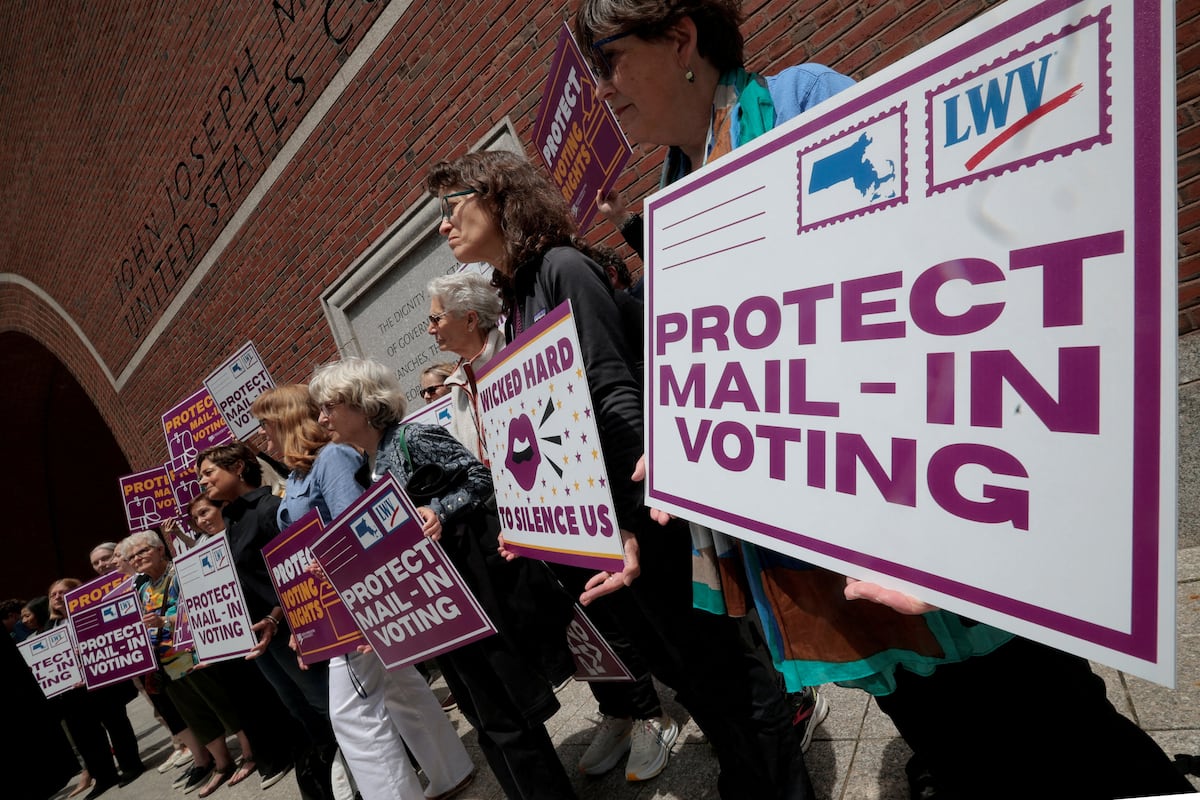
America Between a Deal and Retreat: How Ukraine, Israel and Russia Read Trump’s Signals
By September 14, 2026, the United States had simultaneously become the leading—but highly ambiguous—participant in two conflicts: the attempt to restart negotiations on the Russian-Ukrainian war and a new phase of confrontation with Iran. In Kyiv, Jerusalem and Moscow, these developments are not viewed as manifestations of a single American strategy, but as actions by Donald Trump’s administration, for which the speed of reaching a deal, domestic political advantage and a reluctance to become bogged down in yet another war often matter more than traditional allied commitments. The common thread in all three countries is the question of where American mediation ends and pressure on partners to make concessions begins.
The most painful issue remains Ukraine. Following Steve Witkoff’s and Jared Kushner’s visits to Moscow on September 5 and Kyiv on September 6, the Ukrainian reaction intensified sharply because of Kushner’s remarks at the YES forum on September 12. According to his version, an agreement would be nearly complete if Ukraine agreed to withdraw to the line demanded by Vladimir Putin. For Ukrainian audiences, this sounded not like a neutral mediation formula, but like shifting responsibility for the absence of peace from the aggressor to the country under attack. The contrast highlighted in a Ukrainska Pravda report was particularly telling: while the American envoy spoke about finding the “right formula” and postwar economic prosperity, an air-raid alert was sounding in Kyiv. (pravda.com.ua)
Ukrainian criticism, however, is directed not simply against negotiations themselves. Kyiv is ready for a diplomatic process, but fears that Washington is trying to turn the reality on the battlefield into a legal basis for a territorial settlement. Following his meeting with American representatives, President Volodymyr Zelensky emphasized the need for a winter air-defense package, energy support and American LNG, while warning that without a strong position on the battlefield, negotiations turn into ultimatums. That is why, in the Ukrainian debate, American diplomacy is inseparable from the issue of military aid: a mediator who calls for compromise but does not strengthen the side’s defenses risks being perceived as a source of pressure rather than a guarantor of peace. (cpd.gov.ua)
In Russia’s public discourse, the same diplomatic episode looks almost like a mirror image. Moscow welcomes the very fact of direct contact with the White House and especially values the fact that the American side is discussing not an abstract ceasefire, but the political structure of the postwar order. In a Kommersant analysis, presidential aide Yuri Ushakov conveyed the Kremlin’s assessment: the results of Witkoff’s and Kushner’s visit were received “as a positive,” while Trump linked the end of the war to the prospect of a large-scale restoration of Russian-American trade relations. (kommersant.ru) Russian commentators see the value of the current moment primarily in the fact that the United States no longer appears to be Kyiv’s unconditional political patron and is prepared to discuss the parameters of a settlement directly with Moscow.
But even in Russian analysis, optimism is limited. In a commentary for Kommersant FM, commentator Dmitry Drize notes that real peace talks will most likely depend on the outcome of the winter campaign, while the current contact merely preserves “some kind of” chance for dialogue. (kommersant.ru) This is an important detail: the Russian debate does not assume that Trump is capable of imposing a solution immediately. Rather, his administration is viewed as a channel through which American involvement in the war can be reduced, discussion of the “realities on the ground” can be consolidated, and transatlantic unity weakened. Expert Georgy Asatryan states Russia’s minimum objective directly in Kommersant: to keep the United States as far away as possible from deep involvement in the conflict. (kommersant.ru)
Israel’s perception of Washington is shaped by a different fear: not that America is too deeply involved, but that it may step back at a decisive moment. The strengthening of the Houthis near the Bab el-Mandeb Strait, uncertainty surrounding Iran and American caution ahead of the November midterm elections have created a sense of unreliability in Israel, even amid formally close relations with the White House. In a column for Israel Hayom, military commentator Yoav Limor describes Trump’s current policy as a troubling retreat from the role of global policeman. In his assessment, Washington is effectively leaving its allies alone to deal with the consequences of the Houthis’ growing strength and Iran’s influence. (israelhayom.co.il)
For Israelis, what is most sensitive is not the fact that the United States is unwilling to open a new front, but the practical effect of that reluctance. If Saudi Arabia, under pressure from Iran and the Houthis, begins seeking closer ties with Turkey, Qatar or even Tehran, that would mean a weakening of the regional architecture on which Jerusalem had been counting. Limor also emphasizes another, almost paradoxical dependency: Israel would like to act against a possible revival of Iran’s nuclear program, but is unlikely to do so without clear American consent. (israelhayom.co.il) In other words, American disengagement does not automatically make Israel freer—it makes it more anxious and more dependent on an unpredictable political signal from Washington.
Russia’s interpretation of the U.S.-Iranian escalation, by contrast, focuses on its manageability and electoral function. In a Vedomosti analysis, Americanist Pavel Koshkin describes what is happening as a “controlled escalation”: both sides are demonstrating toughness but are not seeking a new, uncontrollable spiral of war. He links Trump’s rhetoric to the task of maintaining the image of a decisive leader ahead of the U.S. midterm elections. (vedomosti.ru) In this logic, Iran is not only a Middle Eastern crisis for Moscow, but also a tool that diverts American resources, attention and ammunition away from Ukraine.
This is where the Ukrainian, Israeli and Russian perspectives converge, despite their opposing interests. Ukraine fears that the United States will trade principle for a quick agreement; Israel fears that America will trade allied reliability for an unwillingness to take risks before the elections; Russia hopes that Trump’s pragmatism will allow the conflict to be shifted from the realm of pressure to the realm of bargaining. The most unexpected common feature of these reactions is that almost no one believes in American “omnipotence.” Kyiv doubts that Washington will ensure a just peace, Jerusalem doubts that it will ensure deterrence, and Moscow doubts that it can easily force Ukraine and Europe to accept the Russian formula. America remains the central power, but its partners and opponents are increasingly planning their actions not on the basis of its promises, but on the likelihood that it may change the terms of the deal.


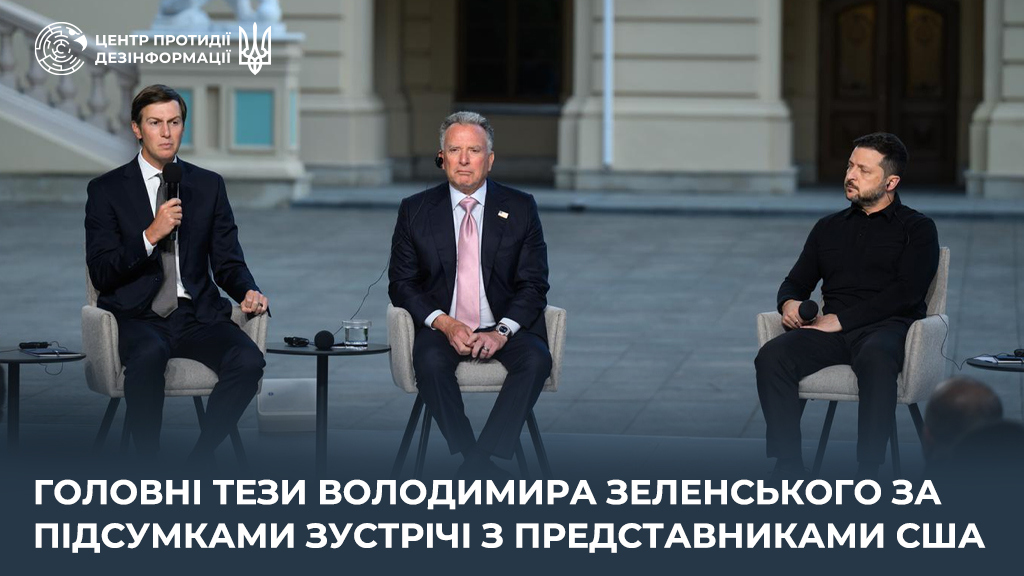
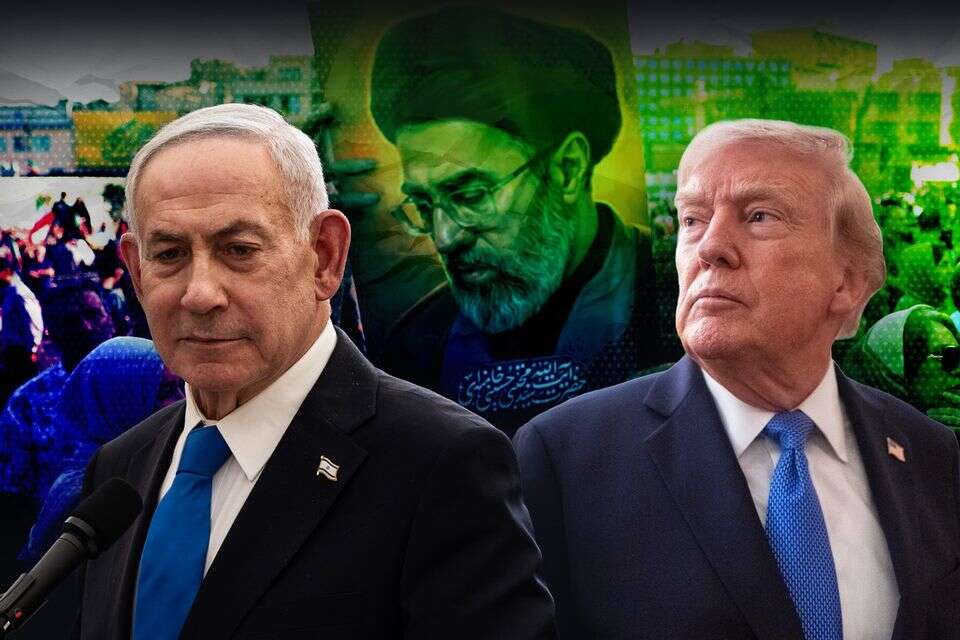
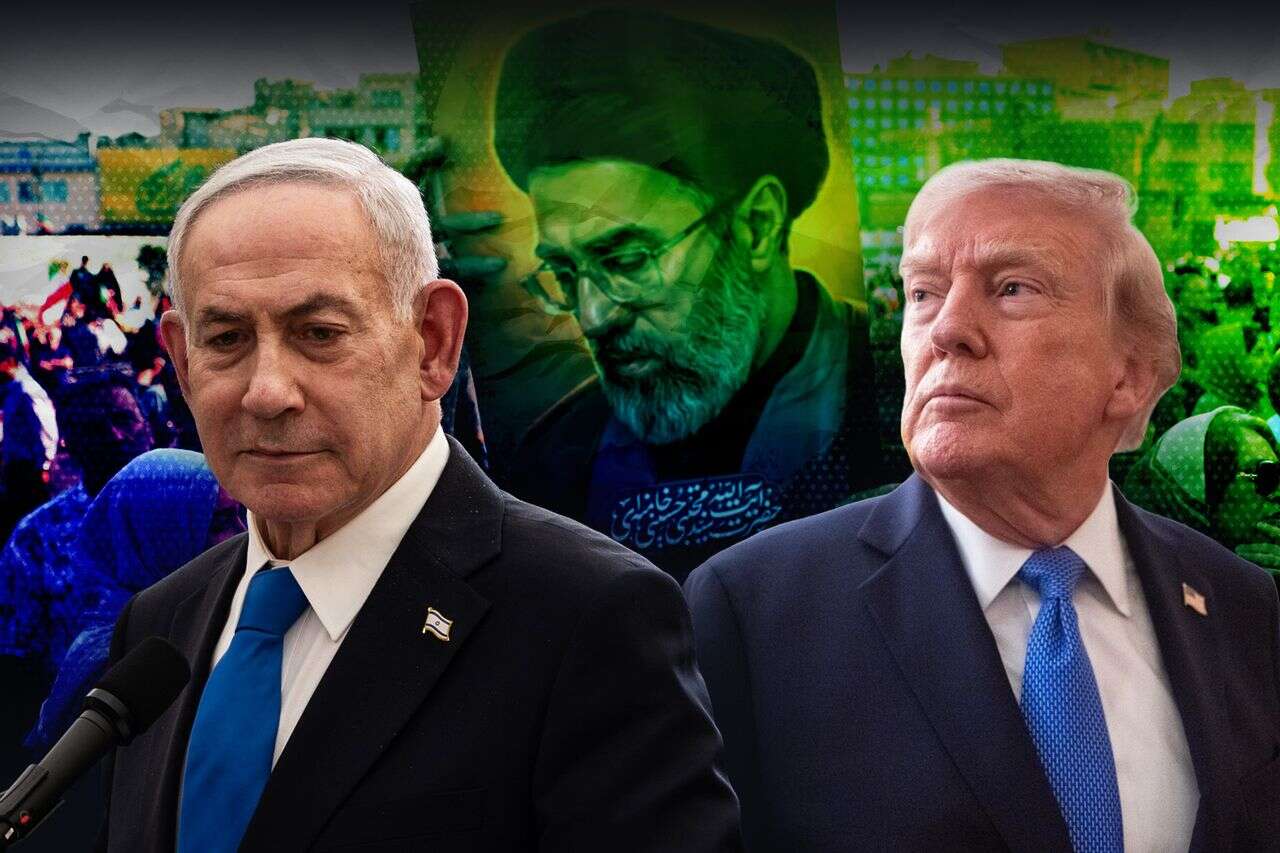


News 14-09-2026
America as a Source of Three Anxieties: Oil, Deals and the Cost of Alliances
By September 14, 2026, discussions about the United States in South Korea, Brazil and Ukraine revolve not around a single news story, but around a sense that Washington has simultaneously become the main generator of geopolitical instability, financial pressure and unpredictable diplomacy. In Seoul, particular attention is focused on how the U.S.-Iran war and possible tariffs are affecting the industrial economy. In Brazil, the United States is discussed primarily through the price of oil, the exchange rate of the dollar and yields on U.S. government debt. In Ukraine, meanwhile, American activity is viewed through a much more existential lens: is peaceful diplomacy possible if the mediator is seeking a quick deal while Russia continues the war?
The broadest common theme is the impact of the American conflict with Iran. For Brazil, this is not an abstract Middle Eastern war, but a contradictory economic shock. Brent crude rising above $100 initially appears beneficial for an oil exporter and for Petrobras, but almost immediately turns into pressure on the real, inflation expectations and Brazilian interest rates. In a Folha de S.Paulo analysis, Avenue strategist Fernando Saad Bernardes captures this duality particularly well: Brazil benefits from improved terms of trade as a result of expensive oil, but the market nevertheless begins viewing the country more cautiously. In other words, oil revenues do not eliminate capital flight from risk when a war involving the United States makes dollar financing more expensive and threatens another surge in global inflation.
Brazil’s response is notable for its pragmatism. There is less debate about whether the United States is right in its confrontation with Iran, and more about how the American decision is translating into more expensive loans and a weaker national currency. In the same Folha article, Nomad strategist Rebecca Nossig links market nervousness to the combination of geopolitical and inflationary risks: expensive oil reduces appetite for emerging-market assets while simultaneously pushing up yields on U.S. Treasuries. For Brazil, this is an extremely sensitive combination: the export benefit from commodities may accrue to large oil companies, while the costs transmitted through the exchange rate and interest rates spread across the entire economy.
In South Korea, the same crisis is interpreted far more darkly. The country depends on imported energy resources and has an industrial model for which a spike in oil prices is not a bonus but a direct blow to production costs, transportation and consumer prices. A Kiwoom Securities review emphasizes that nearly 69% of South Korea’s crude-oil imports come from the Middle East; consequently, the blockade—or threat of a blockade—of the Strait of Hormuz automatically becomes a risk-off factor for the Korean market. This figure explains why Seoul views the American military campaign not only as a U.S. ally, but also as a vulnerable Asian economy forced to pay for instability in a vital maritime corridor.
Korean discussions also reveal irritation that American policy is simultaneously creating an energy shock and driving up global yields. A Korean market review describes the situation after Brent exceeded $100 as a moment when even the White House acknowledged the risk of not merely a brief spike, but several months of expensive oil. For Seoul, this means a double threat: rising energy-import costs and pressure from high U.S. yields, which could draw capital away from Asian markets. Brazil and South Korea agree on the diagnosis—the United States’ foreign policy has become a market factor on a global scale—but differ in the consequences: Brazil receives commodity revenues, while Korea receives the energy bill.
The second overarching theme is declining confidence in U.S. financial management. In Brazil, this is discussed particularly openly. Folha reports that the U.S. Treasury’s attempt to buy back part of the national debt fell short of market expectations and failed to halt the rise in yields. Amundi investment director Vincent Mortier called the scale of the intervention insufficient to resolve the broader problem, while Bank of America strategist Mark Cabana saw the authorities’ attempt to act with minimal means as carrying the risk of sending a counterproductive signal to markets. In Brazil’s reading, this is no longer a technical Wall Street story: when U.S. debt policy appears nervous, emerging markets immediately pay a risk premium.
South Korean financial commentators view this in a similar way, but with a different concern. They are worried not only about the cost of money, but also about the divergence between Washington’s political logic and the logic of independent monetary policy. In a weekly Korean gold-market analysis, rising U.S. yields are described as the main factor suppressing demand for gold even amid war and expensive oil. The significance of this observation extends beyond gold itself: the market has stopped automatically treating geopolitics as a reason to move into traditional safe-haven assets because the yield on U.S. debt has itself become too high and too important a variable. For Korean investors, this means living in a world where the United States is simultaneously a military ally, the center of the financial system and a source of its instability.
The third—and the main one for Ukraine—line of debate concerns the return of American diplomacy to negotiations with Moscow and Kyiv. Ukrainian audiences greeted Steve Witkoff and Jared Kushner’s trips to Moscow on September 5 and Kyiv on September 6 without their previous automatic optimism. After the meeting, President Volodymyr Zelenskyy said Ukraine was counting on a “winter package” including air defense, energy support and American LNG, and warned that without a strong position on the battlefield, there could be only ultimatums rather than genuine diplomacy. These points were compiled by the Center for Countering Disinformation under Ukraine’s National Security and Defense Council.
This is where the Ukrainian perspective differs most sharply from the Brazilian and South Korean ones. For Brazil and South Korea, Washington creates risk primarily through oil, the dollar and trade barriers; for Ukraine, American inconsistency could determine the country’s physical security during the winter. In a Slovo i Dilo column, analyst Oleksandr Radchuk sees Witkoff and Kushner’s approach as a “transactional” model in which negotiations are built around what Russia, Ukraine and the world will receive. But this is precisely where the danger lies for Ukrainian public debate: under such a framework, Russia’s “benefit” may mean not a compromise, but a reward for seizing territory.
Ukrainians are not rejecting American mediation—on the contrary, Kyiv officially thanks the United States for resuming the negotiating process. However, trust depends on testing diplomatic statements against military reality. After the visits by American representatives, Russia continued its massive attacks, strengthening skepticism about hopes for a quick peace. Hromadske separately recorded concern over Donald Trump’s statements about plans to demand that Europe pay for American aid to Ukraine provided under Joe Biden. From the Ukrainian perspective, this is not merely a budget dispute: allied support is increasingly turning into a bargaining chip.
Against this backdrop, the South Korean semiconductor story is particularly revealing. On September 4, Industry Minister Kim Jung-kwan said Seoul continued discussing possible tariffs on chips with the United States, based on Washington’s promised principle of “no less favorable treatment” than that offered to competitors. In a Yonhap report, the minister emphasized that Korea expected the spirit of previous agreements to be respected. This is a diplomatically cautious formula, but behind it lies strong local anxiety: America, on which Seoul depends for security and technology, could simultaneously become a regulatory risk for South Korean exports.
This Korean tone may be the most important unexpected conclusion from the current reactions. In Seoul, the United States is viewed neither as an unequivocal protector nor as an unequivocal threat. Washington is an indispensable partner that, in the same month, can promise fair access for Korean chips, seek Korean investment and create an oil shock undermining the competitiveness of Korean industry. In Brazil, similar ambivalence appears in financial form: expensive oil is beneficial, but the American war and U.S. government debt make that benefit unreliable. In Ukraine, it takes on a tragic dimension: the United States remains a critically important partner, but its desire for a quick deal raises fears that the price of “peace” will be demanded from the victim of aggression.
The international view of America today can be reduced to one formula: the United States still possesses an exceptional ability to set the agenda, but fewer and fewer countries are confident that American power automatically brings them stability. South Korea fears the bill for oil and tariffs, Brazil fears the bill for the dollar and Treasury yields, and Ukraine fears the bill for a diplomatic compromise. In all three cases, the local response is not simply anti-American. Rather, it points to a new pragmatism: an alliance, a market relationship and mediation with the United States are now viewed not as guarantees, but as relationships in which the cost of dependence must be assessed constantly.



News 13-09-2026
America as a Source of Risk and Leverage: Views from Russia, Saudi Arabia and South Korea
In mid-September 2026, the United States is simultaneously seen in Russia, Saudi Arabia and South Korea as an indispensable power and the main generator of uncertainty. At the center of the debate are the American campaign of pressure against Iran and its consequences for the Strait of Hormuz, oil and the security of U.S. allies; Washington’s attempt to once again become a mediator in a settlement of the Ukraine conflict; and the transformation of access to the American market and industrial investment into an instrument of foreign policy. The overall conclusion of local commentators is highly pragmatic: the United States can still change the rules of the game, but the cost of that ability is increasingly being shifted onto partners, neighbors and the global economy.
The most acute issue is the U.S.-Iran confrontation. In the Saudi press, it is viewed not as a distant struggle between two powers, but as a direct test of the entire Persian Gulf security architecture. A columnist for the Saudi newspaper Okaz describes Washington’s actions as an attempt to wage war against Iran “using its own tools”: rather than repeating America’s past ground interventions, the goal is to raise the military and economic price Tehran pays for regional influence. In this interpretation, Houthi strikes and the attack on Saudi energy infrastructure are not peripheral episodes, but a way for Iran to shift the costs of the conflict onto its neighbors and global markets. (okaz.com.sa)
At the same time, the Saudi view is not limited to waiting for American protection. In an Al-Jazirah newspaper article, Riyadh’s role is framed differently: the kingdom should use its relations with both the West and regional players to prevent the crisis from escalating into a major war. An important local argument is that mediation is not a sign of weakness before Washington, but an independent resource for a power whose first priority is to protect its own modernization, energy infrastructure and Gulf stability. American involvement is necessary here, but it must not turn Saudi Arabia into an arena for someone else’s conflict. (al-jazirah.com)
Russia’s reaction to the same war is noticeably colder and, at the same time, more cynical in economic terms. Russian media note that the resumption of mutual U.S.-Iranian strikes has heightened tensions in the oil market. For Russia, this means both a short-term price benefit and the risk of even greater instability in global trade. In an Argumenty i Fakty article, the American strategy is described through the logic of “tanker for tanker”: military pressure on Iran immediately rebounds on Washington in the form of pressure on the global economy. Saudi authors make a similar point, but with a different political tone: Okaz warns that America’s “economic weapon” could turn Iran’s isolation not into a short route to a deal, but into a prolonged war of attrition, with energy consumers around the world paying the price. (aif.ru)
The divergence between Moscow and Riyadh is particularly apparent here. For Russian commentators, the American campaign is further evidence of the limitations of unilateral pressure: Washington may inflict damage, but it is not necessarily capable of creating a stable political order after using force. For Saudi Arabia, the question is much more concrete: even a weakened Iran is not an unqualified benefit if this is accompanied by attacks on oil pipelines, the risk of disruptions to shipping and increasing regional militarization. Saudi media therefore speak far more often not of a U.S. “victory,” but of the need to control escalation. It is no coincidence that oil remains above the psychologically important level of $100 per barrel amid fears of further supply disruptions: for the kingdom, this is both a source of revenue and an indicator of a dangerous political temperature. (okaz.com.sa)
In South Korea, the consequences of U.S. policy in the Middle East are discussed primarily through two lenses—energy security and alliance commitments. An editorial in Hankyoreh urges Seoul to treat American pressure over the possible deployment of forces to protect shipping in the Strait of Hormuz with extreme caution. The editorial’s logic is straightforward: freedom of maritime trade is critically important to export-oriented Korea, but service members must not become the price of the alliance, especially while the Korean Peninsula faces its own deterrence risks involving North Korea. This is not anti-Americanism, but a demand for a more equal distribution of risks: helping an ally should not automatically mean participating in every one of its operations. (hani.co.kr)
The same Korean caution is evident in the dispute over semiconductor tariffs. U.S. authorities are considering new targeted duties and are directly linking preferential treatment to the establishment of production in the United States. The South Korean administration has publicly responded that the parameters have not yet been finalized, but has promised to ensure that national companies are not placed at a disadvantage compared with their competitors, as reported by Hankyoreh. Industry Minister Kim Jung-kwan put the position even more bluntly: negotiations must be conducted in the spirit of the principle of “no less favorable treatment” for Korean chips, Yonhap reported. (hani.co.kr)
This is particularly painful for South Korea because semiconductor exports have become the main engine of the current recovery: during the first ten days of September, their value reached record levels, while shipments to the United States rose sharply. Seoul therefore sees American tariff policy not as an ordinary trade dispute, but as an attempt to turn the technology alliance into a system of conditional market access: invest in American plants, adapt supply chains to Washington’s requirements—and only then receive predictable trade rules. Even the government’s economic assessment acknowledges that the war in the Middle East is increasing uncertainty despite strong export figures. (hani.co.kr)
Russia is watching another manifestation of the same American unpredictability—the diplomacy surrounding Ukraine. Following Donald Trump’s telephone conversation with Vladimir Putin on September 9, Moscow heard the U.S. president describe it as a “great conversation” and express readiness to discuss a trilateral format involving Volodymyr Zelenskyy. Yet optimism in Russian discourse remains restrained: Foreign Ministry spokeswoman Maria Zakharova said that the conditions for substantive dialogue on strategic stability had not yet taken shape, recalling that the previous format had been interrupted by the American side. Vedomosti reported on her remarks. (interfax.ru)
It is characteristic that Russian commentators tend to see the White House’s renewed activity not so much as a fundamental turn toward peacemaking, but as Washington’s search for a manageable outcome. A Vzglyad commentary says that the Trump administration has already returned to the Ukraine track several times after pauses caused by other crises, including the conflict with Iran. In other words, from Moscow’s perspective, Ukraine is one of several dossiers that the United States manages depending on domestic political conditions and its external workload. In Saudi Arabia and South Korea, this issue is read differently, but the conclusion is similar: American priorities can shift quickly, and partners must build contingency strategies in advance. (m.vz.ru)
The most unexpected common feature of the three reactions is not a dispute over whether the United States is powerful, but over how costly American power is for those around it. Russia speaks of the failure of pressure without equal dialogue; Saudi Arabia warns that regional security could be sacrificed in the struggle against Iran; South Korea argues that a military alliance and trade partnership must not turn into unconditional acceptance of America’s costs and demands. In each of these countries, Washington remains a key center of decision-making. But America’s image is changing: it is less and less a guarantor of unchanging rules and increasingly a state that offers protection, demands participation and leaves its allies with the bill for the consequences of its own strategy.
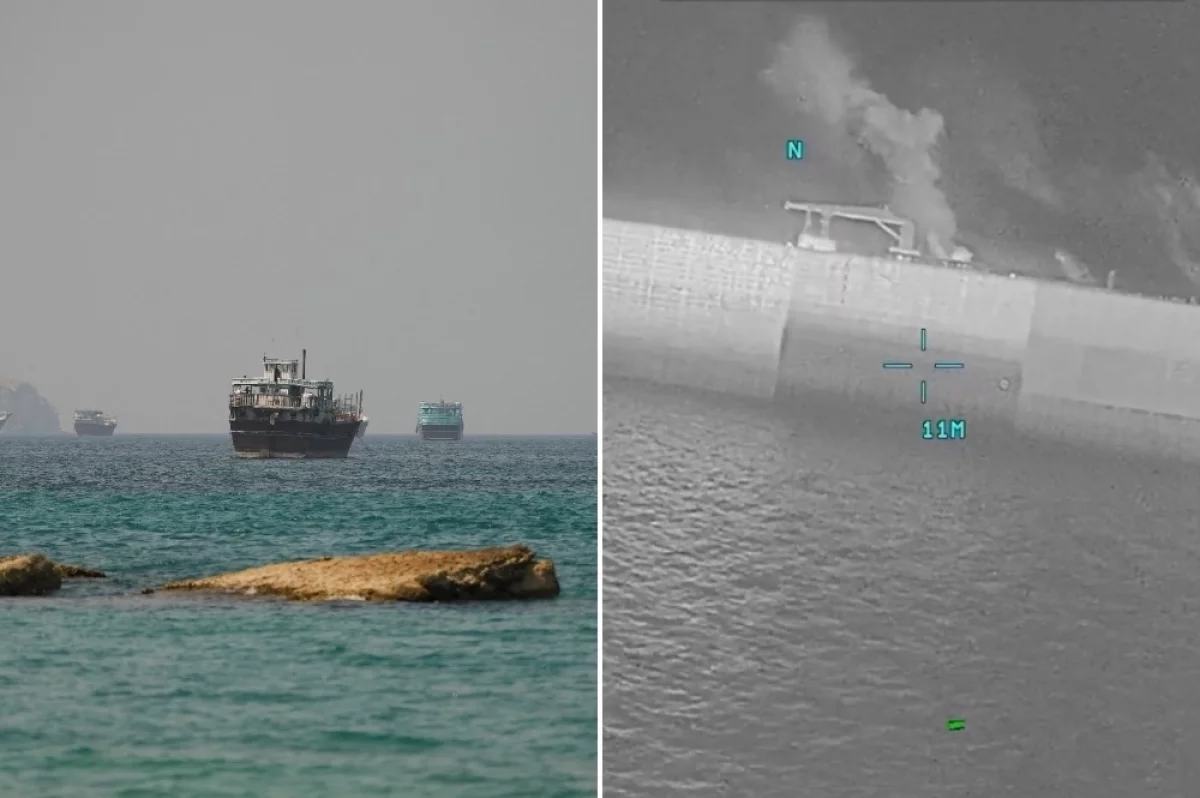

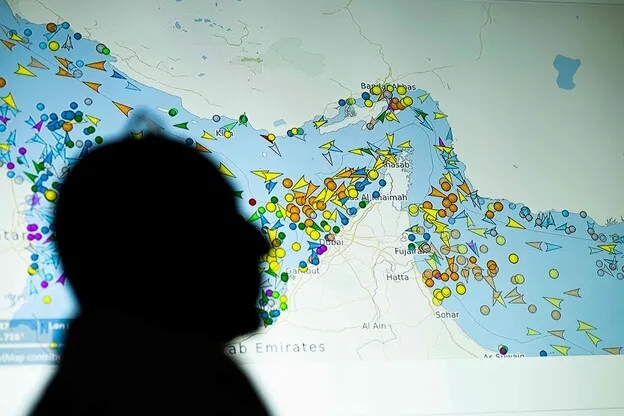


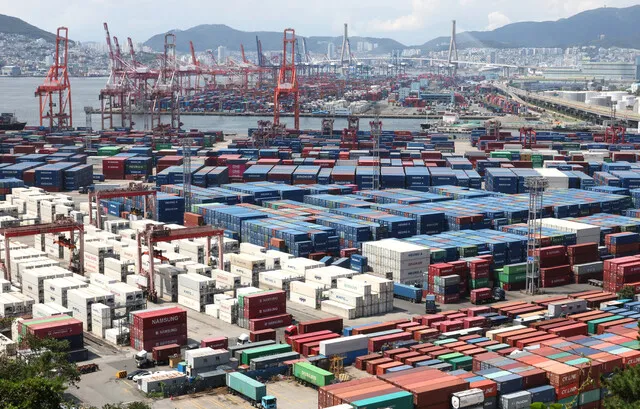


America as a Source of Risk That Cannot Be Escaped
As of September 12, 2026, discussions in Turkey, France, and South Korea portray the United States less as a distant superpower than as an immediate factor in national security, inflation, and political choice. The main shared theme is the protracted US-Iranian confrontation over the Strait of Hormuz. But local commentators see a broader picture behind it: Donald Trump’s administration is simultaneously demanding money, military involvement, and political loyalty from its allies—doing so at a moment when it is increasingly guided by domestic electoral logic ahead of the US midterm elections on November 3. (lemonde.fr)
Hormuz is where the differences between the three countries are especially visible. In France, the conflict is viewed primarily as evidence of Washington’s strategic failure in military policy: the operation launched by the United States and Israel on February 28 has led neither to a lasting settlement nor to safe shipping, but has instead turned into a chronic crisis with an energy cost for Europe. Experts at the French Institute of International Relations, in an Ifri analysis, explicitly raise the issue not of military victory but of the war’s consequences for French and European inflation, budgets, and economic policy. The French reaction therefore goes beyond moral condemnation of Tehran or Washington: Paris is concerned that the United States can launch a campaign but cannot offer a political way out of it. (ifri.org)
In Turkey, the same conflict is viewed much closer to home. Turkish authors speak of an economic “Hormuz trap”: rising oil prices are intensifying already severe inflationary pressure, widening the current-account deficit, and making the country vulnerable to disruptions in trade routes. An analysis by Deutsche Welle Türkçe cites an estimate by the Central Bank of Turkey that every additional $10 increase in the price of oil raises the current-account deficit by approximately $2.6 billion over the following twelve months. For Ankara, the American war with Iran is not an abstract struggle for freedom of navigation, but a risk of having a destabilized Iran at its borders, along with migration and border pressure—and a new surge in prices at home. (amp.dw.com)
The South Korean debate links maritime security to allied coercion even more directly. Seoul is considering options for a military contribution to protecting shipping in the Strait of Hormuz, but public and expert concern stems from the possibility that participation in the American initiative could turn South Korea from a trade-dependent party into a participant in the war. The Hankyoreh newspaper noted that the issue of a Korean military contribution was being discussed precisely as the United States and Iran exchanged a new round of strikes. Korean media also reported Tehran’s warning that Seoul’s intervention would be regarded as direct participation in the conflict. Thus, in Korea, freedom of navigation is an essential economic necessity, but sending troops is a politically toxic step. (hani.co.kr)
In all three societies, there is clear distrust of the American formula of “limited” or “managed” escalation. Turkish researcher Bilgehan Alagöz, in an Anadolu Ajansı article, describes the current phase as a controlled intensification of pressure through limited operations, sanctions, and diplomacy. But it is precisely the word “controlled” that prompts skepticism: in Paris, observers see a prolonged conflict with no diplomatic horizon; in Ankara, the possibility that a mediator will gradually be turned into a party to the conflict; and in Seoul, the risk that allied solidarity will be measured not by declarations but by a willingness to assume military dangers. (aa.com.tr)
The second common theme is the transformation of American alliances into a system of deals with a high entry price. This is especially visible in South Korea because of the dispute over the promised $200 billion in investment in the United States. An investigation by Hankyoreh claims that Washington abandoned one of the safeguards intended to reduce the risk of losses for Korean capital: instead of a consolidated approach to investment returns, the American side insisted on allocating profits and losses on a project-by-project basis. In the Korean reading, this is not simply a commercial dispute but an example of an alliance becoming an asymmetric financial obligation. The authors also raise a more uncomfortable question: is the White House seeking to demonstrate an inflow of Korean money into the United States before the November elections? (hani.co.kr)
Turkish commentators view relations with the United States through a similar, albeit military, lens. Following President Recep Tayyip Erdoğan’s meeting with US Ambassador and Special Representative Tom Barrack on September 9, Barrack declared that bilateral relations were at their best point in history. Yet journalist Murat Yetkin, in a Yetkin Report column, advises against taking the formula at face value: he recalls the continuing consequences of Turkey’s purchase of the S-400, its exclusion from the F-35 program, and problems involving US restrictions affecting the engine of Turkey’s KAAN fighter jet. The Turkish response is paradoxical: Ankara values direct access to Trump and the ability to bargain, but does not regard warm rhetoric as proof of an equal partnership. (yetkinreport.com)
In France, a similar sentiment is expressed through the language of “strategic autonomy.” French analysts increasingly describe Trump’s policy as a combination of pressure on allies, an unstable commitment to NATO, and disregard for international law. A commentary by Ifri on divisions within NATO emphasizes that Europeans are being assigned individual responsibilities while key American command positions in the alliance remain in Washington’s hands. In other words, Europe is being offered more responsibility without commensurate control. The French distinctive feature is that they do not want simply to tolerate this dependence: they are trying to turn it into an argument for independent European defense and technological capabilities. (ifri.org)
A third theme is particularly important and unites local assessments: US foreign policy is increasingly perceived as an extension of America’s domestic campaign. A French Ifri overview lists several of Trump’s fronts—Iran, Canada, Venezuela, and Ukraine—and sees not a coherent strategy but the simultaneous activation of multiple levers of pressure. Turkish analysts likewise link the escalation around Iran to Washington’s electoral calculations, while South Korean publications suspect that investment and military demands on partners are being adapted to the American political calendar. (ifri.org)
This leads to the most unexpected common conclusion of the Turkish, French, and Korean debates. In none of these countries is the United States viewed simply as an adversary that can be discarded: France needs American power in NATO, Turkey needs access to Western technology and political dialogue, and South Korea needs American deterrence against North Korea and protection for its maritime communications. But America’s image is changing. It is no longer a guarantor of order, but a powerful, necessary, and increasingly unpredictable partner capable of shifting the cost of its own crises onto its allies. That is why Paris speaks of autonomy, Ankara of active neutrality and maneuvering, and Seoul of caution about military involvement: different answers to the same problem—how to remain close to America without becoming hostage to its decisions.
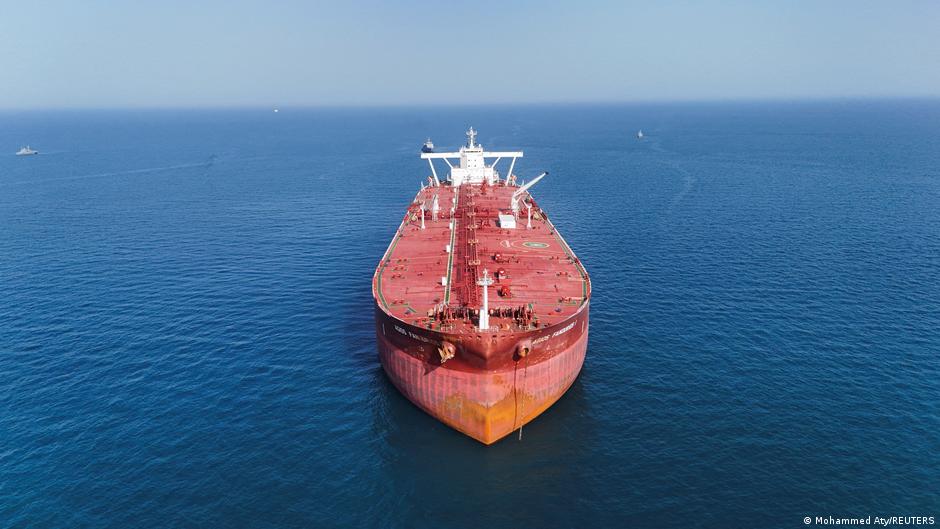

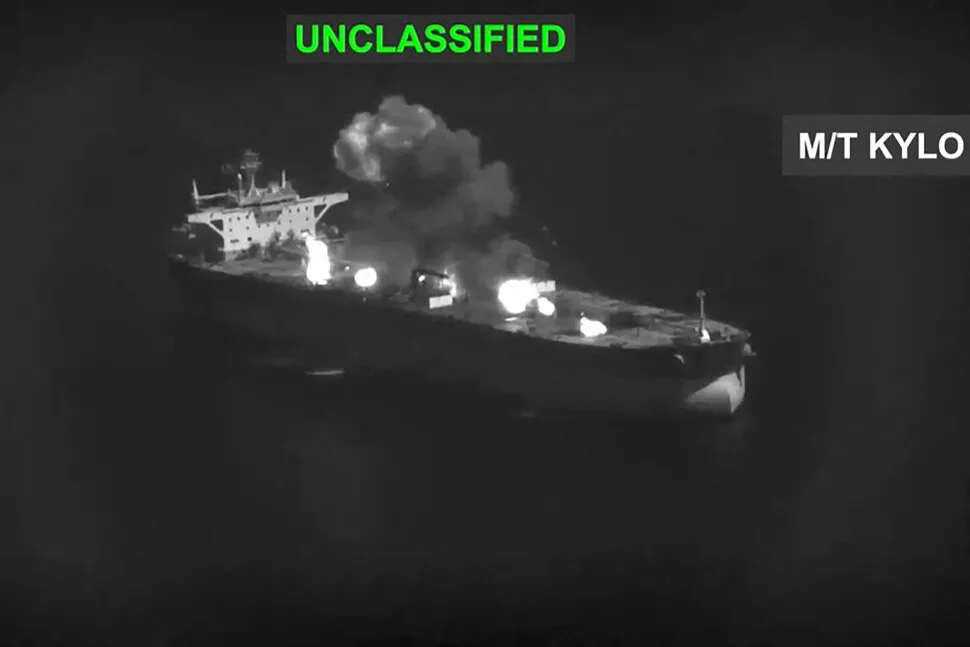
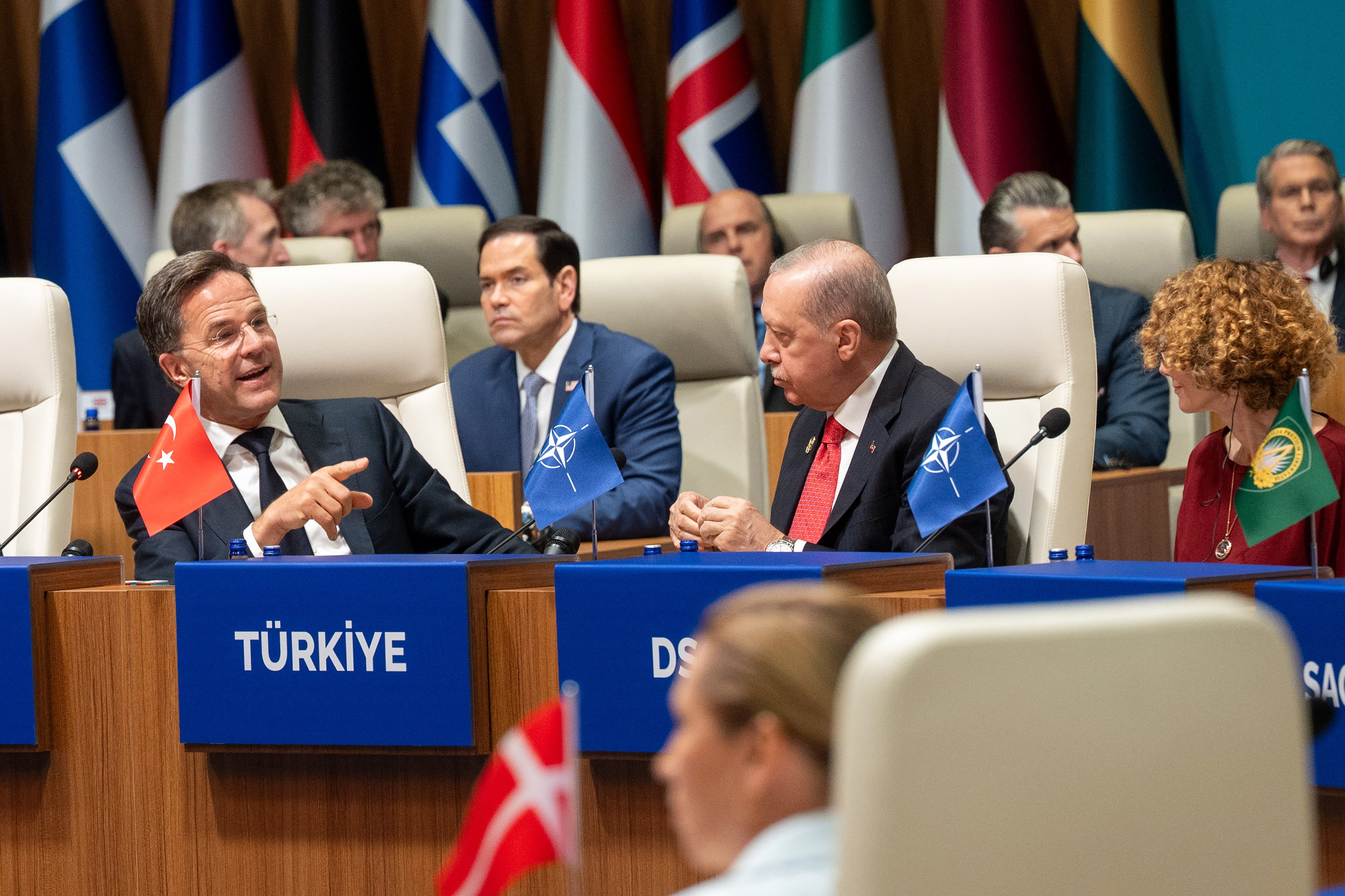
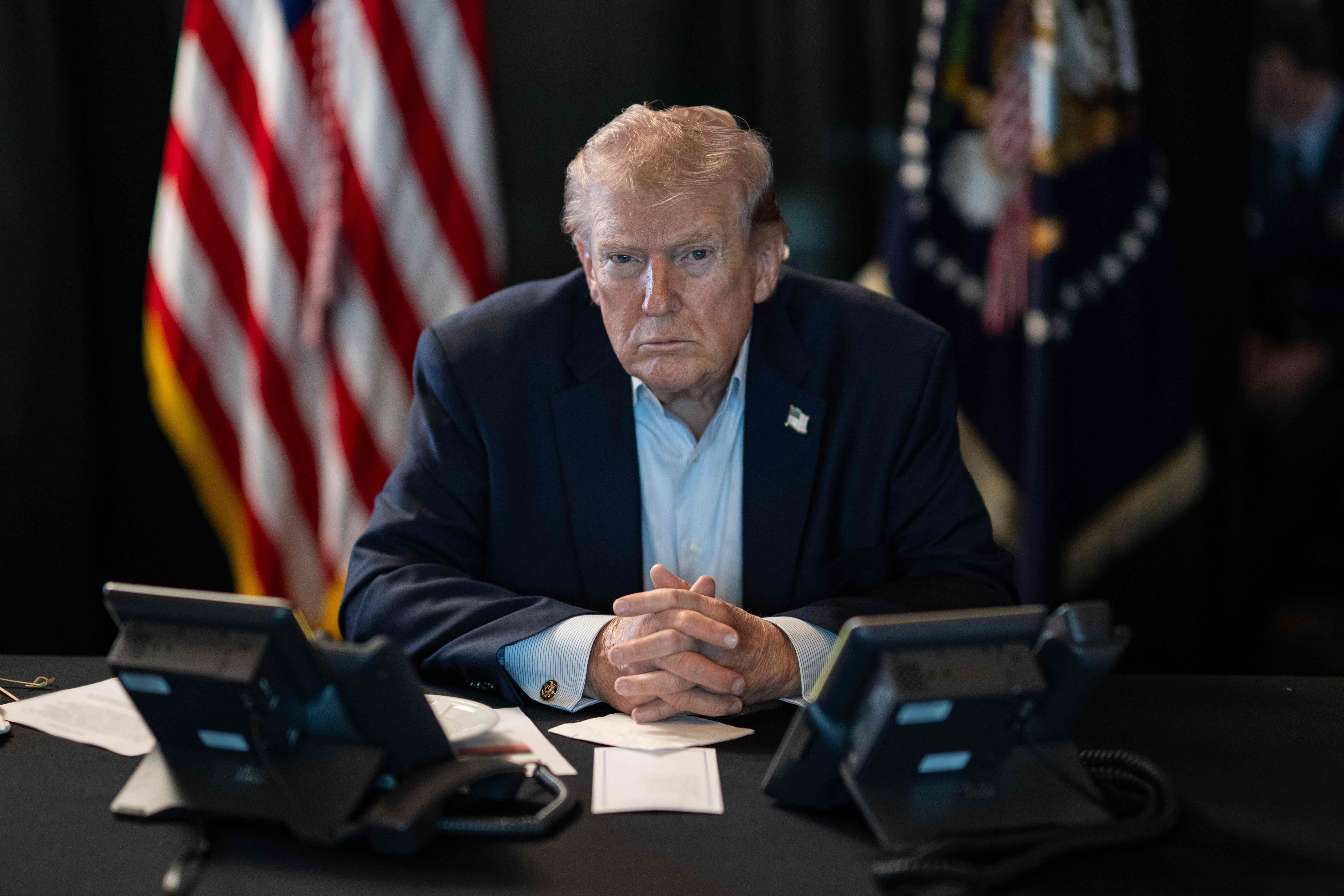
News 12-09-2026
The United States in the News: Security, Health and Fragmented Responses
In today’s roundup, the United States is presented primarily through the lens of security and public health. Turkish materials address the long-term consequences of the September 11 attacks, report a major cyclospora outbreak in the United States, and highlight Washington–Vietnam cooperation in healthcare. The other publications mention the United States only indirectly and focus on commercial, domestic political, or unrelated topics. The result is a fragmented picture without a single international response to a specific event. The review is based on materials from Brookings (South Africa) and Facebook publications (Turkey).
Al-Qaeda and 9/11: The American View of the Threat
The Brookings Institution article examines the place the September 11, 2001 terrorist attacks occupied in Al-Qaeda’s strategy and propaganda, as well as the consequences of the attacks for the United States. It is an American analytical text, not a response from South Africa: it does not present the views of South African politicians, experts, civil society organizations, or the local press.
The author regards 9/11 as Al-Qaeda’s primary symbolic capital. For the group, the anniversary of the attacks was not merely a date for statements and propaganda messages, but also a possible occasion for new large-scale operations capable of once again attracting the attention of the entire world. The organization sought to demonstrate that it was capable of harming the United States and its allies by exploiting the psychological impact of mass terrorism.
The text mentions terrorist plots thwarted in 2006 and 2009. The first involved alleged attacks on transatlantic flights, while the second targeted the New York subway. These episodes are cited as evidence that the threat did not disappear after the initial destruction of Al-Qaeda’s infrastructure in Afghanistan. In addition, according to the information presented in the article, Osama bin Laden discussed the possibility of an attack timed to coincide with the tenth anniversary of 9/11 before his death.
The American perspective is particularly evident in the assessment of the attacks’ consequences. The author links the significance of 9/11 not only to the number of deaths and the social shock, but also to its far-reaching financial and geopolitical consequences. These included direct economic damage, a sharp expansion of domestic security spending, and the lengthy U.S. wars in Afghanistan and Iraq. In this context, the attacks are viewed as an example of how a relatively inexpensive terrorist operation can provoke an extraordinarily costly response from the world’s leading power.
This is precisely the meaning conveyed by describing 9/11 as one of the most “cost-effective global turning points”: the terrorists’ expenses were incomparable with Washington’s subsequent budgetary expenditures, human losses, military campaigns, and restructuring of the international security system. For the United States, it became a vivid demonstration of an asymmetric threat in which a small network of militants could influence global politics and the economy for decades to come.
South Africa is effectively absent from the Brookings article. It does not examine risks to the country, its counterterrorism policy, or the South African government’s position on the American wars and the global campaign against terrorism. Nor does the article compare the threat posed by Al-Qaeda with South Africa’s historical experience, including the legacy of apartheid, regional conflicts, migration, social inequality, or domestic crime.
At the same time, international security issues may have indirect significance for South Africa. The country has major transport hubs, a developed financial sector, and close trade, tourism, and air links with the outside world. Disruptions to global transport routes, increased risks to civil aviation, and disruptions to international trade could also affect the South African economy. However, the text itself does not draw these conclusions, so it would be inaccurate to present it as an independent “South African response.”
Ultimately, this is an American analysis of why 9/11 remained for Al-Qaeda at once an ideological reference point, a propaganda symbol, and a model of the desired impact on its adversary. Its main subject is the vulnerability of the United States to terrorist attacks and the cost of its response, not how this threat is perceived in South Africa or on the African continent.
The European Crisis and the Rise of Right-Wing Populism Through the Eyes of a Turkish Author
A column by Turkish intellectual Süleyman Seyfi Öğün, published via the Facebook link provided, focuses not on Turkey, the PKK, or the “new London equation” mentioned in the headline, but on Europe’s political crisis. The starting point for his discussion was the German elections and the success of the Alternative for Germany (AfD) at the local level in Saxony-Anhalt.
The author urges readers not to turn a single regional result into a definitive diagnosis of Germany as a whole. In his view, the elections in Berlin will be a more revealing test for the AfD and the German political landscape. However, Öğün believes that the broader trend is already visible across Europe: traditional centrist parties are losing support while right-wing populist movements are gaining strength.
He places in this category France’s National Rally, the Dutch right, Britain’s Reform UK, Italy’s Brothers of Italy, Spain’s Vox, and the AfD. The author explains their growth not as Europe’s sudden return to historical Nazism or fascism, but as the result of a deep crisis in the political and socioeconomic model that emerged after the end of the Cold War.
Öğün warns against mechanically labeling contemporary right-wing parties as neo-Nazi or neo-fascist. In his assessment, they differ from historical fascist movements: they lack the previous level of organizational discipline, a single absolute leadership hierarchy, and a coherent ideological structure. He therefore proposes referring to them primarily as “right-wing populist parties.”
As an example, he cites Italian Prime Minister Giorgia Meloni. The author acknowledges the severity of her conservative and anti-immigration rhetoric but considers her practical policies pragmatic. In his interpretation, Meloni is not trying to destroy Italy’s state system in the way Donald Trump, in his view, is acting in the United States.
A central place in Öğün’s argument is occupied by criticism of the neoliberal era. He links the success of the right to the fact that the economic policies of recent decades primarily served elite interests, while center-left and social-democratic forces ceased to act as consistent defenders of the welfare state. Instead of resisting the dismantling of the former social model, the author argues, they “cooperated” with that process.
He is particularly harsh in his assessment of the British experience. In his interpretation, Tony Blair and Gordon Brown did not offer an alternative to Thatcherism but effectively competed with Margaret Thatcher in dismantling the social mechanisms created in postwar Europe. In the author’s view, this policy severed traditional parties’ ties with broad sections of society and created space for right-wing populism.
The Turkish perspective on the situation is reflected in skepticism toward Europe’s self-image. Europe was long portrayed as the bearer of a more humane model of capitalism—the “European Dream”—in contrast to American individualism and harsh market forces. But, Öğün argues, this image is increasingly diverging from reality. After 2010, European economies experienced severe shocks, while the previous benefits of trade and industrial cooperation with China began to disappear.
In this logic, right-wing populism is not the root cause of Europe’s instability but a symptom of the failure of the former centrist consensus. Voters disillusioned by declining living standards, rising inequality, weakened social protection, and the inability of traditional parties to offer a convincing way out of the crisis are turning to forces that promise to restore control, security, and national sovereignty.
The article also contains a politicized assessment of Europe’s relations with Russia. The author argues that left-wing, green, social-democratic, and Christian-democratic parties, confronted with economic difficulties, “found an enemy” in Russia. In his view, European elites are attempting to overcome the crisis by militarizing the economy and strengthening their alliance with the United Kingdom, but this course was chosen hastily and without sufficient consideration of the consequences.
From this perspective, it is precisely the mistakes of the forces that most frequently warn of the far-right threat that are creating conditions for the further strengthening of the AfD, National Rally, Reform UK, Brothers of Italy, and other similar parties. The rise of right-wing populism is presented as the result not of fascist nostalgia, but of the loss of trust in a political class that failed to protect Europe’s social model.
Öğün’s text is not a detailed report on the German elections: it contains almost no verifiable electoral figures, party platforms, or reactions from German politicians. It is a political commentary in which the European crisis is viewed through criticism of neoliberalism, centrist elites, and the EU’s claims to moral leadership.
Turkey is not a direct subject of discussion in the column. However, the framing itself is characteristic of Turkey’s conservative intellectual debate: Europe is presented not as a model of stable democracy and social justice, but as a region experiencing the weakening of its former model, a crisis of trust, and the rise of political forces that have emerged from this breakdown.
America as a Factor of Uncertainty: Why Kyiv, Berlin and Brasília Increasingly Talk Not of Alliance, but...
Three seemingly unrelated stories converged this week in Ukrainian, German and Brazilian discussions of the United States: Washington’s attempt to restart negotiations on the Russian-Ukrainian war, Donald Trump’s conspicuous sympathy for the success of the Alternative for Germany (AfD), and a new escalation of the trade conflict with Brazil. Yet local reactions share one idea: America remains too important a power to ignore, and at the same time too unpredictable to rely on unconditionally. In Kyiv, this means anxiety over a peace imposed for the sake of a quick result; in Berlin, irritation at an ally’s interference in a domestic political dispute; and in Brasília, the conviction that Washington has turned tariffs into a means of pressuring sovereign policy.
For Ukraine, the main American story was the September 5–6 visits by special envoy Steve Witkoff and Jared Kushner to Moscow and Kyiv. The very fact that both Trump representatives made their first trip to the Ukrainian capital was seen as a necessary signal: Kyiv had long sought to ensure that American mediators heard the Ukrainian side not only after talks in the Kremlin. However, the visit did not spark euphoria. An analysis by Ukrainska Pravda emphasizes that the envoys brought several new ideas but offered no breakthrough on the key issues—territory and security guarantees. Ukrainians interpret their desire to see results before winter in two ways: as an attempt to prevent another campaign of strikes against the energy system, but also as a risk that the U.S. political calendar may prove more important than the conditions for a genuine peace. (pravda.com.ua)
The Ukrainian criticism is particularly directed not at U.S. mediation itself, but at its style. An analysis by Yevropeiska Pravda, examining the Moscow and Kyiv stages of the trip, recalled that Witkoff’s previous contacts with the Kremlin had prompted distrust because of their secrecy and his excessive willingness to accept the Russian framework for negotiations. At the same time, Ukraine’s position is pragmatic: resuming a trilateral format involving the United States, Ukraine and Russia is considered useful as long as it does not replace Ukraine’s own agency. Political scientist Volodymyr Dubovyk put the conclusion even more bluntly in a comment to Hromadske Radio: strategically, Ukraine and Europe should invest in their own military and financial capabilities. This is not a rejection of America, but a conclusion prompted by its volatility. (eurointegration.com.ua)
In Germany, the anxiety stems from a different source but follows a similar logic. After the AfD’s victory in the state elections in Saxony-Anhalt, Trump publicly welcomed the success of the “populist party” on September 9, linked it to migration policy and ended his post with the slogan “MGGA”—an obvious variation on “Make Germany Great Again.” To Germany’s political community, this sounded not merely like an eccentric post by a foreign president, but like an attempt to import America’s culture war into the German electoral process. A T-Online commentary expressed the core of the debate with particular clarity: Germany should defend its democratic self-determination regardless of whether outside influence comes from Russia or the United States. (t-online.de)
This marks a notable shift in Germany’s view of transatlantic relations. Washington is no longer automatically perceived as an external guarantor of the liberal order; some German commentators now see today’s America as a participant in Europe’s polarization. Even Berlin’s official reaction was cautious: the issue of Trump’s remarks was raised directly at a government briefing, but the cabinet did not escalate the matter into a public confrontation. This restraint reflects Germany’s dilemma: it needs cooperation with the United States on security, but at the same time cannot allow a foreign leader to legitimize forces that German institutions regard as a threat to the constitutional order. (bundesregierung.de)
Brazil’s reaction to America is even more sharply framed in the language of sovereignty. The discussion there concerns additional 25 percent tariffs on a significant share of imports from Brazil, imposed after a Section 301 investigation. In Brasília, the conflict is interpreted not as an ordinary dispute over market access, but as political and diplomatic coercion. An article by the Observatório de Política Externa e da Inserção Internacional do Brasil draws a telling conclusion: the tariff functions as a diplomatic sanction disguised in technical trade terminology. The authors link the current dispute to a broader American attempt to use economic leverage to influence Brazil’s domestic institutions and foreign-policy choices. (opeb.org)
The verbal exchange intensified this perception. Marco Rubio said that Lula’s government had negotiated “not in good faith,” while Brazil’s Foreign Minister Mauro Vieira called the tariffs irrational and out of touch with reality, pointing to the longstanding U.S. trade surplus with Brazil. In a Le Monde Diplomatique Brasil column, this exchange is presented as a clash between two models of inter-American relations: Washington views the region through the lens of political loyalty and strategic alignment, while Brasília emphasizes equality, a multilateral approach and the right not to choose sides. Even the more moderate Brazilian editorial line is calling not for a break in negotiations, but for market diversification: Jornal do Comércio describes the tariff crisis as a lesson about the risks of excessive dependence on a single partner. (diplomatique.org.br)
This is where the common thread linking Kyiv, Berlin and Brasília becomes visible. Ukraine wants American power, but not American haste; Germany needs American partnership, but rejects American involvement in its partisan struggles; Brazil is prepared to trade with the United States, but will not accept political conditions as the price of access to its market. Everywhere, the United States is increasingly perceived not merely as a country making decisions at home, but as a power capable of reshaping other countries’ negotiations, elections and economic calculations. The local response is also becoming similar: not a break with America, but a search for greater autonomy—military in Ukraine, democratic in Germany, and trade and geopolitical in Brazil.


News 11-09-2026
America’s Endless Wars: How Japan, Russia and India Read the New Uncertainty
By September 11, 2026, the United States had become, for Japanese, Russian and Indian observers, not merely an external power but the main source of strategic uncertainty. Attention to several American storylines at once—the protracted war with Iran, the White House’s new attempt to move Ukraine negotiations forward, and trade pressure on India—has united local debates around one question: can Washington still impose rules on the world if it increasingly changes its goals, timelines and instruments itself? (kommersant.ru)
The most painful issue for Japan has been the American military campaign against Iran and its consequences for the Strait of Hormuz. In Tokyo, this is seen not as a distant Middle Eastern crisis but as a direct blow to the cost of living, energy security and the United States’ ability to deter China in the Pacific. Nobuhide Kiuchi, an economist at the Nomura Research Institute, calculated in his analysis that keeping oil prices near $90 per barrel could add 0.30 percentage points to Japanese inflation and increase the annual burden on households by approximately ¥13,000. From the Japanese perspective, this is particularly alarming: the country depends on seaborne fuel imports, meaning that the US confrontation with Iran literally turns into Japanese bills for gasoline, electricity and food. (nri.com)
Yet Japan’s deeper concern is linked to the geography of American resources. In an article by Nippon.com, the war is described as a source of “distrust in the United States” that Washington is spreading itself: an operation initially promised to be brief has become a six-month confrontation, while American aircraft carriers and air-defense assets remain tied down in the Middle East for longer and longer. Japanese authors see a risk here for Taiwan and the East China Sea: if the United States is expending ammunition and political attention in the Strait of Hormuz, its Indo-Pacific deterrence becomes less convincing. This is a distinctly Japanese perspective: the issue is not only whether the United States is right in its conflict with Iran, but whether it is weakening its own alliance with Japan by trying to manage too many crises at once. (nippon.com)
In Russia, the same war is interpreted differently—as proof that American power remains destructive but is no longer strategically coherent. In a column for Kommersant, Middle East expert Farhad Ibragimov draws attention to Donald Trump’s contradictory rhetoric: the president sometimes promises that the confrontation will end soon, then says he is in no hurry to negotiate. For Russia’s expert community, this inconsistency is not merely a communication error but a symptom of a Washington policy in which loud promises increasingly diverge from military and diplomatic reality. Against this backdrop, reports that the United States has destroyed Iranian tankers and that further escalation is possible are viewed in Moscow primarily through the oil market: prolonged disruptions in the Strait of Hormuz could keep oil prices high and thereby indirectly improve Russia’s foreign economic position. (kommersant.ru)
India views Hormuz even more pragmatically. For New Delhi, the American campaign is simultaneously a risk to energy supplies, shipping and Indian citizens in the region. India’s reaction therefore does not boil down to moral support for either side: its main instinct is to avoid being drawn into bloc politics and preserve room for diplomacy. India applies the same approach to Ukraine. Speaking in Warsaw, Foreign Minister Subrahmanyam Jaishankar stressed that ending the war depended not on decisions concerning purchases of oil, metals or fertilizers but on negotiations; his words were widely quoted by Amar Ujala. Behind this formula lies a direct dispute with American pressure on countries that continue trading with Russia: New Delhi refuses to accept that economic ties with Moscow make India complicit in the war. (amarujala.com)
US diplomacy over Ukraine has become the second theme shared by all three countries. Following visits by Steve Witkoff and Jared Kushner to Moscow and Kyiv on September 5–6, and Vladimir Putin’s subsequent conversation with Trump, Russian commentators began discussing the return of a direct US-Russian channel. In an article by Vedomosti, Pavel Koshkin of the ISKRAN Institute sees “the political will for dialogue” in these developments, but adds a qualification: a willingness to talk does not yet mean a willingness to make concessions. Another expert, Vladimir Pavlov of MGIMO University, links Washington’s renewed activity both to the Iranian campaign and to the approaching US midterm elections. The Russian interpretation is therefore ambivalent: contacts with Trump are welcomed as recognition that Moscow’s interests must be taken into account, but the White House itself is viewed as a partner seeking a rapid, demonstrative result. (vedomosti.ru)
Fyodor Lukyanov, chairman of the Presidium of the Council on Foreign and Defense Policy and editor-in-chief of Russia in Global Affairs, formulates the problem more starkly. In a comment for the Russian International Affairs Council, he acknowledges that the Trump administration is the only Western actor simultaneously trying to change the situation and possessing substantial leverage over it. But this praise itself contains Russian skepticism: the peace process is stalled not because mediators are lacking, but because the parties’ goals are incompatible—and because of the question of how far the United States is prepared to pressure Kyiv and Europe. (russiancouncil.ru)
In Japan, American mediation provokes an almost opposite concern: could Washington too easily turn a Ukrainian territorial concession into the price of its own diplomatic success? Kenro Nagoshi, a professor at Takushoku University, warns in an analysis for President Online that formulas such as a ceasefire, a “buffer zone” or international administration could effectively create conditions for the entire Donbas to come under Russian control. For Japanese audiences, this is not an abstract European issue. Japan itself has a territorial dispute with Russia, and so a compromise cementing a change of borders by force looks like a dangerous precedent for East Asia. (president.jp)
The Indian interpretation is particularly interesting because of its attempt to position India not as a US ally or Russia’s advocate, but as a potential mediator. India’s Foreign Ministry reiterates that a solution “will not come from the battlefield,” while New Delhi maintains constant contact with both Moscow and Kyiv; Amar Ujala reported this position. Against the backdrop of Witkoff and Kushner’s missions, India is effectively offering a different language: not a deal dictated by a single great power, but sustained diplomacy in which Global South countries have their own voice. (amarujala.com)
The third line—trade—shows how quickly the US-India strategic partnership is turning into a bargaining process over sovereignty. Indian Trade Minister Piyush Goyal said that the final parameters of the bilateral agreement would not be announced until Indian goods received a more favorable tariff regime in the United States than competing products; Aaj Tak reported. Indian analysts increasingly describe American tariffs not as a technical trade measure but as an instrument of geopolitical coercion. In an editorial analysis by AFEIAS, the additional 10 percent US tariff is explained less as an effort to combat forced labor than as an attempt to accelerate a trade deal favorable to Washington. (aajtak.in)
On this point, Japan’s experience serves as an important contrast for India. Tokyo has already secured confirmation that the new American measures should not exceed the agreed tariff level for Japan, but the price of such predictability is a far-reaching economic tie to the United States, including major investment commitments. Indians are watching this without much desire to repeat the model: access to the US market is valuable, but it should not be bought by abandoning their own trade, energy or Russia policy. (oanda.jp)
Thus, an unexpected common portrait of America is emerging in all three countries. Russia sees a power with which it must bargain directly and whose desire for a quick deal can be exploited. Japan sees an indispensable ally whose preoccupation with the Middle East may weaken security in Asia. India sees a necessary market, a technology partner and a source of pressure that must not be allowed to determine its foreign-policy choices. The differences between these reactions matter: none of the three countries considers the United States insignificant. But fewer and fewer people in Tokyo, Moscow and New Delhi are convinced that America can consistently wield the power it still possesses.
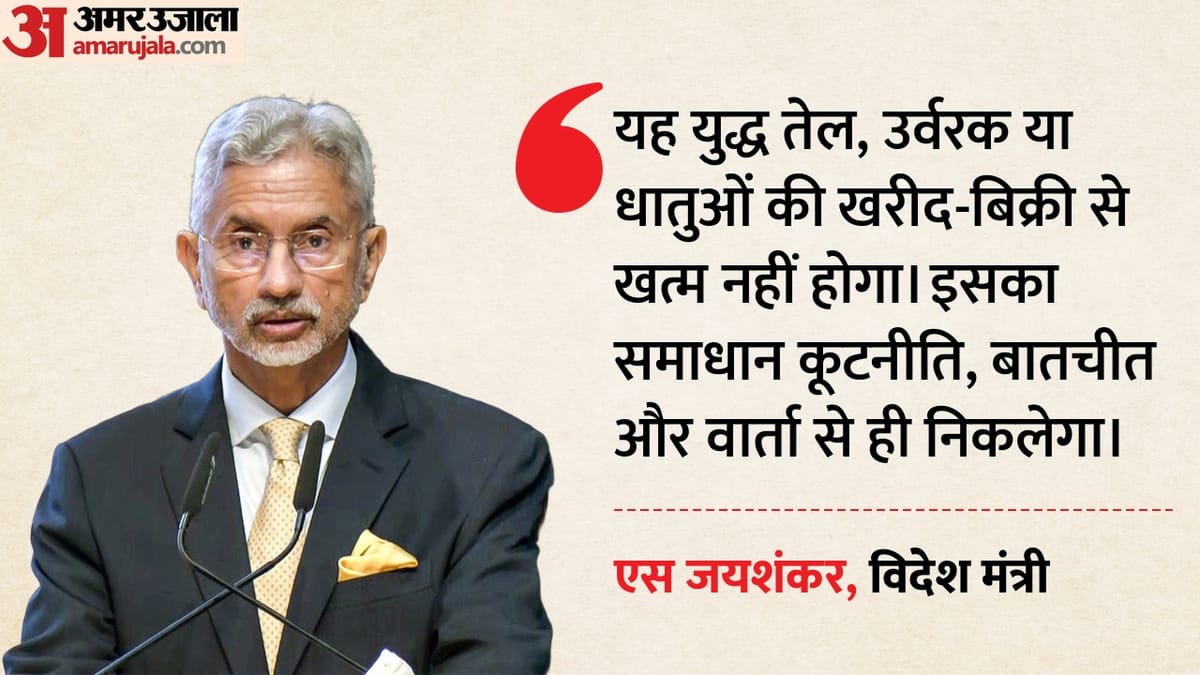
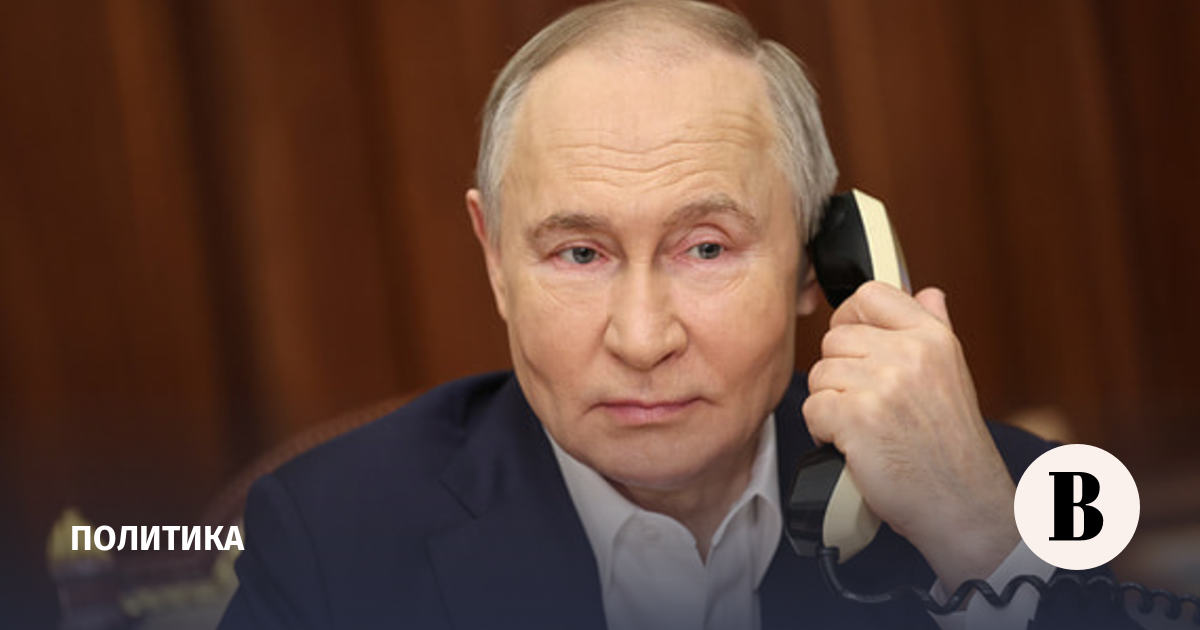
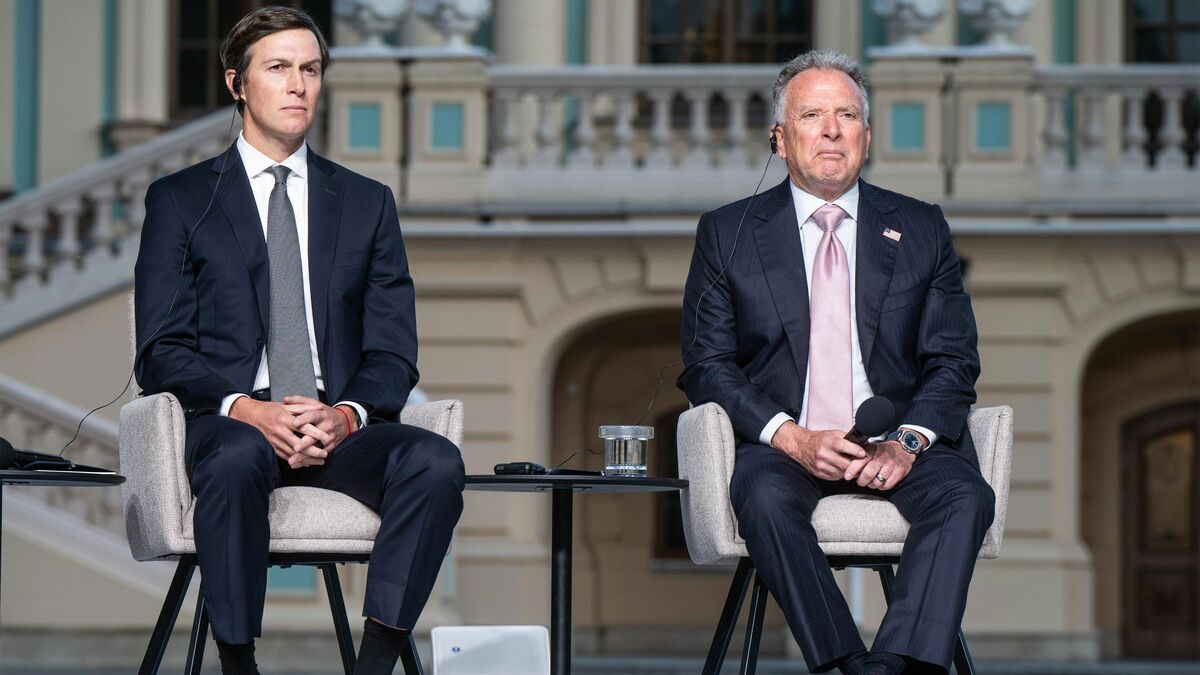
![[Washington Kyodo] On the 4th, Minister of Economy, Trade and Industry Ryosei Akazawa met with US Trade Representative Jamieson Greer in Washington, where he was visiting. According to Akazawa, the two sides agreed to comply with the US-Japan agreement of July last year and not impose additional tariffs on Japan beyond the terms of the agreement. […]](https://storage.googleapis.com/oanda-prod-asne1-oj-jp-wordpress/2026/08/eyecatch_kyodo_q90.jpg)
America as a Source of Risk: Why Berlin, Paris and Seoul Trust Predictability Less and Less
In Germany, France and South Korea, discussion of the United States in early September 2026 no longer centers on the familiar question of “how strong is the American ally?” The main question sounds different: how can countries protect themselves from the consequences of Washington’s decisions while remaining its allies? Three issues stand out in local debates: the protracted US war with Iran and pressure on partners, the trade policy of Donald Trump’s administration, and domestic American instability ahead of the November 3 midterm elections. They share one underlying perception: the United States still possesses enormous capabilities, but is becoming increasingly unable to turn them into a stable and comprehensible strategy.
The war with Iran has become the sharpest symbol of this anxiety. German commentators view it above all as evidence of America’s strategic exhaustion. In a Tagesschau commentary, the war is described as a process in which Trump has “squandered American power”: the issue is not simply a military campaign without a clear endpoint, but the erosion of the US ability to persuade allies, deter adversaries and set the rules. RND columnist Can Merey puts it even more bluntly in his analysis: Washington still has levers of pressure, but no political plan linking military strikes to an achievable outcome. What is notable about the German criticism is not pacifism as such, but fear of American improvisation: Europe remains dependent on US military infrastructure, yet cannot be certain that the White House is capable of calculating the cost of its next escalation. (tagesschau.de)
The French reaction to the same problem is framed in the language of “strategic autonomy,” but that term has now become far less abstract. French public opinion still does not favor breaking with NATO or the United States; on the contrary, it is calling for protection through functioning alliances. Yet trust in the US as the guarantor of that protection has sharply weakened. Hamza Khraoui and Jean-Daniel Lévy note in a Project Syndicate France column that security has become the French public’s top foreign-policy priority, while trust in America has “collapsed.” Their conclusion is important: the French are not choosing isolation; they want Europe, NATO and international law to be judged not by lofty principles, but by their ability to provide real security. This is the French response to the US war with Iran: not anti-Americanism, but a demand that Paris and the EU possess enough political weight of their own not to remain bystanders during American crises. (project-syndicate.fr)
In South Korea, the Iranian issue is perceived even more directly—through the dilemma of potentially sending forces or providing other military assistance to the Strait of Hormuz. In an E-Daily analysis, the local debate is described as being trapped between two threats: the United States points out that Korea depends on Middle Eastern oil and expects a contribution from its ally; Iran, meanwhile, warns that it could regard even noncombat participation by Seoul as direct entry into the war. For Germany and France, the Iranian campaign is primarily a test of Europe’s ability to act independently. For Seoul, it is a question with a harsher practical arithmetic: participation could strengthen relations with the United States, but jeopardize energy security, shipping and South Korea’s own regional diplomacy. (edaily.co.kr)
It is especially telling that South Korean analysts link Trump’s foreign policy to his domestic position. Im Sung-nam, a former first vice minister of foreign affairs of South Korea, warns in an E-Daily interview that the president’s electoral difficulties could push him to pursue an even more active foreign-policy “breakthrough”—from Iran to negotiations involving North Korea and Ukraine. This is a view rarely voiced so openly in American debates: Seoul fears not only US power, but also the possibility that Korean security could become raw material for American electoral tactics. When Trump says the war with Iran will end after the November elections, South Korean television channels discuss this not as a diplomatic forecast, but as a possible sign that the military timetable is being tailored to political needs. (ytn.co.kr)
The second common theme is the transformation of US trade policy into a permanent source of uncertainty. In Germany, this is measured not only by the export sector’s irritation, but also by canceled investments. A study by the ifo Institute, based on a survey of around 1,800 industrial companies, shows that 62% of firms see a negative effect from US policy, rising to more than 70% in mechanical engineering and automotive manufacturing; nearly 40% of companies have canceled, postponed or reconsidered projects because of it. The German conclusion is pragmatic: Trump’s tariffs are dangerous not only because of their direct costs, but also because they make long-term planning impossible. (ifo.de)
France views the same tariffs through the lens of a European compromise. An official briefing from the French Treasury records a base rate of 15% for most European goods imported into the United States, with exceptions for certain sectors. Paris is formally betting on keeping the agreement manageable, but the political mood is far darker: American protectionism is seen as proof that economic interdependence no longer automatically protects allies. From the French perspective, this is not a temporary dispute between the two sides of the Atlantic, but a new normal in which Europe must have tools of its own—a deliberate industrial policy, a unified capital market and a readiness to use trade countermeasures. (tresor.economie.gouv.fr)
For South Korea, the tariff problem is connected to a broader fear of dependence on American rules in technology, investment and supply chains. Seoul is linked to the United States by a security alliance, while simultaneously competing for access to the US market in automobiles, batteries, semiconductors and shipbuilding. As a result, South Korean debate is less inclined toward loud calls for autonomy than the French debate, and less focused on old transatlantic disappointment than the German one. Its tone is adaptive: strengthen the alliance, but create alternative supply routes, legal guarantees for investors, and political ties not only with the White House, but also with Congress, the states and American business.
This is where the third common theme emerges: the United States is becoming harder to predict not because the world has stopped understanding one particular president, but because more and more external actors view this unpredictability as structural. The German weekly Die Zeit describes Berlin’s painful dependence: Germany still relies on the United States for both defense and technology, even though Trump personally “cannot be relied upon.” A Forsa poll for the magazine Internationale Politik found that 67% of Germans believe the impact of US policy on Germany is greater than it was several years ago. This is the paradox of modern Europe: the desire to depend less on the United States is growing at the same time as awareness of how difficult it would be to reduce that dependence quickly. (zeit.de)
The overall conclusion from Berlin, Paris and Seoul is not that America is “withdrawing” or losing its status as a key power. Rather, allies are ceasing to regard American leadership as a free public good. Germany sees the risk of strategic dependence; France sees the need to turn autonomy into practice; and South Korea sees the danger of being drawn into other people’s crises under the banner of allied solidarity. The most unexpected common feature of these reactions is the absence of any illusion that a change in the balance of power after the midterm elections will automatically restore the old normal. The outside world is increasingly preparing not for an “America after Trump,” but for an era in which any United States will be both an indispensable partner and a source of political, military and economic risk.
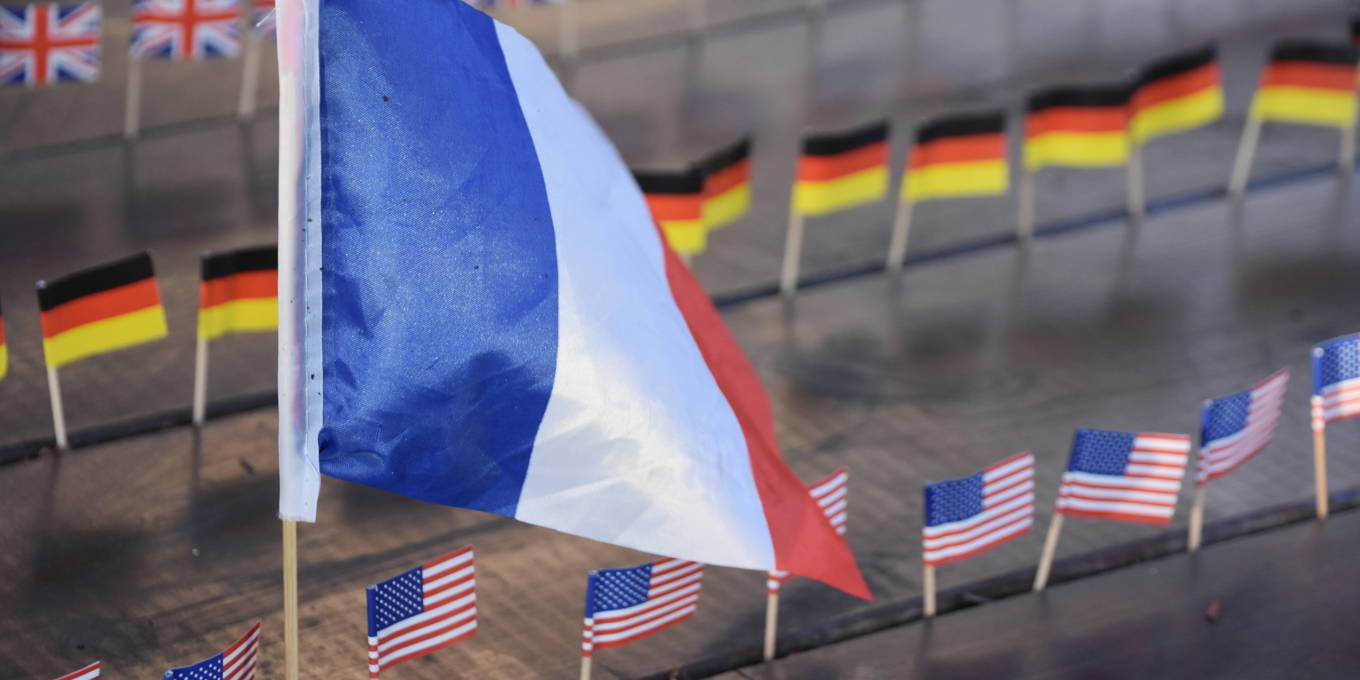
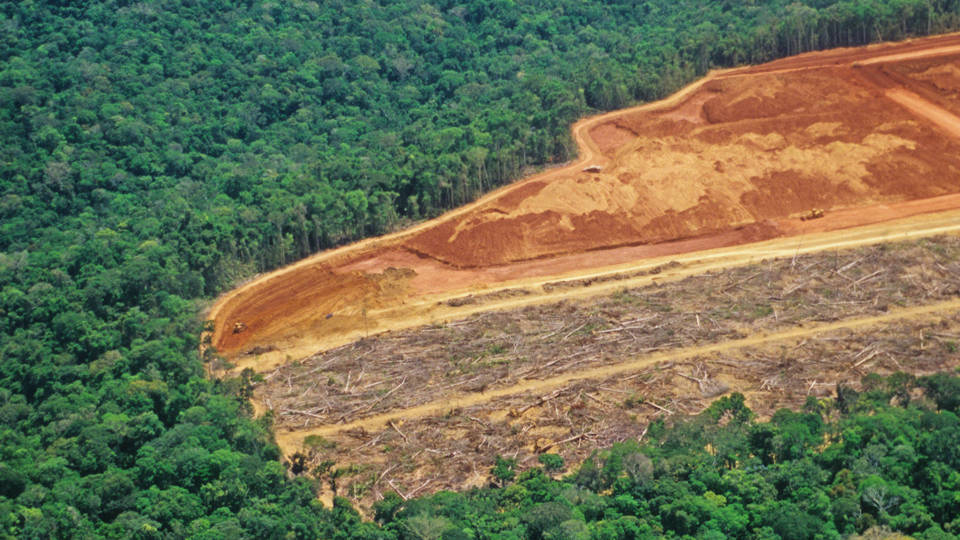

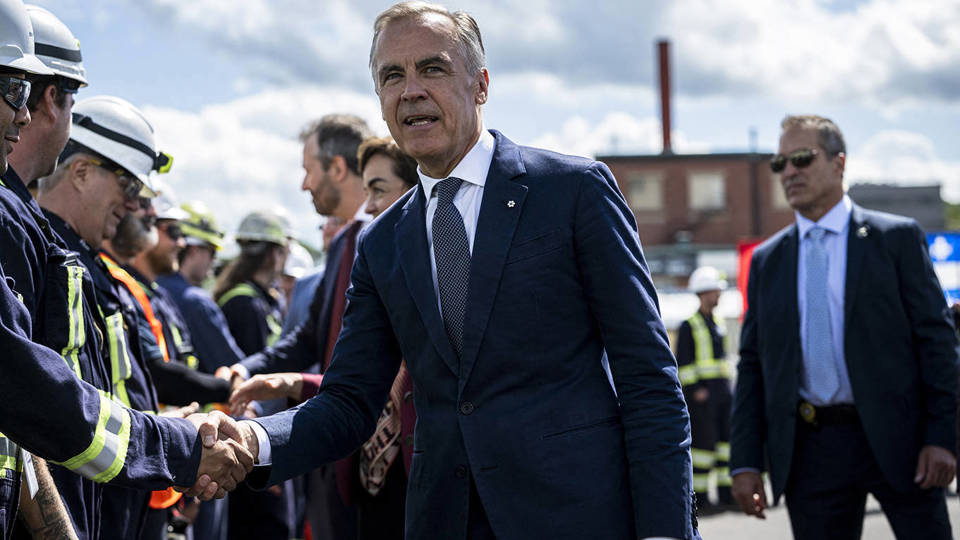

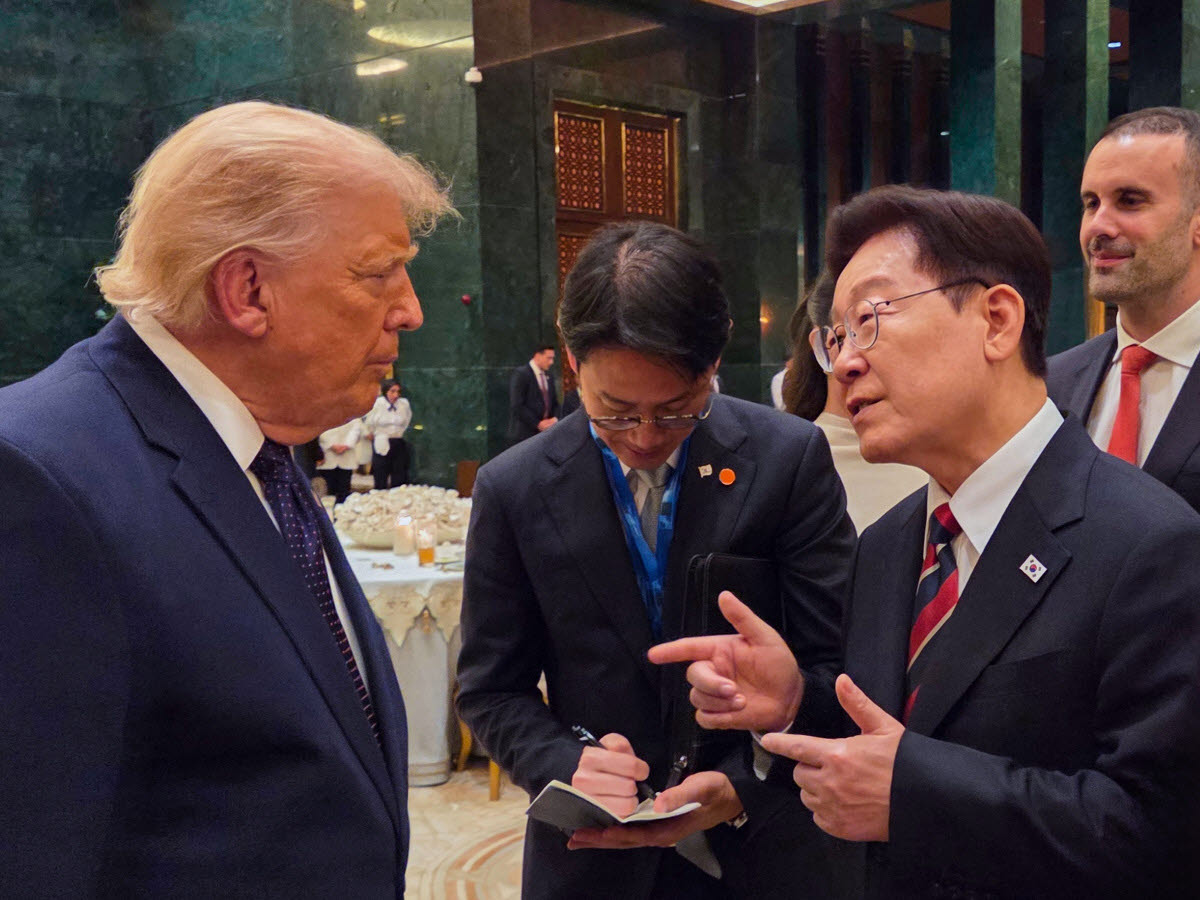
News 10-09-2026
America as a Source of Uncertainty: China, Brazil and Ukraine Respond Differently...
In discussions in China, Brazil and Ukraine over the past few days, the United States has emerged not merely as a great power, but as a generator of changes to which others must urgently adapt. The issues differ: in Beijing, US tariffs and restrictions in artificial intelligence are especially prominent; in Brazil, a new phase of the tariff conflict over exports and the Pix instant-payment system; and in Ukraine, the Donald Trump administration’s attempt to revive negotiations with Moscow. But the underlying concern is the same: local commentators increasingly see Washington as a partner whose rules, promises and tools of pressure may change faster than negotiations can be completed.
The broadest common theme is the transformation of US trade policy into an instrument of political coercion. Chinese authors describe this as the White House’s almost continuous search for new legal grounds to pursue its longstanding goal: maintaining high barriers even when existing mechanisms run up against judicial or political constraints. In an analysis by Xinhua, this logic is expressed in exceptionally stark terms: the rules and legal provisions change, but the “unilateral” nature of the policy does not. Beijing sees this not as an ordinary dispute over the trade balance, but as Washington’s attempt to establish the right to determine unilaterally who may participate in global trade and on what terms. New US measures against Canada, announced on September 8, have only reinforced this picture: bans on some Canadian imports and 50 percent tariffs on additional categories of goods are viewed in the Chinese press as proof that even America’s closest allies are coming under attack. (news.cn)
Brazil’s reaction is much more practical, but it reflects the same concern about sovereignty. After the United States imposed additional tariffs of 25 percent on some Brazilian imports, negotiations resumed. However, US complaints concerned not only goods but also Brazil’s domestic institutions—including Pix, the national instant-payment system—and access to the ethanol market. In an Agência Brasil report, the dispute is described as a conflict in which a US trade procedure is being used to assess Brazil’s domestic policies. (agenciabrasil.ebc.com.br) This is particularly sensitive for Brasília: Pix is not merely a fintech service, but a symbol of the state’s ability to build its own digital infrastructure without relying on US payment giants. As a result, the local debate is not limited to how much exporters may lose; it raises the question of whether the country can pursue an independent industrial and digital policy without risking tariff penalties.
At the same time, Brazilian analysts are not advocating a romantic break with the United States. Their conclusion is rather that vulnerability must be reduced. CNN Brasil economic commentator Débora Oliveira notes in an analysis marking the anniversary of the first “tarifaço” that over the past year Brazil has become less dependent on the US market. (cnnbrasil.com.br) This point matters more than the statistics: in Brazil’s reading, US pressure not only creates losses but also accelerates the search for other markets, agreements and supply chains. Gustavo Pessoa, an economist at the Getulio Vargas Foundation, notes in a comment for TMC that the tariff is formally paid by the US importer, although the indirect damage also affects Brazilian producers. His forecast is sober: the tariffs are likely to remain, and Brazil will have to continue technical negotiations with Washington. (tmc.com.br) In other words, Brazil’s strategy is neither capitulation nor a trade war for the sake of making a gesture, but diversification while keeping the negotiating channel open.
In the Chinese view, the same pattern extends to technology. US statements alleging that Chinese companies are copying American AI models on an “industrial scale” prompted an official protest from Beijing. A representative of China’s Ministry of Commerce called the allegations unfounded and saw them as evidence of the United States’ desire to monopolize computing power. Chinese experts in Global Times describe this approach as the politicization and “weaponization” of technological rules. (globaltimes.cn) The specifically Chinese aspect here is that tariffs and technology bans are viewed as parts of a single system: one restricts access to markets, while the other restricts access to knowledge, chips and AI infrastructure. In this narrative, Washington is no longer protecting individual industries but attempting to address a strategic task—to slow the emergence of a competitor capable of acting autonomously in critical technologies.
Ukraine’s perspective on the United States is entirely different in terms of what is at stake, but similar in its attitude toward the unpredictability of US policy. Following Steve Witkoff and Jared Kushner’s visit to Kyiv on September 6, and then Trump’s telephone conversation with Vladimir Putin on September 8, Ukrainian media have focused less on the diplomatic activity itself than on its substance and guarantees. European Pravda writes that Kyiv sees value in returning to a trilateral US–Ukraine–Russia format, but harbors no illusions about the war ending soon. (eurointegration.com.ua) The main Ukrainian point can be expressed almost as a formula: negotiations make sense only when they strengthen, rather than replace, defense. That is why discussions of a possible ceasefire are constantly accompanied by questions about air-defense supplies, Patriot systems, security guarantees and support ahead of winter.
Ukraine’s wariness of the very idea of a “breakthrough” is especially characteristic. In a comment for NV, Ihor Chalenko, head of the Center for Analysis and Strategy, asks not whether a new American plan can bring peace closer in general, but whether it can bring peace closer on terms acceptable to Ukraine. (podcasts.nv.ua) This is a fundamental distinction. For the US administration, an interim diplomatic success may have value in its own right; for Kyiv, an end to the fighting without effective guarantees and without pressure on Moscow could prove merely a pause beneficial to Russia. Ukrainian authors therefore interpret Trump’s contacts with Putin not as an automatically positive signal, but as a test: is Washington prepared to combine its desire for a quick agreement with real pressure on Russia and the strengthening of Ukraine’s position?
The most unexpected common conclusion from these three national debates is that criticism of the United States does not necessarily amount to anti-Americanism. China uses US tariffs and technology measures to argue for technological self-reliance; Brazil uses them to defend economic and digital sovereignty; and Ukraine uses them to demand that US diplomacy remain grounded in the military and political reality of the war. All three reactions converge on one point: the era when an American initiative was considered, in itself, a sufficient guarantee of an outcome is over. Now, in Beijing, Brasília and Kyiv, people assess not Washington’s intentions but the cost of its decisions, the durability of its commitments and what tools other countries retain if the US course changes again.


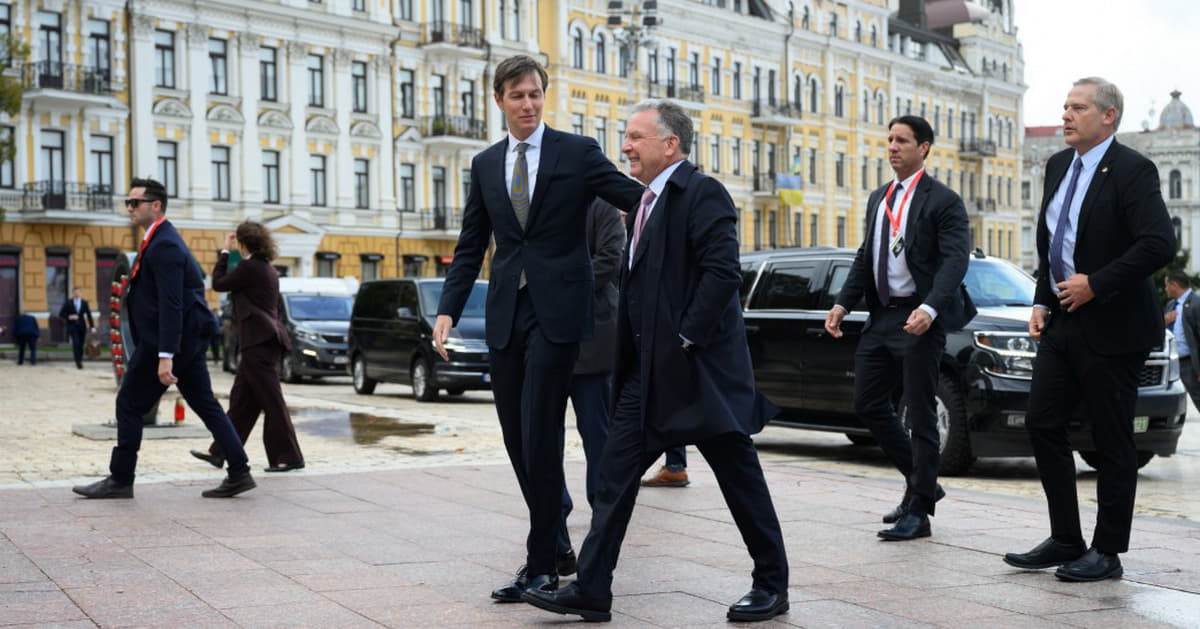
America as Risk and Resource: What Riyadh, Kyiv and Pretoria Say About Washington
In the first days of September 2026, the United States simultaneously found itself at the center of three very different but interconnected conversations—about war, security and the cost of dependence on the world’s largest economy. In Saudi Arabia, the American line in the conflict with Iran is viewed primarily through the threat to the Persian Gulf, shipping and the oil market. In Ukraine, the main focus is on the new American mediation efforts and on whether Donald Trump’s desire for a rapid diplomatic result could turn into pressure on Kyiv. In South Africa, the United States is discussed neither as a military ally nor as a mediator, but as a market capable of wiping out years of industrial policy with a single tariff decision. The common thread running through these reactions is simple: Washington remains an indispensable player, but its partners are increasingly unwilling to accept American decisions as a given.
The most alarming issue in Riyadh is not the abstract rivalry between the United States and Iran, but the danger that an American-Iranian escalation will exact a regional price paid by Iran’s neighbors. In a column published on September 6 in Al Jazirah, Saudi author Subhi Shabana defines the kingdom’s position with precision: Saudi Arabia is not a party to the war, but is “at the very center of its consequences.” This refers to the security of the Strait of Hormuz, energy exports, shipping insurance risks and the possibility that the conflict will spread to new fronts. The author insists that a state’s strength is measured not by the number of weapons at its disposal, but by its ability to prevent war from spreading. This is an important local qualification to American deterrence rhetoric: in the Saudi reading, effective security means not maximum pressure on Tehran, but preserving room for negotiations and preventing an uncontrolled regional chain reaction. (al-jazirah.com)
This view does not mean a break with the United States. On the contrary, the Saudi debate proceeds from the premise that the military and political partnership with Washington is necessary, but must not deprive Riyadh of its freedom of maneuver. When Secretary of State Marco Rubio said on September 8 that the United States was closely monitoring rising tensions between Saudi Arabia and the Houthis, he emphasized the two countries’ “strong defense military relationship.” However, the local logic demands more from this relationship than a promise of protection: it requires American policy that does not increase the kingdom’s own vulnerability. CNN Arabic reports that Washington describes the Houthis as an Iranian tool; in Riyadh, however, the overriding question is how to prevent the conflict in Yemen and around Iran from once again drawing the kingdom into direct confrontation. (arabic.cnn.com)
Ukraine’s reaction to America is emotionally closer to that of an ally, but no less wary. Following special envoys Steve Witkoff and Jared Kushner’s visits to Moscow on September 5 and Kyiv on September 6, the Ukrainian agenda focused not on the fact of the contacts themselves, but on who determines their substance. Volodymyr Zelensky thanked the American representatives for restarting the negotiating process, while simultaneously stating the key condition: without a strong Ukrainian position on the battlefield, there will be not negotiations but ultimatums. He also said that the country was counting on a winter package including air defense, energy assistance and American liquefied natural gas. In a publication by the Center for Countering Disinformation, this idea appears as Kyiv’s political formula: diplomacy is desirable, but it can be viable only if American material support is maintained. (cpd.gov.ua)
Ukrainian commentators are particularly sensitive to the risk of returning to a model in which the key parameters of the war are discussed between Washington and Moscow, while Kyiv is left to respond. An editorial analysis by OstroV links Russia’s massive September 8 strike to the talks held by the American envoys: in its assessment, Moscow is demonstrating that the diplomatic track does not constrain its military campaign. Author Serhii Harmash warns that discussions of an “energy truce” might appear advantageous for Ukraine, while simultaneously weakening its ability to inflict damage on Russia’s oil-refining sector—one of the few pressure tools comparable in effect to sanctions. This is no longer simply distrust of the United States, but a demand of American mediation: it must not replace a strategy of forcing Russia to make concessions with a strategy of seeking a quick deal. (ostro.org)
It is telling that this concern coexists with pragmatism in Ukraine. In an article by the Ukrainian Service of Polish Radio, Ihor Chalenko, head of the Center for Analysis and Strategy, discusses the Americans’ visit against the backdrop of continuing Russian attacks. The fact that the mediators came to hear Kyiv’s position after visiting Moscow is seen as a necessary correction to the process, but not as evidence that peace is approaching. (polskieradio.pl)
In South Africa, the same problem of dependence on American decisions is expressed in the language of export industries, jobs and structural inequality. The current dispute was triggered by new American tariffs: after the previous 30% “reciprocal” tariff on South Africa was lifted, a 12.5% rate was imposed under Section 301 of U.S. trade law. For Pretoria, this is not relief but a partial reprieve. Trade Minister Parks Tau said the government would continue negotiations with the U.S. Trade Representative, seeking the abolition or reduction of the tariff, while also preparing rules against imports produced using forced and child labor. This policy was reported by the official SAnews. (sanews.gov.za)
But the most substantive South African criticism concerns not only the size of the tariff, but also which industries it affects. Economists Jing Chien and Lawrence Edwards calculated in a Business Day column that more than 80% of the approximately 2,700 product lines imported by the United States from South Africa in 2024 are affected by the tariff. Their forecast is that exports in the directly affected categories could fall by $1.9 billion, putting around 45,500 jobs at risk. Automobiles, chemicals and base metals are particularly vulnerable; meanwhile, the exemptions mainly cover raw materials—platinum-group metals, gold and citrus. Their conclusion is that American policy reinforces South Africa’s role as a resource supplier and harms the manufacturing industries the country has spent years trying to develop. (businessday.co.za)
This is where an unexpected common theme emerges among the three countries. Saudi Arabia wants American power not to turn its geographic position into a danger; Ukraine wants America’s pursuit of peace not to turn it into the object of someone else’s deal; and South Africa wants American trade policy not to lock it into the periphery of the global economy. In all three cases, the United States is perceived not as a distant superpower, but as a participant in domestic calculations about sovereignty. The difference is that Riyadh is trying to use its diplomatic and energy influence, Kyiv its military resilience and moral authority as the victim of aggression, and Pretoria negotiations, regulatory concessions and the search for new markets. But the conclusion is the same: relations with America can no longer be built on the expectation of automatic guarantees—they must continually be turned into concrete, verifiable commitments.
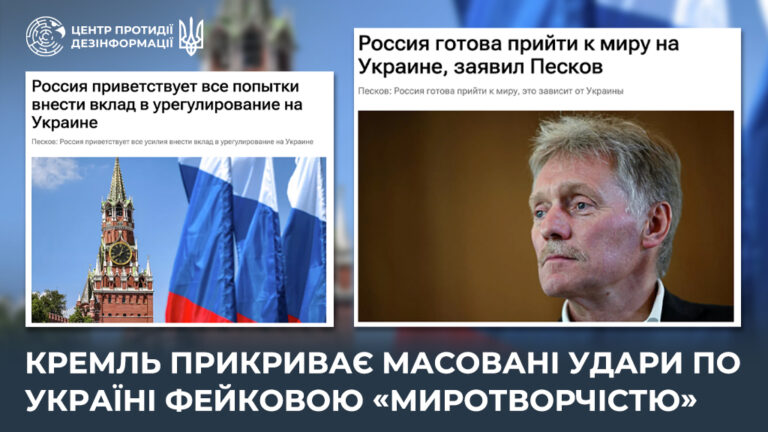



News 09-09-2026
America as a Source of Risk: Why Japan, Brazil and Israel Debate Its Cost
By September 9, 2026, the main American story prompting strong reactions in Japan, Brazil and Israel was not another domestic political drama in Washington, but the United States’ prolonged confrontation with Iran. A new round of exchanges around the Strait of Hormuz pushed Brent crude above $100 a barrel for the first time since May. Yet the three countries interpret the story in entirely different ways: in Japan, as a test of energy security and America’s ability to contain China at the same time; in Brazil, as an imported inflationary shock and an example of how U.S. geopolitics is reshaping the oil market; and in Israel, as a painful reminder that even its closest ally may pursue its own vision of how the war should end—one that does not necessarily coincide with Israel’s. As Brazil’s Folha de S.Paulo reported, Brent rose to $100.95 on September 9 amid U.S. strikes on Iranian tankers and retaliatory Iranian attacks on vessels and facilities belonging to U.S. allies. (www1.folha.uol.com.br)
The Japanese debate is particularly revealing because the American operation is viewed there as more than a Middle Eastern war. For Tokyo, Hormuz is an artery linking the conflict to the country’s everyday economy: about 90% of Japan’s oil imports come from the Middle East. In his Nikkei Book Plus column, energy analyst Noriaki Oba suggests viewing current events not as a brief market flare-up, but as the return of the structural vulnerability seen during the 1973 oil crisis. His central point is that reserves and alternative routes are indeed better than they were half a century ago, but Japan’s dependence on the region has not fundamentally disappeared. (bookplus.nikkei.com)
Even more troubling for Japanese commentators is the strategic impact. An analysis by nippon.com says that the prolonged redeployment of U.S. aircraft carriers and air-defense resources to the Middle East could weaken deterrence in the Indo-Pacific, particularly in the event of a crisis around Taiwan. Japan’s reaction, therefore, is not limited to fears of expensive gasoline: in seeking to force concessions from Tehran, Washington may inadvertently reduce the credibility of its guarantees in areas where Japan considers them vital. The authors also note broader distrust of the style of U.S. leadership: a Pew international survey they cite found that, across 36 countries, 76% of respondents distrust Donald Trump’s international leadership. (nippon.com)
In Brazil, the American war is viewed above all through the price of money. The rise in oil prices is a mixed signal. It may appear favorable for the oil sector and export revenues, but for households, importers and the Central Bank, it poses the risk of a new wave of inflation. In a CNN Brasil article, Sincra Chief Investment Officer Gustavo Cruz links pressure on U.S. prices to the war, while Mirae Asset Chief Economist Marianne Costa explains that rising U.S. bond yields are immediately transmitted to emerging markets, including Brazil. In other words, the local concern is this: the United States is waging a war far from South America, but Brazilian companies and consumers may pay through higher borrowing costs and a weaker currency. (cnnbrasil.com.br)
Brazilian perceptions of the United States are also shaped by the Venezuelan angle. In Latin America, Washington’s agreement granting it access to Venezuela’s oil fields is seen less as a technical measure to stabilize supply than as an attempt by the United States to gain political control over a neighbor’s strategic resource. Even in Folha’s account, experts emphasize that a significant increase in production would require years and enormous investment, while the structure of the deal itself is already fueling talk of “neocolonialism” in Venezuela. For Brazilian audiences, this adds an important qualification to the American argument about protecting the global energy market: Washington is simultaneously fighting for freedom of navigation in Hormuz and building an exclusive oil mechanism in the Western Hemisphere. (www1.folha.uol.com.br)
Israel’s reaction to the same war is the most paradoxical. One might expect American pressure on Iran to be viewed as an unconditional benefit. Yet in Israel, the demand for toughness toward Tehran is growing alongside doubts that the American strategy is actually making the country safer. The Israeli newspaper Israel Hayom described the U.S. economic war against Iran as a “calculated but dangerous gamble”: according to the paper, the blockade and strikes have not forced Tehran to accept Washington’s terms, but have instead given it time to rebuild its missile, drone and potentially nuclear capabilities. (israelhayom.co.il)
These concerns are supported by more than editorial tone. A June poll by the Israel Institute for National Security Studies—INSS—found that 66% of Israelis consider the U.S.-Iran memorandum bad for Israel; only 12% believe Trump is “very committed” to protecting Israeli interests. Even more revealing is the distribution of views on the war: 37% see Iran as the winner, 43% say there is no winner, and only 15% name Israel as the winner. (inss.org.il)
This is the main conclusion emerging from the Japanese, Brazilian and Israeli reactions. None of them considers the United States a weak power: American military, financial and sanctions power remains a decisive factor. But local observers increasingly question whether that power is being converted into a predictable political outcome. Japan fears that America is dissipating its strategic attention; Brazil fears that it is exporting inflation and politicizing energy; Israel fears that the American campaign could end in a deal leaving Iran room to rebuild. This is no longer familiar anti-Americanism, nor a simple expectation of American leadership. It is a more sober and uncomfortable view: Washington’s decisions have become so global in their effects that allies and partners are judging the United States primarily by the price they themselves will have to pay for American strategy.




America as a Source of Risk and Opportunity: How Japan, Turkey and Ukraine View Trump’s Wars, Oil and...
By September 8, 2026, discussion of America in Japan, Turkey and Ukraine has come to revolve around the same feeling: Washington is once again capable of changing the rules of the game overnight—but is no longer necessarily able to ensure a stable order on its own afterward. The most prominent issues in recent days have been the renewed US-Iranian military escalation and the threat to shipping through the Strait of Hormuz, a new attempt by Donald Trump’s team to restart negotiations on Ukraine, and the impact of US inflation and Federal Reserve policy on vulnerable economies. Yet in each of the three countries, the United States is viewed through the lens of its own concerns: in Japan, through energy security and fears over the destruction of international law; in Turkey, through the opportunity to strengthen Ankara’s role as a mediator and ally; and in Ukraine, through anxiety that the White House’s desire for a “deal” may prove more important than a just peace.
The most tangible American problem for Japan and Turkey at present is not diplomatic rhetoric but oil. Following a new round of US-Iranian strikes, markets are once again focused on the Strait of Hormuz, through which a critical share of Middle Eastern supplies passes. For Tokyo, this is almost an existential issue. Energy analyst Nobuhide Kiuchi warns in an analysis by the Nomura Institute that a return of WTI to above $90 per barrel could add around 0.3 percentage points to Japanese inflation and increase annual household expenses by approximately ¥13,000. His main conclusion is particularly telling: American oil has become a temporary safety net for Japan amid the Middle Eastern crisis, but that safety net is not unlimited. The expected reduction in US shipments in September shows that even an allied energy lifeline depends on commercial contracts, domestic demand in America and the military situation.
Japan’s response therefore differs noticeably from the familiar Western discussion of “containing Iran.” The central question is not so much who will win, but whether predictability can be restored to maritime routes and international rules. In a recent editorial in the Asahi Shimbun, the US reliance on overwhelming military force is described as a dangerous simplification that does not produce a political solution. This perspective is important in Japan’s public discourse: a country dependent on imported resources and maritime trade views US coercive policy not as distant geopolitics, but as a direct risk to prices, industry and its own strategic position in East Asia. This gives rise to an underlying concern: if Washington can so easily set international norms aside in the Middle East, how convincingly will it be able to demand that they be observed in the Taiwan Strait or with regard to North Korea?
In Turkey, the same crisis is viewed less detachedly and more instrumentally. Ankara wants neither a prolonged American war with Iran nor another spike in energy prices, but at the same time it sees instability as proof of its indispensable position between NATO, the Middle East, the Black Sea and Europe. Turkish debate starts from the assumption that the United States is overburdened by several crises at once, giving regional powers room to maneuver. Even in an Independent Türkçe analysis of why the United States wants to end the war in Ukraine, written by strategic analyst Osman Gazi Kandemir on September 7, the war is considered primarily as a factor tying up American resources in Europe and limiting the United States in its rivalry with China. From the Turkish perspective, this is not merely an explanation of Trump’s motives; it is an argument for why Washington objectively needs Ankara—in the Black Sea and Syria, as well as in diplomacy with Moscow and Kyiv.
Ukraine’s response to the same American overextension is considerably harsher. In Kyiv, the arrival of Steve Witkoff and Jared Kushner on September 6 was seen as an important symbol: for the first time, key Trump representatives had traveled not only to Moscow but also to Ukraine. Kyiv considers the inclusion of representatives from Britain, France and Germany in the third round of contacts a useful outcome. According to the Ukrainian logic, Europe should not merely be the party that later pays the consequences of an American-Russian agreement. But there is almost no optimism. In an analysis by Ukrainska Pravda, Vladislav Faraponov, head of the Institute of American Studies, assesses the impact of the visit as limited: in his view, the Kremlin’s position has not changed, and for the war to truly become a priority, it is necessary to speak directly with Trump, not only with his envoys.
This Ukrainian wariness is not based on opposition to negotiations as such. Kyiv is ready for a trilateral format with the United States and Russia, which Kushner spoke about reviving. But in the Ukrainian interpretation, negotiations are valuable only when they are backed by coercion aimed at forcing Russia to make concessions. Otherwise, the “many new ideas” mentioned by the American envoys after their meetings risk becoming a new name for the old deadlock. Ukrainian commentators are especially sensitive to the asymmetry of the contacts: before the current trip, Witkoff had already visited Moscow several times, while Kyiv had long been bypassed by the American team. This gives rise to fears that American diplomacy views the war primarily as a problem to be removed from the agenda, rather than as aggression whose consequences must be addressed.
This is where the Ukrainian and Japanese perspectives intersect. For Ukraine, a dangerous deal is one that rewards force and leaves Russia able to recover for another war. For Japan, the same principle is tied to a much broader question: is it acceptable for a great power to cement changes to borders or spheres of influence achieved through military pressure? Japanese experts have long drawn parallels between Ukraine and East Asia. A strategic review by the Japan Institute of International Affairs explicitly stressed that Tokyo has an interest in ensuring that a peace agreement does not undermine Ukraine’s territorial sovereignty. For Japanese audiences, this is not abstract solidarity but a lesson for their own security environment.
Turkey, by contrast, sees not only a risk in these negotiations but also a vacancy. Official Ankara continues to speak of the need to revive direct Russian-Ukrainian dialogue. On September 1, Turkey’s representative to the UN, Ahmet Yıldız, said that resuming the negotiation process was “vital,” while once again confirming Turkey’s non-recognition of the annexation of Crimea and its support for Ukraine’s territorial integrity, as Anadolu reported. But the practical Turkish meaning of this position lies elsewhere: if American mediation stalls because of Iran, domestic politics and global rivalry with China, Istanbul may once again become a working venue where Moscow and Kyiv are at least able to talk to each other.
The most unexpected common feature of these three reactions is not anti-Americanism but doubts about the reliability of American consistency. Ukraine still considers the United States an indispensable source of pressure on Russia and military support. Japan needs its alliance with America as the foundation of its defense. Turkey seeks to improve relations with Washington, including on sanctions and the defense industry. Yet in all three countries, Trump’s America is seen as a power whose priorities can change sharply: Ukraine today, Iran tomorrow, and domestic inflation or an election agenda the day after that.
That is why local discussions converge on a single conclusion. The United States is now judged not by the force of its statements or the number of envoys’ visits, but by whether it can simultaneously prevent the Strait of Hormuz from triggering a new energy panic, avoid turning peace in Ukraine into a pause before the next war, and preserve the trust of its allies. For Japan, this is a test of international law; for Turkey, a test of its growing role as a mediator; and for Ukraine, a test of whether Washington is prepared to pay the political price for a peace that will be not merely quick, but lasting.

News 08-09-2026
America as a Source of Risk: Why Japan, Russia and Germany Are Increasingly Talking Not About...
In the first days of September 2026, attention in Japan, Russia and Germany is focused on two American stories at once: the resumption of U.S. strikes on Iranian targets and the Trump administration’s latest attempt to launch negotiations between Moscow and Kyiv. Yet local debates share a broader conclusion: the United States remains an indispensable power, but its actions are increasingly perceived as an unpredictable guarantee of order. In Tokyo, this is measured by oil prices, the yen’s exchange rate and the ability of America, as an ally, to deter China; in Berlin, by the risk of an endless war in the Middle East and fears that Europe’s security is once again being discussed without Europe; in Moscow, by the possibility of turning America’s need for a deal into a diplomatic advantage.
The war with Iran has become the main test of this perception. In an article for nippon.com, Japanese commentator Kazuhiro Maeda writes that six months after the U.S.-Israeli campaign began, the rapid elimination of the nuclear threat initially promised has not materialized: the conflict is bogged down around the Strait of Hormuz, while America, in his assessment, is itself spreading distrust of its actions. For Japan, this is not an abstract dispute over Middle East strategy. Nobuhiko Kiuchi, an economist at the Nomura Research Institute, calculated that a return of oil prices to around $90 per barrel could add approximately 0.3 percentage points to Japanese inflation and increase the average annual burden on a household by about ¥13,000; meanwhile, hopes of replacing Persian Gulf supplies with American crude have limits. From the Japanese perspective, the problem lies not only with Tehran, but also in the fact that Washington’s military solution makes an energy-import-dependent country hostage to someone else’s escalation. (nri.com)
The German reaction is far more politicized, but reaches a similar conclusion. An analysis by Deutsche Welle describes the logic of the American “mowing the lawn” strategy: Iran rebuilds its military capabilities, the United States launches another strike, and the cycle repeats. Author Andreas Noll emphasizes that this model, borrowed from the fight against non-state armed groups, is poorly suited to a large state with an industrial base and the ability to threaten the Strait of Hormuz. In other words, military superiority does not translate into a political outcome. This asymmetry is especially important in Germany’s public debate: Washington can choose the scale of its strike, but not the adversary’s response—while the consequences, in the form of expensive energy, unstable trade and a new security crisis, also fall on Europe. (amp.dw.com)
In Russia’s expert community, the same conflict is interpreted through the prism of the redistribution of power in Asia. A MGIMO expert on the East and a researcher at the Institute of Oriental Studies of the Russian Academy of Sciences, in a commentary for the Russian International Affairs Council, calls the U.S.-Iran war a “slow-moving endless war” and links it to the prospects of a so-called “Asian NATO.” This is an important and far from obvious Russian emphasis: in Moscow, the Middle East campaign is viewed not only as a conflict between the United States and Iran, but also as a test of Washington’s ability to hold the Middle East, support European security and focus on the Indo-Pacific region simultaneously. For Japan, this perspective is particularly troubling: the more American resources and attention are absorbed by the Strait of Hormuz, the less convincing America’s role in deterring threats in East Asia appears. (russiancouncil.ru)
The second story—the visit by Steve Witkoff and Jared Kushner to Moscow on September 5 and then to Kyiv on September 6—prompted nearly mirror-image, though not identical, reactions. Russian political analyst Fyodor Lukyanov, editor-in-chief of the journal Russia in Global Affairs, in an article for the RIAC, urges recognition of the Trump administration’s persistence: in his view, the White House remains the only Western player that is genuinely trying to do something and has leverage over the situation. Yet Lukyanov immediately tempers expectations: too much is at stake for Russia and Ukraine for the war to end with the quick “deal” favored by Trump. This is a characteristic Russian position: American mediation is welcomed not as moral arbitration, but as a useful channel through which the balance of interests can be discussed and Moscow’s isolation eased. (russiancouncil.ru)
In Germany, however, the order of the trip—Moscow first, Kyiv second—became a symbol of anxiety. German commentators do not deny the value of negotiations, but question the very structure of the mediation, in which Russian demands are heard before Ukrainian ones. Tagesschau quoted Witkoff as saying that both sides must make compromises, while Ukrainian President Volodymyr Zelensky assessed the prospects considerably more cautiously. In a commentary in Süddeutsche Zeitung, the question is posed even more sharply: does the American envoy understand who the aggressor is? Behind this lies more than Berlin’s irritation with Trump’s style. Germany fears that the language of equal mutual concessions could blur the fundamental fact of the war—Russia’s invasion of Ukraine—and turn European security into an object of bargaining between Washington and Moscow. (tagesschau.de)
The Japanese perspective is quieter, but no less significant strategically. Tokyo sees American diplomacy as both a necessity and a warning: the alliance with the United States remains the foundation of security, but the ally increasingly acts as a tough negotiator, ready to link security, trade and macroeconomics. Particularly telling was the episode involving U.S. Treasury Secretary Scott Bessent, who, at a meeting with Bank of Japan Governor Kazuo Ueda, voiced support for measures to correct what he considers a substantially undervalued yen. Japanese observers saw this as direct American pressure on the country’s domestic monetary policy. (fnn.jp)
This is precisely how the broader international image of the United States in September 2026 is taking shape. Russia sees America as a power interested in a deal and therefore potentially receptive to Russian arguments. Germany sees a partner whose diplomatic improvisation could leave Europeans facing faits accomplis. Japan sees an indispensable military ally whose wars and financial demands could simultaneously undermine its economic stability and divert attention from Asia. Their interests, language and political sympathies differ, but the main point is shared: America no longer merely sets the rules. Increasingly, it itself is becoming the main source of uncertainty to which other states must adapt.




America as a Source of Strategic Anxiety: Brazil, Germany and Australia Debate the Cost...
By early September 2026, the United States had simultaneously become a source of three different but interconnected anxieties for Brazil, Germany and Australia: the protracted war with Iran, Washington’s ostentatious return to a policy of force in Latin America, and its increasingly unpredictable attitude toward allies and trading partners. In local debates, the US no longer appears to be the familiar guarantor of order. It is seen as a power whose domestic political calculations—gas prices, midterm elections and Donald Trump’s personal style—can alter the strategic conditions for everyone else.
The most common theme is Iran. In Germany, the conflict is discussed primarily as a test of international law and European autonomy. German broadcaster ARD notes that the US strategy is simultaneously seeking to halt Tehran through military pressure and economically strangle it, but risks achieving the opposite: according to expert Brian Jacobian, regular strikes could convince Iran that its only reliable guarantee of survival is its own nuclear weapons. In a Deutsche Welle analysis, this logic is expressed particularly bluntly: Washington and Israel may accelerate precisely the process they sought to prevent. (amp.dw.com)
Germany’s reaction, however, is not reducible to anti-Americanism. Chancellor Friedrich Merz continues to emphasize the threat posed by Iran’s nuclear program, but divisions within Germany’s political environment are becoming increasingly apparent between the need to preserve ties with the US and the unwillingness to accept as normal a war without a clear legal and political resolution. President Frank-Walter Steinmeier called the war “a politically disastrous mistake” and a violation of international law, adding that the West remains an ideal in terms of values but has effectively ceased to exist as a unified political reality. This formulation, quoted by Tagesschau, captures the German mood well: Berlin fears not only Iran, but also the fact that American power is no longer backed by predictable rules. (tagesschau.de)
Australians view the same war through a completely different, almost painfully practical question: how far can its alliance with the US draw Canberra into a conflict it did not start and does not control? In an ABC analysis published on September 7, US correspondent John Lyons describes Iran as a “quagmire” from which Trump does not know how to escape. He notes that the initial goals—depriving Tehran of its nuclear capabilities and achieving regime change—have not been met. The objective then became restoring shipping through the Strait of Hormuz, even though the war itself made this artery almost impassable. (abc.net.au) For Australia, this is not a distant Middle Eastern drama: around one-fifth of global oil and gas trade passes through Hormuz, meaning the war translates into fuel prices, inflation and the risk of supply disruptions.
But Australia’s main concern is not oil—it is sovereignty. ABC global affairs editor Laura Tingle observes that almost every country is reassessing its relationship with Washington, while Australia continues to deepen AUKUS. She is particularly concerned about the agreement’s transformation: instead of giving Australia its own submarine capability, it increasingly looks like an infrastructure project for the US Navy. Defense Minister Richard Marles explained the agreement’s value to the US directly, saying that servicing American submarines in Western Australia would give the US Navy more days of operational presence in a key region. In an ABC column, this sounds paradoxical: Canberra calls AUKUS a strengthening of sovereignty, while critics see it turning the country into a larger American military outpost. (abc.net.au)
Former Prime Minister Paul Keating articulates Australia’s anxiety even more sharply. He compared Trump’s view of international politics to the logic of mafioso “spheres of influence” and urged Australia not to support the US attempt to contain China through military force from 10,000 miles away from the American coast. His point is important precisely because it is local rather than American: Australia is not debating whether it needs a strong America in the Indo-Pacific; it is beginning to ask whether participating in the US rivalry with China could threaten its own security. (abc.net.au)
In Brazil, the image of the US is different today: not an unreliable distant ally, but an active force seeking to reshape the rules in its own hemisphere. The White House decision to gain control over part of Venezuela’s oil reserves has become the central symbol of Washington’s new policy. Officially, the Trump administration presents the agreement as the largest oil deal in history and a way to strengthen US energy security; the White House claims that the American side is gaining majority control over more than 65 billion barrels of Venezuela’s proven reserves. (whitehouse.gov) In the Brazilian press, however, this is seen not as a purely commercial project, but as a combination of energy, coercive pressure and political influence.
In a Folha de S.Paulo analysis, Trump’s new Latin America policy is reduced to three interconnected areas: oil, the fight against drug trafficking and political influence. The newspaper notes that the US government is acquiring a 35 percent stake in NABEP, a company linked to Venezuelan businessman Alejandro Betancourt, while the project entails control over 65 billion barrels out of Venezuela’s approximately 300 billion barrels in reserves. At the same time, even the US energy secretary acknowledges that significantly lowering oil prices will not be possible quickly; the process is expected to take several years. (www1.folha.uol.com.br) The Brazilian interpretation is therefore simple and uncomfortable for Washington: the slogan of energy stabilization is masking the restoration of American political dominance in the region.
For Brazil, this is not an abstract dispute over Venezuela. Difficult trade negotiations are taking place at the same time following the US introduction of 25 percent tariffs on some Brazilian imports; the American side has linked its demands, among other things, to the Pix instant-payment system and access to Brazil’s ethanol market. This was reported by the state-run Agência Brasil. (agenciabrasil.ebc.com.br) Consequently, in Brazil’s view, the “good relations” Trump talks about mean little without the removal of tariffs and an end to pressure on the country’s domestic politics. Folha writes directly that Washington’s praise for Brazil offers no promise of relief in the negotiations: the country remains simultaneously the target of trade pressure and diplomatic friction, as well as of US interest in critical minerals. (www1.folha.uol.com.br)
The most unexpected aspect of comparing the three countries is that they offer no single response to American unpredictability. Germany is seeking a way to preserve the transatlantic relationship without abandoning international law. Australia is effectively doubling down on the alliance, even as its public intellectual debate increasingly warns of dependence. Brazil is choosing a more confrontational sovereignty-based rhetoric because the pressure is being felt directly—in trade, regional politics and the struggle for resources. Yet the overall conclusion is the same: the problem is no longer whether Berlin, Canberra and Brasília agree with individual decisions by Trump. They are increasingly questioning whether a long-term strategy can be built around a country that simultaneously demands loyalty from its allies, imposes tariffs on its partners, and treats oil, security and political influence as elements of a single deal.
News 07-09-2026
America as a Source of Risk and an Indispensable Arbiter: How Turkey, Ukraine and Israel View Its...
In the first days of September 2026, the main topic of discussions about the United States in Turkey, Ukraine and Israel was not American domestic politics itself, but the limits of American power. Washington is simultaneously trying to contain its conflict with Iran, reclaim its role as a mediator in the Russian-Ukrainian war, and prevent a direct Turkish-Israeli confrontation in Syria. In local debates, this appears as one overarching problem: America still has the means to influence the course of wars, but its policy is increasingly seen as impulsive, dependent on the domestic political calendar, and therefore capable of creating new threats even where it promises stabilization.
The most notable point of agreement among the three countries is skepticism toward the American strategy against Iran. A new exchange of strikes between the United States and Iran in early September returned the conflict to a dangerous military phase after the June memorandum was supposed to provide the basis for de-escalation. The Turkish press primarily interprets this as a failure of the American pressure model itself. In a Medyascope analysis, the resumption of U.S. strikes is described not as an isolated operation, but as a new escalation of the war, with Iran responding by attacking American facilities in Jordan, Kuwait, Iraq and Bahrain. For Ankara, the key issue is not who carried out the latest strike, but the risk of the conflict spreading to neighboring states and trade routes.
The Turkish view is by no means uniform. Some commentators believe Washington is losing its ability to act as a guarantor of the regional order; others fear that, under the slogan of “regional autonomy,” Turkey could become involved in someone else’s confrontation. In an article by Recep Karagöz on the Turkish-Saudi-Pakistani Mecca Agreement, this dilemma is expressed particularly sharply: if the new security mechanism becomes independent and comprehensive, it will represent a step toward strategic autonomy; but if it effectively focuses on containing Iran while leaving the American and Israeli military presence outside the equation, regional armies will merely assume some of the risks from which the United States wants to distance itself. This is an important Turkish qualification to the American narrative: Washington’s withdrawal from direct involvement does not necessarily mean the end of American influence—sometimes it means passing the costs on to allies. (medyascope.tv)
The Israeli debate views the same war from a different angle. There, few question the need to pressure Tehran, but there is growing doubt that American tactics can resolve the issues most important to Israel—the nuclear program, Iran’s missile capabilities and maritime security. In Itamar Eichner’s commentary for Ynet, American precision strikes are described as a negotiating tool: according to the author, Trump is seeking to force Tehran into more substantive negotiations while demonstrating toughness to his electorate ahead of the midterm elections. But this logic is troubling precisely because military action is being subordinated not only to regional strategy, but also to the American political climate. (ynet.co.il)
An even harsher Israeli conclusion appears in an analysis by Iran expert Raz Zimmt: the June document between the United States and Iran turned out not to be a durable agreement, but a “memorandum of misunderstanding” that left nearly all the key issues unresolved. For Israeli audiences, this means that the seemingly convenient status quo—an weakened Iran, no major war and continued American pressure—may be the most dangerous option: Tehran gains time to rebuild its military capabilities, while Jerusalem receives no clear answer as to where America’s red lines lie. (ynet.co.il)
Ukraine’s reaction to the Iran issue is less emotional but perhaps more pragmatic. In Kyiv, the U.S.-Iran conflict is seen as a competition for American attention, air-defense missiles, ammunition and the political resources of the White House. Ukrainian analyst Petro Herasymenko, in an article for LB.ua, characterizes the American-Iranian confrontation as a state of “neither war nor peace”: the sides avoid decisive steps, hoping to wear each other down economically and politically. For Ukraine, this formula is particularly troubling: the longer the United States becomes bogged down in the Persian Gulf, the more likely it is that aid to Kyiv will be viewed in Washington as a secondary expense. (lb.ua)
This leads to the second major issue—the return of American diplomacy to the Russian-Ukrainian war. Local commentators greeted the visit of Steve Witkoff and Jared Kushner to Kyiv on September 6 with cautious approval, but without euphoria. After the talks, President Volodymyr Zelenskyy explicitly linked diplomacy to the country’s survival in the coming months: Ukraine is counting on a winter package including air defense, energy support and American LNG; without a strong position on the front, he warned, negotiations will turn into ultimatums. These remarks, published by Ukraine’s Center for Countering Disinformation, convey the local attitude toward American mediation well: negotiations are necessary, but only negotiations backed by weapons and infrastructure protection can be trusted. (cpd.gov.ua)
Ukraine’s unique perspective is that the United States is simultaneously seen as the only power capable of launching a meaningful process and as a partner who must constantly be dissuaded from the temptation of a “quick deal.” In a report by hromadske, the continuation of negotiations after the visit is discussed with cautious optimism. But the very tone of Ukraine’s reaction shows that Kyiv considers neither the arrival of American envoys nor an attractive formula about the “rapprochement of the sides” a success. What matters are concrete guarantees on the eve of winter. (hromadske.ua)
Turkey and Israel, meanwhile, also discuss the United States through the Syrian triangle. In Turkey, there is a growing sense that Washington is no longer able—or willing—to manage the contradictions between two of its key partners on its own. In a Medyascope program on Turkish-Israeli tensions, Gönül Tol links Israel’s strike on a site in Syria to the concerns of Benjamin Netanyahu’s government about a possible Turkish military presence. From the Turkish perspective, the issue is not limited to a single base: Israel is seeking to restrict in advance the space for Ankara to expand its influence in postwar Syria, while the United States is forced to act as a crisis dispatcher between allies whose strategic goals are becoming increasingly incompatible. (medyascope.tv)
Israelis see the opposite danger in this story: America’s desire to avoid conflict with Turkey could leave Israel alone to face the expansion of Turkish influence along its northern border. Thus, from the Israeli perspective, American restraint is not always a benefit. From the Turkish perspective, American mediation is useful only as long as it does not turn into an attempt to impose limits on Turkey’s regional role. This reveals a fundamental divide: both countries want American involvement, but each wants Washington to restrain the other side.
The overall conclusion of the local debates is paradoxical. Neither Ankara, Kyiv nor Jerusalem believes the United States can simply be replaced by another external player. Ukraine needs American air-defense systems and diplomatic weight; Israel needs American military and political cover; Turkey needs predictable dialogue with NATO and Washington’s ability to contain regional crises. Yet in all three societies, the conviction is growing that America can no longer be viewed as a stable center of order. For Kyiv, this means turning promises into deliveries. For Israel, it means demanding a clear strategy from the United States instead of temporary pauses. For Turkey, it means building its own regional foundations without becoming an instrument of someone else’s war. This dual attitude—dependence on American power coupled with distrust of American consistency—has become the main international story of early September.
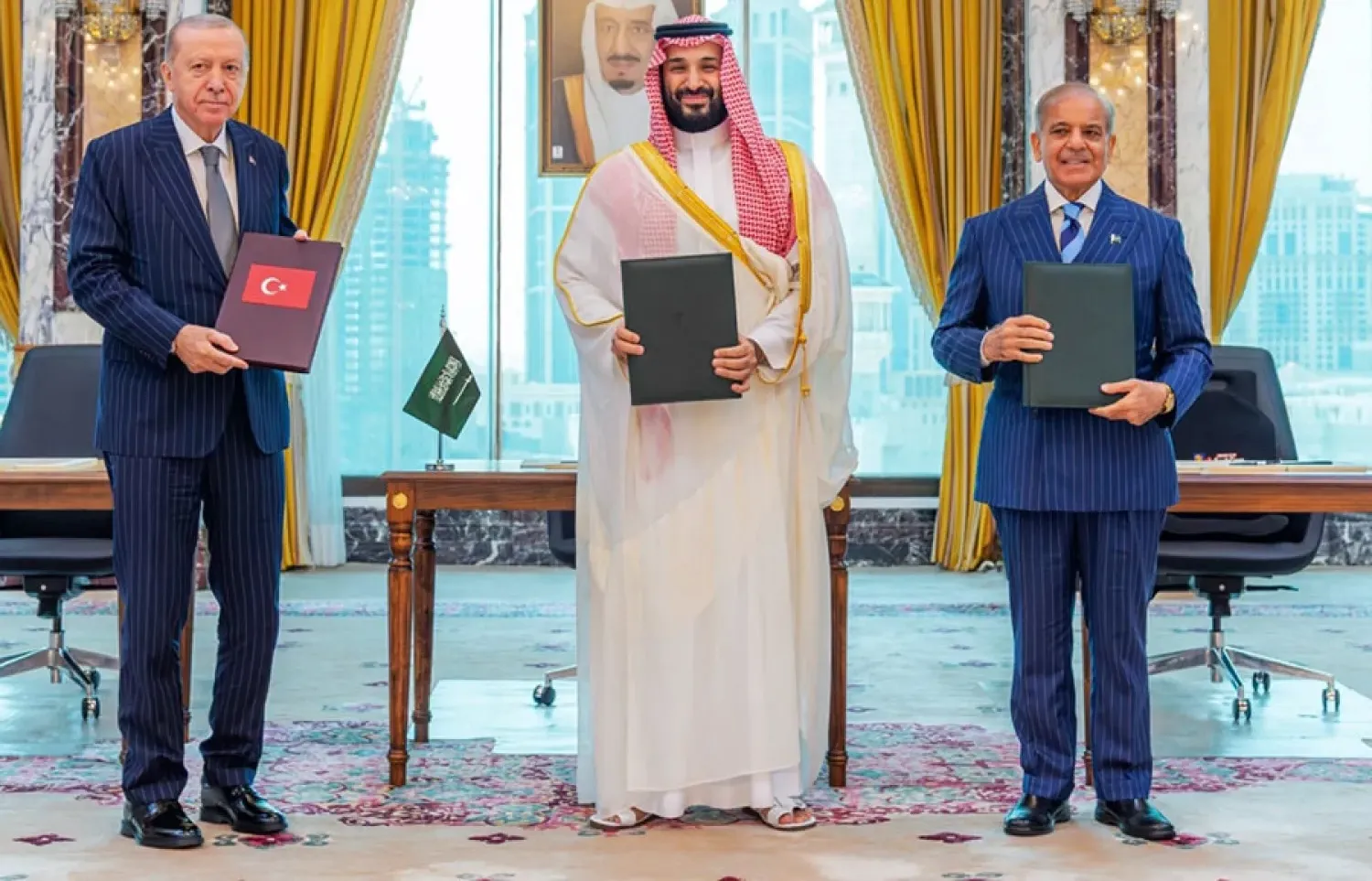
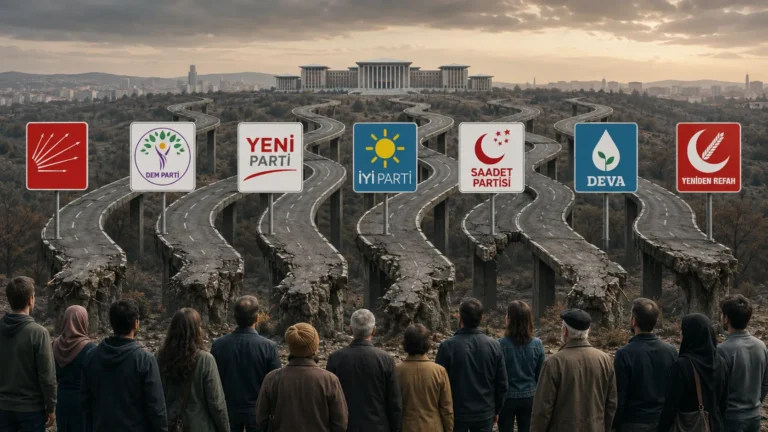



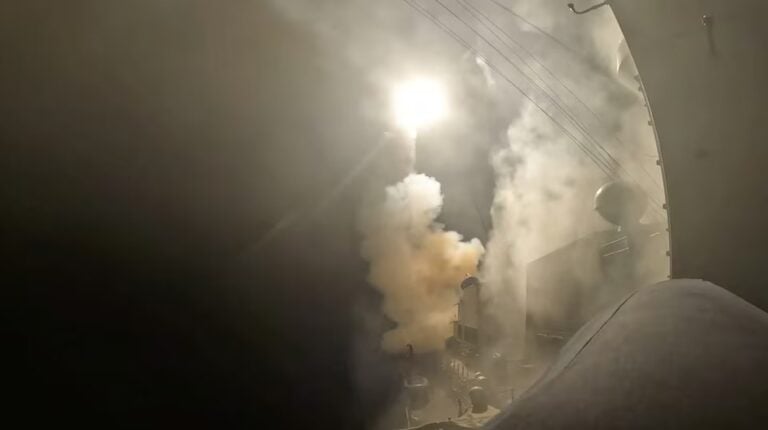
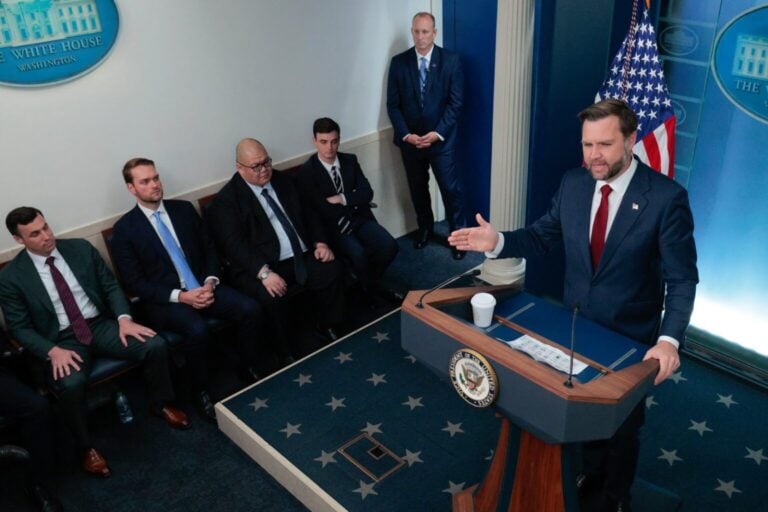

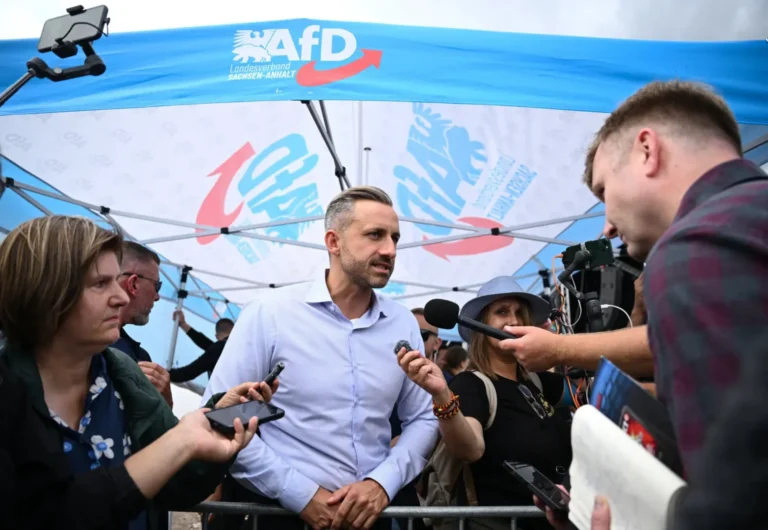



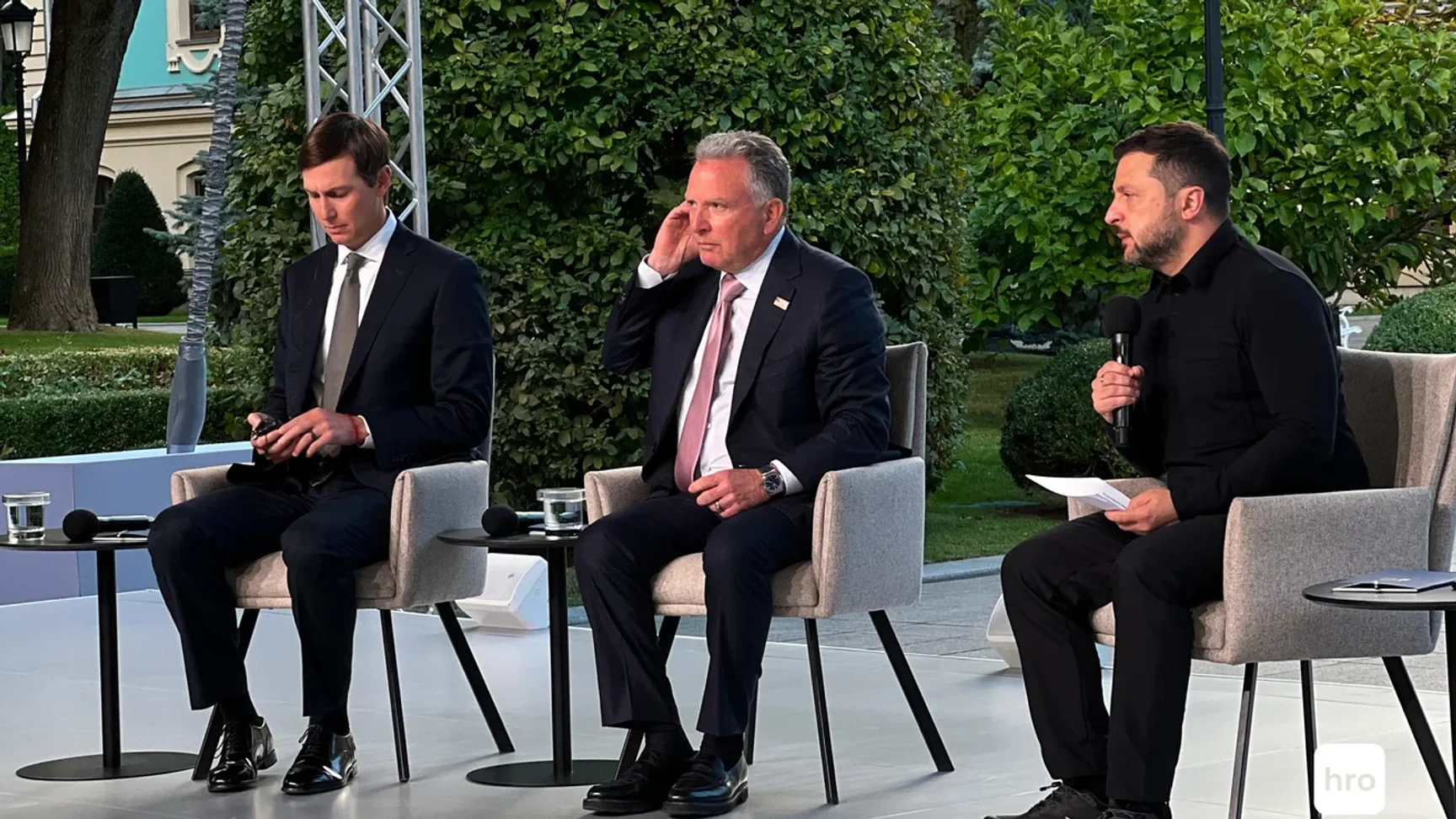
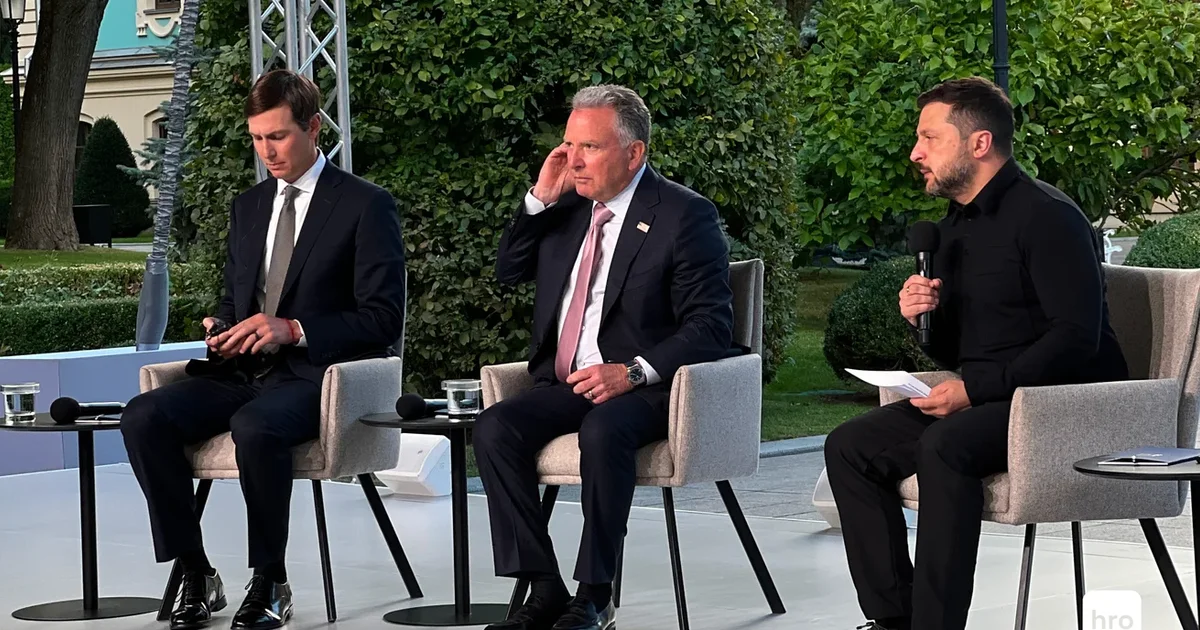
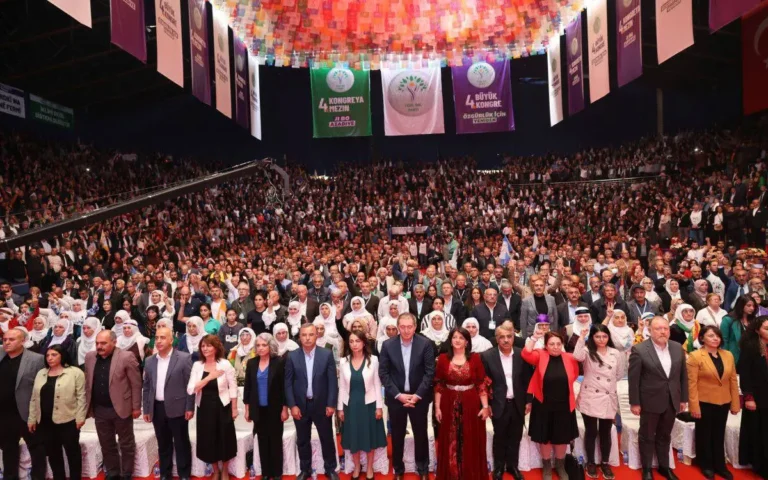
America as a Deal: Why Kyiv, Pretoria and Beijing Trust It Less...
In the first days of September 2026, discussions about America in South Africa, Ukraine and China unexpectedly come down to one question: what exactly is the United States willing to guarantee its partners—and for how long? The circumstances differ. In Pretoria, officials are discussing extending AGOA trade preferences only until 2028; in Kyiv, they are awaiting new contacts between American intermediaries, Moscow and Volodymyr Zelensky; and in China’s information space, preparations are under way for a possible visit by Xi Jinping to Washington on September 24, at the head of a large business delegation. Yet in all three countries, US policy is perceived not as a stable system of alliances and rules, but as a series of negotiations in which the terms can change at any moment.
South Africa’s reaction is the most visibly economic. The extension signed by Donald Trump of the African Growth and Opportunity Act, which provides duty-free access to the US market, was formally good news for Africa. However, a two-year horizon is far short of the 15 years Pretoria had sought. A Sunday Times analysis stresses that South Africa’s future eligibility under the scheme is still not guaranteed: Washington has opened a review of admission criteria for 2027, while relations between the two countries remain politically strained.
For South Africa, this is not an abstract dispute over tariffs. Cars, components, steel and aluminum are already facing US duties, while business data show that automotive export revenues from the US market fell sharply in 2025. The local debate therefore revolves around a paradox: preferential treatment has been preserved, but investor confidence has not been restored. Fakamile Hlubhi-Mayola, a representative of the Motor Industry Staff Association, welcomed the decision, noting that the automotive industry depends on long investment cycles. At the same time, the Solidarity union warns of the risk of losing thousands of skilled jobs if the country is excluded from the list of beneficiaries. Solidarity’s head of public relations, Jaco Kleynhans, stated bluntly that the organization intends to step up its engagement with the White House before the final decision on the 2027 list.
This is where a specifically South African anxiety becomes clear: for Pretoria, Trump’s America is less a geopolitical adversary than a market whose access has become an instrument of political pressure. US grievances concern not only the trade balance but also South Africa’s domestic policies, including land reform, requirements imposed on foreign investors and its foreign-policy “nonalignment.” This turns AGOA from a development mechanism into an annual test of political acceptability in Washington’s eyes.
Ukraine’s debate, by contrast, barely separates US policy from the question of physical security. Against the backdrop of a new round of mediation activity—following Steve Witkoff and Jared Kushner’s contacts with Vladimir Putin and ahead of their talks with Volodymyr Zelensky—Kyiv is discussing not so much the likelihood of peace as the price of a hasty peace. Political analyst Ihar Tyshkevich writes in a column for Glavkom that both Trump and Putin are in a hurry: for the US president, the window for achieving results may be only two or three months, while the Kremlin particularly benefits from a situation in which the United States remains the sole intermediary between Moscow and Kyiv.
Ukrainian commentators increasingly describe Washington not as an unconditional protector but as a player that needs a signed deal. Lesia Bidocko, an expert at the European Political Institute in Kyiv, puts it particularly bluntly in an article for Ukrainska Pravda: in her view, Trump needs an agreement that can be presented as his own achievement, while the durability of the accord and the political structure of the postwar order are pushed into the background. Hence Kyiv’s dual strategy: Ukraine is trying to be useful to the United States not as an aid recipient but as a partner—offering drone technology, combat experience and joint production, including prospects for US-Ukrainian cooperation in air defense. But, as Bidocko emphasizes, usefulness is not the same as security.
This is an important difference from South Africa’s reaction. Pretoria is seeking predictability for investors; Kyiv is trying to convert its military expertise into political insurance. But the diagnosis is the same: Washington’s promises now have to be backed by mutual benefit, a contract, a production chain or the American leader’s own domestic political interests.
In China, a different, more confident language prevails. There, the current US fluctuations are read not primarily as a threat but as evidence that America’s strategy is overstretched and contradictory. In recent articles, China’s Global Times links the widening US trade deficit to the limitations of the tariff approach: if domestic production cannot replace imports—especially in supply chains connected to AI, computers and semiconductors—new barriers merely increase costs for American companies and consumers. This argument turns American protectionism from a source of strength into a sign of dependence on global supply chains.
In Chinese rhetoric, the United States is simultaneously trying to contain China technologically, sustain a tense alliance architecture in Asia and spread its resources across the Middle East. Global Times describes the redeployment of the last US aircraft carrier from Asia to the Middle East as a bill Washington is being forced to pay for strategic overstretch. Behind this formulation lies not only a propagandistic barb but also a practical Chinese conclusion: Beijing gains additional negotiating leverage when the United States is forced to choose between several crises.
Against this backdrop, reports of a possible September 24 visit by Xi Jinping to the White House with a large group of Chinese corporate executives take on special significance. As Lianhe Zaobao notes, such a format is unusual: the Chinese leader rarely takes such a prominent business delegation on overseas trips, especially after years of Beijing taking a tougher stance toward the private sector. The signal is aimed not only at the United States: China wants to demonstrate its readiness to discuss investment and business precisely when Washington needs economic results and reduced tensions ahead of the US midterm elections.
The most unexpected common thread in these three reactions is that no one is waiting for a return to the old model of American leadership. South Africa is not counting on automatic extensions of market access; Ukraine does not believe political sympathy can replace institutional guarantees; and China does not assume that interdependence will eliminate rivalry. All three countries are adapting to an America that speaks the language of power, tariffs, personal mediation and short-term deals.
Yet the conclusions they draw are opposite. In Pretoria, they are looking for a way not to fall out with an indispensable trading partner. In Kyiv, they are looking for a way to become so valuable to Washington that a quick compromise at Ukraine’s expense would be too costly. In Beijing, meanwhile, they are trying to use America’s need for a deal as an argument for recognition of China’s equal status. The main international story surrounding the United States today is therefore neither “America’s decline” nor “America’s return,” but the struggle among different countries to determine the terms on which they will deal with Washington.


News 06-09-2026
America as a Source of Uncertainty: Views in Germany, Japan and South Africa on the New Use of Force...
On September 5–6, 2026, German, Japanese and South African commentators focused not on a single American story but on an entire chain of events: the United States struck three Iranian oil tankers after a missile attack on its ships; Donald Trump’s administration continued turning sanctions into an instrument of pressure on third countries; and allies and trading partners once again faced the reality that American decisions quickly become their own domestic economic and political problem. In Germany, this is seen primarily as a symptom of Washington’s strategic failure; in Japan, as a risk to fuel supplies, the yen and financial stability; and in South Africa, as a reminder that access to the US market increasingly comes with political conditions.
The latest maritime escalation in the Persian Gulf has become the sharpest catalyst for these sentiments. US Central Command said it had disabled two Iranian tankers and destroyed a third after the Islamic Revolutionary Guard Corps launched ballistic missiles at a US aircraft carrier and destroyer. Iran, in turn, reported attacks on tankers and vessels linked to the United States. Germany’s Tagesschau relays these statements cautiously, but the focus of the local debate is clearly broader than the question of who initiated the latest exchange of blows. For Germany, what matters more is that the conflict has entered a stage in which not only military infrastructure but also oil-carrying commercial shipping is becoming a target—that is, the very material foundation of the global economy.
This concern is layered on top of nearly seven months of German disappointment with America’s strategy toward Iran. ARD commentator Carsten Küntopp, in a blunt column for Tagesschau, stated the conclusion without diplomatic reservations: “The US has weakened itself in the war with Iran.” His argument is not simply a criticism of Trump: from the German perspective, the prolonged campaign has exposed the limits of American military power, depleted resources and simultaneously made Europe more vulnerable to an energy shock. In a similar vein, Deutsche Welle describes the American approach as a strategy of continually striking Iran’s newly emerging capabilities—a method that may contain the adversary tactically but offers no political way out.
Japan’s reaction is less moralizing and far more practical. In Tokyo, the current crisis is viewed through a narrow but vital passage—the Strait of Hormuz. Japanese media emphasize that Washington’s “tanker for tanker” formula is bringing the war to the level of directly affecting oil supplies. Forbes Japan writes about the first use of this approach and recalls that under normal conditions, roughly one-fifth of the world’s oil passes through Hormuz. For a country dependent on imported energy, this is not a distant Middle Eastern war but a threat to the cost of electricity, transportation and industrial production.
What distinguishes the Japanese debate is its linking of the military escalation to financial dependence on the United States. An analysis by the Japan Research Institute speaks of “dissonance” in the US-Japan political dialogue: Washington demands coordination on currency, fiscal and monetary policy, while Tokyo must respond simultaneously to rising domestic yields and external risks. Economist Nobuhiko Kiuchi, in an NRI column, notes that market expectations of changes in Japan’s economic policy under pressure from the Trump administration are already exerting a lasting influence on the yen’s exchange rate. In other words, the Japanese are concerned not only about tankers: American policy could first drive up the price of oil and then, through the dollar, bonds and investor expectations, limit the Bank of Japan’s room for maneuver.
South Africa sees the same American model of pressure, but in an even more explicit trade-and-political form. In Pretoria, President Trump’s decision to extend the African Growth and Opportunity Act—the program providing duty-free access for African goods to the US market—was met with relief, but not confidence. As South Africa’s Business Day notes, the country had sought a 15-year extension but received only two years; at the same time, its eligibility to remain an AGOA participant after 2027 is still not guaranteed. For exporters, this means that a formally positive decision does not provide the main thing: a planning horizon for investment, production and jobs.
This produces a particularly revealing contrast. Germany and Japan—long-standing US allies—fear that American power is being used without a clear strategy and that the costs are being shifted onto partners. South Africa, which is not part of the US alliance system, fears something else: that trade preferences are becoming a reward for political compliance. In an article for The National, Rasygan Maharaj, a professor of public management at Tshwane University of Technology, urges the country to accelerate industrialization and seek more reliable partners. Noluthando Phungula, an international-relations expert at the University of KwaZulu-Natal, in turn, speaks of the need to diversify both currency and market ties. This is not a call to immediately sever relations with Washington: South Africa’s trade with the United States is incomparably more important than its limited dealings with Iran. But it is a local acknowledgment that dependence on a single market makes foreign policy vulnerable.
It is precisely the issue of Iran that connects South Africa’s military and economic concerns. The American sanctions campaign targets not only Tehran but also its financial and commercial links around the world. For Pretoria, this creates an unpleasant dilemma: maintain its traditional “Global South” rhetoric and opposition to unilateral US actions, or minimize the risk to exports to America. At the sharper end of the debate, South African columnist Iqbal Jassat, in his column, calls on BRICS to publicly condemn Washington’s “illegal military aggression.” This position does not encompass all South African opinion, but it is significant: for a sizable segment of the local political environment, the American strikes are not merely a dangerous escalation but a test of whether BRICS can be something more than an economic club.
The most unexpected common theme in all three countries is not anti-Americanism as such. Neither Berlin, nor Tokyo, nor Pretoria is proposing to abandon relations with the United States. On the contrary, all three societies recognize that America is too important—for security, sea routes, trade, technology and finance. But that is precisely why another demand is being voiced more and more often: the United States should be a predictable center of power, not a country that simultaneously wages a war for control of shipping, threatens partners with secondary sanctions and keeps trade preferences on a short political leash.
The German formula is that America is losing strategic power because it cannot turn military superiority into a political outcome. The Japanese formula is that American crises instantly become the price of oil, the exchange rate of the yen and a problem for the national budget. The South African formula is that economic partnership with Washington is necessary, but increasingly resembles not a stable rule but a conditional contract. Taken together, these reactions paint a picture of the United States as a country whose influence remains enormous, but whose reliability is increasingly becoming a subject of international dispute.
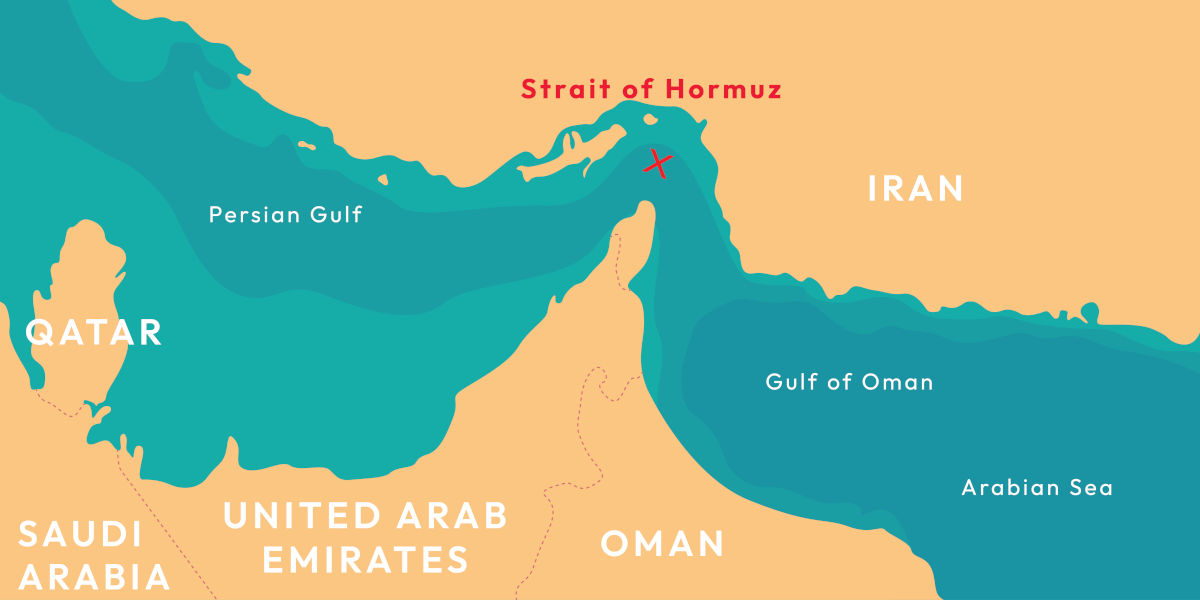


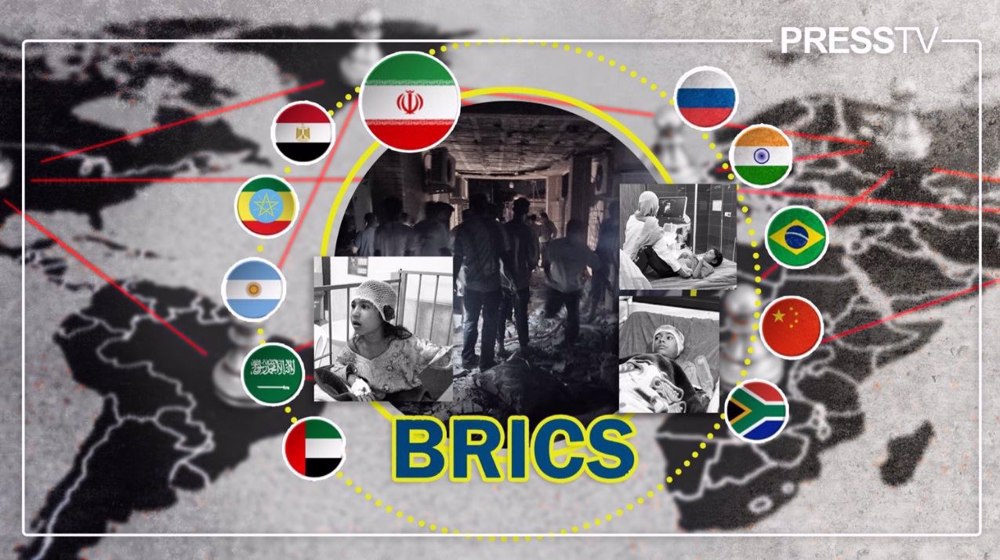
The United States at the Center of Global Tensions
Russian and Brazilian sources analyze how Washington’s actions are intensifying international instability—from threats of escalation around Iran and military operations at sea to migration pressure, deportation agreements with Guyana, and disputes over U.S. border policies. Against this backdrop, U.S. allies and partners are reassessing their diplomatic, financial, and regional ties with Washington, while its influence over the G20, NATO, and relations with the Vatican is becoming a source of growing disagreement. The material is based on publications by prospect.com.ru (Russia) and www.instagram.com (Brazil).
Moscow Says It Is Ready to Discuss U.S. Ideas on Ukraine
The United States has proposed a number of ideas for resolving the conflict in Ukraine, while Russian President Vladimir Putin conveyed “comprehensive assessments” of the situation in the combat zone to American representatives. This was stated by Russian presidential aide Yuri Ushakov, as reported by Prospect.com.ru.
The Russian side presents these contacts as evidence of Moscow’s willingness to discuss diplomatic options. At the same time, it emphasizes that any potential agreement, in its view, must address the so-called “root causes” of the conflict and Russia’s security demands. The published reports do not disclose the specific content of the U.S. initiatives or provide details about the possible parameters of future agreements.
Ushakov also said that Kyiv and European countries “are counting on prolonging the conflict.” This assessment reflects the Kremlin’s frequently stated position that the European Union is interested not in ending the war as quickly as possible, but in continuing it. Russian official statements often accuse the EU of supporting the armed confrontation, expanding military assistance to Ukraine, and obstructing direct dialogue between Moscow and Washington.
At the same time, the United States occupies an ambiguous position in the Russian interpretation. On the one hand, it is regarded as a key participant without whom a settlement is impossible; on the other, it is seen as a country acting primarily in its own interests. Rodion Miroshnik, Russia’s ambassador-at-large, for example, links American involvement in the talks not to the role of a neutral mediator but to Washington’s calculations.
Moscow consistently rejects the option of a simple ceasefire or a “freeze” of the conflict along the line of contact. Russian authorities believe that such a scenario would not eliminate the causes of the confrontation and would merely give Ukraine time to recover and rearm. Official Russian rhetoric identifies Ukraine’s relations with NATO, the scale of Western military support for Kyiv, security guarantees, and the status of the Russian-speaking population among the issues of principle for Moscow.
Thus, the Russian position is that negotiations should not be limited to a temporary truce. Moscow insists on a political settlement that would take into account its assessment of the outcome of the hostilities and, in the view of Russian authorities, create long-term guarantees against the emergence of new threats.
The publication by Prospect.com.ru is based primarily on statements by Russian officials and does not contain a detailed description of the American proposals, Kyiv’s position, or independent assessments of the negotiating process. As a result, the central message remains the Kremlin’s: Russia says it is ready for dialogue, but links the prospects for peace to the fulfillment of conditions it considers necessary for its own security.
UN Supports Call for a Fairer Depiction of the World
The UN General Assembly approved an initiative intended to draw attention to historical distortions in commonly used world maps. The campaign, promoted by Togo and other African countries, was supported by 164 states; the United States was the only country to vote against it. In a Brazilian publication by Rádio Sucesso FM, the decision is viewed not only as a technical cartographic issue but also as a symbolic step in the struggle against global inequality and the underestimation of countries in the Global South.
As Rádio Sucesso FM notes, widely used map projections often create the impression that Africa, South America, and South Asia are considerably smaller than they really are. For decades, such images have shaped a visual hierarchy of the world in which Europe and North America appear disproportionately large and central, while countries in the Southern Hemisphere seem peripheral.
The publication emphasizes that maps are not a neutral tool. In its view, the debate surrounding the UN decision “revives the debate about how maps can influence perceptions of the size, importance, and position of continents.” In other words, the issue is not simply the choice of a convenient projection, but the way in which visual representations of the planet shape people’s understanding of the political, economic, and cultural weight of different regions.
For Brazil, this issue is particularly important. The country is the largest in Latin America in both territory and economy, possesses vast natural resources, and plays a significant role in discussions on climate, food security, development, and reform of international institutions. Yet South America often appears smaller than it really is on familiar maps, which can reinforce the perception of the region as secondary to North America and Europe.
The “Corrija o mapa” campaign—“Correct the Map”—is presented as an effort to create a fairer picture of the world for regions historically undervalued by Western-centered cartography. In this context, more accurate depictions of Africa, South America, and South Asia become an issue of dignity, visibility, and recognition of their actual scale.
Although the material contains no statements from Brazilian politicians or experts, its editorial emphasis reflects an agenda important to Brazil and other countries of the Global South: sovereignty, multipolarity, and the need for developing states to have greater influence in international governance. The contrast between the initiative’s support by 164 countries and the U.S. opposition is also presented as evidence of a divergence between the majority of the international community and a country that has traditionally wielded exceptional influence in politics, the economy, culture, and the formation of perceptions of the world.
Thus, the discussion of maps at the UN takes on a broader meaning. It concerns who determines the visual language of the planet and why familiar images can reinforce outdated notions of center and periphery. For Brazil and other countries of the Global South, correcting the map means not only achieving greater geographic accuracy but also demanding a fairer place in global political and public consciousness.

America as Negotiator, Creditor and Source of Risk: What They Are Saying About the US in Riyadh, Kyiv...
In the first days of September 2026, the image of the United States in Saudi Arabia, Ukraine and Brazil is taking shape not around a single news story but around a shared perception: Washington still has the power to change the rules of the game, but is increasingly doing so through the language of urgent deals, tariffs and personal arrangements rather than durable commitments. In Kyiv, this is discussed through the lens of future negotiations with Russia, security guarantees and access to American weapons. In Riyadh, it is viewed through the consequences of the US–Iran war for the security of the Persian Gulf and shipping in the Strait of Hormuz. In Brasília, the focus is tariff pressure, the dispute over the national payment system Pix, and suspicions that Washington’s trade arguments are intertwined with domestic Brazilian politics.
The most prominent common theme is the transformation of American foreign policy into an exchange of specific assets and concessions. Ukrainian analyst Oleksandr Kraiev, head of the North American program at the Ukrainian Prism, describes this new logic in especially stark terms in a column for Ukrainska Pravda: Moscow can offer Washington energy resources and geopolitical benefits, while Kyiv can offer war-tested technologies and production expertise in the drone sector. In his assessment, this creates practical interdependence but does not signify strategic closeness: Ukraine is becoming more useful to the Trump administration, but that does not automatically make it more secure. (pravda.com.ua)
This point is particularly important against the backdrop of reports on September 3 about planned visits by Donald Trump’s representatives Steve Witkoff and Jared Kushner to Moscow and Kyiv. Volodymyr Zelensky emphasized that US involvement in the negotiating process is “very important” and that Kyiv expects a substantive meeting in the coming days. Ukrainska Pravda’s report reflects Ukraine’s ambivalent mood: America remains an indispensable participant in the process, but the very form of its mediation is causing concern, as Ukraine fears that Washington may value the speed of reaching a deal more than its durability. (pravda.com.ua)
In Brazil, the same transactional style is perceived not as diplomatic uncertainty but as direct pressure on sovereignty. US tariffs on Brazilian goods reach 37.5% in some cases; Washington links the measures to complaints regarding Pix, ethanol and efforts to combat imports of products made using forced labor. During a phone call on August 21, President Luiz Inácio Lula da Silva called the grounds for the tariffs “unfounded,” although the two sides formally agreed to continue negotiations. Folha de S.Paulo reports on this in detail. (www1.folha.uol.com.br)
But Brazil’s reaction goes far beyond a dispute over tariff rates. For the country, Pix is not merely an instant-transfer service but a symbol of the state’s ability to create mass digital infrastructure independent of American card networks. As a result, the USTR investigation is viewed in the local debate as an attempt to portray a successful public technology as a trade violation. Brazilians see here the same formula that Ukrainians observe in discussions of drones, minerals and air defense: the United States wants the value offered by a partner country to be incorporated into American interests on American terms. At the same time, Lula is not choosing a path of rupture: on August 25, the countries scheduled a new meeting on tariffs, while Brazilian officials and industrialists considered even the resumption of dialogue useful, albeit without high expectations of immediate results. (www1.folha.uol.com.br)
The Saudi perspective adds the question of physical security to this economic and military-technical bargaining. In the local Arabic-language press, the United States is discussed primarily through the war with Iran, attacks on regional infrastructure and the fate of the Strait of Hormuz. In a commentary by the Saudi newspaper Okaz, published on August 26, the main focus is not on who will gain a diplomatic advantage but on the inadmissibility of turning an international strait into an instrument of blackmail. The author insists that Iran cannot claim exclusive control over Hormuz, since freedom of passage there is guaranteed by international law and is critical to the global economy. (okaz.com.sa)
For Riyadh, this is not an abstract legal dispute. Saudi Arabia’s official response to the June US–Iran agreement welcomed the cessation of hostilities but simultaneously called for the restoration of maritime security and for the security interests of the region’s states to be taken into account. In an Okaz publication, this position is framed as a desire for lasting peace rather than a short pause between escalations. (okaz.com.sa) The Saudi view is notable because it amounts neither to support for nor condemnation of the United States: Washington is needed as a military power and negotiator, but an American operation could itself make the kingdom a target for retaliatory strikes. Hence Riyadh’s desire to be not a staging ground for someone else’s war but an independent mediator and guarantor of regional de-escalation.
This brings Saudi Arabia closer to Ukraine than might initially appear. Kyiv fears a peace imposed for the sake of a political result in Washington; Riyadh fears a military campaign whose consequences will remain on its territory, even if the decision to launch it was made overseas. The difference lies only in the scale of the threat: for Ukraine, the price of a mistake is territorial integrity and the survival of the state; for Saudi Arabia, it is the security of its oil infrastructure, maritime trade and entire economic transformation model. In both cases, local commentators are demanding not a dramatic gesture from the United States but predictability.
In Brazil, distrust of Washington’s predictability is further colored by historical memories of US interference in Latin American affairs. Researcher Lucas de Souza Martins says in an interview with Folha that the Trump administration views Brazil through an “ideological, partisan-political lens” rather than through the prism of the long-term national interest of the United States. He warns that such a policy creates the impression that America is an unreliable partner, and that the natural response will be to seek support in Europe and Asia. (www1.folha.uol.com.br)
The most unexpected common feature of these three reactions is that none of the countries is building its strategy around the simple formula of being “for America” or “against America.” Ukraine is trying to turn its own technologies and military experience into an argument that Washington cannot ignore. Saudi Arabia seeks to keep the United States within the regional security architecture while preventing the American confrontation with Iran from dictating its own choices. Brazil is resisting tariffs and the politicization of trade but continues negotiations because the American market remains too important. In all three capitals, the United States is seen not as a departing superpower but as a power with which it is becoming increasingly difficult to deal according to the old rules: it remains necessary, but requires ever more careful safeguards against its own unpredictability.


News 05-09-2026
America as a Source of Risk: China, Israel and France Debate the Cost of US Policy
By early September 2026, the United States had become the central subject of international debate for three interconnected reasons: the resumption of strikes on Iran and the crisis surrounding the Strait of Hormuz, Washington’s attempt to extend its economic blockade of Tehran to third countries, and the increasingly explicit use of trade pressure even in relations with allies. In China, Israel and France, these developments are viewed through different national interests, yet the conclusion is increasingly the same: American power remains immense, but its use has become less predictable, more transactional and therefore itself a source of instability.
The most acute issue is the American campaign against Iran. Following US strikes on Islamic Revolutionary Guard Corps facilities near the Strait of Hormuz on September 1, the conflict once again moved from a phase of sanctions and maritime pressure into a military one. China’s reaction is deliberately not limited to defending Iran as a partner. From Beijing’s perspective, this is an example of how Washington first unilaterally declares the rules and then punishes anyone unwilling to comply with them. In an article by China.com on the new round of strikes, the central question is framed not as “Will the United States win?” but as “Why did hostilities resume after a month?” The authors point to the gap between American statements expressing readiness for an agreement and the practice of using force.
China views secondary sanctions even more harshly—measures targeting companies and banks in third countries that trade with an already-sanctioned state. Commentator Leshui, writing in China Review, called the American threat of secondary sanctions “a tangled bill”: according to this logic, Washington demands Iran’s isolation but offers the world neither a workable diplomatic exit nor protection from an energy shock. Beijing’s official position is even more direct. On September 3, Chinese Commerce Ministry representative Huang Ling said that the United States was “grossly interfering” in other countries’ normal economic ties and undermining the security of global energy supplies; her statement was published by The Paper. For Chinese audiences, American policy toward Iran is not a regional operation but a warning to every country whose companies depend on the dollar, marine shipping insurance and access to the US market.
France views the same events differently: there is less sympathy for the Iranian regime here, but much more skepticism toward the American strategy. Pascal Boniface, director of the Institute for International and Strategic Relations (IRIS), writes in a September column that Donald Trump’s initial military gamble failed, while the negotiating track also reached an impasse. After two wars—in June 2025 and February 2026—Tehran was given an incentive to raise the price of any agreement. French concerns have less to do with America failing to act forcefully enough than with its acting without a political resolution. In a Le Monde analysis, Washington’s new policy of economically “strangling” Iran is described as a substitute for the military solution the White House failed to achieve. French commentators particularly emphasize the risk that sanctions may inflict enormous damage on Iran without necessarily forcing its authorities to capitulate, while the oil market and maritime trade are already paying the price of uncertainty.
In Israel, the debate is far more painful because it concerns the country’s immediate security. There is no unified enthusiasm here either for American restraint or, conversely, for American intervention. The pro-American side of Israeli commentary fears that, by trying to avoid a major war, Washington is giving Tehran time to rebuild its military and nuclear infrastructure. In a Ynet column, journalist Ben-Dror Yemini called the formula “quiet in exchange for quiet” a de facto concession to Iran and compared the risk of excessive appeasement to a “Chamberlain-like” approach. His logic is straightforward: if Trump’s threats are not accompanied by consistent action, Iran and its allies will test the limits of American power.
But another Israeli line of reasoning is almost the opposite. Eldad Shavit, a former senior military intelligence and Mossad official and a senior researcher at the Institute for National Security Studies (INSS), warns in Ynet that a political narrative is already taking shape in the United States: Israel is supposedly dragging America into a broad war with Iran without a clear exit strategy. For Israel, this is dangerous regardless of whether the narrative is fair. In American politics, Shavit notes, once a storyline takes hold, it is difficult to dislodge with facts. This creates a paradoxical Israeli response: the country needs American military support and firm deterrence against Iran, but at the same time fears becoming too costly an ally for Washington.
The second common theme is the transformation of the economy into an instrument of geopolitical coercion. China sees this in US sanctions against Chinese companies allegedly linked to Iranian trade, as well as in the attempt to use the G20 as a platform for pressuring Beijing. After the meeting of G20 finance ministers and central bank chiefs in Asheville, United States, China was the only country not to agree to language concerning “non-market policies” and excessive export dependence. China’s Commerce Ministry said that talk of “imbalances” and “overcapacity” served as a cover for protectionism; the statement was published here. In a commentary by Yuyuan Tantian, the American position is described as an attempt to turn a multilateral organization into a mechanism for directing accusations at one state, while avoiding discussion of the role of the dollar, financial flows and the US deficit in global imbalances.
The French reaction to America’s economic policy mirrors China’s in emotional terms, though not in terms of the target of pressure. Paris and French analysts do not argue with Washington over China’s model in the same way Beijing does; they are concerned that Europe has already found itself in the position of a party making concessions in order to preserve access to the American market. Boniface calls the trade agreement imposing a 15 percent tariff on European exports “unequal and humiliating.” This tariff regime is combined with the opening of the European market to American industrial goods and commitments to purchase products in the United States. Even after the agreement was approved by the European Parliament, the French press continues to interpret it as evidence of asymmetry: a Le Monde analysis explicitly notes that European concessions were significantly broader than American ones.
Israel’s economic debate is less ideological but no less alarming. The United States remains not merely a partner there, but the main financial reference point. Rising yields on US government bonds, expensive oil due to the situation around Hormuz, and the threat of a new inflationary surge are immediately reflected in the Israeli market. Globes describes the rise in oil prices and US yields as the main backdrop to Wall Street’s decline, while on September 3 Calcalist reported oil at around $95 a barrel and the yield on 10-year US Treasury bonds at 4.77 percent. Israeli authors do not accuse the United States of protectionism in the way Chinese commentators do, nor do they speak of a “vassal” Europe, as some French columnists do. But they see the same reality: Washington’s decisions on war, debt and interest rates have become domestic economic factors for Israel.
The most unexpected common theme is not talk of America’s decline, but doubts about the United States’ ability to turn power into a sustainable order. Chinese commentators want to show that American unilateralism is undermining international institutions. French commentators argue that Washington is turning alliances into commercial transactions in which protection, markets and loyalty all come at a price. Israeli commentators warn that US inconsistency may prove more dangerous than either excessive escalation or premature reconciliation.
That is why Beijing, Paris and Jerusalem are now discussing not only Trump, Iran or tariffs. They are discussing a new American formula of power: the United States can still strike, impose sanctions, shut off markets and redirect capital flows, but it is finding it increasingly difficult to convince others that each such step is part of a strategy that will make the world—and America itself—safer.
![The geopolitical challenges are numerous this fall. Donald Trump is at the center of every one of them and has failed in most cases. First of all, this concerns the situation in Iran: the rapid operation the United States was supposed to conduct there is still not over more than six months after the conflict began. Donald Trump now appears to be at an impasse. The initial military solution did not work. Donald Trump then tried the path of negotiations. Iran, having endured two wars (June 2025 and February 2026) while negotiations were on the verge of succeeding, showed no eagerness to reach a conclusion and raised the stakes. The American superpower, with a staggering military budget of $1 trillion, is running out of ammunition. What an admission of failure! Donald Trump is now using a third option: declaring total economic war on Iran by threatening any country that maintains trade relations with Tehran with sanctions imposed by the United States. In reality, Iran has long been accustomed to circumventing the sanctions imposed on it. But there is an even more serious problem. While the United States’ European allies may perhaps follow Donald Trump in order not to antagonize him, one country will undoubtedly resist pressure from Washington: China. Beijing cannot afford to give in to this pressure, both for geopolitical and domestic political reasons. The Chinese population would be furious to see its government yield to Washington. China also has geopolitical interests. It needs Iranian oil and, above all, must show the rest of the Global South that it does not yield to American power. Moreover, Donald Trump is expecting Xi Jinping in the United States at the end of September. He needs Xi to make economic concessions and buy more Boeing aircraft and American agricultural products. It therefore seems hardly credible that he would simultaneously launch a total trade war with China over Iran. He has done so with Canada, however. And Canada did not give in. Prime Minister Mark Carney assured that he would impose on the United States the same tariffs, dollar for dollar, as those Washington imposed. It is true that […]](https://www.iris-france.org/wp-content/uploads/2026/04/donald-trump-08-12-25-scaled-e1788339650377.jpg)

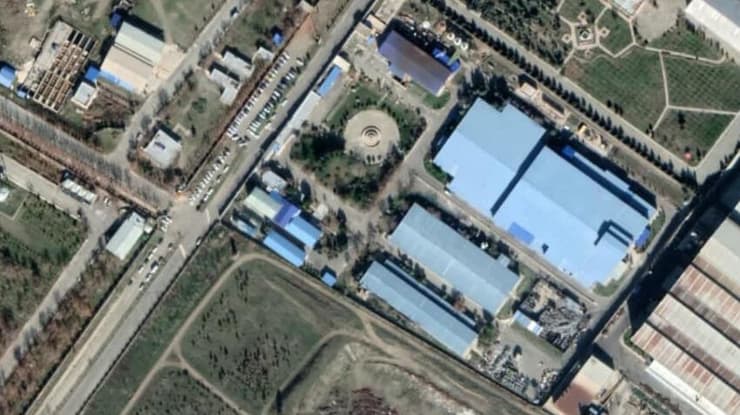
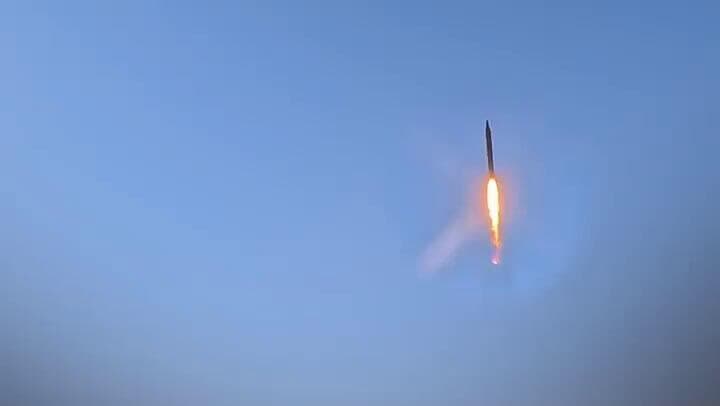


America as a Source of Risk and an Indispensable Mediator: What Ukraine, India and Germany Are...
By September 4, 2026, the image of the United States in Ukrainian, Indian and German debates had split in an unusual way. Washington is simultaneously seen as the only power capable of moving the most dangerous conflicts off dead center and as a country whose impulsive decisions create new crises—from Ukraine to the Persian Gulf. Shared concern does not mean identical conclusions. Ukraine is primarily trying not to become a bargaining chip; India is defending its right to talk to those whom the United States wants to isolate; and Germany is increasingly discussing how to live in a world where American power no longer guarantees either predictability or order.
The most urgent issue for Kyiv is the expected visits by Steve Witkoff and Jared Kushner to Moscow and Kyiv this coming weekend. Donald Trump said his representatives were carrying a “proposal to end the war,” while Volodymyr Zelenskyy confirmed that he was ready to receive them after their talks in Moscow. In the Ukrainian information space, it is not so much the formula of the proposal—which has not yet been published—that matters, but the sequence of events itself: traveling first to Moscow and then to Kyiv is read as a reminder that the United States still claims the role of chief negotiator. Ukrainska Pravda also records Kyiv’s cautious response: Zelenskyy said Ukraine would not conduct airstrikes during the Americans’ visit and expected a symmetrical step from Russia. (pravda.com.ua)
However, Ukraine’s reaction is not limited to hope for a diplomatic breakthrough. Political analyst and head of the Center for Analysis and Strategies Ihor Chalenko, in a comment to the OstroV outlet, offers an interpretation characteristic of Kyiv: Trump has a “short window” before the midterm congressional elections, and he could present even a temporary ceasefire as his own achievement. This is not an accusation of insincerity, but an attempt to understand American motivations through the lens of the domestic political calendar. For Ukraine, it is crucial whether the peace initiative is designed for lasting security or for a quick television result. (ostro.org)
This leads to the Ukrainian paradox: the country needs American involvement, but fears precisely the form of involvement in which speed becomes more important than the terms. Ukrainian analyst Oleksandr Kraiev of the Ukrainian Prism explained the improvement in relations between Kyiv and Trump pragmatically in an interview with Deutsche Welle: Ukraine has become more attractive to the White House because it demonstrates a willingness to cooperate, whereas Russia, in his assessment, is sabotaging normal diplomacy. This view does not romanticize the United States: Kyiv has to prove its usefulness to Washington—in military cooperation, sanctions pressure and the broader security architecture. (amp.dw.com)
The Indian conversation about America these days revolves around a very different boundary of what is permissible—the right of New Delhi to “strategic autonomy.” After Narendra Modi met Iranian President Masoud Pezeshkian at the SCO summit in Bishkek, U.S. Secretary of State Marco Rubio warned that countries helping Tehran circumvent sanctions could themselves face American sanctions. But he also acknowledged India’s right to shape its foreign policy independently. In an analysis by The Indian Express, this duality is conveyed particularly clearly: Washington is not directly accusing India of violating the sanctions regime, but is conspicuously drawing a red line after Modi’s contact with Pezeshkian. (indianexpress.com)
For Indian audiences, this is not merely a dispute over Iran. It is a test of the entire model of relations with the United States: can India simultaneously develop technological, defense and trade cooperation with America, talk to Iran, maintain channels with Russia, and avoid becoming an appendage of anyone’s coalition? The Indian media outlet The Lallantop emphasizes that Tehran expects India to play a diplomatic role in reducing tensions in the Middle East. This is an important local nuance: in the Indian interpretation, contact with Iran is not necessarily economic defiance of the United States, but a potential mediating role for a power capable of speaking to all sides. (thelallantop.com)
The contrast with the official, business-oriented rhetoric about partnership is all the more striking. This week, U.S. Ambassador to India Sergio Gor described bilateral ties as being at “historic highs” and spoke of “fair, reciprocal and mutually beneficial” trade relations, inviting Indian companies to expand investment in American manufacturing, research and distribution. In an Economic Times report, the formula sounds almost like a proposed deal: India receives access to American technology and markets, while the United States gets Indian capital and a broader market for its companies. (m.economictimes.com) But the Indian reaction shows that partnership is welcomed as long as it does not require coordinating every diplomatic gesture with Washington in advance.
Germany views the same America through the prism of lost strategic confidence. In the German debate, the loudest question is not “who is right” in the latest American crisis, but what price Europe is paying for the American style of politics. ARD commentator Carsten Küntopp writes in an article for Tagesschau that the U.S. war with Iran has weakened America itself, while its consequences extend far beyond the Persian Gulf and affect Europe. His argument is not a pacifist rejection of force as such, but a criticism of a policy in which military operations are not accompanied by a viable political strategy. (tagesschau.de)
This idea is also developed in a Handelsblatt commentary: Jens Münchrath believes that the protracted conflict in Iran ultimately strengthens China—the very power Trump is trying to contain. The German criticism is pragmatic in its own way: if the United States becomes bogged down in Iran, it spends resources and political attention, while Beijing, Moscow and regional actors benefit by exploiting the gap between American statements and capabilities. (handelsblatt.com)
For Germany, this is directly connected to Ukraine. An ARD-DeutschlandTrend poll published on September 3 found that 56% of Germans consider the country’s security to be strongly or very strongly threatened by Russia. Tagesschau thus captures the public mood in which any American attempt to reach a quick agreement with Moscow causes not relief, but demands that Europe have its own voice and its own security guarantees. (tagesschau.de) It is no coincidence that German debates about a peace agreement repeatedly return to the argument that European security cannot be discussed without Europe, and that lasting peace is impossible without guarantees for Ukraine. (amp.dw.com)
The most unexpected common thread between Kyiv, New Delhi and Berlin is that none of them considers the United States unimportant. On the contrary, America remains too significant simply to distance themselves from it. But local expectations differ. Ukraine wants American mediation not to turn its sovereignty into a bargaining chip. India wants partnership without the discipline imposed on a junior ally. Germany wants its alliance with the United States not to mean strategic dependence on decisions Europe cannot control.
That is why today’s international reaction to Washington is not simply a wave of anti-Americanism. It is a demand that the United States be not only strong, but also predictable; not only capable of initiating negotiations or applying pressure, but also ready to take responsibility for the consequences. For Ukraine, the price of that responsibility is measured in borders and lives. For India, it is measured in freedom of diplomatic maneuver. For Germany, it is measured in Europe’s ability not to become a spectator in matters of its own security.
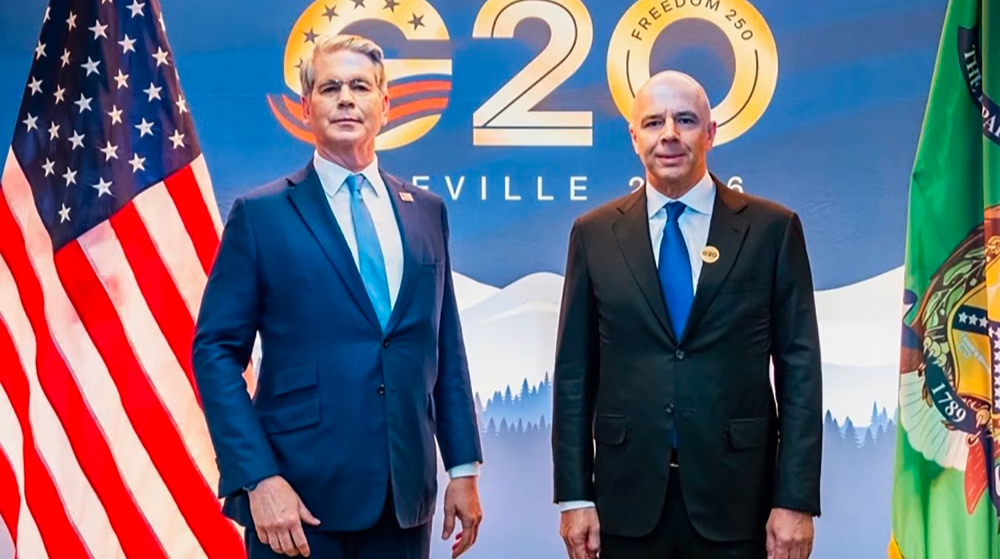
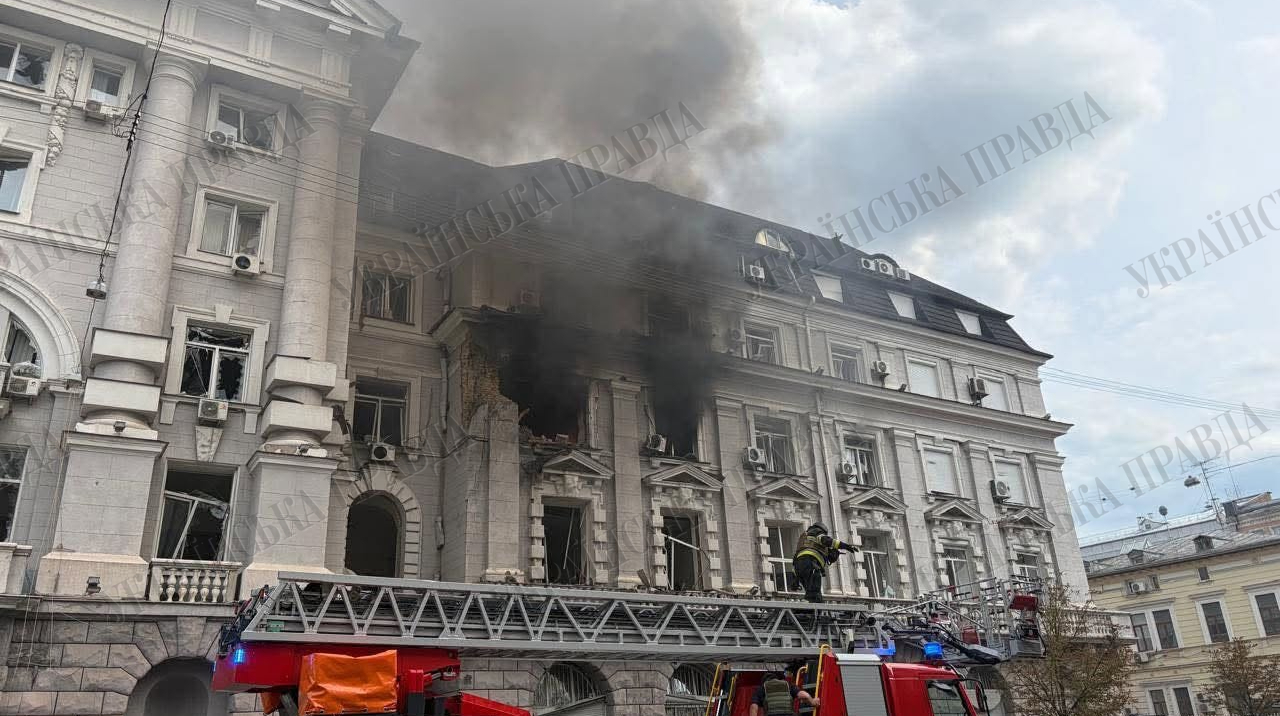
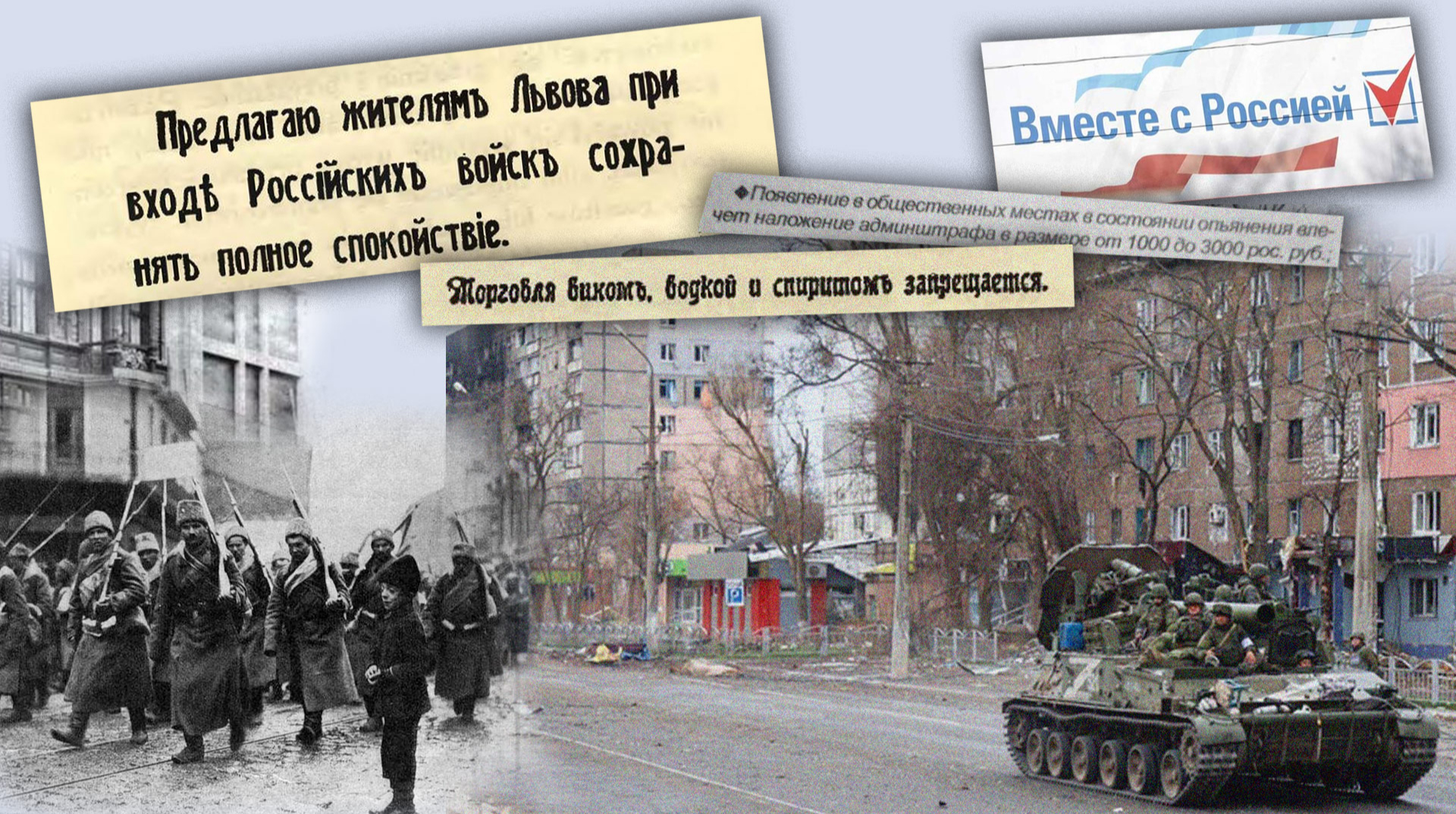
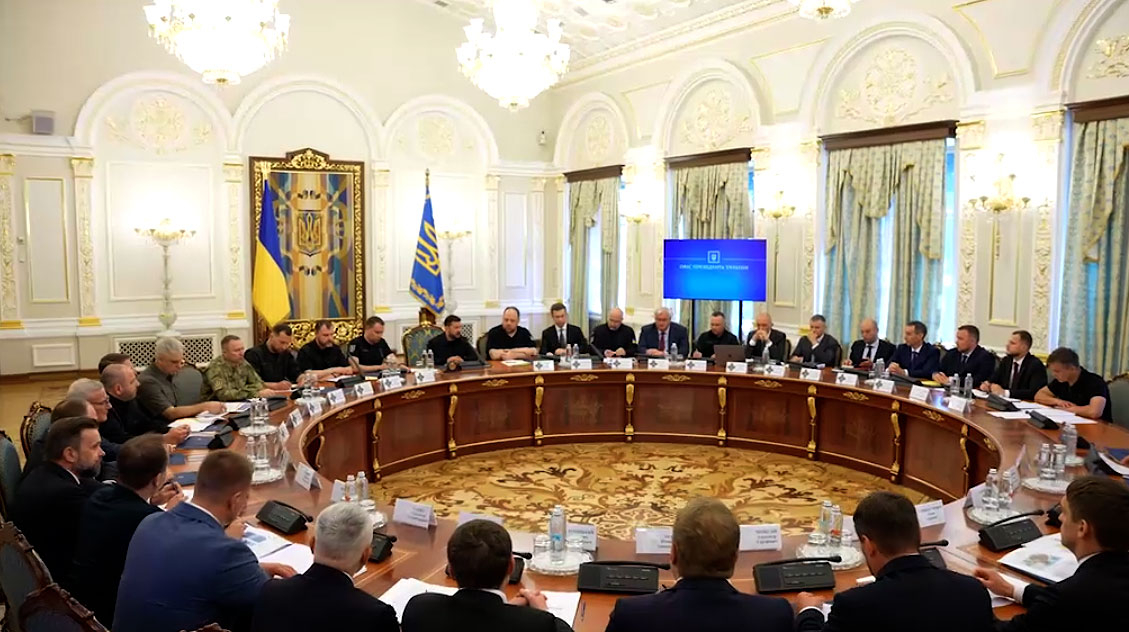



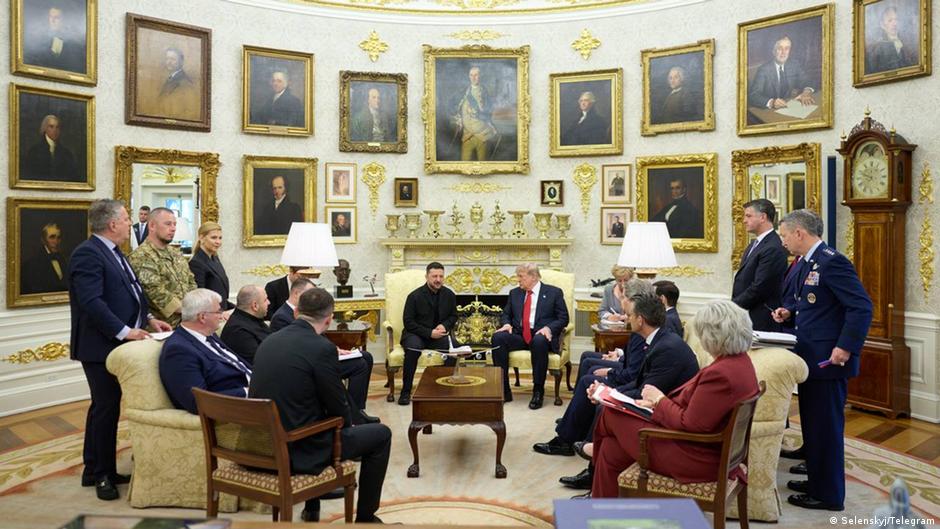

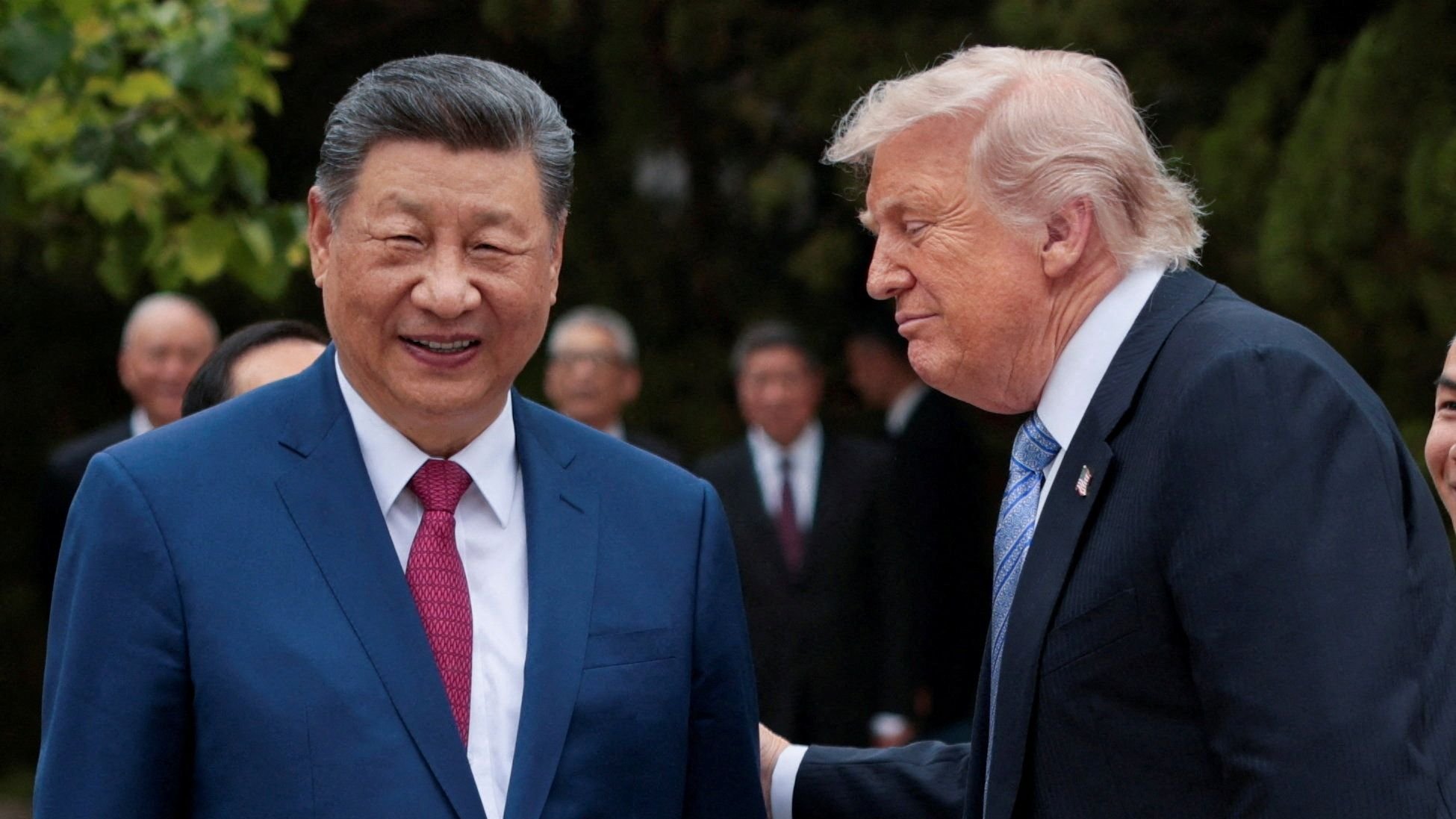
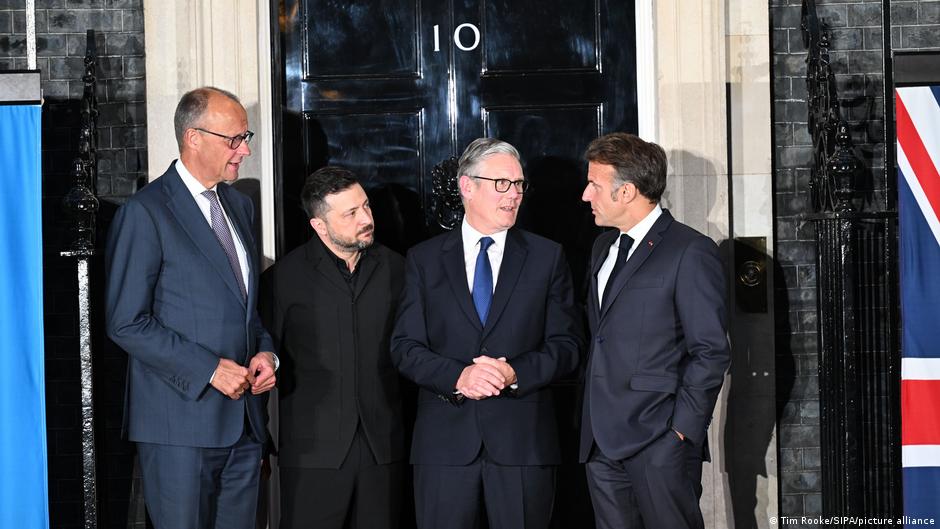
News 04-09-2026
America as an Indispensable but Unreliable Power
By early September 2026, the United States had simultaneously become the main source of hope, anxiety, and strategic dependence for Saudi Arabia, Israel, and Russia. Local discussions are no longer focused simply on “American influence,” but on a far more troubling question: can the administration in Washington bring to completion the wars, negotiations, and promises that it itself sets in motion? The most widely discussed issues have been the American confrontation with Iran and the security of shipping through the Strait of Hormuz, the US attempt to shape Gaza’s postwar order, and the renewed—though extremely vague—diplomacy between Moscow, Washington, and Kyiv.
In Saudi and, more broadly, Arab expert circles, America is viewed primarily through the prism of the war with Iran. The main dispute is not over US military power as such, but over the political price of using it. An article by the Al Jazeera Centre for Studies describes American strikes as actions capable of temporarily destroying missiles, bases, or air-defense elements, but not of creating a stable order in the Persian Gulf. This is a crucial local qualification: for Riyadh, security is not a spectacular operation, but predictable shipping, the protection of energy infrastructure, and the absence of missile strikes against neighboring states.
The American policy toward the Strait of Hormuz was discussed with particular concern. Arab analysts noted that Washington initially linked protection of the maritime route to the idea of a 20 percent levy on passing cargoes, then quickly abandoned it in favor of investment and trade agreements with Gulf states. In the local interpretation, this looks less like a carefully designed architecture of collective security than an expression of America’s transactional approach: the protection of an ally is increasingly presented as a service with a political or economic bill attached. A study by the Middle East Council on Global Affairs puts the conclusion more bluntly: the war demonstrated the vulnerability of the Gulf Cooperation Council states’ civilian infrastructure and the limited reliability of the American “umbrella.”
Yet in Saudi Arabia this does not translate into calls to break the alliance with the United States. On the contrary, the local logic is that there is no alternative to American technology, intelligence capabilities, and military presence, but dependence on them must be hedged through regional air defense, independent diplomatic channels, and economic maneuvering. Saudi reactions to America are therefore ambivalent: Washington remains an indispensable partner, but is no longer considered a partner to whom the management of risks can be handed over unconditionally.
In Israel, the same American style produces a different emotion—not fear of being left without protection, but fear of losing freedom of action. Israeli commentators increasingly speak of Washington not as an ally helping to wage a war, but as a power defining its boundaries. Military analyst Michael Milshtein wrote in a column for Ynet that the public dispute over turning Israel into an American “client state” overlooks a historical fact: the United States has stopped Israel before, but its current involvement is different in depth—Washington is claiming not merely the right to issue instructions, but a presence in the very mechanism for controlling Gaza and enforcing a ceasefire.
This also explains Israeli skepticism toward high-profile American statements about agreements. In an article published on September 4, “Agreements Without Backing”, commentator Doron Hader suggests that the arrangements concerning Gaza, Iran, and Lebanon should be called what they are in practice: not peace deals, but ceasefires. This semantic correction matters. The Israeli debate does not deny the usefulness of American pressure on Iran or mediation in Gaza; it questions whether the White House has managed to turn a series of pauses into a stable order. In the same publication, expert Eldad Shavit makes the criticism of President Trump even more directly: he understands how to pressure Tehran, but does not explain what the political end state of that pressure should be.
The paradox is that some Israeli writers simultaneously demand greater US involvement and fear it. An August review of the situation in Gaza describes the American project for Gaza’s future almost ironically—as a dream of a “green Gaza”—while Israel is forced to balance between Trump’s demands and its own right-wing electorate. The Saudi perspective is sharply different here: for Riyadh, an American postwar arrangement for Gaza makes sense only as part of a regional formula that includes a Palestinian political horizon and conditions for normalization. For Israel’s right-wing camp, such a formula looks above all like a restriction on sovereignty and military initiative.
Russia’s reaction to the United States in recent days has been less emotional, but even more instrumental. Moscow is not concerned with whether America will return to dialogue on Ukraine, but with whether it will bring to the negotiations not a media gesture, but acceptable terms. On August 28, Kremlin spokesman Dmitry Peskov said that the negotiating process was “on pause” and that there were no new ideas, stressing that Ukraine knew Russia’s demands, Kommersant reported. Deputy Foreign Minister Sergei Ryabkov, meanwhile, confirmed Moscow’s readiness to discuss American initiatives, but only if its “fundamental positions” were taken into account, according to his comment.
From this Russian perspective, the United States is still essential as the only power capable of exerting real influence on Kyiv and its European allies, but there is no confidence in its consistency. Fyodor Lukyanov, editor-in-chief of the journal Russia in Global Affairs, commenting on possible undisclosed contacts, said that given the situation at the front, this was “not the moment for negotiations”; his words were quoted by Kommersant. This reflects a widespread view in Russia: diplomacy with Washington is possible, but Washington itself is too preoccupied with Iran, the Middle East, and domestic political disputes to guarantee the implementation of even its own proposals.
This is where the three very different countries converge. Saudi Arabia sees America as a military guarantor that can create a threat and then offer protection from it. Israel sees it as the only ally whose support is simultaneously becoming a constraint. Russia sees it as an indispensable negotiator whose signals must be tested not through statements, but through concrete concessions and enforcement mechanisms. American power has not disappeared—quite the opposite: it is precisely that power that makes the United States a central participant in all these crises. But local reactions point to a deeper change: Washington is no longer viewed as the architect of final solutions. It is seen as a force without which nothing begins, but which has yet to prove that it can reliably finish what it starts.


Japan on the Price of American Power
Japanese media are discussing the consequences that the United States’ coercive policies could have for the world and the economy. Against the backdrop of the conflict with Iran and mounting sanctions pressure, particular attention is being paid to rising fuel prices, the strategic role of Venezuela’s heavy crude oil, and the risk that excessive use of dollar sanctions could accelerate countries’ shift away from the American currency. In this way, the military and energy agenda is becoming part of a broader debate about the limits of Washington’s influence and the price of its decisions. This material is based on publications by Vietnam.vn and Asahi Shimbun (Japan).
Japan Sees Economic Risks in Fuel Prices and Dollar Sanctions
Rising diesel prices in the United States and the expansion of American sanctions against Iran are being viewed by Japanese observers as interconnected signals of instability in the global economy. For a country heavily dependent on energy imports, maritime trade, and the dollar-based financial system, tensions in the oil market and the use of currency settlements as an instrument of pressure could quickly affect transportation, food, manufacturing, and household costs.
According to a report on the situation in the US diesel market, on September 2, the US diesel refining margin reached a historic high of $108.02 per barrel. The record was set amid concerns about a supply shortage, while market anxiety persisted even after official data showed a slight increase in domestic diesel inventories.
Experts at consulting firm Lipow Oil Associates call diesel “a key fuel for road transportation, agriculture, and industrial production.” Its rising cost, they warn, increases transportation expenses and quickly spreads throughout the entire economic chain, ultimately affecting food prices.
For Japan, this is not merely a story about the US market. The country depends on imports of oil, liquefied natural gas, and other energy resources, meaning that supply disruptions abroad, insufficient refining capacity, or interruptions to maritime logistics could drive up fuel prices domestically as well. Higher costs could then affect freight transportation, agriculture, industry, electricity and gas rates, and eventually consumer prices.
This scenario becomes particularly painful when the yen weakens: higher dollar-denominated prices for oil and petroleum products then increase import costs even more when converted into the Japanese currency. A diesel shortage in the United States could intensify international competition for petroleum products, creating additional pressure on Japanese companies’ expenses. This echoes recent experience, when expensive energy already led to higher utility rates, transportation costs, and retail prices.
Against this backdrop, the Japanese press is also focusing on another source of global uncertainty: Washington’s sanctions policy. In an analytical Asahi Shimbun column, the dollar is presented as America’s most important instrument for pressuring its adversaries, but also as a potential source of long-term risks for the global financial system itself.
The publication was prompted by the strengthening of measures against Iran amid a deadlock in military operations and diplomatic efforts. Presenting additional restrictions on August 24, US Treasury Secretary Bessent declared: “There is no one beyond the reach of American sanctions.” Washington is signaling that countries and companies continuing to do business with Iran could be cut off from financial infrastructure based on dollar settlements.
The column’s author notes that the systematic use of the dollar as a sanctions tool intensified sharply after the terrorist attacks of September 11, 2001. The administration of George W. Bush then instructed government agencies to use all available means in the fight against terrorism, and the financial system became one of the key fronts of that policy. The particular strength of the United States lies in its ability to control critical nodes of the global economy: dollar payments, banking operations, and access to the international financial network.
However, according to Asahi Shimbun, this very strength is a “double-edged sword.” The more often the dollar system is used for coercion, the more likely it becomes that participants in global trade will seek ways to reduce their dependence on it. Possible alternatives include settlements in national currencies, regional payment mechanisms, gold, and central bank digital currencies.
For Japan, the issue is especially sensitive. Japanese companies, banks, insurers, shipping operators, and industrial groups are deeply integrated into the dollar system. The expansion of secondary sanctions could force businesses to make a difficult choice: comply with American restrictions or maintain ties with third countries. In Iran’s case, financial pressure is also linked to the risk of instability in the Middle East, a region that remains critically important for Japan’s energy supplies.
As the publication emphasizes, Japan’s concerns do not imply support for Iran or rejection of sanctions as a political instrument. The issue is trust in the dollar and the predictability of the rules governing global trade. If transactions in the American currency are increasingly perceived as politically vulnerable, a gradual shift away from the dollar could become more likely. Such a process would not necessarily be rapid, but it could reshape the financial environment on which Japan’s economy largely depends.
For Tokyo, this creates a dilemma. Japan is interested in preserving American leadership, the security of sea lanes, and the stability of the international order. But as an export-oriented and import-dependent economy, it also needs open markets, reliable logistics, and rules that do not change under the pressure of yet another geopolitical conflict.
The record diesel margin in the United States and the debate over the dollar’s use as a sanctions tool reveal one common problem: geopolitics is having an ever-deeper impact on everyday economic life. For Japan, this underscores the importance of strategic reserves, supplier diversification, resilient maritime logistics, energy conservation, and the development of renewable energy sources. At the same time, the country must recognize that instability in the global financial system and fuel markets can harm not only the adversaries of the United States, but its allies as well.

News 03-09-2026
America as Deal, Risk, and Indispensable Ally: What South Korea, South Africa, and Ukraine Now Think...
As of September 3, 2026, discussions about America in Seoul, Pretoria, and Kyiv are united not by a single event, but by a new sense of US unpredictability. Washington is simultaneously offering negotiations with adversaries, tying access to its market to investment inside the country, and scaling back its customary forms of international engagement. Yet in all three countries, this is provoking not an identical anti-American reaction, but a far more complicated question: how can they cooperate with a power on which their own security or economy still critically depends when that power is increasingly acting like a tough bilateral negotiator?
In South Korea, the most heated debate concerns the transformation of the alliance into an economic transaction. New US plans for tariffs on semiconductors are seen as more than a trade dispute: at stake is the foundation of Korea’s export model—Samsung and SK hynix, electronics supply chains, and investment in memory-chip production. As noted in an analysis by Ajou Economy, US Commerce Secretary Howard Lutnick stated the principle with utmost clarity: locate production in the United States and receive tariff relief; do not, and pay for access to the largest market. The Korean interpretation of this policy is that Washington is using not ordinary protectionism, but a “tax on the geography of production”: an ally is offered continued market access only at the price of moving part of its industrial base to America. (ajunews.com)
This explains Seoul’s unease over the Alaska LNG project, to which President Trump is once again inviting South Korea and Japan. In the local press, this is being read as package pressure: tariffs, investment in US plants, and participation in costly energy infrastructure are being placed in a single political basket. Professor Kim Sung-hyo, the author of an analysis in Weekly Donga, describes the situation as “all-out pressure” on Seoul: the threat now concerns not individual sectors, but the Korean stock market as a whole. In his account, Washington first secured promises of major investment in the United States in exchange for a lower tariff, and then gained additional leverage when implementation of those promises slowed. (weekly.donga.com)
For Korea, however, economic anxiety is inseparable from security. Trump’s attempts to renew direct dialogue with Kim Jong Un and the scaling back of some Ulchi Freedom Shield exercises are prompting a mixed reaction. On the one hand, easing tensions on the peninsula could support markets and open a path to diplomacy. On the other, Seoul fears that the US president could strike a symbolically impressive deal with Pyongyang without safeguarding Korean interests. Professor Park Won-gon of Ewha Womans University warns in a Yonhap article that without “ironclad” US–South Korean coordination, negotiations with the North could lead to Seoul’s effective exclusion from the process. This is the local meaning of the phrase Korea passing: not a rupture in the alliance, but the risk that decisions about Korea will be made without Korea. (yna.co.kr)
Ukraine’s reaction to America looks almost like a mirror image of Korea’s. Kyiv likewise fears diplomacy in which its fate is decided by great powers, but for Ukraine the cost of a mistake is measured not in investment and exports, but in territory, lives, and the stability of the front. Ukrainian media are interpreting Trump’s September 3 statement that he is ready to meet Vladimir Putin only when Putin is prepared to sign an agreement ending the war as a potentially tougher signal to the Kremlin. But there is little optimism in it: the same Ukrainska Pravda report emphasizes that on August 31, Volodymyr Zelenskyy cited intelligence indicating that Putin had no intention of ending the war. (pravda.com.ua)
Ukrainian public debate has therefore long developed a kind of immunity to Washington’s peacemaking rhetoric. Local analysts do not reject negotiations, but assess them by a practical criterion: do they lead to pressure on Russia, or to pressure on Ukraine for the sake of a quick deal? In a ZN.ua analysis, the cautious thaw between Trump and Zelenskyy is explained not by a change of mood, but by the fact that Russia’s intransigence and Ukraine’s military resilience have altered the White House’s political calculations. The main Ukrainian conclusion is almost cynical: America’s goodwill is not a constant; it must be reinforced by Ukraine’s own agency, battlefield results, and ability to offer the United States a workable strategy. (zn.ua)
South Africa views the same American transformation through a different lens—dignity, multipolarity, and the consequences of the United States abandoning its former role in the world. In Pretoria, irritation is caused not only by Washington’s tariff and diplomatic toughness, but also by the very logic through which it turns humanitarian aid, market access, and political recognition into instruments of punishment or reward. The winding down of US funding for HIV programs is especially painful: civil-society organizations warn that young women and girls are the first to be affected, while most programs are expected to end by late September. (apnews.com)
South African criticism, however, does not boil down to the slogan “America must pay.” Political philosopher Sarah Setlaelo formulates a deeper grievance in a Daily Maverick column: there is a shift “from cooperation to competition, from development to resource extraction, from multilateralism to transactionalism.” For a country that sees itself as a voice of the Global South and relies on BRICS, this is not merely a diplomatic change, but a test of its ability to act without paternalistic dependence on the West. (dailymaverick.co.za)
At the same time, South Africa’s reaction is noticeably more pragmatic than its sharp rhetoric. The new ambassador, Roelf Meyer, a veteran of the negotiations that ended apartheid, arrived in Washington not for an ideological confrontation, but with the task of rebuilding trust and expanding trade and investment. In an interview with Daily Maverick, he says that Pretoria still has friends among both Republicans and Democrats. This is an important local qualification to the widespread perception of South Africa as an unequivocally anti-American country: Pretoria’s elite is not seeking a break, but a more equal way to remain engaged with America. (dailymaverick.co.za)
The common thread among all three countries is not so much fear of American power as distrust of its inconsistency. For Ukraine, the United States remains an indispensable source of military and diplomatic support, but every American initiative is assessed for the risk of an imposed compromise with Moscow. For South Korea, the US alliance remains the foundation of deterrence against North Korea, yet it no longer guarantees protection from trade pressure and does not rule out Seoul being “bypassed” in negotiations with Pyongyang. For South Africa, America is still an important market, investor, and healthcare partner, but it is no longer seen as a reliable guardian of multilateral rules.
The most unexpected common feature of these reactions is the determination not to choose between submission and rupture. Kyiv is seeking influence over US strategy through its own resilience; Seoul is trying to turn dependence into coordination, without allowing trade concessions to replace security; Pretoria wants to respond to pressure by expanding ties with other centers of power rather than through isolation. In all three societies, America remains too powerful to ignore, but is now too transactional to simply trust.
![US President Donald Trump [Photo: UPI·Yonhap News]](https://image.ajunews.com/content/image/2026/09/03/20260903162236299934.jpg)
America as a Source of Risk: Why Seoul, Berlin and Kyiv Now Debate Not US Power, but Its Price
As of September 2, 2026, the attention of South Korea, Germany and Ukraine is focused less on the domestic twists and turns of American politics than on the consequences of two foreign-policy decisions by Washington: the renewed military escalation with Iran around the Strait of Hormuz and the United States’ closed-door contacts with Moscow over an alleged 28-point plan to end the war in Ukraine. At first glance, these are different stories—oil and tankers in the Persian Gulf, negotiations over territory and sanctions in Europe. Yet local debates converge on one point: America’s allies increasingly see Donald Trump’s administration as a power capable of rapidly using force or opening a negotiating channel, but far less predictable when it comes to who will ultimately pay for the strategic consequences.
The Iran issue is particularly acute in Seoul. For South Korea, Hormuz is not an abstract piece of Middle Eastern geography, but an artery on which energy imports, freight rates, export competitiveness and consumer sentiment depend. A review by the National Strategic Information Portal of the National Assembly Library of the Republic of Korea records that after a new exchange of strikes on August 30 and September 1, two tankers were attacked in the strait, including a vessel linked to the Korean company Chang Myung Shipping; shipping traffic fell sharply, while oil prices rose by approximately 5%. This turns the American operation from news about a distant war into a direct economic risk for South Korea. (nsp.nanet.go.kr)
The Korean reaction is practical and almost entirely devoid of ideological pathos. The question is framed not as “Should the United States contain Iran?” but as “Does Washington have a realistic way out of the conflict without disrupting transit and markets?” The official Korean review explicitly warns of the risk that recurring limited clashes could become entrenched—a state somewhere between peace and war. (nsp.nanet.go.kr) For a country whose industries are particularly sensitive to raw-material costs and maritime logistics, this is the worst-case scenario: not a one-off shock that can be offset with reserves, but a prolonged risk premium built into the price of oil, insurance and shipping.
But in Seoul, this concern has a second layer. The war with Iran is viewed as a factor capable of changing Trump’s priorities on the Korean Peninsula. In a Korea Economic Daily article, the reduced scale of the US–South Korean Ulchi Freedom Shield exercises is explained as an attempt by the White House to achieve quick diplomatic results with Pyongyang ahead of the US midterm elections in November. The author calls this a continuation of Trump’s “transactional” view of the alliance: security is assessed in terms of cost and the partner’s reciprocal contribution. (wsj.hankyung.com) Professor In Eul-chul of Kyungnam University’s Institute for Far Eastern Studies adds an uncomfortable detail for Washington: thanks to its military and economic rapprochement with Russia, as well as cooperation with China, North Korea now depends significantly less on diplomacy with the United States. (wsj.hankyung.com) In other words, the Korean perspective is that the American president may want a quick détente, but Pyongyang is no longer obliged to help him create such a picture of victory.
In Germany, the escalation with Iran provokes similar concern, but it is expressed in a different language—the language of strategic futility and Europe’s financial vulnerability. In a Deutsche Welle analysis, the American practice of regularly striking Iranian facilities as they are rebuilt is described as “mowing the lawn”: the adversary is not destroyed once and for all, but periodically weakened to an acceptable level. The problem, the article emphasizes, is that this model may not eliminate the threat but instead make the war self-sustaining: Tehran rebuilds its air defenses, radars, missiles and mine-laying capabilities, and the United States strikes again. Moreover, Mona Yacoubian, an expert at the Center for Strategic and International Studies, warns that continued attacks could push Iran to conclude that its only reliable means of deterrence is its own nuclear weapon. (amp.dw.com)
This is an important German perspective: Berlin does not dispute that the security of shipping in the Strait of Hormuz matters, but fears that Washington’s chosen method of ensuring it will produce precisely the kind of prolonged instability from which Europe suffers most. In a column for Südkurier, German commentator Christian Grimm links the Iran campaign to another American problem—public debt, inflation and high interest rates. His conclusion is blunt: the growth of US borrowing is already making credit more expensive for other countries, while military spending and high fuel prices increase the threat of renewed financial stress. (suedkurier.de) Behind this criticism lies more than irritation with Trump. Germany feels dependent on two American variables at once: American military power in the security sphere and American monetary and fiscal policy in the economy.
Ukraine’s reaction to the US conflict with Iran is even sharper, because Kyiv measures every new American commitment not only in oil, but also in air-defense missiles. In a column by Mykhailo Dubinyansky in Ukrainska Pravda, the war with Iran was described as a risk that American surface-to-air missiles could be diverted from Ukraine—a category of weapons that was already in chronically short supply there. (pravda.com.ua) Ukraine’s fear is not that the United States will lose interest in the war with Russia because of a single Middle Eastern crisis. It is deeper: Washington may remain involved in several conflicts at once, but begin allocating scarce resources according to the logic of an immediate American threat rather than the logic of Europe’s long-term security.
At the same time, Ukraine is trying not to reduce American policy to the simple formula “Trump is pro-Russian.” An analysis of the consequences of the Anchorage summit offers a more precise—and perhaps more troubling—idea: Trump is primarily “pro-Trump.” Ukraine may be valuable to him as a source of combat experience, drone technology, joint production and future commercial projects, but that usefulness does not equal security. The author puts it almost aphoristically: new interdependence with the United States makes Kyiv more valuable to Washington, “but not safer.” (pravda.com.ua)
That is why the renewed discussion of the 28-point peace plan is being received so nervously in Kyiv. According to Gazeta.ua, on September 1, US Treasury Secretary Scott Bessent discussed Trump’s plan with his Russian counterpart Anton Siluanov, while Ukrainian society followed the developments amid air-raid alerts and Russian strikes. The article highlights what matters most to the local mood: it is not the fact of negotiations itself that matters, but their outcome. The author sees a danger in Europe once again finding itself on the margins of the discussion, even though its own approach had been coordinated with Kyiv. (api.gazeta.ua)
Here, the German and Ukrainian reactions converge almost word for word. For Kyiv, negotiations without firm guarantees could create a pause in which Russia rearms. For Germany, they are dangerous because the United States may reach an agreement on European security in a format where Europe is present more as an object of the consequences than as a full-fledged participant. It is telling that, in the same Ukrainian article, Siluanov’s arrival at a meeting of G20 finance officials is called an “alarming signal,” while German Finance Minister Lars Klingbeil reportedly reacted especially sharply to his presence. (api.gazeta.ua)
The most unexpected feature of these three national debates is the absence of the familiar question of whether the United States will remain the leader of the West. Seoul, Berlin and Kyiv start from the assumption that America remains indispensable—as a military power, issuer of the world’s key reserve currency, provider of technology and security partner. The dispute is about something else: can a strategy be built around an ally that simultaneously protects sea routes and turns them into a war zone; promises negotiations while leaving their terms uncertain; demands greater contributions from its partners while making decisions capable of sharply increasing their risks?
South Korea is responding by trying to calculate the cost of American actions for tankers, oil and deterrence against North Korea. Germany is calling for reduced dependence on Washington’s political impulses without severing the transatlantic link. Ukraine is seeking to turn its military value to the United States into lasting security, rather than allowing it to become a bargaining chip in a larger deal. The common conclusion among local voices is not anti-American. It is far more complicated: Trump’s America remains necessary, but its allies are finding it increasingly difficult to regard it as predictable.
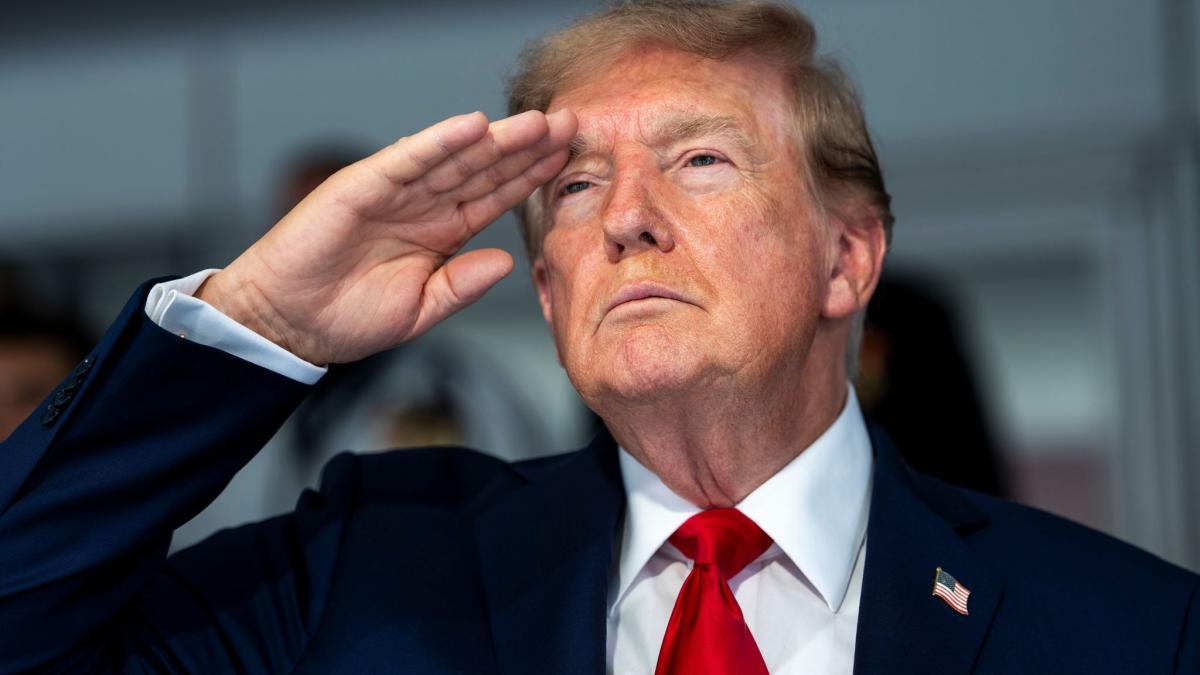
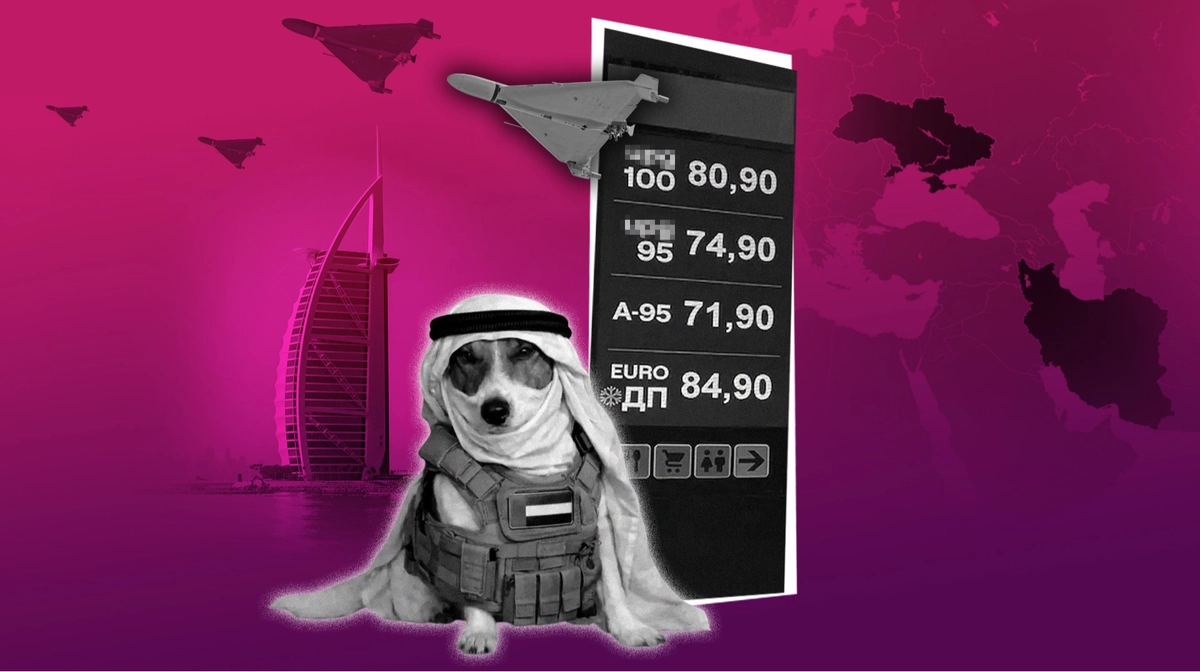
News 02-09-2026
America as a Source of Risk: Why Australia, France and Germany Are Increasingly Talking Not About...
In the final days of August and early September 2026, the United States has become a subject of discussion in Australia, France and Germany not because of a single high-profile statement by Donald Trump, but because of a cumulative effect: American foreign policy, trade measures and pressure on technology regulation are perceived as parts of one model. The ally remains indispensable, but at the same time looks like an unpredictable partner capable of turning security, market access or access to technology into a bargaining tool. Three interconnected themes stand out: new US tariffs, the protracted war with Iran and the dispute over European digital sovereignty.
Trade is the most tangible nerve of this debate. In Australia, irritation is caused not simply by the 12.5 percent US tariff on imports, but by its official justification: Washington linked it to allegedly insufficient action against goods produced using forced labor. Canberra rejects this argument as lacking a convincing evidentiary basis. In an ABC analysis, Prime Minister Anthony Albanese describes his conversation with Trump as “productive, constructive … and substantial,” but the diplomatic formula itself highlights the weakness of Australia’s position: a close military ally is forced not to negotiate as an equal, but to ask the White House merely to “consider” an exemption from the tariff regime.
Australia’s reaction is particularly revealing because it is not reducible to anti-Americanism. Albanese reminds Trump of decades of US trade surpluses with Australia and of the scale of Australian investment in the United States—in other words, he appeals to the logic of alliance and mutual benefit. But an ABC economic analysis reaches a different conclusion: the problem for exporters is not only the additional cost of entering the US market, but also the unpredictability of the rules. If a tariff can be quickly overturned by a Supreme Court decision and then almost immediately replaced through another legal mechanism, businesses cannot plan investments, supply chains or contracts. The US market remains important to Australia, but no longer appears institutionally reliable.
In France and Germany, the same process is viewed through a European lens. Paris and Berlin are dealing not with a bilateral exemption, but with US tariffs on EU goods and the consequences of an agreement that formally capped some tariffs without restoring the previous normality. France’s customs administration explicitly states that the additional rate for goods originating in the EU has been capped at 15 percent since August 1, 2025, while in 2026 the regime was adjusted again following US legal and political maneuvers. This is no longer a “trade dispute” in the traditional sense, but a constantly changing system of administrative pressure, described on the French customs website.
France’s distinctive feature is its political vocabulary. In Paris, the tariff concession to Washington is often assessed not only as the price of preventing a worse scenario, but also as a symptom of European dependence. When the previous tariff agreement was criticized in France as “soumission”—submission—it reflected a much broader concern: the United States is using the imbalance of power to force Europe to accept rules it did not choose. Germany speaks more cautiously, since its export industry is particularly sensitive to disruption in transatlantic trade. But a Bundesbank analysis clearly records German concerns: for Germany and the euro area, the main impact comes through weaker exports to the United States and increased uncertainty over trade policy. In Berlin, the question is less whether Trump is right than what this uncertainty will cost Germany’s industrial model.
The second common theme is the US war with Iran and its consequences for confidence in American leadership. Six months of conflict have changed the allies’ perspective. The issue is no longer whether to support a particular strike, but the fear of being drawn into a conflict whose objectives keep shifting—from promises to end the operation quickly to efforts to secure shipping in the Strait of Hormuz. The Associated Press notes that US priorities have noticeably shifted toward the Strait of Hormuz, which is especially painful for Europeans and Australians dependent on the stability of global energy supplies and maritime trade.
Australian commentators view the Iranian crisis primarily as a test of the limits of ANZUS and AUKUS. An ABC report on Canberra’s “red line” emphasized that political support for the US operation does not amount to a readiness to automatically commit military forces. This is where a rare shift in Australia’s tone becomes visible: a country accustomed to viewing the United States as the foundation of its own defense is trying to separate support for the alliance from participation in every American war. At the same time, its dependence has not disappeared. Albanese is simultaneously seeking a tariff exemption, discussing Iran and confirming that the AUKUS nuclear submarine program is moving “full steam ahead.” The result is a paradox: Canberra is seeking greater freedom of action precisely because it is so deeply integrated into US strategy.
In France and Germany, the Iran issue intensifies the longstanding debate over Europe’s strategic autonomy. The French view is the sharpest: Europe is discovering that it pays for and experiences the consequences of American decisions alongside the United States, but has no real influence over them. A Le Monde opinion column poses a painful question: how did Europeans, who played a central role in the negotiations over the 2015 nuclear agreement, end up virtually pushed aside after the war began? The authors link this not only to military weakness, but also to the fact that diplomacy increasingly depends on leaders’ personal decisions and the informal circles around them rather than on stable institutions.
Germany’s reaction is more contradictory. Berlin cannot afford a rupture with Washington: US guarantees, bases and command structures remain of fundamental importance to European security. But this is precisely why German commentators are increasingly framing the problem as one of “reliability.” In an August article in Die Zeit, the American president is described as a source of a constant stream of threats to NATO, tariff displays and political improvisation, while peace in Europe still depends to a large extent on US military capabilities. This is not a call to abandon the United States; it is an acknowledgment that Germany is not yet capable of replacing America, but can no longer base its policy on the assumption that America will always be predictable.
The third theme reveals the deepest Franco-German disagreement with Washington: the struggle over regulation of digital platforms. If the United States is primarily a military protector and market for Australia, then for France and Germany it is also a source of critical technological dependence. In Paris and Berlin, threats of new trade measures in response to European fines and rules for US technology giants are viewed not as a narrow conflict involving Google or social media, but as an attempt to restrict Europe’s right to establish its own standards.
Emmanuel Macron stated this position in particularly strong terms: “Nous serons inflexibles”—“we will be uncompromising”—speaking about the defense of European regulation. Chancellor Friedrich Merz, for his part, said that “legislative sovereignty in Europe and its member states cannot be called into question by anyone.” These remarks, cited in a Le Monde analysis, matter less for their harshness than for the rare convergence between the French and German approaches. Paris has traditionally emphasized sovereignty and the EU’s ability to wield power; Berlin has usually feared trade escalation. Yet US pressure is bringing them closer together.
This convergence is already taking institutional shape. Following the Franco-German Council of Ministers in July, both countries declared their intention to advance a European technology sovereignty package: not to close markets, but to reduce critical dependencies, develop domestic capacity in AI and digital infrastructure, and preserve the EU’s right to regulate platforms. This approach is set out in the Élysée Palace’s joint conclusions and the French Finance Ministry’s position. Notably, “digital sovereignty” here does not mean abandoning American technology. It means seeking the ability to function, protect data and enforce its own laws even in the event of political pressure from its closest ally.
The main conclusion from Australia, France and Germany is that the image of the United States is changing not from affection to hostility, but from confidence to risk management. Australia is trying to preserve its defense ties with Washington, but does not want AUKUS to automatically mean participation in every American campaign. France is using the tariff and technology conflict as an argument for a more independent Europe. Germany, the country most dependent on American security and open trade, is gradually acknowledging that the old transatlantic formula no longer guarantees either.
The most unexpected detail of this international reaction is not the three countries’ desire to sever ties with the United States, but almost the opposite: a desire to preserve the alliance, trade and technological cooperation while simultaneously creating safeguards against decisions made by Washington itself. America remains necessary. But in Canberra, Paris and Berlin, people are increasingly starting from the premise that necessity is no longer synonymous with trust.



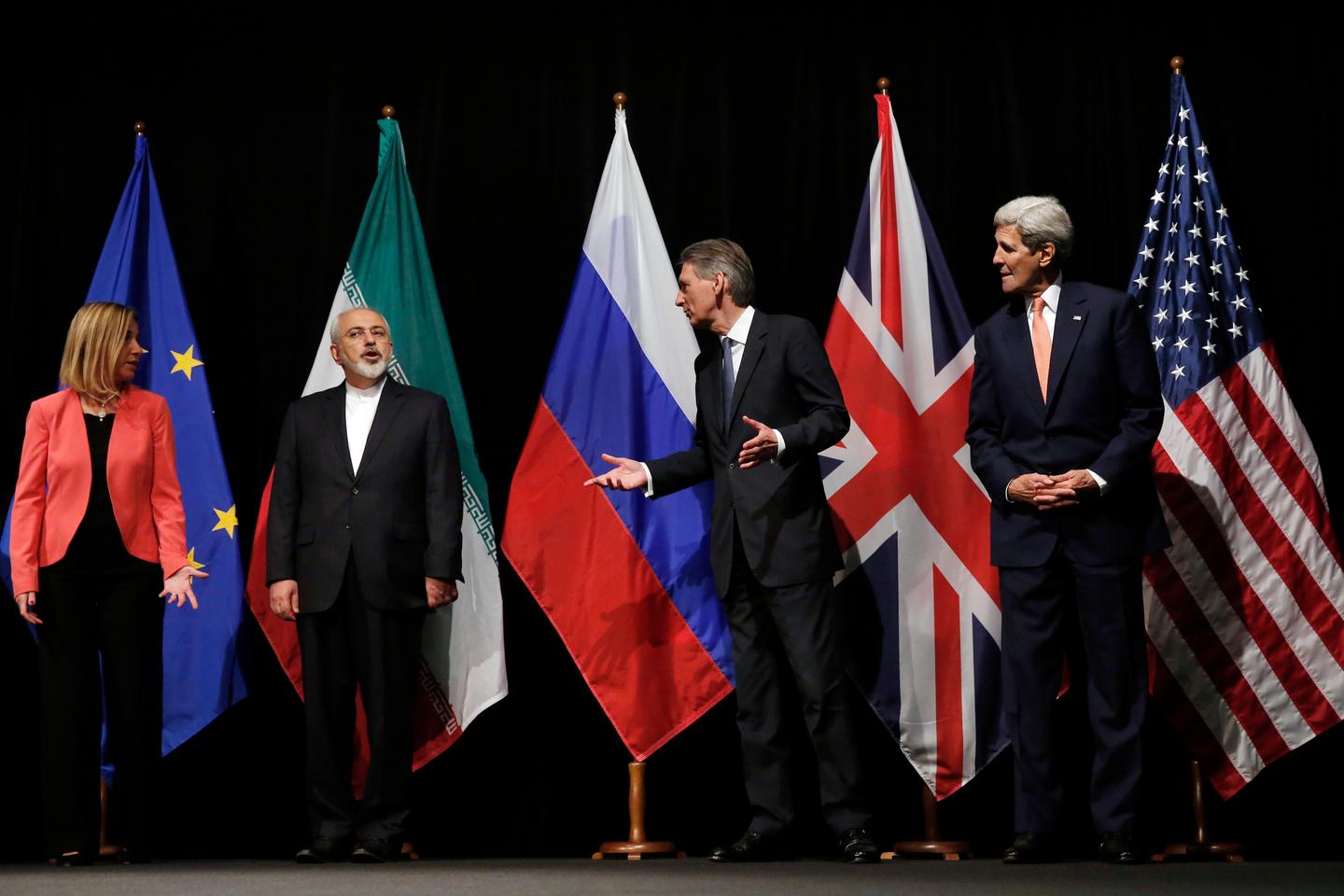

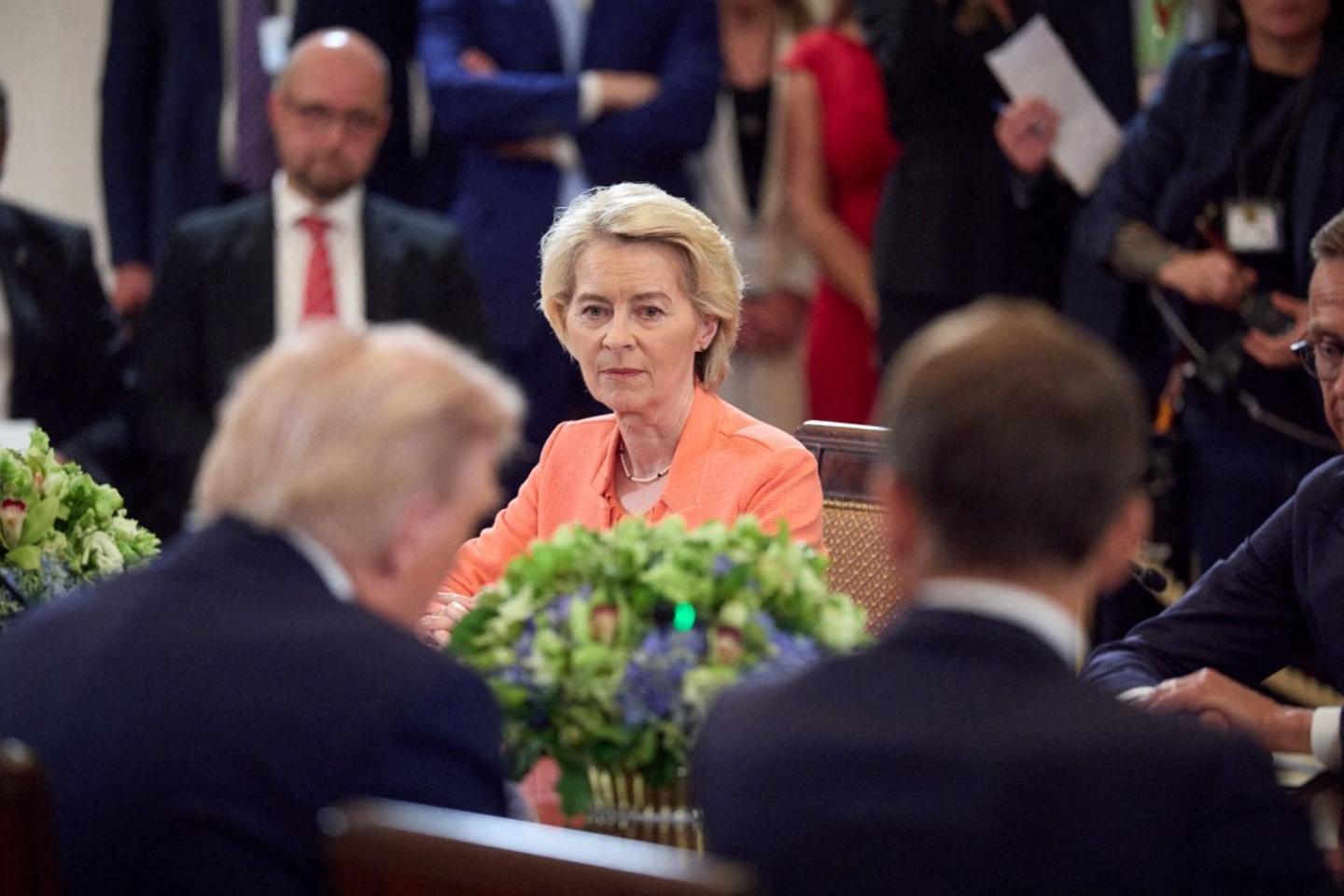

America Between Hormuz, Kyiv and Pyongyang: Allies Seek Protection, Rivals—Concessions
In the final days of August and the first hours of September 2026, the United States became the focus of particularly close—and sharply divergent—attention in South Korea, Russia and Israel. The immediate cause was the same: the resumption of American strikes on Iranian targets near the Strait of Hormuz. But local interpretations differ. In Israel, analysts are debating whether Donald Trump’s administration can combine military deterrence against Iran with economic coercion. In South Korea, the conflict is being read as a warning: American involvement in the Middle East is already affecting the cost of Washington’s alliance commitments in Asia. In Russia, meanwhile, the escalation in the Middle East highlights another issue—the US attempt to negotiate over the war in Ukraine while retaining its logic of pressure and deal-making.
Hormuz has become the main pressure point. Following the US strike on August 31 against IRGC units, which Washington accused of preparing to mine the strait again, the local debate shifted from the question of “who carried out the attack” to a far more significant one: can America guarantee freedom of navigation without becoming bogged down in another prolonged war? The Israeli Institute for National Security Studies states the Trump administration’s dilemma directly in its analysis: the White House must shift the center of gravity from a military campaign to economic pressure, while ensuring that Tehran does not conclude that the United States has lost its willingness to use force. The Israeli perspective is especially practical here. For Jerusalem, a one-off display of power is not enough: if Iran can periodically restore mines, anti-ship capabilities and threats to commercial shipping, every American declaration of a “secure Hormuz” will be tested by another attack.
That is why Israeli analysts view sanctions not as an alternative to war, but as its continuation by other means. INSS emphasizes that the effectiveness of a new campaign will depend not on the number of restrictions announced, but on whether Washington is prepared to impose secondary sanctions on banks, companies and states that continue trading with Iran—above all, Chinese entities. This is a revealing detail: in Israel, the debate is less about America’s right to strike Iran than about American consistency. If force is used sporadically and sanctions do not reach Tehran’s external sponsors and intermediaries, the strategy becomes an expensive effort to maintain the status quo.
Russia’s reaction to the same events is noticeably more skeptical. In a column for Kommersant, Iran expert Farhad Ibragimov describes the situation as being in a state of “neither peace nor war” and draws attention to the inconsistency of American signals: Trump simultaneously promises that the crisis will end soon, says he is in no hurry to negotiate, and portrays Hormuz as almost normalized, even though attacks and threats to shipping continue. This is not simply anti-American rhetoric. It reflects a specific observation: Moscow sees American policy as an attempt to preserve freedom of maneuver—to strike, declare the operation limited, threaten sanctions and leave the door open to a deal. From the Russian perspective, such flexibility may benefit Washington tactically, but it does not create predictable rules for its adversaries.
The South Korean debate gives Hormuz a different meaning—an economic and alliance-related one. South Korean media are reporting a new wave of concern over tanker attacks, shipping suspensions and rising oil prices; SBS directly links the renewed US-Iranian clashes to tensions along a route critical to global energy supplies. But for Seoul, this is not only about oil. The more American ships, aircraft, munitions and political attention are absorbed by the Middle East, the sharper the question becomes: could the Korean Peninsula become a bargaining chip in a broader Washington deal with its allies and rivals?
This concern intensified after Trump ordered a reduction in the scale of joint US-South Korean exercises in August, while again discussing the possibility of a personal meeting with Kim Jong Un. In an assessment by the Korea Institute for National Unification, Lee Sang-shin, director of the institute’s research division, argues that the decision could open a window for easing tensions and resuming US-North Korean dialogue. But another analysis by the same institute, prepared by senior researcher Min Tae-eun, advances a tougher argument: Trump is seeking a foreign-policy breakthrough after the Iranian track failed to produce results, while North Korea’s nuclear capabilities are now greater than during Trump’s first term and Pyongyang has fewer incentives to make concessions. The publication also contains a particularly important warning for Seoul: if the summit collapses or ends in failure, both Washington and Pyongyang may try to shift part of the blame onto South Korea.
This reveals a common theme linking South Korean and Israeli assessments: US allies are not sure that the current White House understands an alliance as a lasting commitment rather than a set of interchangeable bargaining assets. Israel wants pressure on Iran to be sustained and backed by real penalties for those evading sanctions. South Korea fears that reducing exercises or Trump’s rapprochement with Kim could be tied to questions of spending, investment or the extent of Seoul’s participation in American plans for the Middle East. Jeong Jae-sung, president of the East Asia Institute, describes this as a “package” approach in an EAI analysis: US pressure over Iran, defense spending and economic issues should not be viewed separately, but as elements of a single negotiating framework.
For Russia, American “package diplomacy” is most visible in the Ukrainian context. The debate here concerns not so much the possibility of contact between Moscow and Washington as its price. Vedomosti reports intensified negotiating efforts by Trump’s circle and contacts surrounding a peace settlement; at the same time, Russian commentators interpret the absence of a prompt trilateral summit as a sign that Moscow is unwilling to formalize an agreement until it receives substantive concessions. In the Russian view, negotiations matter not as a humanitarian pause, but as a mechanism for translating the military situation into a new architecture of security and economic relations with the United States.
This explains why Moscow may see a connection between Hormuz and Ukraine where Western audiences see two independent lines of crisis. The more resources and political capital America spends on containing Iran, the more limited its ability appears to dictate terms simultaneously in Europe and East Asia. This does not mean Russia expects the United States to withdraw from every region; rather, it questions Washington’s ability to sustain maximum pressure everywhere for an extended period. The Russian interpretation therefore does not boil down to hoping for “US weakness.” Instead, it assumes that the United States will bargain more actively because the cost of simultaneous confrontation in the Persian Gulf, Ukraine and the Indo-Pacific is rising.
The most unexpected conclusion from the local debates is that in Seoul, Moscow and Jerusalem, America is now viewed not as a declining power, but as a power whose strength has become more selective, personalized and transactional. Israelis are testing whether it is truly prepared to establish rules in Hormuz. South Koreans are asking whether their security could become a bargaining chip in exchange for a Trump-Kim Jong Un meeting or a new deal on burden-sharing. Russians are considering whether America’s need for a diplomatic success can be converted into more favorable terms on Ukraine and in bilateral relations.
This reputational test matters more for the United States than individual missile strikes, sanctions lists or negotiating leaks. A credible American strategy must simultaneously show Iran that freedom of navigation is not a bargaining chip; reassure allies that their security does not depend on the next presidential term; and make clear to Russia that negotiations are possible, but will not automatically mean accepting terms dictated by force. For now, however, foreign observers see in Washington’s actions not a unified doctrine, but a risky attempt to manage three crises with different instruments—strikes, sanctions, reduced military exercises and promises of personal diplomacy.
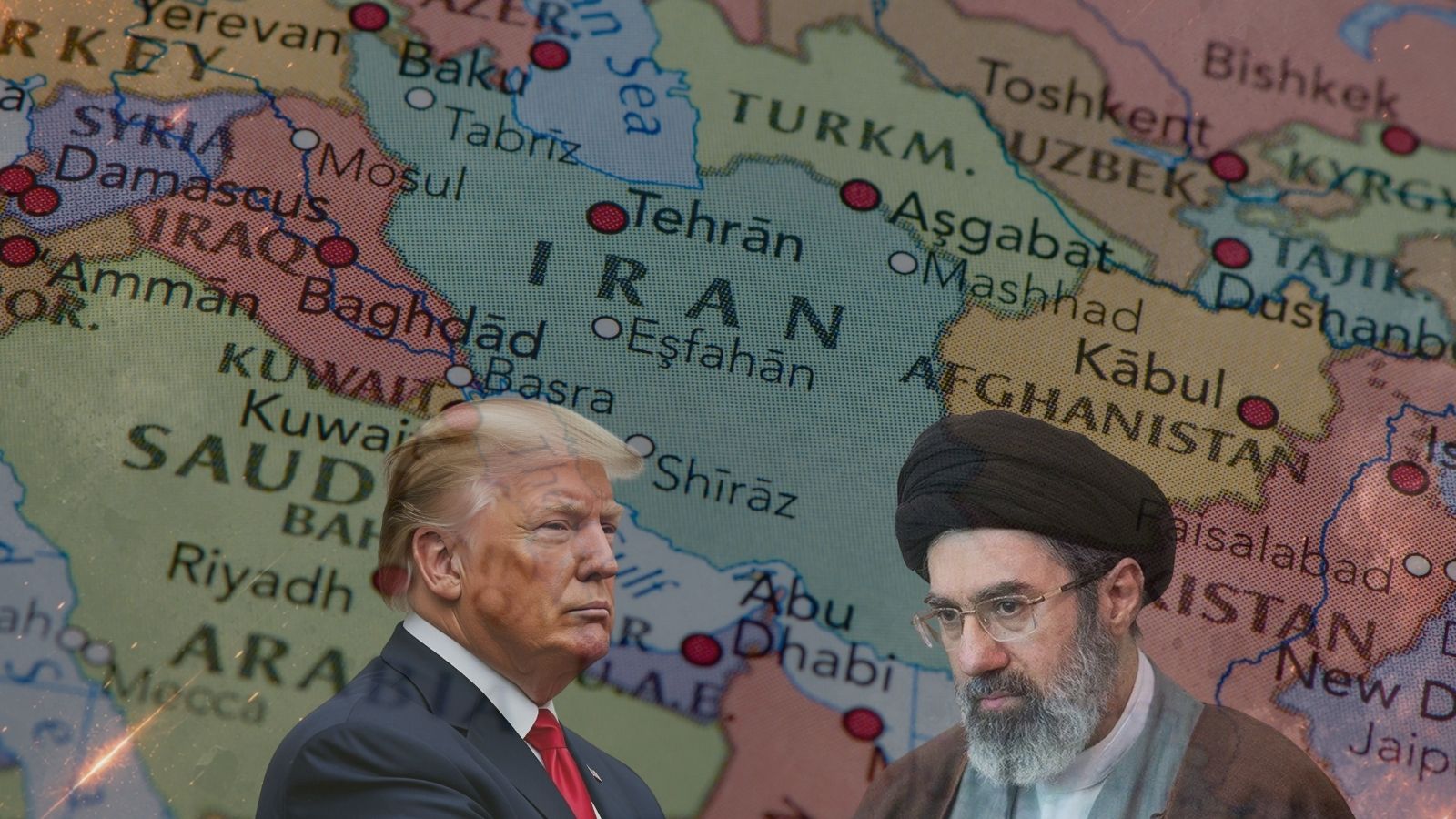
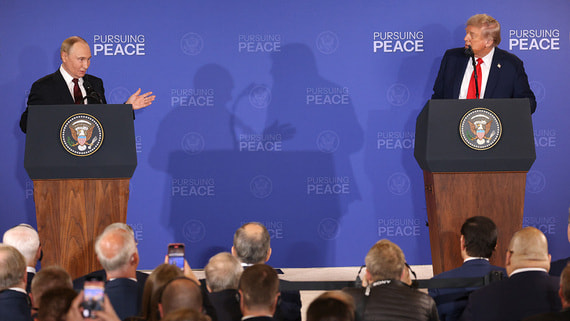
News 01-09-2026
America as a Source of Risk: Why Japan, China and Turkey Debate More Than Trump—and the...
In the first days of September, the main American issue in Japanese, Chinese and Turkish discussions was not U.S. domestic politics itself, but a combination of three elements: a new escalation of pressure on Iran, the threat of secondary sanctions against its trading partners, and Washington’s familiar use of tariffs as an instrument of coercion. Local observers see the same pattern in all this: the United States is trying to preserve freedom of military and economic maneuver, while the costs of this strategy—from expensive oil to disrupted supply chains—are shifted onto allies, Iran’s neighbors and the largest Asian economies. Following the U.S. strike on facilities on Iran’s Larak Island on August 30 and Tehran’s retaliatory actions, tensions around the Strait of Hormuz were once again perceived not as a prolonged backdrop but as a risk of immediate escalation. (thepaper.cn)
The broadest reaction in all three countries is skepticism toward the idea that economic strangulation can replace a political settlement. In China, this skepticism is expressed most directly. In a Pengpai analysis, Sun Degang, director of the Center for Middle East Studies at Fudan University, describes a shift in roles: the United States, he says, is seeking to “wear Iran down through an economic cold war,” while Tehran is trying to force Washington to accept its terms more quickly through active measures. The Chinese interpretation is important because it does not reduce the crisis to the nuclear program: control over Hormuz is understood as a test of whether America still retains the ability to set security rules in the Persian Gulf unilaterally. In another Chinese analysis, Qin Tian, deputy director of the Institute of Middle East Studies at the China Institutes of Contemporary International Relations, calls control of the strait a symbol of American hegemony in the region: in his view, yielding here would signal its weakening. (chinanews.com.cn)
At the same time, the Chinese debate emphasizes the limits of American pressure. Pengpai notes that the policy of maximum economic pressure announced by Washington on August 19 depends less on the forcefulness of its language than on whether third countries—above all the UAE and China—are actually prepared to cut off Iran’s trade and financial channels. Chinese authors see a contradiction here: the United States wants to punish countries supporting Tehran, but overly strict enforcement of secondary sanctions would inevitably affect Chinese banks, oil refineries and yuan-based transactions, turning the Iranian issue into a new front in the U.S.-China confrontation. This prospect is already apparent in Japanese analysis as well: the Dai-ichi Life Research Institute believes that the exclusion of major Chinese banks from the sanctions campaign may be explained by the White House’s reluctance to worsen relations with Beijing ahead of the planned September 24 meeting between Donald Trump and Xi Jinping. (dlri.co.jp)
In Japan, the same American campaign is viewed primarily through the language of an ally’s vulnerability. Tokyo does not publicly dispute Washington’s stated goal—preventing further destabilization of the region—but focuses on the consequences for Japanese companies, shipping and energy security. Chief Cabinet Secretary Kihara said on August 25 that the government was studying the substance of the new U.S. measures and their impact on Japanese businesses; at the same time, he stressed the importance of reopening the Strait of Hormuz as soon as possible and reaching a final U.S.-Iran agreement. (news.tv-asahi.co.jp) This is a characteristically Japanese formula: not directly challenging American power, but demanding predictability and a negotiated way out of the crisis. Japanese commentators, however, are increasingly unsure that Washington is genuinely moving toward a deal. In a Kobe Shimbun editorial, the American approach is described as having reached its limit: pressure is being applied not only to adversaries but also to allies, while expanding the sanctions coalition remains doubtful precisely because of China’s resistance. (kobe-np.co.jp)
For Turkey, the American line on Iran is not an abstract dispute over the global order, but almost an accounting problem capable of becoming a social one. In a Turkish DW report, the threat of secondary sanctions is described as a direct challenge to a country that remains one of Iran’s major trading partners. The concern is not limited to a decline in bilateral trade: the U.S. warning that violators could be shut out of the dollar-based financial system affects banks, logistics companies and exporters even before any penalties are formally imposed. Turkish energy expert Mehmet Öğütçü, writing in a column for Yetkin Report, advises Ankara to prepare a “dual stress test” in case sanctions against Iran and Russia are intensified simultaneously. His particularly striking conclusion is that losing Iranian gas would be a manageable problem on its own, but the simultaneous impact of Iranian and Russian sanctions shocks would turn energy into a systemic economic and strategic crisis. (yetkinreport.com)
That is why in Turkey, the debate over the United States quickly becomes a debate about oil, inflation and the current account. DW Türkçe cites an estimate by the Central Bank of the Republic of Turkey: a $10 increase in the price of oil could widen the country’s current-account deficit by $2.6 billion over the following 12 months. For an economy still struggling with high inflation, Hormuz is not a distant sea passage but a channel through which the U.S.-Iran conflict is transmitted into gasoline prices, imports and credit costs. Analysts at Gedik Yatırım put it even more clearly: uncertainty surrounding the strait is critical for Turkish inflation and monetary policy. (amp.dw.com)
The second common theme is tariffs as part of the same American philosophy of pressure. In Japan’s case, this is particularly painful: NRI executive economist Nobuhide Kiuchi writes that the new 12.5% tariff on Japanese goods introduced in July continues a policy in which the Trump administration is seeking new legal grounds for trade pressure after courts restricted its previous tariff mechanisms. His key conclusion concerns not the size of the rate but its consequences: this tactic increases uncertainty for both the Japanese and global economies. (nri.com) Chinese economic reviews offer an almost mirror-image assessment: the new U.S. tariff regime against dozens of trading partners is viewed as a “change of packaging,” rather than a rejection of the previous policy; under this logic, much of the cost is passed on to American importers and consumers, while the global price is reflected in instability across production chains. (finance.sina.com.cn)
Ultimately, Japanese, Chinese and Turkish perspectives differ in their political sympathies but converge in their diagnosis. Japan fears that its alliance with the United States does not protect it from arbitrary economic demands. China sees an attempt to preserve slipping strategic superiority without entering into a direct and excessively costly confrontation with Beijing. Turkey views Washington as a power whose decisions could simultaneously obstruct trade with a neighbor, raise energy prices and narrow the room for independent diplomacy. The most unexpected common theme in these discussions is not whether America is strong enough, but whether it can still turn power into a durable order. For now, local analysts are answering this question with growing caution: the United States can radically change the rules, but is becoming less and less able to ensure that the rules will work afterward.



U.S. Escalation in the Middle East Raises Alarm and Doubts
Chinese and Turkish publications view Washington’s policy toward Iran and the Middle East as strategically unsuccessful and increasingly costly. The focus is on missed opportunities to contain the crisis surrounding Iran, disagreements within the Pentagon over military operations, threats to oil supplies and shipping through the Strait of Hormuz, and growing pressure to withdraw U.S. troops. Commentators note that the consequences of the escalation are narrowing Donald Trump’s room for maneuver, while China may gain additional strategic advantages. The material is based on publications by Guancha (China).
Chinese Press on Protests Against U.S. Data Centers
America’s race to build artificial intelligence infrastructure is increasingly encountering resistance from local communities. Residents fear higher electricity bills, overloaded power grids, environmental consequences, and the influence of major technology corporations on regional life. Yet in U.S. political rhetoric, these domestic conflicts are increasingly being linked to China, writes the Chinese outlet Guancha.cn.
The publication was prompted by remarks from Donald Trump, who urged American communities not to obstruct the construction of data centers. In his view, opponents of such facilities are choosing “backwardness and poverty,” whereas the development of AI infrastructure could create new jobs, increase prosperity, and reduce taxes. Trump also claimed that China was supposedly “incredibly happy” about the anti-AI movement in the United States.
Guancha.cn ironically observes that China has once again been drawn into an American domestic political debate without convincing evidence of its involvement. In the Chinese interpretation, this fits Washington’s familiar pattern: problems caused by its own political decisions, energy constraints, and conflicts of interest between corporations and the public are explained as the result of an external threat and “Chinese interference.”
At the same time, the publication notes, the causes of the protests are quite concrete and domestic. According to an Annenberg Foundation poll, 61% of Americans oppose the construction of new data centers in their communities. Among Republicans, the figure is 54%. People fear that energy-intensive data-processing facilities will increase demand for electricity, drive up rates, and place additional strain on public utilities.
Vice President J.D. Vance effectively acknowledged the connection between public dissatisfaction and household expenses. In his words, “99%” of the strong opposition to data centers is probably explained by rising energy costs in areas located near such facilities. This admission is particularly notable against the backdrop of attempts to portray the protest movement as the result of foreign influence.
Another problem is the split within the Republican Party. Republican governors, lawmakers, and candidates who had previously supported expanding AI infrastructure are being forced to take voters’ attitudes into account. In Texas, where the authorities had sought to attract technology investment, hundreds of projects have been halted. Governor Greg Abbott and other Republican politicians have found themselves in a situation where supporting data centers has become a politically risky position.
The Chinese publication sees this as a contradiction between U.S. national ambitions in AI and the interests of local communities. The effort to overtake China in the technology race requires the rapid construction of computing capacity, but at the local level it encounters rising costs, environmental concerns, distrust of Big Tech, and demands for public oversight. According to Guancha.cn, these factors—not actions by Beijing—determine the scale of the resistance.
Nevertheless, some members of the American political establishment have attempted to link the protests to the PRC. Republicans in the House of Representatives called for an investigation into alleged Chinese “incitement,” while OpenAI, without providing evidence, claimed that China might have conducted an online campaign against the construction of data centers. Even American analysts have challenged this logic. Ryan Fedasiuk, an expert at the American Enterprise Institute, emphasized: “We have to acknowledge that China is not the reason AI construction is unpopular in the United States.”
For China, the story is important in the broader context of technological competition and the development of its own computing capacity, energy base, and AI industry. However, Guancha.cn’s publication focuses less on rivalry than on the vulnerabilities of the American model. The United States is trying to rapidly build critical digital infrastructure, but it cannot reconcile the interests of technology companies, the energy sector, local authorities, residents, and party elites.
In this interpretation, references to China become a convenient political device that allows officials to avoid discussing the real costs of AI expansion: expensive energy, pressure on the grid, potential environmental damage, and a lack of dialogue with the public. The Chinese press presents protests against data centers not as the result of an external campaign, but as a consequence of the United States’ internal problems—problems that American politicians seek to explain through the presence of a symbolic foreign adversary.


America as a Risky Ally: Why Riyadh, Berlin and Kyiv Increasingly Speak Not of “U.S
As of August 31, 2026, the main American issue simultaneously provoking reactions in Saudi Arabia, Germany and Ukraine has been not one specific Washington initiative, but the overall effect of its policy: the United States remains an indispensable power, yet its decisions are increasingly perceived by partners as a source of secondary risks. The resumption of U.S. strikes on Iran, reported by Germany’s Tagesschau on August 31, once again linked the Persian Gulf, European security and Russia’s war against Ukraine in a single political picture. In all three countries, the debate is less about whether America is powerful than about whether it can turn that power into a predictable strategy.
The sharpest reaction is coming from Saudi Arabia, where the U.S.-Iran war is perceived not as a distant conflict between great powers, but as a threat to the kingdom’s own economic heart—its oil infrastructure, maritime trade and the stability of the Persian Gulf. Saudi diplomacy formally supports an end to the hostilities: in a June statement, the Foreign Ministry welcomed the U.S.-Iran agreement, but particularly emphasized the need to restore the security and freedom of navigation in the Strait of Hormuz to the level that existed before February 28. This qualification is more important than an ordinary diplomatic formula: Riyadh is demanding not merely a pause, but a settlement that takes into account the interests of the states in the region themselves, rather than only those of Washington and Tehran. This is evident in the official position of the Saudi Foreign Ministry.
Saudi writers are not calling for a break with the United States. On the contrary, they are advocating a tougher reassessment of the terms of the partnership. An Okaz columnist describes the kingdom’s course as “war diplomacy”: avoiding direct involvement in the conflict while assembling regional coalitions, protecting the sovereignty of neighboring states and seeking an international security regime for Hormuz. What is notable in his column is the underlying logic itself: security can no longer be built on the assumption that the presence of U.S. forces automatically deters escalation. Bases and treaties remain assets, but they also make the Gulf states part of Iran’s retaliation map. For Riyadh, this is a particularly painful paradox: Washington is needed as a guarantor against threats, yet its confrontation with Tehran may bring the threat directly onto allied territory.
This leads to a surprisingly pragmatic Saudi conclusion: the region needs not a replacement for the United States by another external patron, but its own network of safeguards—integrated air defenses, diplomatic ties with Iran, coordination within the Gulf Cooperation Council and diversified international relations. A recent analysis by the Al Jazeera Centre for Studies describes the American campaign as a war in which the United States achieved individual tactical objectives but failed to secure a political exit: the Iranian nuclear issue has not been resolved, while shipping through the Strait of Hormuz remains vulnerable. For Saudi audiences, this is not an abstract assessment of someone else’s war, but a warning: a prolonged American conflict is destroying precisely the regional environment on which Saudi modernization depends.
In Germany, the same question is being voiced differently, but with a similar sense of urgency. Berlin views the United States primarily through the prism of NATO, Ukraine and its own technological and military dependence. An ARD commentary on six months of war with Iran sums up the mood in strikingly stark terms: the administration of Donald Trump, in the view of author Karsten Küntopp, has not strengthened American power but squandered it, ignoring specialists’ warnings and drawing the country into a conflict without a convincing political endgame. In the Tagesschau article, the main fear is framed not as sympathy for Iran, but as Europe’s anxiety: a weakened America, preoccupied with the Middle East and unpredictable, is less capable of serving as a pillar of support for its allies on the continent.
The German debate is therefore becoming less about conventional anti-Americanism and more about the question of “insurance against an ally.” In an analysis of Germany’s dependence on the United States, Die Zeit points out that Germany is tied to American capabilities not only through troops and nuclear deterrence, but also through satellite intelligence, logistics, air defense, munitions and digital technologies. In other words, even the political desire to become more self-reliant does not yet amount to the ability to act independently. This is a key difference between the German and Saudi reactions: Riyadh is trying to reduce the risk of being drawn into someone else’s war, while Berlin fears being left without American resources in its own.
Yet the overall conclusion is the same: it is no longer possible to rely on the United States “as before.” In Germany, this idea is leading to accelerated rearmament, the development of a European defense industry and efforts to preserve Ukraine as a military shield for Eastern Europe. In Saudi Arabia, it is leading to regional diplomacy and a multi-vector foreign policy. In both cases, America remains critically important, but is no longer perceived as a political constant.
For Ukraine, American unpredictability has an even more tangible dimension—Patriot missiles, funding, sanctions pressure on Moscow and the very possibility of surviving another winter. After Trump’s August 6 statement that Washington would not provide Kyiv with additional interceptor missiles because the United States needed them itself, Ukraine’s reaction was ambivalent. On the one hand, Kyiv cannot afford a public rupture: Serhii Kyslytsia, First Deputy Head of the Office of the President, continues to speak of confidential contacts with American envoys and stresses that U.S. mediation has not stopped. On the other hand, the very fact that visits and closed-door talks are repeatedly postponed has become a symbol of the fragility of the relationship, as described in a report by DW’s Ukrainian service.
Ukrainian commentators are increasingly candid in distinguishing between the United States as a necessary provider of capabilities and the United States as an unreliable political ally. Diplomat and analyst Andrii Melnyk, speaking on Hromadske Radio, put it almost without diplomatic euphemisms: with Trump’s arrival, Ukraine, in his assessment, lost an ally and gained “a partner—and not the most reliable one.” But this does not mean surrendering to circumstances. Ukraine’s strategy is based on trying to make itself useful to Washington where their interests directly overlap: in deterring Russia, striking its military logistics and, as Ukrainian analysts note, restricting Moscow’s ties with Iran.
This is where the most unexpected common thread emerges. In Kyiv, some experts see the war with Iran not only as a threat that could divert American resources, but also as an opportunity to prove Ukraine’s usefulness to the United States in the broader confrontation with Moscow and Tehran. Ivan Us, chief consultant at the National Institute for Strategic Studies, argues in a DW article that the rapprochement between Trump and Zelenskyy is connected to Ukraine’s ability to pressure Russian-Iranian military communications in the Caspian region. This idea shows how much Ukrainian diplomacy has changed: Kyiv is forced to prove its right to support not only through the moral argument of defending itself against aggression, but also through its usefulness to current American priorities.
A new international picture of the United States is thus taking shape. Saudi Arabia wants America to stop turning the Gulf’s security into collateral damage in its confrontation with Iran. Germany wants U.S. commitments to NATO to depend less on White House impulses and external wars. Ukraine wants to preserve vital American assistance without harboring illusions about its political durability. All three countries are adapting in different ways to the same reality: American power is still enormous, but allies no longer assume that it automatically serves their interests.
The most significant aspect of these reactions is not a rejection of America, but a rejection of their former passivity. Riyadh is demanding the right to participate in shaping the regional order, Berlin is seeking European strategic agency, and Kyiv is learning to turn its own military capabilities into an argument in negotiations with Washington. In this sense, today’s debate about the United States is less about the decline of American influence than about the coming of age of those who for too long regarded American protection as unconditional.
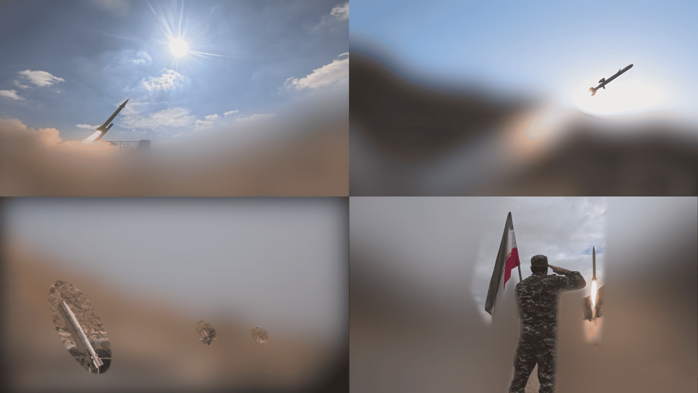
![Figure 2: U.S. attacks on communications infrastructure and bridges in southern Iran, July 2026 [U.S. Central Command/X]](https://studies.aljazeera.net/sites/default/files/inline-images/40.png)
![A U.S. Air Force F-16 fighter on patrol over the skies of the Middle East [U.S. Central Command/X].](https://studies.aljazeera.net/sites/default/files/inline-images/41.jpg)

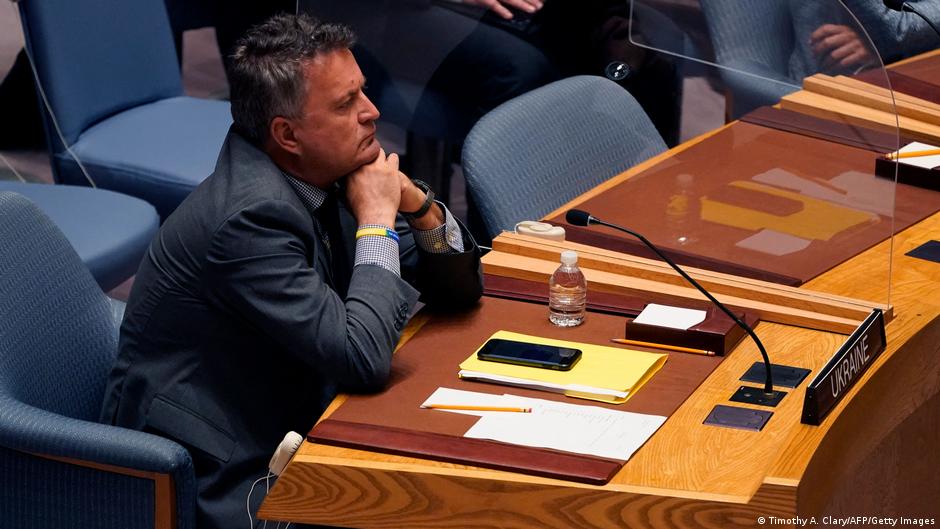
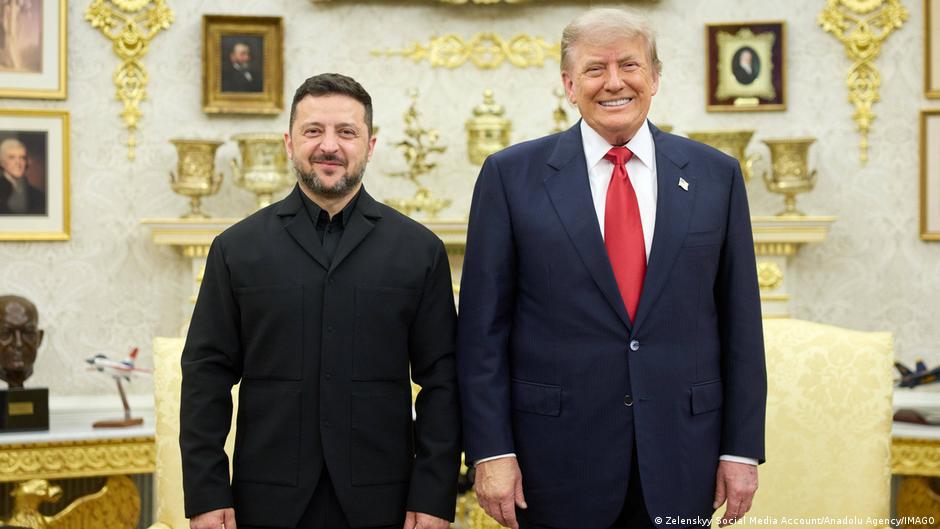
News 31-08-2026
America as a Source of Risk: Why Australia, France and Japan Debate the Cost
Events in recent days have once again placed the United States at the center of global debate: on August 30, U.S. forces struck Iranian missile installations near the Strait of Hormuz, ending a month-long pause in direct military action. For Australia, France and Japan, this is not an isolated Middle Eastern news story but a symptom of a broader problem: Washington is simultaneously pursuing coercive diplomacy, using tariffs as a means of pressure, and handling its commitments to allies in an increasingly unpredictable manner. (apnews.com)
The main common theme is Hormuz and the transformation of the American campaign against Iran from a promise to quickly restore order into a prolonged source of economic and strategic risks. In Australia, the issue is discussed primarily in professional military terms: not “should America show resolve?” but whether it is capable of reliably ensuring freedom of navigation at all. In a University of New South Wales analysis, former Royal Australian Navy officer Jennifer Parker explains that a single strike against shore targets is not enough. For commercial vessels to actually return to the strait, the United States would need intelligence, maritime patrol aircraft, continuous air cover, escort ships and, if mines posed a threat, a lengthy mine-clearance operation. The Australian view is particularly clear-eyed here: American power is recognized as immense, but it is not considered capable of overriding geography, Iran’s inexpensive drones or the cost of a prolonged maritime campaign. (unsw.edu.au)
In Japan, the same crisis is perceived even more painfully—as a test of the vulnerability of a country dependent on seaborne energy supplies. In a strategic commentary, Koichi Nakagawa, a researcher at the Japan Institute of International Affairs, calls Hormuz the “lifeline” of Japan’s oil imports. His central point is not limited to condemning or supporting the American operation: in his assessment, the U.S.-Israeli attack changed the very nature of the conflict—from an attempt to constrain Iran’s nuclear program to an intervention affecting the structure of Iranian rule and the regional order. The Japanese therefore see the American action not as a brief episode, but as the risk of being drawn into a remaking of the Middle East without a clear political endgame. (jiia.or.jp)
Economists in Tokyo put it even more directly. In a Japan Research Institute analysis, the Hormuz crisis is described as having exposed two weaknesses in Japan’s energy security: the concentration of supplies and the lack of alternative routes. For Japanese audiences, it is crucial that America’s war be measured not only in allied declarations, but also in the cost of electricity, fuel, transportation and industrial raw materials. This differs noticeably from the French debate, which focuses more on Washington’s political objectives and the destruction of international rules, but it coincides with the Australian view: an alliance with the United States does not eliminate the need to calculate one’s own costs.
In France, distrust of Donald Trump’s strategy is expressed in more ideological terms. In a column for Le Monde, Sciences Po professor Jean-Pierre Filiu links the current destabilization to decisions made during Trump’s first term—U.S. withdrawal from the nuclear deal with Iran, the relocation of the embassy to Jerusalem and the desire to replace consistent diplomacy with displays of force. His diagnosis is that U.S. military infrastructure becomes an asset only when backed by a clear political strategy; when objectives keep changing, it becomes a vulnerable burden. The French response thus raises a question more often implied in Australia and Japan: if America’s ultimate goal is constantly shifting, how can its allies plan their own security? (lemonde.fr)
The second common theme is trade as an extension of U.S. foreign policy. Australia’s response here is not rhetorical anti-Americanism, but irritated pragmatism. During an August conversation with Trump, Prime Minister Anthony Albanese sought Australia’s full exemption from the new tariffs or at least a refusal to raise the existing 10% rate; according to him, the White House promised only to “consider” the request. As ABC News notes, the leaders were simultaneously discussing AUKUS, a defense project of key importance to Canberra. This juxtaposition is especially telling: Australia is discovering that strategic closeness with the United States does not guarantee trade immunity. (abc.net.au)
In Japan, the reaction is less emotional but no less critical. In his review, Kiyotaka Kiuchi, chief economist at Nomura Research Institute, writes that the new 12.5% U.S. tariff on Japan was introduced on the pretext of insufficient efforts to combat goods produced through forced labor. He assesses the direct effect as relatively limited—around 0.06% of annual GDP—but the main issue lies elsewhere: after the previous tariff framework encountered legal obstacles in the United States, the Trump administration found a new legal mechanism for applying pressure. For the Japanese expert, the problem is less the specific figure than the fact that the rules may once again be rewritten. (nri.com)
The French reaction to the same logic is considerably more politicized. A Le Monde report on approval of the EU-U.S. trade agreement reveals an unusual consensus in French politics: from the left to the far right, most French members of the European Parliament opposed lifting European tariffs on American imports. Manon Aubry, co-president of the left-wing group, called the compromise a “capitulation before Trump,” while Social Democrats Raphaël Glucksmann and Jean-Marc Germain criticized the weakening of the EU’s automatic response mechanisms. For Paris, the dispute is no longer only about exports: it is about whether Europe can respond collectively to American economic pressure instead of relying on individual exemptions. (lemonde.fr)
Finally, the Japanese and French press highlight another concern—the United States’ diplomatic improvisation in East Asia. Trump’s proposal to meet Kim Jong Un again is viewed not as an opportunity for a breakthrough in itself, but as the danger of reaching a deal over the heads of America’s allies. In a column published in France, Richard Haass warns that if complete denuclearization of Pyongyang remains the measure of success, the talks are doomed; arms control is more realistic, but it could look like de facto recognition of North Korea as a nuclear power. For Japan and South Korea, he emphasizes, this would cause profound concern. (lemonde.fr)
An unusually coherent international picture thus emerges. In Canberra, the United States is seen as an indispensable ally that requires constant protection against its own decisions. In Tokyo, it is viewed as a security guarantor whose unpredictability simultaneously raises the cost of energy, trade and regional deterrence. In Paris, it is seen as a power whose pressure demands not personal deals, but European political autonomy. What unites them is not a rejection of relations with America, but a departure from the old assumption that American power automatically creates order. Today, Australia, France and Japan increasingly believe the opposite: power without a stable objective can itself become the main source of instability.
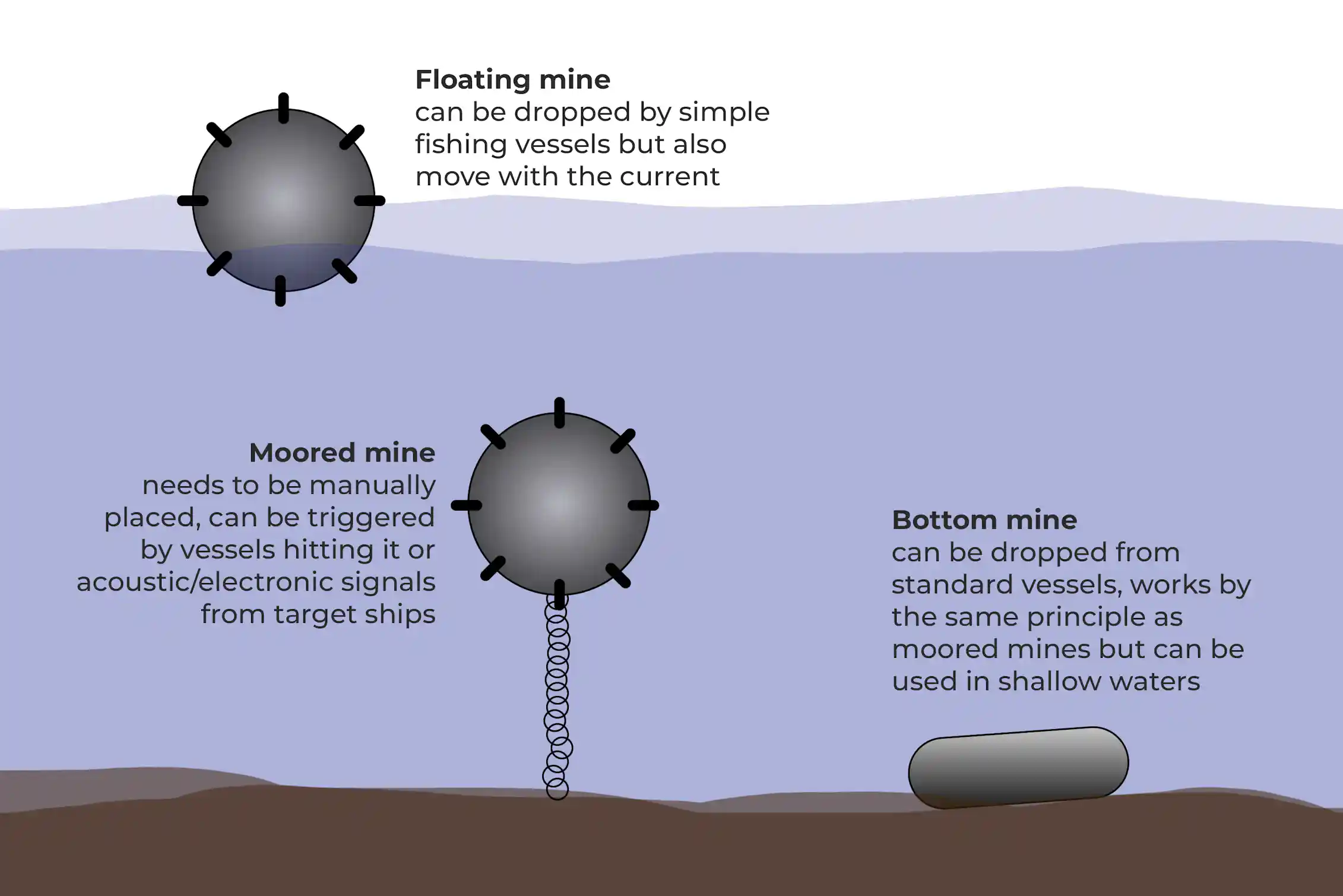


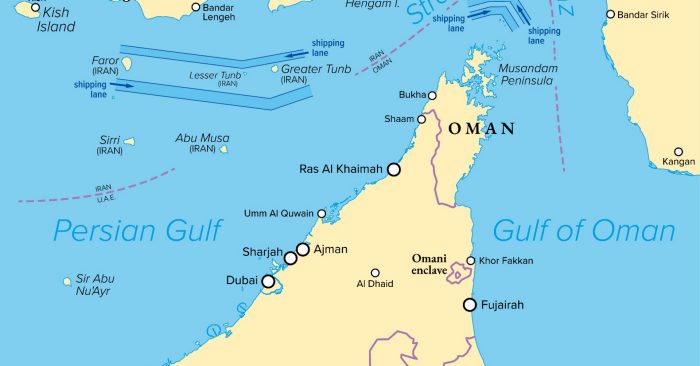
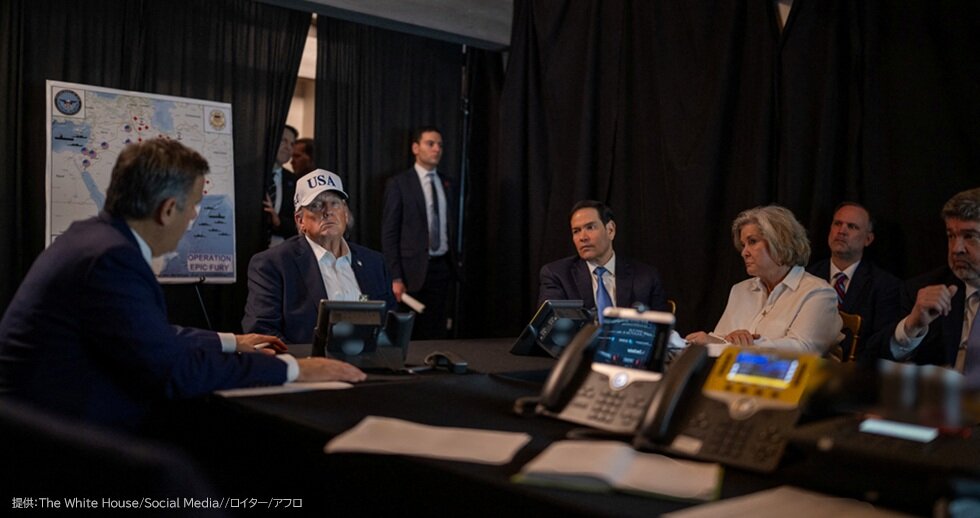

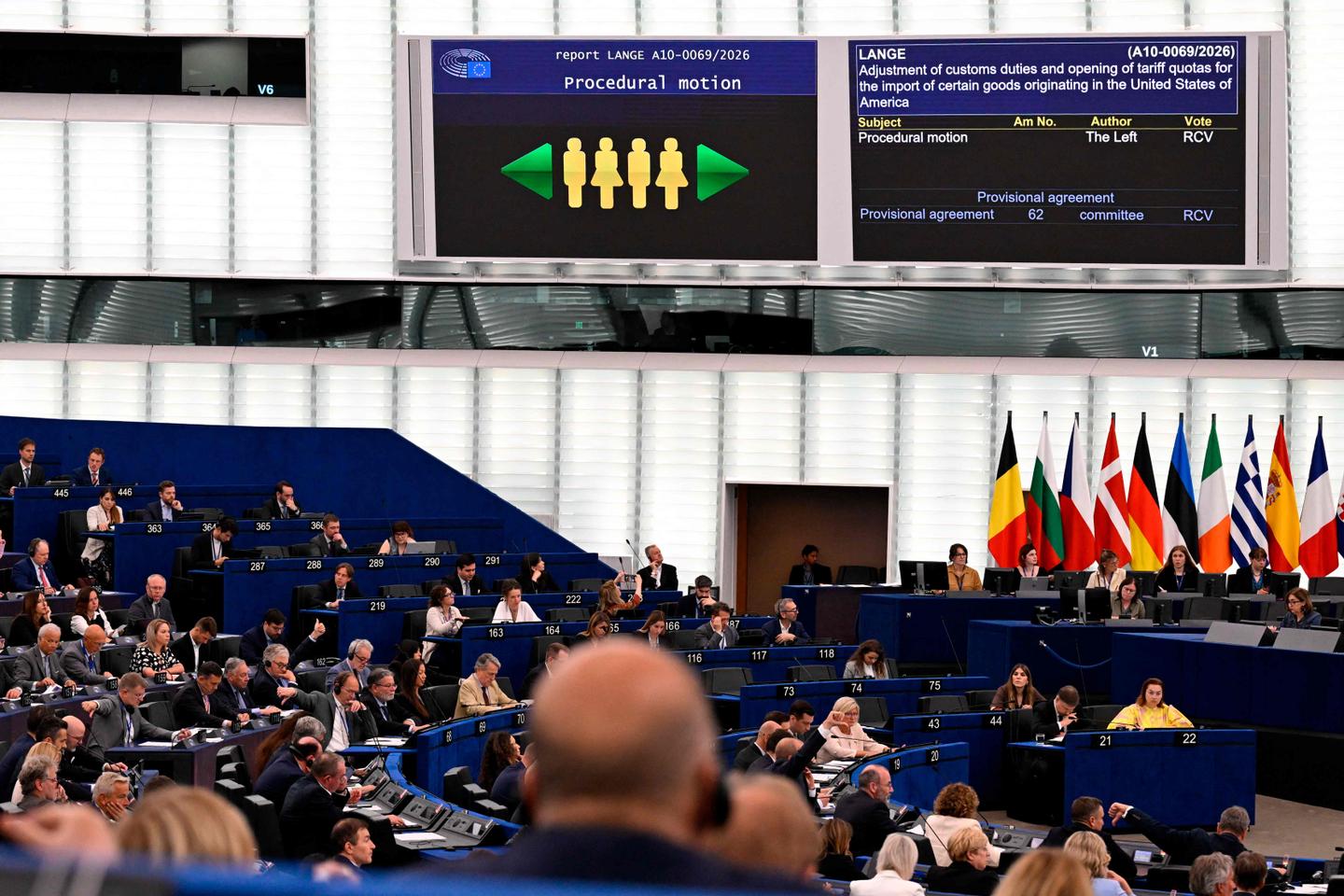
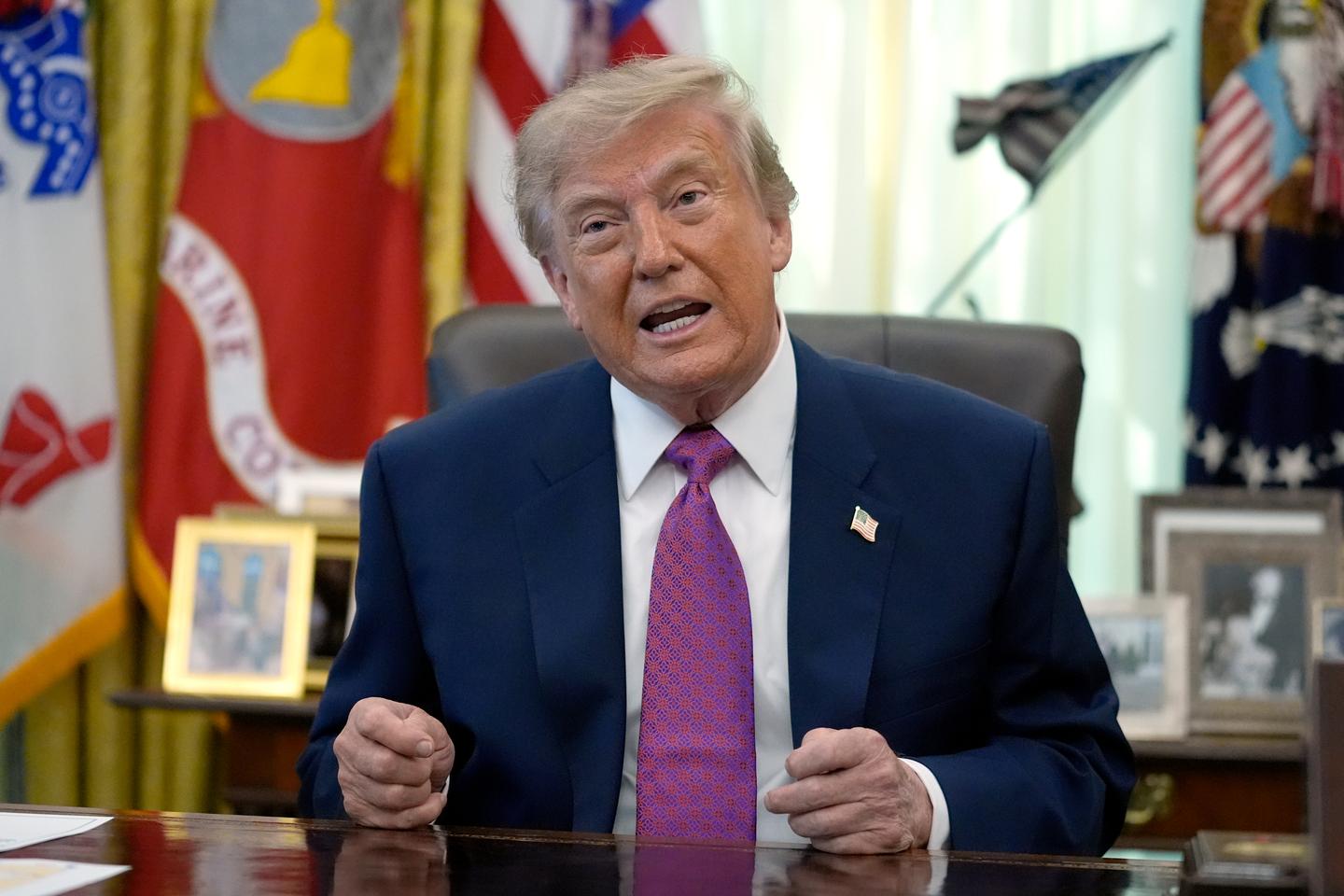
America Is Turning the Iran Crisis Into a Loyalty Test—China, Russia and Saudi Arabia...
In the final days of August 2026, the main foreign-policy issue shaping reactions to the United States in China, Russia and Saudi Arabia was Washington’s latest attempt to isolate Iran economically. Launched on August 24 by U.S. Treasury Secretary Scott Bessent, the “economic expulsion” campaign threatens secondary sanctions not only against Tehran, but also against states, banks, carriers and companies that continue trading with it. For Washington, this is a way to move from a protracted military confrontation to economic coercion. For the three capitals watching from the sidelines, it is simultaneously a test of America’s ability to dictate the rules, a warning about the fragility of maritime trade, and a reminder that the costs of U.S. strategy are increasingly being shifted onto third countries. (kommersant.ru)
In China’s debate, U.S. pressure is viewed primarily not as a narrow Iranian issue, but as another stage in the rivalry between the United States and the PRC. Beijing officially rejected the extraterritorial logic of the sanctions: Foreign Ministry spokesman Lin Jian said on August 24 that pressure and sanctions “do not help solve problems,” but instead increase tensions. The following day, he stressed that Chinese-Iranian cooperation is conducted within the framework of international norms and should not become the subject of interference. This formula is important: China is not promising a political or military alliance with Iran, but it refuses to recognize Washington’s right to determine what trade between third countries is permissible. The Chinese statement carried by China News Service and the Xinhua report show that official Chinese language focuses not on defending Tehran as such, but on defending the principle of sovereign trade. (chinanews.com.cn)
Chinese analysts go beyond the official rhetoric. In an article by Fudan University’s Center for American Studies, Trump’s renewed reliance on economic pressure is interpreted as evidence that the White House lacks a convincing way out of the Iran conflict: “Trump is pressuring Iran precisely because he has no good moves.” This Chinese interpretation is particularly revealing: U.S. actions are assessed not by the toughness of their wording, but by whether they can turn military superiority into an attainable political result. Zhou Bo, a researcher at Tsinghua University, expressed a similar idea back in July, describing the war as the consequence of a decision made “at the expense of the entire world.” His eight conclusions about the U.S.-Iran war reflect a widespread view in China: American power remains immense, but its use is becoming increasingly difficult to reconcile with the stability of the global system. (cas.fudan.edu.cn)
This explains China’s unexpectedly restrained but firm position. Beijing has no interest in direct confrontation with the United States over Iran, especially when its own energy supplies and relations with Arab exporters are at risk. But neither does it see any reason to help Washington restore regional dominance through a sanctions blockade. Chinese political scientist Gu Xuewu, in an interview with Deutsche Welle in Chinese, put it almost cynically: China does not need to “decide America’s fate” in the Middle East; it is enough not to prevent America from making its own mistakes. This does not necessarily mean that Beijing is prepared to compensate Iran for all its losses. Rather, it will calibrate its support so that U.S. secondary sanctions do not become a universal norm.
In Russia, the same campaign is viewed through the experience of years of sanctions against Moscow. Russian media describe the American initiative as an attempt not merely to punish Iran, but to turn trade with it into a risk for all of its partners. The Kommersant analysis emphasizes that Washington speaks of the regime’s “economic strangulation” and openly does not rule out putting pressure on China—the main buyer of Iranian oil. For a Russian audience, this is a familiar construct: sanctions are understood not as a temporary negotiating tool, but as a technology for creating a broad economic perimeter around an unwanted state. (kommersant.ru)
That is why the most important issue in Russian commentary is not how painful the new restrictions will be for Iran, but their blowback. China expert Nikolai Vavilov argues in an RT column that pressure on oil suppliers ultimately accelerates their economic rapprochement with China and makes Beijing an increasingly indispensable center for settlements, logistics and demand. This is clearly a politically colored assessment, but it conveys a broader Russian argument well: excessive use of sanctions does not return countries to the American orbit; instead, it forces them to seek alternative channels for payments, transportation and trade. (russian.rt.com)
Yet the Russian view is not identical to China’s. For Beijing, the crisis is primarily a risk of being drawn into someone else’s war and of losing access to Middle Eastern oil. For Moscow, it is also proof that American sanctions pressure is becoming increasingly global and therefore objectively bringing Russia, China and Iran closer together. In other words, China is predominantly characterized by a pragmatic rejection of American interference, while Russia has a more ideologized view of the conflict as another episode in the struggle against American unipolarity.
The Saudi reaction differs noticeably from both. Riyadh is less interested in the dispute over the legitimacy of secondary sanctions as such, and more interested in whether the American strategy can once again make the Persian Gulf safe for trade, exports and investment. The Saudi state news agency SPA reported after a July conversation between Crown Prince Mohammed bin Salman and Donald Trump that the parties identified maritime security and support for regional stability as priorities. The official SPA statement shows that Riyadh is not abandoning cooperation with the United States, but measures it by practical results: Are shipping, energy routes and Saudi Arabia’s own security protected? (spa.gov.sa)
Saudi writers increasingly describe the American and Iranian approaches as a mutual trap. Dr. Faiz al-Shehri writes in a column for Al-Riyadh that Washington possesses colossal military power, but has so far failed to transform it into the political will needed to force Tehran to concede; Iran, for its part, is holding on to its leverage over the Strait of Hormuz, but cannot raise the stakes indefinitely. This assessment is notable not for any sympathy toward Iran—which is absent from Saudi public discourse—but for its skepticism toward the idea that American power automatically produces an orderly system. (alriyadh.com)
Hormuz has become the focal point of Saudi perceptions of America. In late August, Al-Riyadh recorded oil prices above $85 per barrel, rising insurance and transportation costs, and the threat that a closure of the strait would disrupt not only crude oil supplies but also petroleum-product exports. This economic review is more important than many high-profile political statements: Saudi Arabia does not automatically regard high prices as a gain. For a country implementing its Vision 2030 economic-diversification program, unstable logistics, higher insurance rates and regional risk may prove more dangerous than short-term oil revenues. (alriyadh.com)
The Saudi approach can therefore be reduced to a demand for a dual outcome from the United States: Iran must not be allowed to threaten the security of its neighbors and maritime routes, but American pressure must not escalate into an open war whose consequences the Gulf states would have to bear. In an Asharq Al-Awsat article, this position is described as a desire for an agreement that eliminates the roots of the crisis rather than a temporary pause. This is the main difference from China and Russia: Riyadh does not merely want to limit American influence; it wants America to use that influence more predictably and effectively.
The common conclusion of the three debates is not that China, Russia and Saudi Arabia have the same attitude toward the United States. On the contrary, their interests are often opposed: China is defending its room for maneuver in trade, Russia sees an opportunity for further erosion of the West’s sanctions architecture, and Saudi Arabia needs a functioning American security system. But all three countries agree on one point: Washington’s current policy is seen as a test of its ability to combine pressure with diplomacy. If the United States limits itself to threats of secondary sanctions without ensuring the reopening of the Strait of Hormuz, de-escalation and a political framework for negotiations, Beijing will see this as evidence of American strategic exhaustion, Moscow as confirmation of the failure of sanctions hegemony, and Riyadh as yet another reason to hedge its security and economic future against American unpredictability.
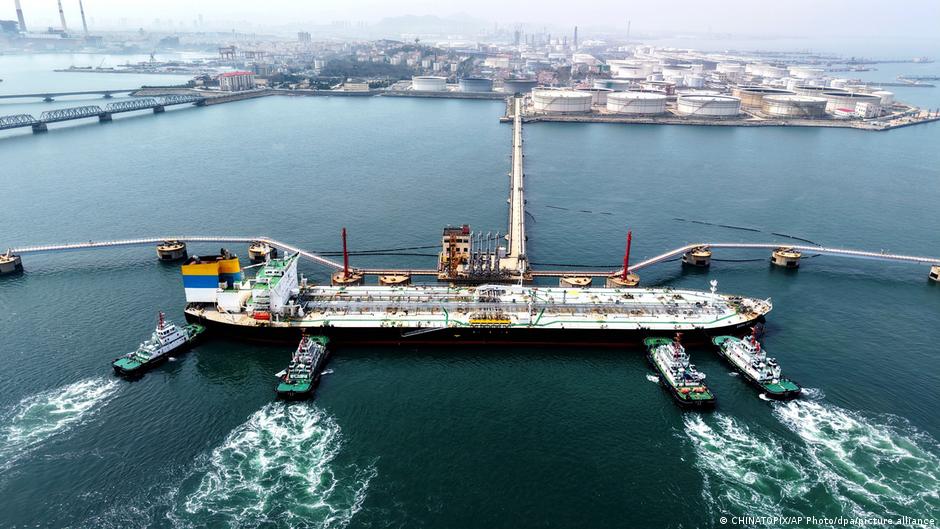
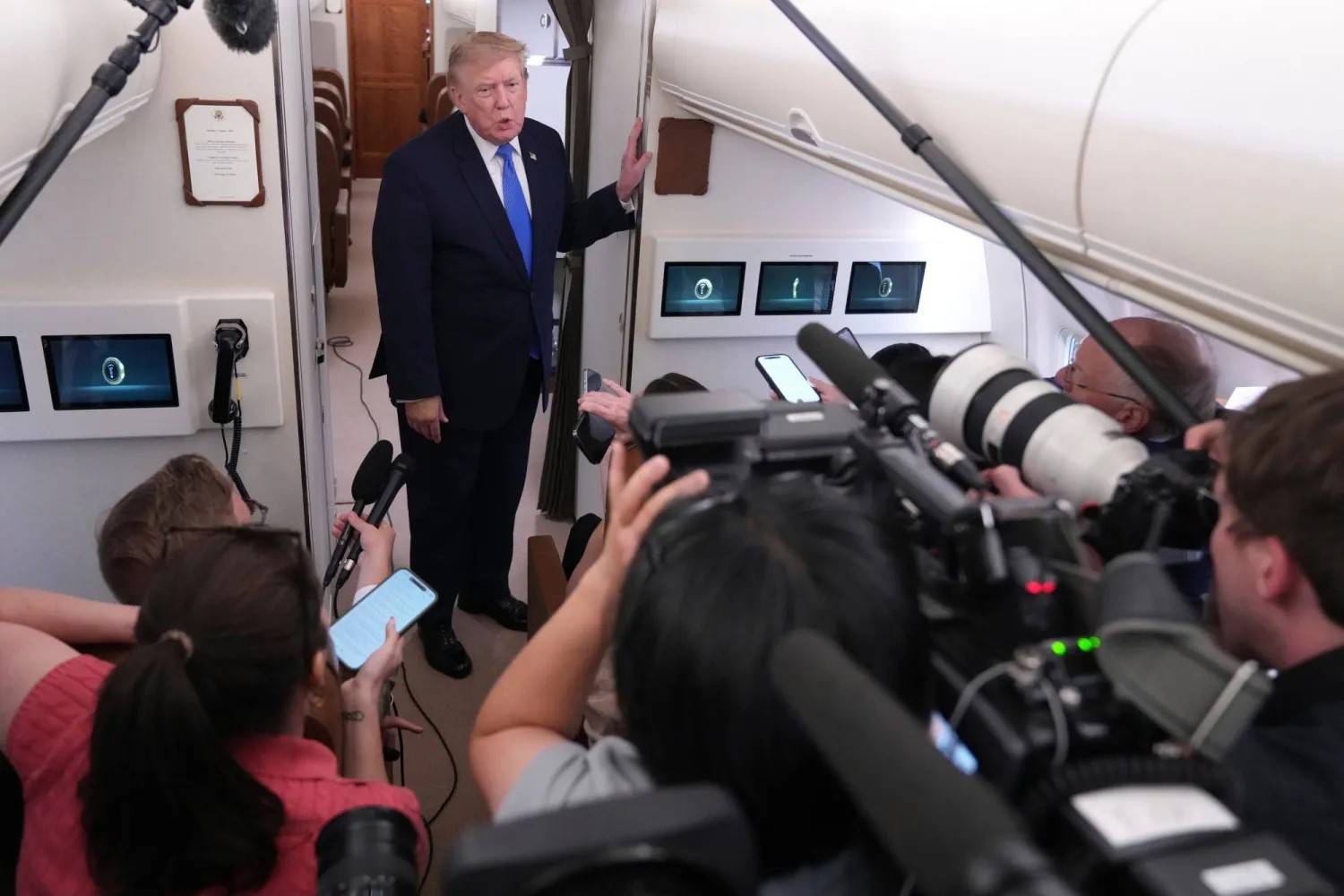
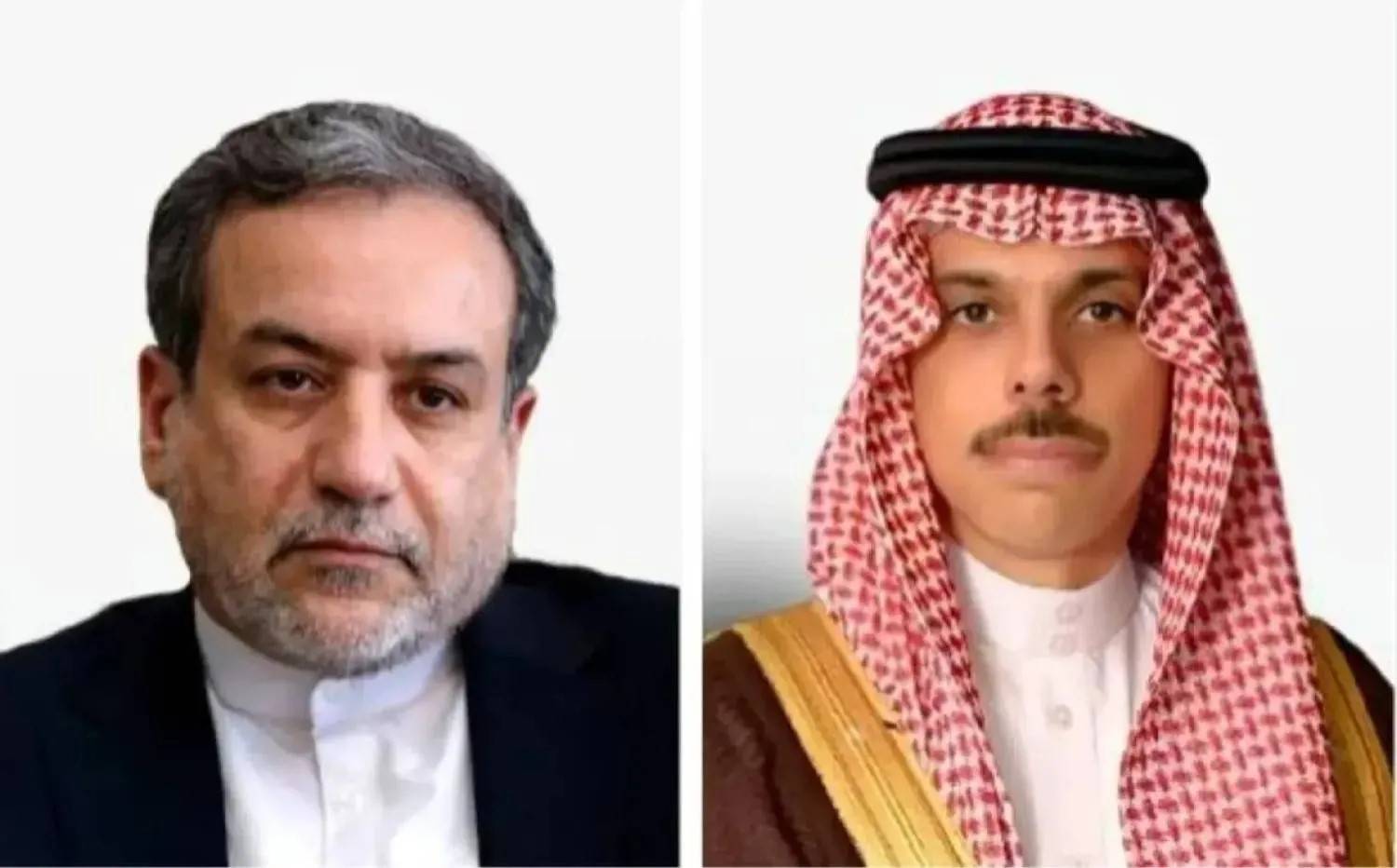
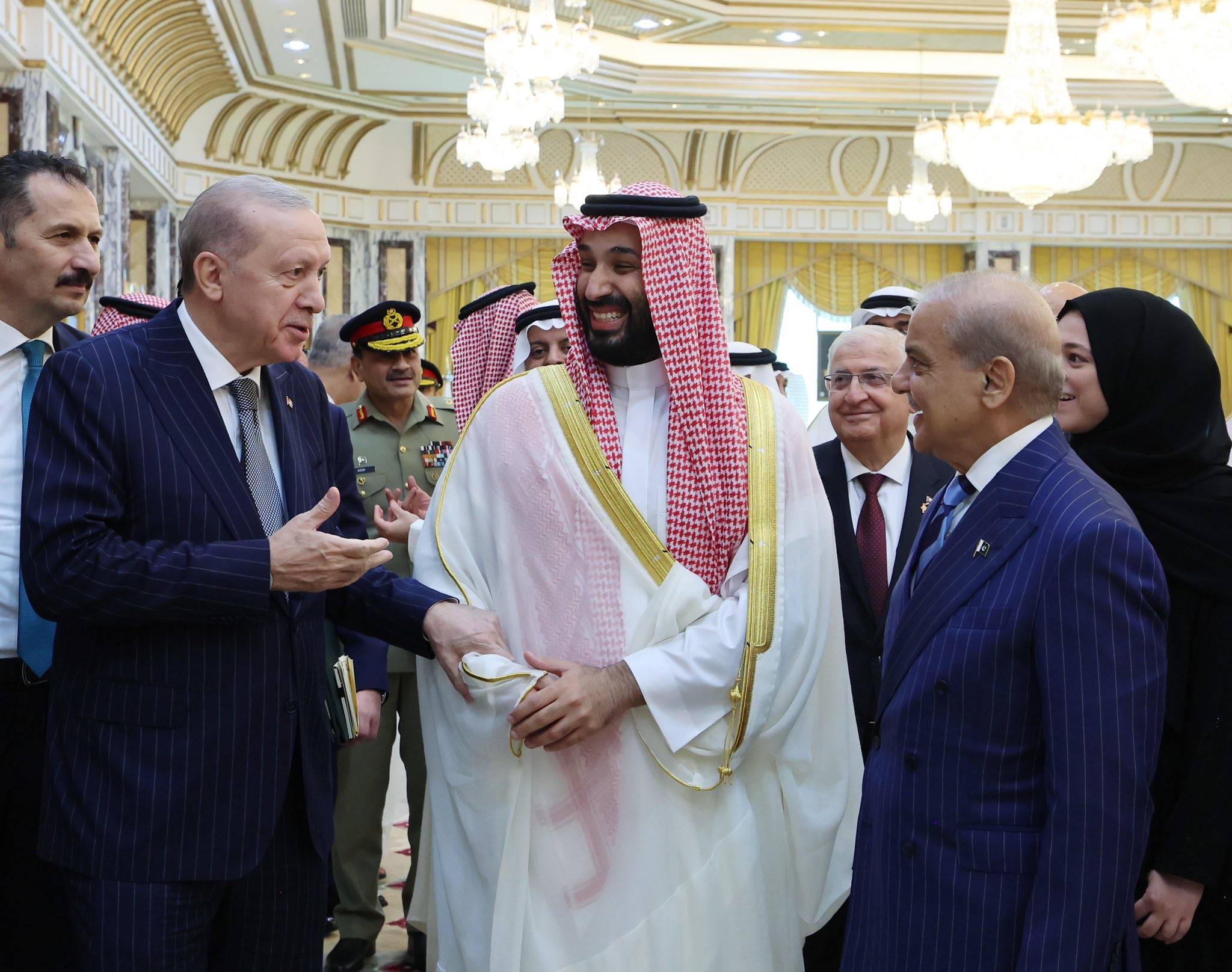
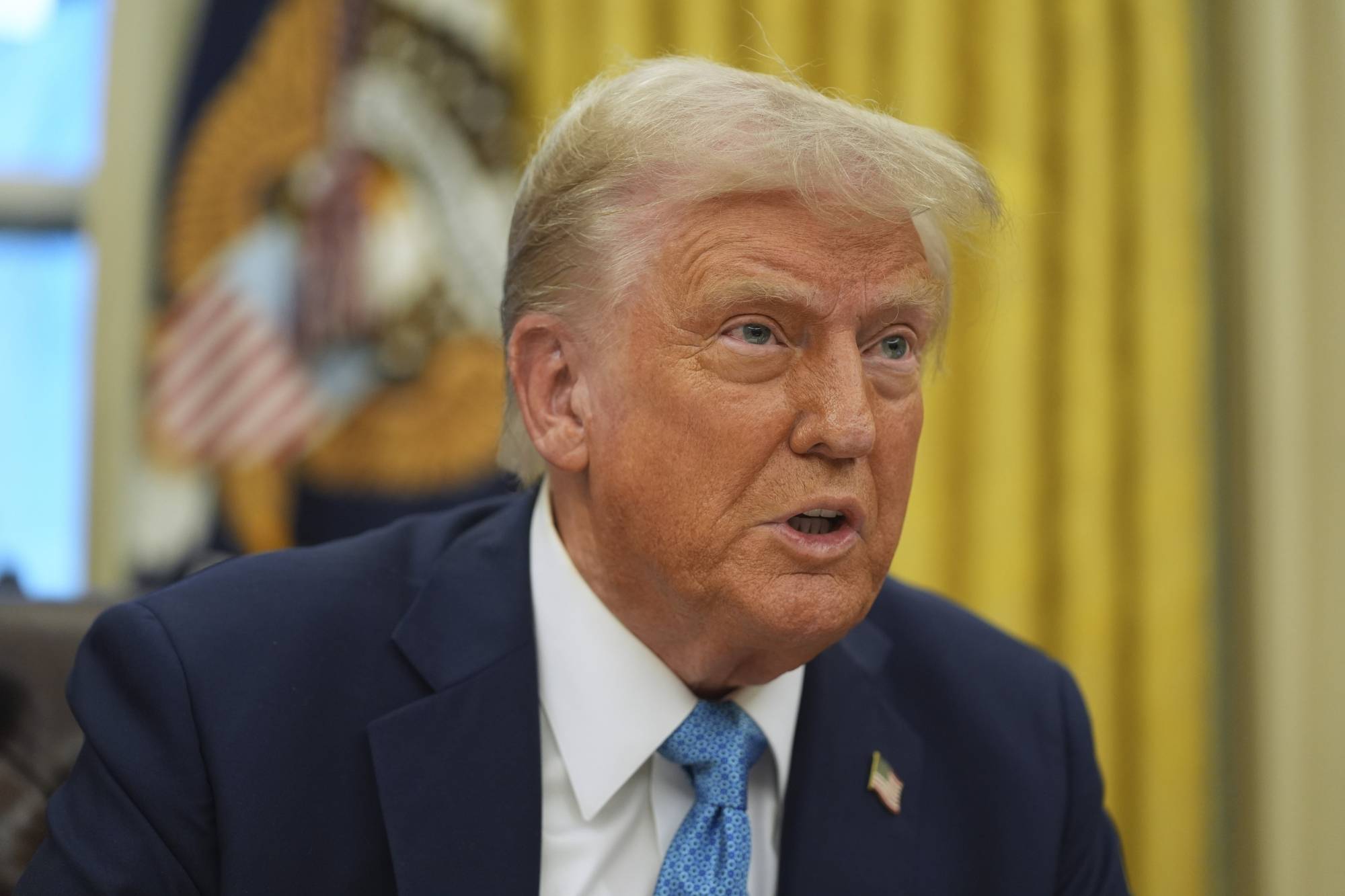
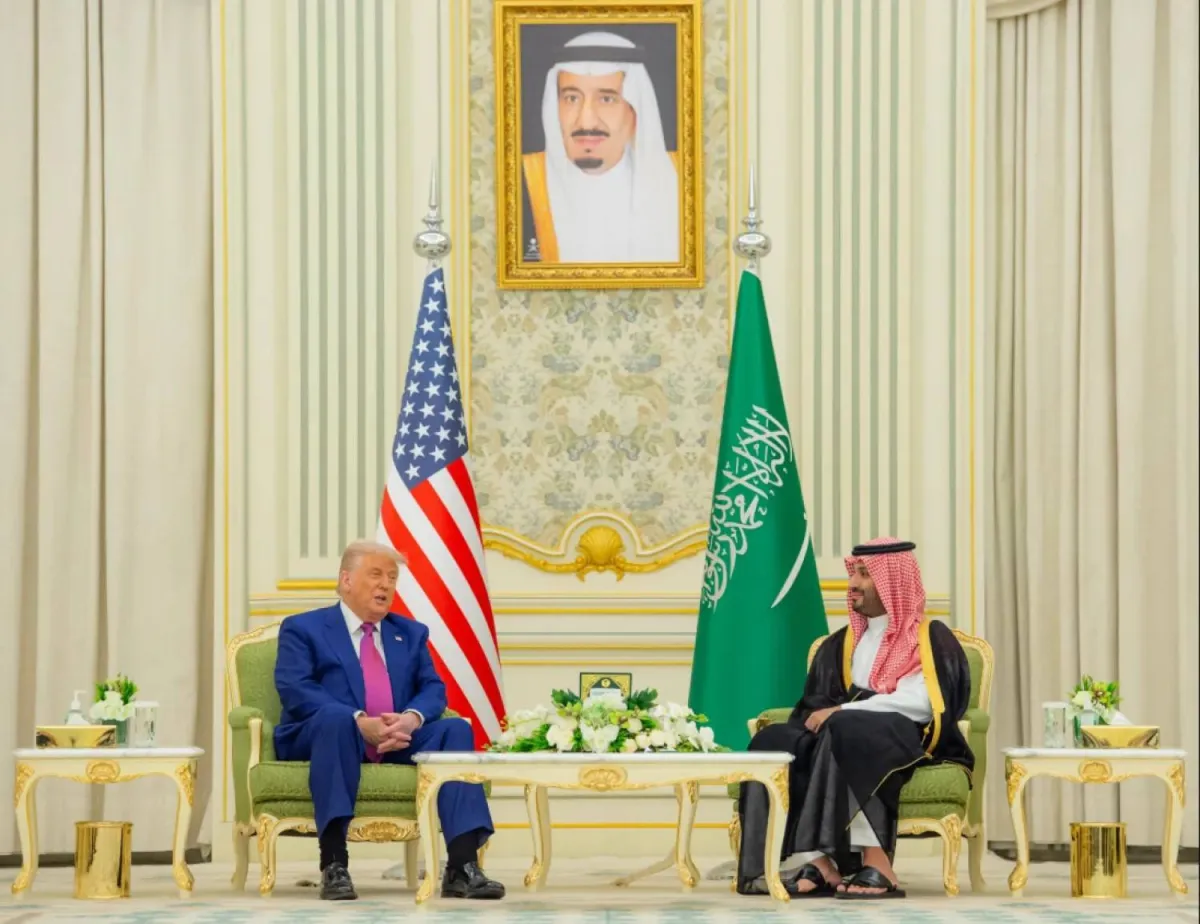
News 30-08-2026
America Pressures Iran—But Turkey, India and China Are Debating America’s Limits
In recent days, U.S. policy has sparked not just one but several interconnected debates in Turkey, India and China. The most prominent issue is Washington’s new campaign of economic pressure on Iran, announced on August 24, which threatens secondary sanctions against countries, banks and companies that maintain trade ties with Tehran. But local commentators do not see this as an isolated Iranian story. For Ankara, it is a question of gas, cross-border trade and the ability to resist unilateral diktat; for New Delhi, it is a test of “strategic autonomy” and a threat to Indian exports; for Beijing, it is another episode in the U.S. struggle to claim the sole right to set the rules of global trade. The common conclusion in all three countries is becoming increasingly clear: Washington is trying to turn access to the dollar system and the American market into an instrument of geopolitical coercion, but the cost of this strategy is also rising for the United States itself.
The issue of Iran has become particularly acute. U.S. Treasury Secretary Scott Bessent warned that countries continuing economic ties with Tehran could be cut off from the dollar-based financial system. In Turkey’s debate, this formula is viewed not as an abstract threat but as a direct blow to the national economy. A DW Türkçe article emphasizes that secondary sanctions affect not only oil trade but also banks, transportation, technology, gold and digital assets. Turkish-Iranian trade reached $5.5 billion in 2025, while energy dependence, although reduced, remains politically sensitive—particularly for the country’s eastern regions, which have historically relied on the pipeline from Iran.
Turkey’s response, however, is not limited to anti-American rhetoric. It reflects a pragmatic fear that the sanctions campaign will deprive Ankara of room for maneuver at a time when its previous long-term gas contract with Iran is ending, while logistics, insurance and energy costs are rising. Euronews Türkiye notes that the agreement covering supplies along the Tabriz–Ankara route expired on July 29, 2026, and that no new long-term contract has been publicly announced. As a result, the U.S. restrictions are seen not only as a foreign-policy problem but also as a risk to inflation, the currency and industrial competitiveness.
At the same time, Turkish analysts are increasingly assessing the U.S. and Israeli campaign against Iran in terms of its strategic effectiveness. On Medyascope, the war that began six months ago is described as a conflict that has failed to achieve its stated goals and has become a political problem for Donald Trump ahead of the November midterm elections. Earlier, political scientist Gönül Tol told the same outlet that the ceasefire had effectively already been violated: “the conflict is still continuing.” From the Turkish perspective, the main paradox is that the United States sought to reduce Iran’s role in the region, but the prolonged war has given Tehran new levers—from threats to shipping in the Strait of Hormuz to the ability to raise the price of any diplomatic compromise. A Medyascope analysis puts it even more bluntly: Washington has become interested in reopening the Strait of Hormuz as soon as possible and is therefore forced to reckon with Iran’s control over the pace of de-escalation.
In India, the reaction is less emotional but no less cautious. The Indian press is focusing primarily on the consequences of secondary sanctions for trade with Iran, food and medicine supplies, and future transport projects. Mint Hindi notes that, formally, the new U.S. measures have not yet placed Indian companies on sanctions lists. However, the very risk of punishment for transactions with Iran is already influencing the decisions of banks and exporters. This is an important detail: Indian concerns are linked less to an immediate ban than to a “chilling effect,” in which businesses abandon deals on their own for fear of losing access to the U.S. market and financing.
India’s debate therefore revolves around the principle New Delhi calls strategic autonomy: India does not want to choose between the United States, Iran, China and Russia according to someone else’s timetable. In a Xinhua publication, Indian international trade law specialist Shatanu Singh points to a key legal argument: without a mandate from the UN Security Council, the United States cannot turn its own sanctions into a universal obligation for the entire world; they are binding on U.S. entities, but not automatically on third countries. This argument matters not because it guarantees India protection, but because it reveals how the conflict is perceived locally: the issue is seen not as a dispute over Iran, but as an attempt to extend U.S. jurisdiction far beyond the United States.
The second Indian line of debate concerns trade. New Delhi is simultaneously discussing U.S. pressure over the alleged re-export of Chinese goods through India and Indian manufacturers’ dependence on Chinese components. Aaj Tak cites a figure that explains the duality of India’s position: despite tariff threats and political tensions, the United States accounts for around 20% of India’s merchandise exports. Indian commentators are therefore not calling for a break with Washington. Rather, they warn that the U.S. campaign against Chinese “transshipment” could punish precisely the production chains India has been building under the Make in India initiative. For New Delhi, this is almost a trap: the United States urges manufacturers to move production from China to India, but then suspects Indian companies of using Chinese intermediate goods.
China’s response is the most systematic. Beijing links sanctions against Iran, tariff measures, export controls and restrictions on Chinese companies into a single architecture of American pressure. China’s Ministry of Commerce has already responded to U.S. measures against Chinese entities with a series of countermeasures, including export controls on drones and their critical components. In a statement published by People’s Daily, the U.S. steps were described as violations of agreements reached by the leaders and of China’s legitimate interests. Ministry spokesman He Yadong, commenting on a U.S. report about alleged “shadow transshipment networks,” said that Washington was portraying normal international trade and investment as a fraudulent scheme, creating a “false narrative” to contain Chinese products. This position was outlined in a People.cn article.
In the Chinese interpretation, Iran is merely the latest test of whether America is truly prepared to punish major economies for refusing to follow its sanctions. Chinese media make no secret of the fact that Beijing will be at the center of U.S. pressure as Iran’s largest trading partner and an important buyer of its oil. But they also emphasize the limits of this strategy. Xinhua writes that military pressure failed to force Iran to capitulate, which is why the United States is once again relying on sanctions. To Chinese readers, this looks like an admission not of strength but of the absence of a functioning political strategy: if, after war and blockade, the only remaining option is to expand economic punishment, then the original goal has not been achieved.
Notably, in China this debate quickly shifts to the question of America’s domestic resilience. Caixin and China Radio International discuss in detail Trump’s decline in approval to 33% and link it not only to the war but also to inflation, voter anxiety and uncertainty ahead of the November 3 elections. The Chinese conclusion is politically calculated: U.S. external pressure may intensify precisely because the White House needs to demonstrate resolve at home. At the same time, this dependence on domestic electoral logic makes America’s course less predictable for both partners and adversaries.
Across all three countries, there is widespread mistrust of the assumption that sanctions automatically change states’ behavior. Turkey views them through the price of gas, transit and the regional balance; India through the right to pursue an independent economic policy and preserve access to the U.S. export market; China through the struggle over the rules of global trade and the rejection of extraterritorial jurisdiction. Their interests differ, but they share the sense that Washington is offering the world an excessively stark choice: either maintain economic ties with Iran and China, or retain secure access to the dollar and the American market.
The most unexpected local idea is that American pressure is no longer necessarily seen as evidence of unquestioned superiority. In Ankara, it is read as a risk to be circumvented; in New Delhi, as a reason to diversify trade without breaking ties with the United States; in Beijing, as an incentive to accelerate the creation of alternative financial and production networks. Thus, the new U.S. campaign centered on Iran may produce the opposite of its stated result: rather than isolating individual rivals, it may bring closer together countries that, for different reasons, are unwilling to give Washington the right to decide whom they may trade with.
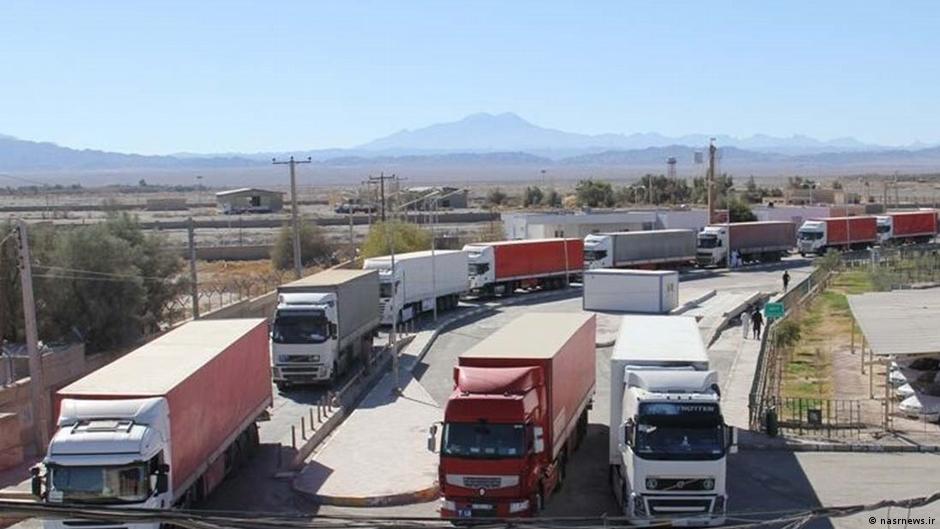
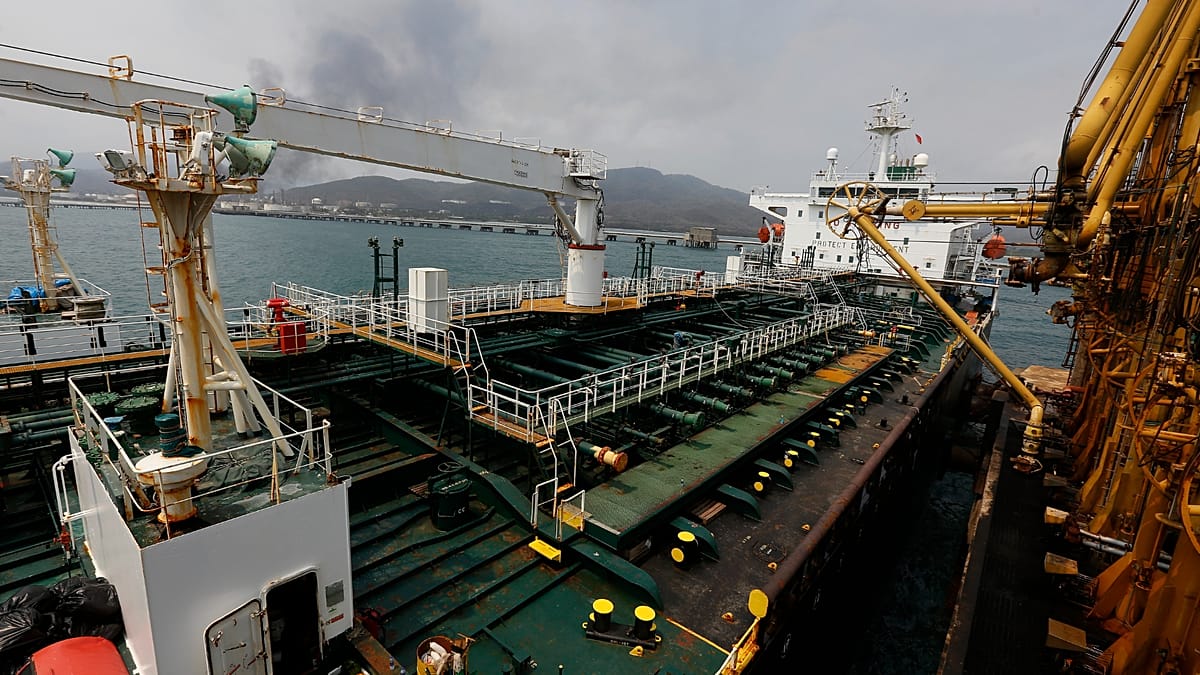
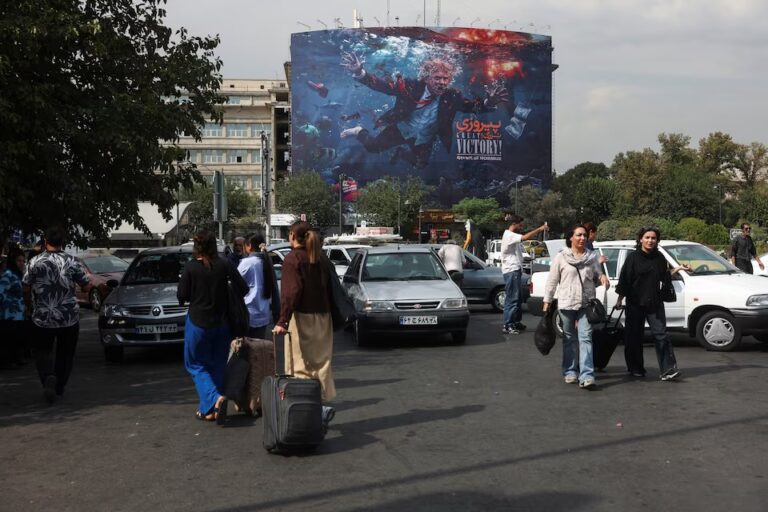
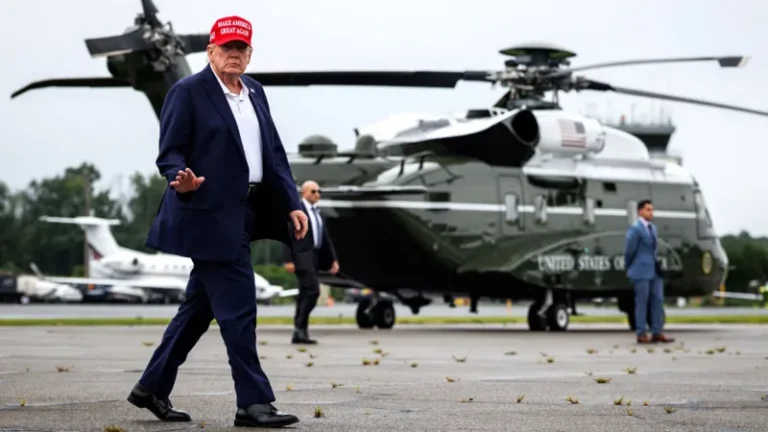
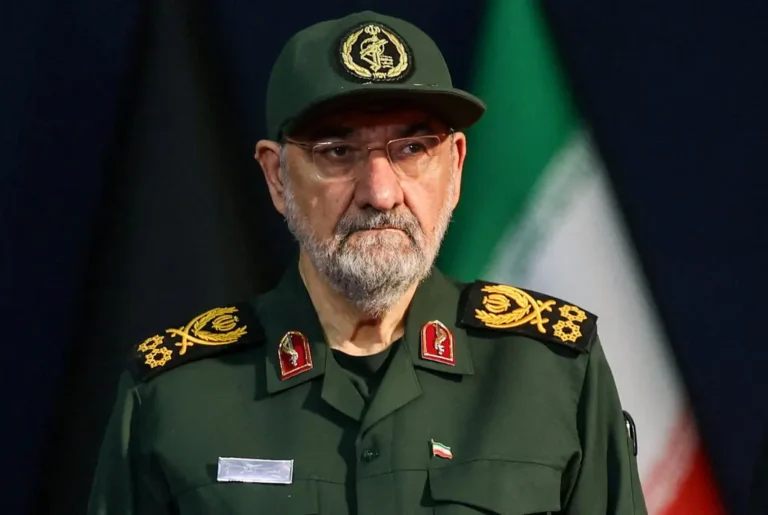



America as a Source of Risk: Why Seoul, Tokyo and Delhi Are Increasingly Talking Not About Alliance with...
As of August 29, 2026, discussions of America in South Korea, Japan and India revolve around one shared concern: Washington is increasingly using force not only in the military sense, but also through control over trade routes, access to its market and the right to work in the United States. The most acute symbol of this has been the protracted US-Iranian confrontation over the Strait of Hormuz. But two other issues have emerged alongside it in Asian debates: new US tariffs, including on drones, and a proposal to once again charge employers $103,265 for a new H-1B visa application. On the surface, these are different decisions—war, trade protection and migration policy. To Asian observers, however, they form a single picture: America is turning its power and the size of its market into instruments of coercion, while its partners are being forced to pay in advance for the unpredictability of this policy.
Hormuz is the point where this concern is felt most directly. After August 28 marked six months since the start of the US-Israeli war against Iran, there is growing skepticism in Seoul and Tokyo that Washington’s statements about restoring freedom of navigation automatically mean a return to normal trade. President Donald Trump insists that the United States has regained the upper hand in the strait, but for Asian countries what matters is not the formula about “control” but the ability to receive oil, gas and components without interruption. In an analysis by EAI President Chung Jae-sung and researcher Park Ji-eun, South Korea’s East Asia Institute describes American statements that the strait is effectively US territory primarily as coercive negotiating rhetoric, rather than a realistic assertion of sovereignty. The authors draw a more important conclusion: for Tehran, control over the passage of vessels is not merely a bargaining chip, but an asymmetric instrument for regime survival. Therefore, even a partial resumption of shipping does not eliminate the risk of a new crisis. (global.eai.or.kr)
This is a distinctly Korean perspective: rather than arguing over who is “winning” the US-Iran confrontation, it assesses how dangerous it is to build a national economy on the assumption that American military power will always guarantee predictable trade. EAI recommends that South Korean companies avoid rushing back to regular routes, gradually reduce their dependence on passage rules imposed by Iran, and closely monitor the prospects for Omani mediation. Particularly notable is the analysts’ assessment that the baseline scenario of alternating negotiations and escalations has a 50% probability, while the scenario involving the collapse of mediation has a 30% probability. This is not a forecast of imminent peace, but a call to adapt business and government to prolonged instability. (global.eai.or.kr)
In Japan, the same problem is framed even more starkly—as an exposed vulnerability in the country’s energy security model itself. In a recent report by the Japan Research Institute, Naoyuki Fukuda writes that the crisis revealed two weaknesses: the excessive concentration of sources and supply routes in the Persian Gulf and the Strait of Hormuz, and the vulnerability of the domestic oil-product distribution chain. In other words, even if a tanker manages to pass through the strait, that does not mean the crude will be converted into fuel and reach Japanese consumers without delays. Japan’s response contains little hope that the problem can be solved by the US Navy alone; instead, it focuses on diversifying procurement, building oil reserves, and expanding the role of nuclear and renewable energy. (jri.co.jp)
The Indian press views Hormuz through an even broader set of risks. In an editorial by Amrit Vichar, the crisis is described as an issue in which New Delhi must simultaneously support Omani mediation, seek guarantees from Iran for Indian shipping, defend its energy interests in negotiations with the United States, and develop alternative supply channels from the Gulf states. In a commentary by Navbharat, the emphasis shifts to sanctions against Iran and the potential damage to India’s project at the port of Chabahar. For India, this is not an abstract port: it provides access to Afghanistan and Central Asia while bypassing Pakistan. India’s response to American pressure is therefore ambivalent: Delhi does not want to quarrel with Washington, but it is not prepared to calmly accept a situation in which US strategy toward Iran blocks its own regional geography. (amritvichar.com)
The second shared theme is American protectionism, which Seoul and Tokyo increasingly view not as a temporary trade dispute but as the new norm in alliance relations. The tariff regime for drones and their components is especially telling: from September 3, the United States will impose tariffs of up to 100% on certain categories of products. South Korea’s Ministry of Trade emphasizes that Korean goods are subject to a 15% ceiling, while also acknowledging the urgent need to clarify the details with Washington and assess the consequences for the industry. The Seoul government briefing makes the prevailing mood clear: even treatment that is preferential compared with China’s or the general regime is not seen as a guarantee—conditions may change by sector and depending on America’s definition of national security. (admin2.korea.kr)
Japan’s reaction is similar in substance but more technocratic. JETRO explains that Japanese, Korean, Taiwanese and European supplies have received a combined ceiling of 15%, while sensitive categories of drones may be subject to a 100% tariff. At the same time, the US scheme provides tariff exemptions for companies that invest in production on US territory. Tokyo reads this as an unmistakable signal: access to the American market is increasingly purchased not through the quality of exports, but through the localization of capital, technology and jobs in America. An alliance with the United States does not eliminate trade pressure; it merely makes it possible to negotiate a lower rate and a longer adjustment period. (jetro.go.jp)
The most distinctive, but politically highly sensitive, Indian issue is H-1B. On August 24, the US Department of Homeland Security proposed introducing an additional $103,265 fee for H-1B visa applications subject to the annual cap. Formally, this is still a proposed rule rather than an enacted regulation: the department says it is needed to offset government expenses related to reviewing, administering and overseeing immigration programs. (content.govdelivery.com) In India, however, it is seen as a blow not only to outsourcing companies but also to the very notion of the United States as the primary platform for the career advancement of the engineering and IT elite.
Yet India’s response reflects not only resentment but also pragmatism. The National Association of Software and Service Companies, Nasscom, said that Indian technology firms have already substantially reduced their dependence on H-1B visas by expanding hiring directly in the United States. In a statement reported by the Indian news agency Press Trust of India, the industry is effectively telling Washington that the program is needed to address skills shortages, not to displace American workers. This is an important tone. Indian business is not responding with calls for confrontation; it is demonstrating that it has already adapted to American political risk—localizing part of its workforce, investing in training and now demanding not privileges but predictable rules. (ibc24.in)
This is the most unexpected shared conclusion emerging from South Korean, Japanese and Indian discussions. In all three, the United States remains an indispensable partner: a military ally for Seoul and Tokyo, the largest market for their industries, a technological center and a key strategic partner for India. But the image of America as a provider of stability is changing noticeably. South Korea is learning to live with the fact that American power at Hormuz does not eliminate insurance and logistics risks; Japan is turning the crisis into a program for structural energy autonomy; and India is trying to protect its sea routes, Chabahar and the mobility of its human capital at the same time. In all three countries, what is growing is not anti-Americanism but a more sober understanding: dependence on the United States now requires not trust but costly insurance—in the form of energy reserves, local production, alternative routes and indigenous technological ecosystems.



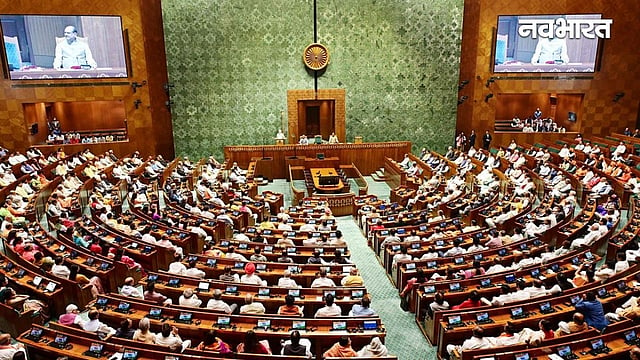

News 29-08-2026
America as a Risk Variable: Why Kyiv, Moscow and Canberra Read Signals Differently
By August 29, 2026, the main subject of international discussion about the United States was no longer any single initiative by Donald Trump, but rather the style of American policymaking: Washington is simultaneously trying to wage war on Iran, pressure its partners with tariffs, and seek discreet channels of communication with Moscow over Ukraine. In Kyiv, this is seen primarily as a test of whether the White House’s desire for a “quick deal” will turn into pressure on the victim of aggression. In Russia, it is viewed as evidence that without direct dialogue with the Kremlin, the United States cannot resolve either the Ukrainian or Middle Eastern crisis. In Australia, it is painful proof that even America’s closest ally is not protected from trade threats and sudden demands.
The week’s most discussed signal was CIA Director John Ratcliffe’s unannounced visit to Moscow on August 25. For the Ukrainian audience, the most important aspect was not the intelligence meeting itself, but a detail accompanying it: according to reports in the Western media, Kyiv was asked not to carry out long-range strikes on Moscow, St. Petersburg or Russia’s northern regions for several days. In an analysis by Ukrainska Pravda, former military intelligence chief Valeriy Kondratyuk sees the replacement of customary political envoys with the CIA director as a sign that is, on balance, favorable to Ukraine: it may indicate a shift from vague “peace” rhetoric to a discussion of verifiable threats, Russian mobilization and risks to NATO. In this reading, Ratcliffe came not so much to bargain over Ukrainian territories as to set out to the Kremlin the limits of further escalation.
But the opposite concern remains in Kyiv as well. Political analyst Igor Petrenko, in an interview with the OStriv outlet, stresses that any covert U.S.-Russian mission inevitably raises the question of whether Washington is returning to a negotiating model in which Ukraine is not a participant but the subject of a deal. This concern has intensified following Trump’s August refusal to provide additional Patriot interceptor missiles, citing the United States’ own needs in the Middle East. For Ukrainian commentators, this is no longer merely a supply issue, but a vivid illustration of the White House’s new hierarchy of priorities: when America is drawn into another war, Ukrainian air defense risks becoming a secondary resource.
Russia’s reaction to the visit has been noticeably calmer and even demonstratively businesslike. Sergey Lavrov said that there was “nothing unusual” about contacts between the CIA chief and Russian intelligence services, as reported by Vedomosti. This is an important formulation: Moscow does not want to present the trip as a diplomatic breakthrough, while at the same time emphasizing that the United States is nevertheless forced to speak with it directly. Russian experts writing in Expert magazine offer a broader list of reasons for the visit: Ukraine, the risk of a clash between Russia and NATO, prisoner exchanges, and Iran. This range suits Moscow precisely because it diminishes Ukraine’s exceptional status: the Kremlin seeks to portray itself not as a party that must be forced to end the war, but as an indispensable center of power without which several global crises cannot be resolved at once.
This reveals a paradox. Kyiv and Moscow interpret the same arrival by an American intelligence chief in completely different ways, yet both capitals see it as proof that Trump’s personal diplomacy is insufficient. Ukraine fears that it is too transactional and could trade long-term security for the appearance of a quick result. Russia, by contrast, suspects that behind the “routine” contacts may lie an American warning against expanding the conflict. Even when Washington speaks of peace, both countries primarily hear a question of power and coercion.
The second shared theme is the U.S. war with Iran, which by the end of August had already lasted around six months and was increasingly changing perceptions of American power. In Australia, this became not an abstract geopolitical issue but a debate over the limits of allied loyalty. Prime Minister Anthony Albanese said back in the spring that under Trump, the United States was “playing a different role” in the world: it was combining protectionism and unilateral military decisions with an expectation that partners would adapt to American priorities. In an ABC interview, he directly linked this shift to Australia’s need to work more closely with other middle powers.
Australian criticism does not, however, mean that Canberra is prepared to break the alliance. Australia still sees AUKUS and the U.S. presence in the Pacific as the foundation of its security in the face of China. Yet the war with Iran has shown that the price of closeness to the United States may be higher than expected: an ally is expected not only to show political solidarity, but also to participate in conflicts it did not choose. In a March ABC analysis, this was described as a possible Australian “red line”: sending military resources to a Middle Eastern war proved too risky for Canberra, even as it sought to preserve relations with Washington.
For Ukraine, the U.S. campaign in the Middle East matters in a different way: it diverts American attention, ammunition and political capital precisely when Ukraine needs protection for its energy infrastructure ahead of winter. In Russian debate, by contrast, Iran has become an argument for the growing negotiating value of Moscow. In the Russian interpretation, Washington cannot effectively “strangle” Tehran economically unless Russia and China limit their ties with it; consequently, the United States has to seek engagement with the Kremlin even amid confrontation over Ukraine. This does not necessarily signify genuine rapprochement, but it helps explain why Russia’s public discourse readily links Ratcliffe’s visit to the Persian Gulf, rather than solely to the war in Europe.
The third line of tension—American tariffs—particularly highlights Australia’s disappointment. In August, the Trump administration imposed a 12.5% tariff on imports from Australia, and Albanese asked for a full exemption. As ABC News writes, the Australian prime minister reminded Trump that over two decades, the United States had accumulated a $442 billion trade surplus with Australia. The argument sounds almost like a request to an ally not to punish a country that is already investing in the American economy and strategic partnership.
This is where the Australian perspective is most unexpected for an American audience. In Canberra, the issue is not limited to the amount of the tariff. The tariff is understood as a political signal: relations with the United States have ceased to provide predictability even where the countries’ interests formally coincide. Australia is not planning to abandon AUKUS, but it is increasingly separating the alliance from trust. Ukraine is experiencing a similar process in the areas of arms supplies and negotiations; Russia is experiencing it in its dealings with an American administration that can seek dialogue and intensify pressure at the same time. The difference is that for Kyiv, U.S. unpredictability is a threat to survival; for Moscow, it is room for maneuver; and for Australia, it is an incentive to pursue a more independent foreign policy.
The overall conclusion from the Ukrainian, Russian and Australian reactions is simple: America remains the central power, but its decisions are increasingly perceived as an unstable foundation. Today, its influence is measured not only by its ability to supply weapons, impose tariffs or conduct secret negotiations, but also by the extent to which other countries are forced to hedge against yet another American shift.

America, Expected to Deliver Solutions but Prepared for Its Absence
In recent days—from August 25 to 28, 2026—three interconnected themes have stood out in Ukrainian, French and Turkish discussions of the United States: America’s protracted war and sanctions campaign against Iran, Washington’s shifting of increasing responsibility for Ukraine onto Europe, and the domestic weakening of the Donald Trump administration. Local reactions do not boil down to the familiar argument “for” or “against” America. In Kyiv, Paris and Ankara, the United States is increasingly seen as a still indispensable but less predictable power whose domestic political needs are beginning to shape its international strategy.
The most painful common issue is Ukraine and Washington’s de facto proposal that Europe assume the main burden of the war. On August 27, U.S. Deputy Secretary of Defense Elbridge Colby said plainly at NATO headquarters that the United States expects Europeans to take the leading role both in their own conventional defense and in supporting Ukraine. At the same time, he stressed that Europe remains a “critical interest” for the United States, even as America’s priority shifts to the Western Hemisphere. This is not the language of an alliance rupture, but of a redistribution of roles: America is not promising to disappear, but is warning that it no longer intends to be the main provider of European security. Ukrainska Pravda reported this. (pravda.com.ua)
In France, this statement reinforces an already established conviction: European strategic autonomy is ceasing to be a French intellectual ambition and becoming a necessary form of insurance. An editorial in Le Monde calls on Europe to accelerate aid to Kyiv, noting Trump’s inconsistency over U.S. Patriots: at first he appeared open to licensing their production for Ukraine, then backed away. French anxiety is therefore directed less at a specific White House decision than at a new norm—assistance that depends on the fluctuations of the U.S. president and can be canceled with a single political maneuver. (lemonde.fr)
The Ukrainian perspective is noticeably more sober and कठोर. In Kyiv, no one concludes that a decline in Trump’s popularity will automatically make U.S. policy more pro-Ukrainian. Oleksandr Krayev, director of the North America program at the Ukrainian Prism center, calls Ukraine a “golden share” for Trump in an analysis for Ukrainska Pravda: success in supporting Kyiv could improve his position, but inaction would not necessarily harm him in the eyes of voters preoccupied with prices, migration and incomes. This is an important local qualification to European hopes: Ukrainian analysts see the American president not as an ally who can be persuaded by a moral argument, but as a politician who may be interested only by proof of geopolitical advantage. (pravda.com.ua)
This also explains the ambivalent reaction to CIA Director John Ratcliffe’s visit to Moscow on August 25. For Ukrainian observers, the visit itself is significant: Washington is once again speaking directly with the Kremlin and is likely attempting to deal simultaneously with Russia, Ukraine and Iran. But Ukrainska Pravda emphasizes another aspect: if the U.S. side delivered a warning about the consequences of escalation, it would be a rare instance of a signal reaching the Kremlin personally from the head of the U.S. intelligence service. Kyiv sees this not as a guaranteed diplomatic breakthrough, but as an indication that American deterrence still exists—and that it must not be allowed to dissolve into deals or fatigue. (pravda.com.ua)
The Turkish discussion of Ukraine is less emotional but no less pragmatic. For Ankara, the redistribution of roles within NATO means greater importance for Turkey itself. Against the backdrop of Russia’s war against Ukraine, Europe’s rearmament and the Middle Eastern crisis, Turkey is once again emerging not as a peripheral ally but as a country indispensable to discussions of the Black Sea, the eastern flank and mediation. In an Anadolu Ajansı analysis, this is presented almost as a diplomatic opportunity: the weakening of American exclusivity in European security gives Turkey room to demand the removal of restrictions on defense-industrial cooperation. In other words, where Kyiv fears American distance and Paris prepares to compensate for it, Ankara is seeking to turn Europe’s new dependence on regional players into practical concessions.
The second theme—Iran—brings the three countries even closer together, although their reasons for concern differ. French media describe the American strategy as a shift from hoping for a quick military resolution to economically strangling Tehran. A Le Monde report describes the situation as “neither war nor peace”: six months after the start of operations, the United States has achieved no decisive victory, but has also found no acceptable way out. The French interpretation is especially revealing: pressure on Iran is viewed not as a demonstration of American strength, but as a consequence of the absence of a military solution and the approach of the U.S. midterm elections in November. (lemonde.fr)
In Turkey, this same policy is perceived primarily through its cost to Iran’s neighbors. New U.S. restrictions and the threat of cutting violators off from the dollar-based financial system affect countries that continue trading with Tehran. DW Türkçe notes that Turkey remains one of Iran’s major trading partners: it exports textiles, machinery, chemicals and automobiles there, while importing gas, agricultural products, aluminum and steel. In Ankara, therefore, America’s “maximum economic” pressure does not look like an abstract punishment of the ayatollahs’ regime, but a threat to its own energy supplies, cross-border trade and Turkish businesses’ access to the global financial system. (amp.dw.com)
Turkish commentators add another motive, less obvious to Western audiences: Washington may be stronger militarily, but Iran has learned to turn geography and regional interdependence into instruments of pressure. In a Medyascope program, the war is described as having reached a dead end within just six months: in the authors’ assessment, further strikes are unlikely to force Tehran to yield, while the political risks for Republicans ahead of the elections are only growing. A typically Turkish interpretation is evident here: rather than choosing between American and Iranian rhetoric, it measures both sides’ ability to withstand the economic, energy and transportation costs of a prolonged confrontation. (medyascope.tv)
For Ukraine, Iran remains above all a factor dispersing American attention. In the Ukrainian analysis already mentioned, Krayev links Trump’s falling approval ratings to the consequences of the Middle Eastern adventure and the blockade of the Strait of Hormuz, which struck the global economy. But Ukrainian authors draw not the conclusion that Washington is about to turn toward Kyiv, but the opposite one: the White House has even more incentive to seek quick, high-profile and inexpensive diplomatic results rather than conduct a long, consistent campaign of support for Ukraine. (pravda.com.ua)
The third theme, currently voiced most loudly in France, is doubt about the institutional resilience of the United States itself. French financial debate is closely watching the administration’s pressure on the Federal Reserve. Le Monde warns that confidence in the country’s central bank is at risk—an institution whose decisions affect not only American but also global interest rates. For Paris, this is not merely an internal American scandal: the Fed’s independence, the stability of the dollar and the cost of servicing debt are elements of the financial infrastructure on which the European economy rests. (lemonde.fr)
This is where all three national perspectives converge. France sees an America capable of exporting financial instability; Turkey sees an America capable of changing the terms of trade with a neighbor through a single sanctions decision; Ukraine sees an America whose electoral incentives may determine the pace and scale of assistance at the front. In each country, the United States remains the principal external player, but confidence is disappearing that Washington itself sets stable rules. Its policy is increasingly perceived as a combination of power and improvisation—while its partners simultaneously try to keep America close, hedge against it and benefit from its new inconsistency.

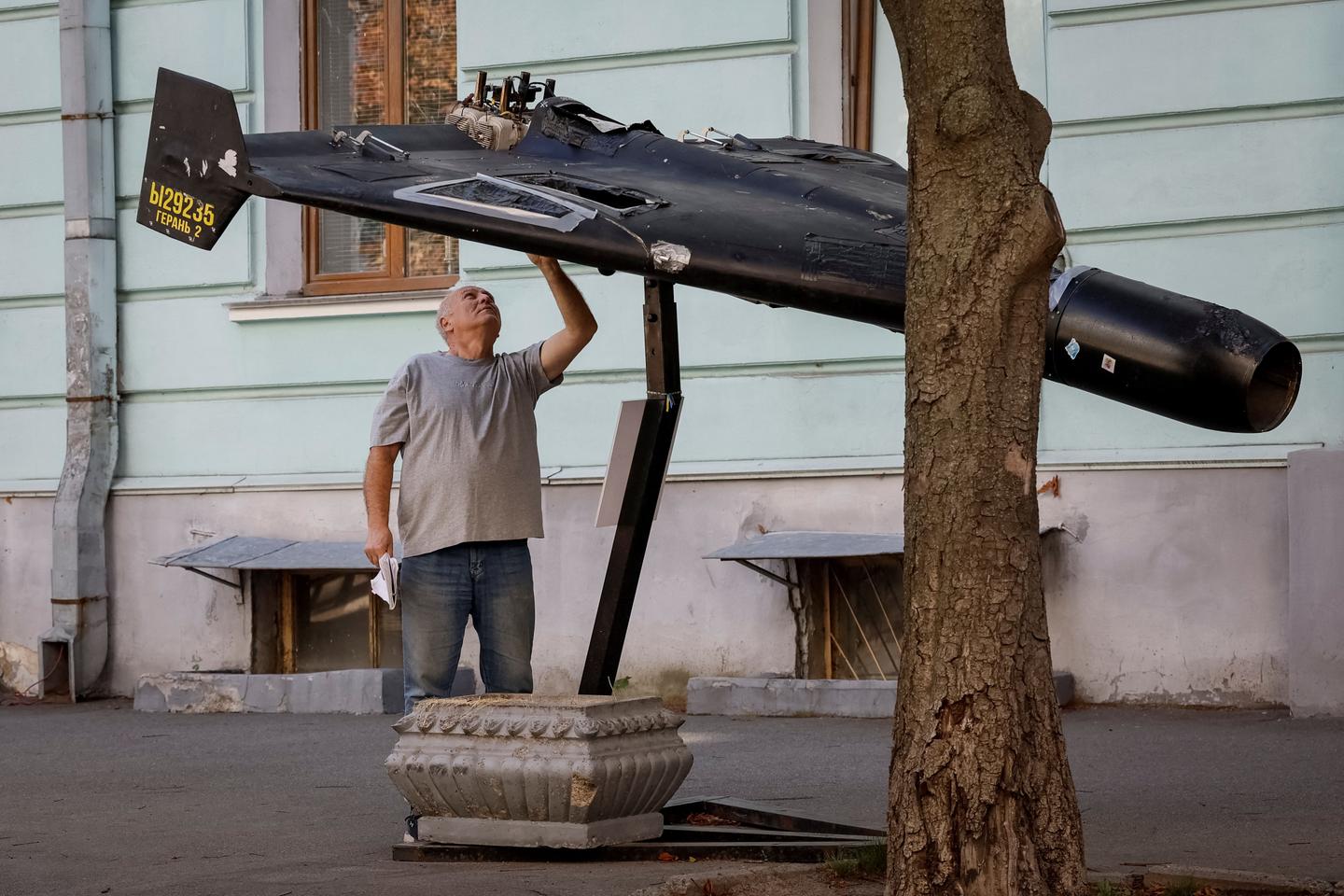

News 28-08-2026
America Under Pressure: How Paris, Riyadh and Beijing Read the Erosion of U.S. Power
By the end of August 2026, the United States had simultaneously become the center of three interconnected crises: the protracted standoff with Iran over the Strait of Hormuz, a new escalation in the economic and technological confrontation with China, and the increasingly visible domestic constraints on Donald Trump’s administration. In France, Saudi Arabia and China, these developments are viewed not as separate American news stories, but as signs of a larger shift: Washington remains capable of imposing sanctions, blocking markets and demonstrating military force, but is becoming less and less able to turn pressure into a durable political outcome.
The most acute issue is Iran. In the French debate, the American approach looks above all like a trap created by the White House itself. In a Le Monde analysis, the current strategy is described as a shift from military coercion to “economic strangulation”: after six months of operations, the United States has achieved neither Tehran’s surrender nor a genuine peace, and is attempting to compensate for the military deadlock with new sanctions. The French perspective is particularly important here: Paris sees not only a U.S.-Iran conflict, but also the risk of extraterritorial American pressure on third countries, including European institutions and banks. U.S. sanctions policy is portrayed not as a precise instrument, but as a mechanism that expands the conflict far beyond its original boundaries.
The Saudi reaction is markedly less ideological and much more practical. For Saudi observers, the question is not whether the United States is right in its dispute with Iran, but whether freedom of navigation through the Strait of Hormuz—the key export route for energy from the Persian Gulf—can be guaranteed. The Saudi newspaper Okaz emphasizes the restoration of vessel traffic and links it to the presence of the U.S. Navy; in its interpretation, the increase in maritime traffic means that Tehran is gradually losing its ability to dictate terms in the strait. But this is by no means an unconditional endorsement of the American war. In another article, Okaz notes that Washington is linking an extension of the truce to the full reopening of Hormuz, while Iran is demanding an end to the blockade and sanctions. (okaz.com.sa) For Riyadh, the United States remains an indispensable military partner, but the American campaign is valuable only insofar as it reduces, rather than multiplies, regional instability.
This is precisely where the French and Saudi views diverge significantly. France primarily sees American policy as a threat of endless war and to Europe’s diplomatic autonomy. Saudi Arabia sees it as a necessary, though risky, shield against disruption to trade and Iranian pressure. As Chatham House expert Neil Quilliam noted in his commentary, Riyadh seeks to assume greater responsibility for regional security while simultaneously demonstrating its own strategic indispensability to Washington. (chathamhouse.org) This is a characteristic Saudi qualification to the widespread European idea of an “America in retreat”: Riyadh is not expecting the United States to disappear from the Middle East, but is seeking to make its dependence on Washington less one-sided.
China’s reaction links the war with Iran to the trade war against Beijing. In China’s official analysis, the U.S.-Iran confrontation is interpreted as the “middle game,” in which Washington’s options are limited: military fatigue, domestic political resistance and electoral pressure are pushing the Trump administration to keep the conflict at a low intensity rather than seek a decisive breakthrough. Xinhua directly links the U.S. shift toward blockades and sanctions to the absence of a convincing military solution. (news.cn) For Beijing, this is not merely an assessment of the American campaign; it is an argument against the model of American coercion itself—force, sanctions and control over financial flows.
This logic became even more apparent in the August exchange of restrictive measures between the United States and China. After Washington imposed measures against Chinese companies and restrictions in the technology sectors, Beijing tightened export controls on drones and their components destined for the United States, introduced restrictions against American organizations and launched the first national-security investigation in the field of foreign trade in its history. China’s Ministry of Commerce called the American actions a violation of agreements reached by the two countries’ leaders and said the countermeasures were “restrained.” (news.cn)
But the Chinese press goes beyond the official formula of a “necessary response.” In an editorial in Global Times, U.S. restrictions on Chinese robots, inverters, photovoltaic products and optical technologies are described as an attempt to build supply chains without China—a project that, the authors argue, will harm America’s own energy sector, AI infrastructure and innovation economy. (opinion.people.com.cn) The Chinese view thus differs from the French and Saudi perspectives: while Paris is concerned by Washington’s unpredictability and Riyadh measures it by its impact on security in the strait, Beijing believes that America is trying to turn the concept of national security into a universal tool of industrial protectionism.
Across all three countries, one common idea is particularly noticeable: Trump’s threats are no longer perceived as an automatic mechanism that forces others to give way. Arab commentator Abdelazim Muhammad Abdelrahim writes in an article for Al Jazeera that the constant escalation and promises of tough action have ceased to produce their previous effect: the limits of the administration’s capabilities have become visible to courts, markets and U.S. rivals alike. (aljazeera.net) French articles reach a similar conclusion through the story of Iran; Chinese ones through the language of “countermeasures” and technological interdependence; Saudi ones through a cold calculation of the cost of security in Hormuz.
The most interesting local conclusion is heard not in Paris or Beijing, but in Riyadh. The Saudi perspective does not assume that a weakening of the United States’ ability to impose its decisions would automatically benefit the region. On the contrary, a less decisive but still heavily armed Washington may be more dangerous than the former American hegemony, because it retains the power to escalate but no longer has sufficient political resources to bring conflicts to a rapid conclusion. French anxiety over unilateral American pressure, Chinese criticism of the “small yard and high fence,” and the Saudi emphasis on the security of shipping converge at one point: the world is learning to live not without American power, but with American power that has become more nervous, more economically driven and less convincing.
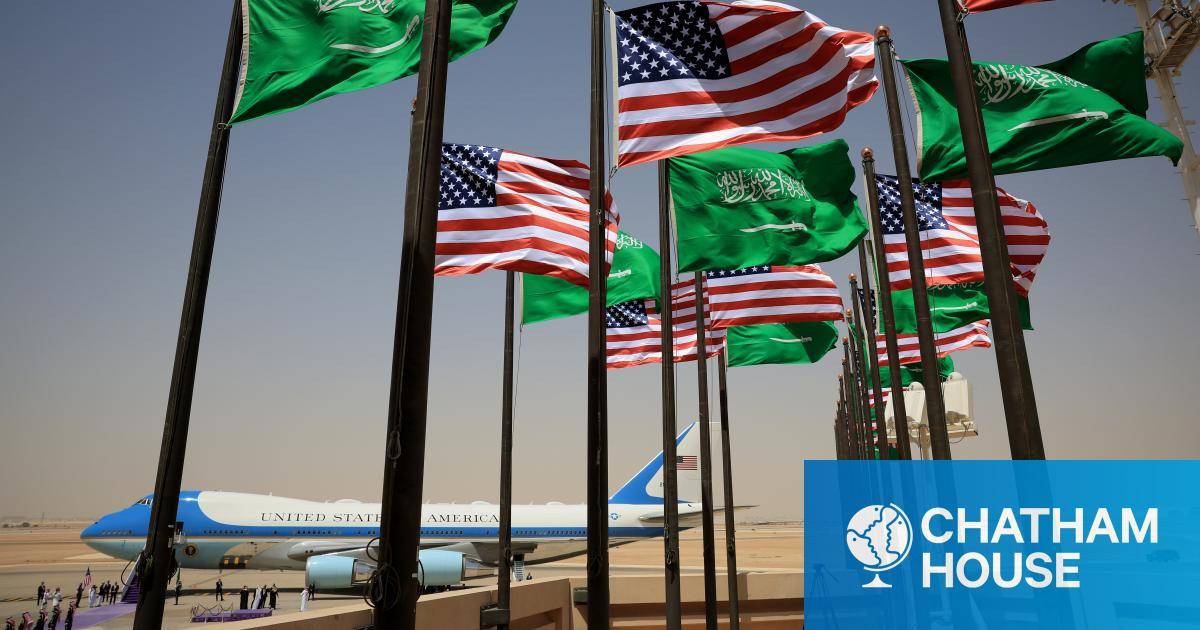


America as a Source of Strategic Uncertainty: China, Australia and Germany on War, Tariffs...
In late August 2026, the United States is being discussed in Beijing, Canberra and Berlin not as the familiar center of the Western order, but as a country whose decisions simultaneously create military, economic and political risks for partners and rivals alike. Three themes stand out in local debates: the protracted US confrontation with Iran and the fate of the Strait of Hormuz; Washington’s new tariff confrontation with Canada; and the broader question of whether security can still be built around American guarantees. The overall conclusion in all three countries differs in tone but coincides in substance: the problem is no longer just Donald Trump as an unpredictable leader, but the fact that US policy is increasingly seen as unconstrained by institutions, alliances and rules.
The most acute issue remains Iran. China’s state-backed expert debate describes the American campaign primarily as a demonstration of diminishing power: military means have not secured a political result for Washington, while the shift toward threats of “economic war” is interpreted as evidence that it lacks a convincing next step. In a CCTV analysis, Niu Xinchun, director of the Institute of Arab Countries at Ningxia University, calls control of the Strait of Hormuz Tehran’s main trump card. Qin Tian, deputy director of the Middle East division at the China Institutes of Contemporary International Relations, goes further, arguing that losing control of the strait would become a symbol of the weakening of American hegemony in the Middle East. This perspective is characteristic: Beijing looks not so much at the military campaign as a standalone crisis as at its significance for the broader balance of power—whether America can impose rules in a region on which Asia’s energy security depends. (news.cctv.com)
The German reaction is markedly less triumphant and far more legalistic. For Berlin and German analytical centers, the danger lies not only in the war’s failure to end, but also in the way it is eroding the regime of freedom of navigation on which Germany’s export economy depends. An analysis by the German Institute for International and Security Affairs explicitly stresses that the status of an international strait cannot be altered either by a coastal state or by an agreement between individual countries to the detriment of third parties; the authors call for the collective defense of maritime law. This is a crucial nuance: German criticism is directed not only at Iranian restrictions on transit, but also at the very idea that Washington has the right to unilaterally reshape the rules governing the passage of ships under the pretext of security. (swp-berlin.org)
In Australia, the same crisis is perceived even more personally—through the price of gasoline, inflation, maritime trade and the country’s involvement in the American military architecture. Australian Minister Kristy McBain warned that the longer the war continues, the greater the impact on households and businesses; opposition spokesman Dan Tehan called the very idea of charging for passage through Hormuz particularly alarming, as it could set a precedent for the South China Sea, a vital route for Australian trade. (abc.net.au) This makes Australia’s specific anxiety especially clear: if the United States can declare itself the arbiter of transit in the Persian Gulf, what will that mean for the future rivalry with China in the Indo-Pacific?
That is why, in Canberra, the debate over Iran quickly turns into a debate over AUKUS—the defense partnership between Australia, the United States and the United Kingdom. In an ABC commentary, political editor Jacob Greber drew an uncomfortable conclusion for the alliance’s supporters: AUKUS “binds Australia to America’s actions, whether it wants that or not.” Former Prime Minister Paul Keating, a longtime opponent of the deal, calls it the worst in the country’s history. Sam Roggeveen of the Lowy Institute, meanwhile, reads Canadian Prime Minister Mark Carney’s call for cooperation among middle powers as a warning: excessive closeness to any great power turns a state into a supplicant. (abc.net.au) This does not mean Australia is turning toward China. On the contrary, the Australian elite still considers the American presence a necessary deterrent. But the local debate increasingly features demands not to replace dependence on the United States with dependence on Beijing, but to build greater strategic autonomy.
This mood is reinforced by a deeper assessment of America’s retreat from Asia. In a recent Lowy Institute article, a researcher argues that Trump did not create America’s retreat; he became its symptom: the United States has fewer reasons and less political will to shoulder its former global commitments. (lowyinstitute.org) For Australia, this is probably the most painful conclusion of all: a change of president in Washington may not restore the former predictability, because American domestic politics itself is increasingly ill-equipped to support the country’s role as guarantor of the regional order.
The tariff dispute with Canada has become a vivid example of why US allies increasingly distrust even economic agreements with Washington. After negotiations collapsed, America’s 50 percent tariffs hit a number of Canadian goods, and from January 1, 2027, Trump promised to extend that level of duties to automobiles, auto parts and steel. Prime Minister Mark Carney responded with a “dollar-for-dollar” formula, saying that Canada had been attacked. (tagesschau.de) German commentators view the conflict as a stress test for the entire North American production system. Handelsblatt correspondent Laurin Meyer put it aptly: the tariff does not “restructure” North America’s economic space; it “taxes its connections.” In the automotive, steel, energy and agricultural sectors, goods cross the border repeatedly before becoming finished products. Political pressure on Canada therefore inevitably returns as higher costs for American companies and consumers. (handelsblatt.com)
In China, this episode is interpreted as confirmation of a long-promoted argument: Washington’s tariffs are not a special instrument aimed at China, but a universal mechanism of pressure, even against its most closely integrated allies. Xinhua describes the current phase as a threefold struggle—for economic resilience, a domestic political base and the negotiating initiative—while noting that Carney’s strategy is to turn the dispute into a problem for US domestic politics and force the White House back to the negotiating table. (news.cn) For Chinese audiences, the Canadian episode itself is less important than the lesson: even deep interdependence, a shared border and the USMCA agreement do not protect against sudden American escalation. This makes China’s argument for diversifying trade and technology links more persuasive not only within the PRC, but also to countries that once regarded the US market as the most reliable.
Germany and Australia do not share China’s desire to declare these developments proof of America’s irreversible decline. Yet they increasingly converge with Beijing on a much narrower, practical diagnosis: the United States has begun using power, sanctions and tariffs in ways that make an alliance with it a source of risk in its own right. The German press speaks of a “trade war” and a dangerous spiral of retaliatory measures; Australian authors write about the cost of dependence and the need to prepare for an America that may take less interest in Asia’s security; Chinese analysts focus on the limitations of US military and economic pressure. (tagesschau.de)
The main international shift, therefore, is not that China, Australia and Germany assess America in the same way. They do not: China sees a strategic opening, Germany a crisis of rules, and Australia the risk of losing sovereign choice. But all three debates increasingly depart from the old assumption that American power automatically produces stability. It is now more often seen as a force whose consequences must be hedged—diplomatically, economically and militarily.
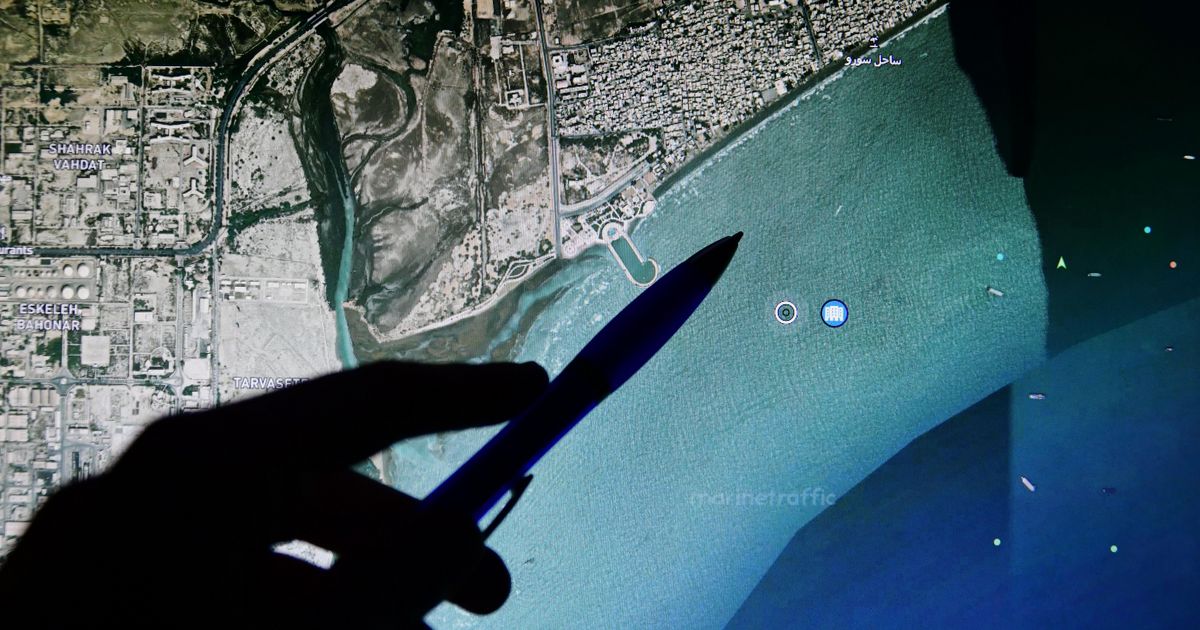

News 27-08-2026
America as a Source of Coercion, Not Order: What China, Australia and Japan Are Discussing
In recent days, from August 24 to 27, 2026, China, Australia and Japan have been looking at the United States through the same troubling lens: Washington is simultaneously expanding its economic war against Iran, increasing pressure on international institutions and demonstrating a willingness to use trade barriers even in relations with its closest partners. But local reactions differ. In China, this is presented as evidence of the failure of America’s “maximum pressure” policy; in Australia, as a test for an alliance that must be preserved without illusions; and in Japan, as a painful question of whether the country can defend the rules-based international order when its principal ally is attacking it.
The most discussed issue has been the American operation announced on August 24, Economic Outcast—an expansion of secondary sanctions against states, banks, carriers and companies cooperating with Iran. Formally, the aim is to cut off Tehran’s financial, maritime, technological and oil channels. In practice, however, the campaign extends far beyond Iran: it requires third countries to restructure their own trade around American political objectives. Australia’s ABC News analysis of the operation notes that the US administration is still issuing more threats than concrete deadlines and target lists. Former US diplomat Alan Eyre expressed the skepticism in particularly stark terms: the sanctions field has already been exhausted—“we’ve picked the low-hanging fruit, the middle-hanging fruit, the high-hanging fruit—everything on the tree.” For Australian readers, this is not an abstract dispute about the Middle East: a prolonged war means risks to maritime trade, energy prices and the stability of the US alliance strategy.
China’s reaction is even more categorical. In an editorial in Huanqiu Shibao, reprinted by People’s Daily Online, Washington’s “economic D-Day” is described as the wrong scenario: turning finance and trade into weapons, the newspaper argues, will not remain within the boundaries set by the United States but will spread the costs to everyone. What matters here is not only the anti-American tone. Chinese debate identifies a specific contradiction: for Iran’s isolation to work, the United States must be prepared to punish China—the largest buyer of Iranian oil—but Washington is trying to avoid precisely such a confrontation ahead of high-level contacts. Japanese expert Shin Sasaki reaches nearly the same conclusion in Wedge, albeit from a completely different political standpoint: if the sanctions do not affect China’s independent refineries and the banks servicing the transactions, they will remain a “painted rice cake”—a beautiful but inedible picture. This is a rare point of convergence between Chinese and Japanese analysis: both see the campaign not as a sign of limitless American power, but as evidence of the limits of its applicability.
In Beijing, however, this weakness leads to a geopolitical conclusion: the United States is undermining trust in the dollar-based and sanctions infrastructure itself, forcing countries to seek ways around American control. In Tokyo, the conclusion is more cautious and more alarming: the problem is not that pressure on Iran is insufficiently harsh, but that its unpredictability threatens the global economy. In a forecast by the Daiwa Institute of Research, Japanese analysts Daisuke Yahagi and Tsubasa Fujiwara link the shift in America’s emphasis—from military pressure to a combined sanctions strategy—to rising oil prices, problems in the Strait of Hormuz and declining consumer sentiment in the United States itself. In other words, the Japanese perspective is primarily economic: America is trying to reduce the domestic cost of war while shifting uncertainty onto its partners and markets.
The second common theme is the increasingly open conflict between the United States and international law. New sanctions against International Criminal Court President Tomoko Akane, a Japanese citizen, have transformed what was an abstract dispute over the ICC’s jurisdiction into a personal and national issue for Tokyo. In an interview with TBS, Akane called on the Japanese government to clearly reaffirm that it would continue supporting the Court and would not withdraw from it: “the world is watching” to see whether Japan will yield to pressure or support the ICC together with other states. Her broader warning sounds like a diagnosis of the current moment: the normalization of “might makes right” could make it a customary foundation of the world order.
Notably, criticism in Japan is directed not only at Washington but also at Japan’s own caution. Amnesty International Japan, in a statement dated August 25, urged Tokyo not to limit itself to expressions of regret but to publicly seek the sanctions’ cancellation. Prime Minister Sanae Takaichi says Japan will continue pursuing the matter at “the necessary moment,” without revealing its diplomatic cards in advance. This is a typically Japanese dilemma: Japan cannot break with the United States, on which its security depends, but neither can it silently accept an attack on an institution headed by a Japanese judge.
In Australia, the dilemma looks almost like a mirror image. ABC News reports that the government does not support sanctions against the ICC and its personnel, while Australian officials privately describe the Trump administration’s actions as “destructive.” But the public protest remains restrained. The reason is stated openly by ABC’s source: the campaign against the ICC is closely associated with Secretary of State Marco Rubio, who is simultaneously an indispensable partner for Canberra on security issues. Australian foreign policy finds itself in a position where it must defend the rules without directly quarrelling with the person challenging them.
The third theme is trade as a means of political coercion. Australians are particularly sensitive to this after the United States imposed a 12.5 percent tariff on Australian imports, citing forced-labor problems in supply chains. Prime Minister Anthony Albanese is seeking an exemption, reminding Trump that over two decades the United States has run a $442 billion trade surplus with Australia. In an ABC report, Albanese articulated the fundamental disagreement: tariffs are primarily an economic burden for the country imposing them. That has not stopped Canberra from simultaneously emphasizing its commitment to AUKUS and its military alliance with Washington.
For China, it is particularly revealing that the United States is at the same time escalating its tariff dispute with Canada. Chinese commentators view this not as a separate bilateral quarrel but as an example of a new American model: alliance ties no longer provide immunity from economic pressure. Beijing gains a convenient argument to make to countries in Asia and the Global South: dependence on the US market leaves partners vulnerable regardless of their political loyalty. Watching the Canadian case, the Australian public sees not someone else’s drama but a possible scenario for its own dependence on unpredictable exemptions and personal arrangements with the White House.
The common thread running through the Chinese, Japanese and Australian debates is not simply sympathy or antipathy toward Trump. It is the question of the reliability of American power. Chinese authors argue that Washington is no longer capable of imposing its will without incurring serious costs. Japanese analysts fear that American inconsistency will damage both markets and norms. Australians are trying to develop a practical formula for coexisting with an ally who is simultaneously needed to deter China, capable of imposing tariffs on Australia and willing to weaken the international institutions that Australia itself considers essential.
The most unexpected conclusion from these reactions is this: the United States remains the center of global politics, but it is increasingly perceived not as the architect of a predictable order but as a source of risks that others must hedge against—through trade diversification, quiet diplomacy, support for international courts and the search for new coalitions. Beijing welcomes this as a strategic shift. Tokyo and Canberra, by contrast, are learning to live with it, without being able either to distance themselves completely from America or to return to their former confidence in it.

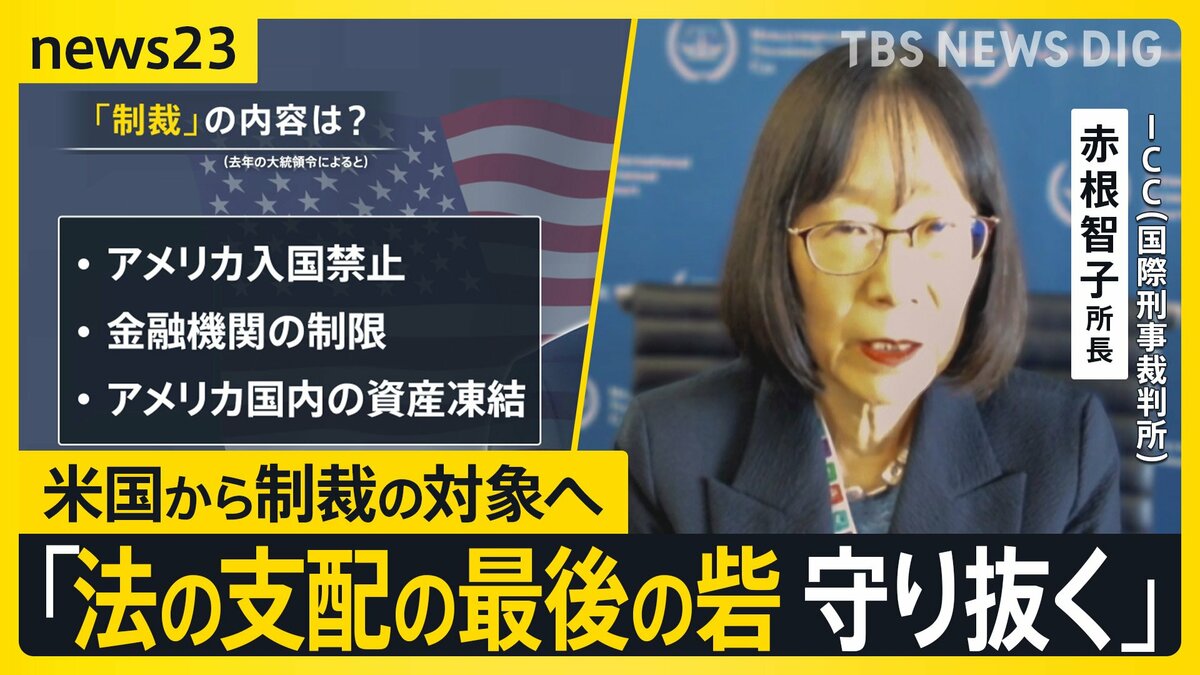
America as a Source of “Secondary Shocks”: What India, France and Japan Are Saying About...
In recent days, the United States has prompted India, France and Japan not so much to engage in the familiar debate over Donald Trump’s foreign policy as to worry about America’s ability to turn its own crises into global ones. At the center of the discussion are a new round of economic pressure on Iran announced on August 24, including threats against countries and companies that do not join the U.S. line; the vulnerability of the global financial system to problems involving U.S. government debt and the Federal Reserve; and, finally, the entrenchment of tariffs as an instrument not only of trade policy but also of political coercion. U.S. Treasury Secretary Scott Bessent summed up the logic of the new campaign in stark terms: countries that do not support the sanctions regime will “share Tehran’s isolation.” (lemonde.fr)
For India, this is primarily a question of strategic autonomy, not an abstract conflict between Washington and Tehran. Indian media have been particularly concerned about secondary sanctions: direct trade with Iran is already largely limited to humanitarian supplies—food and medicine—but the risks to banks, insurers, shipping companies and intermediary firms remain. A Mint analysis emphasizes precisely this gap between the relatively limited immediate impact on trade and the far more dangerous uncertainty facing businesses. (livemint.com)
India’s distinctive position is that Iran is not merely an energy supplier to New Delhi. It is also a land-sea corridor to Central Asia and Russia through the port of Chabahar, enabling India to bypass routes through Pakistan. Washington’s sanctions escalation is therefore seen as a potential attempt to narrow the space for India’s multi-alignment. Local commentators see a dilemma: yielding to the United States would reduce the risks to relations with Washington, but make India more dependent on sea routes and the political decisions of other powers; resisting, meanwhile, could bring financial consequences. Hence the pragmatism characteristic of the Indian response: the issue is not sympathy for the Iranian regime, but protecting India’s own routes, oil prices and freedom of maneuver.
In France, the tone is different: American pressure on Iran is viewed through the prism of the breakdown of diplomatic rules and the cost of escalation for the European economy. An editorial in Le Monde describes the U.S.-Iran confrontation as a “dead-end” cycle of mutual escalation that is damaging the global economy. (lemonde.fr) French criticism is aimed not simply at Washington’s toughness, but at replacing strategy with a series of measures, each of which raises the cost of the next step: military pressure, the blocking of maritime routes, sanctions and then threats against third countries.
This view is reinforced by very tangible experience. Paris has already extended support measures for sectors suffering from the Middle East crisis and rising petroleum-product prices, including transport, fishing, agriculture and construction. (economie.gouv.fr) For French audiences, therefore, the Strait of Hormuz is not a distant geographical concern, but a risk to household bills and business competitiveness. At the same time, Paris’s position is not synonymous with appeasement toward Iran: Emmanuel Macron has called for a “serious and lasting” agreement with verifiable controls on Iran’s enriched uranium. (publicsenat.fr) France’s objection to the United States lies elsewhere: pressure without a political way out does not contain a crisis; it makes the crisis chronic.
In Japan, the response is the most technocratic and, at the same time, the most nervous. On August 25, Chief Cabinet Secretary Kihara said Tokyo would examine the details of the new U.S. restrictions and analyze their impact on Japanese companies. (nagoyatv.com) This cautious wording reflects Japan’s position: it remains a U.S. ally, but its industry, commercial shipping and energy security are sensitive to any expansion of the extraterritorial sanctions regime. Japanese analysts add an important detail that is often lost in U.S. debates: the sanctions threat may be louder than its actual implementation. In a Wedge Online commentary, the new campaign is described as at risk of becoming a “disappointment”—particularly because Washington may be unwilling to take secondary measures to their limit if doing so would affect relations with China. (wedge.ismedia.jp) In other words, Tokyo is watching not only whom America promises to punish, but also where America itself will draw the line of risk.
Another common theme is doubt over how capable Washington is of maintaining the stability it once provided. The French debate is especially direct in identifying a crisis of confidence in the Federal Reserve: Le Monde writes that the reputation of an institution whose decisions indirectly affect interest rates around the world is at stake. (lemonde.fr) In Japan, this concern has practical implications: rising U.S. bond yields affect the yen’s exchange rate, the cost of financing and the value of Japan’s enormous holdings of U.S. debt. Japanese economist Taku Imamura, writing in Business Insider Japan, interprets Washington’s recent moves in the debt market as a sign that the administration’s political “self-preservation” is turning into nervousness. (businessinsider.jp)
Tariff policy completes the picture. For France, it has become proof that access to the U.S. market is increasingly paid for with political and investment concessions: the French customs service lists the current system of U.S. measures under Sections 232 and 301, as well as European concessions made in response to agreements with the United States. (douane.gouv.fr) In India, the final U.S. measures under Section 301 placed the country in the 10 percent tariff category, although a number of key export goods—including generic drugs and smartphones—were exempted from the additional surcharge. (pib.gov.in) In Japan, an agreement with the United States formally caps some tariffs at 15 percent, but at the same time links them to major investment commitments in the U.S. economy. (meti.go.jp)
The overall conclusion from the Indian, French and Japanese responses is that America remains an indispensable power, but is increasingly seen as an unpredictable guarantor of order. India is trying to preserve its freedom of choice, France to restore the independent value of diplomacy and international rules, and Japan to calculate the consequences and minimize the damage to its alliance with the United States. What unites them is not anti-Americanism, but a new caution: decisions in Washington are now judged not by their stated objective, but by the “secondary shock” they will deliver to other countries’ trade, energy supplies, currencies and foreign-policy autonomy.


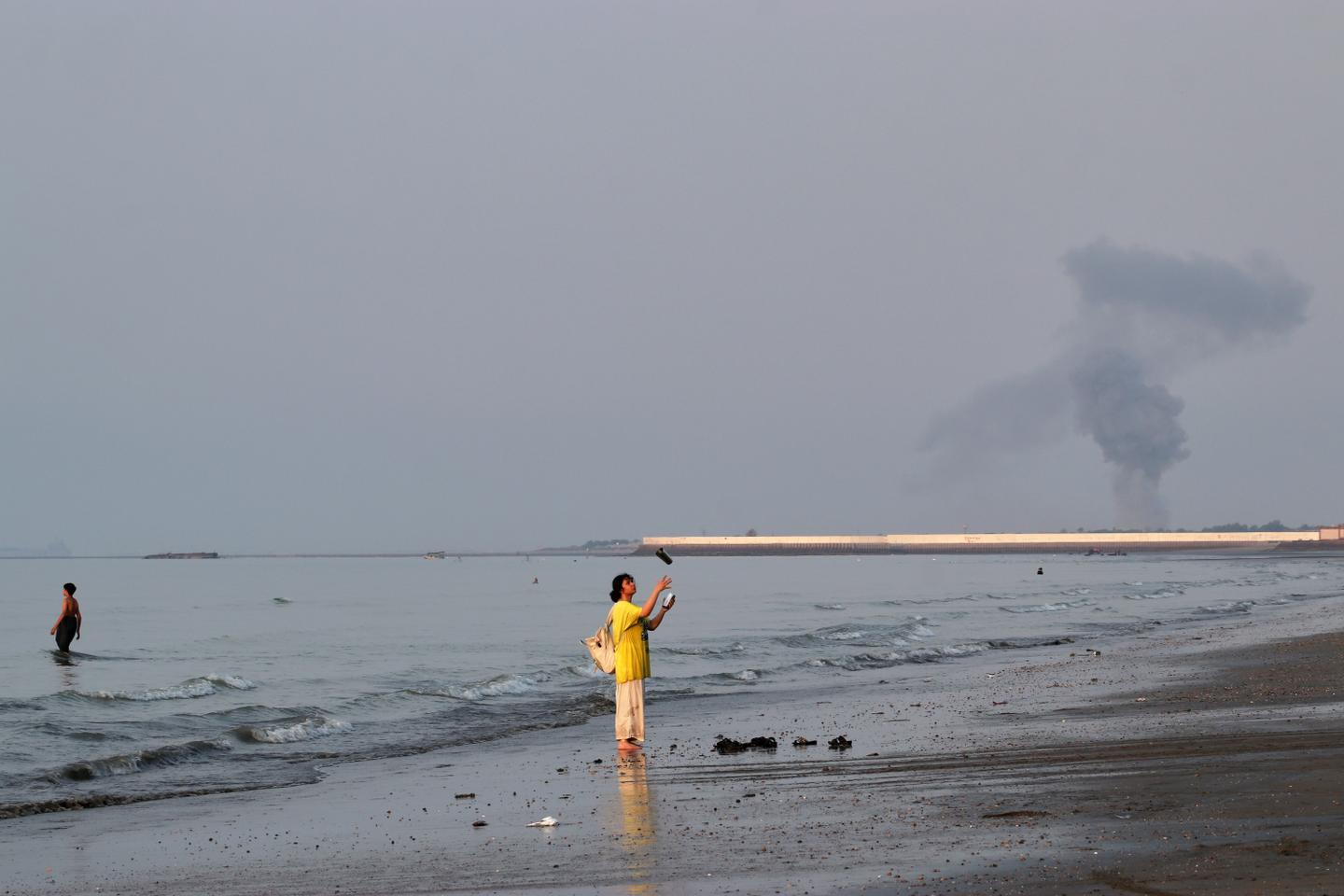



News 26-08-2026
America Between Moscow, Kyiv and Berlin: Why Trust Is the Week’s Main Fault Line
In German, Russian and Ukrainian discussions about the United States, three storylines have converged in recent days: CIA Director John Ratcliffe’s unexpected visit to Moscow on August 25, Washington’s attempt to shift from war with Iran to economic coercion, and the ongoing reassessment of the American military presence in Europe. On the surface, these are separate stories. But local commentators see one question connecting them: Is America acting as a guarantor of order, as a negotiator seeking a quick deal, or as a power ready at any moment to redistribute its commitments in line with its domestic political needs?
Ratcliffe’s visit became a particularly striking symbol of this uncertainty. Russia’s reaction has been notably restrained and pragmatic. The Kremlin confirmed only contacts through the intelligence services, emphasizing that there had been no meeting with Vladimir Putin; RBC presented this wording as a deliberate effort to limit public expectations surrounding the trip. In RBC’s report, what matters is not only the official brevity but also the context: the visit comes at a time when Moscow and Washington, judging by leaks and comments, appear to be trying to maintain a direct channel outside high-profile diplomacy.
Russian experts quoted by Gazeta.Ru interpret the CIA director’s arrival primarily as an attempt to clarify the “red lines” ahead of autumn: Russia’s plans at the front, the risk of strikes that could affect NATO countries, and the possibility of interim agreements where Moscow and Kyiv’s positions are incompatible. For Russia’s public sphere, this is neither a sign of capitulation nor a breakthrough, but evidence that the United States is forced to speak directly with Russia when the stakes are too high for exchanging statements through press offices. Even the possibility that Iran was part of the agenda reflects a broader Russian view: the more crises Washington is managing simultaneously, the greater Moscow’s diplomatic value as an interlocutor that cannot be ignored.
In Kyiv, the same Ratcliffe aircraft is viewed in almost the opposite way. Ukrainian anxiety is not about the very fact of U.S.-Russian contact—it is inevitable—but about the risk that negotiations over the war could be conducted around Ukraine without Ukraine. Ukraine’s OstoV cites Igor Petrenko, head of the United Ukraine analytical center, who assesses that the visit could have been both a warning to Moscow and a test of whether there is an opening for a genuine dialogue before winter. But Petrenko believes Russia’s leadership is not prepared to abandon pressure on Donbas, meaning that the trip itself does not indicate that a compromise has already been found.
The Ukrainian sense of alarm is expressed even more sharply in an analysis by RBC-Ukraine: political analyst Volodymyr Fesenko suggests that Ratcliffe may have come not so much to bargain as to deliver a “tough warning” about the price of further escalation. This interpretation is important: Kyiv prefers to see the United States as a force for deterrence, rather than as an arbiter mechanically averaging the parties’ positions. That is why reports that the Ukrainian side was asked to temporarily refrain from certain strikes while the delegation was visiting are seen as a painful test: Is Washington prepared to restrict Kyiv in order to preserve its own negotiating channel with Moscow? (amp.dw.com)
Germany views this secret dialogue with a different kind of concern. For Berlin, the issue is not whether negotiations will take place, but whether European security will become a secondary subject of an American-Russian bargain. In a column for Die Zeit, the publication’s head of politics, Heinrich Wefing, formulates an uncomfortable thought for German readers: Germany still depends on the United States not only for defense, but also for technology, digital infrastructure and financial platforms. In other words, the discussion of “strategic autonomy” in Berlin is no longer an intellectual fashion; it has become an acknowledgment of vulnerability.
That vulnerability is compounded by the reassessment of the American military presence. Deutsche Welle writes that the Pentagon is evaluating the deployment of forces in Europe based on the principle that Europeans should assume primary responsibility for their own conventional defense. In Germany, this formula is viewed ambivalently. On the one hand, it has long reflected what some members of the German establishment themselves demanded: Europe must stop “outsourcing” its security to America. On the other hand, independence cannot be created by a single political decision, especially when it comes to air defense, strategic aviation, intelligence, logistics and long-range deterrence.
Military expert Carlo Masala, in an interview summarized by Deutsche Welle, calls a potential pause in the deployment of American long-range missiles particularly dangerous: it would create a gap in deterrence against Russia that European systems would be unable to fill anytime soon. Here, the German reaction unexpectedly intersects with the Ukrainian one. Kyiv is demanding not abstract diplomatic activity from the United States, but concrete air-defense systems and pressure on Russia; in August reports about contacts with Washington, Ukrainian representatives directly linked peace initiatives to the need to defend the skies. (amp.dw.com) Germany, meanwhile, fears that a reduction in American involvement could make such shortages a pan-European norm.
The third issue—Iran—turns these doubts into a systemic question about the nature of American power. In Berlin, Washington’s shift toward promises of the “toughest sanctions in history” after weeks of war is being read not as a demonstration of confidence, but as an admission of the limits of the military outcome. The German edition of Deutsche Welle notes that the Trump administration needs a result ahead of the November midterm elections and is therefore trying to turn the military campaign into an economic “finale.” German criticism in this case is not reducible to pacifism: many commentators believe that an inconsistent war is worse and more dangerous than a clear strategy because it simultaneously undermines alliances, raises risks in the Persian Gulf and offers no political way out.
In Russian discussions, Iran, by contrast, is viewed as an additional source of negotiating leverage. The logic is as follows: if the United States is unable to end the conflict quickly and needs regional mediation, Russia gains another argument in its direct dialogue with Washington. This is precisely why Russian authors readily embrace theories that Ratcliffe discussed not only Ukraine in Moscow, but also the Middle East. That does not necessarily mean an agreement exists; rather, the Russian audience sees America’s overextension as evidence that the era when Washington could impose rules simultaneously in Europe, the Middle East and Asia is coming to an end.
The Ukrainian perspective is the bleakest here. For Kyiv, America’s war with Iran is dangerous not only because it diverts resources. It creates a political incentive to “close the Ukrainian file” more quickly—possibly through an arrangement that would halt the intensity of the fighting without eliminating the cause of the war or providing Ukraine with reliable guarantees. Serhii Kyslytsia, deputy head of the Office of the President, said directly in an interview with Deutsche Welle that American mediation had not stopped, but he saw no motivation on Vladimir Putin’s part for substantive negotiations. In the Ukrainian reading, this is the central contradiction of the moment: America wants results, but Russia, in Kyiv’s view, still believes that time is working in its favor.
The most unexpected common feature of the reactions in Germany, Russia and Ukraine is that almost no one disputes that the United States remains an indispensable power. The disagreement concerns something else: Can it still be considered predictable? In Moscow, Washington’s unpredictability is seen as room for bargaining and the restoration of direct channels. In Kyiv, it is seen as the risk of a deal in which the country’s security becomes a bargaining chip. In Berlin, it is a painful reminder that European sovereignty was postponed for decades precisely because the American guarantee seemed eternal. Thus, today’s image of the United States outside America is not that of a declining power. It is the image of a power whose decisions still determine the security of others, but whose priorities are becoming increasingly difficult to predict.

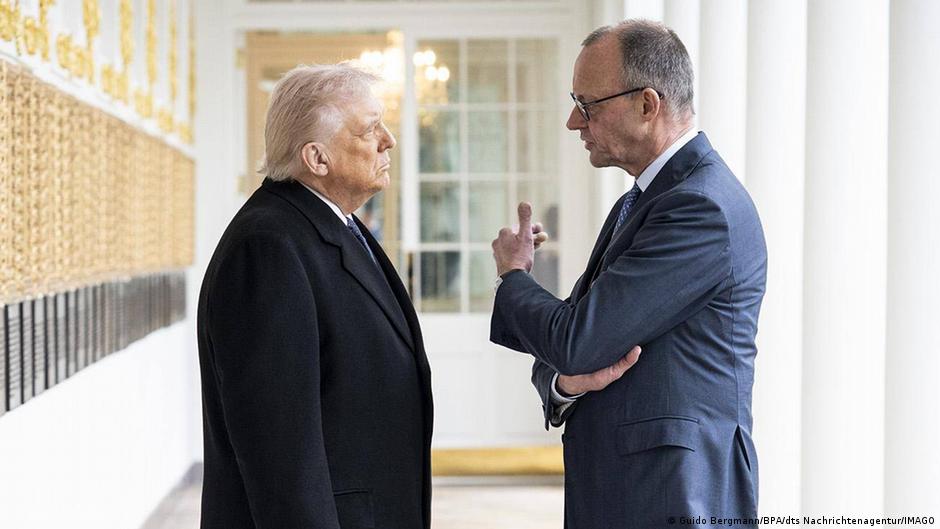
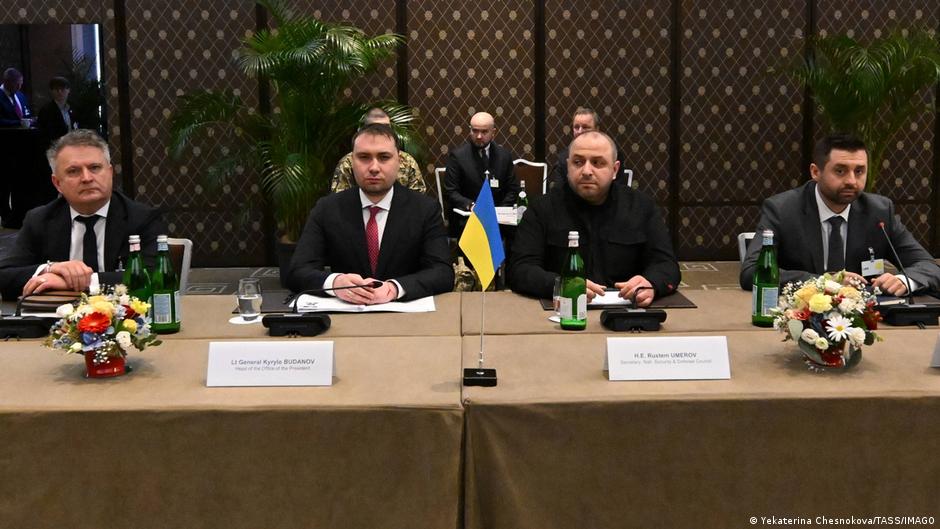
Escalation Around Iran: Sanctions, Threats and Diplomacy
The United States is increasing pressure on Iran by discussing new sanctions and possible military action, while Tehran prepares for confrontation. Regional and international players are trying to contain the escalation, and China may resist American economic pressure. Amid the struggle for influence, the humanitarian consequences of sanctions and the risks to security across the region are becoming increasingly apparent. This material was prepared based on publications by asharq.com (Saudi Arabia).
Riyadh Monitors U.S. Pressure on Iran and Oil Security
Reports of an adjustment in the American approach to Iran are attracting particular attention from Saudi Arabia and other Persian Gulf countries, primarily because of the situation in the Strait of Hormuz. For the region, this is not merely a route in the U.S.-Iran confrontation, but a critically important artery for oil exports and the foundation of the global energy market’s stability.
According to Asharq, citing American leaks and sources reported by Axios and Reuters, U.S. Secretary of State Marco Rubio informed Washington’s allies that the U.S. administration “at this time” does not expect any new strikes on Iran. According to the sources, the American policy is centered on avoiding a large-scale military operation in the immediate future, increasing economic pressure through sanctions and a naval blockade, and ensuring the maximum possible volume of oil shipments through the Strait of Hormuz.
For Saudi Arabia, reducing the risk of a major war near its borders is of direct importance. An armed escalation between the United States and Iran could affect oil infrastructure, maritime shipping, military facilities and civilian sites in the region’s countries. Protecting export routes therefore remains not only a commercial task, but also a factor in financial stability, energy security and the implementation of the kingdom’s long-term development programs.
American sources describe the clearing of mines from the waterway and the growing number of vessels passing through it as signs that Tehran’s ability to use the strait as leverage is weakening. One source said that the mine-clearing operation had become “a turning point in the war.” Washington also claims: “The Iranians have lost control of the strait, and now the United States controls it.” However, this wording reflects the American side’s assessment rather than an independent conclusion by the source.
Pressure on Iran’s leadership remains at the center of the American strategy. According to one U.S. official, “we are not negotiating with Iran right now—we are putting pressure on it.” This policy entails further restricting Tehran’s economic resources, military capabilities and remaining sources of government funding. In the Saudi—and more broadly, Gulf—context, this approach is viewed through a dual lens: the desire to prevent Iran from acquiring nuclear weapons and reduce the capabilities of armed groups linked to it is combined with the need to avoid a war whose cost would be borne by the entire region.
Regional intermediaries may play a particularly important role in this situation. The reported contacts between Pakistan’s army chief, Asim Munir, and Washington and Tehran underscore the demand for de-escalation channels. For the Gulf states, mediation remains an important tool for preventing a conflict that could threaten shipping, energy exports and the security of neighboring countries.
Saudi concerns about the risks are not abstract. The kingdom has already faced threats to its oil infrastructure, including the attacks of 2019, while the war in Yemen was accompanied by missile strikes and drone attacks. These events heightened Riyadh’s focus on the security of maritime routes, the protection of energy facilities and the containment of regional crises.
At the same time, the restoration of diplomatic relations between Saudi Arabia and Iran in 2023 increased the importance of dialogue and tension reduction. Therefore, the strategy of pressure described by American sources—without an immediate transition to large-scale strikes—corresponds to a key interest of the Gulf states: preventing the region from becoming a theater of open war.
The Asharq article contains no direct statements from Saudi officials or experts. Its Saudi perspective is reflected in its choice of key issues—the security of the Strait of Hormuz, the unhindered movement of tankers, the threat of new strikes and the possibility of mediation. From this perspective, the effectiveness of U.S. policy is measured not only by the degree of pressure placed on Iran, but also by whether it will be possible to preserve energy-market stability and protect the vital interests of the Persian Gulf countries.
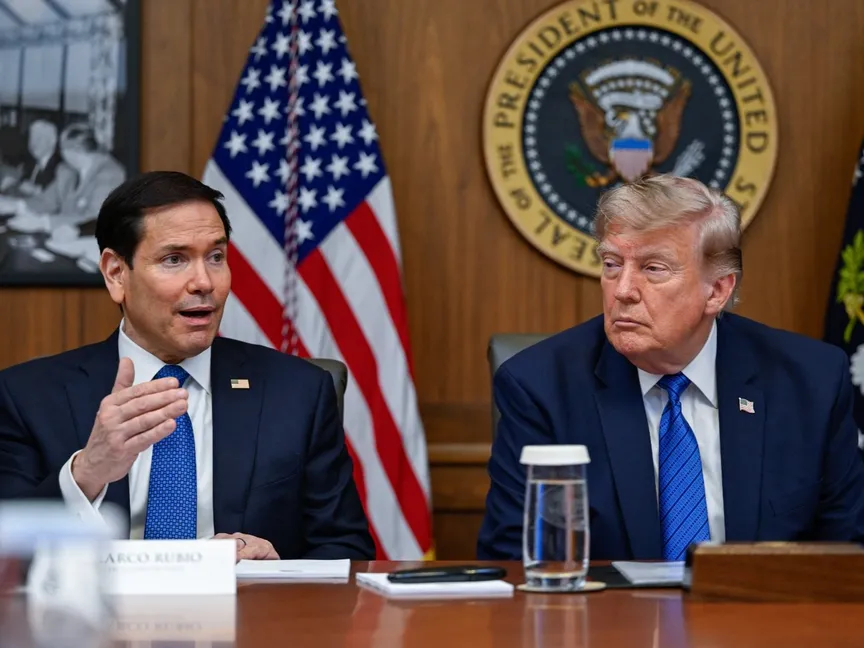
America as a Source of Risk, Not a Guarantee of Order: What Israel, South Korea and China Are...
In the Israeli, South Korean and Chinese press, discussion of America in recent days has focused not on a single statement by Donald Trump, but on a broader question: can Washington’s policy of coercion—military threats, a naval blockade, secondary sanctions and pressure on allies—actually restore order, or does it merely push crises into a new, more costly and unpredictable phase? Iran and the Strait of Hormuz have been at the center of the debate, but two other issues are visible behind them: the price of the American alliance and Washington’s readiness to turn access to the dollar system into an instrument of global discipline. (hani.co.kr)
In Israel, the reaction to the American line is mixed. On the one hand, U.S. firmness toward Iran is seen as a necessary continuation of the broader campaign to contain Tehran. On the other, concern is growing that Trump could trade Israel’s long-term interests for a short-term deal to reopen the Strait of Hormuz and lower oil prices. In a commentary for Walla, Professor Uzi Rabi describes a possible “Trump victory” as a package consisting of freedom of navigation, calmer energy markets and a regional political realignment. But his key warning is that an agreement giving Iran economic and political space before its main instruments of power are dismantled would become not a mechanism of containment, but a mechanism for restoring Tehran. (news.walla.co.il)
Israeli commentators are particularly troubled by the inconsistency of U.S. tactics. Trump alternately speaks of being ready for negotiations and rules them out; he threatens to declare Hormuz “American territory,” then relies on pressure without launching a new major operation. In a Ynet analysis, this is interpreted not simply as presidential eccentricity, but as a symptom of failed coordination: according to the author, Israel does not understand the American position on Hormuz, even though the strait remains Iran’s main strategic asset in the war. For Israeli audiences, this represents an important and rather unexpected shift: the danger is now seen not only in an Iranian missile or nuclear infrastructure, but also in the possibility that the United States could independently determine the terms for ending the conflict, leaving Israel to deal with the consequences. (ynet.co.il)
In South Korea, the same American policy is viewed primarily through the lens of the export economy’s vulnerability and dependence on energy from the Middle East. The Korean debate is less focused on whether Washington will defeat Iran and more on why an ally is demanding political and possibly practical support from Seoul in a conflict whose consequences would be particularly severe for Korea. After Trump publicly expressed displeasure at Seoul’s refusal to participate in the operation around Hormuz, the Korean press noted that President Lee Jae-myung had effectively found himself caught between his alliance obligations to the United States and the national interest of avoiding becoming a party to the war. The Chosun Ilbo quoted Trump as saying he was “unhappy” with Korea’s refusal to help, while also emphasizing the country’s dependence on supplies passing through the strait. (chosun.com)
In South Korea, however, the dispute extends far beyond oil. The Hankyoreh calls the American campaign against Iran an “operation of isolation” and warns that secondary sanctions could affect Korean companies and financial institutions even if their direct ties to Iran are limited. In the Korean reading, the problem is that the United States demands solidarity while leaving its allies to bear the commercial, energy and diplomatic risks. This also explains fears of South Korea being “sidelined” on another sensitive issue—possible Washington–Pyongyang contacts: if the White House is capable of conducting Middle East diplomacy without regard for its partners, why would it not do the same on the Korean Peninsula? (hani.co.kr)
China’s reaction most sharply rejects the very principle of American pressure. Chinese media and experts describe the new U.S. measures not as sanctions in the narrow sense, but as an attempt to create an “economic Cold War” against Iran and force third countries to choose between trade with Tehran and access to the American financial system. In an analysis by The Paper, Sun Degang, director of the Middle East Studies Center at Fudan University, says that after the 60-day negotiating window ends, the United States seeks to “wear Iran down” economically, while Iran is becoming increasingly prepared for an active military response to force Washington to make concessions. His formula—“a post-American era in the Persian Gulf”—is telling: the Chinese debate sees the crisis as evidence not of American omnipotence, but of the limits of U.S. power. (thepaper.cn)
At the same time, the Chinese view is not limited to ideological condemnation of Washington. A Pengpai article emphasizes the practical weakness of the American strategy: Iran has long adapted to sanctions, and an attempt to completely cut off its trade and financial channels could push Tehran toward a new round of military escalation and even more aggressive use of Hormuz. Beijing also sees U.S. calls to join the restrictions as a direct test of its own sovereignty in foreign trade. China’s official position is expressed diplomatically—Beijing calls for a political settlement and says that “economic war” and “maximum pressure” only intensify the conflict—but its meaning is clear: China does not want the United States to turn the sanctions regime against Iran into a universal mechanism for controlling Chinese companies and energy supplies. (zaobao.com.sg)
A striking common picture therefore emerges. Israel fears that America will conclude an overly narrow deal and underestimate Iran’s remaining potential; South Korea fears that its alliance with the United States will become a one-sided distribution of risks; and China fears that American financial pressure will be extended to everyone who refuses to accept Washington’s foreign-policy objectives. All three reactions converge on one point: the United States remains the central force in the crisis, but is no longer automatically perceived as its neutral arbiter or guarantor of a stable order. To some, it is too inclined toward compromise; to others, too inclined toward coercion. It is precisely this contradiction that makes American policy the main focus of international anxiety today.