Imagine that clutter had been piling up in your room for years. Some of it was hidden under the bed, some stuffed into a closet, and then everyone argued over who should clean it up. Something similar happened to Seattle’s Duwamish River. Factories operated along its banks for many years, while pollution settled on the riverbed. Removing it required a great deal of money and patience. This is the story of how adults argued—and how people from nearby homes refused to let anyone forget about the river, which little by little became useful and loved again.
A River with Too Many Bends
The Duwamish used to twist like a ribbon you had tossed onto the floor. It wound between trees and wetlands, and salmon spawned in its waters. The Duwamish people lived here. The name itself roughly means “people of the river.” To them, the river was a road, a pantry full of food, and a home.
But at the beginning of the twentieth century, the city wanted large ships to travel along the river and factories to stand on its banks. Between 1913 and 1917, the river channel was straightened. According to various estimates, about nine miles of winding river became a little more than five miles of straight channel. Many wetlands were filled in, the banks were reinforced, and factories, warehouses, and workshops appeared on the reclaimed land.
This was convenient for the factories. For the river and the people who lived nearby, everything became more complicated. The homes near the water remained, but the old fishing spots and familiar paths disappeared.
What Was Left on the Bottom and Why It Became a Problem
The factories operated for decades. At the time, people did not yet know that some substances entering the water do not disappear on their own. They settle on the bottom and remain there. One of these substances is called PCBs. Fish feed on the riverbed and take in some of this pollution along with their food. If people eat such fish often, it can be harmful to their health.
In 2001, a section of the river about five and a half miles long was added to a special federal list. In the United States, it is called Superfund. Put simply, it is a list of places that need a major cleanup. The Environmental Protection Agency, known as the EPA, is responsible for overseeing the work.
This is where the most difficult part begins: money. Cleaning up the river costs a great deal. Estimates put the cost at hundreds of millions of dollars. Everyone kept discussing the same question: who should pay—the companies that once operated along the river, the city, the county, or other organizations? And how should the cleanup be done: only in the dirtiest places, or throughout the entire river?
Money, Arguments, and a Plan for Many Years
These disputes are like an argument in class over who should clean up after a party. One person says, “I barely made any mess,” while another says, “That was a long time ago—I didn’t start it.” Only here, instead of desks and candy wrappers, there were major companies, officials, and very serious calculations.
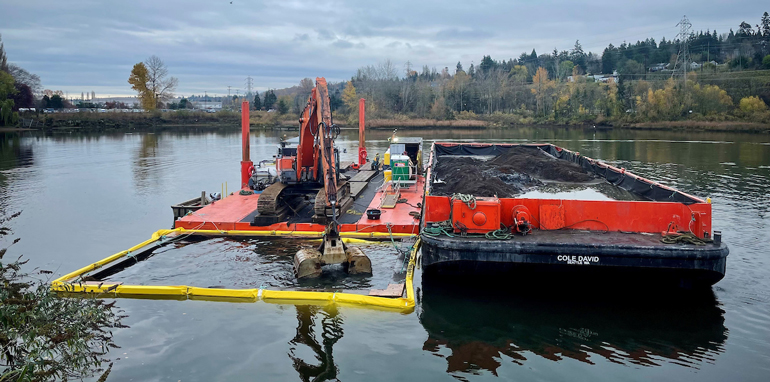
After many years of studying the river, the EPA approved a cleanup plan in 2014. It contained several main ideas:
- in the most polluted areas, the riverbed should be dredged and the contaminated sediment removed;
- in other areas, the bottom could be covered with a layer of clean sand and other materials to lock the pollution underneath;
- steps should be taken to prevent new pollution from entering the river from streets and pipes;
- afterward, the river must be tested to determine whether it has actually become cleaner.
The work is being carried out in stages. First, the most urgent areas are cleaned up; then the results are checked before work moves on. For the exact completion dates of the entire plan, it is best to consult the EPA websites, since they may change.
But why is spending so much money a good idea at all? Economists and residents explain it this way: a clean river means healthier fish, safer places to walk, more parks, and fewer illnesses. When a neighborhood is well maintained, it is a better place to live and start a small business. Money spent on cleanup comes back in the form of benefits for people and nature, although this does not happen in a single day.
The Neighbors Who Would Not Let the River Be Forgotten
Now for the most important question: who made the adults stop putting things off? It was the people who lived near the river. Many were immigrants, low-income families, and members of Indigenous communities. Some continued to fish in the river because they were accustomed to eating that food or simply could not afford anything else. They did not want their children to grow up beside polluted water.
In 2001, residents founded an organization now called the Duwamish River Community Coalition. Its members attended meetings, translated documents into different languages so that all their neighbors could read them, put warning signs along the banks, and taught schoolchildren how to handle fish safely. They told officials something simple: “We live here. This is our home, not just an industrial zone.”
One example worth knowing about is Herring's House Park on the riverbank. Factory sites once occupied this area. Now wetlands have been restored, native plants have been planted, and a quiet place has emerged where people can walk, watch birds, and remember what the river once looked like. The name is connected to the history of the Duwamish people: according to local accounts, a village where the river people lived once stood here.
What I Think About This Story
It seems to me that the most interesting part of this story is not the money or the factories, but how people’s understanding of a place can change. At first, the river was seen simply as a “working road” for ships. Then people realized that it was also a home for fish, birds, and people who need clean air and safe water.
The argument over money was not pleasant. But it forced everyone to calculate how much it costs to care for the place where we live. And once the number appeared on paper, it became clear that staying silent and doing nothing would cost even more.
What the Duwamish River Teaches Us
The story of the Duwamish shows that major projects can take a long time. First the river was straightened, then it was polluted, then people argued for several years, and only afterward did the cleanup begin. It is neither quick nor simple. But every stage taught people something: factories became more careful, officials began listening more closely to residents, and residents realized that their voices could be heard when they spoke together.
If you ever see a dirty stream, pond, or shoreline, remember the Duwamish. At first, it may seem that one person cannot change anything. But neighbors who come together, write letters, tell others, and refuse to give up can bring even huge sums of money and enormous companies to the same table. And when a new park appears along the shore, it proves that caring for the place where you live really does work.