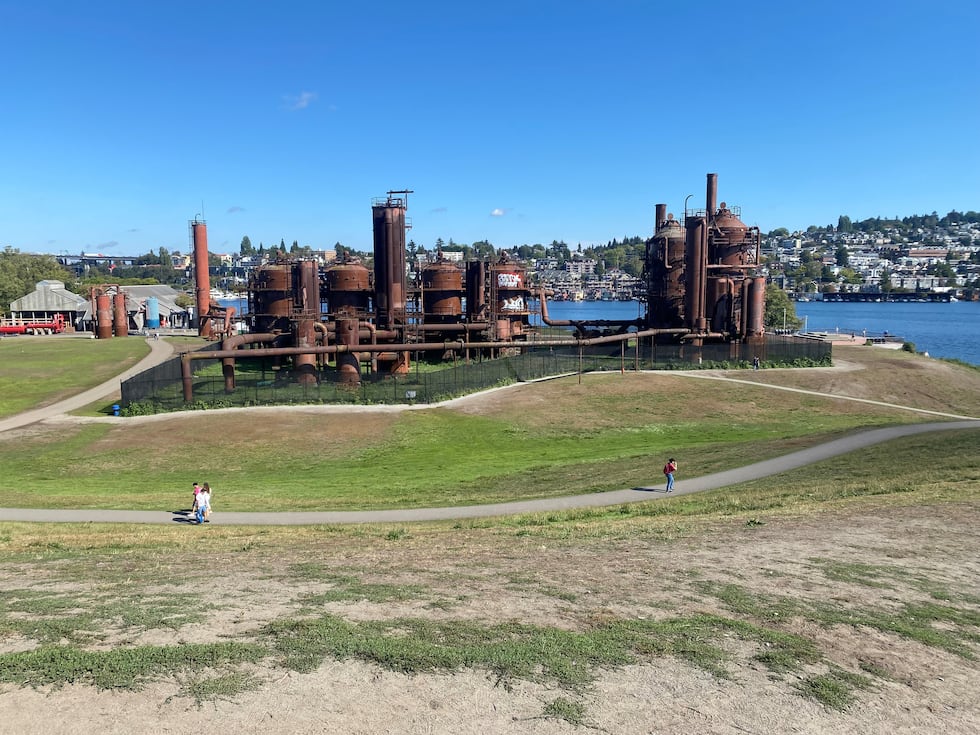
Imagine enormous rusted towers that once belched smoke, and ground soaked with tar. Now imagine children flying kites and having picnics in that same place. That is what Gas Works Park in Seattle looks like. Its story is about more than a beautiful view: the land there was healed in some unusual ways, with help from microbes too small to see.
Before the Park
For more than fifty years, from 1906 to 1956, a gas plant operated on the shore of Lake Union. It produced gas from coal, and later from oil. People used the gas to light lamps and cook on stoves, and it was used to heat homes. That sounds useful, but the work had a dark side. Tar, oils, and other substances were produced along with the gas, and seeped into the ground. Over time, the soil became so polluted that you couldn’t simply plant grass there.
After the plant closed, it stood empty and rusted away. Many people thought everything should be torn down, the soil hauled away, and the site forgotten. But in 1962, the City of Seattle bought the property. It decided that the lakeshore, with its view of downtown, should become a park.
The Man Who Didn’t Tear Everything Down
The park was designed by landscape architect Richard Haag. His idea surprised many people. Haag didn’t want to demolish the old industrial towers. He believed they were part of the city’s history and should remain, like an open-air museum. Some Seattle residents thought nobody would like a park full of rusty ironwork.
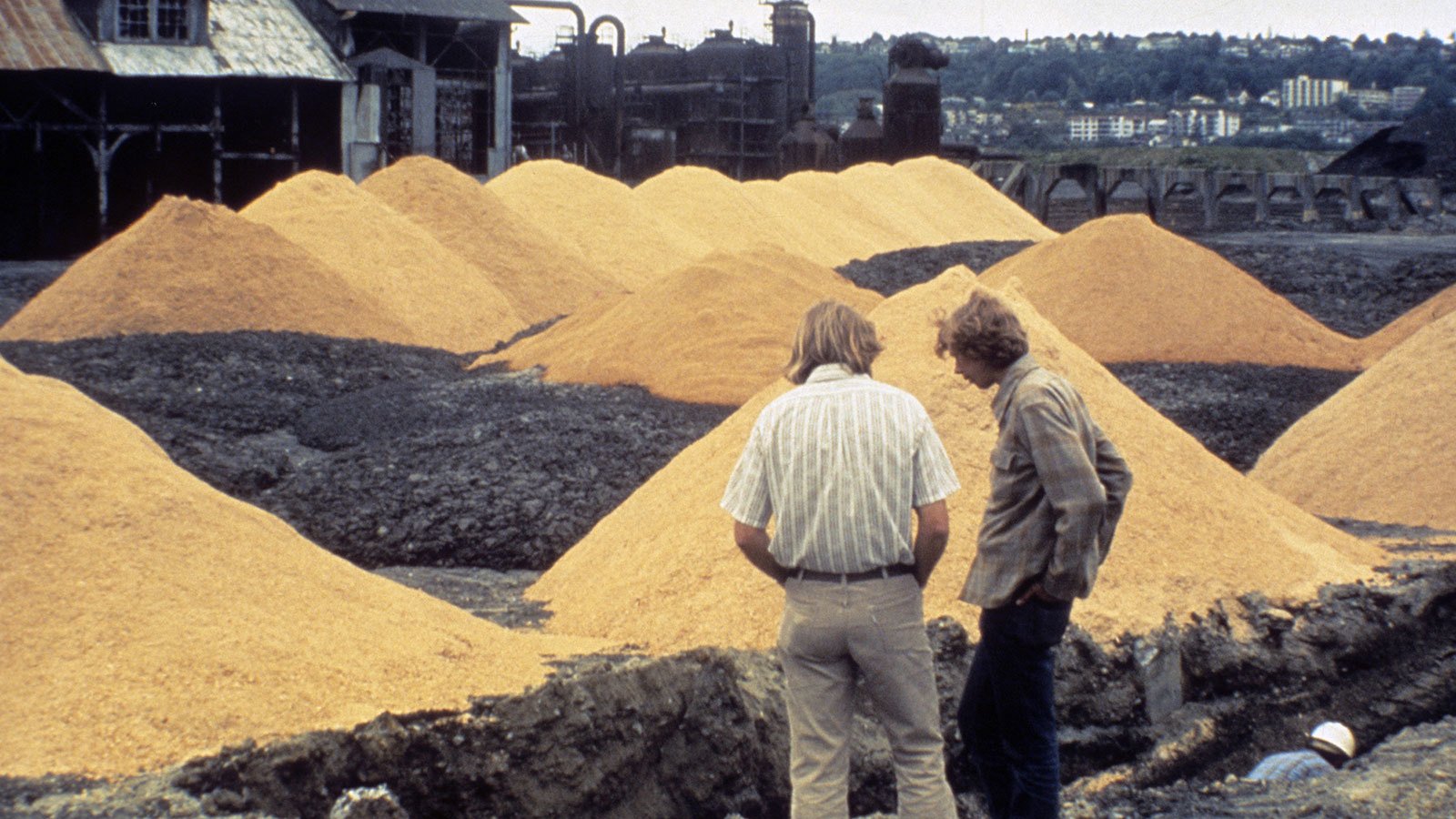
Then Haag proposed something that sounds almost like a fairy tale: healing the land with nature itself. Just as we add compost to a garden to help plants grow, he brought organic waste to the site: yard waste, sawdust, and sludge from the city’s wastewater treatment plants. This mixture is home to microbes, tiny organisms invisible without a microscope. They “eat” oils and tar and turn them into safer substances. It’s like tidying a room, except the cleanup is done not by people but by millions of tiny helpers, working slowly but diligently.
A Hill Made from “Medicine”
One of the park’s best-known spots is called Kite Hill. It was made from soil mixed with this special “medicine.” From its summit, you can see the lake, boats, and Seattle’s skyscrapers. The park opened to visitors in 1975, and over time grass grew there. People fly kites on the hill and hold celebrations.
But it’s important to be honest: the land hasn’t been completely healed. Some substances remain deep underground, so there are rules in the park. Digging is prohibited in certain areas, and you shouldn’t eat things that grow directly in the soil. Additional inspections and cleanup work were carried out later because scientists wanted to make sure the park was safe for people. That’s an important part of the story: nature can repair a lot, but it needs time and the help of adults who carefully monitor the results.
What This Means for Us
I think the most beautiful thing about this story is that Richard Haag didn’t try to hide the past. He didn’t pretend the plant had never existed. He left the towers standing and planted grass nearby, as if to say, “Something went wrong, but we can fix it.” If you ever find yourself at the top of Kite Hill, remember that invisible helpers once worked beneath your feet. Sometimes even the most damaged place can be brought back to life—with patience, imagination, and care.