Imagine you built an entire street out of blocks, then accidentally knocked it all down. What would you do? Build it again—and make it even better. That’s more or less what Seattle did in 1889. Only the blocks were bricks and stones, and the builders came from all over the world.
The Glue That Boiled Over
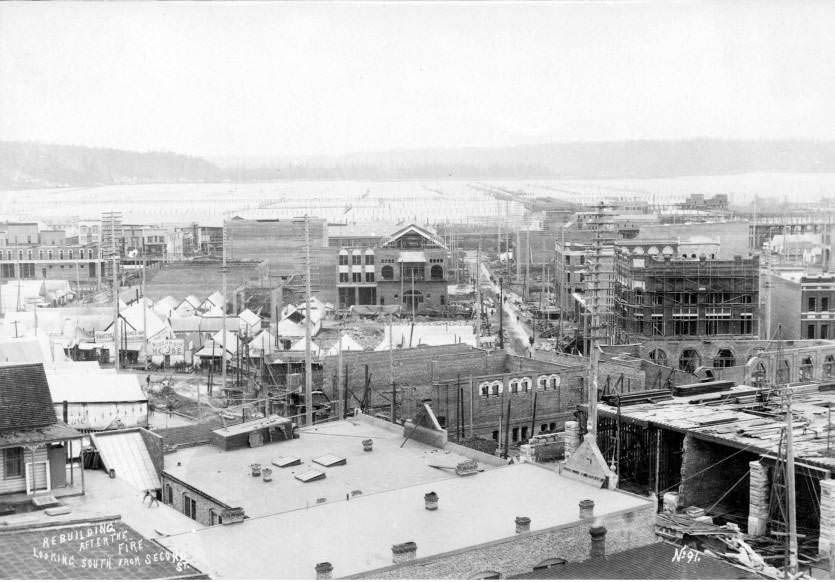
On June 6, 1889, carpenter Victor Clermont was heating glue in his workshop. The pot overheated, and wood shavings caught fire. The wind fanned the flames, and most of the buildings in the young city were made of wood. The fire quickly raced toward the waterfront, burning piers, warehouses, shops, and workshops.
More than two dozen blocks in the city center burned down. But here’s the most amazing part: according to the traditional account, no one died. Historians are still checking the details, but it seems the residents were very lucky.
At the time, firefighters were volunteers, and there wasn’t enough water in the pipes. After the fire, the city decided it was time to stop relying on luck. It hired professional firefighters, and new downtown buildings were made of brick and stone so fire couldn’t spread so easily through the streets.
Builders from Around the World
Seattle was a city of newcomers. In the late 19th century, many people living there had come from other countries: Scandinavia, England, Germany, Ireland, and Scotland. Many knew how to work with wood, stone, and brick, and there was plenty of work for everyone after the fire.
One of the best-known builders was architect Elmer Fisher. He was born in Scotland and arrived in Seattle shortly before the fire. He designed many buildings, including the famous Pioneer Building. Dark brick and stone walls, arches, beautiful windows—the blocks rose again, as if the city were changing into a new outfit before everyone’s eyes.
Think about it: in less than a year, hundreds of new buildings rose from the ashes. That was incredibly fast for 1890.
Streets on Tiptoe and Staircases in the Middle of Town
There was another problem, unrelated to the fire. Downtown Seattle stood very low, almost at sea level. When the tide rose in the bay, water flowed back through the sewer pipes. In some homes, toilets could send water “back up.” Not very pleasant!
So the city decided to raise the streets. They piled up earth by a whole story, and in some places even higher—several meters. But the buildings had already been built at the old level. The street rose, while the shops’ ground floors stayed below, like cellars.
While the streets were being raised, actual staircases stood at intersections: to cross the road, you had to go down from the old sidewalk and then climb up to the new one. Pedestrians, horses, and wagons moved through this “game of floors.”
Purple Glass and a City Beneath the City
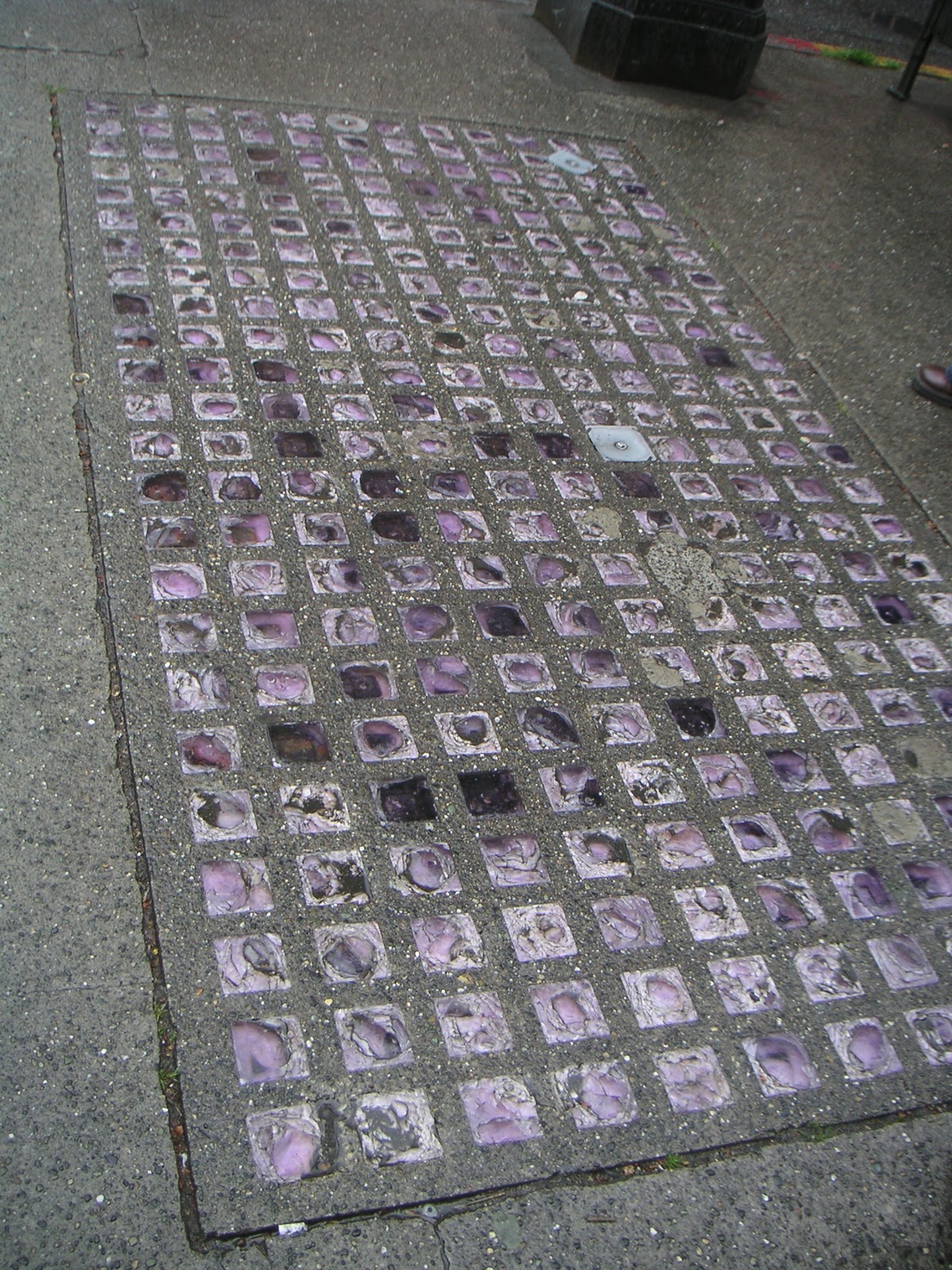
Then people came up with the idea of building sidewalks above the sunken streets. To let light in below, they set small glass prisms into the sidewalks. During the day, sunlight passed through them into the basements, like little windows beneath your feet.
Over time, many of the glass pieces turned purple. The story goes that the glass contained a substance that darkens in sunlight. If you ever visit Pioneer Square, look for lilac-colored circles in the sidewalk. Those are the “windows” of the old city.
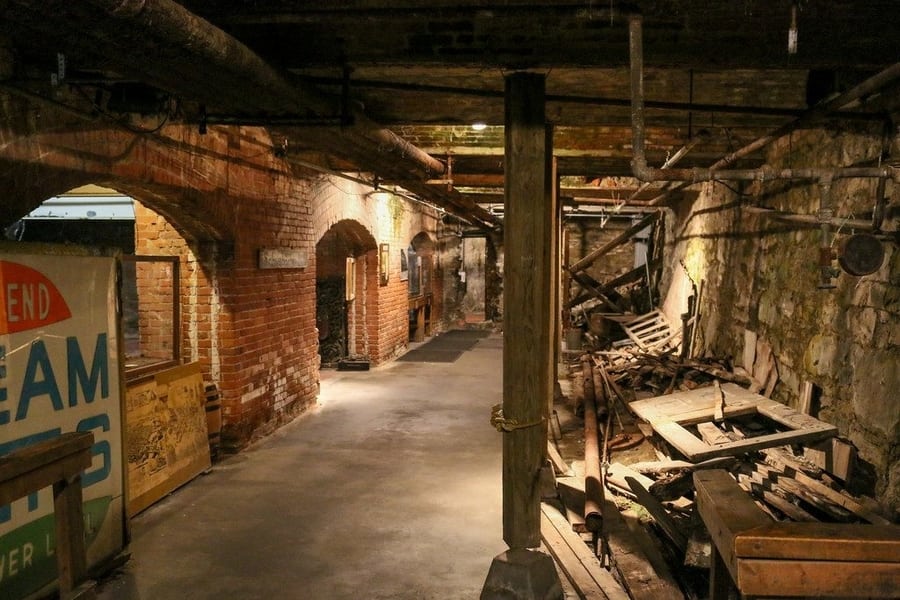
The lower floors continued to be used for a while: they housed shops and warehouses and provided passageways between buildings. Later, they were closed off and eventually turned into a museum. Today, tourists are shown “underground Seattle”—not a cave, but real streets left beneath the new ones.
My View and Takeaway
To me, this story isn’t about how frightening fire is, but about how people refused to give up. They had a hard time: the city center had burned down, water was flooding homes, and money was scarce. But instead of simply rebuilding everything as it was, they came up with higher streets, sturdier buildings, and a professional fire service. And people from different countries, who had never met before, built it all together, like blocks.
So when you walk through the center of a big city, look down at your feet. There may be another street beneath you, and it has a story of its own.