Picture an ordinary rainy evening in Seattle. A mother walks by with a bag, schoolchildren hurry past with backpacks, and the window of a small café glows on the corner. Inside, pieces of chicken sizzle on a hot griddle, and the whole street smells of sweet sauce. It’s a teriyaki café—and in Seattle, these places seem to be on almost every block. The story began with one small kitchen and one person who came up with a simple dish.
What Is “Teriyaki,” and Who First Made the Seattle Version?
The word “teriyaki” comes from Japanese. “Teri” means “shine,” and “yaki” means “to grill” or “to bake.” Put them together, and you get “glossy grilling”: meat or fish is coated in a dark, sweet glaze that gives it a lovely shine. It’s been cooked this way in Japan for a long time.
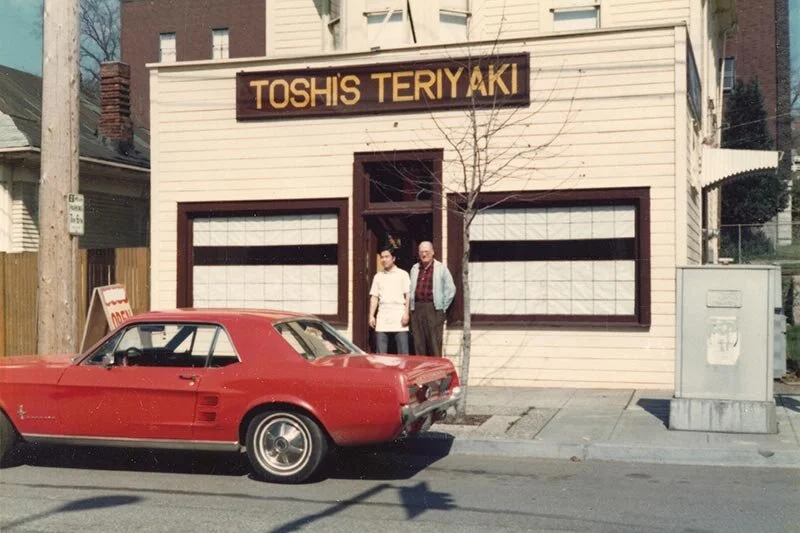
Seattle, though, developed its own version. In 1976, Japanese immigrant Toshi Kasahara opened a small restaurant called Toshi’s Teriyaki on Broadway, in the Capitol Hill neighborhood. The distinctive “Seattle-style” version is said to have taken shape there. Chicken thighs were cut into pieces and quickly cooked on a flat griddle, then drizzled with a thin, slightly sweet sauce and served with rice and shredded cabbage salad. No fancy garnishes, but it was tasty and filling.
Teriyaki is often made differently in other American cities. For example, chunks of meat might be served on skewers or coated in a very thick sauce. The Seattle version is different: simpler, faster, and more like home cooking. That’s why families, students, and workers in a hurry to grab lunch all came to love it.
A Little Machine Made of a Griddle, Rice, and Cabbage
If you look closely, the whole setup is like a cleverly designed kit. Adult engineers might call it a “system,” but the idea is simple.
Part one: a flat griddle. It’s large and smooth, so you can cook lots of pieces at once, and they cook quickly. Part two: chicken thighs. They’re juicy, don’t dry out, and are inexpensive. Part three: the sauce. It’s the same for every dish, so the cook doesn’t have to come up with something new each time. Part four: rice. It’s cooked in large batches in a special pot and is always hot. Part five: cabbage salad. It’s fresh and crunchy, and adds a lightness to the meal.
All the parts fit together like building blocks. That’s why a café can be tiny: all you need is one griddle, one pot of rice, and a couple of knives. The dish takes just a few minutes to prepare, which matters when people are short on time. It’s not easy to make something simple that works day after day. That’s the “engineering” part of the story.
What Nature Has to Say About It
Now let’s look at the story from nature’s point of view. Chicken usually leaves a smaller footprint on the planet than beef: raising chickens requires less land and water, and releases fewer gases that warm the Earth. Rice and cabbage don’t need complicated “packaging” from faraway countries, either. And because cafés prepare food to order, they make only as much as they need each time, which means less food gets thrown away.
But there’s a problem worth being honest about. Many people get teriyaki to go, which means they need boxes, bags, forks, and chopsticks. These are often made of plastic, and plastic waste takes a long time to break down. Seattle residents have been thinking about this for a long time: in 2018, the city became one of the first major cities in the United States to ban cafés and restaurants from handing out single-use plastic straws and utensils. Businesses had to look for paper and wooden alternatives. So an everyday lunch also became a challenge: how to care for the water and land around us.
A Café Where They Know You by Name
The most interesting part of this story isn’t about the food—it’s about the people. Many of Seattle’s teriyaki cafés were opened by immigrant families, and many of the owners are of Korean descent. For a family arriving in a new country, a small café was often a chance to start a business of their own: it didn’t take much money, and everyone could work together. Mom stands at the stove, Dad takes orders, and after school the kids do their homework at a table in the back.
These places become part of the neighborhood. The owner remembers that you like your food without spicy sauce, and a student who has come to the city to study can get a tasty, affordable lunch. For some, working at a café like this is their first job: first they wash dishes and carry boxes, then they learn to cook at the stove.
As for exactly how many cafés there are in the city, even the city itself couldn’t say for sure: estimates put the number in the hundreds, and new ones continue to open.
Why It Matters
I think this story shows one thing particularly well: big changes don’t always begin with big buildings and grand speeches. Sometimes all it takes is one small kitchen, one person, and a recipe anyone can understand. Toshi Kasahara probably never imagined that his chicken and cabbage would become part of an entire city’s character. But that’s what happened: simple, affordable food brought together people of different countries and ages.
The story also reminds us that even the most delicious things have an environmental cost—and that thoughtful people can always find ways to do better: less plastic, more care. So next time you eat something simple and tasty, try thinking about who came up with it, where the ingredients came from, and what will happen to the box. Sometimes the most interesting stories are hidden in the most ordinary plate.