Imagine a huge concrete roadway hanging over a major city’s waterfront for many years—and then being removed, with a spacious place for people to walk taking its place. That is exactly what happened in Seattle. A giant machine named “Bertha” helped make it possible, but the real heroes were ordinary residents who spoke up and attended public meetings.
The Road Overhead
In the 1950s, Seattle built a double-decker viaduct along the shore of the bay—the Alaskan Way Viaduct. Cars sped along it, while the area below the concrete decks was dark and noisy. Many residents disliked the road: it blocked views of the water and separated downtown from the waterfront. But removing it was not easy, because so many people used it every day.
In 2001, an earthquake struck the Seattle area, known as the Nisqually earthquake. It damaged the viaduct. Engineers said that if a major earthquake occurred, the roadway could collapse. It was like an old, shaky shelf holding something heavy: one day, it might not be able to bear the weight. The city had to decide what to do.
Arguments, Meetings, and a Vote
That was when the real debate began. Some people said, “Let’s build another viaduct just like it.” Others suggested, “It would be better to build a tunnel underground.” Still others believed that a highway was not needed at all and that the city should provide more buses and space for pedestrians.
Seattle residents attended meetings, asked questions, wrote letters, and discussed the plans. In 2007, the city held a vote asking people about the two main options—a new viaduct and a tunnel. Neither option received enough support. It was as if the city had said, “We do not agree with either of these plans; think again.” It was difficult and took a long time, but in 2009, officials finally agreed on a tunnel plan.
Personal opinion: I think it is wonderful that people did not simply accept the first proposal but demanded that everyone think again. Even when debates are tiring, they are how a city becomes more connected to the people who live there.
“Bertha”: The Largest Tunneling Machine
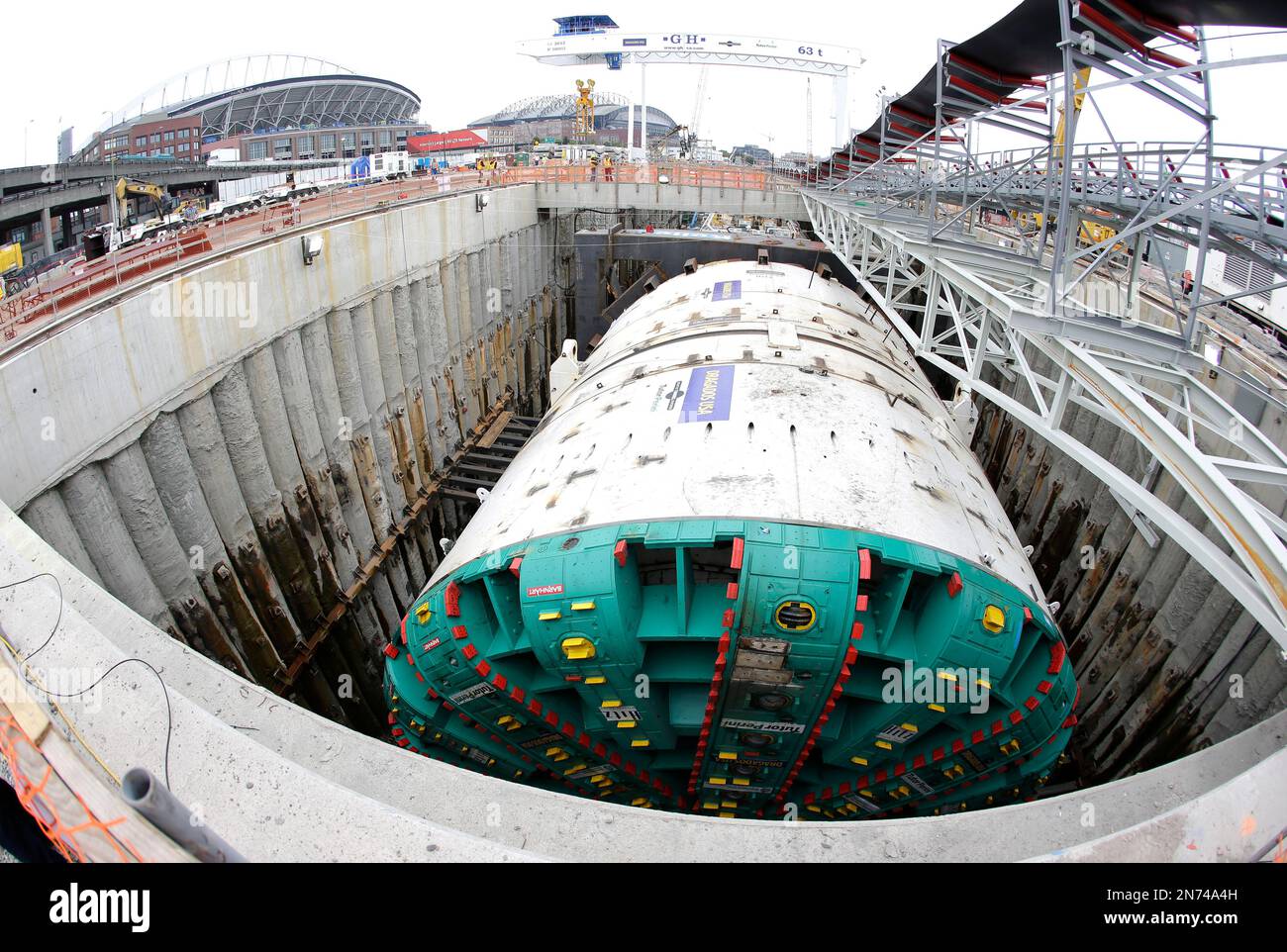
A special machine was needed to build the tunnel. It was made in Japan and turned out to be enormous, with a diameter of about 17.5 meters. That is roughly the height of a five-story building laid on its side! A machine like this is called a tunnel-boring machine. It slowly chews through the earth with its rotating “head” while simultaneously installing the tunnel’s concrete walls behind it.
The machine needed a name. Residents voted, and the winning name was “Bertha,” in honor of Bertha Landes, who was Seattle’s mayor in the 1920s. She was one of the first women to lead a major American city. So the huge machine received not just a name, but also a reminder of a courageous woman.
“Bertha” began working in 2013 but soon stopped: in December 2013, it became stuck. It was as if a spoon had become trapped in very thick yogurt. Engineers could not get the machine running again for almost two years. They had to dig a huge shaft, retrieve the machine’s main section, repair it, and lower it back underground. Many residents were worried and joked about the situation, but in the end, “Bertha” reached the finish line. The roughly two-kilometer-long tunnel opened in 2019.
What Took the Old Road’s Place
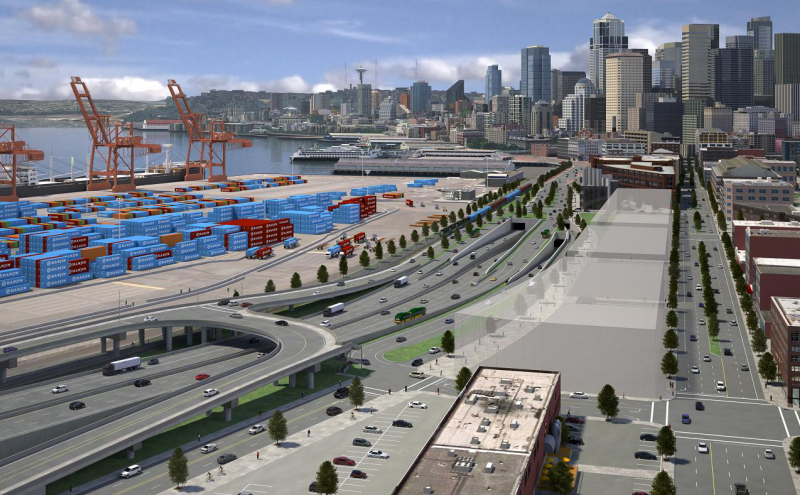
Once the tunnel began operating, workers started demolishing the old viaduct. It was a major event: residents could finally see the sky and water where concrete had stood before. A new waterfront began taking shape on the freed-up land, with wide paths, parks, and places to relax.
Of course, construction and landscaping are still continuing, and the latest details and timelines are best checked in current sources. But the main point is already clear: the city has had the chance to reclaim its waterfront.
What This Story Teaches Us
The story of “Bertha” shows us two things. First, even the biggest and most complicated projects—such as building a giant tunnel—can be completed if people do not give up when something breaks. Second, the voices of ordinary people matter. Seattle residents attended meetings, debated, and voted, helping turn the decision into a shared undertaking rather than simply an order from above.
So the next time you feel that you are too small to change anything, remember Bertha. Not the machine—the people who were not afraid to make their voices heard.