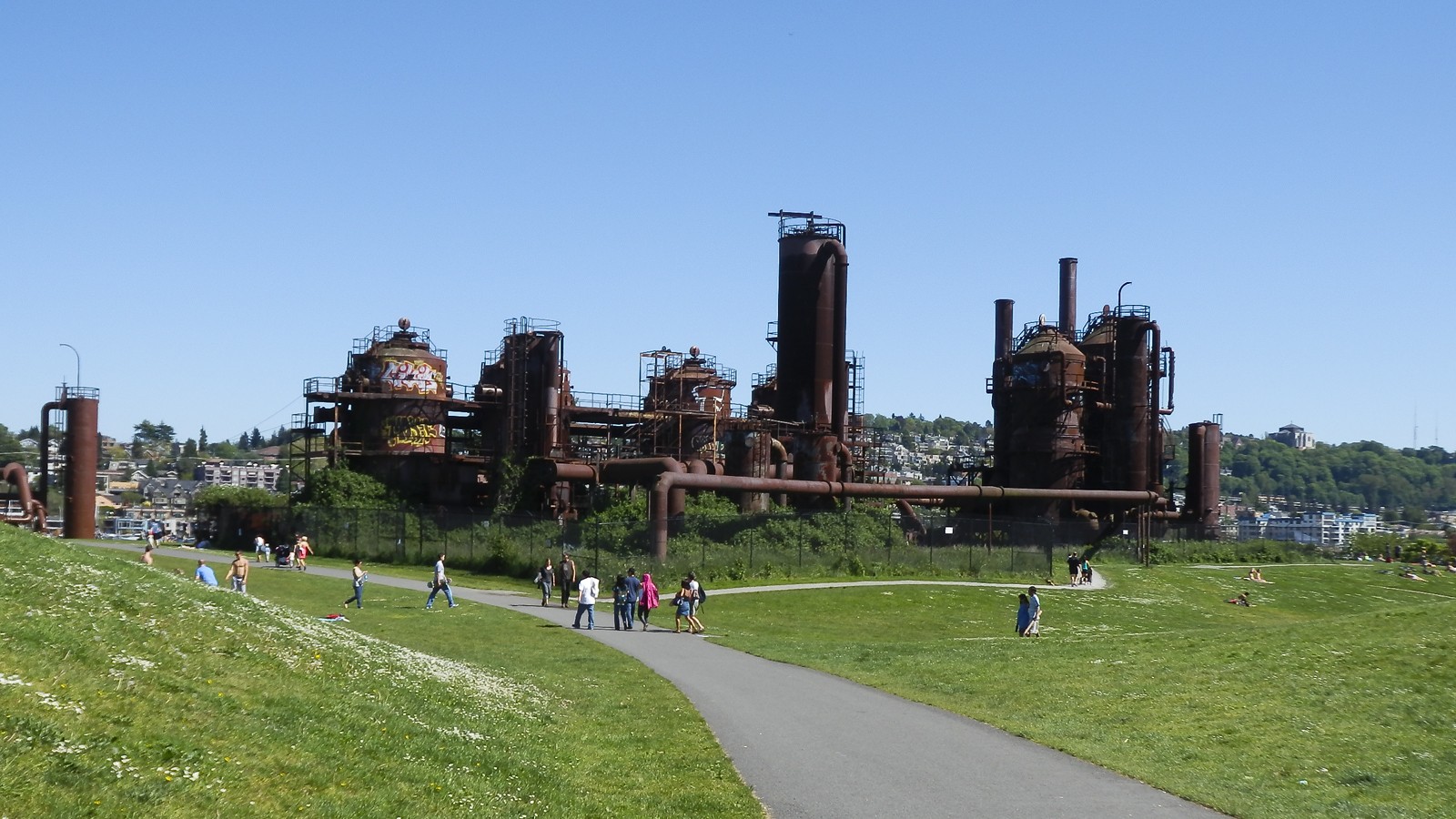
Imagine enormous rusty towers, pipes and strange metal structures that look like sets from a science-fiction movie. Nearby, children are flying colorful kites on a green hill. This isn’t a movie set: it’s Gasworks Park in Seattle, America. This was once a dirty, unhealthy site, but now it’s a favorite place for local residents. How did that happen? It all began with one bold architect and the people who believed in his unusual idea.
When the Gas Plant Was Here
More than a century ago, in 1906, a gas plant was built on the shore of Lake Union in Seattle. It produced fuel gas for homes and factories, where people used it to cook and light the streets. At first, the gas was made from coal, and later from oil. The process required tall towers, pipes and enormous tanks. The plant operated for half a century, until it closed in 1956: people began receiving a different kind of gas, and the old plant was no longer needed.
But the plant left behind more than metal. The surrounding soil was contaminated with harmful substances: oil, tar and various industrial residues. It wasn’t safe to stroll there or grow plants. Many people looked at the site and thought the easiest thing to do was hide it from view.
Richard Haag’s Bold Idea
In the 1960s, the city came up with a plan: turn the site into a park. But what kind? Many people wanted to tear everything old down and create an ordinary green lawn, like in most parks. Landscape architect Richard Haag had a different idea. He looked at the rusty towers and saw unusual sculptures, not junk. He proposed keeping part of the plant as a monument to how people used to live and work.
At first, not everyone agreed. Some thought it was strange to build a park next to enormous rusty pipes. But Haag talked about his plan, showed people his drawings and explained how something old could be made beautiful. Gradually, the city’s residents began to believe in his idea. It was one of the earliest projects in the world to transform an industrial site into a park without erasing its history.
How the Soil Was “Healed”
The most interesting question was how to get rid of the harmful substances in the soil. Removing tons of earth would have been too expensive and difficult. Haag took a different approach. Special materials were added to the contaminated soil: compost (decayed plant matter), fallen leaves and sludge from water treatment. This attracted tiny living things—bacteria and microbes. They acted like invisible cooks, “eating” some of the harmful petroleum substances and turning them into safer ones.
It didn’t happen overnight; nature needs time. But this approach proved both clever and gentle. It showed that sometimes soil can be healed with the help of nature itself, rather than heavy machinery.
A Hill for Kites and a Play Area in an Old Building
In 1975, the park opened to the public. Soil left over from the plant was piled up to create a hill called Kite Hill. The wind from the lake is strong and steady there, making it an ideal place to fly kites. At the top of the hill, a “sundial” was created, with a design on the ground: the shadow can be used to tell the approximate time.
One of the former factory buildings was also turned into a playground called Play Barn. Where machines once roared, children can now play. Some of the towers were painted bright colors to make the old metal look more cheerful. The park became so unusual that it was designated a historic landmark, and many cities around the world later created similar parks on the sites of old factories and plants.
What This Means for Us
The story of Gasworks Park teaches a simple but important lesson: old and “spoiled” places don’t always need to be thrown away. Sometimes all it takes is looking at them in a new way for them to become beautiful and useful. Richard Haag wasn’t afraid to suggest something that seemed strange, and the residents were brave enough to support him.
Think about it: is there an abandoned place in your city that could become a park, playground or garden? Perhaps one day you’ll be the one to figure out how to give it a new lease on life.