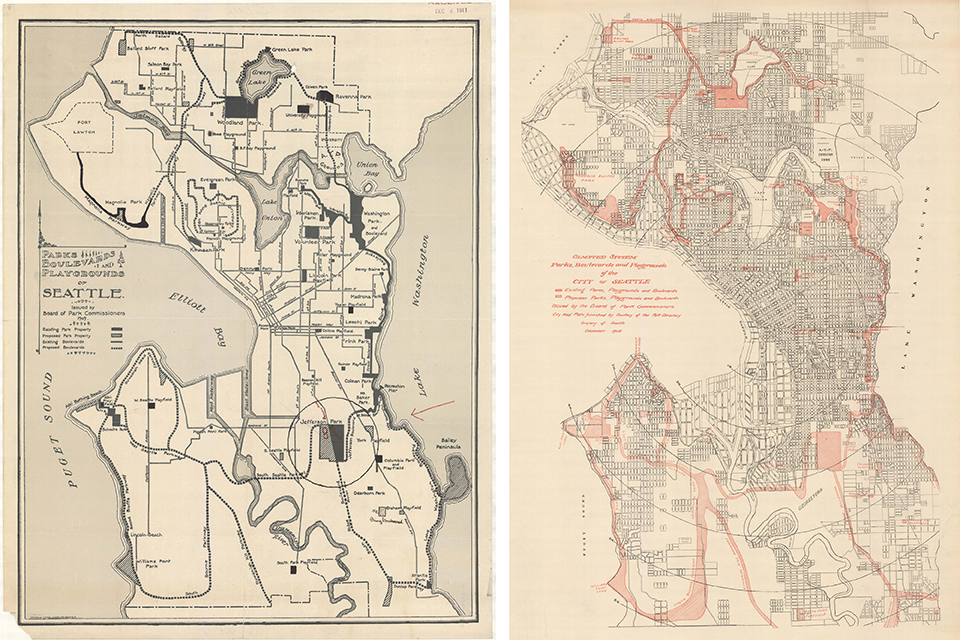
More than a century ago, Seattle decided to give future residents a gift: not just one beautiful square, but an entire chain of parks and boulevards linked together like beads on a string. The idea came from the Olmsted brothers—the heirs of the man who created New York’s famous Central Park. But the most unexpected part of the story is this: the parks were not only about beauty. They were also a smart way to help the city grow, prosper, and attract people.
Who Were the Olmsted Brothers, and What Did They Create?
Frederick Law Olmsted was one of America’s best-known designers of gardens and parks. He believed that a large city without greenery was like a house without windows: you could live there, but it would feel cramped and gloomy. His sons—John Charles Olmsted and Frederick Law Olmsted Jr.—continued his work. Their firm was called the Olmsted Brothers.
In the early 1900s, Seattle was growing rapidly: new residents were arriving, and homes and streets were being built. In 1903, the city invited John Charles Olmsted, and he proposed an idea: instead of simply scattering parks across the map, connect them with beautiful boulevards—wide, tree-lined roads where people could stroll, ride in carriages, or cycle. The total length of these boulevards was intended to be about 20 miles, or roughly 32 kilometers.
Imagine that the parks are colorful stones and the boulevards are a thin but sturdy thread. Together, they form a necklace “worn” by the city itself. Only instead of gold and pearls, it contains lakes, forests, lawns, and views of the mountains.
Some of these plans were carried out quite quickly. Washington Park, Woodland Park, and Green Lake were created or significantly transformed. And the best part is that many of these places are still alive today—people walk, play, ride scooters, and have picnics there.
Why Beauty Matters to a City: The Simple “Arithmetic” of Parks
Now for the most interesting part. Why should a city spend time and money on parks? It could simply build more homes and factories. But even then, many urban planners had already noticed a pattern that can be explained very simply.
Imagine that a beautiful little park with benches and a fountain appears on your street. What happens? Families will probably want to live nearby because it is pleasant to take a walk there. Cafés, a bakery, and a toy shop may open. The land around the park will become “more valuable”—people will be willing to pay more for it. And when land becomes more expensive, the city collects more taxes, which means it can build schools, bridges, and new streets.
That is the economics of parks. Without complicated words: a beautiful place attracts people—jobs, shops, and money appear—the city becomes wealthier and can create even more good things. The creators of plans like the Olmsted plan understood this perfectly. To them, a park was like a “seed”: you plant it, and it bears fruit for many years.
The Great Celebration of 1909
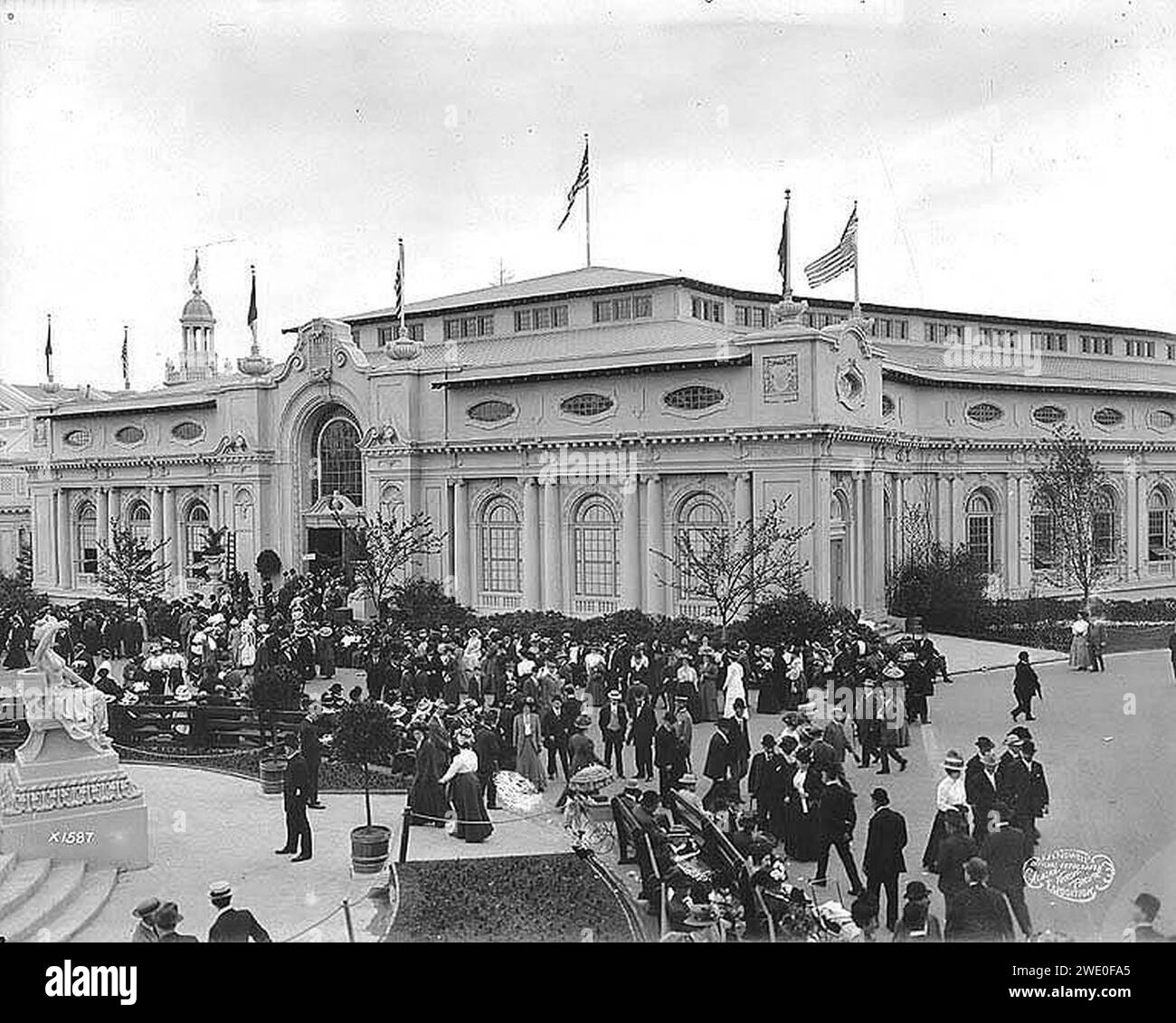
In 1909, Seattle hosted an event that demonstrated how beauty and usefulness can work together. On the site where the University of Washington now stands, the Alaska–Yukon–Pacific Exposition opened. It was a huge fair filled with wonders: pavilions showcasing new technologies, food exhibits, displays about distant northern lands, concerts, and festivities.
The exhibition grounds were designed to look like a beautiful park, with paths, avenues, flower beds, views of the water and mountains. Landscape designers from the Olmsted circle also worked on the project, and this was no coincidence: people who knew how to create parks also knew how to make a place welcoming to thousands of visitors.
About 3.7 million people visited the exposition. For a city of that era, this was an astonishing number! Visitors stayed in hotels, ate in restaurants, bought souvenirs, and traveled by streetcar. And when the celebration ended, the beautiful grounds remained for local residents—and eventually became a university campus, one of the most scenic in the country.
You could say that the 1909 exposition was a major “test” of the idea: when a place is beautiful and well designed, it attracts people and continues to provide benefits for a long time.
What Became “Forgotten” and What Remains with Us
Over time, people grew accustomed to the parks and boulevards. They seem to have always been there, like the hills and lakes. Few people walking along a path or sitting on a bench think: “Someone came up with this path, on paper, more than a century ago.”
This is “forgotten heritage”: an idea that works so well that it becomes invisible. Not everything in the original plan was built. Cities change, new roads, construction projects, and buildings appear, and not every “bead” remained on its original “thread.” But the basic principle—that parks should be connected to one another and accessible to everyone—has endured and continues to influence how Seattle thinks about its green spaces.
I think there is something especially kind about this story. The people who created the plan would never have seen all the fruits of their work: many of the trees were very small at the time. They planted them for those who would be born later. For you and me, for example.
Conclusion
The next time you walk through a park, stop for a moment and look around. A wide path, old trees, a bench by the water—all of these were once just an idea in the mind of someone with a pencil and a sheet of paper. The Olmsted brothers believed that beauty was not a luxury, but an investment in the future: it makes people happier and a city stronger and wealthier. And, as Seattle’s history shows, they were right. A well-designed place can serve people for more than a century—and never even ask for “thank you.”