Seattle is home to the world’s best-known online bookstore. You might think ordinary bookshops couldn’t survive alongside it. But not only have they survived—Seattle still has plenty of cozy bookstores. One of them is unlike any other: it has no director, and the workers make all the decisions themselves, like a good team.
The giant and the small shops
In the mid-1990s, entrepreneur Jeff Bezos launched Amazon. At first, it was just an online bookstore, and the idea came about near Seattle. Later, the company grew into a giant.
Many people thought that paper books from small stores would disappear. For a while, it seemed that way: in cities across America, bookshops were closing one after another. But then something unexpected happened. In the 2010s, the number of independent bookstores in the United States began to grow again. People suddenly realized that a bookshop offered more than just books. You could talk to a bookseller who had read the book themselves and ask for a recommendation.
This is especially noticeable in Seattle. In 2017, the city was even named a “City of Literature” by UNESCO, an organization that promotes culture around the world.
A basement where writers read aloud
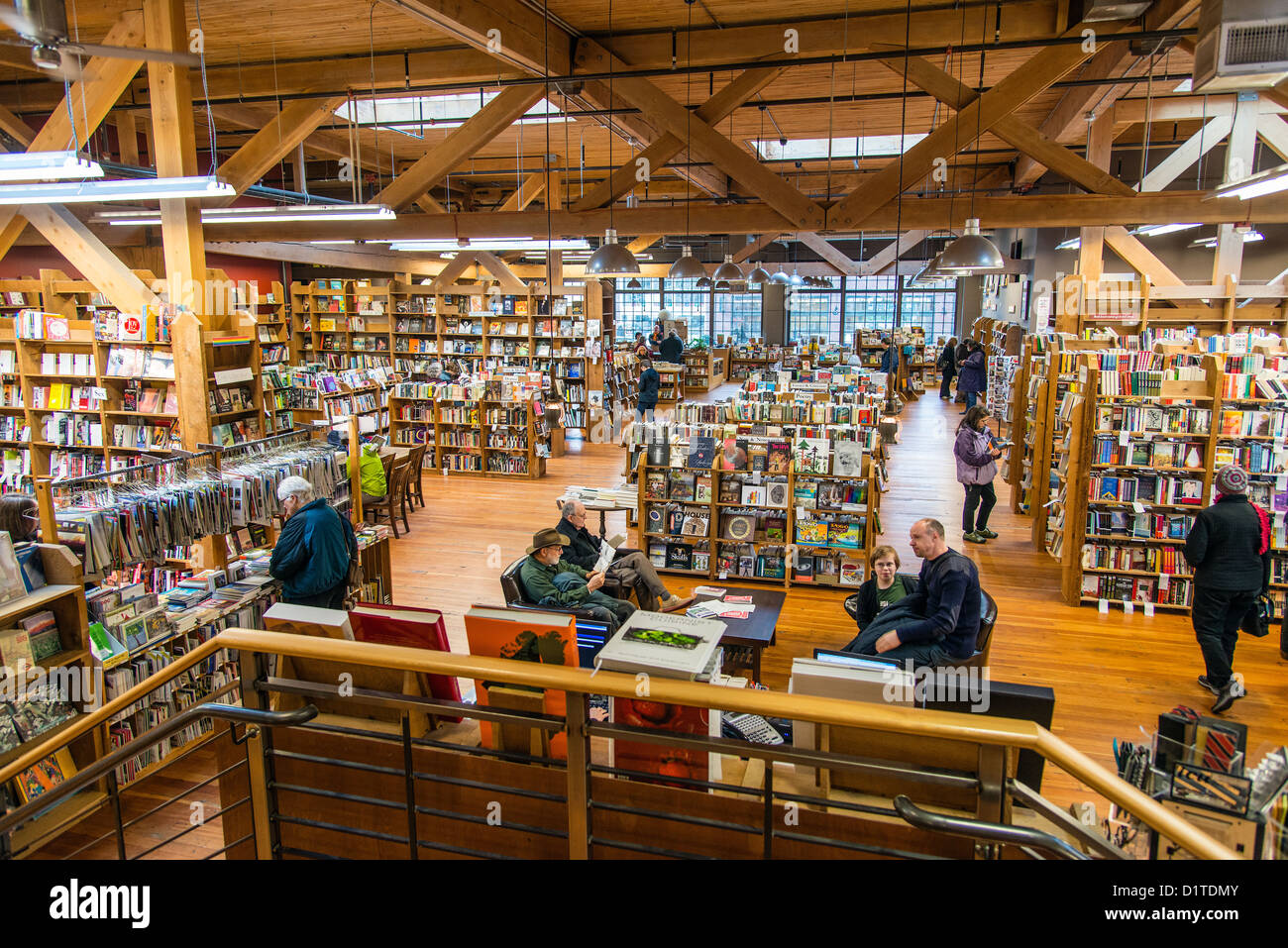
In 1973, Elliott Bay Book Company opened in the old Pioneer Square neighborhood. It was founded by Walter Carr. The store was named after the bay on whose shore the city stands. It was like a maze: long rows of wooden shelves, brick walls, and little nooks where you could hide away with a book. There was a café in the basement. Later, in 2010, the store moved to another neighborhood, Capitol Hill, but kept its character.
Its main distinction was that it didn’t just sell books. Writers came there to read their stories aloud. These events took place year after year. Imagine how exciting it would be to hear the author read their own work and then ask them a question while they’re standing right in front of you.
A store where everyone decides together
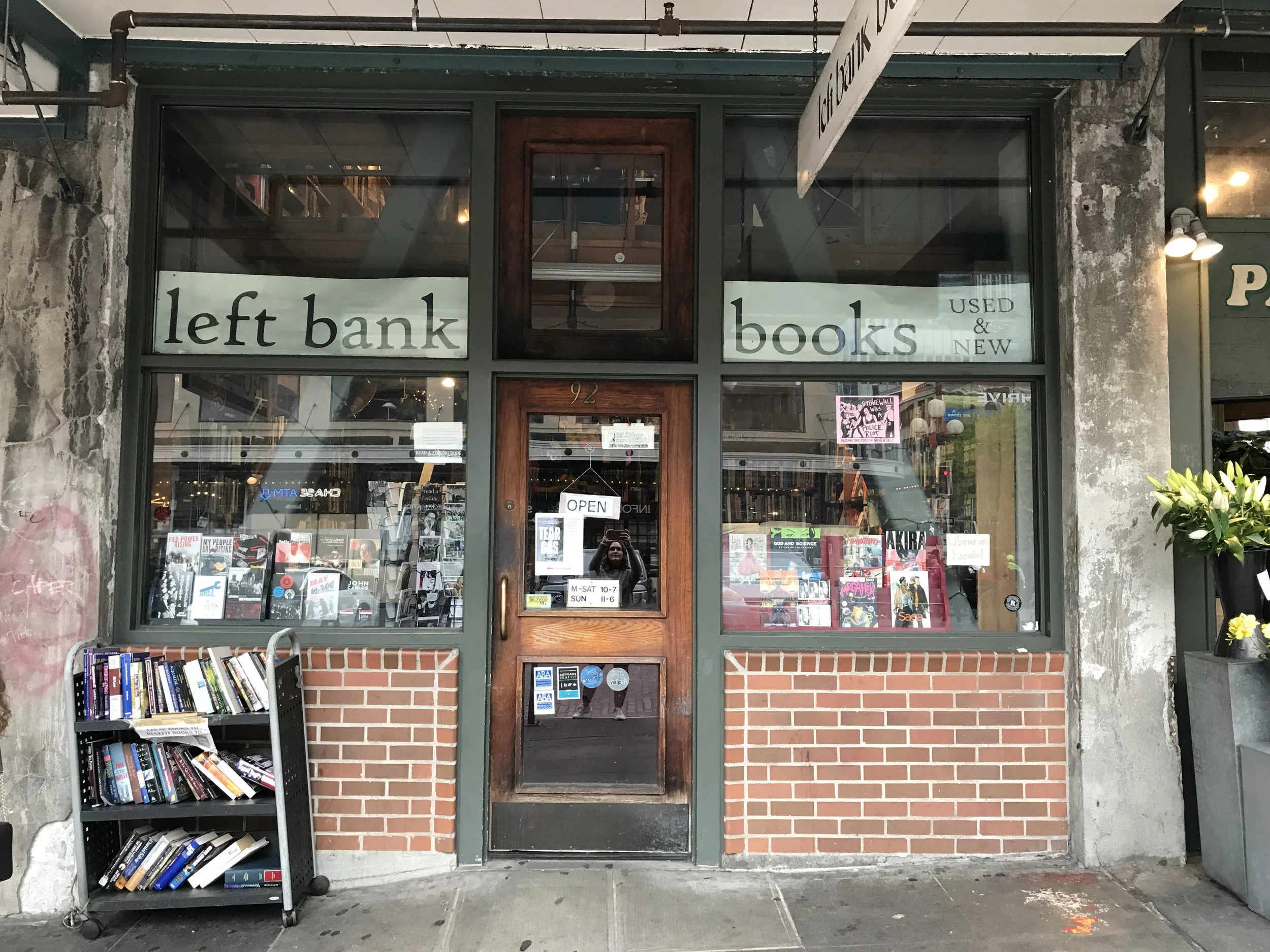
That same year, in 1973, another unusual shop opened at the old Pike Place Market: Left Bank Books. It was founded as a collective. That means everyone who works there has an equal stake and makes decisions together about which books to stock, how to arrange the shelves, and what to do next.
Imagine there’s no teacher in your class telling everyone what to do, and the kids have to agree among themselves about what games to play during recess. It’s hard, right? You have to listen to each other and find a solution everyone can agree on. That’s how this store has operated for more than half a century.
It sells things you rarely find in big chain stores: books from small publishers, stories by people no one listened to for a long time, and books about how to make the world a better place. You could read them online, but finding them among millions of other titles isn’t easy. In a small shop, a bookseller can simply pull the right one off the shelf.
Little magazines made by hand
There’s something else interesting on the shelves at Left Bank Books: zines. These are small, homemade magazines. Their creators write, draw, and assemble them themselves, then make copies on an ordinary printer and distribute them to shops. Some zines are about favorite comics; others are about friendship, school, music, or learning to cook.
The great thing about zines is that you don’t need permission or a big publisher to make one. Anyone—even a child—can take some paper, pencils, and scissors and create their own magazine. That’s how “forgotten voices” get a chance to be heard: people overlooked by major publishers are finally listened to.
I think that’s the real secret of Seattle’s bookstores. They say, “Everyone has a story, and it deserves to be heard.”
What this story teaches us
Seattle’s small bookstores have survived because people trust them. They know their readers and remember what each person likes. And they make room for people others have overlooked.
If you want to feel part of this tradition, try making your own zine. Take a few sheets of paper, fold them in half, draw a cover, and write a story about something that really matters to you. Maybe one day your little magazine will end up on the shelves of a small bookshop somewhere.