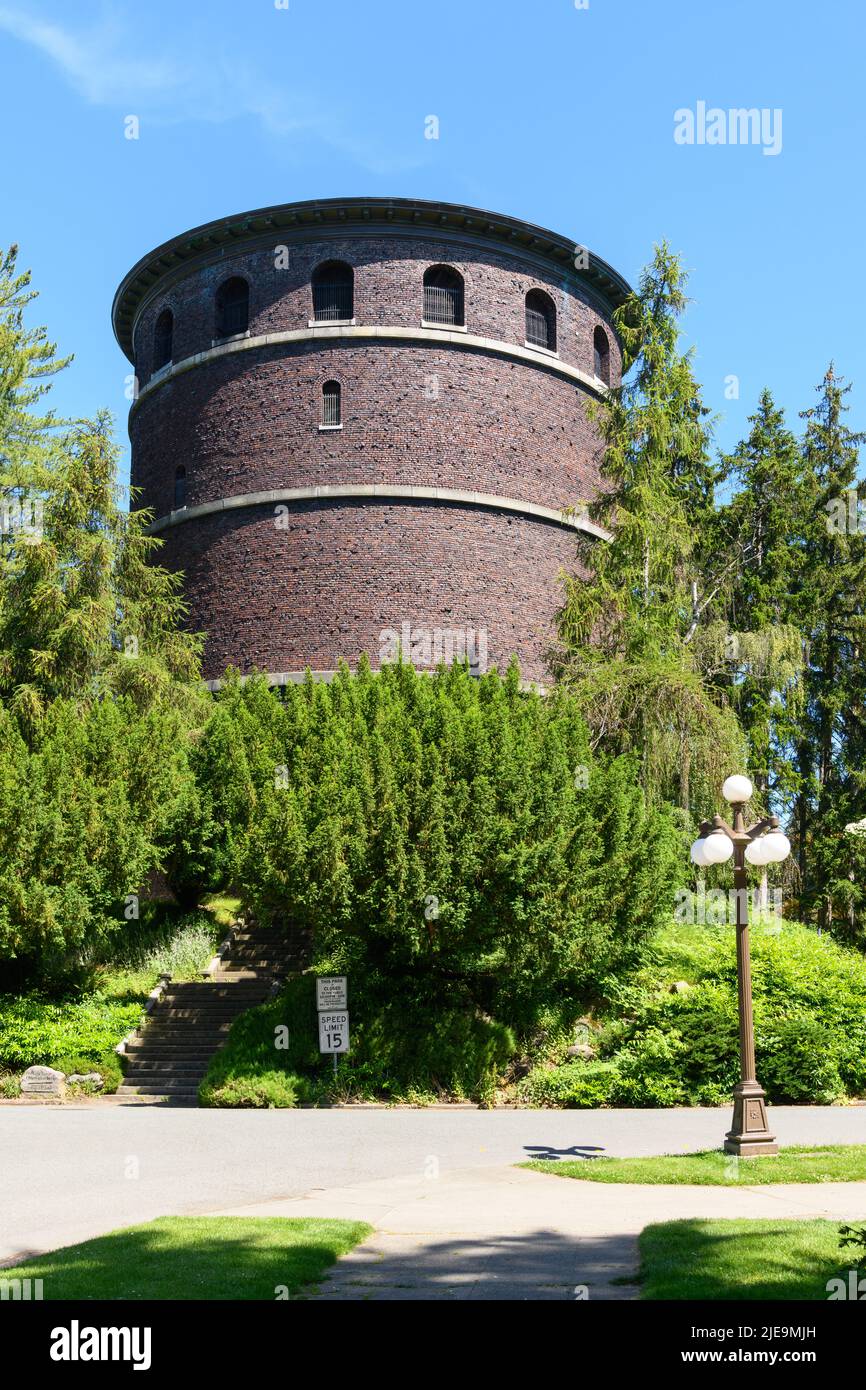
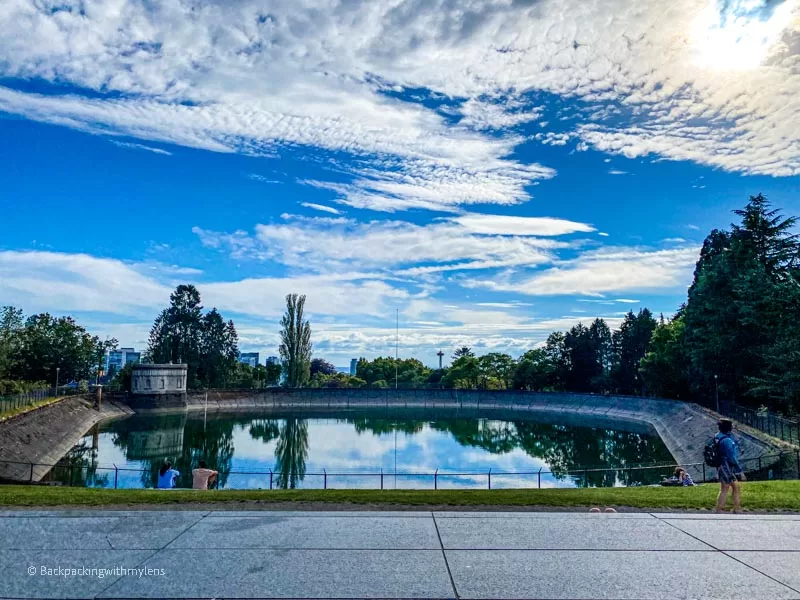
Imagine a city where water needs to flow from the taps in thousands of homes all by itself. To make that happen, it’s pumped high up a hill, then runs downhill through pipes, like water going down a slide. That’s what Seattle did: it built a huge drinking-water reservoir on Capitol Hill and put up a brick tower beside it. Today, the tower no longer stores water. Instead, people go there to enjoy the views, and it has become part of the beautiful Volunteer Park.
A Slide for Water
In the early 20th century, Seattle was growing very quickly. In 1900, about 80,000 people lived there; by 1910, the population had reached around 237,000. People need water all the time: for drinking, washing, cooking, and fighting fires. The city had once suffered a major fire, in 1889, so officials understood how important a reliable water supply was.
In 1901, a major system was completed to bring water into the city from the Cedar River. Some of that water was sent to the highest nearby hill. There, an open reservoir was built—a huge pool for storing water. From there, the water flowed downhill under its own weight, like water from a bottle held above your head.
A few years later, in 1906, a brick water tower about 23 meters (75 feet) tall was built nearby. It helped keep the water pressure steady, so the flow from the taps wouldn’t weaken or come in bursts. For the city, it was a real “water helper”: while the system was running, new homes could be connected to the pipes, making it possible to build streets, shops, and workshops.
A Park That “Draws” People In
A park was created around the hilltop waterworks. The city brought in the renowned landscape designers, the Olmsted brothers, to plan the paths, lawns, and trees. The park was named in honor of volunteers who had once gone off to war.
Beautiful homes began to spring up near the park, and some very wealthy families lived on a nearby street, which even earned the nickname “Millionaire’s Row.” People like to live near beautiful places, and the more appealing a neighborhood is, the more attractive it becomes to shops, cafés, and schools. In this way, the tower on the hill indirectly helped an entire neighborhood grow.
Over time, other attractions appeared in the park too. Take a look at the timeline:
| Year | What happened |
|---|---|
| 1901 | The open reservoir was built |
| 1906 | The water tower was built |
| 1912 | The greenhouse with tropical plants opened |
| 1933 | The park’s art museum opened |
| Early 21st century | The open reservoir was taken out of the water supply system |
The greenhouse and museum brought new visitors to the park. In time, the tower was no longer needed for water and found a new job. Now it’s a free observation deck. Climb the spiral staircase—with more than a hundred steps—and you can see the city, the bay, and distant mountains. Tourists and residents don’t have to pay admission, so everyone can enjoy the beautiful view.