The historic Springwater Lodge on Mayne Island is for sale for C$1.999 million—less than the average price of a home in Vancouver. The property has been vacant since 2024 but could be revived. The province’s new Conservative government plans to repeal Bills 43 and 44, which promoted denser development; according to expert Tom Davidoff, doing so could worsen the housing shortage and drive prices higher. Meanwhile, Environment Canada has issued a heavy-rainfall warning for much of Vancouver Island. From Thursday to Friday, 80–150 mm of rain is expected, with localized flooding possible, and a series of further storms is on the way.
Historic waterfront lodge in B.C. listed for less than Vancouver’s average home price
The historic Springwater Lodge, a legendary waterfront hotel and pub on Mayne Island in British Columbia, is up for sale. It is said to have been the longest-operating hotel in the province. The asking price is C$1.999 million—less than the average price of a typical home in Vancouver, where real estate prices are traditionally among the highest in North America. The listing has attracted the attention of investors as well as people interested in the region’s history and culture.
The building was constructed in 1892 as a private residence, but by 1895 its owner had begun renting rooms to guests. According to the Mayne Island website, it was originally a boarding house for miners—hence the name of the community, Miners Bay. The establishment later became a hotel called Grandview Lodge. Its first operator was Tom Collinson, the island’s first postmaster, who, according to local lore, rowed across the channel to collect the islanders’ mail. His daughter Emma later ran the hotel. During the Fraser River and Cariboo gold rushes, the lodge was a popular stop for prospectors. Over time, it became known as Springwater Lodge and continued to welcome travellers passing through the Gulf Islands or visiting Mayne. For more than 120 years, it remained an important part of the local community.
The property is now vacant: the hotel closed around 2024. But a buyer could bring it back to life. The main building is set up as a pub and restaurant, with a waterfront terrace overlooking Active Pass. The property also includes two recently renovated duplexes that could provide four guest rooms. The listing notes that there is potential for new development on the site, with considerably more rooms. The listing agent had not responded to a request for comment by publication time.
A few points help explain why the sale is noteworthy. Vancouver’s average home price has long exceeded C$2 million. The city’s real estate market is considered one of the most overheated in the world, making C$1.999 million for a historic waterfront property seem relatively affordable. Mayne Island is one of the Gulf Islands, an archipelago between mainland British Columbia and Vancouver Island that is accessible by ferry. It is a popular summer destination, but has limited infrastructure. The Wayback Machine is a digital archive of web pages that lets users see how websites looked in the past. Active Pass, a channel between the islands known for its strong currents and scenic views, is also part of the ferry route.
The key point is that Springwater Lodge was more than a commercial property: for over a century, it was a social and cultural anchor for the island. Its possible revival or repurposing could significantly affect the character of Miners Bay. The potential for new construction mentioned in the listing raises questions about balancing heritage preservation with commercial development. For a buyer, this is a chance to acquire not only real estate but also a piece of British Columbia’s history—with responsibilities to the local community and the tourist trade. More details, along with photos of the property, are available in Vancouver Is Awesome’s report.
B.C. at a crossroads: repealing housing laws could hurt affordability
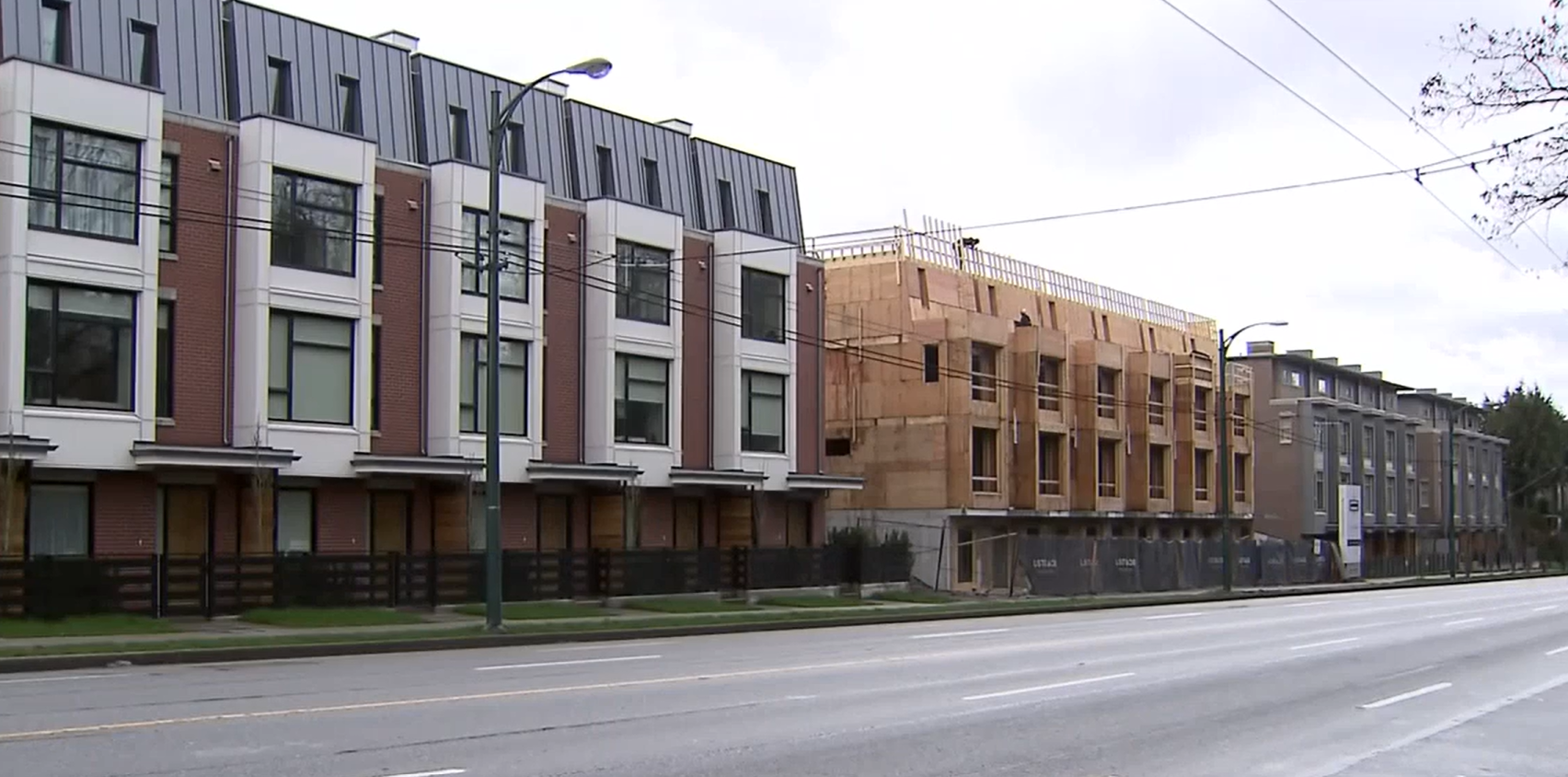
British Columbia’s new Conservative government, led by Lorne Doerkson, has promised to make housing affordability a policy priority. But one of the cabinet’s first moves—its plan to repeal two key laws introduced by the previous NDP government—could produce the opposite result. Bills 43 and 44 gave the province the power to set mandatory housing targets for municipalities and, more importantly, allowed at least duplexes and multiplexes to be built on land zoned for single-family homes. Repealing the laws would give cities back the freedom to decide how to increase density, but it also risks entrenching housing shortages and rising prices in the most in-demand parts of Metro Vancouver.
The reform now facing repeal was intended to shift responsibility for regional housing affordability from individual cities to the province. Tom Davidoff, a professor at the University of British Columbia’s Sauder School of Business, explains the problem the laws were designed to address, calling it a regional “free-rider problem.” When a municipality such as West Vancouver allows luxury zoning, with one home per lot, it makes housing less affordable for everyone else: instead of several homes being built on a lot, there is only one. As a result, people who cannot afford a detached house are forced into a small number of locations, where competition pushes prices up. In the expert’s view, that is the essence of the region’s affordability problem.
Supporters of repealing the laws have their own arguments. Jasrup Gosal, the B.C. Real Estate Association’s government relations manager, points out that even when denser development is permitted, it does not necessarily happen: “It doesn’t mean homes are actually going to get built if the financing doesn’t pencil out.” Critics also argue that cities lack the infrastructure needed for so-called “gentle density”—including hospitals, roads and school capacity. The Conservatives also insist on a matter of principle: Victoria should not dictate to municipalities how they must increase density. Surrey Mayor Doug McCallum said in a statement that Surrey is the province’s fastest-growing city and that homes will be built there, but decisions about how a neighbourhood develops should be made by residents and their elected council, not imposed through a one-size-fits-all rule from Victoria.
Davidoff, however, says the consequences of repealing the laws are predictable: responsibility for meeting the needs of the entire Lower Mainland will once again fall on a limited number of cities. “People who can’t afford a detached house get crowded into a very small number of places across the region, driving up prices—and that’s our affordability problem,” he says. In other words, without provincial mandates, municipalities with restrictive zoning will again be able to shift the costs onto their neighbours, leaving the overall housing shortage and pressure on prices in place.
The key takeaway is that the dispute over Bills 43 and 44 is not about whether more housing should be built, but about who should make decisions on density and at what level of government. Both sides have legitimate arguments: development permits do not turn into apartments without infrastructure and financing, but without regional coordination, cities tend to adopt policies that benefit current residents at the expense of the region as a whole. As CityNews Vancouver reports, repealing the laws could undermine the new government’s stated goal of making housing more affordable.
For readers unfamiliar with Canadian terminology, a few definitions may help. “Municipalities” are local governments—cities that have broad powers over zoning in Canada. “Gentle density” means moderate increases in density without high-rise construction, such as duplexes, townhouses and low-rise apartment buildings. The “free-rider problem” in this context describes a situation in which one city benefits from restrictive zoning while shifting the burden of accommodating a growing population onto neighbouring municipalities. Finally, the Lower Mainland is the densely populated part of Metro Vancouver, including the city of Vancouver, Surrey, Burnaby, Richmond and other municipalities, where most housing demand is concentrated.
The new government’s dilemma is clear: abandoning provincial mandates would increase local autonomy but weaken a mechanism that at least partly required cities with restrictive zoning to contribute to solving the region’s housing problem. The figures and expert assessments in the article suggest that without such a mechanism, prices are likely to keep rising and demand to remain concentrated in a limited number of areas—putting the government’s stated priority of housing affordability at risk.
B.C. braces for the season’s first major storm: rain warning issued for Vancouver Island
Canada’s weather service is warning of an approaching series of storms along the country’s Pacific coast. The first is expected to hit much of Vancouver Island on Thursday, bringing tens or even hundreds of millimetres of rain. Officials are advising residents to prepare for localized flooding and stay away from waterways.
According to CHEK News, Environment Canada’s heavy-rainfall warning covers northern, western and inland parts of Vancouver Island, particularly areas near Port Alice, Gold River and northwest of Barkley Sound. From Thursday at noon until Friday at noon, 80 to 120 millimetres of rain is expected, with up to 150 millimetres in some places, especially at higher elevations. The rain is expected to peak around midnight, with the heaviest period lasting until Friday morning. In some areas, rainfall could reach 10 millimetres an hour for several hours in a row. “The heaviest rainfall is forecast between Tofino and points north, with rain spreading inland across the island to Port Alice, Zeballos, Tahsis and Gold River,” the weather service said. It also described the storm as “the first potent system in a series of wet and windy weather systems that will affect the B.C. coast into next week.”
Alongside the rainfall warning, the BC River Forecast Centre issued a high streamflow advisory for the same parts of the island. Under these conditions, river levels rise rapidly and minor flooding of low-lying areas is possible. However, the centre emphasized that “major flooding is not expected.” Forecasters are already predicting a second round of rain over the weekend, which could affect areas that receive the heaviest rainfall on Thursday and Friday. A third storm, beginning on Monday, could bring a prolonged period of rain to the entire B.C. coast for the following week. The centre reminds residents that storm drains are often clogged with debris at this time of year and asks them to keep drains clear where possible. EmergencyInfoBC has also issued an advisory for the south and central coast, as well as northern, western and central Vancouver Island, urging people to stay away from fast-flowing rivers and potentially unstable shorelines.
Environment Canada advises residents to keep away from rivers, streams and culverts while the warning is in effect, and to be prepared for localized flooding, road washouts and sharply reduced visibility. The current warning is at the “yellow level” on the weather service’s new colour-coded scale, which also includes orange and red levels. A yellow alert means the weather could cause some damage or disruption, but the impacts are expected to be “moderate, localized and/or short-term.” Updates are available on Environment Canada’s website.
A few points help put this in context. A high streamflow advisory is the least severe of British Columbia’s three flood warning levels. It signals rapidly rising water and the possibility of minor flooding, but not a serious threat, unlike a flood warning or emergency. The colour-coded alert system mentioned here is a relatively new development: yellow, orange and red indicate increasing severity of expected impacts, rather than simply the strength of a weather event. Finally, the description “first potent storm” matters because the fall and winter season on Canada’s Pacific coast is traditionally marked by a series of atmospheric rivers—long streams of moisture from the tropics that bring heavy rain and can cause flooding and landslides.
The main takeaway is that the region is entering a period of heightened pressure on rivers and waterways. The greatest risk comes not from a single downpour, but from several storms in succession falling on already saturated ground and swollen rivers. The most vulnerable areas are on the island’s west coast, from Tofino to Port Alice and Gold River, where the heaviest rainfall is expected and a streamflow advisory is also in effect. The practical consequences for residents are clear: roads may be closed because of washouts, low-lying areas could flood, visibility on highways may deteriorate, and conditions near the water could be dangerous. The authorities’ practical reminder to keep storm drains clear is also significant—a simple measure that can reduce the risk of flooding in urban neighbourhoods. Overall, the warning is an early signal that the storm season has begun on the B.C. coast and that residents and public works crews will need to remain on alert over the next ten days.