In West Vancouver, a creek has been named after conservationist Hugh Hamilton; a CityNews story about “Gastown ghosts” is actually about a series of pedestrian collisions in Metro Vancouver, two of them fatal; and sleep experts are criticizing British Columbia’s decision to adopt permanent daylight saving time, warning of disrupted circadian rhythms and winter sleep loss.
West Vancouver creek named after conservationist Hugh Hamilton
West Vancouver has dedicated an unusual memorial to a man who devoted much of his life to protecting local nature. A small, previously unnamed creek on Mount Hollyburn—barely visible in summer but reliably carrying snowmelt to the Pacific Ocean in winter—is now officially called Protector’s Creek. It was named in honor of Hugh Hamilton, who died in 2020 at the age of 90 and is considered one of the key figures in environmental conservation in West Vancouver. The dedication ceremony took place on October 24 beside a tributary above Cypress Bowl Road, where Hamilton’s friends, colleagues and family gathered.
Hugh Hamilton was born in India in 1929, where his father worked as a forester for the British colonial administration. The boy was drawn to nature from an early age: he went hiking in the Himalayas with his parents. His family later sent him to England to study, but when the Second World War broke out, they arranged for him to live with a naturalist aunt in the United States, who nurtured his love of the natural world. Hamilton followed in his father’s footsteps, studying forestry at Oxford University before building a career in British Columbia and settling in West Vancouver. But he became a real force for change after retiring, when he joined a range of conservation groups—including the West Vancouver Shoreline Preservation Society, West Vancouver Streamkeepers, Nature Vancouver, the North Shore Eagle Network, Old Growth Conservancy and the Lighthouse Park Preservation Society—as a volunteer, activist or leader.
John Barker, a former president of Streamkeepers, said Hamilton was “a really well-rounded and knowledgeable person in virtually every aspect of our natural capital.” Barker emphasized that Hamilton’s interest was no passing fancy: he had a deep understanding of what could and should be done, and supported anyone who came forward to help. That is why his legacy lives on in shorelines, creeks and groves across the municipality. One of his major achievements was a campaign ahead of the 1990 referendum that stopped the municipality’s plans to clear 140 hectares of forest on Mount Hollyburn to build a 27-hole golf course. The area still contains a rare stand of old-growth forest, with some trees estimated to be up to 900 years old. Barker saw Hamilton not just as an ally but as a catalyst: Hamilton could inspire others with his stories about nature, engaging even those who might otherwise have been indifferent. Knowledgeable and skilled people would join in, and “the word would spread.”
The idea of naming something after Hamilton was first proposed by British Properties president Jeff Kroll. Until this year, the creek was listed in official documents under the far less fitting designation “Tributary R.” The provincial process for officially naming a geographical feature is long and complicated: Barker first submitted the paperwork in 2023, and the proposal had to be reviewed by 28 different “stakeholders,” including municipalities, businesses and First Nations. In its response, the Sḵwx̱wú7mesh Úxwumixw (Squamish Nation) said it would prefer the naming process to follow its own tradition, which does not involve naming places after people. Instead, it suggested “Protector’s Creek,” and Hamilton’s family enthusiastically agreed. Barker explained the choice this way: “He protected the shoreline. He protected the trees. He protected the creeks, the salmon, all kinds of natural life in the community that you encounter.”
In a fitting coincidence, Protector’s Creek flows into Pipe Creek, which runs just a block from the house on Mathers Crescent where Hamilton raised his children and taught them about the world around them. “Of all the creeks he worked on in West Vancouver, and all the things he accomplished, the fact that Protector’s Creek flows into this particular creek is truly extraordinary,” said Hamilton’s daughter, Cynthia Simpson. “It’s especially meaningful to us because of our childhood memories and everything he achieved in this area.” The creek is not large, but Simpson said her father took a keen interest even in nature’s smallest details, with a clear understanding of how they fit into the bigger picture.
The naming ceremony took place just as Protector’s Creek was entering its “active season.” “It was a very rainy, typical West Vancouver day, and that was actually perfect. A lot of people liked that because he probably would have gone hiking in that kind of rain himself,” Simpson said. She added another important detail: Hamilton died at the very beginning of the pandemic, when public memorial gatherings were prohibited. More than 50 people who knew Hamilton well attended the ceremony, making it one of the few true public tributes to his memory in the community. “I think he would have been very proud, because he really felt good about having touched so many people,” she said. A memorial plaque to Hamilton now stands beside the creek. To find it, walk about eight minutes west along the Mountain Trail from the parking lot on Chippendale Road, just east of Rogers Creek Place. Anyone can retrace a route Hamilton himself must have taken many times—this time to a creek that now bears his other name.
Vancouver: Between Gastown ghosts and real danger on the roads
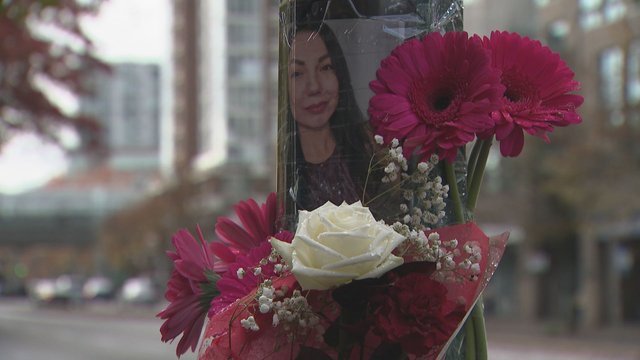
A story published by CityNews Vancouver under the headline “Gastown and ghosts: Vancouver’s haunted history” initially promises a light seasonal feature: a tale of ghosts in the city’s oldest neighborhood, where Victorian façades and cobblestone streets naturally conjure up spirits of the past. But the story’s actual content sharply diverges from its headline. Under the Halloween-themed packaging, readers are offered a very different story: a series of pedestrian collisions across Metro Vancouver over the past week, at least two of which were fatal. Reporter Cecilia Hua tells how the family of one of the victims is coping with grief and shares their appeals to road users.
The mismatch between the headline and the content is itself a story worthy of separate scrutiny. The headline and URL mislead readers: someone who clicks the link in the run-up to Halloween hoping to find out where ghosts haunt Vancouver gets a story about a real, very tangible tragedy. On the one hand, this could be explained by a technical mix-up—leftover details from an earlier version of the story or metadata scrambled in the editorial process. On the other, it illustrates a familiar problem in modern digital journalism: headlines take on a life of their own, and readers often form an impression of a story without ever getting to its substance. The original story is available at CityNews Vancouver, and it is the content, not the catchy headline, that deserves attention.
At its core, this is a short video report built around two interconnected themes. The first is statistical and urban: several pedestrian collisions occurred at different locations across Metro Vancouver in a single week, and at least two resulted in deaths. Even without exact figures, the pattern is alarming: this is not an isolated incident but a series of events in a short period, pointing either to a systemic problem with pedestrian safety across the region or to a coincidence that nevertheless requires a response from municipal authorities and police. The second theme is human: the family of one of the people killed speaks about their loss and urges drivers and pedestrians to look out for one another. This emotional dimension is not just an embellishment; it is the story’s core. Behind every collision report is a particular family whose life has changed irrevocably, and it is the voice of a victim’s loved ones that gives the news a weight dry statistics cannot.
A few terms that are left unexplained in the story are worth clarifying. “Metro Vancouver” is not just the city itself, but a metropolitan region that includes Vancouver and more than 20 neighboring municipalities: Burnaby, Richmond, Surrey, Coquitlam, North Vancouver, West Vancouver and others. Transportation policy and traffic enforcement are split among different levels of government, making pedestrian-safety problems harder to address than in a single municipality. “Pedestrian-involved collision” is a deliberately neutral term used by police: it records that a pedestrian was involved in a collision without assigning blame to the driver or pedestrian before the investigation is complete. Finally, Gastown is a historic neighborhood in downtown Vancouver, named after “Gassy” Jack Deighton, a trader and saloon owner who set up a steam-powered boiler at an intersection in 1867, laying the foundations for the district. Today it is a tourist destination known for its cobblestone streets, antique streetlamps and reputation as one of the city’s most haunted corners—which explains the word “ghosts” in the headline.
The story’s main takeaways can be summarized as follows. First, several pedestrian collisions occurred across Metro Vancouver in one week, at least two of them fatal. This is not an isolated incident but a series that warrants attention. Second, the report’s central message is a human one: the victim’s family urges everyone using the roads to be careful and respectful of one another, and that appeal comes amid personal grief, not abstract statistics. Third, the fact that the story appeared under a “ghostly” headline is a reminder of how important it is to check whether a headline matches its content—especially when tragedies are involved, as an inappropriately light tone can diminish someone else’s pain. Finally, the story indirectly raises questions about urban infrastructure and driver behavior: if pedestrian collisions are happening with alarming frequency, calls for caution alone are not enough. Systemic measures are needed, from improved crossings and lighting to speed enforcement in residential neighborhoods.
The practical value of this report lies in how it brings together two elements that usually remain separate: a dry account of incidents and the living voice of a family facing loss. That combination makes readers stop rather than scroll past. And if the headline about Gastown and ghosts caught the attention of a casual passerby, the story itself is a reminder that Vancouver’s real dangers are not lurking in haunted old alleys, but at ordinary intersections, where one person’s inattention can cost another their life.
British Columbia chose the wrong path: Why sleep experts criticize permanent daylight saving time
The Canadian province of British Columbia plans to stop changing its clocks seasonally and adopt permanent daylight saving time, but sleep specialists warn that the decision could have serious consequences for residents’ health. Experts say the province has chosen an option that runs counter to the body’s natural rhythms and could worsen trouble falling asleep, especially in the winter months. CTV News reports.
Wendy Hall, professor emerita at the University of British Columbia, said bluntly that the province had “chosen the wrong path” in deciding to adopt a permanent time zone. The experts’ concern is that under permanent daylight saving time, the sun would rise much later in winter, forcing people to wake up and start their day while it is still dark. This is especially critical for schoolchildren and workers who start their shifts early, since morning light plays a key role in setting circadian rhythms—the body’s internal clock.
Circadian rhythms require some explanation here. They are cyclical changes in physiological processes tied to the daily cycle of light and darkness. Bright morning light is the body’s main cue: it resets the internal clock and helps promote cortisol production and alertness. If a person wakes up in the dark, that signal comes later and the body clock shifts. As a result, the body does not feel tired at the right time in the evening, falling asleep takes longer, and sleep becomes shorter and poorer in quality. Experts emphasize that permanent daylight saving time effectively means living in winter with a “permanent one-hour shift forward” relative to solar time.
The specialists’ main argument is that permanent standard time—often called winter time—would be preferable because it is closer to astronomical noon. Chronobiologists say this option brings earlier sunrises and sunsets, helping the body naturally prepare for sleep. Permanent daylight saving time, by contrast, provides more evening light—pleasant for leisure, but harmful to sleep because bright light in the evening suppresses melatonin, the hormone that signals the onset of night.
Another risk is so-called “social jet lag,” a mismatch between biological time and social schedules. Under permanent daylight saving time, this mismatch could become chronic in winter, and chronic sleep deprivation is associated with a range of problems, from reduced cognitive function and concentration to an increased risk of cardiovascular and metabolic diseases. For teenagers, whose circadian rhythms are naturally shifted later, dark mornings create particularly unfavorable conditions.
Significantly, the scientific consensus in this area is fairly consistent: most sleep researchers and chronobiologists favor either keeping seasonal clock changes or switching to permanent standard time. British Columbia’s decision therefore runs counter to these recommendations, and Hall’s statement reflects broader concern in the scientific community. The practical conclusion for provincial residents and policymakers is that adopting permanent daylight saving time will require a deliberate approach to sleep hygiene—limiting bright light in the evening, making the most of morning light and maintaining a consistent schedule—to offset the decision’s negative effects. The question remains: will lawmakers heed the experts’ arguments before the change becomes permanent?