This edition covers the transfer of 300,000 acres of Crown land in British Columbia, controversial spending on a single tenant in Vancouver, and a city guide for travelers from Seattle.
Crown Land Transfer in British Columbia: A New Stage in Talks with First Nations
In recent days, heated debate has erupted in the Canadian province of British Columbia over government plans to transfer more than 300,000 acres of Crown land to five Indigenous groups located on Vancouver Island. According to published documents, the proposal involves approximately 30 sites, including both iconic natural areas and urban properties such as Hatley Castle, the Royal Roads University grounds, Victoria’s waterfront, a site near the legislative assembly, and Discovery Island and Sooke Mountain provincial parks. The initiative, which forms part of the modern treaty process, has drawn sharp criticism from opposition forces and legal experts, who say it undermines democratic principles and lacks public consultation.
The proposal would place land currently owned by the government under the control of five Indigenous groups whose territories stretch from Parksville to Victoria. This is not merely a symbolic gesture but an actual transfer of rights that would automatically make the land private property. It is important to understand that Canada has two types of treaties with Indigenous peoples: historical agreements, such as the Douglas Treaties signed in the 1850s and covering southern Vancouver Island, and modern treaties negotiated as part of the settlement of land claims. As lawyer Jeffrey Moyes, who advised the province on Aboriginal law for decades, points out, there is no legal need to revisit the Douglas Treaties—they have already settled questions of land rights. In his view, the current decision is political rather than legal, adding “modern treaty attributes” to the old agreements and potentially creating a dangerous precedent.
Critics, particularly those from the Conservative Party, have called the move a “betrayal of the foundations of democracy.” Conservative leader Kerry-Lynne Findlay stresses that the province belongs to all British Columbians, who should have a say in such important matters. Activist Steve Kunner adds that the government is systematically ignoring public consultation and overriding democratic oversight. These concerns are reinforced by the fact that the transferred land would become private property without any obligation to preserve public access or comply with existing zoning. This means that popular places such as provincial parks could be closed to ordinary citizens, while future use of the land would be determined solely by its new owners.
Notably, the province’s minister responsible for Indigenous affairs did not respond to inquiries from Global News journalists, further strengthening the impression that the process lacks transparency. At the same time, it should be noted that such transfers are not unprecedented in Canadian history. However, their scale and the selection of specific sites, including parks and university property, have generated particular concern. Ultimately, the issue touches on fundamental principles: how to balance the rights of Indigenous peoples, which have historically been violated, with the interests of the province’s population as a whole. Supporters of the initiative point to the need to correct historical injustice and recognize First Nations’ sovereignty, while opponents see it as a threat to public assets and a sign of insufficient transparency. A Global News article also notes that the mayor of Richmond asked one of the communities to provide written confirmation of guarantees concerning private property, reflecting growing concern among municipalities. It remains to be seen how the situation will unfold, but it is already clear that it will be a serious test for British Columbia’s political system as it moves toward reconciliation with Indigenous peoples.
Vancouver: The Perfect Sequel to Seattle for Those Seeking Something New in the Familiar
When you live in Seattle, it can seem as though you have already seen everything the Pacific Northwest has to offer. But once you cross the border, the world seems to expand, revealing a city that feels both familiar and entirely different. Vancouver is not simply another metropolis on the map; it is Seattle’s mirror image, with its own distinctive character, capable of surprising even the most experienced traveler. Authors at The Seattle Times suggest an unconventional approach to planning a trip: instead of relying on a standard list of “must-see” attractions, start with the things you enjoy doing at home.
Imagine that you are a fan of Seattle’s famous Pike Place Market, with its fishmongers’ calls and endless rows of flower stalls. Vancouver will not disappoint: Granville Island is not just a market but an entire island where the bustle of the city blends naturally with a creative atmosphere. You can spend several hours admiring local artisans’ work, sampling oysters straight from the counter, and watching chefs compete in the art of preparing the freshest seafood. The Granville Island Public Market is only part of the picture, however. The island is also home to an art school, theaters, and numerous small boutiques selling items you are unlikely to find in Seattle.
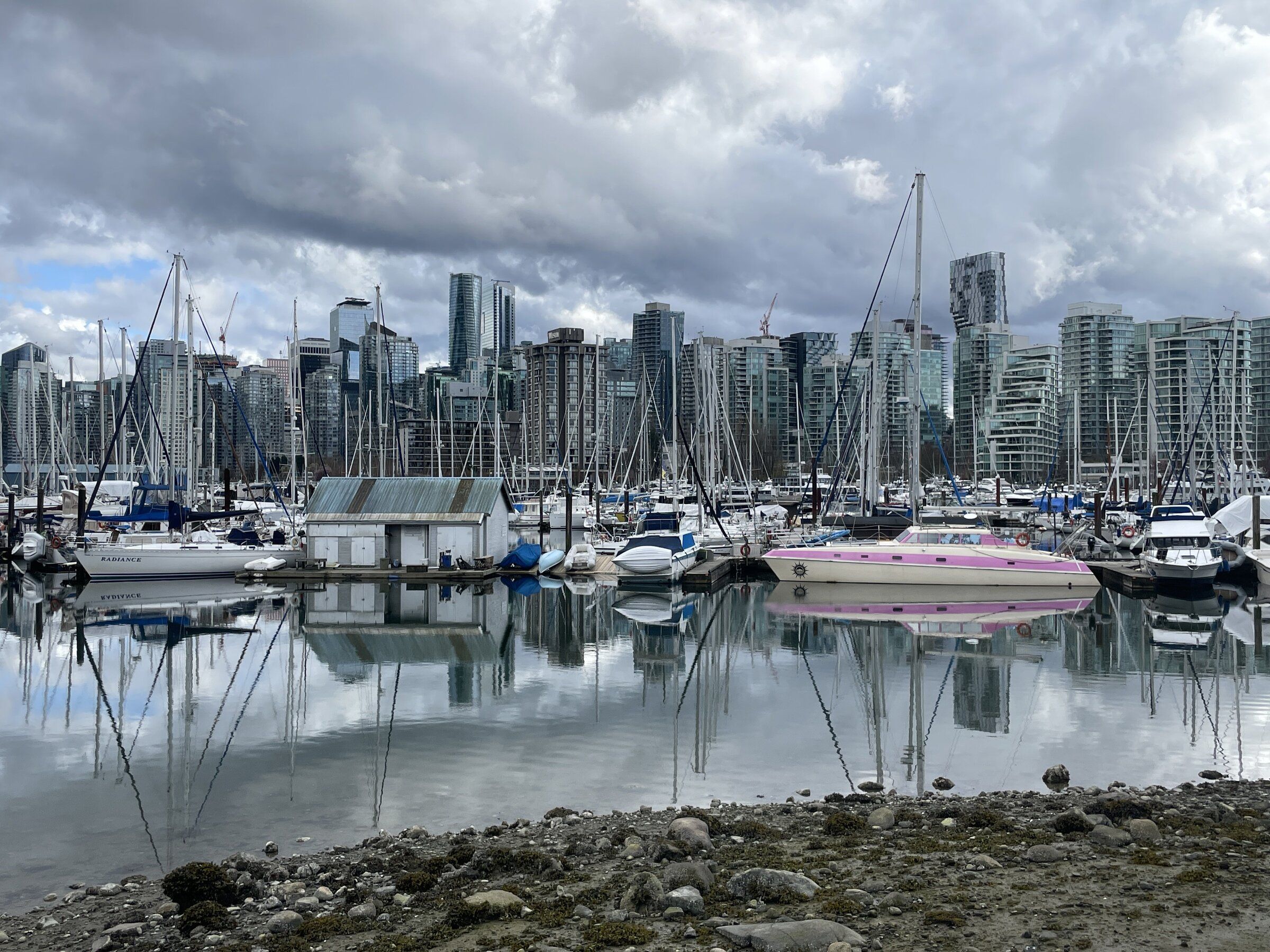
For those who cannot imagine a Seattle weekend without a trip to Discovery Park or Green Lake, Vancouver offers Stanley Park—a true wilderness oasis within the city. The park is nearly three times larger than New York’s Central Park, and visitors can stroll along well-maintained trails while spotting raccoons, squirrels, and even herons. Be sure to climb to the Prospect Point lookout, which offers breathtaking views of the bay and mountains, then walk along the famous seawall. On a clear day, you can see the outline of Mount Baker in the distance—the same mountain familiar to Seattle residents.
If your love of Seattle begins with its coffee culture, prepare for a pleasant discovery: in recent years, Vancouver has become a true specialty-coffee capital. The city’s cafés do not simply copy Seattle’s, but instead borrow its best practices while adding a Canadian laid-back attitude and multicultural flair. One place worth visiting is 49th Parallel Coffee Roasters, a company that began as a small roasting workshop and now serves some of the best lattes on the continent. After your espresso, head to Gastown, with its famous steam clock and cobblestone streets—one of the few parts of the city where you can feel the presence of history reaching back to the gold-rush era.
Vancouver also has pleasant surprises in store for art and museum lovers. If you are accustomed to spending time at Seattle’s Museum of Pop Culture or art museum, be sure to visit the Museum of Anthropology at the University of British Columbia. It is more than a museum: it is a temple of Pacific Northwest Indigenous culture, housing totem poles, ceremonial masks, and other artifacts that tell the region’s story in far greater depth than any textbook. The building was designed by renowned architect Arthur Erickson, and its interiors, with views of the ocean and mountains, are themselves works of art.
A trip to Vancouver requires a little preparation, particularly if you plan to drive. The border crossing can take anywhere from 30 minutes to two hours, depending on the time of day and day of the week, so experienced travelers recommend leaving early in the morning or late in the evening on weekdays. If you want to avoid the hassle, you can take a bus or train—both options allow you to relax and enjoy the scenery while someone else handles the transportation. For air travelers, a direct flight from Seattle takes just an hour, making Vancouver an ideal destination for a spontaneous weekend getaway.
Vancouver manages to maintain a remarkable balance between nature and urban life, offering attentive travelers not just a collection of tourist attractions but a whole palette of experiences unavailable in Seattle. The city continues to surprise with its food scene—from Asian restaurants in Richmond, considered among the best in North America, to innovative downtown establishments serving dishes made with local ingredients grown in the nearby Fraser Valley. The main advice from seasoned travelers is not to try to see everything in a single day. Instead, choose what genuinely appeals to you—whether art, food, or nature—and allow Vancouver to reveal itself in the way cities do when they truly welcome their guests.
Vancouver Pays $101,000 a Month for One Tenant in Former Hotel: What’s Happening?
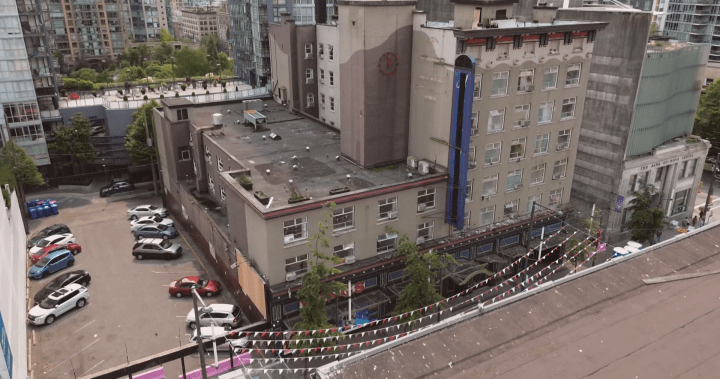
British Columbia authorities are at the center of a scandal: the provincial government is spending astronomical sums to house a single resident in a building it had promised to close. The site is the former Luugat hotel on Granville Street, where Ryan Donnelly, a man with a severe seizure disorder, still lives despite official statements that the facility would cease operations. According to data from the Ministry of Housing, the cost of his accommodation totaled $101,000 in July alone—and he remains there.
The situation has baffled not only taxpayers but also city politicians. Vancouver Coun. Sarah Kirby-Yung makes no secret of her outrage: she calculated that the same amount could have paid the market rent for a decent one-bedroom apartment for more than four years. This is not a matter of luxury accommodation but basic housing for one person. Even compared with the city’s most expensive options, the amount appears absurd. For example, a room at the Fairmont Vancouver, including breakfast and evening lounge snacks, would cost approximately $70,000 a month—about one-third less.
Most notably, the government still has no clear timetable for closing Luugat. Housing Minister Christine Boyle declined to comment to the press, further raising suspicions about the ineffectiveness of the decisions being made. Officials previously said the building would be decommissioned, but Donnelly has apparently been living there since at least mid-July, and the prospects for his relocation remain unclear.
Why does housing one person cost so much? The answer likely lies in the nature of his medical needs. Donnelly suffers from epileptic seizures and, by his own account, requires a spacious room. Even taking round-the-clock medical care, specialized equipment, and enhanced security into account, however, $101,000 appears excessive. Experts note that costs like these often arise because no alternative options are available: when the government must urgently house someone with special needs, it may pay private contractors’ highest rates without holding a tender or comparing prices.
The situation at Luugat is only the tip of the iceberg in Vancouver’s broader affordable-housing crisis. The city is facing severe pressure: property prices continue to set records, while the supply of social housing units is catastrophically inadequate. Under these conditions, every instance of ineffective public spending is especially painful, since the money could have gone toward addressing systemic problems. Commenting on the situation for Global News, Kirby-Yung emphasized that this is not merely a matter of accounting but one of public policy and accountability to society.
For now, the story appears to have reached an impasse. The government remains silent, the tenant stays put, and the expense meter keeps running. Unless a more sensible solution is found—such as placing him in a specialized facility with a fixed cost of care—these expenses could continue indefinitely. That means taxpayers will continue paying every month to house one person in a building that was officially supposed to be empty.