Residents of key regions in British Columbia gave their communities an average C+ for quality of life: nature and parks scored highly, while housing policy received the lowest marks. Sixteen-year-old musician Richard Lee raised more than $22,000 for BC Children’s Hospital, and Vancouver’s First Christian Reformed Church is marking its centennial as it stands on the brink of leaving its denomination.
British Columbia gives its cities a C+: housing falls short, parks save the day
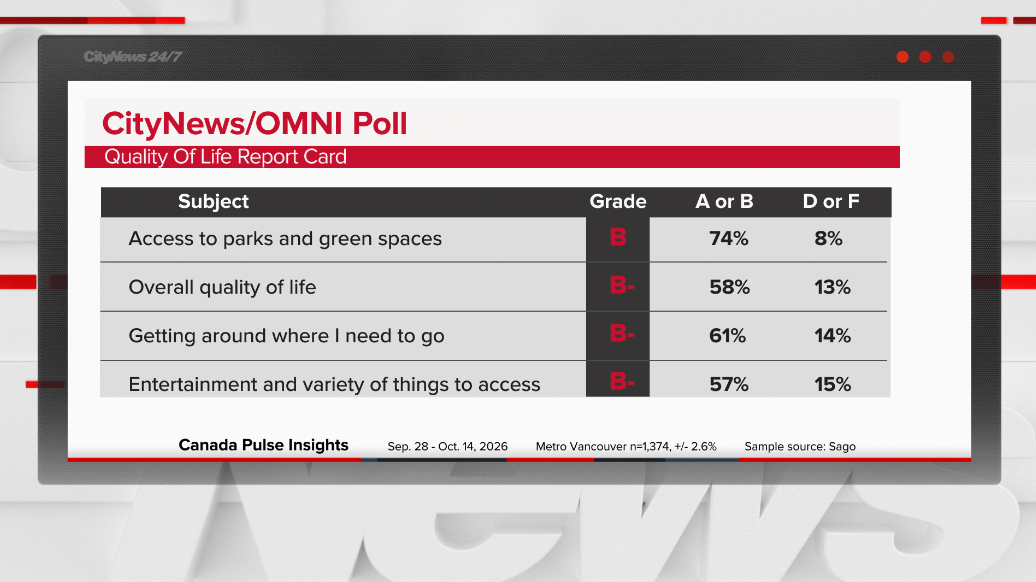
Residents of three key regions in British Columbia—the Metro Vancouver area, Vancouver Island and the Okanagan Valley—gave their communities an average C+ for quality of life. That is according to a new Canada Pulse Insights poll conducted for CityNews OMNI TV, covering 13 aspects of local life. The results, reported by CityNews Vancouver, paint a picture of regional self-perception with a clear imbalance: nature and parks earn solid Bs, while municipal housing policy receives the lowest grade—C- in all three regions.
Housing emerged as the main sore point. About four in ten respondents gave their municipalities’ plans to improve housing affordability a failing grade: 38 percent in Metro Vancouver, 40 percent on Vancouver Island and 41 percent in the Okanagan Valley. By comparison, just 21–23 percent gave those plans an A or B. In other words, the number of dissatisfied residents is nearly twice the number of satisfied ones—a rare degree of agreement across three regions so different in character.
Against that backdrop, green spaces look like an island of stability. Parks and public spaces received a B in Metro Vancouver and the Okanagan Valley, and a B+ on Vancouver Island, where 85 percent of residents gave them an A or B. The island also leads in overall quality of life, with a B: three-quarters of its residents gave it an A or B, compared with 58 percent in Metro Vancouver and 65 percent in the Okanagan. Significantly, even amid dissatisfaction with housing, most residents consider their municipalities good places to raise a family: 77 percent in Metro Vancouver, 83 percent on the island and 84 percent in the Okanagan.
Transportation was the only category in which Metro Vancouver outperformed its neighbours, earning a B-. Surrey, meanwhile, came last on two measures: it had the fewest A or B ratings for quality of life and the most D or F ratings for its local public school system. Within Metro Vancouver, the poll also found an age divide: people aged 18–34 were less likely to give quality of life high marks than those aged 55 and older—52 percent versus 67 percent. Income also correlates with satisfaction: only 30 percent of households earning less than $50,000 rated their working life an A or B, compared with 55 percent of those earning $100,000 or more. Renters are notably more pessimistic than homeowners about their financial prospects—20 percent versus 38 percent.
It is also worth noting that only 58–61 percent of respondents said they were proud of their municipality and its work, while residents gave the way vulnerable groups are treated—and their own chances to “get ahead”—a C. The poll was conducted from September 28 to October 14 and included 1,374 respondents from Metro Vancouver, 511 from Vancouver Island and 498 from the Okanagan Valley.
What lies behind these figures? Affordability, a term that has long stood on its own in Canadian public debate, means not simply low prices but housing costs relative to income—a balance that remains among the most strained in North America in Vancouver. The C- grade essentially reflects a feeling that municipal plans—such as allowing apartment buildings in residential neighbourhoods or increasing density—are not keeping pace with the scale of the problem. Another important point: the A–F ratings use the school grading scale, where C means “satisfactory” and D or F means failure. In this context, C+ means “more good than bad,” but with clear reservations.
The poll’s main takeaway is that the region’s quality of life rests not on municipal services, but on nature and a sense of community. Parks, green spaces and family-friendly communities pull the average grade up, while housing, support for vulnerable people and economic mobility pull it down. The gap between homeowners and renters, young and old, rich and poor shows that “quality of life” in British Columbia is profoundly uneven: for some, it is a B; for others, a barely passing grade. Municipalities will apparently have to answer first and foremost on housing—that is where voters have already delivered their verdict, and it is far from reassuring.
Sixteen-year-old Vancouver musician raises more than $22,000 for children’s hospital
In a world where teenagers are often assumed to be mostly preoccupied with themselves and their devices, Richard Lee’s story sounds almost unbelievable. The 16-year-old Vancouver bass-baritone does more than sing onstage: he organizes benefit concerts, leads a youth music network and has already raised enough for a children’s hospital to fund several modest galas for adult philanthropists. One concert brought in C$22,653, exceeding its $20,000 target. And counting all his efforts, Lee has directed more than $33,000 to the BC Children’s Hospital Foundation.
The concert, titled Aubade with Joy, took place on October 18, 2026, at the Chan Shun Concert Hall at the University of British Columbia. An orchestra, two choirs and guest performers took the stage, with Lee serving as both the lead organizer and one of the featured performers. The event was presented by Firefly Youth Network, a youth organization that brings music and the arts together with practical community benefit. According to a Classical FM report, the network has worked with more than 350 young performers, organizing major productions and partnerships with community organizations. Richard Lee is its co-president.
The money raised will support the Mighty Music program, which provides music therapy to young patients at the children’s hospital. For Lee, this is not abstract philanthropy: he once received care and emotional support at BC Children’s Hospital himself, and hopes that funding for therapy will help other children through difficult times. That personal connection gives the story particular weight: this is not just a kind gesture, but a deliberate choice by someone who knows firsthand how valuable that kind of support can be.
Lee’s path to his current role began modestly. He sang at small community events and was one of the first few children to join Firefly Youth Network after its founding in 2021. Over time, he moved from volunteer to community organizer and co-president. One telling detail: when Richard first joined the organization, he had a speech impediment, and vocal training in a supportive environment helped him overcome it. In that sense, his own story reflects what his fundraising is about: art as therapy and as a tool for personal growth.
By the age of 16, Lee, a Grade 12 student, has already built an impressive portfolio. He received the Judges’ Distinction Award and three first-place prizes at the American Protégé International Vocal Competition, which led to a performance at New York’s Carnegie Hall. He was named British Columbia’s vocal representative at the Canadian Music Competition’s national finals. He took part in Vancouver Opera’s mentorship program and Boston University Tanglewood Institute’s Young Artists Vocal Program, where he sang with the Boston Symphony Orchestra and worked with such luminaries as Bryn Terfel and Renée Fleming. At Aubade with Joy, he performed with the Oriental Philharmonic Student Orchestra, the Oriental Philharmonic Chamber Choir and the Oriental Philharmonic Choir, conducted by Tyler Xue.
A few terms in this story are worth explaining. A bass-baritone is a male singing voice between the lower bass and the higher baritone, usually with a rich, deep tone; in opera, such voices often take roles such as noble fathers, priests or villains. Music therapy, which the Mighty Music program funds, is not simply concerts for patients: it consists of clinically organized activities in which listening, singing or playing instruments can help reduce anxiety, ease pain and support children’s emotional well-being during long-term treatment. Firefly Youth Network, meanwhile, is a model of youth-led organization in which teenagers devise, organize and run cultural events themselves, rather than simply taking part at someone else’s direction.
The network’s work beyond a single concert is also significant. Firefly has raised money for arts education, including US$29,000 for the International Art Museum of America in San Francisco through an international youth fundraiser; performed for groups of older adults; and run music programs at BC Children’s Hospital itself. This points to a sustained approach: the organization does not limit itself to one-off events, but builds lasting ties with the community. Lee himself is a living example of how early involvement in the arts can develop into professional ambition and civic responsibility at the same time.
The fundraiser is still open for those who would like to support the program; donations can be made through the BC Children’s Hospital Foundation’s official page. Richard Lee’s story is a rare case in which youth is not an excuse but an asset: he has an entire career ahead of him, and it is already clear that the stage and service to others are inseparable for him. In the world of classical music, where high art is often discussed apart from everyday life, his example is a reminder that the true power of a voice is measured not only in applause at Carnegie Hall, but also in the money it raises for those who cannot come to a concert.
A century of service and a difficult choice: Vancouver’s First Christian Reformed Church marks its anniversary on the brink of a denominational split
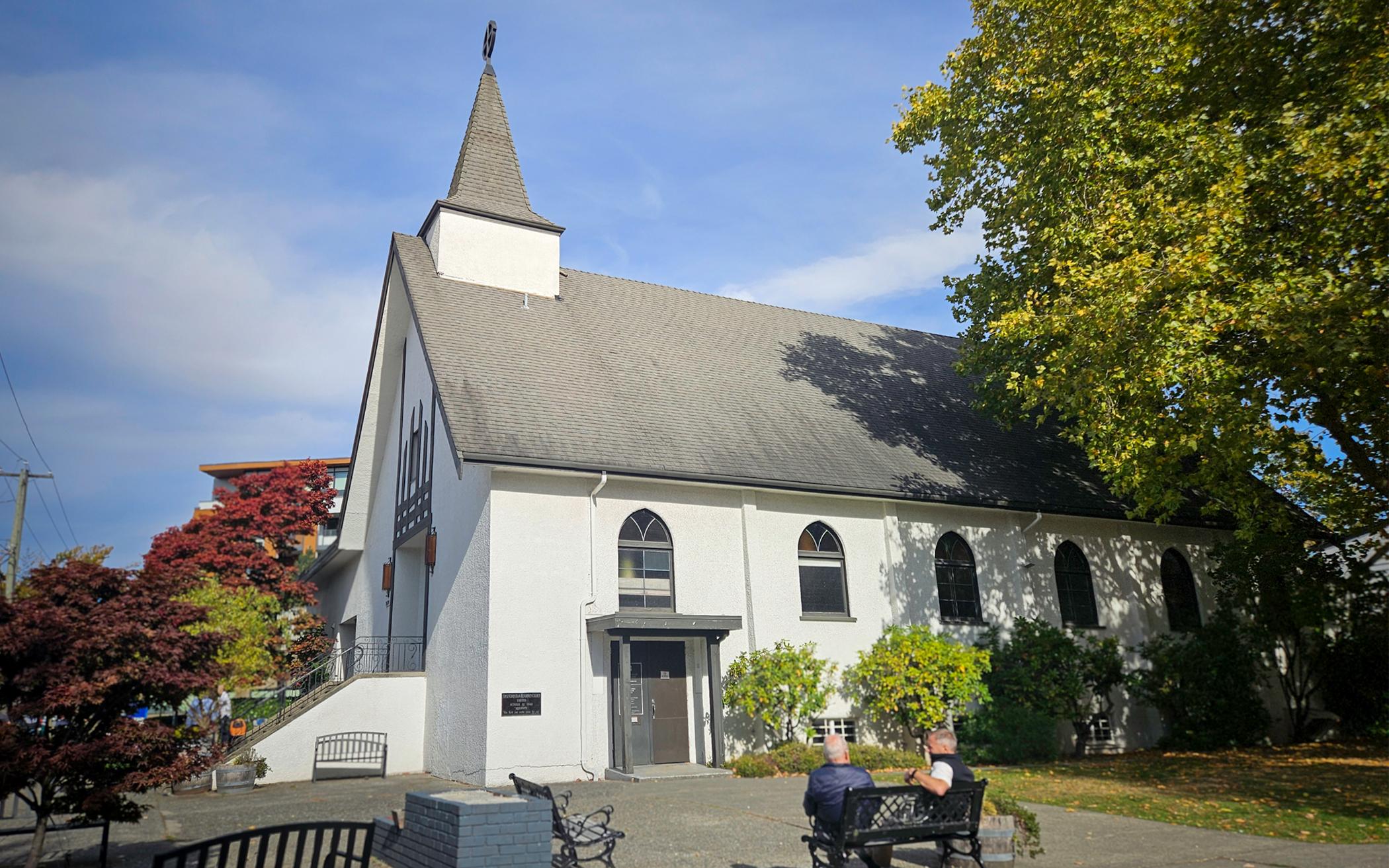
In the fall of 2026, the congregation of Vancouver’s First Christian Reformed Church marked the centennial of its founding, but the celebration coincided with one of the most consequential decisions in its history. The church, on Victoria Drive in the eastern part of the Canadian city, not only looked back on a century of history but also began the process of leaving the Christian Reformed Church in North America. Anniversary celebrations and painful reflections on the future became intertwined, making the congregation’s story especially revealing for the denomination as a whole.
A century ago, on October 21, 1926, a small group of immigrants who had arrived after the First World War founded the first Christian Reformed Church congregation in British Columbia. In 1948, the church moved to its current location, where the cornerstone was inscribed with the word “Rehoboth” and the words from Genesis, “The Lord has given us room.” Those words became a kind of motto for the congregation’s century-long presence in the province’s largest city. That legacy was celebrated at a centennial service on October 18, 2026, described in The Banner’s report.
The service itself illustrated what the church has become over the past century. Pastor Trevor VanderWeele was welcomed by Father Kassahun Asrat of the Ethiopian Orthodox Church, while a Korean Presbyterian congregation also worships in the building—three distinct traditions sharing one roof. The music spanned 1,500 years, from an eighth-century text to hymns from the 17th through 21st centuries, including the famous Dutch Christmas hymn “Ere zij God,” whose text was available in Spanish, Chinese, Indonesian and Tagalog. During a “roll call of the decades,” congregants stood according to when they had joined the church, whether by birth or otherwise. The oldest member born into the congregation was 96-year-old Kaspar Golhof. Of the congregation’s 14 former pastors, two are still living, and both took part in the celebration: the Rev. Frederick Koning, who served from 1987 to 1993, offered a prayer, while the Rev. Julia Prins-VanderWeele, who co-pastored with her husband from 2007 to 2016, preached the anniversary sermon on Ephesians, calling the congregation to live worthy of God’s calling. She concluded by reading a letter of guidance to the congregation, which was placed in a time capsule along with other messages and items. God willing, it will be opened at the bicentennial in 2126. The service was accompanied by a community banquet, a dinner for neighbours and a choir evening.
Looking back over the century, the church recalled not only spiritual milestones but also very tangible ones. In 1944, Princess Juliana, the future Queen of the Netherlands, who had taken refuge in Ottawa during the war, attended a communion service—a visit still remembered by longtime congregants. In 1949, members of the congregation founded Calvin Christian School, now known as Vancouver Christian, which today serves 950 children from a wide range of families. Following the postwar wave of immigration, First Church became a “mother church” to a number of congregations in the Lower Mainland. In the late 1960s, it began a ministry to seafarers; in the 1970s, it was among the first to welcome Vietnamese refugees and shared its building with the newly formed Vietnamese congregation. Community dinners, English classes and a large community garden followed. In 2016, a branch of the Immigrant Services Society of British Columbia opened next door on land that had previously belonged to the church. In response to the arrival of Syrian refugees, local churches, including First Church, funded a chaplain and refugee support coordinator position, filled by congregation member Dena Nikolai.
The congregation also played a notable role in the history of women’s ministry in the denomination. In 1995, the same year the synod authorized classes to ordain women as elders, pastors and evangelists, First Church opened all positions to women. By its 90th anniversary, five percent of all women pastors in the denomination had completed an internship, served or held membership there.
Yet it was questions of doctrine and church governance, rather than social ministry, that brought the congregation to its current crossroads. As it prepared for the anniversary and sought to reflect on the denomination’s discernment process surrounding its 2021 report on human sexuality, the church council began holding “listening circles” in 2021, using restorative practices. In 2022, the synod recommended the report to churches as “a helpful statement of biblical teaching on human sexuality” and declared that traditional teaching against “unchastity,” which it defined as including “homosexual sex,” had confessional status—that is, it was binding on all church officeholders. Between 2021 and 2024, First Church’s council, with the congregation’s support, submitted three documents to the denomination’s governing bodies: an overture on the status of confessional teachings; an overture on gravamen, a special church-order procedure that allows an officeholder to declare difficulty with a particular teaching (the 2024 synod affirmed that a gravamen “is not intended and should not be used as an exception to the confessions”); and a letter of protest expressing concern that synodical decisions could hinder First Church’s mission. The Classis of British Columbia-Northwest supported sending the protest to synod, which then ruled that churches and officeholders in ecclesiastical protest should face discipline for the sake of “restoration and reconciliation.” The classis refrained from taking disciplinary action while awaiting clarity on First Church’s response to the implications of the sexuality report. Ultimately, the stumbling block for potential officeholders in the congregation became the decisions of the 2024 and 2025 synods: the requirement to accept the teaching “without reservation” and the revision of the gravamen process, which was declared a “temporary” measure subject to set deadlines for resolution.
Significantly, in a January 2026 report to the classis, church visitors described the congregation in very warm terms, noting: “There is much love, encouragement, shared ministry, and engagement here. In many ways we see in them a ‘New Testament’ church—worship, prayer, lots of shared meals, teaching, diverse ministries, and a genuine love for one another.” At the same time, they recorded frustration, a sense of powerlessness and grief that the congregation no longer had the life-giving connection to the denomination it once had. “As difficult and potentially polarizing as these matters are, there is a genuine sense of care, not hostility, within the congregation,” the visitors emphasized.
After all the listening and discernment, First Church’s council recommended leaving the Christian Reformed Church. The first vote, held on September 15, 2026, gave a clear mandate to continue the process, with just two votes against and two abstentions. Several “roundtable” meetings were held for congregants to explain clearly what was at stake. A second vote, required under church order, is scheduled for November 17. Council chair Joel Pel, who was born into the congregation in the 1980s, speaks candidly about the mixed feelings of someone leading the church through a time of both celebration and difficult choices: “There is deep gratitude for the rich history of this church and other CRC institutions, such as Christian schools, which have so generously shaped our theology and practice. At the same time, it feels as though some things we thought were true of the CRC may no longer be true.”
A few terms help make sense of this story. A classis is a regional body in the Reformed tradition, somewhere between a local church and a synod, with oversight of congregations in a particular area. An overture is a formal proposal submitted by a congregation or