News roundup: Uniqlo will open in downtown Vancouver in the former Nordstrom space, the B.C. Greens held on to two seats in the legislature, and Vancouver rock bands raised money to protect bats.
Uniqlo heads to downtown Vancouver: Japanese retailer to take Nordstrom’s place at Pacific Centre
The opening of the first Uniqlo store in downtown Vancouver is more than just another expansion by the chain. It signals tectonic shifts in Canada’s urban retail landscape, where Asian brands are moving in as American giants leave, and vast retail spaces are being divided into smaller, more specialized units. According to Business in Vancouver, the Japanese retailer will open its seventh store in British Columbia in spring 2027 at CF Pacific Centre. This will be more than a new store: it is part of a major redevelopment of the space once occupied by department store Nordstrom, which left Canada in 2023.
Uniqlo will join two other major tenants set to occupy the former Nordstrom space: Canadian brand Aritzia and Quebec-based chain Simons. All three stores are scheduled to open between 2027 and 2028. In an official statement, Cadillac Fairview Vice President of Retail Lillian Tammondss emphasized that the partnership reflects the company’s commitment to creating “unparalleled retail destinations” and will bring new energy to downtown Vancouver. Notably, Aritzia, which announced plans for a four-level, 40,000-square-foot flagship in November 2025, had initially targeted a 2027 opening. But according to Cadillac Fairview’s latest announcement, the opening has now been pushed back to 2028. Simons, meanwhile, plans to open a roughly 92,000-square-foot store spanning three floors in fall 2027.
Independent retail analyst Bruce Winder described the development as “another vote of confidence” in downtown Vancouver. His comments shed light on the difficult position the city centre has found itself in: “It’s been pretty difficult for downtown Vancouver to find tenants. Lately, getting some brands to sign leases has been a challenge. And they’ve had to deal… with Nordstrom leaving. Not specifically at Pacific Centre, but Saks Fifth Avenue left, Sears left earlier, and so on. So filling those big retail spaces has been difficult.” Indeed, the departure of giants such as Nordstrom, Target and Saks Off Fifth has left significant vacancies in shopping centres across Canada, and filling these “big boxes” has become a major challenge for property owners.
But, Winder observes, one large store is now being replaced by several mid-sized ones. This trend toward breaking up retail space is not unique to Vancouver; it is also playing out in other Canadian cities. The analyst points to another important trend, too: the growth of Asian retailers as American chains withdraw. “American companies seem to have a tougher story, while some other retailers from Asia, like Uniqlo, Miniso, Muji and a few others, have done very well in Canada,” he said, according to the publication. Uniqlo’s expansion timeline bears this out: the brand opened its first Canadian store in 2016 at CF Toronto Eaton Centre, followed by its first British Columbia location in 2017 at Metropolis at Metrotown in Burnaby.
A few points help put this in context. CF Pacific Centre is the largest shopping centre in downtown Vancouver and is managed by Cadillac Fairview, one of Canada’s largest commercial property owners. A “flagship store” is a major retail location that a brand uses not only to sell products, but also as a marketing tool and a showcase for its image. “Big boxes” refers to large-format retail spaces typically occupied by department stores or hypermarkets. Their share of modern shopping centres is declining as more flexible formats take their place.
The key takeaway is that, despite the challenges of recent years, downtown Vancouver remains attractive to international brands, particularly Asian retailers, which see the Canadian market as a stable and promising opportunity. Uniqlo’s arrival, alongside the previously announced Aritzia and Simons stores, will not only fill vacant space but also reshape the shopping centre, making it more attuned to current trends and a diverse customer base. It also shows how adaptable the commercial real estate market can be: mall owners are willing to subdivide large spaces and bring in several tenants instead of just one, reducing risk and making the property more resilient. For Vancouver residents and visitors, this means new destinations in the heart of the city; for the job market, it means new retail jobs.
British Columbians chose Conservatives, but Greens show their voice still matters
The British Columbia election held on Saturday ended in a convincing victory for the Conservative Party, which won a majority and effectively redrew the province’s political map. But against the sea of blue, two green spots stood out: the riding of West Vancouver–Sea to Sky, where Jeremy Valeriote won, and Saanich North and the Islands, which elected party leader Emily Lowan. The Greens thus held on to both their seats and, more importantly, their status as an official party. For 26-year-old Lowan, who took over the party just a year ago, this is both a modest result and a significant source of political capital.
In her victory speech, Lowan did not pretend that her caucus would set the agenda. Instead, she made her role crystal clear: “We may have a small caucus, but today we have inherited an enormous responsibility: holding the Conservative majority government to account.” Those words were the refrain of her campaign and will likely define her work in the legislature. The question is how she plans to do that with just two votes against a solid majority.
Michael MacKenzie, a political science professor and Jarislowsky Chair in Trust and Political Leadership at Vancouver Island University, takes a clear-eyed view of the situation. In his opinion, Lowan did well, given that she has been leader for only about a year, and he is impressed by her energy. But he has no illusions: “I think Emily Lowan will have a voice in our legislature, because she represents a different kind of party and she’s young—people will talk to her, and she’ll have a loud voice. But the party doesn’t have a lot of power, and it won’t. So her job is to be a critic.” In other words, her strength lies not in voting power, but in having a platform: in articulating an alternative and drawing the attention of the press and the public.
Lowan appears to understand this and is not relying solely on parliamentary work. She speaks openly about her experience as a grassroots organizer and plans to use it to take supporters beyond the Green benches in the legislature. “My experience is as a movement organizer, and I firmly believe we’ll have the opportunity to create and build movements among working people that will force them to reckon with us,” she told reporters on Saturday evening. This is an important signal: the Greens plan to work not so much through formal procedures as through mobilizing civil society, unions and grassroots activism.
Along with holding their seats, the party can point to growing popularity. Preliminary results show the Greens won roughly 23,000 more votes than in the previous election. That did not translate into additional seats, but it suggests the party’s electoral base is expanding, particularly amid polarization between the Conservatives and other parties. And young people do seem to be drawn to Lowan. CIVIX, which runs Student Vote—a mock election for schoolchildren below voting age, designed to teach them about citizenship and elections—offered an interesting picture in its 2026 version: the Conservatives still led among young voters, though without a majority, while Lowan’s Greens would have won 24 seats and a quarter of the vote. These are not official results, but they offer a vivid indication of how the younger generation views politics and how much it identifies with the Green agenda.
Lowan now faces a twofold challenge. In the legislature, she must become an effective critic of the Conservative government without having the power to block its decisions. Outside it, she must turn a growing army of supporters into a genuine political force capable of putting pressure on the government. Professor MacKenzie calls her role “leadership as a critic,” and it is perhaps an apt description. Her strength lies in speaking for those not represented in government and drawing attention to alternative priorities: the environment, social justice and young people’s rights. Time will tell whether she can keep the party on the political agenda and turn two seats into a moral platform. But it is already clear that even a small Green caucus can be an inconvenient yet important voice in a province where a Conservative majority has won a mandate—but not a monopoly on the truth. After all, as CBC’s election report showed, the Greens did more than survive: they maintained a presence and earned the right to speak for their voters, which is no small thing when the political pendulum has swung to the right.
For readers unfamiliar with the terms, “official party status” in Canadian politics means a party is entitled to certain privileges in the legislature, including question period time, funding for research staff and participation in committees. A party usually needs to win a certain number of seats to qualify, and with two seats, the Greens retain that status—giving them more opportunities to exert influence than might be expected. Student Vote, meanwhile, is a nationwide initiative that lets students take part in mock elections and better understand how democracy works.
Rock ’n’ roll against extinction: how Vancouver is helping save bats
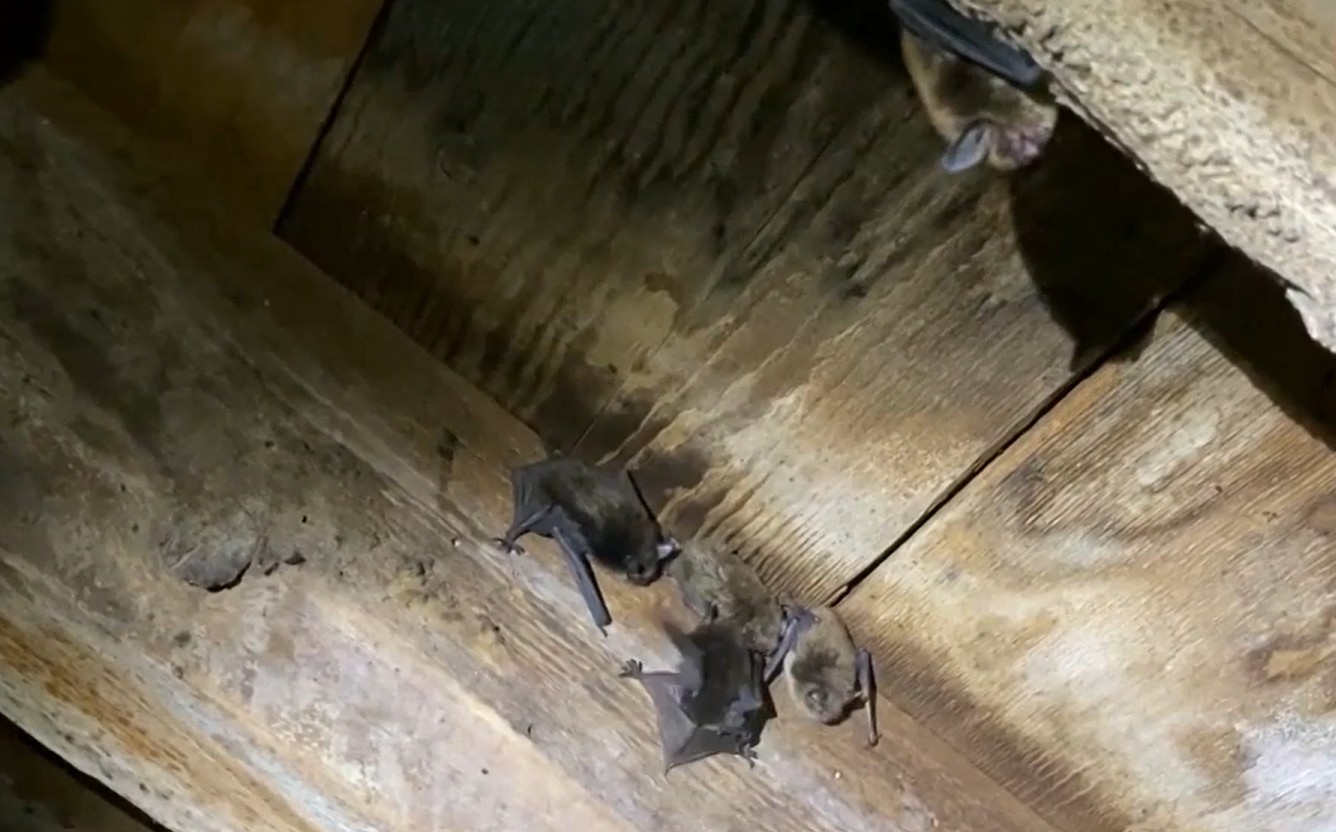
In late October, an unusual concert took place at LanaLou’s Rock ’n’ Roll Eatery in Vancouver. Local rock bands came together not for another loud night out, but to draw attention to one of British Columbia’s most overlooked and vulnerable groups of animals: bats. Event organizer Allan MacInnis joined forces with the BC Community Bat Program, timing the event to coincide with National Bat Week. The goal is simple but ambitious: raise money to protect bats and dispel myths that have kept people from appreciating these animals for decades. As CityNews Vancouver reports, there is more than enough reason for concern.
The main threat organizers are talking about is White-Nose Syndrome, a fungal disease that is devastating bat populations in eastern North America. “It’s killing millions of bats on the East Coast, and their numbers have already dropped significantly from what they were before,” MacInnis told the outlet. Bats also suffer from habitat loss and declining numbers of the insects they feed on. That is why the concert is more than a fundraiser: it is an effort to establish a lasting tradition. MacInnis hopes the event will “take hold” as a way to raise funds and awareness regularly.
Cory Loewen, bat conservation director at WCS Canada, told the outlet that bats deserve far more recognition than they get. “Our brains are wired to be afraid of anything that flies fast at night, but these are amazing animals,” she said. Bats, she noted, live a long time and are curious, and the health of British Columbia’s forests is directly linked to theirs. “They’re the main consumers of night-flying insects, which means they eat forest pests. And not just moths that lay eggs, but also caterpillars and beetles that damage our forests,” Loewen explained. The conclusion, she says, is clear: the more we understand the value of bats, the clearer it becomes that protecting them is part of planning for sustainable forestry in the future.
Another thread in the conversation is cultural baggage. For nearly a century, films have portrayed bats as embodiments of evil, and the vampire image has become firmly associated with them in the public imagination. That is why, MacInnis says, “there’s a lot of misinformation about bats.” The Vancouver concert is an attempt to break this cycle of fear and indifference through music and face-to-face conversation.
The key insight here is that conservation efforts are increasingly turning to unconventional formats: a rock concert in a bar can be as much a tool for protecting biodiversity as scientific reports and nature reserves. The figures cited by participants are alarming: the deaths of millions of bats from the fungus in the eastern part of the continent show how quickly a population can collapse. And Loewen’s reference to “forest pests” recasts bats from objects of superstitious fear into economically valuable allies of the forestry industry. If White-Nose Syndrome reaches the western provinces, the consequences could be felt not only by conservationists but also by logging companies. So the Vancouver concert is not a curiosity, but a small yet telling step in the larger story of how society is learning to protect the creatures it has been taught to fear.