All three pieces point to the same broader trend: the Russia-Ukraine war is increasingly shifting from the direct destruction of military targets toward attacks on infrastructure, communications, and information support. Missile strikes on energy facilities and data centers, possible restrictions on U.S. intelligence support, and disruptions to Starlink are coming together into a single picture—Ukraine’s resilience depends not only on arms deliveries, but also on the uninterrupted operation of a complex digital system that includes satellite communications, early-warning capabilities, data centers, electricity supplies, and telecommunications networks.
The central question running through all the sources is how vulnerable Ukraine is to attacks on this system and how predictable Western assistance remains. If Russian attacks physically disable infrastructure while U.S. intelligence or commercial satellite services can be restricted by political decision, Ukrainian military and civilian services face two kinds of uncertainty at once: the external threat from Russia and dependence on decisions made by partners.
According to CBS News, the United States may not have provided Ukraine with timely warning of Russian missile strikes that took place earlier in the week. Ukrainian sources claimed that U.S. officials attributed the failure to send a warning to a malfunction in the launch-detection system caused by “bad weather.” Kyiv, however, did not believe this explanation and suspected that the U.S. side had deliberately restricted the transmission of data.
According to CBS sources, this was not a complete halt to intelligence sharing. Rather, the possible incident concerned a specific episode—the detection of and warning about ballistic missiles. This distinction is crucial: early warning is not abstract information. It allows air defenses to be placed on alert, the population to be warned, military facilities to be dispersed, and drone routes to be changed. During a ballistic attack, even a few minutes can determine whether a missile is intercepted and whether people have time to reach shelter.
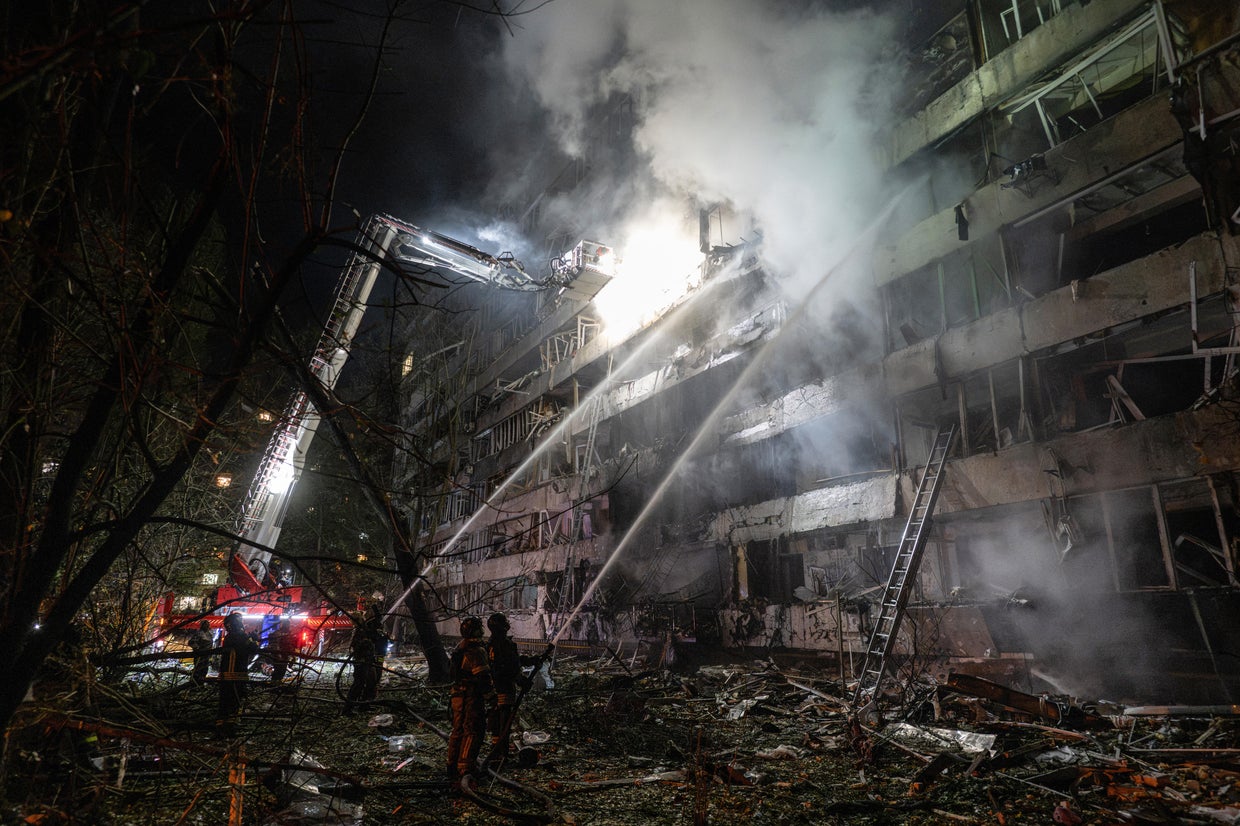
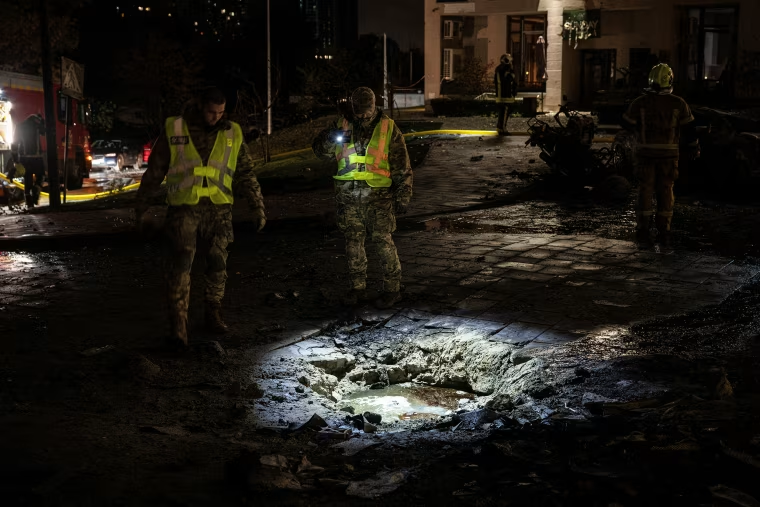
The following day, Russia launched another strike, firing, according to Volodymyr Zelenskyy, more than 39 ballistic missiles and over 120 drones and loitering munitions. The main targets were energy facilities and other critical infrastructure in Kyiv and Kharkiv. Six people were killed, and around 600,000 residents were left without electricity. These figures show that infrastructure attacks have a dual effect: they cause physical damage while simultaneously placing pressure on systems of command, communications, and essential services.
The situation was compounded by political pressure from Washington on Kyiv. According to CBS sources, the administration of Donald Trump threatened to restrict intelligence sharing and halt European purchases of U.S. weapons for Ukraine through the PURL system unless Kyiv stopped long-range strikes against Russia’s energy infrastructure. In this context, the absence of a missile warning was perceived by the Ukrainian side not as a technical malfunction, but as a possible instrument of pressure.
Trump denied that intelligence sharing had been halted, saying: “We’re helping them, but we’re really helping them get to a final answer. We want the war to end.” However, the discrepancy between the official statement and reports from Ukrainian and European sources increases uncertainty. For military planning, it is not enough to know whether intelligence is being shared in general; it is also necessary to understand exactly what data is available at a given moment, in what volume, and with what delay.
At the same time, Ukraine encountered problems with Starlink, SpaceX’s satellite system, which has become one of the most important elements of Ukrainian military communications. An NBC News report said that Ukrainian forces had detected speed restrictions on Starlink terminals. According to Serhii Beskrestnov, Zelenskyy’s adviser on defense technologies, the restrictions were introduced without warning and disrupted a number of operations.
The impact on drones was particularly serious. One Ukrainian army corps reported that, because of the restrictions, drones continued to fly but became significantly more difficult to control. Some planned operations had to be canceled. According to the Ukrainian side, the restrictions affected the military version of Starlink—Starshield—when terminals were used while moving at speeds of more than 100 miles per hour.
It is important to explain why this matters. Starlink is a satellite internet-access system in which a user terminal communicates with a constellation of satellites in low Earth orbit. For Ukraine, it has become an alternative to damaged terrestrial networks and a means of communication in areas where conventional infrastructure has been destroyed or subjected to electronic warfare. The military uses it to coordinate units, transmit intelligence, control drones, and maintain communications between remote locations.
A speed restriction does not necessarily mean a complete shutdown. But for drones—especially those controlled in real time—delays and reduced bandwidth can be critical. Bandwidth is the amount of data a system can transmit within a given period. If it is insufficient, the operator receives images with a delay, commands take longer to arrive, and control of the aircraft becomes less precise. In conditions involving air defense and electronic warfare, such a delay can turn a functioning system into an unreliable one.
Ukrainian officials suggested that the disruptions could be connected to the current political situation and Elon Musk’s proximity to Trump. NBC News, however, noted that the immediate cause of the restrictions had not been established. This is an important qualification: a timing coincidence does not prove political motivation. Nevertheless, the fact that a critical military function depends on the decisions of a private company creates a strategic problem. Unlike a state-run communications system, a commercial service can change its operating conditions, technical parameters, or availability based on internal decisions, legal requirements, or the owner’s political position.
CBS provided a more detailed account of the consequences of the restrictions. Sources in Ukraine’s Defense Ministry claimed that on the night of October 14, SpaceX unilaterally restricted the operation of Starshield military terminals “while in motion.” This complicated the use of interceptor and attack drones and reduced capabilities in frontline logistics, reconnaissance, and signal relaying. The ministry said it had begun reviewing reports from military units and testing backup communications channels with the participation of the United States, SpaceX, and NATO.
Thus, missile strikes and disruptions to satellite communications affect different levels of the same system. Missiles physically destroy energy infrastructure and data centers, while communications disruptions make coordination and recovery more difficult. If a delay or lack of missile-launch warnings is added to this, Ukraine loses the ability to adapt to an attack in advance.
The third source, Data Center Dynamics, shows that the targets of attacks include not only power plants and military bases, but also data centers—buildings and technical facilities housing servers, network equipment, data-storage systems, and telecommunications nodes. Russian strikes damaged the Tenet provider’s data center in Odesa. The company reported serious damage to the facility’s essential systems, particularly cooling and backup power.
A data center is more than a “server room.” Its operation depends on backup power, air conditioning and cooling, network connections, fire-suppression systems, and physical security. Servers generate substantial heat, so damage to cooling systems can quickly lead to their shutdown or failure. The loss of generators and other power equipment means that even functioning servers may become inaccessible.
Tenet said that the overall capacity of its network remained stable, although repairs could cause temporary disruptions for individual customers. This points to an important feature of modern digital infrastructure: damage to one node does not always result in a complete shutdown of the entire network if traffic can be rerouted to other sites. But redundancy requires additional resources and an architecture prepared in advance. If several data centers or network operators are hit simultaneously, the system’s reserve capacity can quickly diminish.
According to Data Center Dynamics, facilities operated by Parkovyi Data Center, MiroHost, Datagroup, Vodafone Ukraine, De Novo, Cosmonova, Omega Telecom, and Ukrtelecom were hit or damaged over a period of several weeks. There were also reports of a strike on the Ukrsibbank data center in Kyiv and a facility belonging to the hosting company RX-Name in Mykolaiv region. Russia’s Defense Ministry claimed that some of these facilities were used by the Ukrainian military to process, transmit, and store information. However, the published materials do not independently verify the military role of each facility.
Attacks on data centers have consequences far beyond the military sphere. They can affect banking operations, government websites, business activity, e-commerce, domain names, and medical and logistics systems. Even if users do not immediately notice an outage, companies may face data loss, increased latency, and the need to urgently relocate services to other regions or abroad.
At the same time, the attacks are taking place in both directions. Data Center Dynamics reported that Ukrainian drones had struck Russian data centers, including Yandex facilities in Vladimir region, Sasovo, and Kaluga. This shows that digital infrastructure has become part of a mutual strategy of pressure. Data centers may have civilian purposes, but in a total war their role in supporting government, economic, and military communications makes them potential targets.
The overall picture points to a transition toward a war of attrition aimed at infrastructure resilience. Russia is seeking to deprive Ukraine of energy, communications, and the ability to respond rapidly to attacks. Ukraine, in turn, is attempting to strike Russian energy and technological facilities in order to raise the cost of the war and limit the opponent’s resources. In this logic, a data center, satellite terminal, and early-warning system are no longer auxiliary elements but part of the battlespace.
Ukraine’s dependence on external technology providers is especially clear. U.S. intelligence supplies data used for defense and operational planning. Starlink provides communications and drone control. Western weapons systems require continuous information support, technical maintenance, and access to satellite data. This integration increases the effectiveness of the Ukrainian military, but it also creates vulnerability: a political decision by one partner or a commercial decision by one company can change the situation on the battlefield.
The key conclusion is not that Western support is necessarily ending, but that its reliability has become an independent factor in the war. Even a partial, temporary, or technically limited reduction in support can have a disproportionately large effect if it occurs during a mass missile attack. For this reason, Ukraine urgently needs diversified communications channels, the development of its own launch-detection systems, distributed data storage, backup data centers, and independent satellite or radio systems.
There is also a broader political conclusion. If intelligence data and commercial communications services are used to influence Kyiv’s decisions, the boundary between military assistance and diplomatic pressure becomes less distinct. Washington may claim that it continues to share information while Ukraine simultaneously faces restrictions in specific areas. Formally, these positions do not necessarily contradict one another, but in practice they create a crisis of trust.
For Russia, attacks on digital and energy infrastructure make it possible to achieve an effect without constant advances on the ground. For Ukraine, protecting infrastructure is becoming no less important than striking military targets. For Western partners, this means the need to define in advance the rules governing access to critical systems, procedures for notifying users of restrictions, and mechanisms for emergency failover. Otherwise, dependence on a single provider becomes a strategic risk.
Ultimately, the three pieces describe not isolated disruptions but a unified struggle for the manageability of the war. Russia is trying to destroy the physical nodes of Ukraine’s system; Ukraine is trying to preserve its functionality while disrupting the opponent’s infrastructure; and Western states control a significant share of the technological resources on which Ukraine’s defense depends. The main resource in this struggle is not only weaponry but also predictability: the ability to receive a warning in time, maintain communications, process data, and continue operating after an attack.