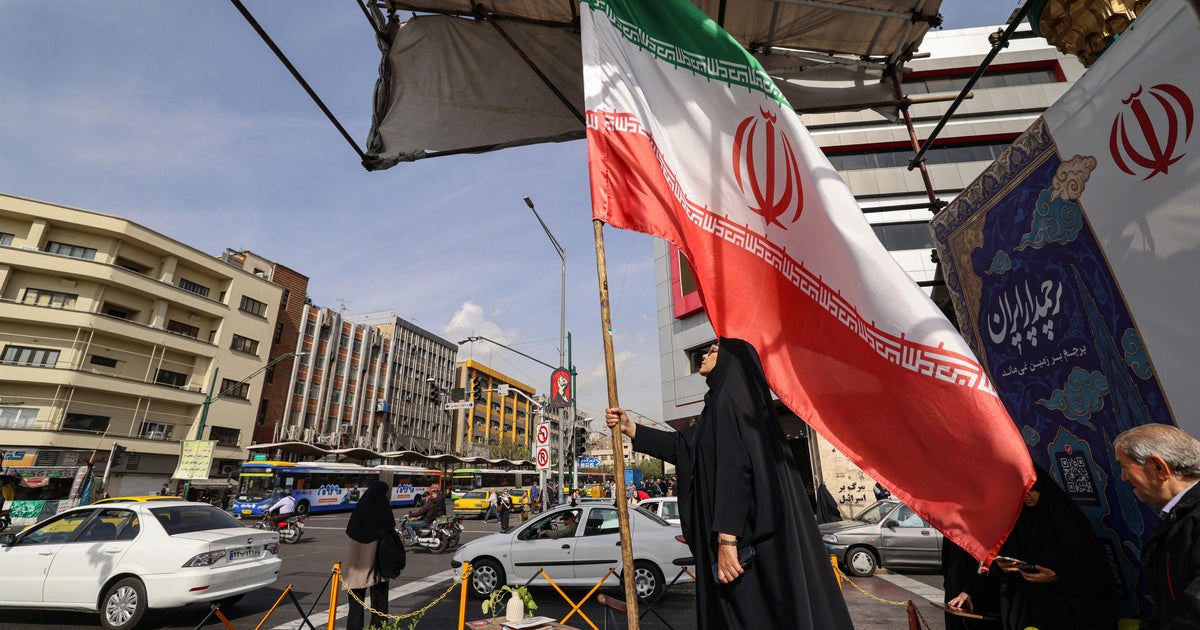
All three reports converge on the same story: the United States, Iran and Israel are discussing a possible end to the war even as they prepare for it to resume. Diplomatic contacts are advancing, but key disagreements over the Strait of Hormuz, the U.S. blockade and sanctions remain unresolved. Washington has not disclosed whether it is ready to continue negotiations or launch new strikes; Tehran says the next move is up to the United States, while Benjamin Netanyahu is reportedly pushing for renewed military pressure. As a result, the talks are taking place not in the absence of threats, but under their constant influence.
According to a brief report by CBS News, President Donald Trump said the war would end “soon” as Qatar sought to broker an agreement between the United States and Iran. But more detailed reports show just how uncertain that promise remains. Trump has alternated calls for a deal with statements about possible strikes: he said the United States needed to “take care of” several more sites, mentioning a suspected underground nuclear facility, and left open the possibility of using force at an unspecified time. So far, then, his promise of a swift end to the conflict has not been backed by publicly agreed terms or a timeline.
According to the Associated Press, Iran has proposed a plan to reopen the Strait of Hormuz and resume nuclear talks within two days, provided Washington meets Tehran’s demands. Iran had previously spoken of a deadline of up to a week and seven conditions. Its stated demands include lifting the U.S. blockade and sanctions, particularly restrictions on Iranian oil sales, as well as a ceasefire on all fronts, including Lebanon. Iran also insists that ships follow a route agreed upon by Tehran and Oman.
Tehran presents its initiative as a show of goodwill. Iranian Foreign Ministry spokesman Esmaeil Baghaei called it a basis for negotiations through intermediaries. But that wording does not mean an agreement is close: the plan is conditional on U.S. concessions, and the parties disagree over who should make the first move. A France 24 report says Mohsen Rezaei, Iran’s security official, reported that U.S. Vice President JD Vance had sent a letter proposing a resumption of talks. He noted a shift in Washington’s tone but said Tehran had not yet responded. This suggests that channels of communication remain open, but that fundamental differences have not been overcome.
The main pressure point is the Strait of Hormuz, through which a significant share of the world’s oil and other energy supplies passes. Access to it matters not only to Iran and the United States, but also to countries that depend on stable maritime trade. According to AP, a vessel crossing the strait was damaged by an unknown projectile; its crew was unharmed. Iran has said it attacked ships that, in its view, were using unauthorized routes, and has also claimed there are mines in the strait. The U.S. military denies that mines are present along recognized international routes and says it has cleared them. Amid these competing claims, any incident in the strait could increase pressure on negotiators and trigger fresh disruptions to shipping.
Israel’s position adds another source of uncertainty to the talks. Citing regional officials, AP reports that Netanyahu is pushing for a new wave of strikes on Iran after the U.S. midterm elections. According to the sources, during a conversation with Trump over the weekend, the Israeli prime minister pressed for military action, while the U.S. president made no commitment to strike. At the same time, the same sources say, intermediaries are trying to agree on a framework under which Iran would halt attacks in the Strait of Hormuz and the United States would lift its blockade of Iranian ports. Other U.S. allies in the region are warning against further strikes, which could destabilize the situation.
The U.S. elections matter in practical terms: reports about the possible timing of strikes are being linked to the midterm vote. This creates a risk that military decisions will be seen not only as a response to conditions on the battlefield, but also as part of domestic political calculations. However, the available reports do not establish whether the election results will affect Trump’s position or the course of the negotiations. Public statements so far indicate only that the timing remains under discussion, while the White House has not disclosed the contents of the president’s conversation with Netanyahu.
For its part, Tehran warns that a new round of war could last longer than the previous one. Iranian army spokesman Mohammad Akramnia said the U.S. president would not be able to dictate the timing or terms of the end of a possible conflict. A spokesman for the Islamic Revolutionary Guard Corps said the confrontation would not be confined to a single geographic area. These statements serve both as a warning and as a deterrent: Iran is signaling that, in its view, new strikes could provoke a response beyond the immediate theater of operations. During the previous, most intense phase of the conflict, which began on February 28 with U.S.-Israeli strikes on Iran, Tehran responded with missile and drone attacks across the region, while armed groups linked to it entered combat in Lebanon and Yemen.
The risk of the conflict widening is also evident in other events covered by AP. In Yemen, the Houthis accused Saudi Arabia of striking port infrastructure, while Saudi-backed forces reported Houthi attacks on a medical center and a market. The agency could not independently verify the accusations, and the parties did not provide comprehensive comment. Still, the sheer scale of reports of casualties, displacement and damage to civilian infrastructure underscores that the regional conflict already spans several fronts. In the West Bank, the Israeli military ended an operation in Hebron after two Israeli soldiers were killed; hundreds of Palestinians were forced to leave their homes, and some residents found their homes damaged after the raids.
The crisis is seen as a threat by more than just the parties directly involved. UAE presidential adviser Anwar Gargash, according to France 24, expressed hope for a diplomatic breakthrough but also said the region was preparing for the worst. China announced that it would send a special envoy to Iran, Oman and Saudi Arabia to help de-escalate tensions. Beijing has an interest in stability, partly because it depends on oil supplies from the region. This broadens the diplomatic context: mediation is not limited to U.S.-Iran relations, but also involves states for which the security of maritime routes and energy flows is of direct importance.
The central paradox is that the parties are simultaneously signaling a willingness to negotiate and raising the cost of walking away from the talks. Iran is tying the reopening of the strait and a return to nuclear dialogue to the lifting of the blockade and sanctions; Israel is reportedly pushing for new strikes; and the United States is maintaining the military threat while leaving a deal on the table. This may give negotiators leverage, but it also increases the risk of miscalculation: an incident involving a ship, a new attack or a mistaken reading of an adversary’s intentions could quickly undermine diplomatic efforts.
Trump’s statements that the war will end soon and Iran’s warnings of a protracted conflict, however, describe less a clash of predictions than competing strategies of pressure. Washington wants to show that it can strike quickly while also securing a favorable deal. Tehran is responding that it can expand and prolong the confrontation if its demands are not met. Israel is trying to sway the choice between those options toward a military scenario, while regional states and mediators are working to prevent the fighting from spreading further.
The immediate test for diplomacy, then, is not high-profile rhetoric but whether the parties can agree on the sequence of concrete steps: halting attacks on shipping, establishing rules for passage through the Strait of Hormuz, resolving the status of the U.S. blockade and sanctions, and returning to nuclear talks. The parties are discussing a possible framework, but have not announced an agreed mechanism for putting it into effect. The gap between diplomatic signals and military preparations defines the situation today: the possibility of an agreement remains, but the window is narrow, and the cost of failure could extend far beyond U.S.-Iran relations.