The first reports on iPhone Duo reveal less a finished revolutionary product than an attempt by Apple to redefine the familiar way people use a foldable smartphone. Before official reviews appear, the device is already being showcased in unboxing videos, while screenshots of built-in apps offer a look at how the company has adapted iOS to a large flexible display. At the same time, discussion of the accessories highlights the design’s compromises: the unusual form factor requires equally unusual cases, which may not be convenient for everyone.
The main theme running through all the reports is Apple’s entry into the foldable-device market and its search for a balance between hardware novelty, software adaptation, and practicality. iPhone Duo is expected to combine the outer screen of a conventional smartphone with an inner display the size of a tablet, but its availability is limited: delivery dates have already shifted to January 25, 2027, and shortages are expected at retail stores. As a result, early impressions are mixed: technically, the device appears carefully designed, but buyers will have to consider its high price, limited supply, and specific usage requirements.
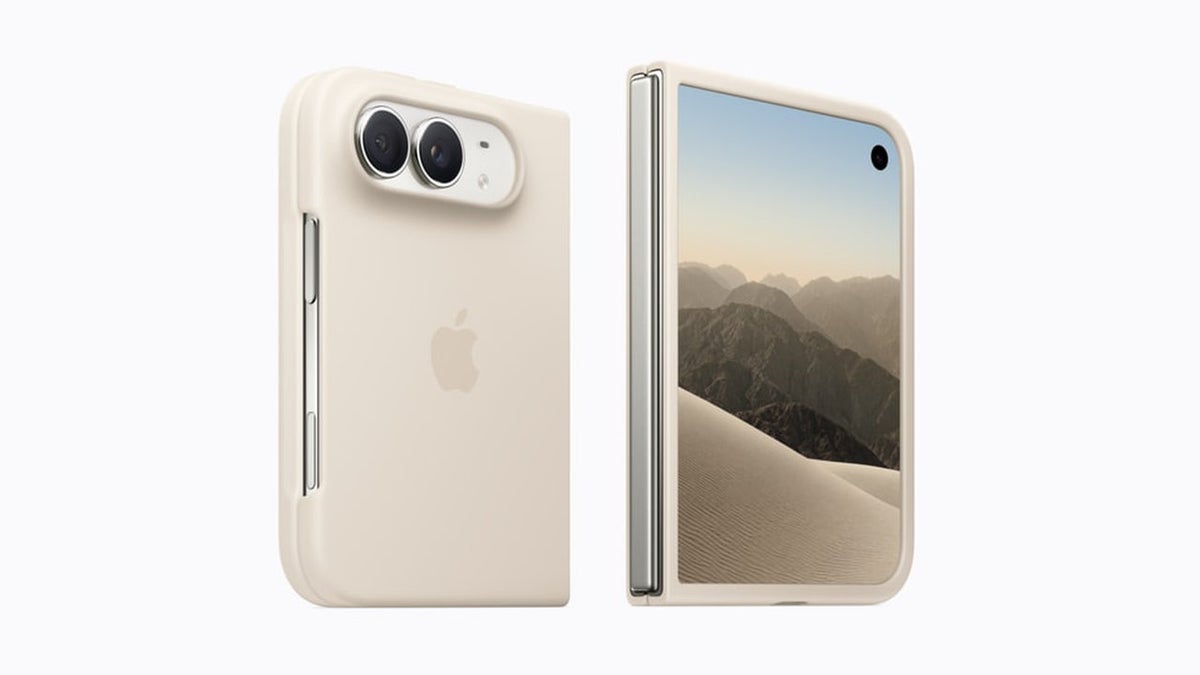
AppleInsider has published the first iPhone Duo unboxing videos in Star White and Night Sky. The smartphone ships already unfolded, emphasizing that Apple considers the inner display its primary mode of use. The device can nevertheless be folded even during the initial setup. The videos also demonstrate the unfolding animation, which works in both portrait and landscape orientations.
Particular attention in the unboxing videos is devoted to the display’s central crease. The video creators claim that the fold is virtually invisible during normal use. However, it becomes visible when pressure is applied to a particular area of the screen. This is an important distinction: an “invisible crease” here does not mean the complete absence of a physical mark, but rather that during everyday viewing, users probably will not notice it constantly. For foldable displays, this is one of the key quality indicators, since a prominent crease can affect the perception of images, reflections, and tactile sensations.
The unboxing videos also reveal unusual software details. One clip demonstrates a feature called Kid Cue, designed to attract a child’s attention while taking photos or recording video. Its very presence suggests that Apple is trying to use the advantages of a large display not only for work and multimedia, but also for more specific camera scenarios. In another video, the creator spends considerable time removing a packaging strip with a heat gun and then describes the build quality as “heaven.” This is more of an emotional presentation than an independent test, so firm conclusions about the casing’s reliability should be reserved until after extended use.
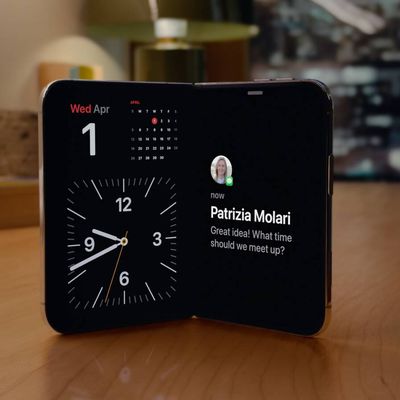
Information from MacRumors provides a better understanding of how iPhone Duo will work in everyday tasks. Apple has adapted many system apps to the display’s larger area, with a substantial portion of the interfaces designed for landscape orientation. In this mode, the apps take on an iPad-like structure: a navigation panel appears on the left, while the main content occupies the rest of the screen.
In some apps, the division goes beyond a simple sidebar. For example, Contacts displays a list of contacts on one side and editing details on the other. In Siri, conversation tiles appear on the left, while the selected exchange opens on the right. This approach makes iPhone Duo more than just a phone with an enlarged image; it is designed for viewing and managing information in parallel.
The system also supports portrait orientation. When unfolded, iPhone Duo can resemble a large tablet, especially when used with the keyboard or while browsing websites in Safari. However, based on the images presented, Apple is placing greater emphasis on landscape mode. This makes sense for apps with side navigation, video content, and multitasking, but it also shows that the foldable device does not have one universally optimal mode: its effectiveness depends on how the user holds it.
The interface also changes when moving between the unfolded and folded states. Apple seeks to preserve the placement of key controls so users do not become disoriented when switching modes. Apps may use bottom toolbars, side menus, pop-up windows, and full-screen views. In Preview, for example, editing tools are located at the bottom, while navigation elements may appear on the side. Panels can be hidden to free up space for content.
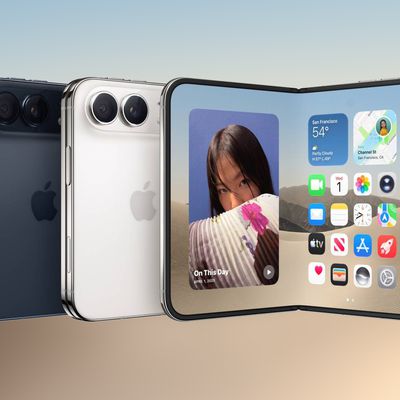
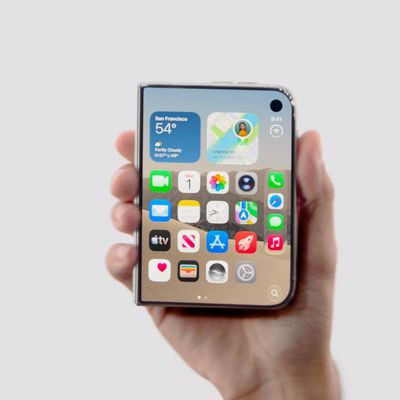
On the Home Screen, Today View widgets appear on the left, while app icons are on the right. This is another example of how the inner panel becomes a workspace rather than merely enlarging the standard interface. At the same time, the inner screen does not have a permanently visible Dynamic Island in its familiar form: it lacks Face ID, and the front-facing camera is located beneath the display. Instead, Dynamic Island may appear at the side for notifications and Live Activities. The outer screen uses a vertical version of Dynamic Island with a camera cutout.
Apple has also provided several intermediate body positions. iPhone Duo can be propped up at an angle, used in a “tent” configuration, partially opened like a book, or operated through the outer screen. These modes expand the possibilities for watching videos, making video calls, and taking photos, but they also complicate the user experience. The more positions a device supports, the more important it becomes for apps to respond properly to changes in orientation and workspace size.
The PhoneArena report focuses on another aspect of the issue: accessories. According to the publication, Apple offers two cases, and both look unusual. The article’s headline critically compares the company’s solution with the “worst-case” design used for Android foldables. Although the excerpt provided does not contain a detailed description of each accessory, the general conclusion is clear: the foldable construction limits conventional ways of protecting the body.
For a conventional iPhone, a case can be a single piece that fully covers the back panel, sides, and corners. A foldable device constantly changes shape, while its hinge and two halves require separate protection. As a result, a case may consist of several parts, add thickness, interfere with unfolding, or provide a less secure grip on a surface. This is not a minor issue but a significant part of the everyday experience: if the accessory is inconvenient, some of the smartphone’s advantages may be negated.
Taken together, these reports show that Apple is betting on the integration of the device, interface, and usage scenarios. The foldable screen itself is not considered a sufficient advantage. What matters more is how apps distribute information, how quickly the interface changes when the device is folded, whether the phone can be used in different positions, and whether iOS retains its familiar logic. Based on the published images, Apple is trying to avoid creating the impression of “two different devices” and preserve a unified control environment.
At the same time, the software adaptation currently looks more convincing than the confirmed long-term practicality. Screenshots demonstrate an attractive layout, but they do not answer questions about performance, battery life, heat generation, hinge durability, or the inner screen’s resistance to damage. The unboxing videos confirm the high visual quality and barely noticeable crease, but they cannot replace months of testing. Early reports should therefore be viewed as a preliminary introduction rather than a final assessment.
Availability further complicates the situation. iPhone Duo is expected to go on sale on October 23, 2026, but preorders are already receiving delivery dates of January 25, 2027. Expected low inventory could create a sense of scarcity around the device, with public interest growing faster than actual supply. For Apple, this may be a way to control the launch of a new product, but for buyers it means a long wait and limited choices of configurations or colors.
The key conclusion is that iPhone Duo is not simply Apple’s late entry into the foldable-smartphone market. The company is attempting to present the foldable format as an extension of its ecosystem: iOS apps receive multi-panel interfaces, system elements are rearranged for different body positions, and the device can serve as a phone, tablet, mini-laptop, or multimedia screen. However, the broader the range of scenarios, the more apparent the compromises become—complex cases, heavy dependence on app support, possible shortages, and the need to adapt to a changing interface.
The first reports create a cautiously positive impression of the display quality and the thoughtfulness of the software. But the final assessment will depend not on an impressive unboxing or attractive screenshots, but on how reliably iPhone Duo withstands daily folding, how convenient it is to use when closed, and whether the new format justifies its price and limitations. Early interest in the device demonstrates the importance of the Apple brand to the foldable-smartphone market, but the model’s success will be determined not by its mere arrival, but by its ability to turn an unusual construction into a genuinely more convenient everyday tool.