Three pieces cover very different events: a product recall in the United States, a rescue operation on an island in the Susquehanna River, and a news feed about the war in Ukraine. Yet they share one theme: in situations involving risk, public safety depends not only on the incident itself, but also on how quickly the threat is detected, how well services coordinate, and how transparently information is communicated. The Taylor Farms case illustrates this especially clearly, as its broad supply chain complicated efforts to identify the source of contamination and inform consumers.
The most substantial of the materials is ABC News’ report on Taylor Farms’ recall of jalapeño products. The company is recalling more than a dozen products, including sauces, dips, salsa, and guacamole, following a salmonella outbreak that has affected 345 people in 27 states. The products were sold at Walmart, Target, Whole Foods, Trader Joe’s, and Kroger. They were distributed in 26 states, and some items had expiration dates as late as August 16, 2026.
The problem was traced to jalapeños supplied by Coast Citrus Distributors. The U.S. Food and Drug Administration, or FDA, linked the company to contaminated peppers from the Mexican state of Sinaloa. Taylor Farms said it was no longer purchasing products from the farmer in question and was shifting its supply to alternative producers. At the same time, the company emphasized: “As of today, Taylor Fresh Foods has no information regarding illnesses associated with its products containing jalapeños.”
That wording is important: a product recall does not always mean that the product has already been conclusively proven to have caused specific illnesses. In the food-safety system, recalls are often conducted as a precaution when there is a possibility that an ingredient has been contaminated or that supply chains have overlapped. Salmonella is a bacterium that causes intestinal infection and can lead to diarrhea, fever, abdominal pain, and, especially among vulnerable groups, serious complications. Cyclosporiasis, mentioned in the article as a separate outbreak, is caused not by a bacterium but by the parasite Cyclospora cayetanensis. The two investigations therefore have different biological causes, even though both involve fresh produce and complex supply systems.
Taylor Farms’ scale makes the situation particularly significant. The company has said that it produces about 40% of all salad kits sold in the United States and provides American consumers with approximately 265 million servings of fresh vegetables each week. This means that a single problem involving one ingredient can quickly spread through restaurants, supermarkets, prepared foods, and convenience products. Earlier, Chipotle and QDOBA removed products because of the jalapeño outbreak, and the U.S. Department of Agriculture later announced a recall of meat products containing the peppers.
At the same time, an investigation into another outbreak—cyclosporiasis linked to Taylor Farms—was expanding. The FDA said that potentially contaminated iceberg lettuce was supplied to Subway restaurants in July. The lack of comment from Subway, noted by ABC News, highlights another crisis-communication problem: consumers need to know not only the manufacturer’s name, but also the specific restaurants, brands, and dates on which the product was sold.
This is where the Consumer Federation of America’s criticism arises. The organization accused Taylor Farms of insufficient transparency in its initial recall notice because it did not clearly identify the potentially affected brands and retail chains. For major suppliers, this is a critical issue. Even when a company carries out a recall, an overly general notice can leave consumers uncertain: they do not know whether they should check products at home, return them to the store, or stop using a particular batch.
Walmart’s response, by contrast, demonstrates a model of rapid action by a retailer. The company said it was quickly removing recalled products, imposing sales blocks at checkout and online, and advising customers to stop using the products. Such a block is a technical mechanism that prevents a product from being sold after a recall notice has been received. But its effectiveness depends on the accuracy of the data: if the manufacturer does not provide sufficient details about brands, batches, and dates, even an automated system may fail to cover every potentially dangerous product.
Against this backdrop, the WGAL report on the rescue of a person who fell on Peavine Island and the Kyiv Post news feed on events in Ukraine show other forms of risk response. In the Peavine Island case, emergency services began an operation at about 6:05 p.m. after receiving a report that a person had fallen approximately 50 feet. Rescuers evacuated the victim and completed the operation at about 7:40 p.m., although the extent of the injuries was unknown at the time of publication. The report is brief and avoids unsupported speculation. Its strength lies in documenting the sequence of events and clearly stating what remains unknown.
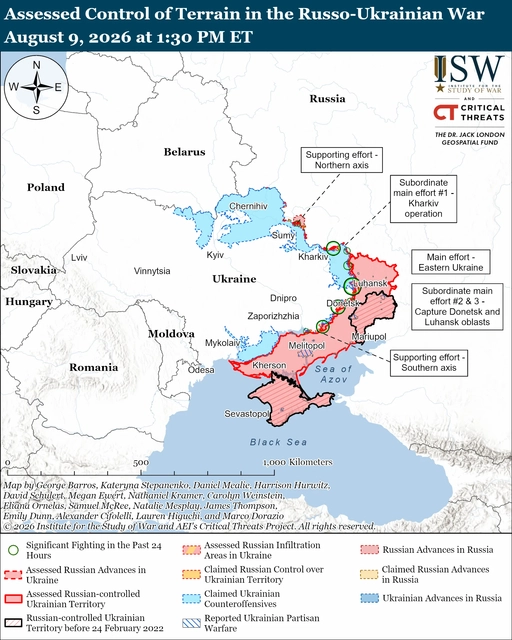
The Kyiv Post page represents a different format: a continuously updated aggregate feed about the war in Ukraine. The excerpt provided contains no separate factual report about a specific strike, decision, or military event; instead, it describes the page’s purpose—to collect military, political, and international news from verified sources and correspondent reports. It therefore cannot be used as independent confirmation of a particular development, but it illustrates the role of constantly updated channels in a situation where information changes rapidly and the cost of delay or error is high.
The connection between these publications lies not in the subject matter of the incidents, but in the information infrastructure surrounding a crisis. In food safety, a notice must help people understand which product is dangerous and what they should do. In a rescue operation, it must convey verified information about the location, time, and status of the victim without replacing facts with speculation. In war reporting, it must distinguish confirmed information from unverified reports and continually update the picture of what is happening.
The main conclusion is that modern risks spread through networks. A contaminated ingredient moves through suppliers, processors, restaurants, and stores; an emergency requires coordination among dispatchers, rescuers, and medical personnel; and military events are reported through international sources, correspondents, and digital platforms. The more complex the network, the more important traceability becomes—the ability to determine where a product or piece of information came from and whom exactly it affected.
The Taylor Farms case also shows that a formal recall does not amount to full consumer protection. Specific brand names, stores, batches, dates, and clear instructions are necessary. Companies must not only stop purchasing from a potentially dangerous supplier, but also explain how the source of the problem was identified, which products are being tested, and why the recall is being expanded. Otherwise, uncertainty undermines trust even when technical measures are already being taken.
Three key trends emerge from these materials. The first is the expansion of responsibility: product safety depends not on a single manufacturer, but on the entire supply chain and retail infrastructure. The second is the priority of rapid but cautious communication: WGAL explicitly states that the extent of the injuries is unknown, while ABC News distinguishes confirmed facts from assumptions about a connection between the product and illnesses. The third is the growing importance of aggregators and digital alerts, which enable information to spread quickly but require constant source verification.
For consumers, the practical lesson is simple: when a product is recalled, rely on official lists, check the product name, date, and batch number, do not consume suspicious products, and follow the instructions of the store or regulator. For companies, the conclusion is more complex: the effectiveness of crisis response is measured not only by how quickly a product is removed from shelves, but also by how clearly people understand whether they themselves are at risk. Transparency is what turns scattered warnings about danger into a functioning public-safety system.