Three reports show how military escalation, economic pressure and efforts by regional countries to contain the crisis are unfolding at the same time amid the US-Iran confrontation. Talks in Tehran between Iran, Saudi Arabia, Pakistan and Turkey do not yet signal a breakthrough: the parties remain divided on key issues, and the threat of further strikes persists. Against this backdrop, high oil and gasoline prices are not a secondary consequence of the war but part of Washington’s political calculations.
In a report by CBS News, the US representative to the United Nations suggests the war could last another year. The report itself is brief, but it underscores the scale of the uncertainty: diplomatic contacts are continuing, yet Washington is not promising a swift end to the conflict. The headline also links the threats and negotiations to high oil prices and tensions around the Strait of Hormuz, a key route for international energy supplies.
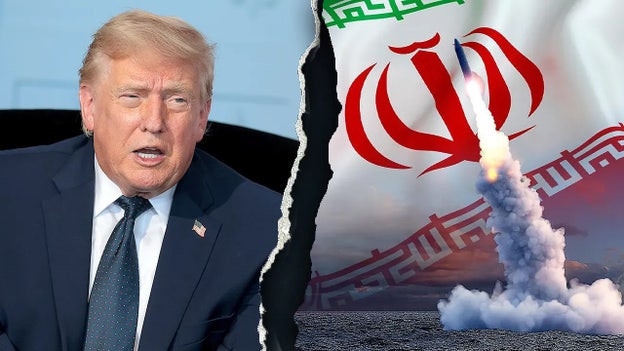
Donald Trump has openly acknowledged the economic cost of the conflict. In an interview with Fox News, the president said he had expected gasoline prices to rise because of the war, but considered that justified if it meant preventing Iran from acquiring nuclear weapons. Asked whether voters might be more concerned about the cost of food and fuel than strategic arguments, Trump replied that nuclear weapons in Tehran’s hands would have even more serious consequences.
This explanation reflects the administration’s political logic: short-term costs to consumers are presented as the price of preventing a much greater threat. But it does not resolve the underlying contradiction. The longer the war lasts and the higher fuel prices climb, the harder it becomes to sustain public support for a policy justified by long-term security concerns. Trump’s claim that the oil industry is already recovering and prices will fall over time is not supported by detailed data in the report, so it should be treated as the president’s position, not as a confirmed forecast.
The most substantive effort at regional mediation is described by Al Jazeera. Representatives of three countries that signed the Mecca Joint Defence Agreement met in Tehran: Saudi Defence Minister Khalid bin Salman, Pakistan’s army chief Asim Munir and Turkish intelligence chief Ibrahim Kalin. They held talks with Iranian President Masoud Pezeshkian and are expected to discuss regional security, including the threat of renewed US-Iran clashes and attacks by Yemen’s Houthis.
The significance of these consultations goes beyond an effort to improve relations between Tehran and Washington. Saudi Arabia faces the threat of attacks by the Houthis, who are linked to Iran, while Pakistan and Turkey have an interest in preventing the conflict from spreading. At the same time, Riyadh’s allies are not prepared to send troops to Yemen, according to researcher Ayesha Siddiqa. The defence agreement therefore does not automatically translate into the prospect of military intervention; it is more a political framework for consultation and coordination.
The talks also face a specific limitation. As Ali Vaez of the International Crisis Group notes, the visit could strengthen the hand of those advocating compromise, but only if participants offer a convincing way to bridge US-Iran differences. Umer Karim believes those at the meeting are unlikely to have enough leverage to change Tehran’s strategic calculations. Sanam Vakil of Chatham House sees scope for limited agreements, particularly on Yemen, but doubts that a lasting breakthrough is possible. She also stresses that the Houthis act in their own interests, so Iran’s influence over them is not unlimited.
The main diplomatic deadlock stems not only from deep mutual distrust but also from incompatible demands. The United States and regional powers want safe passage for ships through the Strait of Hormuz, limits on Iran’s nuclear program and access for international inspectors to its stockpiles of highly enriched uranium. Israel, Al Jazeera reports, seeks regime change in the Islamic Republic. Iran, in turn, demands an end to the US naval blockade of its southern ports and a return to the memorandum of understanding agreed in June. Washington rejects these terms; according to the article, Trump is considering new strikes as a way to break the diplomatic deadlock and is threatening attacks on civilian infrastructure.
This is where regional diplomacy meets the limits of its influence. Neighboring countries can try to reduce the risk to Saudi Arabia and facilitate local agreements, but they cannot resolve the core differences between the United States and Iran on their own. Moreover, renewed military escalation could draw regional countries in whether they want to be involved or not: during an earlier phase of the war, Iran struck US bases and infrastructure in Arab countries, while Houthi attacks pose a separate threat to Saudi Arabia.
The economic dimension of the crisis heightens this risk. If the blockade prevents Iranian oil exports and shipping through the Strait of Hormuz remains under threat, the consequences will extend beyond relations between the two countries, affecting supply, prices and expectations in energy markets. That is why Trump’s remarks about rising gasoline prices matter more broadly: they show that foreign policy is already affecting Americans’ everyday expenses. If the war continues, this could become a source of domestic political pressure, even if the administration continues to present the campaign as a necessary security measure.
Taken together, the reports describe not a single negotiating process nearing completion but several parallel fronts in the crisis: Washington threatens to continue the war while weighing its domestic cost; Tehran insists on an end to the blockade and a return to previously agreed terms; and regional powers are trying to limit the damage and prevent the clashes from spreading. Judging by the expert assessments cited, the most likely outcome of the immediate consultations is not a comprehensive agreement but efforts to secure partial deals, for example on Saudi Arabia’s security or Yemen.
“Highly enriched uranium” refers to uranium in which the proportion of an isotope suitable for use in nuclear technologies has been raised above the level typical of ordinary fuel. The degree of enrichment matters when assessing how closely the material may be linked to weapons development. A “memorandum of understanding” is a document setting out arrangements between parties, usually without the status of a full international treaty. A “naval blockade” means restricting ships’ access to ports and trade routes; in this case, its consequences affect both oil exports and other forms of trade. The Strait of Hormuz is a narrow sea passage between the Persian Gulf and the Gulf of Oman through which a significant share of the world’s oil supplies passes.
The main takeaway is that diplomatic activity is, for now, only a potential restraint on the crisis; it does not address its underlying causes. The Tehran talks matter as an effort to open a channel of communication between regional players, but a lasting outcome will require compromise on Iran’s nuclear program, sanctions, maritime security and the role of Iran’s armed allies. Until the parties move closer to such a compromise, the threats of further strikes, the risk of a wider conflict and pressure on energy markets will remain intertwined.