Three articles point to the same broad trend: Apple is seeking to transform the iPhone from a mass-market smartphone into the centerpiece of an expensive technology ecosystem. The company is strengthening its core lineup through the performance, cameras, and battery life of the iPhone 18 Pro Max, while also entering the foldable market with the iPhone Duo. At the same time, however, the cost of ownership, repair expenses, and user dependence on Apple’s services and accessories are all increasing.
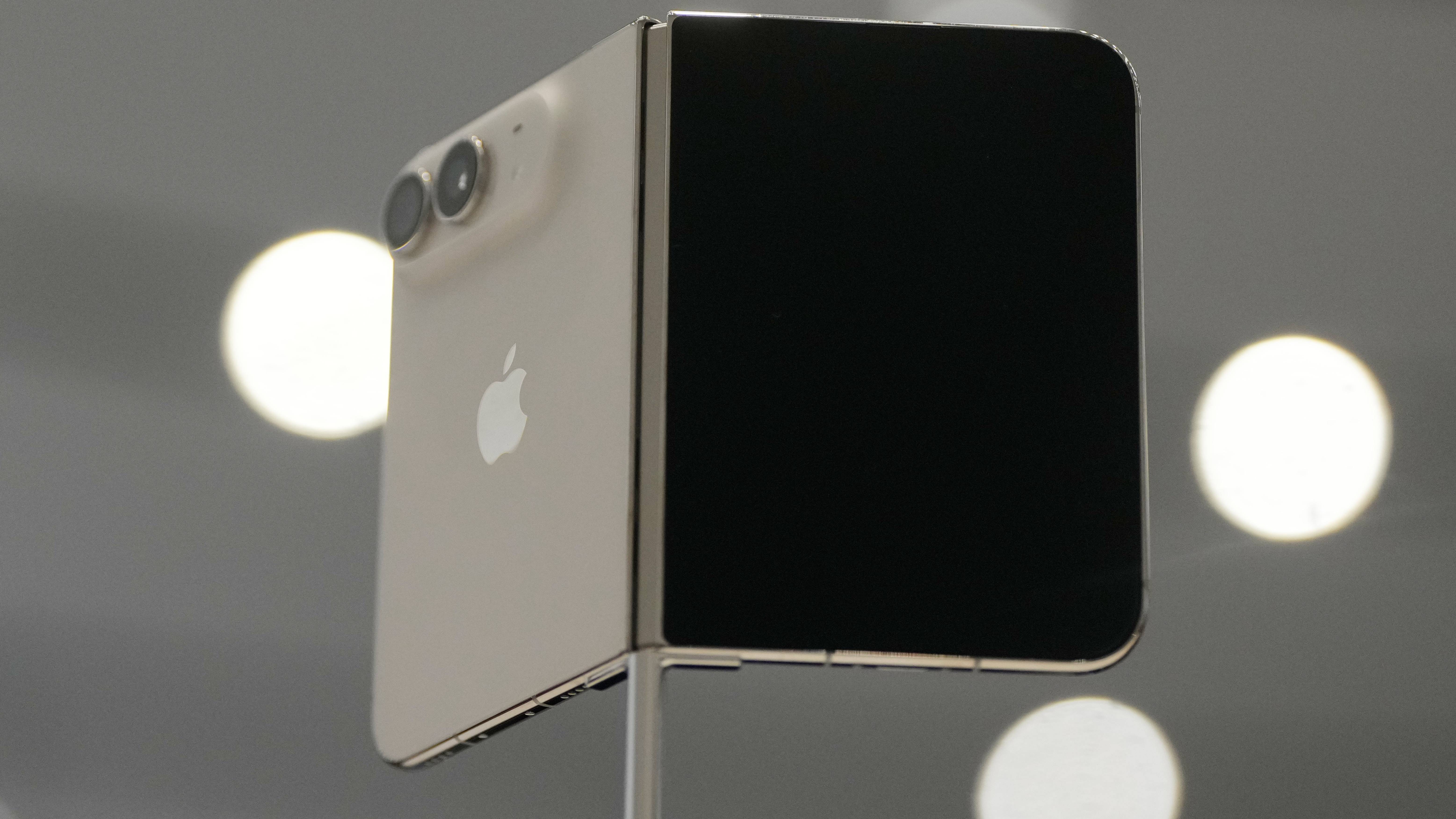
The foldable iPhone Duo is the clearest example of this strategy. According to Yahoo Finance, preorders for the $1,999 device sold out within minutes, and delivery dates shifted from October 23 to late January. This fact alone does not prove mass-market demand: Apple may have released a limited initial batch, while some orders may have come from enthusiasts and early adopters. Still, it shows that the company can generate intense excitement around a foldable form factor even after staying out of the market for years.
The Duo uses a book-style design: a 5.4-inch display on the outside and a 7.6-inch flexible panel on the inside. The device can be used in several modes. When unfolded, it supports two apps side by side or two windows from the same app. Content can be transferred automatically from the outer display to the inner one and back again. When partially folded, the smartphone resembles a mini-laptop: the upper half displays content, while the lower half is used for controls. In “tent” mode, the phone is suitable for watching videos, while its angled position can even allow it to function as a desk clock.
This is an important point: Apple is selling not only a new type of hardware, but also a set of use cases. Foldable phones are often criticized for merely increasing screen size without changing everyday habits. The Duo attempts to justify its design through software features. For example, when taking a photo with the main camera, the outer screen shows the subject what is being captured, allowing them to see immediately how they look. It is a small but typically Apple-like detail: the company tries to explain complex technology through a familiar everyday problem.
At the same time, the device does not appear to be an undisputed technical leader. It has wide-angle and ultrawide-angle cameras, but no telephoto lens. The Center Stage front-facing camera automatically keeps the user in frame, while the FaceTime camera is hidden beneath the main foldable panel. This reflects a typical Apple compromise: the company emphasizes hardware-software integration, but does not necessarily offer the maximum number of specifications.
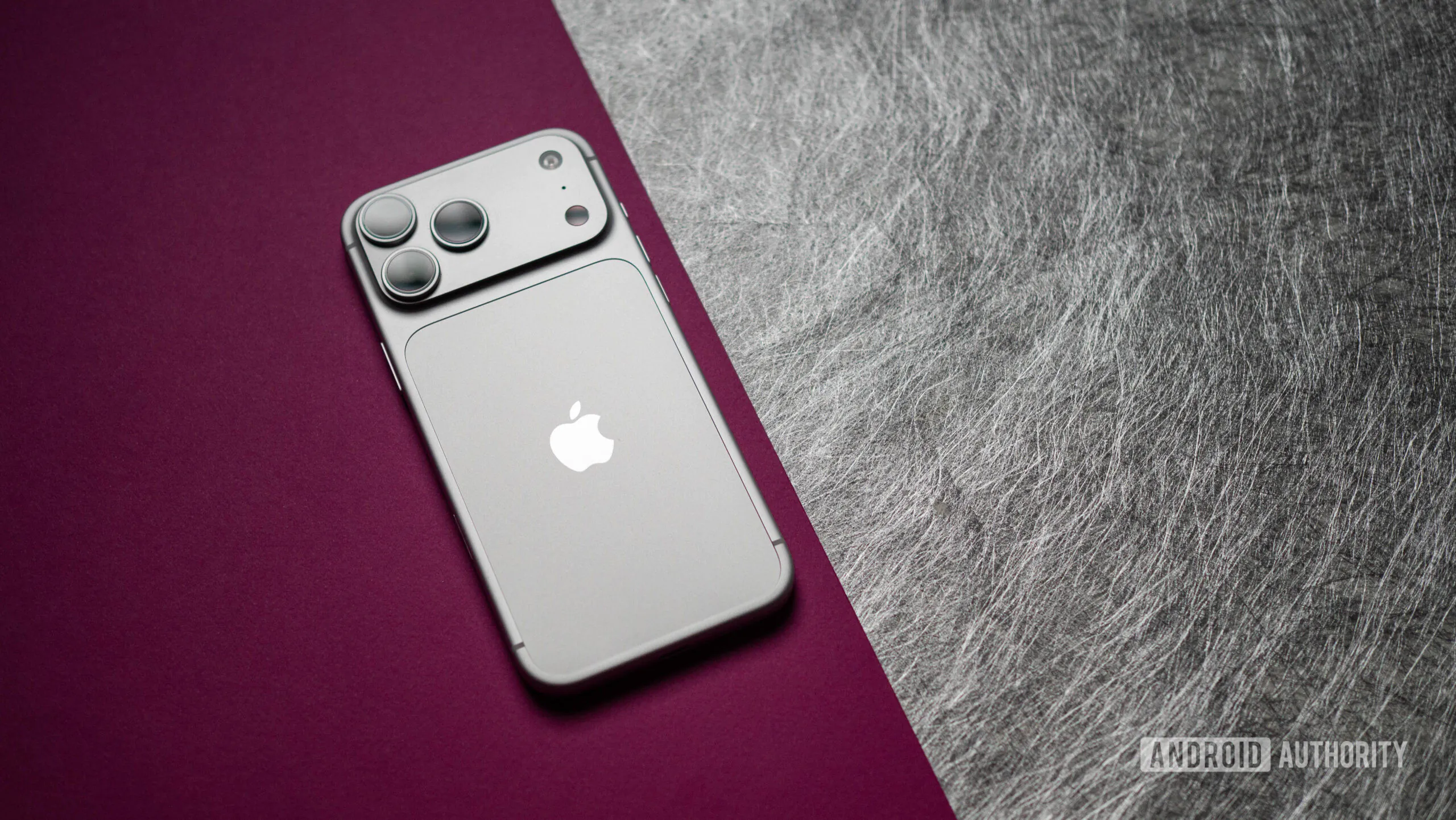
A similar strategy can be seen in the standard flagship model. After using the iPhone 18 Pro Max for three weeks, the author of Android Authority notes that the smartphone has changed very little externally, while significant updates have taken place under the hood. The camera now features a variable aperture ranging from f/1.48 to f/4.0, as well as manual shutter-speed, exposure, and white-balance controls. Aperture determines how much light reaches the sensor and also affects depth of field. For most users, it will remain an automatic feature, but photography enthusiasts gain greater control over the final result.
The author believes that photo quality is only slightly better than last year’s level and is roughly comparable to that of the Galaxy S26 Ultra and Pixel 11 Pro XL. In his assessment, Chinese flagships retain an advantage in the technical quality of their images thanks to high-resolution sensors and aggressive image processing. The iPhone’s strongest area remains video recording. This is telling: Apple does not necessarily win in every specification, but seeks to maintain leadership in areas where predictability, color reproduction, stabilization, and workflow convenience matter.
The A20 Pro processor also reflects the company’s traditional approach. Moving to a 2-nanometer process resulted in gains of approximately 19% in single-threaded tests and 22% in multi-threaded tests compared with the A19 Pro. The nanometer figure describes the size of technological elements on a chip; in general, a more advanced process makes it possible to fit more transistors and improve efficiency, although direct comparisons based solely on nanometer figures no longer always reflect actual performance.
Cooling proved more important than synthetic benchmarks. A new memory architecture and vapor chamber helped the iPhone 18 Pro Max maintain high performance for longer without overheating. This is especially important for gaming, video recording, and other sustained workloads. Apple is therefore improving not only peak performance, but also so-called sustained performance—the ability to maintain a level of power after several minutes or tens of minutes of use.
Battery life has also become part of the premium offering. The 5,391 mAh battery is approximately 10% larger than last year’s, while the energy efficiency of the 2-nanometer chip enables more than a day of use even during intensive video recording. The Android Authority author writes that under moderate use, the smartphone often lasted a day and a half. Charging takes less than an hour with a powerful adapter, while Qi 2.2 support makes wireless charging more convenient. This is not an absolute advantage: phones from some Chinese manufacturers with silicon-carbon batteries can last longer. But the iPhone competes confidently with the Galaxy and Pixel models that Apple targets in the premium segment.
At the same time, the iPhone 18 Pro Max shows that Apple no longer considers an annual exterior redesign essential. The previous dimensions, compatibility with last-generation cases, and overall visual language remain intact. The most noticeable change is a smaller Dynamic Island, as the infrared sensor is now hidden beneath the display. The Android Authority author emphasizes that switching between iOS and Android has become easier, but the change involves more than the smartphone itself. Users also have to replace accessories, subscriptions, cloud services, and familiar device ecosystems.
The ecosystem helps explain why Apple can charge such high prices. The company has repeatedly entered established categories later than its competitors and then quickly captured a significant share of them. In the Yahoo Finance article, the iPhone Duo is compared with AirPods and the Apple Watch: other companies effectively developed those markets, while Apple entered once the technology had become sufficiently mature. Foldable smartphones remain a niche product for now. According to data cited from IDC, manufacturers could ship around 1.25 billion smartphones in 2025, of which only 20.6 million would be foldable models. However, Counterpoint expects cumulative sales of foldable devices worldwide to exceed 100 million by the end of 2026, with foldables potentially approaching 10% of the smartphone market by 2029.
If these forecasts prove accurate, Apple’s entry will be timely. The company may not be a pioneer, but it can offer a mature device backed by a strong brand, a well-developed app ecosystem, and a familiar services infrastructure. This is the Duo’s potential advantage over competitors’ early foldable models: buyers are not purchasing an experimental gadget, but an expensive iPhone with a new form factor.
However, the shift toward premium products is particularly evident when it comes to repairs. Gizmodo cites Apple’s published prices: replacing or repairing damage to the inner display can cost $999, while the “other damage” category costs $1,499. Battery and main-camera repairs are priced at $229, the rear glass costs $199, and simultaneous damage to the outer display and rear panel costs $509.
For comparison, according to the article, repairs to the inner display of the Galaxy Z Fold 8 and Galaxy Z Fold 8 Ultra cost $419 and $479, respectively, while complete screen-module replacements cost $579 and $639. Replacing the battery in the iPhone 18 Pro costs $129—$100 less than in the Duo. The difference is explained by the complexity of the foldable design, but the scale of the gap shows that the Duo is positioned not as an ordinary iPhone model, but as a luxury item.
This creates an important contradiction. A foldable display is supposed to increase functionality, but it also makes the device more fragile, more expensive to manufacture, and more difficult to service. Repairing the inner panel costs almost as much as some new smartphones. As a result, AppleCare+ becomes almost essential for Duo owners. The Gizmodo author notes that a two-year subscription could pay for itself after just one serious incident involving the inner display, although the theft-and-loss protection plan itself costs $199.99 per year, excluding service fees.
This changes the very model of electronics ownership. A premium smartphone increasingly resembles an expensive watch or piece of jewelry: it is insured immediately after purchase because an accidental repair can undermine the economics of ownership. In this situation, the high device price is only the first payment. It is followed by cases, insurance, branded accessories, subscriptions, and potentially expensive servicing.
The main trend across all three articles is that Apple is dividing the market into several levels of premium products. The iPhone 18 Pro Max remains a universal flagship for users who want high performance, long battery life, capable cameras, and a stable ecosystem. The iPhone Duo is aimed at those willing to pay substantially more for a new way of interacting with a screen and the status of being a technology early adopter. At the same time, Apple is working to make movement between devices within its ecosystem as seamless as possible.
This creates a double pressure on competitors. Android manufacturers will have to respond not only with specifications, but also with software integration, service, and design quality. As Android Authority observes, Chinese interfaces such as ColorOS, OriginOS, and HyperOS are already borrowing Apple’s visual effects, including the transparent interface elements of Liquid Glass. Yet copying the external style does not guarantee the same level of trust in the product. Apple continues to sell not individual features, but a complete user experience.
For consumers, the conclusion is less straightforward. The new iPhones do offer noticeable improvements: more stable performance, better battery life, advanced cameras, and, in the case of the Duo, a fundamentally new format. But the usefulness of these features depends on the user’s needs. Most people do not need a $1,999 foldable screen, while the benefits of a faster chip or manual camera controls will be noticed primarily by enthusiasts, content creators, and professional users.
The success of the iPhone Duo will therefore depend not only on the number of preorders, but also on the durability of its design, lower repair costs, and Apple’s ability to convince buyers that the foldable format offers more than an impressive appearance. If the company can gradually reduce prices and improve reliability, it will accelerate the transition of foldable devices from a niche segment into the mainstream. If repairs and insurance remain excessively expensive, the Duo will primarily establish itself as a status accessory for affluent consumers.
Taken together, the sources describe an Apple that is no longer simply updating smartphones, but managing the boundaries of the premium market. It enters new categories late, but does so with a strong brand, mature software, and a powerful ability to monetize its ecosystem. On the one hand, this brings users more cohesive and technologically advanced products. On the other, innovation is becoming more expensive, and the cost of a mistake or accidental damage is rising along with the price of the device itself.