
The World Cup group-stage match between Belgium and Egypt ended 1-1 on Monday in Seattle. The game itself was thrilling only in spots, but as an event it extended far beyond sport: socially and culturally it drew the world’s attention to this American city. Nearly 70,000 people filled the stadium, temporarily renamed from “Lumen Field” to “Seattle” — FIFA requires that stadiums carry no advertising from companies that are not its official sponsors during the tournament, so the telecommunications company name “Lumen” was removed. Thousands more gathered at fan zones across the region to be part of what is called humanity’s greatest shared event.
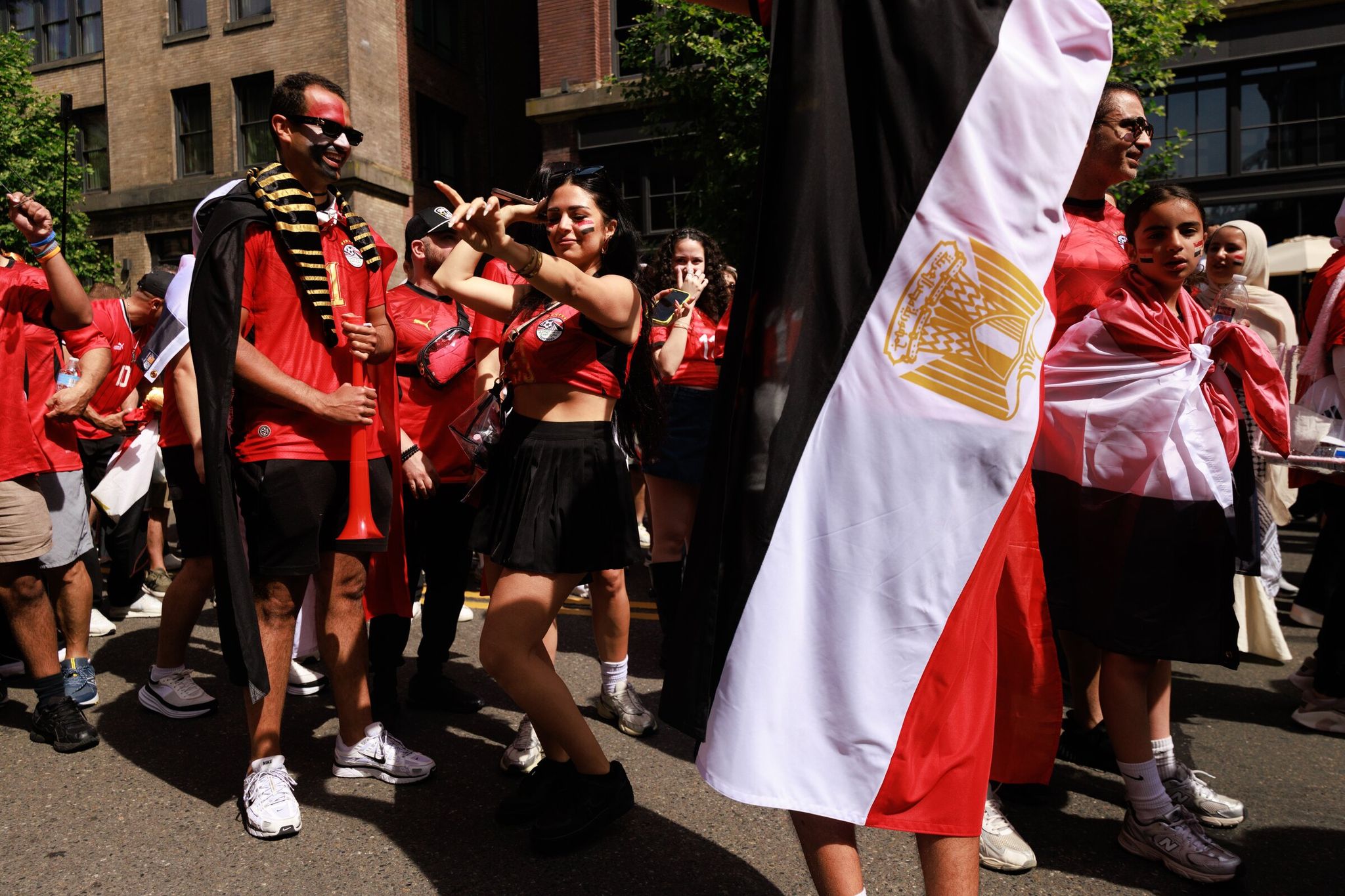
The match brought out bright red-and-white crowds of supporters from both countries and their diasporas, filling sidewalks, buses, cafes and bars. Locally worn shirts easily rivaled Belgian star Kevin De Bruyne and Egyptian icon Mohamed Salah for popularity. For many attendees it was a unique experience beyond sport, despite “absurd” ticket prices and FIFA’s controversial reputation, criticized for closeness to authoritarian regimes.
One of those who made the trip was Ali Gad, who drove from Portland with his wife and two sons. Portland is about 280 kilometers from Seattle — roughly three and a half hours by car. Gad, an IT worker who has lived in Oregon for eight years, is originally from Egypt, as is his wife; most of their relatives remained in their homeland. “Each year it gets harder being so far away,” he admitted. Given that Egypt has qualified for the World Cup only sporadically, these moments are especially precious, and he wore a red shirt and draped himself in an Egyptian flag to mark the occasion.
For Gad, the match meant much more than the score on the board: it became a bridge between his sons’ two worlds. Egypt missed every World Cup between 1990 and 2018, and in 2022 failed to qualify after Salah, then regarded as one of the world’s best players, blasted a decisive penalty over the crossbar. “My sons are torn between home and America,” Gad said. “I want the World Cup outing to strengthen their love for their native country.” In that sense, the spectacle in Seattle helped stitch together identity, memory and distance.
Local connections to the competing countries showed up from another angle too. Seattle resident Matt Wass de Zege, who attended high school in Belgium when his father worked at NATO, came to the match with his wife. “The World Cup is a box on the bucket list,” he said. “To be part of this atmosphere in your hometown — it’s the greatest sporting event in the world.” Outside the stadium on Monday morning there was a cacophony of street preachers warning of “God’s wrath,” pop music and patrolling police helicopters — all underscoring the scale of the event.
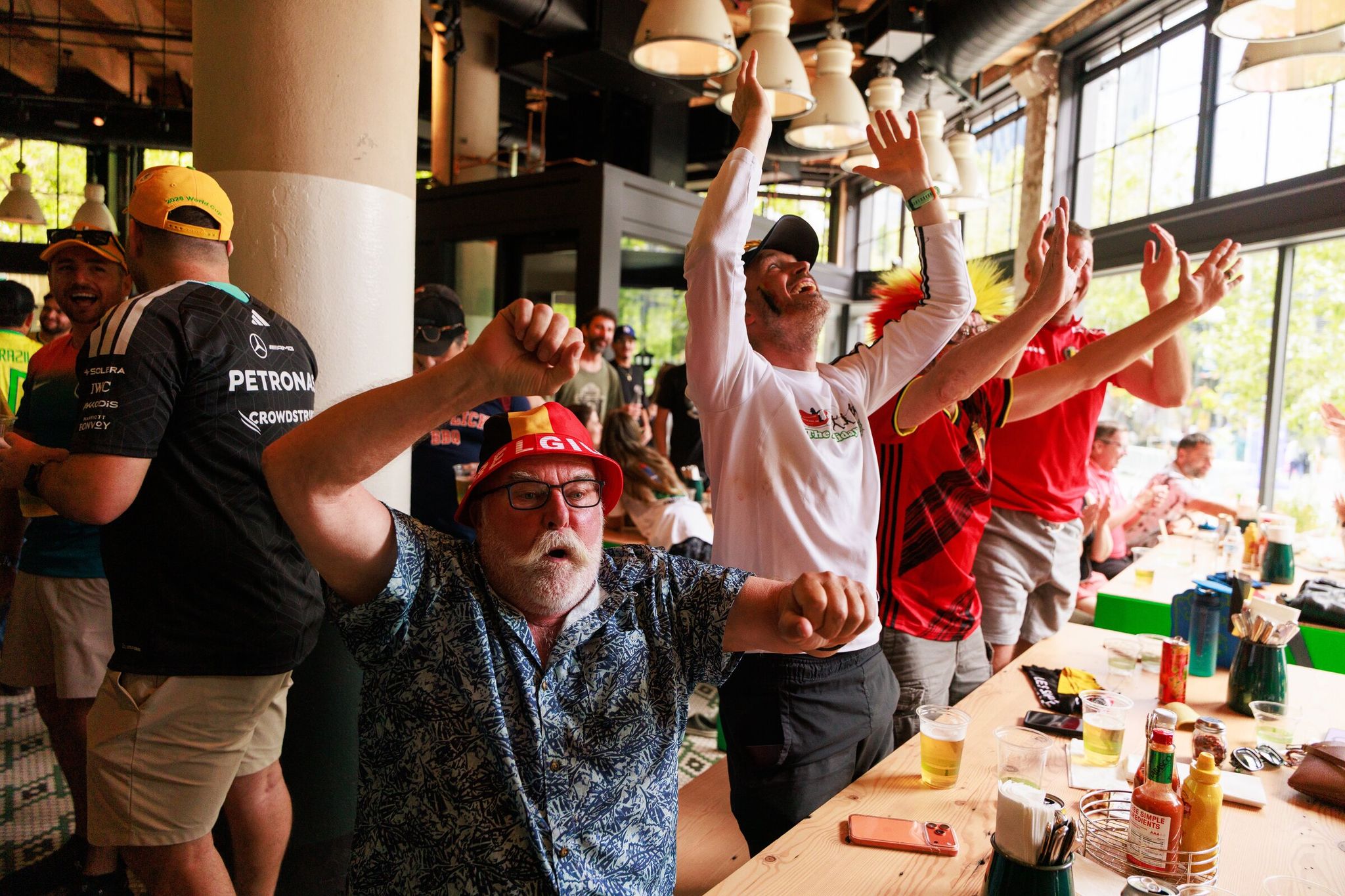
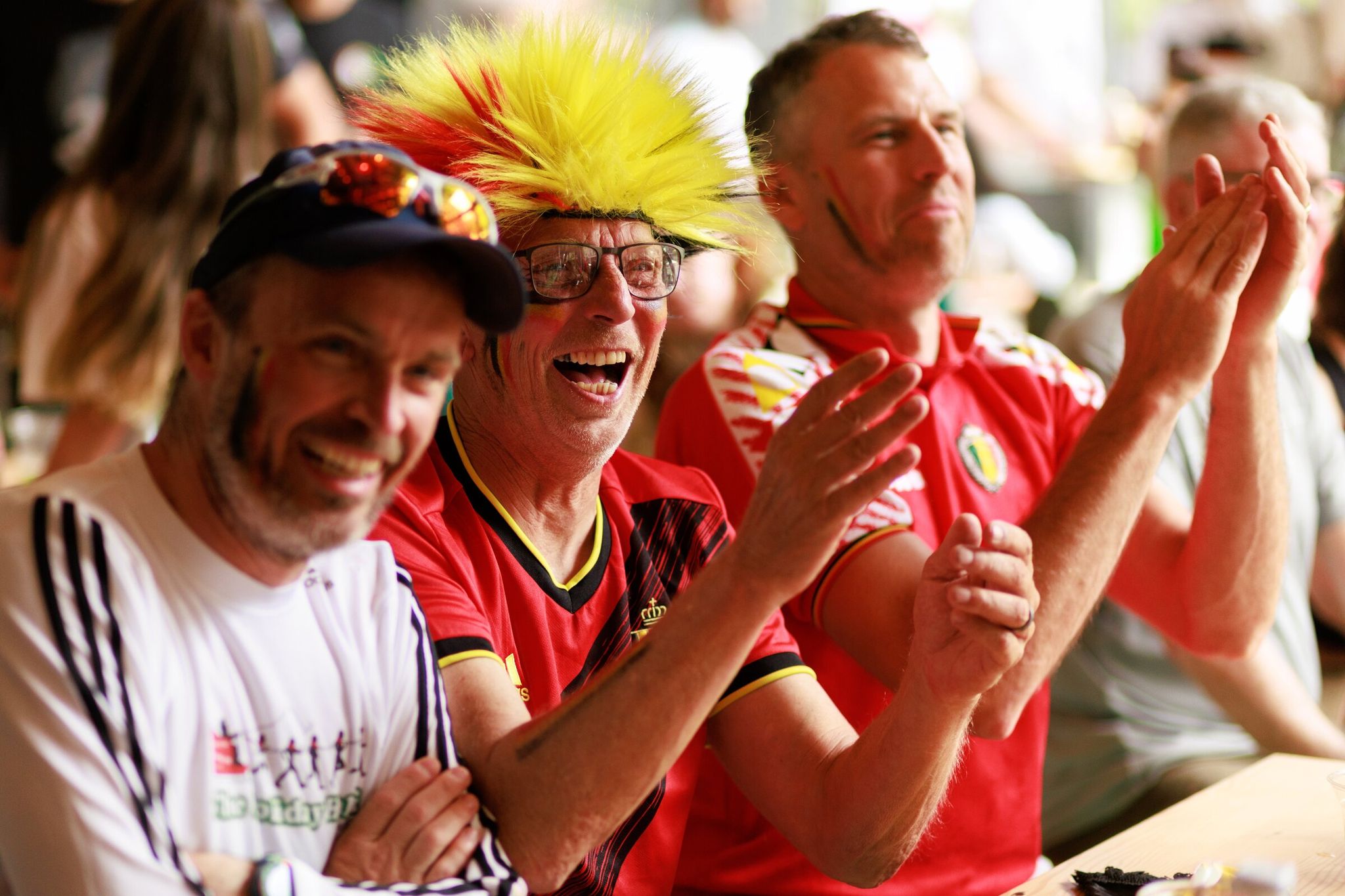
Belgian fan Paul Van der Brande flew in with four friends and turned the tournament into a road trip down the West Coast. They plan to drive from Seattle to San Francisco — about 1,300 kilometers — and Los Angeles for Belgium’s match with Iran, then go to Las Vegas and several national parks, and return to Vancouver, only 230 kilometers from Seattle, where Belgium will face New Zealand. On American TV Van der Brande was surprised by the relative lack of World Cup coverage: “You turn on the TV and it’s all basketball. The world championship is on, I don’t get it.” For Europeans, where all channels switch to the World Cup, this is a shock — but in the U.S. soccer still trails basketball and other sports in popularity and runs on less prominent channels.
Despite frustration with the media, Van der Brande praised the atmosphere around the matches. The civil engineer has been to several European championships but says the World Cup is a different level. “Completely different feelings,” he said. “This is why we travel: different people with the same mood but different pasts.” Among the more conspicuous fans was 27-year-old Belgian Filip Goeders, who flew into Seattle the day before and arrived at the match dressed as a giant Belgian fry — a nod to the country’s famous street food.
The stadium was charged with intense, contagious energy. Fans arrived in elaborate costumes — pharaohs and even more fries — and roared with delight at every attack and save. The hottest day of the year added physical strain, but the heat did nothing to cool the crowd’s enthusiasm. For those who couldn’t get inside, improvised fan zones around the city recreated the collective excitement.
In downtown Pioneer Square — Seattle’s historic center, where the city began in the 1850s with brick buildings and old pubs, just a five-minute walk from the stadium — hundreds gathered under plane trees to watch the match on a big screen. They stood on hot brick, dodged traffic and endured the heat for one simple reason: people wanted to experience the game together. The crowd buzzed when FIFA president Gianni Infantino appeared on the video and laughed when a commentator praised the “delightful Emerald City” — Seattle is nicknamed that for its year-round greenery of evergreens — and the “lovely Puget Sound,” the complex inlet of fjords and islands that connects to the Pacific Ocean, adding: “There is no bad coffee here — it simply doesn’t exist.” And it’s true: Seattle is the birthplace of Starbucks and the hub of the “third wave” coffee movement, where hundreds of independent cafes compete for the perfect cup, so bad coffee simply can’t survive.
For some attendees, the football itself was almost incidental. “I don’t even know the rules,” one woman in the crowd admitted.
Based on: World Cup fans in Seattle find the game, even if they can’t find tickets