
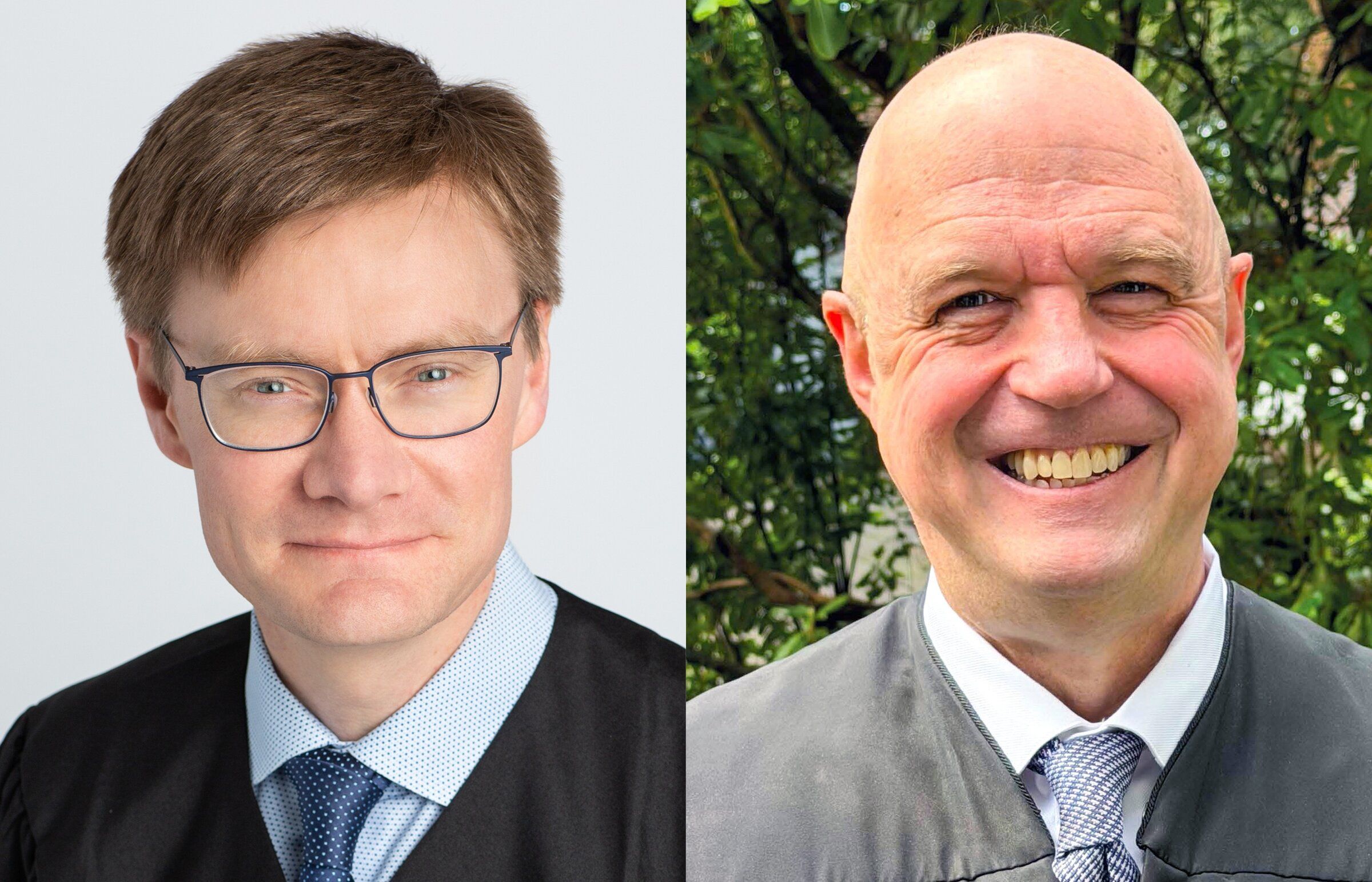
The race for Position No. 4 on the Washington State Supreme Court could become one of the most expensive judicial campaigns in state history: Justices Sean O’Donnell and Ian Burke have raised just over $1 million combined. This year, five of the court’s nine seats are up for election—a rare turnover on this scale.
Washington voters elect state Supreme Court justices in general elections, usually for six-year terms. Candidates appear on the ballot without party affiliations to underscore the judiciary’s independence. However, political parties, labor unions, business groups and other organizations may endorse candidates, raise money and campaign on their behalf. As a result, formally nonpartisan campaigns often take on a political character.
Burke, 48, has raised about $578,000. He has served on the state Court of Appeals since 2022; before that, he spent about 20 years in private practice, including handling insurance claims and workplace discrimination cases. O’Donnell, 54, has raised approximately $499,000 and has served as a King County Superior Court judge since 2013. Earlier, he worked as a prosecutor and took part in investigations involving serial killer Gary Ridgway. Both candidates say they will defend constitutional rights and decide cases based on the law.
The dispute between the candidates intensified after Burke accused his opponent in campaign mailers of promoting a “partisan agenda.” O’Donnell responded with a letter signed by 62 judges from across the state denouncing “partisan attacks.” He also pointed to Burke’s past donations to progressive politicians. Burke acknowledged that the contributions were open to scrutiny but stressed that they did not prevent him from serving as a fair and impartial judge. O’Donnell, who has been endorsed by state Republicans, said his reputation and experience in public safety demonstrate his independence.
The Washington State Supreme Court is the state’s highest court, not part of the federal system. It considers disputes involving state laws and the state constitution and can review lower court decisions. Cases before it could therefore concern whether a tax complies with the state constitution, how housing laws are applied, and what rules govern access to legal aid. A case can be taken to federal court after a state Supreme Court ruling only in limited circumstances, when a question of federal law is involved.
Both candidates expect the court to take up issues including a shortage of criminal defense attorneys, housing affordability and access to legal aid, as well as the use of artificial intelligence. A dispute over a new tax on high incomes is also possible: voters will consider Initiative 645, which proposes repealing the tax. The candidates declined to discuss how they might rule, noting that judicial ethics prohibit judges from stating in advance how they would decide a case that could come before them.
Hugh Spitzer, a political scientist and former University of Washington law professor, considers both candidates experienced, moderate judges. In his view, their election is unlikely to change the court’s overall direction, which will probably remain centrist or become somewhat more progressive despite the large-scale turnover. The outcome is difficult to predict: there was no primary, and both candidates have substantial records.
Based on: This WA Supreme Court race could be one of the most expensive in history