The Seattle Seahawks snapped a two-game losing streak and handed the Kansas City Chiefs their first loss of the season, 20–3. Seattle’s defense completely neutralized Patrick Mahomes (165 yards, one interception) and Kenneth Walker III (36 yards on 14 carries), while Jaxon Smith-Njigba hauled in nine passes for 150 yards and a touchdown. Sam Darnold, who had come close to being benched after a run of poor performances, put together a composed outing (257 yards, one touchdown) and answered his critics, while head coach Mike Macdonald reaffirmed his confidence in the quarterback. The Seahawks improved to 4–3 and reminded the league of their championship pedigree, while the Chiefs (5–1) lost their aura of invincibility.
The Seahawks Stifle Mahomes: How Seattle Reclaimed Its Championship Form
Sometimes a single game can change how a team is perceived. The Seattle Seahawks entered Sunday night’s matchup against the Kansas City Chiefs on a two-game losing streak, with the reputation of defending champions who couldn’t find their footing. They left the field at Lumen Field feeling like the same Seahawks who bulldozed their way through the playoffs last winter. The 20–3 rout of the Chiefs was more than a win over the league’s last unbeaten team. It was a statement that Seattle’s defense could disarm even the best quarterback of the modern era—and that its offense had finally stopped being the coaching staff’s biggest headache.
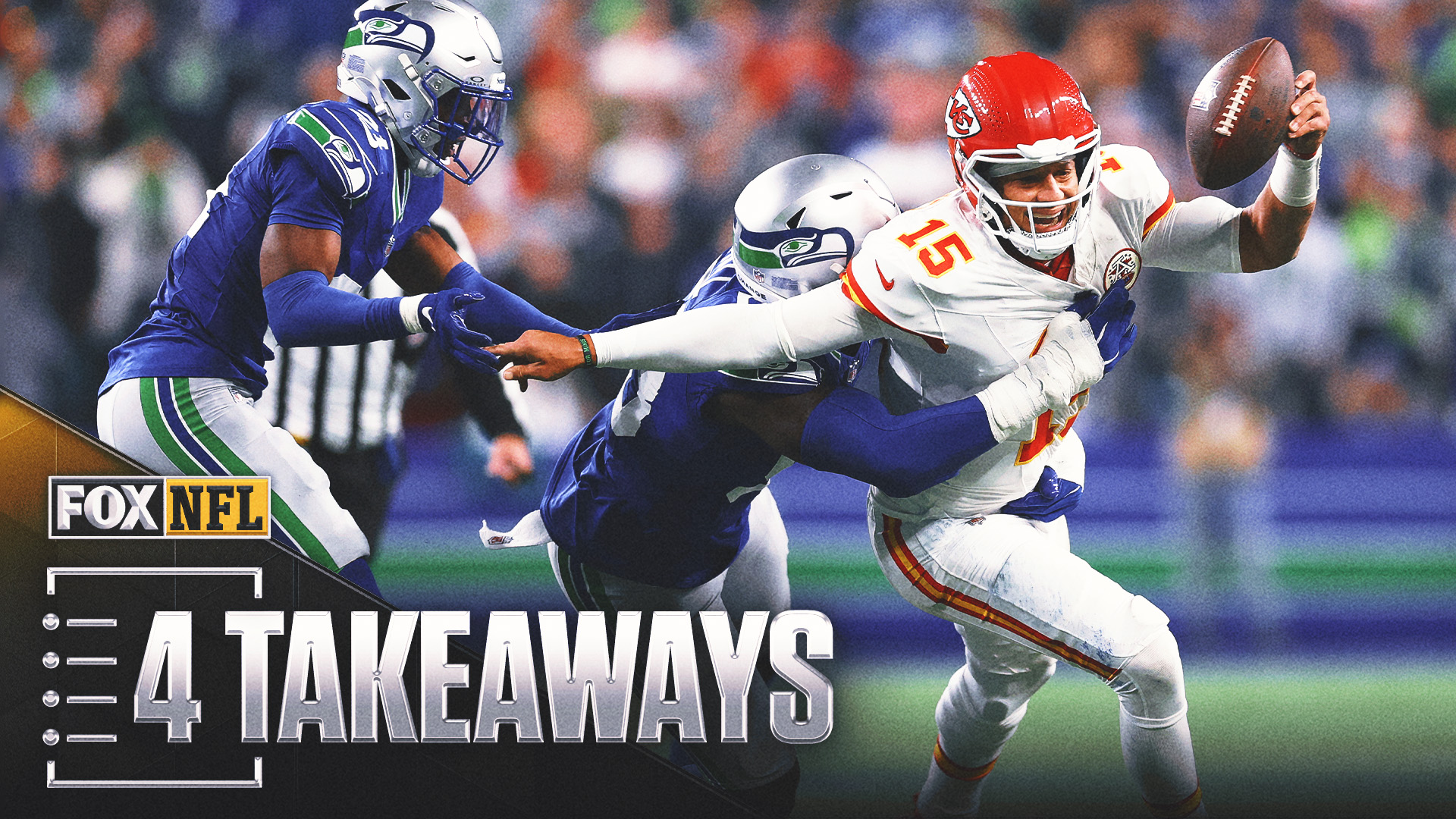
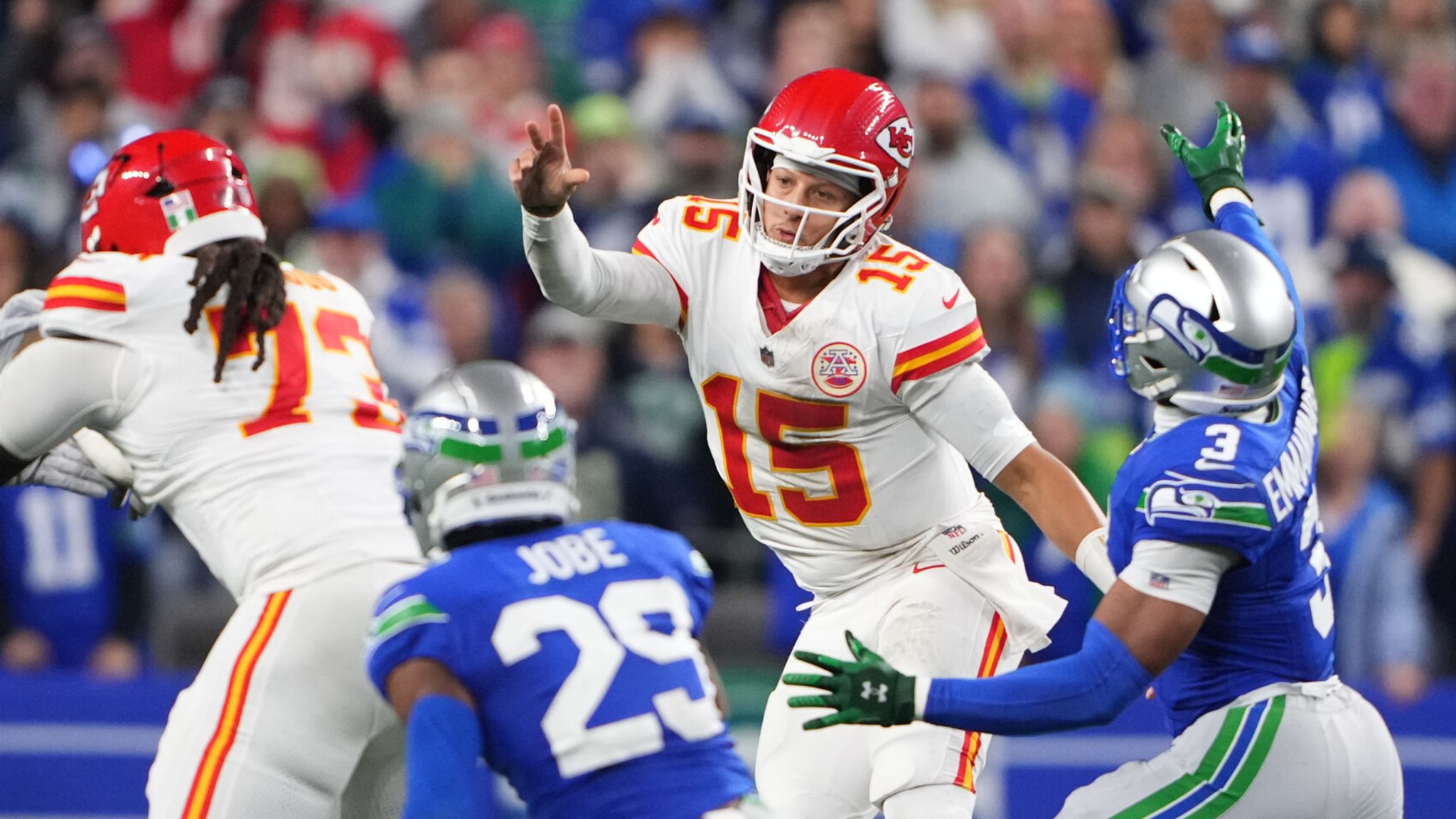
The night’s main story was the complete and emphatic shutdown of Patrick Mahomes. Before this matchup, he had been playing some of his best football since his 2022 MVP season: a 103.1 passer rating and a confident return from the knee injury that ended his previous season. But it all came up against the “Dark Side”—the nickname the Seahawks’ defense has earned around the league. Mahomes finished 19 of 33 for 165 yards, with no touchdowns and one interception. He also fumbled, though Kansas City managed to recover the ball in the second half. The Chiefs, who had been averaging 414 yards per game, finished the night with 213 and never reached the red zone. The formula is simple: Seattle’s defense ranks first in the league in total yards allowed (237.3 per game), passing yards allowed (141.3), yards per play allowed (4.0) and interceptions (11). Mahomes, for his part, now has a career record of 4–4 against the league’s top-ranked defenses at the time of the game—a reminder that even the greats are not invincible.
The key to neutralizing Mahomes was shutting down running back Kenneth Walker III. This is where the most intriguing storyline lies: Walker returned to Lumen Field for the first time since winning Super Bowl MVP with Seattle and moving to Kansas City the following summer. It was also the first time in league history that a reigning Super Bowl MVP faced the team he had won the title with in the very next season. Walker came into the game leading the league in rushing yards (665), more than 19 NFL teams had managed through the first six weeks. But the Seahawks knew his tendencies by heart: they closed off his cutback lanes, kept him from breaking to the outside and held him to a modest 36 yards on 14 carries. The irony is that his replacement in Seattle, Emanuel Wilson, gained 100 yards—the exact amount the Chiefs were missing from their star player.
While the defense smothered Mahomes, the Seahawks’ offense found its new superstar. Jaxon Smith-Njigba came into the game leading the league in receptions (49), receiving yards (717) and receiving touchdowns (7). Yet Kansas City defensive coordinator Steve Spagnuolo inexplicably decided to press-cover him on the outside with rookie Mansoor Delane. The strategy predictably backfired: Smith-Njigba finished with nine catches for 150 yards and a touchdown. According to Next Gen Stats, Delane, as the nearest defender, allowed four catches for 85 yards and a touchdown on six targets in his coverage. The last receiver to win the “triple crown” was Ja’Marr Chase in 2024—and if opponents keep covering Smith-Njigba the way the Chiefs did, the league’s reigning top offensive player has every chance of matching that feat.
Sam Darnold is a story in his own right. As a year ago, he started the season unevenly, and after returning from a glute injury, he had thrown seven interceptions—the second-most in the league—with seven touchdowns to go alongside them. Seattle, with 12 turnovers, ranked third-worst in the league in that category. But against the Chiefs, Darnold played with composure: 20 of 28 for 257 yards, with a touchdown to Smith-Njigba, few sacks taken, quick decisions and a fast release. The one sour note was a terrible decision late in the first half, when he tried to squeeze a pass into a crowded area for Rashid Shaheed and Nick Bolton intercepted it, nearly returning it for a touchdown. Seattle was saved by left tackle Charles Cross, who brought Bolton down, and then Harrison Butker missed field goals from 58 and 45 yards. With Drew Lock dealing with an elbow injury, the Seahawks have no real choice but to hope the Kansas City game is a turning point for Darnold, not a one-off flash.
A few terms are worth explaining for readers unfamiliar with the finer points of American football. The “red zone” is the 20-yard stretch before the opponent’s end zone; reaching it sharply increases the chances of scoring a touchdown, so the fact that the Chiefs never got there speaks louder than any statistic. “Press coverage” means a defender lines up close to a receiver and tries to disrupt his route immediately after the snap—against a technician like Smith-Njigba, it’s almost suicidal without safety help. “Yards per play” is an average measure of efficiency: Seattle’s defensive figure of 4.0 means opponents gain just four yards per attempt, stifling their offense. And a receiver’s “triple crown” means leading the league in receptions, receiving yards and receiving touchdowns at the same time, a rare feat achieved by only a select few.
The win moved the Seahawks to 4–3, leaving them two games behind the San Francisco 49ers (6–1) in the NFC West. The Chiefs (5–1), like the Niners, also lost their unbeaten status: San Francisco fell 29–20 on the road to Atlanta that same day. Seattle gets an extra day of rest before hosting the Chicago Bears (5–2), while Kansas City travels to face its fierce AFC West rivals, the Denver Broncos (5–2). If the Seahawks’ defense maintains this level and Darnold stops giving the ball away, last season’s championship run could have a sequel. As FOX Sports reported after the game, that was the night’s main takeaway: Seattle reminded the league that a title is not surrendered without a fight.
The Seahawks End the Chiefs’ Perfect Start: How Seattle Stifled Kansas City’s Offense
On Sunday night in Seattle, something happened that had not happened in the first half of the current NFL season: the Kansas City Chiefs lost. The Seattle Seahawks routed the visitors 20–3, snapping their five-game winning streak and ending their own two-game skid in the process. A game that was supposed to be another showcase for Patrick Mahomes and his offense instead became a performance by Seattle’s defense and young receiver Jaxon Smith-Njigba, who caught nine passes for 150 yards and a touchdown. For the Chiefs, it was their first loss of the season—and the first serious sign that their offense is not invincible.
The night’s main storyline was not so much the home team’s win as the return of Kenneth Walker III, the running back who was Super Bowl MVP for the Seahawks last season before joining Kansas City over the summer. Walker entered the game leading the league with an average of 133 yards per game. Seattle held him to 36 yards on 14 carries and limited the Chiefs’ entire offense to 213 total yards, just 50 of them on the ground. Mahomes finished with a modest 165 yards and one interception. The visitors’ only bright spot was a record for Travis Kelce: his four catches brought his career total to 1,104, moving him past Marvin Harrison and Cris Carter and into fifth place on the NFL’s all-time receptions list.
The game turned on the visitors’ mistakes and the home team’s composure. Sam Darnold threw for 257 yards and a touchdown. He first led Seattle into the red zone, allowing Jason Myers to open the scoring with a 25-yard field goal, then, after Ty Okada intercepted Mahomes, engineered a 28-yard touchdown pass to Smith-Njigba. Seattle led 10–0 at halftime, although it could have extended its lead: Darnold was intercepted in the end zone, but Harrison Butker missed a 58-yard field goal. The second half followed the same pattern. Myers added a 35-yard field goal, Mahomes fumbled on third down, and the Chiefs managed only a 50-yard kick by Butker. Emanuel Wilson put the game away, running 21 yards for a touchdown with 3:47 left. He finished with 100 yards on 24 carries. Butker’s miss from 45 yards in the fourth quarter was also notable: he now has ten missed field goals since the start of last season.
Andy Reid did not make excuses after the game: “Listen, all three phases failed for us, so we’ve got to play better, and that’s on me. We’ve got to play better as a team,” he said, according to a Sky Sports report. Mike Macdonald, the Seahawks’ coach, spoke instead about the team’s potential: “This game reminds the guys what we’re capable of. I think they understand there are more levels we can reach, and I hope they feel a sense of urgency, because that’s something we can control.” Those words matter in the context of the standings: Seattle improved to 4–3 and rejoined the playoff race, while Kansas City remains at the top with a 5–1 record but has lost its aura of invincibility.
A few terms help put the game in context. The “red zone” is the stretch of field within 20 yards of the opponent’s end zone, where it is especially important for an offense to score. “Third down” is the attempt on which a team must either extend its series or give up the ball, making a turnover on that play particularly costly. An interception occurs when a defender catches a pass intended for an offensive player, immediately changing possession. A field goal is a kick through the uprights worth three points; misses from 45 to 58 yards are not unusual, but in this game they were what kept the Chiefs from getting back into it. Finally, “all three phases” refers to offense, defense and special teams—a standard coaching phrase emphasizing that the failure was systemic.
The main takeaway from this game is that there is a formula for beating Kansas City, and it does not require anything extraordinary: stop the running back, make Mahomes operate under pressure and protect the ball. Seattle did all of that, while finding in Smith-Njigba a receiver capable of making difficult catches. His 150 yards were the night’s leading individual performance. For the Chiefs, the worrying sign was not the loss itself but the fact that their offense looked not merely contained, but unrecognizable: 50 rushing yards with the league’s leading running back is a statistic that demands an explanation from the coaching staff. The coming schedule will show whether this was a one-off stumble or whether opponents have found a game plan that works.
The Seahawks Rout the Chiefs: Darnold Answers Critics as Seattle Reasserts Its Championship Pedigree
A game many had penciled in as a potential Super Bowl preview turned into a one-sided display of strength. The Seattle Seahawks took care of the Kansas City Chiefs 20–3 at Lumen Field, and the main story was not so much the defense as the coach’s resolve and the patience shown to a quarterback who, just a week earlier, had nearly been benched.
The context matters because it explains how unexpected the result was. In 2026, the Chiefs once again look like a machine on course for another conference championship game against Buffalo, while the Seahawks, after opening with two wins over the Patriots and Cardinals, slipped to 1–3. A loss to the Commanders, a win over the struggling Chargers, and two painful overtime defeats to San Francisco and Denver had called the reigning Super Bowl champions’ status into question. The most worrying sign was Sam Darnold’s collapse against the Broncos: 27 of 51, no touchdowns and two interceptions in a game in which his opposite number threw for just 107 yards. In a league where results are everything, talk of replacing him with Drew Lock immediately began to spread. It seemed almost absurd: from Super Bowl MVP to backup in six weeks.
But Seattle head coach Mike Macdonald stood firm. In a radio interview on October 16, he said that “Sam has played great football for us most of the time,” describing the turnover problem as something that could be fixed within the system with Darnold at quarterback. At a press conference that same day, he added: “We have a lot of belief in Sam. He’s done a lot of great things this year. We’ve obviously turned the ball over more than we wanted to, but I feel like there are things we can do on our end to help him play better. And he’s definitely part of the solution, not the other way around.” The full quote is worth repeating because it sums up the coach’s philosophy: rather than blame the most visible player, fix the system around him. These comments were highlighted in a Fox News report, and the game against Kansas City was their strongest vindication.
The game began with a series of punts in the first quarter, but everything changed in the second. Patrick Mahomes, unusually, looked rattled: his interception killed one of the Chiefs’ drives, while Darnold found his rhythm. On Seattle’s first scoring drive, he threw for 71 yards, including a 33-yard connection with Jaxon Smith-Njigba. On the next possession, after Mahomes’s interception, Darnold found Smith-Njigba again—this time for a 28-yard touchdown, with the 24-year-old receiver showing impressive strength to stay in bounds. But the ball-security problems had not gone away. Thirty seconds before halftime, after another 28-yard pass to Smith-Njigba, the Seahawks reached Kansas City’s two-yard line. George Holani’s run lost ground, and under pressure Darnold tried to find Rashid Shaheed in the end zone, only for Nick Bolton to intercept the pass. Bolton’s long return seemed to give the Chiefs a chance to score before the break, but Harrison Butker, who had made a poor start to the season, missed from 58 yards.
Darnold continued to do his part in the third quarter. Passes of 17, 12 and 19 yards helped Seattle add three points and make it 13–0. Kansas City’s offense, meanwhile, still could not find its rhythm. Mahomes was constantly hurried, Rashee Rice was out again, and the Chiefs’ receivers could rarely get separation from the defenders. Kenneth Walker, who had gained 128 yards and scored two touchdowns on 19 carries the previous week, was held to 36 yards on 14 carries against Seattle. Mahomes himself nearly lost a fumble in the third quarter and mostly settled for short passes. Even when Kansas City finally put together a solid drive in the fourth quarter, Butker missed again—this time from 45 yards, on a kick that would have cut the deficit to 13–6. Seattle punished the Chiefs immediately: Emanuel Wilson’s 21-yard touchdown run on third-and-four put the game away.
The numbers underscore the scale of Seattle’s dominance. Before garbage time, the Seahawks held a 388–210 advantage in yards and a 22–11 edge in first downs. They converted 11 of 15 third downs, compared with Kansas City’s 3 of 11. The Chiefs’ three points through the start of the fourth quarter matched the lowest total of Mahomes’s career at that stage of a game—he had scored fewer only once. It was the suffocating defense that has become Seattle’s trademark in recent seasons and, more importantly, a far more convincing performance from Darnold, apart from that ill-fated interception in the second quarter.
The Seahawks stay home, where they will host the Chicago Bears on Monday, while the Chiefs head to Denver to face the Broncos at Empower Field. For Kansas City, it is a chance to bounce back quickly, but questions about roster depth and reliance on Mahomes will remain. For Seattle, the win was more than two points in the standings: it confirmed that the coaching staff was right to trust its quarterback at the most difficult moment. In a league where patience is considered a luxury, the Seahawks allowed themselves that luxury—and were rewarded with a rout of the Chiefs.
For readers who do not follow the NFL closely, a few terms are worth explaining. A quarterback (QB) is the passer and chief play-caller of the offense, on whom almost every play depends. An interception occurs when an opposing defender catches a pass intended for a teammate, often leading to a change of possession and a dangerous drive for the other team. A touchdown is scored by carrying or catching the ball in the end zone and is worth six points; a field goal is a kick through the uprights worth three. Third down is a crucial play on which a team must gain a certain distance to retain possession; third-down conversion rate is one of the main indicators of control over a game. A fumble is a loss of the ball, while “garbage time” refers to the closing minutes of a game whose outcome has effectively been decided.