In today’s roundup: the Seattle Kraken squandered a three-goal lead against the Detroit Red Wings but won in a shootout thanks to Montour’s return; the Seattle City Council approved a program to assist vehicle residents, with permits for RVs and $5 million for parking lots and outreach; and Michael O’Neal Fleming was arrested in Chicago after being accused of a shooting at a Seattle gas station and linked to the deaths of his mother and stepfather in Kenosha.
The Kraken Are Learning to Win Under Pressure: How Seattle Squandered a Three-Goal Lead but Still Beat Detroit in a Shootout
The game between the Seattle Kraken and the Detroit Red Wings offered a vivid illustration of how, in today’s NHL, a team can dominate for two periods, nearly give everything away in the third, and still take both points in a shootout. The Kraken led 3–0 after 40 minutes, conceded twice in the final 20 minutes, and sent the game to a shootout, where they ultimately tipped the balance in their favor. For Seattle, the victory matters not only in the standings but also as a test of character after Saturday’s unsuccessful game against the Florida Panthers, in which Brandon Montour did not play.
The first period set the tone. At 6:45, Mackie Samoskevich opened the scoring, taking a pass from Chandler Stephenson at the blue line, moving toward the middle, and shooting over Tarasov’s blocker. “Stephenson just made a great pass,” Samoskevich said in an NHL.com article. “We already know he’s a great passer and playmaker. It was almost as if he set the play up for me, picked the player, and I just came out for the shot.” Seattle’s lead grew in the second period. At 3:22, Ryan Evans scored on the power play after taking advantage of a mistake by Detroit forward Michael Rasmussen, whose backhand from the left corner, intended for Keegan Kolesar, went straight onto an opponent’s stick instead. Evans waited for an opening and pushed the puck under the goalie’s right arm. Then, at 16:01, Montour, returning to the lineup after missing the game against the Panthers, converted on the power play by redirecting a “bouncing” puck out of midair over Tarasov’s blocker from the top of the left circle. “The biggest thing for me was telling the coaching and medical staff that I felt good enough to go out there and confidently play my game,” Montour emphasized.
But the game turned in the third period. At 6:25, Viktor Arvidsson cut the deficit, taking a pass from Emmitt Finnie in the upper part of the right circle and shooting over Grubauer’s right pad while gliding toward the crease. After the game, Kraken head coach Lambert candidly admitted: “We made a mistake in the neutral zone on their first goal, which gave them momentum and breathed life into them.” At 7:24, Lucas Raymond converted on the power play, collecting his own rebound after a sharp-angle shot from below the left circle and sending it into the upper corner on the short side. “Obviously, it feels good to score my first goal of the season,” Raymond said. “It was great to cut the deficit to one goal and then force overtime—that’s a good sign for our team.”
The key takeaway from the game is that the Kraken demonstrated an important quality for teams with playoff ambitions: the ability not to fall apart after surrendering a lead. A lapse in concentration in the neutral zone and two goals conceded in two and a half minutes could have turned into a disaster, but Seattle held on through the remaining time and won the shootout. For Detroit, it was another reminder that its power play and Raymond’s persistence are working, but a poor first two periods and Rasmussen’s costly mistake cost the team at least one point. In the context of the season, games like this are especially valuable for the Kraken. They show that even without complete control of a game, Lambert’s team can still get results, while Montour’s return strengthens both the attack and the power play.
For clarity, a few terms should be explained. An NHL shootout consists of one-on-one attempts against the goaltender after overtime and determines the winner, awarding the winning team two points instead of one. A blocker is the rectangular glove worn on a goaltender’s stick side, used to deflect shots. A backhand is a shot or pass made with the back side of the blade. The neutral zone is the middle third of the rink between the blue lines, where teams most often lose the puck through inaccurate passes. According to Lambert, it was precisely a mistake in that zone that gave Detroit a chance to get back into the game.
Seattle Changes Its Approach to People Living in Vehicles: City Launches Assistance Program and New RV Rules
The Seattle City Council approved a package of six pieces of legislation that together create the city’s first systematic strategy for helping people who live in vehicles. The package includes the so-called Vehicle Resident Assistance Program (VRAP), championed by Councilmember Dan Strauss, who represents District 6. The decision is notable because, until now, Seattle essentially had neither a clear strategy nor a significant set of services for this group of unhoused people, even though one in four people experiencing unsheltered homelessness in the region lives in a car, van, or RV. This was stated in a post on the official Seattle City Council blog.
Strauss framed the dilemma plainly: the council had to decide whether to continue with the status quo, which everyone understood was not working, or try a new approach. The council chose the latter. According to the councilmember, the legislation creates “a path to shelter and housing” for people living in their vehicles. It is important to understand that “vehicle residents” refers not only to owners of large RVs, but also to people sleeping in cars and vans—a group traditionally overlooked by social services and city regulations.
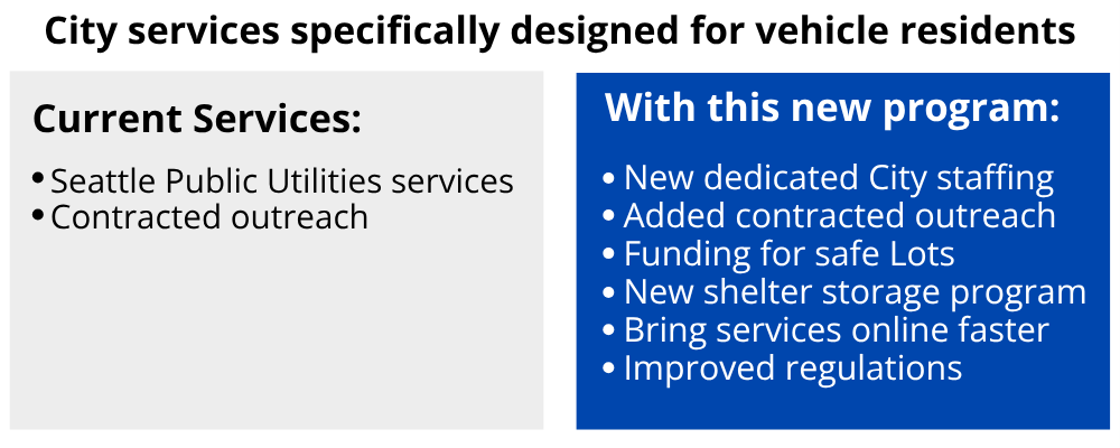
The program rests on three pillars. The first is new services. The city is redirecting $5 million already included in the budget toward expanded services: safe lots, storage for people moving into shelters, direct outreach, and pathways to permanent housing. The second is a fundamentally new service called “Shelter Storage.” It allows the city to store a person’s vehicle when they move into a shelter or housing, so they do not lose their property or face a choice between having a roof over their head and keeping their belongings. The third is administrative streamlining. The director of the Finance and Administrative Services Department will receive expanded authority to sign leases and open safe lots and storage sites more quickly, allowing resources to be deployed without unnecessary bureaucratic delays.
A separate and perhaps most sensitive section concerns RVs and travel trailers. A permit system will be introduced: people already living in their RVs will be allowed to continue doing so if they comply with existing city laws and basic rules while remaining on a waiting list for suitable housing. The permit will remain valid unless the person violates the rules or repeatedly declines offers of suitable shelter. Unpermitted RVs and trailers will be allowed to remain on public streets for no more than two hours at a time. According to the legislation, the new RV rules will take effect later than the other measures, on April 30, 2027. A warning period will run through July 31, 2027, before enforcement actually begins. The other five laws will take effect 30 days after being signed by the mayor.
Finally, the sixth measure updates the city’s Junk Vehicle Law, which had not been revised in a quarter-century. The law is being clarified so parking-enforcement officials can deal more effectively with vehicles in which no one lives and that have been abandoned or improperly stored on city streets. This is an important distinction: the program seeks to draw a clear line between people for whom a vehicle is a home and who need a path toward housing, and abandoned vehicles that merely take up public space.
Practitioners also voiced support for the reform. Jen Adams of the Vehicle Resident Outreach team said her group had worked with people living in RVs for years without a consistent path forward. She called the legislation a much better route to housing for this population, while cautioning that the city still faces a severe shortage of affordable housing overall and that the package is an important and substantive first step.
Several concepts are worth clarifying. A safe lot is an organized site where people living in vehicles are legally allowed to park, typically with access to sanitation facilities and social workers. Unlike informal parking along sidewalks, it provides predictability and oversight. Outreach refers to social-service workers going directly to people on the street or at a parking site rather than waiting for them in an office, helping them connect with available services. The Junk Vehicle Law is a city ordinance that allows abandoned or clearly unusable vehicles to be towed and disposed of; updating it matters because the 25-year-old language was poorly suited to current conditions on the streets. Finally, Shelter Storage is essentially a storage facility for an entire vehicle. For someone whose car is both a storage space and their last remaining property, it could be a decisive factor in agreeing to move into a shelter.
The key conclusion from the decision is that Seattle is recognizing vehicle residents for the first time as a distinct group requiring a separate policy, rather than treating them as a byproduct of general homelessness programs. The figures are telling: one in four unsheltered people experiencing homelessness in the region lives in a vehicle; $5 million in existing budget funds is being directed to the program; and enforcement of the RV rules has been postponed for more than six months after the law takes effect, giving the city time to establish parking, storage, and outreach services before fines and towing begin. This sequence—resources first, restrictions later—is the main difference between the new approach and the previous status quo Strauss described. The open question is whether $5 million and the capacity of social-service agencies will be enough to move people through the housing waitlist faster than violations accumulate. That will determine whether residents keep their permits and maintain trust in the program.
Chicago Arrests Suspect in Kenosha Double Homicide and Seattle Shooting
On Tuesday evening, 33-year-old Michael O’Neal Fleming was arrested in Chicago. Authorities link him to a series of serious crimes spanning several states. According to court documents, Fleming has been charged with murder in connection with a fatal shooting at a Seattle gas station earlier this month. At the same time, Kenosha, Wisconsin, police identify him as a person of interest in the killings of his own mother and her husband. Fleming’s case is a disturbing example of how a man described as “armed, dangerous, and unstable” could become the focus of two separate criminal investigations in different parts of the country within days, with his capture resulting from coordinated work by several police departments.
Events in Kenosha unfolded rapidly. Shortly before 3 p.m. Monday, officers went to a home in the 5500 block of Washington Road in response to a welfare check. Inside, they found the bodies of 57-year-old Rodney Brushwood and 59-year-old Rena O’Neal—both had been shot. Kenosha police then issued a public warning, urging residents to contact authorities immediately if they encountered Fleming, whom they described as “presumably armed, dangerous, and unstable.” Such wording is uncommon in official U.S. police alerts and signals that law enforcement considered the risk of further violence to be very high. A welfare check is a standard procedure in which police or social-service agencies are asked to make sure someone is safe. Such calls often come from concerned relatives or neighbors and do not always end with bodies being discovered.
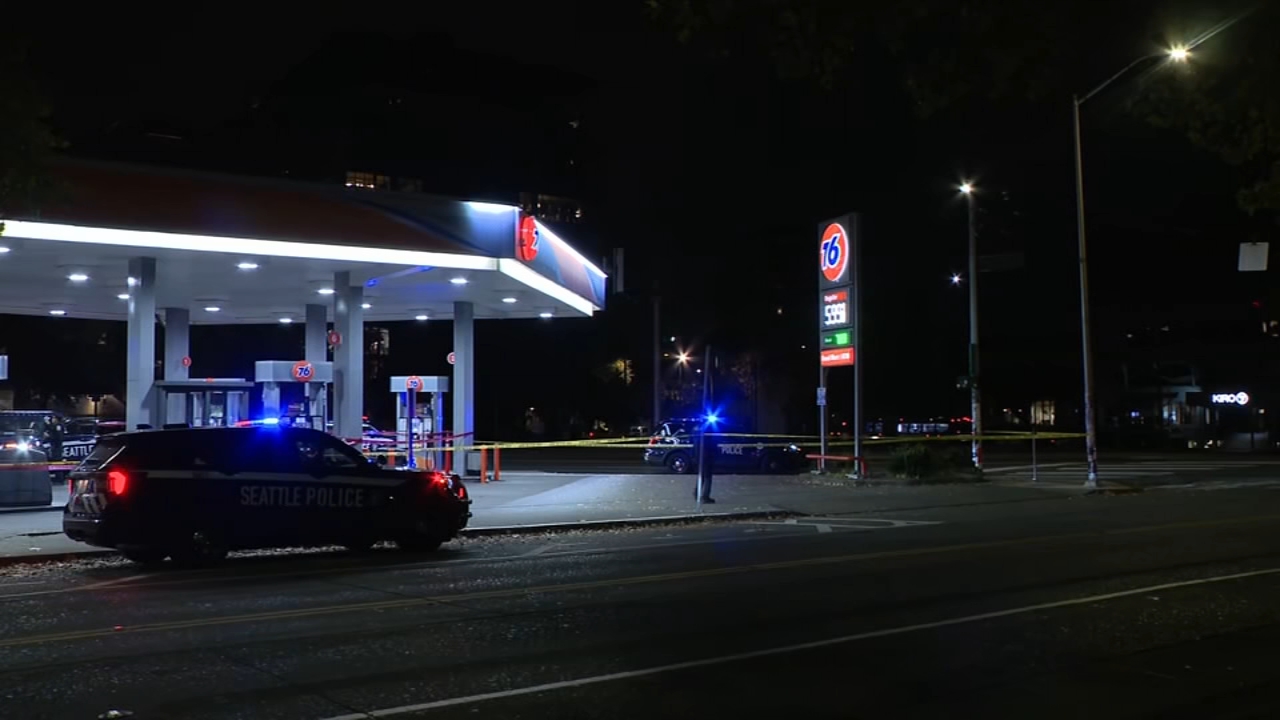
The parallel investigation in Seattle adds an even darker dimension to Fleming’s background. The murder charge listed in court documents is connected to a shooting at a gas station that left one person dead. It has not yet been clarified exactly how the Seattle and Kenosha incidents are connected or what the motive may have been. However, the suspect’s movements—from the Pacific Northwest to the Midwest and then to Chicago—indicate the scale of the search. As ABC7 Chicago reports, the arrest took place in Chicago on Tuesday evening. Afterward, authorities said detectives would begin working with the Kenosha County District Attorney’s Office to initiate extradition proceedings and pursue charges in Wisconsin.
The key legal issue is extradition, meaning the formal transfer of a detainee from one state to another for court proceedings. Because Fleming was arrested in Illinois while the allegations against him concern Wisconsin and Washington, the next stage of the case will depend on which state files a request first and how quickly prosecutors coordinate. In such cases, priority is typically given to the most serious charge or to the state that first issued a warrant, although in practice the outcome is determined through negotiations between agencies. It is significant that Kenosha officials explicitly said they intend to “pursue charges in Wisconsin,” indicating the seriousness of the local case and that the killings of Fleming’s mother and stepfather are being treated as a central episode.
The human context is equally important: this is a man accused of killing his own mother and her husband. Such intrafamilial crimes are often associated in criminology with long-running conflicts, inheritance disputes, or mental-health disorders, although there is no official information about the motive so far. Police descriptions of Fleming as “unstable” may suggest that investigators suspect mental-health problems, but before trial that remains only an assumption. For residents of Kenosha and Seattle, the main conclusion is straightforward: a series of tragedies that initially appeared unrelated may have been connected to one person, and his arrest in Chicago has removed the immediate threat. What happens next will depend on the speed of the extradition process and the evidence detectives gather in both states. That will determine whether Fleming’s case remains a single-state prosecution or becomes a complex multistate proceeding.