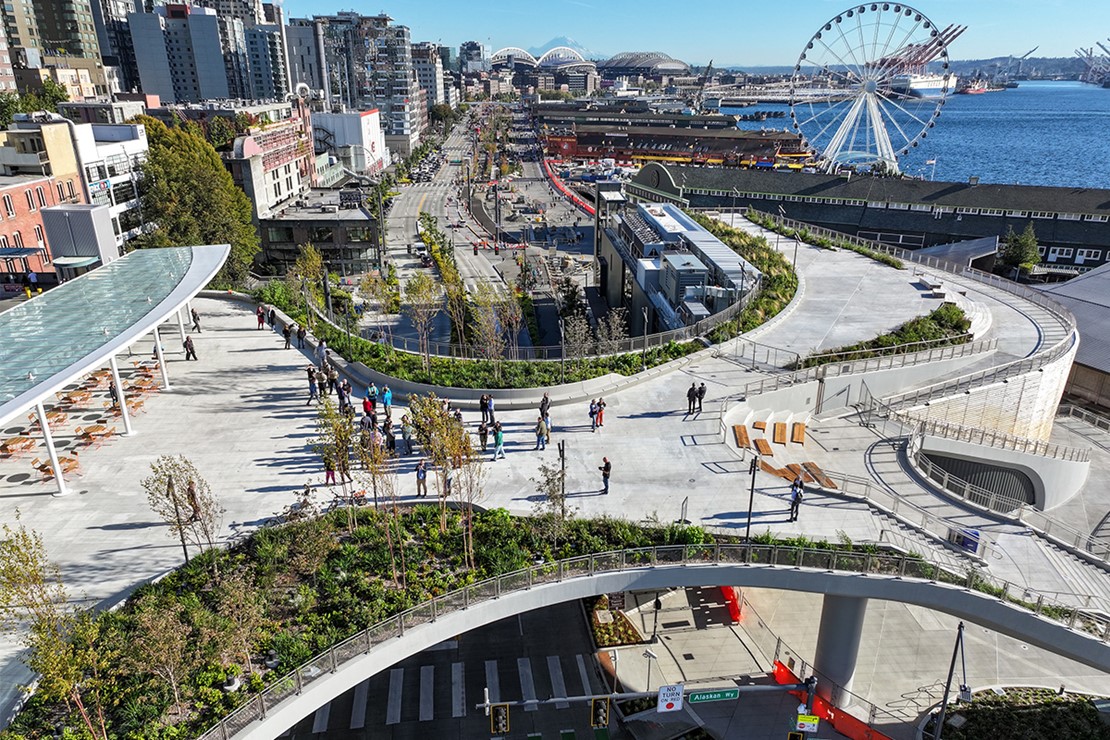
In Seattle, a USA–Australia soccer match took place with a large parade and transportation headaches, and the Mariners made a roster change that brought in Weston Wilson.
Seattle Held a Huge “March to the Match” Ahead of the U.S. Team’s Win Over Australia
On Friday, Seattle put on a real show even before the players took the field. A massive crowd gathered at Pier 58 for a sunny pre-match event featuring the leading podcasters from “Men in Blazers,” author John Green, and the “Beastmode” himself—NFL star Marshawn Lynch. The rally began at about 8:30 a.m., and by then, tons of fans had already arrived. It was part of the “March to the Match” ahead of a friendly men’s international between the United States and Australia, which the Americans won 2–0.
As reported by Seattle Refined, the event drew an incredible number of supporters, underlining the city’s passion for soccer.
Seattle has long been known for its loyal soccer fan base—home to the MLS club Seattle Sounders, whose supporters are famous for loud backing and record attendance. The “March to the Match” is a tradition where fans walk through the city streets to the stadium, creating a festive atmosphere. The presence of media figures like John Green (a bestselling author and video blogger) and Marshawn Lynch (an NFL legend known by the nickname “Beastmode” for his powerful style of play) gave the event extra scale.
It was especially symbolic that Lynch—an Oakland native, but tied to Seattle through his Seahawks performances—became part of the soccer celebration. It shows how soccer (and the sport more broadly) can bring together different sports cultures in the United States.
For those not in the know: “Men in Blazers” is a popular soccer podcast and TV show, hosted by figures known for an ironic style and deep knowledge of the game. John Green, in addition to his literary work, is also an active supporter of soccer and is even a co-owner of Birmingham City alongside other celebrities. Marshawn Lynch, after retiring from the NFL, has become a prominent pop-culture figure and frequently participates in charity and sports events.
The key takeaway from all this is the growing popularity of soccer in the U.S., especially ahead of the home World Cup in 2026. Events like the “March to the Match” don’t just bring in casual fans—they also create a sense of community. Organizers managed to pack record numbers onto Pier 58, which points to strong interest in the U.S. team, which has shown steady growth in recent years. The 2–0 win over Australia is another step in preparation for major tournaments.
As for the economic and cultural impact: events like these boost tourism and local business while strengthening Seattle’s image as one of the country’s leading soccer cities. For fans, it was a chance not only to see stars, but to be part of a bigger celebration that will be remembered for a long time.
U.S. vs. Australia Soccer Match in Seattle: Traffic Chaos and Blocked Roads
On Friday, June 19, Seattle hosted a major FIFA World Cup soccer match between the U.S. and Australia national teams. As is common during big sporting events, the city faced serious transportation problems. Local broadcaster FOX 13 Seattle quickly launched a live stream of road-condition updates to help residents and visitors navigate closed streets, public-transport delays, and traffic jams.
In the article Seattle traffic updates for USA-Australia World Cup, reporters provide real-time updates on the busiest sections, changes to bus routes, and recommendations for avoiding the stadium area.
Even though the piece itself is only an announcement and a brief introduction, it’s clear from it that on game day Seattle residents ran into the kinds of inconveniences that typically come with events like this. The match—held at one of the city’s largest stadiums—drew tens of thousands of fans, immediately affecting congestion on major corridors. Put it in context and you can see the bigger picture: Seattle has long suffered from chronic traffic problems, and international tournaments only make things worse.
Closing roads around the venue, temporary changes to bus-routing patterns, and parking restrictions are standard practice during games involving national teams.
The main points that come out of this report are the need to plan trips in advance and to keep an eye on the latest updates. While the article itself doesn’t include specific figures or quotes, it’s obvious that local authorities and transportation services were working under extra strain. The effects aren’t limited to just a few blocks around the stadium—they also hit distant highways, since many spectators travel in from suburbs and nearby cities.
For those unfamiliar with the concept of a “World Cup” (or “World Baseball Classic,” as it may be confused in some contexts), it’s worth clarifying: this is an international competition held every four years, where national teams from different countries compete for the title of the best. In this case, the U.S. vs. Australia match was part of the group stage or a friendly (the exact status isn’t clear from the article), but its scale still required a mobilization of city services.
As the FOX 13 Seattle publication shows, the TV station plays an important role in informing citizens in real time. Live blogs like these help people avoid hours stuck in traffic and get to their destination faster. Overall, Seattle’s traffic situation on match day is a clear example of how a major sporting event can effectively paralyze movement in a metropolis for hours—and even after the game ends, the impact can still be felt well afterward.
Residents and visitors should be ready for similar inconveniences in the future, especially if Seattle continues to host matches at the highest level.
Mariners Bolster the Bench with a Right-Handed Bat: Wilson for Mastrobuoni
The Seattle Mariners continue to make targeted adjustments to the roster ahead of the season’s decisive stretch. On Friday, the team announced the addition of utility veteran Weston Wilson to the active roster from the AAA Tacoma Rainiers. To open a spot on the team’s expanded 40-man list, the club designated another utility player for assignment (DFA)—Miles Mastrobuoni. According to a source Seattle Sports, the move is intended to add right-handedness to a bench that’s mostly left-handed, especially in the infield.
Weston Wilson, who is 31, already made the starting lineup on Friday night at third base and took ninth place in the batting order in the game against the Boston Red Sox. Over the previous three seasons with the Philadelphia Phillies and 19 games this year with the Baltimore Orioles, he played 100 games at the highest level. In 2025, Wilson set a personal best in home runs (five) with a modest .198 batting average across 125 at-bats.
This season his numbers look more modest: .231/.348/.333 (OPS .681) with one home run in 46 appearances for the Orioles. Still, his versatility stands out. At 188 cm tall, he has played every position in MLB except catcher and shortstop, most often appearing on the left side, at third base, second base, and first base. The Mariners signed Wilson as a younger minor-league free agent on Sunday, immediately after he chose free agency over being sent to the minors by Baltimore. And he has quickly justified the trust: in two games for the Rainiers, Wilson collected 6 hits in 9 at-bats (.667), including a double, four runs, four RBI, and two stolen bases.
The roster spot created by sending Mastrobuoni to the DFA list is a standard procedure that allows a club within a week to either trade the player, place him on waivers for a claim, or terminate the contract. Miles, 30, was in his second season with Seattle and his fifth in MLB (he previously played for the Chicago Cubs and Tampa Bay Rays). This year he appeared in just eight games after a full rehabilitation stint in the minors due to a calf injury suffered while playing for Italy during the World Baseball Classic.
His size is more modest (175 cm), but he’s also a utility man: he’s played first base, second base, third base, and left field. The only MLB positions he hasn’t tried are catcher and center field. This season for the Mariners, his batting line is .217 (5 hits in 23) with two walks, three runs, and one RBI. Last year, over 76 games, Mastrobuoni hit .250/.324/.296 (OPS .620) with one home run and four doubles.
For a Seattle team that currently leads the AL West division 39–37, this blend of experience and profiles could matter in the push for the playoffs. Wilson offers more power contact from the right side, balancing the lineup—especially in series against opponents with left-handed starting pitchers. That said, his Orioles stats leave some questions, but the uptick in Triple-A provides hope.
The adjustment should be quick: already on Friday he’s in the lineup against Boston, and the expectation is that he’ll contribute not only on defense, but with timely hits as well. Seattle’s management is clearly betting on roster flexibility: both players can cover many spots, but for now the preference is for the bigger, right-handed Wilson.