
Michael Baumgartner, the Republican representative for Eastern Washington in Congress, is running for a second term in the state’s 5th District. He is counting on voters’ support based on his local roots, political experience and legislative initiatives.
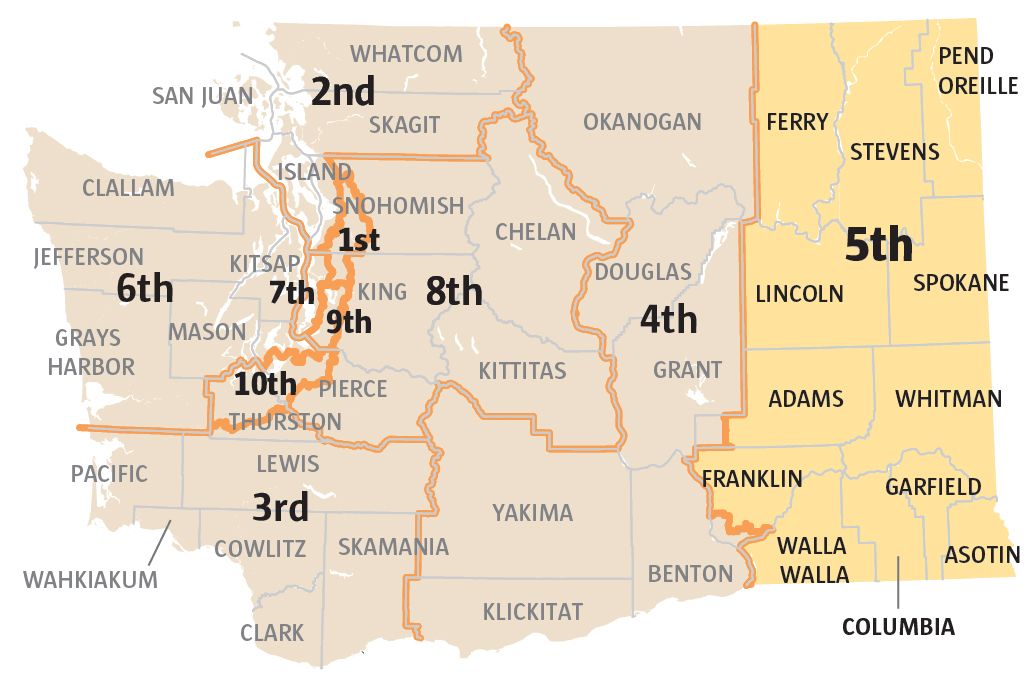
The 5th District includes Spokane and vast rural areas of Eastern Washington. Despite Democratic gains elsewhere in the state, it has remained predominantly Republican for decades. Conservative and socially conservative views are strong in agricultural areas, along with distrust of the federal government. Spokane is politically more diverse, but its electoral weight is usually insufficient to change the balance beyond the city.
During a campaign interview, Baumgartner praised the Republican-led Congress’ achievements, including new children’s investment accounts, tax breaks for tips and overtime work, measures supporting rural hospitals and initiatives to restore salmon populations. He also supports banning members of Congress from trading stocks.
Candidates must account for the differences between Spokane and the district’s rural areas. For urban voters, housing, health care, public safety and infrastructure are more important. Rural residents pay greater attention to fuel and agricultural input prices, property rights, access to water, forestry and taxes. Baumgartner grew up in Whitman County, located in neighboring Idaho, and his ties to Eastern Washington’s agricultural region help him appeal to that audience, although Whitman County itself is not part of the 5th Congressional District.
This time, his opponent is again Democrat Carmela Conroy, a former diplomat, prosecutor and attorney. Baumgartner defeated her decisively in 2024, winning 61% of the vote, but Democrats now view the district as potentially vulnerable for Republicans.
The national political climate is working against Baumgartner. President Donald Trump’s low approval ratings, dissatisfaction with deportation policy, the war and high fuel prices are creating conditions for a possible “blue wave” in the Nov. 3 election. The Democratic Congressional Campaign Committee has already labeled the race competitive.
At the same time, the 5th District is traditionally considered safely Republican. The last Democrat to represent it was House Speaker Tom Foley, who lost his seat back in 1994. In the August primary, Baumgartner received 47% of the vote, Conroy received 19%, and the remaining votes were divided among other candidates.
Baumgartner is relying on his connection to the region and his many years of political experience. He worked for the U.S. Forest Service, served at a diplomatic mission in Iraq and later represented the district in the state Senate. He also emphasizes his independence from his own party. For example, he criticized the trade war with Canada and opposed attempts by the Trump administration to change the vote-by-mail system.
Mail-in voting remains an important part of political disputes in Washington. Because ballots are sent out in advance, campaigns begin persuading voters well before Election Day and focus on getting ballots returned, not merely on turnout. Democrats consider the system convenient and secure, while some Republicans are demanding stricter signature verification and closer adherence to deadlines, arguing that the lengthy counting process undermines confidence in elections. The disputes surrounding the system are especially important to Baumgartner, who previously opposed attempts by the administration to change the rules for mail-in voting.
Conroy argues that the Trump administration has failed to keep its promises to lower prices and leave Medicare, Medicaid and Social Security untouched. She opposes broad domestic enforcement by immigration authorities, criticizes tariffs and believes local governments should decide for themselves how to protect water and energy resources from the excessive demands of data centers.
Eastern Washington attracts data centers with affordable land and comparatively cheap hydropower, but their rapid growth is intensifying competition for water and electric-grid capacity. Such facilities consume substantial amounts of electricity and sometimes water to cool servers. Local residents and officials fear higher prices, strain on infrastructure, and harm to agriculture, ecosystems and the reliability of the power supply.
Despite Democrats’ cautious optimism, analysts still consider Baumgartner the favorite. By the end of September, Conroy had raised about $723,000 and had approximately $154,000 on hand, while Baumgartner had raised $2.2 million and had more than $807,000 in his account. The congressman himself acknowledges that the race cannot be considered guaranteed, but says he enjoys the job and solving difficult problems even amid growing political polarization.



Based on: Amid potential blue wave, Spokane Republican vies to stay in Congress