Seattle news digest: a new court for minor offenders and tougher penalties for repeat offenders, the 25-year investigation into the murder of prosecutor Thomas Wales with a $2.5 million reward, and the return of the legendary Georgetown Morgue attraction for the Halloween season.
Seattle Changes Course: A New “Connection Court” and a Tough Response to Repeat Offenders
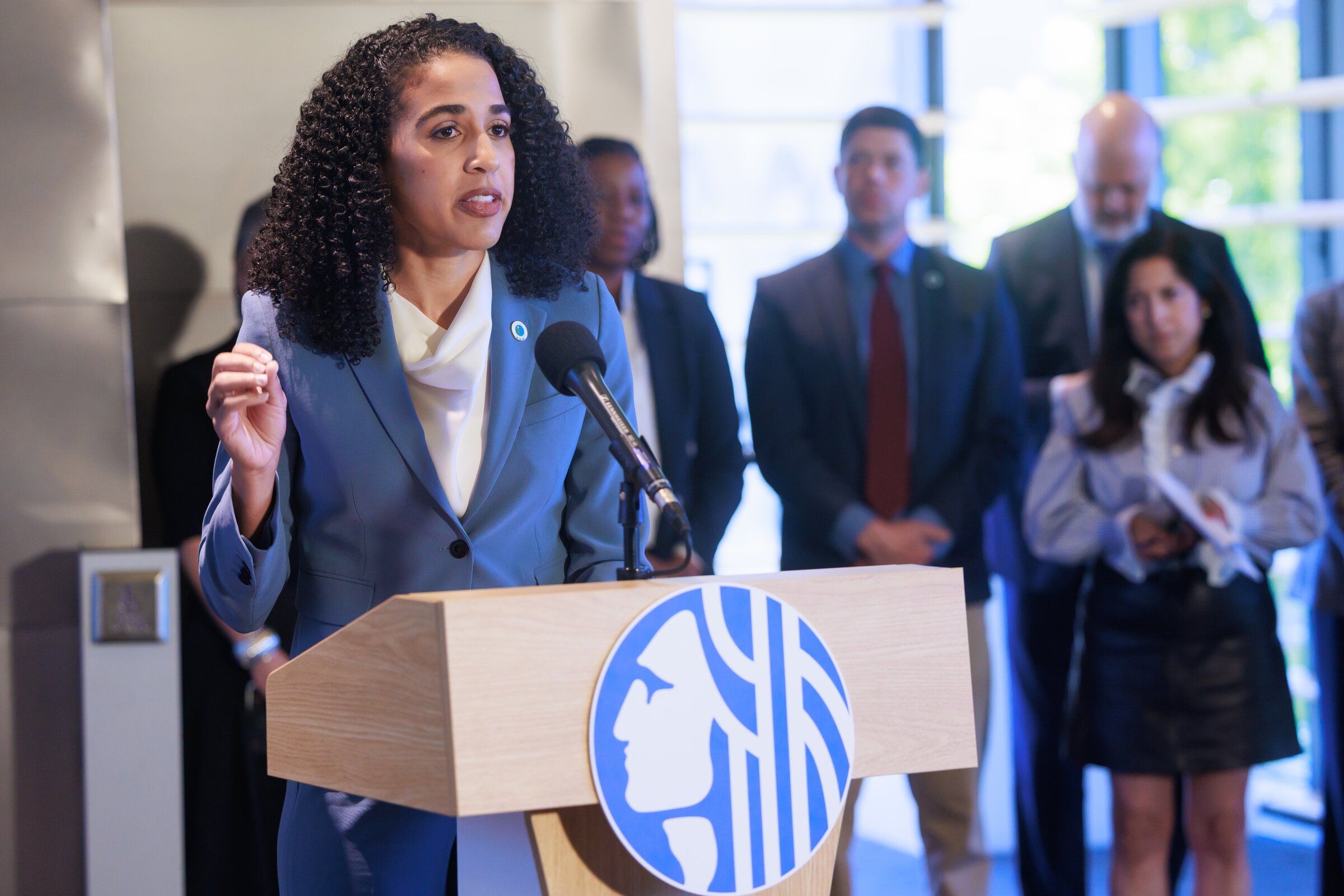
Seattle officials are once again changing course in their approach to minor offenses. City Attorney Erika Evans has announced the launch of Connection Court, a program that allows people accused of nonviolent misdemeanors to complete a 90-day services program instead of facing criminal prosecution. At the same time, the city announced the HiPRO initiative, aimed at imposing tougher penalties on those who repeatedly return to criminal behavior. The move marks another turn in the city’s years-long oscillation between strict enforcement and compassion—two forces that have shaped Seattle’s criminal justice policy.
The new program, called Connection Court, held its first session Wednesday. It is intended for people accused of minor, nonviolent offenses and offers services such as addiction treatment, employment assistance, help obtaining medical benefits and peer support. According to The Seattle Times, the initiative resembles a community court that shut down three years ago. That court automatically referred people arrested for certain misdemeanor offenses to six hours of mandatory community service. Evans, however, emphasizes that Connection Court will feature stricter accountability. “Smart justice means holding accountable those who repeatedly break the law, while also helping those who are ready to accept that help, with oversight and accountability throughout the process,” she said in a press release.
Not everyone welcomed the new initiative. Public defenders from the King County Department of Public Defense, who helped create the earlier community court, have raised concerns about the program’s limitations. In their view, Evans’ model is a weaker version of what was originally discussed during closed-door meetings. Katie Hurley, a special adviser on criminal policy and practice, said the 90-day requirement would disproportionately affect low-income people, people of color and people experiencing homelessness. “The restrictions will affect people who are indigent, people who are disproportionately people of color, and people experiencing homelessness,” she said.
To qualify for Connection Court, the charge must not be “part of a pattern of frequent criminal misdemeanors.” People with serious felony convictions—including rape at any time or second-degree assault within the past decade—are ineligible. The program is also unavailable to people accused of driving under the influence, weapons offenses or domestic violence. Some minor theft cases, however, may qualify. Participants must demonstrate “law-abiding behavior” for 90 days to successfully complete the program; otherwise, their cases will proceed through the traditional court system.
At the same time, Evans announced the High-Priority Repeat Offenders initiative, or HiPRO, targeting people who frequently cycle through the legal system. The program covers people charged in three cases within three months or six cases within six months, as well as those who return to places from which they have previously been banned and are accused of theft. Prosecutors will seek enhanced jail sentences for such individuals, who are expected to be ineligible for Connection Court and other alternative-justice programs. Hurley expressed “concern” that people classified as high-priority offenders would be excluded from Connection Court and noted that the program should also be available to people in custody who cannot afford bail. “We believe we should not exclude the people for whom a Connection Court response is most needed, and that seems truly inconsistent with the concept of an expanded community court,” she added.
Mayor Katie Wilson endorsed Connection Court, saying the program would help “people with complex needs” through individualized approaches. The new alternative also creates potential employment opportunities through the Downtown Seattle Association’s ambassador program, a second-chance employer. Ambassadors clean downtown streets and assist tourists and residents. Cases better suited to mental health court, or cases involving someone already participating in that court, will not go through Connection Court.
The initiative reflects another shift in Seattle policy, which for years has vacillated between stronger enforcement and softer penalties for people struggling with poverty, addiction and mental-health problems. The previous version of community court launched in 2020, at the height of protests for racial justice, but was abolished in 2023 by Ann Davison, a former tough-on-crime city attorney. Last year, she introduced a replacement that included orders to stay away from drug and prostitution zones. After taking office, Evans suspended enforcement of those laws. She is now proposing her own balance between accountability and support—a balance that has already drawn criticism from advocates and raised questions about how effectively it will address the problems facing the city.
Several terms require explanation to understand the context. In the American legal system, a misdemeanor is a category of offense that falls between a felony and a minor infraction. Misdemeanors are generally punishable by a fine or a short jail sentence. A community court is a specialized court focused on addressing the underlying causes of offenses, such as addiction or homelessness, rather than relying on traditional punishment. Connection Court therefore represents an attempt to combine alternative justice with elements of supervision and accountability, making it stricter than earlier models. The HiPRO initiative, meanwhile, is designed to combat recidivism by increasing penalties for people who appear resistant to rehabilitation.
The FBI Won’t Give Up: Who Killed Prosecutor Thomas Wales—and Why the Case Remains Open After 25 Years
Twenty-five years is long enough to forget many tragedies. But not this one. In October 2001, federal prosecutor Thomas Wales was shot to death in his home in Seattle’s Queen Anne neighborhood. He was sitting at his computer in the basement when an unknown assailant fired several shots through a window. Neighbors heard the gunfire and called police, but the killer fled before officers arrived. A quarter-century later, the FBI and the U.S. Department of Justice still hope someone connected to the crime will speak. As W. Mike Herrington, the FBI’s special agent in charge in Seattle, put it, “People out there know what happened,” and many, in his view, are already close to coming forward. “Someone will be the first to talk,” he said, according to a KOMO News report.
Herrington says investigators have several suspects and that the crime was not the work of a lone gunman but of a group that planned the murder. The FBI has not disclosed details, but it emphasizes that the investigation is ongoing and that the reward for information has reached $2.5 million. “Anyone who was involved 25 years ago is in a different place in life now. You need to come to us before we come to you,” the agent warned. These are not merely rhetorical words. Behind them lie decades of painstaking work, several theories, one strange anonymous letter and one high-profile but ultimately inconclusive perjury episode.
To understand why the case remains active, it is important to understand who Thomas Wales was. He worked for nearly 20 years in the U.S. Attorney’s Office in Seattle, handling complex fraud cases. His colleague Tom Woods, an assistant U.S. attorney for the Western District of Washington, put it this way: “Tom was killed for doing his job. His job was to protect society. When someone attacks him, they attack the very fabric of our justice system.” This is more than a figure of speech: the murder of a prosecutor in his own home was seen as an attack on the entire law-enforcement system.
One of the first theories focused on retaliation for a specific criminal case. Several months before his murder, Wales prosecuted employees of a Washington helicopter company who were accused of fraud. The prosecution fell apart, and the case against the men was dismissed in the summer of 2001. Three years after the murder, the FBI searched the home of a man connected to that helicopter case, but there was not enough evidence to bring charges. Investigators also pursued a theory connected to Wales’ outspoken position on gun control. In March 2001, he appeared on KOMO News and called for legislation requiring gun owners to store their arsenals responsibly. In the United States, where the right to bear arms is protected by the Second Amendment, such statements can make a prosecutor a target for radical opponents.
The strangest twist came in 2006. The FBI’s Seattle office received a letter from someone claiming to have shot Wales. The envelope was mailed from Las Vegas, and the return address listed “Gidget”—a nickname that did not appear in any suspect database. In the letter, whose full text the FBI posted on its website, the unknown writer said he had been unemployed, received an anonymous call offering money to kill someone, traveled to Seattle, received an address and a weapon at a designated location, waited for the victim to sit at his computer, fired and escaped. The writer also mentioned that “the wife was away” and that he had been paid in cash to avoid leaving a trail. The FBI viewed the letter skeptically: it contained no details that were not already public, and some facts contradicted the case file. However, as noted in a 2006 statement, profilers did not rule out the possibility that the writer was connected to the murder.
That same year, in 2006, the FBI released a composite sketch of a man who might have information about the crime and made an important clarification: the murder weapon was apparently a Makarov pistol fitted with a nonstandard, so-called aftermarket barrel. This meant that only a limited number of such barrels had been sold in the United States, giving investigators an additional lead. But the weapon itself was never found.
For nearly two decades, the case saw no major breakthroughs—until an unexpected turn in 2019. An Everett woman was charged with lying to a grand jury. According to investigators, she had told the FBI and Seattle police that “Suspect No. 1” had boasted to her about taking part in “the murder of a judge or prosecutor who lived on top of a hill.” But when she was called before a grand jury—a panel that determines whether there is enough evidence to bring charges—she said she had never made such statements. Her case sparked renewed interest in the Wales murder and fueled rumors that the FBI was close to solving it. The woman ultimately reached a deal with prosecutors and avoided prison time. The episode is revealing: even 18 years after the murder, people with information continued to become confused in their accounts, fear the consequences or try to protect someone.
Today, Herrington insists that this is not a “cold case.” Wales’ murder is being investigated by a joint task force that includes the FBI, Seattle police, the Department of Justice, the U.S. Attorney’s Office and the King County Prosecuting Attorney’s Office. “We are not going to let this go. We believe the people involved are still alive, still able to provide testimony and still able to be brought to justice. And we will not give up,” the agent said. He is relying on psychology: over a quarter-century, every participant’s life has changed. Someone may have started a family, someone may now fear retaliation, and someone may simply be tired of looking over their shoulder. “They need to be thinking: Is this the moment when this catches up with me? It’s time to put an end to it,” Herrington added.
Several aspects of the story may be unfamiliar to Russian readers. A grand jury is not a jury trial in the usual sense, but a closed proceeding in which a prosecutor presents evidence and jurors decide whether there are grounds to bring charges. Lying under oath during such a proceeding is a separate crime, which is why the Everett woman was prosecuted. A Makarov pistol with an aftermarket barrel is a Soviet-designed handgun popular among collectors and gun owners in the United States; replacing the original barrel with a nonstandard one complicates ballistic analysis but narrows the pool of potential buyers. The Second Amendment is the constitutional provision guaranteeing the right to keep and bear arms, a subject of decades-long political battles in the United States.
The central mystery of the Wales case lies in the combination of motive and inevitability. If the murder was ordered because of the prosecutor’s professional work, it would mean that an organized group decided to physically eliminate a representative of the law in order to influence other cases or seek revenge. If the motive was personal hostility stemming from his position on gun control, then it was a political assassination aimed at a specific stance. In either case, the $2.5 million reward sends a clear message: the government is prepared to pay for information leading to an arrest. And judging by Herrington’s tone, the FBI genuinely believes that one of the participants or witnesses may eventually break. Twenty-five years is not only a long time for fear to persist; it is also a point after which remaining hidden becomes increasingly difficult.
The Return of Georgetown Morgue: How Seattle Prepares for the Season of Fear
Fall in Seattle is a season not only of rain and pumpkin spice lattes, but also of lines stretching for hours for the chance to hear a single scream. One of the city’s oldest attractions, Georgetown Morgue Haunted House, has once again opened its doors to anyone looking for a thrill ahead of Halloween. Judging by the crowds, there is no shortage of visitors: people travel from across the Pacific Northwest to walk through corridors that were once genuinely used to prepare bodies for funerals and cremation.
Attraction owner Scott Colling told local journalists that the building housing the “morgue” has served as a haunted house for 19 years, while the team itself has been frightening the public for 35 years. “We love scaring people. I have a great team, a great makeup department, and we’ve been preparing for this incredible season,” he said, according to a KIRO 7 report published by Yahoo News. His words capture the essence of the Halloween-attraction industry: behind the polished appearance and terrifying sets is the hard work of hundreds of people for whom fear is a profession.
The main feature of Georgetown Morgue is that its history was not invented for effect. The building was once genuinely used for funeral services and cremation, giving the atmosphere an additional, almost tangible darkness. Despite the historical setting, however, the show does not stand still. Colling says the program changes by about 30 percent each year. “We just tweak it a little every year and add something new,” he explained. This approach helps retain the interest of regular visitors who might otherwise feel they have already seen everything.
The scale of the preparation is impressive. During the season, the attraction hires more than 100 temporary employees, while between 25 and 50 scare actors rotate throughout its operating period. These are not simply people in masks but an entire production operation involving makeup artists, costumers and technical staff. KIRO 7 journalists were able to see the process backstage—from makeup application to the final touches on costumes—and found that every sudden appearance by a monster is backed by carefully rehearsed choreography.
For those planning a visit, organizers have provided several practical options. Tickets can be purchased online, and parking is free. But the most interesting feature is a way to avoid standing in line for hours. Colling described an unusual tradition: “We hold a blood drive every year—two or three times during the season. If you donate blood, then after buying a ticket, they let you go straight to the door.” The initiative not only helps local blood banks but also creates a kind of visitor cult: donating blood to skip the line sounds like the perfect horror scenario, but in reality it is a thoroughly humane marketing strategy.
The season will run through Nov. 7, and judging by the lines, Georgetown Morgue will remain one of Seattle’s main destinations for thrill-seekers. In a world where entertainment is becoming increasingly digital, the attraction offers something archaic and therefore especially valuable: a live, physical experience of fear shared by hundreds of strangers standing in the same line. That may be precisely what has made it so popular for 35 consecutive years.