
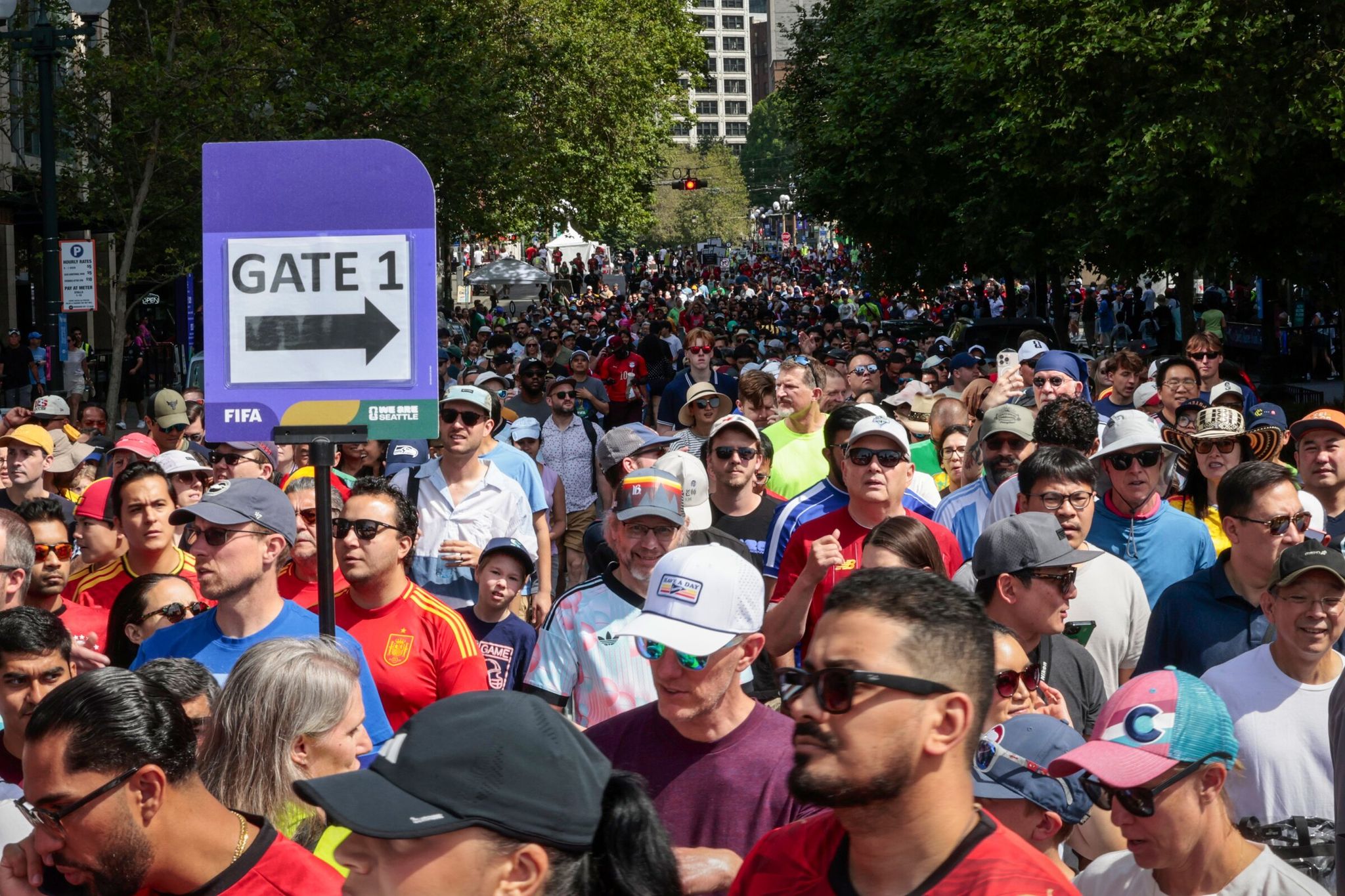
After a record-hot Monday, when the number of hospital calls in Seattle during World Cup soccer celebrations rose by 15%, American Medical Response (AMR) is deploying additional ambulance crews both inside the stadium and outside the pedestrian zone for Friday’s match between the United States and Australia.
According to Curtis Dominges, AMR’s Seattle chief supervisor of paramedics, Monday was festive but relentlessly hot: people were under the sun all day, leading to numerous heat-related illnesses and dehydration.
On Monday, four two-person crews were on duty inside the stadium, and three more were stationed outside. While the exact number of patients wasn’t given, there were reports of fractures, sprains, bruises, and head injuries, some of which were linked to alcohol. Because of the large number of international visitors, medics faced a language barrier, but Dominges says translation apps helped them quickly get patients’ basic information.
For Friday’s match, which begins at noon and is followed by an evening baseball game, the Mariners vs. the Boston Red Sox, eight additional ambulance crews will be added. Officials expect even larger crowds than on Monday, so the extra teams will be distributed throughout the city. Both venues—Lumen Field, where the soccer match is held, and T-Mobile Park, for baseball—are located in the SoDo area in south downtown Seattle, literally across the street from each other. When games are played on both arenas at the same time, traffic in the area is completely shut down: streets are blocked off and tens of thousands of fans fill the sidewalks. Emergency services must coordinate routes in advance, use special lanes or detours, and sometimes even staff locations on-site to avoid call delays that during rush hour can reach 10–15 minutes.
Weather forecasters are predicting up to 27°C—not as hot as Monday, but enough to trigger new heat problems. Seattle’s historically cool and damp climate means most homes and apartments don’t have air conditioning. Residents aren’t used to sudden temperature spikes: the body doesn’t have time to adapt to heat in a short period. High humidity also makes it harder for the body to cool itself through sweating. As a result, even 27°C—conditions considered comfortable in other regions—can lead to heat exhaustion and heat stroke, especially among older people and those with chronic illnesses.
Medics advise fans to drink water before and during the match, take breaks in the shade, wear light clothing, and be more careful with alcohol in the sun. If you experience dizziness, nausea, confusion, muscle cramps, or vomiting, don’t wait—call emergency services right away. “As soon as symptoms intensify to the point of loss of orientation or fainting, that’s a signal to call 911 immediately,” Dominges warns.
Based on: Emergency responders are ready for more World Cup matches