In this digest: Oregon’s crushing exhibition loss to Seattle after 25 turnovers; the Florida Panthers host the Seattle Kraken following Brady Tkachuk’s second consecutive natural hat trick; and Seattle endured nearly record-breaking late-October heat, surpassed only by the 2022 anomaly, while “zombie summer” has officially come to an end.
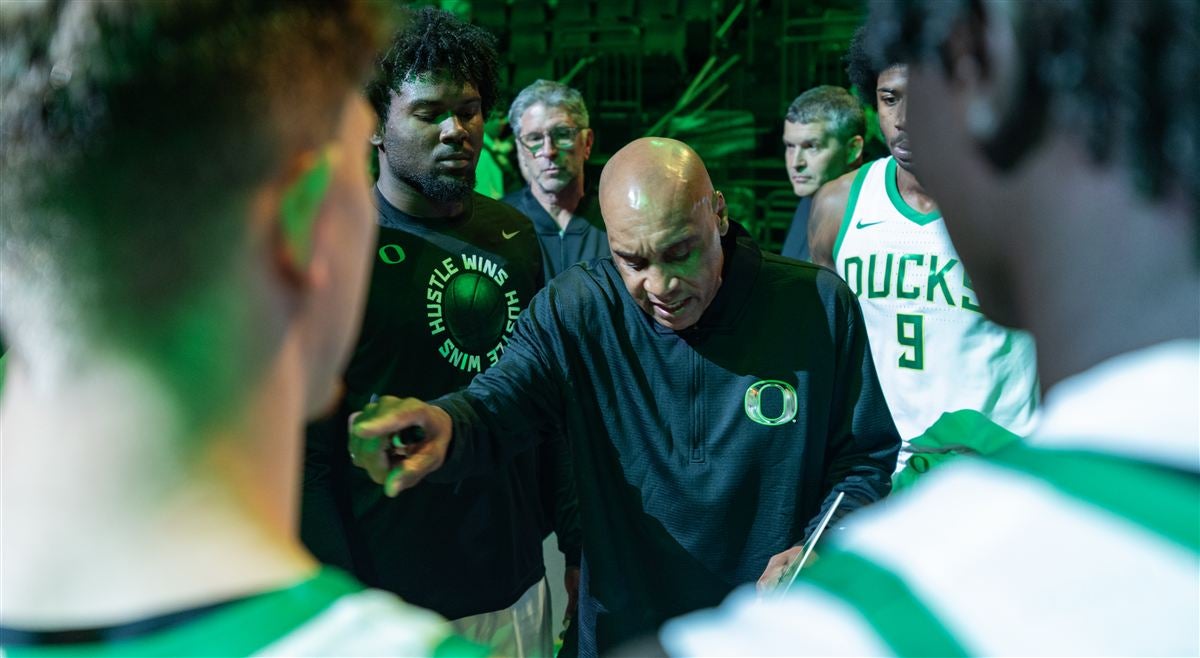
Chaos at Matthew Knight Arena: Oregon Falls to Seattle in Exhibition Opener, Doomed by Turnovers
On Thursday evening at Matthew Knight Arena, Oregon fans saw what they least expected: the Ducks fell to Seattle University, 71–65, in the first of three preseason exhibition games. Formally, the result does not count toward the record—the regular season begins only on November 2—but the game was a cold shower for a team undergoing a massive rebuild. Twenty-five turnovers, 42 percent shooting from the field, and a sense of complete disjointedness were on display from a squad whose ten new scholarship players are still learning a new system.
Acting head coach Tony Stubblefield did not look for excuses after the game, but candidly acknowledged that the opponent was simply more physically prepared. According to Stubblefield, Seattle came out and competed clearly for all 40 minutes, while the Ducks were rattled by the Redhawks’ physicality. Stubblefield also noted that he tried several different player combinations in the second half, and those experiments clearly did not help. That, however, is normal for exhibition games: this is when coaching staffs look for effective combinations and test their system in action. The problem was that on Thursday, the gap between the plan and reality was far too obvious.
Oregon’s best player was junior forward and newcomer Pharaoh Compton, who came off the bench and scored 15 points on perfect shooting—4-for-4 from the field—along with five rebounds and two assists. However, in 18 minutes he also committed four turnovers. Two other newcomers—senior forward Andrew Meadow, with 12 points, and Taylor Bol Bowen, with 11 points and seven rebounds off the bench—also made their mark on the scoresheet. But the overall picture was no brighter: the team’s most experienced player, senior forward Sean Stewart, fouled out after just eight minutes, while starting guard Tyrone Riley IV also left the floor for the same reason after playing 23 minutes. When the most experienced leaders cannot stay on the court, a young team has no one to rely on in the decisive minutes.
The turning point came with just over 14 minutes remaining, when Oregon led by 13 points. That was when the Ducks’ turnovers reached industrial levels, and Seattle began converting them into points. The Redhawks went on a 27–5 run over roughly nine minutes of game time and took a 67–58 lead with 4:42 remaining. During that stretch, Oregon turned the ball over ten times, and Seattle scored ten points off those mistakes. Stubblefield explained the collapse simply: defensive intensity dropped, questionable shots followed on offense, and then came those turnovers. Late in the game, the Ducks nearly came back—Wei Lin made two free throws, Bol Bowen scored five points in just over a minute, and with 1:06 left the deficit was down to two. But the final two three-point attempts missed, while Seattle secured rebounds at its own end and settled the matter with four free throws in the final 24 seconds.
The statistics underscore the scale of the problem: Seattle won the rebounding battle 41–40, including 16–10 on the offensive glass, and attempted 67 field goals to Oregon’s 48. The 19-attempt difference was a direct result of turnovers and dominance on the offensive glass, which was precisely what Stubblefield was referring to when he said that winning with 25 turnovers and 16 fewer shots than the opponent is virtually impossible. The Ducks made 7 of 21 three-pointers and 18 of 27 free throws. Seattle’s leading scorer was Mason Williams, who had 19 points, including three made three-pointers on seven attempts.
Perhaps the main conclusion from the evening came from Stubblefield himself: ten new players are not an excuse; the team must watch the film, get back to work the next day, and clean things up. Oregon’s next opportunity to test itself comes Wednesday at Stanford, in the second of three exhibition games. Although there is no standings table yet, fans should understand that preseason games do not count toward the record—but they do honestly show how ready a team is for real basketball. Judging by Thursday, there is a great deal of work ahead.
For readers unfamiliar with basketball terminology: exhibition games are preseason contests whose results do not count toward the official season record; they are held to evaluate the roster and strategies. A turnover is a situation in which a team loses possession without taking a shot, because of a steal, an out-of-bounds pass, traveling, or a rule violation. “Points off turnovers” refers to the number of points an opponent scores directly after such mistakes. An offensive rebound is a ball recovered by the attacking team after its own missed shot, giving it another possession and often becoming a key factor in games with many missed attempts. Finally, fouling out means a player is removed from the game after committing five personal fouls, which is especially damaging in NCAA college basketball because it deprives a team of experienced players late in the game.
Source: 247Sports.
Panthers Host Kraken: Can Tkachuk Repeat the Feat?
The game between the Florida Panthers and the Seattle Kraken at Amerant Bank Arena is more than just another NHL regular-season matchup. It is a meeting between two teams in completely different situations, but with the same number of points at the start of the season. Florida enters the game with a 4–2–2 record after a dramatic 3–2 overtime win over the Vancouver Canucks, remembered above all for Brady Tkachuk’s phenomenal performance. Seattle, meanwhile, is finishing a five-game road trip with a 5–2–1 record after losing 4–3 in overtime to the Tampa Bay Lightning. Both teams are showing that they must be taken seriously this season, and Saturday evening in Sunrise promises to be a test of resilience for both.
The main storyline surrounding Florida is Brady Tkachuk, who on Thursday recorded his second consecutive natural hat trick—that is, scoring three goals in a row without an opposing goal in between. No one had accomplished this since 1986: the last players to do so were Petri Skriko and Cy Denneny, making Tkachuk only the third player in NHL history to achieve the feat. His goals rescued the team from a two-goal deficit: he scored his first at 11:11 of the third period, tied the game with 13 seconds remaining in regulation, and won it at 2:33 of overtime. Seth Jones also deserves credit for contributing two assists, while Matthew Tkachuk extended his point streak to seven games. Goaltender Akira Schmid stopped only 17 shots, but made several key saves early in the third period, allowing the Panthers to remain in the game. That ability to pull games out through sheer determination is what currently sets Florida apart from many of its rivals.
Seattle, for its part, looks like a significantly improved version of last season’s team. The club has collected 11 points in eight games and put up a strong fight against Tampa, with goals from Ryan Winterton, Jared McCann, and Matty Beniers, while Philipp Grubauer stopped 31 shots before Victor Hedman beat him in overtime. Despite the loss, the Kraken are showing roster depth and confident defensive play, making them a dangerous opponent for any team in the league. The upcoming game will be the first of two meetings between the clubs this season. Their previous matchup, on March 24, 2026, ended with a 5–4 Florida victory in a shootout. The next meeting is scheduled for January 12, 2027.
The expected goaltending matchup is Schmid versus Grubauer. Schmid, despite modest numbers—2–1–1, an .876 save percentage, and a 3.25 goals-against average—has already shown that he can perform in tense late-game situations. Grubauer, by contrast, has been steadier at 2–1–1, with a .910 save percentage and a 2.71 goals-against average, and his confidence could help the Kraken make a serious push on the road. For Florida, the game is an opportunity to finish its homestand on a high note and strengthen its position in the highly competitive Atlantic Division. For Seattle, it is a chance to prove that its fast start was no fluke and that the loss to Tampa was merely an unfortunate setback. The game begins at 6:00 p.m. Eastern Time and will be available on Scripps, Prime Video, and KONG, as well as on radio stations 104.3 WQAM, 106.3 ESPN, and Thunder 100.3. On social media, the game will be accompanied by the hashtags #TimeToHunt, #SeaKraken, and #SEAvsFLA. A detailed fan analysis of the game will traditionally appear on Litter Box Cats, where the Panthers’ fan community follows every detail of the season.
Several terms may be unfamiliar to casual readers. A “natural hat trick” means that a player scores three consecutive goals without the opponent scoring between them. A “point streak” is a run of games in which a player records points—goals or assists—in several consecutive contests. A goaltender’s goals-against average, or GAA, shows how many goals they allow on average per 60 minutes, while save percentage indicates the share of opponents’ shots they stop. The lower the GAA and the higher the save percentage, the more reliable the goaltender. A record listed as “4–2–2” means four wins, two regulation losses, and two losses in overtime or a shootout. In the NHL, overtime and shootout losses are counted separately, and teams still receive one point for them, which explains why Florida and Seattle have nearly identical standings totals despite having different numbers of wins.
The key conclusion from this matchup is simple: Florida relies on Tkachuk’s individual bursts and its ability to turn games around late, while Seattle is displaying more balanced hockey backed by reliable goaltending. If the Panthers again allow their opponent to build a lead, relying on another hat trick would be risky—the Kraken know how to protect an advantage. On the other hand, if Schmid receives support from the defense and Florida plays more disciplined hockey in its own zone, Seattle may have trouble creating scoring chances. The game promises to be a tactical clash between two different styles, and its outcome could indicate how serious both teams’ ambitions are this season.
Seattle Nearly Broke Its Late-October Heat Record, but “Zombie Summer” Is Officially Over
On Friday, Seattle experienced a strange meteorological collision: the city saw one of the hottest days ever recorded for the second half of October, but the temperature record still was not broken. The air warmed to 77 degrees Fahrenheit—about 25 degrees Celsius—which is comparable to the average temperature in mid-July and several degrees above all previous highs for dates after October 15. The only exception was October 16, 2022, when the thermometer rose to 88 degrees Fahrenheit, or roughly 31 degrees Celsius, surpassing the previous October record by a full 16 degrees. Against that backdrop, Friday’s 77 degrees—which would have exceeded the old daily record of 72 by five degrees—remained only the “silver medalist,” falling 11 degrees short of the all-time high. As the author of the Emerald City Weather forecast wryly notes, something strange is happening with October 16 in this decade.
The main news, however, is not the records but the fact that the anomalous warmth is finally retreating. A weak atmospheric front will move through the region overnight Friday into Saturday, bringing laughably little precipitation for late October: most areas will receive less than 0.10 inches, or about 2.5 millimeters, while Whatcom County could get a quarter of an inch. The hourly HRRR models show zero precipitation for downtown Seattle because of the rain-shadow effect of the Olympic Mountains. If you sleep through Saturday morning, the rain will probably already be over. A small convergence zone could extend light showers in the North Sound area through midday and into the afternoon.
Despite its meager rainfall totals, this front will be the “winner” that brings summer to an end. Saturday’s highs will fall to the low 60s Fahrenheit—15–16 degrees Celsius—which, as the meteorologist wryly remarks, corresponds to the “ancient scrolls,” meaning normal averages for this time of year. So sweaters and flannel can come out again. Tourists still will not need umbrellas, though: the rain will be so light that visitors will have to be identified by other signs—for example, asking where Pike Place Market is or crossing the street in the wrong place.
From Sunday through the middle of next week, a dull but seasonal pattern will settle in. The next Pacific storm system, which will initially look as though it is headed straight for the coast, will instead turn south, leaving the region dry and seasonally cool, with highs in the upper 50s to low 60s. Long-range models are “sort of maybe” promising some rain around Thursday and possibly next weekend, but its intensity is expected to be extremely low. The two-week forecast also looks bleak for fans of bad weather: very mild conditions with only occasional patches of light precipitation.
The author expresses particular concern about whether this pattern could become the scenario for the entire winter season amid El Niño conditions. The latest NOAA winter outlooks remain colored warm for the region, so the meteorologist’s concerns are well founded—as is the joke that umbrella sales to tourists should not suffer. The reader response to the article is telling: 57 percent rated it “wow,” 43 percent chose “love,” and no one selected “funny,” “sad,” or “angry.”
Several terms help clarify the text. “Zombie summer” is an informal term describing the return of summer heat in autumn after the season appeared to have ended. A rain shadow is an effect in which moist air loses its moisture as it rises over a mountain range, leaving little precipitation on the leeward side; this is why the Olympic Mountains “protect” Seattle from rain. A convergence zone is an area where airflows meet and are forced upward, potentially sustaining precipitation longer than in surrounding areas. HRRR is a high-resolution regional weather forecasting model, while NOAA is the U.S. National Oceanic and Atmospheric Administration, which issues long-range seasonal forecasts.
The article’s key conclusion is that Friday’s heat was Seattle’s second-highest late-October reading on record, but the 2022 record remains out of reach. A symbolic but decisive front is now replacing the anomaly and returning the region to normal autumn temperatures. The main question, however, is not Friday but the entire coming winter: if NOAA’s forecasts prove accurate, warm and dry weather could linger for a long time, in which case the meteorologist’s “dull” forecast would be not a joke but a warning sign.