
Switching Washington state to permanent daylight saving time—a change possible only if federal law is amended—would add nearly 35 million school commutes before sunrise each year, according to researchers at the University of Washington. Behind the appealing idea of brighter winter evenings lies a less visible cost: for many children, especially in the state’s western areas and at schools with early start times, mornings would be darker for dozens of school days.
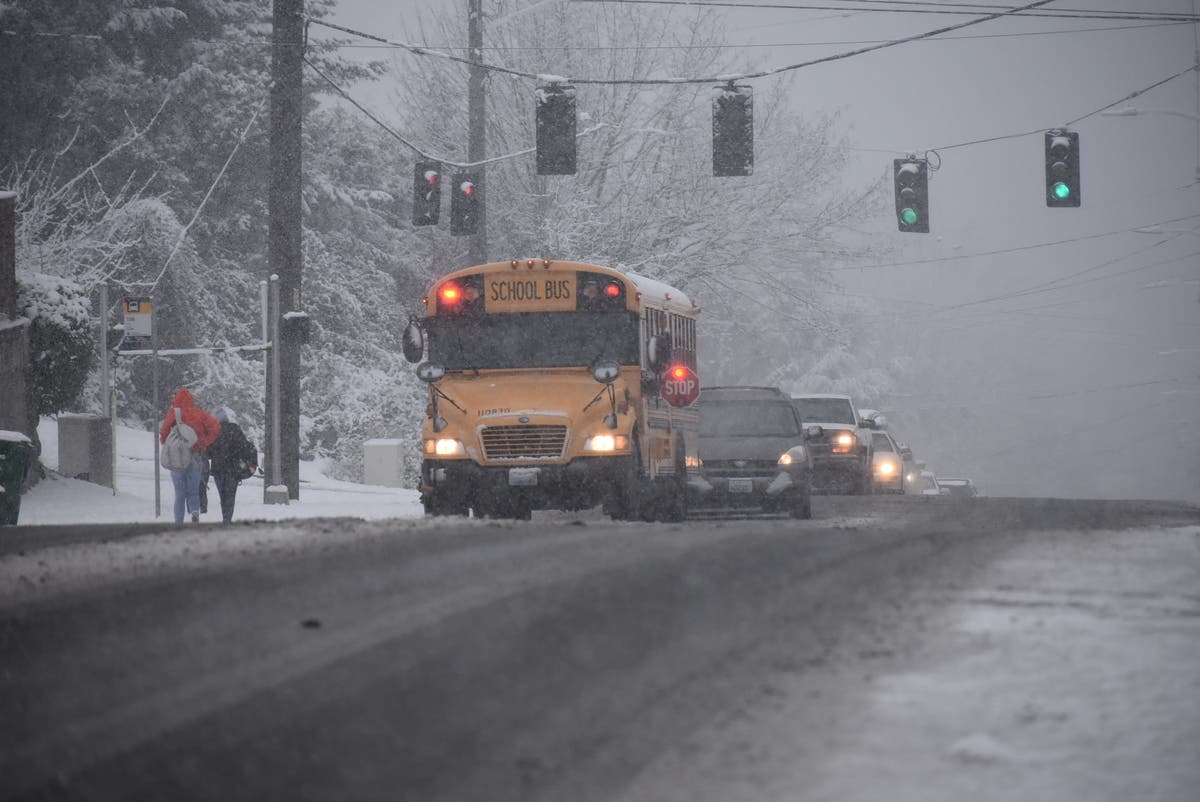
In late October, when Seattle is already settling into a rhythm of early sunsets and rain at school bus stops, the debate over changing the clocks can seem almost mundane: some people want more light after work, while others are tired of resetting the clocks twice a year. A new University of Washington study gives the debate a more concrete shape: a child’s journey to the bus, car, or school entrance before sunrise.
The study, published October 29 in the journal Current Biology, looks not at abstract “winter darkness” but at the schedules of individual schools. The researchers compared school start times, enrollment figures, and school coordinates to determine how many days children would have to set out before sunrise under three systems: the current clock changes, permanent standard time, and permanent daylight saving time. For their calculations, they assumed a 20-minute commute to school.
On average, schools in the state start classes at 8:27 a.m. Under the current system and under permanent standard time, students at an average school would not have to leave before sunrise on any school day. With permanent daylight saving time, dark commutes would occur through much of the winter—from about November to February. For an individual child, that would mean roughly 30 to 40 additional mornings setting out in the dark, with high school students statewide more affected than others because their schedules start earlier.
Seattle stands out for its different school-day structure. According to the data used by the authors, elementary schools in the city’s school district start at an average of 8:02 a.m., while middle and high schools start at around 8:50. As a result, under permanent daylight saving time, Seattle’s elementary school students would most often be on their way before sunrise—about 58 days of the school year, compared with roughly 12 to 17 days for middle and high school students. The issue, then, is not only teenagers’ body clocks, but also the age when children are still often walked to school by an adult or are making their first solo trip to a bus stop.
Communities at the western edge of the time zone are particularly vulnerable, as the sun rises later by the clock there. In Washington, this includes Forks on the Olympic Peninsula. Across the state, the difference between the current system and permanent daylight saving time adds up to nearly 35 million additional “child-days” of travel before sunrise—a figure that multiplies the number of students by the number of such mornings for each of them.
The authors do not claim that every trip to school in the dark inevitably leads to a crash. But they analyzed 20 years of collision data from Seattle on school-year weekdays, between 7 a.m. and 8:30 a.m. The overall number of crashes did not differ significantly between dark and light mornings. However, after adjusting for time and weather, a crash was 2.4 times more likely to involve a pedestrian in the dark. This is not a forecast of inevitable tragedies, but an important reminder that darkness changes road conditions precisely when children are using them.
Washington has already laid the legal groundwork for permanent daylight saving time: in 2019, the state legislature approved the change, provided Congress allows states to stop switching back to standard time. On July 14, 2026, the U.S. House of Representatives passed the federal Sunshine Protection Act, which would establish permanent daylight saving time, but the bill has stalled in the Senate. So this winter, clocks will still be set back, and morning light will return to school streets earlier.
The study does not settle the debate over the clocks—long, bright evenings still have their supporters, and schools could theoretically move their start times. But it shows that moving the hands forward by an hour does not disappear into a smartphone’s settings. It shifts sunlight from morning to evening, and for tens of thousands of families in the state, that would mean the winter school day began before sunrise.

Based on: Permanent daylight saving could nearly triple dark school commutes in WA