
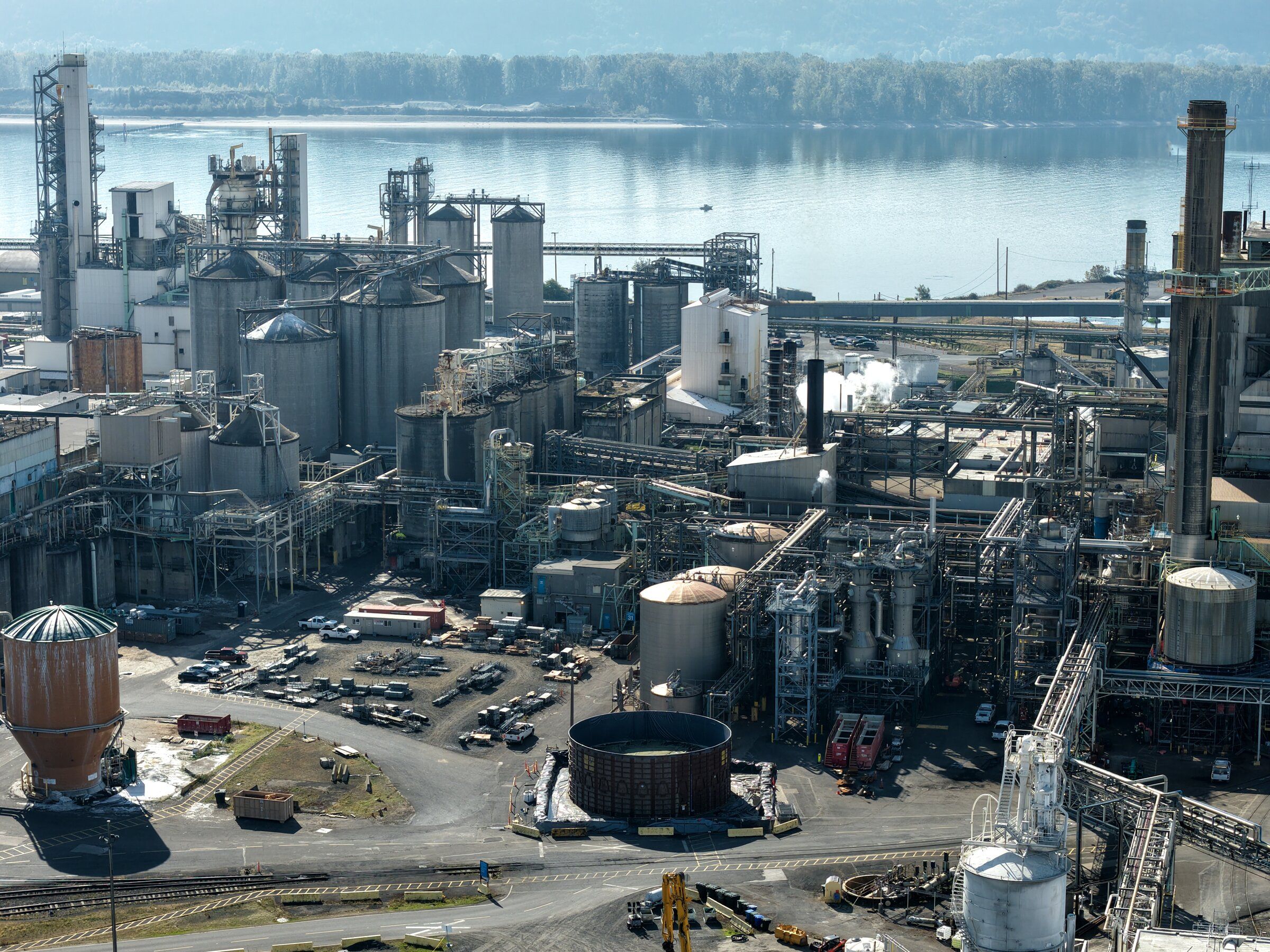
Washington state authorities have fined the Nippon Dynawave Packaging paper mill in Longview $77,800 after a worker trying to shut off a valve that had been left open fell into a pit hidden beneath hot pulp. The investigation is unrelated to the May collapse of a “white liquor” tank that killed 11 employees, but it adds an important detail to the picture of the mill’s safety culture, where, inspectors say, hazardous emergency work was not unusual.
The pulp spill occurred in the spring of 2026—the state Department of Labor & Industries dates it to March. The official inspection began on May 6, several weeks before the main chemical tank collapsed on May 26. A valve on one of the tanks had been left open, and the pulp began spilling onto the mill floor. The hot pulp, at a temperature of about 63°C, washed away the asphalt and concealed a pit roughly four feet deep beneath a three-foot layer of the viscous material.
The worker was assigned to shut off the valve. He made his way through the spill, climbed onto a pipeline and stopped the flow, but stepped straight into the resulting crater as he climbed down. Inspectors said that if he had not managed to grab hold of the pipe, he could have been completely engulfed by the pulp, which was more than six feet deep in places. The worker did manage to catch his foot on the edge of the pit and climb out.
The most troubling aspect of the inspection findings is not just that the valve was left open, but that the incident appears to have been part of the normal routine. Paper-machine managers told inspectors that spills like this occurred every few months, sometimes more often. They also knew workers had previously walked through spilled pulp to open or close valves. About 3,400 gallons of pulp per minute flows through the system, and in this case it spilled onto the ground for about two hours.
The Department of Labor & Industries classified the main violation as willful and serious: the company, the agency concluded, had failed to provide workers with safeguards, procedures or engineering controls to protect them from burns or the risk of being engulfed by the pulp. That violation carries a $74,910 fine. An additional $2,890 fine was imposed because the paper machine’s piping system had not been included in the required inspection and maintenance program for hazardous piping, even though it carries pulp at temperatures above 54°C.
The company has been ordered to prepare written procedures for safely containing and cleaning up spills by December 1, train employees in those procedures, and add hot-pulp piping to its regular inspection program. Nippon Dynawave management has already agreed, the agency said, to prohibit employees from entering spill zones and to develop a way to shut off valves without workers coming into direct contact with the hazardous material. The mill has 15 business days from receipt of the citation to appeal it.
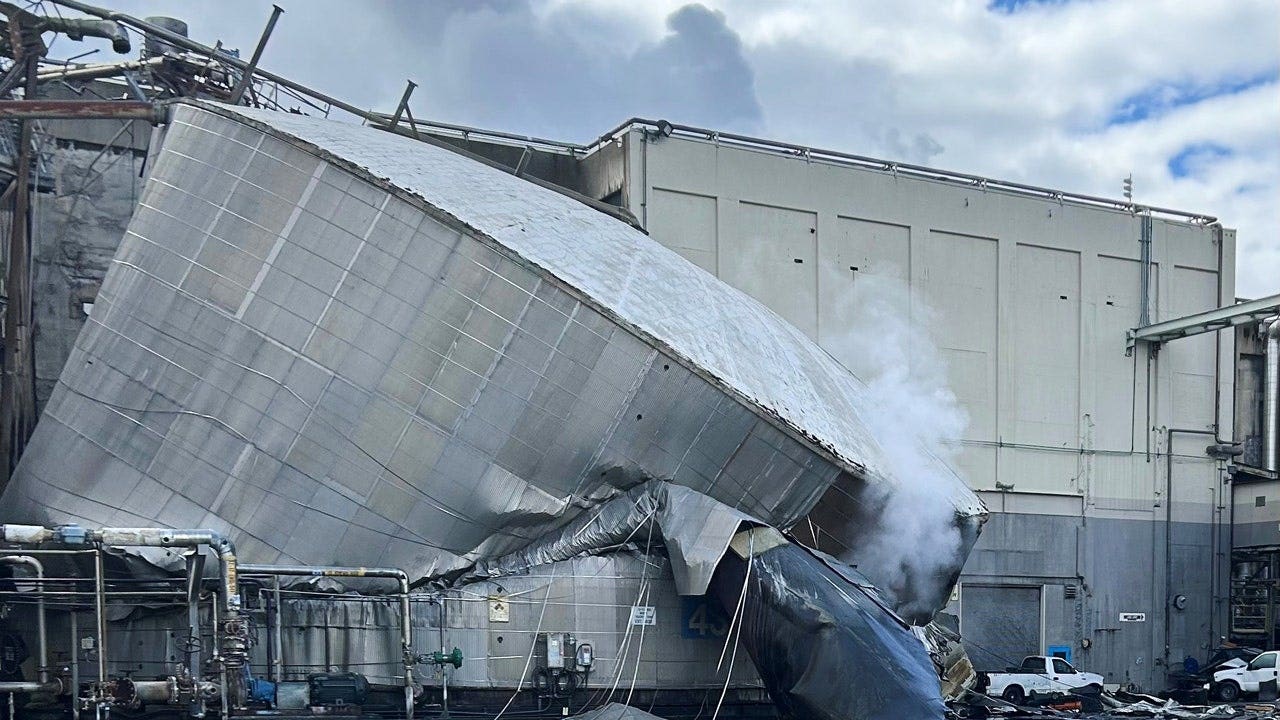
This incident is formally unrelated to the May 26 tragedy, and authorities have emphasized the distinction. That day, the mill’s 1.2-million-gallon atmospheric G Tank collapsed, releasing about 900,000 gallons of extremely hot, caustic “white liquor”—a chemical mixture used to process wood into pulp. Eleven workers were killed; three suffered serious injuries, while several other employees and a firefighter were less seriously injured.
The federal Chemical Safety Board found that an external inspection of the tank in July 2025 had revealed dangerously thin steel walls. The contractor deemed the tank unfit for continued operation without repairs. Subsequent inspections in the fall and winter again identified areas of metal thinner than the calculated safe limit, yet the tank remained in service until it collapsed. Why it was not repaired, taken out of service or operated under less demanding conditions remains the subject of a separate investigation.
Nippon Dynawave has said it is cooperating with state and federal investigators, but has urged people not to draw final conclusions before the investigation is complete. Meanwhile, the fallout from the May disaster has already reached beyond a single mill: Washington state has begun special inspections of the state’s other operating kraft pulp mills and expanded inspections of hazardous chemical storage at other paper mills. In Longview, two separate investigations—one into a near-invisible fall beneath hot pulp, the other into a collapsed tank—are increasingly raising the same question: What workplace hazards were considered routine enough to live with?

Based on: Nippon Dynawave cited for endangering workers at Longview mill before tank failure