Daily roundup: the NFL is embroiled in controversy over a missed flag that could have changed the outcome of the 49ers–Seahawks game; a shooting tragedy in Bend, Oregon, was covered by regional media; and analysts are drawing parallels between Seattle’s difficult 3-3 start and the path taken by the defending champion Eagles, wondering whether the Seahawks will repeat their success—or their mistakes.
Untimely Penalty: How a Missed Flag in the 49ers–Seahawks Game Could Have Changed the Outcome
The NFL has an unspoken tradition: the weekly fines the league publishes after each round often serve as a kind of acknowledgment that officials on the field made mistakes. If a player receives a fine for an infraction that referees failed to flag, it means the league office believes a flag should have been thrown. That is exactly what happened last week, directly affecting the finish of one of the season’s most intriguing games.
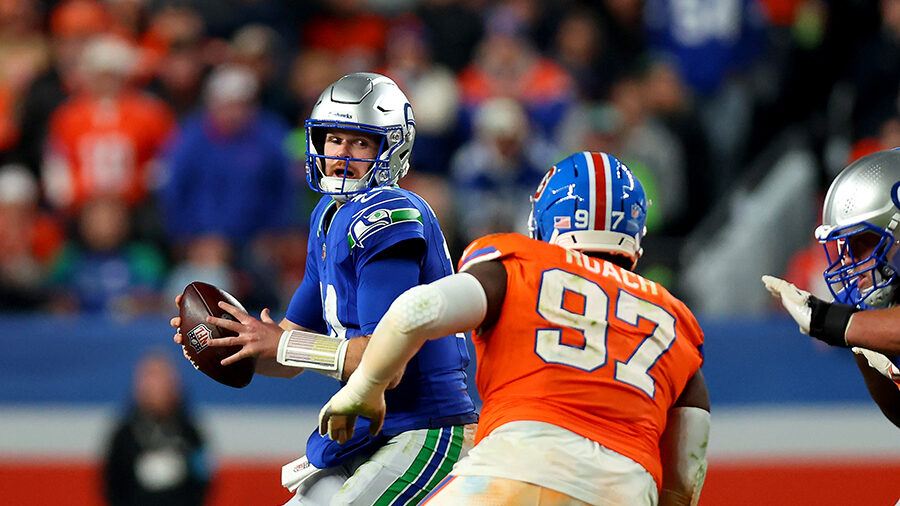
The game in question was between the San Francisco 49ers and the Seattle Seahawks. According to NBC Sports, with 1:13 remaining, when Seattle had the ball on its own side of the field—first down at midfield—quarterback Sam Darnold threw a pass to Jaxon Smith-Njigba. The catch was stopped by a hard hit from 49ers safety Malik Mustapha. Fox commentator Kevin Burkhardt called the hit “brutal.” However, officials did not throw a flag for a hit on a defenseless player. The league office later fined Mustapha $6,998, effectively acknowledging that an infraction had occurred.
Had the officials judged the play the same way as the league, Seattle would have received a first down at San Francisco’s 35-yard line with 1:09 left. Instead, the Seahawks were unable to sustain the drive, hurt by an uncharacteristic drop from Smith-Njigba and the controversial ruling that Cooper Kupp had not reached the first-down line before the ball went out of bounds. Seattle ultimately lost by three points without ever getting the chance to run a new series from the 35-yard line.
The incident is a vivid illustration of how subjective officiating decisions and subsequent disciplinary measures can affect game outcomes. After learning of the fine, Mustapha responded on social media with a single word—“soft”—reflecting the widespread view among players that the league is inconsistent. It is important to understand that the rule prohibiting players from lowering their helmets to deliver a hit does exist, but its enforcement on the field remains highly uneven. In the same round, for example, Buffalo’s James Cook was fined $21,167 for a similar violation that also went unflagged. The difference between the fines—$6,998 for hitting a defenseless player versus $21,167 for lowering the helmet—may seem illogical, but it reflects the gradation of infractions established in the collective bargaining agreement.
The key takeaway is that the league office, by publishing fines, provides a retrospective assessment of the officials’ work. In this case, it confirmed that Seattle was denied a crucial first down late in the game. We will never know how that drive would have ended, but the league’s acknowledgment of the error casts doubt on the fairness of the game’s outcome. For the Seahawks, it is a bitter lesson: in the NFL, even one missed flag can cost a team a victory.
Tragedy in Bend: What Is Known About the Victims of the Oregon Shooting
A segment that aired on Good Day Seattle, the morning program on FOX 13 Seattle, focused on tragic events in Bend, Oregon, where a shooting occurred. The report took the form of an immediate news update, focusing on what was known at the time of broadcast about those killed and injured. The video is available on the FOX 13 Seattle website, but the accompanying text contains only a brief introduction, so details in the original publication are limited.
Judging by the wording of the announcement, the newsroom focused on the human dimension of the tragedy—the victims’ stories rather than the chronology of the incident or the shooter’s identity. This approach is typical during the first hours and days after such events: media outlets seek to provide audiences with verified information about those affected while avoiding hasty conclusions about motives and circumstances. The report emphasizes that it covers what was known at that point, meaning the picture was still developing and information could change as police and emergency services provided further details.
Bend is a relatively small city in central Oregon, known as a popular destination at the foot of the Cascade Mountains. Deadly mass violence in communities like this is felt especially sharply: such incidents are rare and therefore generate significant public attention far beyond the region. That is why the story aired on a Seattle station that covers news across the Pacific Northwest, rather than only its own city.
Several points provide useful context. In news reporting, the term “victims” generally includes both those killed and those injured, whereas the Russian word “жертвы” is more commonly associated in everyday usage with people who died. Good Day is a typical American morning news-and-entertainment program, where breaking news alternates with weather, traffic and lighter stories. As a result, reports about tragedies are presented in condensed form and are often repeated during the broadcast with updates. Finally, the date—Sunday, October 18—is important for understanding the news cycle: because it was a weekend day, law-enforcement briefings may have been limited, and information arrived in fragments.
The key takeaway from this report is not a specific figure—none was included in the announcement—but the fact that a shooting with casualties occurred in Bend, Oregon, and that regional media quickly began covering it. For viewers, this is a signal to follow updates: in situations like this, initial information about the number and identities of victims is almost always revised, while official confirmations often arrive later. The report’s main emphasis is on remembering those who died and supporting their loved ones, an enduring part of journalism even when the circumstances of a tragedy are not yet fully clear.
Seahawks at 3-3: Are They Following the Eagles’ Path—or Repeating Their Mistakes?
When the defending Super Bowl champion loses three of four games, fans start looking for signs. Some panic; others search for historical parallels. And here is the interesting part: the Seattle Seahawks’ difficult start this season bears an unsettling resemblance to what the Philadelphia Eagles went through a year ago—only to finish the season with 11 wins. The question is whether the Seahawks will follow the Eagles’ path all the way, or reach the same crossroads where Philadelphia took a wrong turn.
Let’s recall the context. In February 2025, the Eagles crushed the Kansas City Chiefs 40-22 in the Super Bowl, doing so primarily through a defense that ranked first in the league in yards allowed and second in points allowed. The offense was no pushover either: Saquon Barkley was named AP Offensive Player of the Year, and the team finished the regular season 14-3. But before reaching its peak, Philadelphia stumbled: it started 2-2, including an ugly loss to the Tampa Bay Buccaneers in Week 4. After that, the Eagles won 16 of 17 games, and in the playoffs they won three of four games by double-digit margins. The only team to seriously challenge them was the Los Angeles Rams.
Now move ahead to 2025 for the Eagles—and this is where things get especially interesting. The roster barely changed, and the defense remained elite even after the departures of Darius Slay and C.J. Gardner-Johnson. The offense, however, declined: it ranked 19th in points scored, Barkley’s rushing total fell from 2,005 yards to 1,140, and the team surpassed 300 passing yards in a game just once all season. The criticism immediately centered on Jalen Hurts, the quarterback who had won a Super Bowl but whom national media outlets stubbornly refused to call a top-10 player at his position. Before the season, Pro Football Focus ranked Hurts and Sam Darnold 14th and 15th, respectively—and this is where the parallel becomes almost mocking. The two most recent ring winners, both “underrated,” both faced a return of the skeptics as soon as their teams entered a losing stretch. The only difference is the nature of the criticism: Darnold is criticized for being overly aggressive and turning the ball over, while Hurts is criticized for being too cautious—he threw just six interceptions all season.
The second warning sign is the offensive coordinator. Philadelphia’s Kellen Moore left to become the head coach of the New Orleans Saints, and Kevin Patullo was promoted internally to replace him, taking on the coordinator role for the first time. The result: by late November, fans were chanting “Fire Kevin!” in the stands, while head coach Nick Sirianni defended him to the very end. Patullo lasted exactly one year and now works as the Miami Dolphins’ pass-game coordinator. The Seahawks currently face a similar situation with an inexperienced play-caller, and this may be the most underestimated risk factor: instability in the scheme is far more dangerous than it appears from the outside.
What is important to understand is that the Eagles were still a good team that season. Most of their losses came by one or two possessions, their 11-6 record comfortably won the NFC East, and their wild-card exit against the San Francisco 49ers was more a consequence of the pressure of defending the title than a genuine collapse. A defending champion does not have to be bad to lose; it only has to be slightly less hungry. That is where the Seahawks face a much harsher crossroads: the NFC West does not forgive mistakes, and Seattle’s schedule is such that if the offense cannot establish “complementary football”—Mike Macdonald’s term for coordination across all phases of the game—the team could miss the playoffs altogether. More on this parallel can be found in the Seattle Sports article.
What is the bottom line? The Eagles’ story offers the Seahawks two lessons. The first is reassuring: a difficult start for a champion is not a death sentence, and 3-3 can turn into 11-6. The second is a warning: even if the season is turned around, a weak offense with an inexperienced coordinator and a quarterback who is not considered elite will eventually hit its ceiling. Philadelphia paid for that with a first-round playoff exit. Whether Seattle can avoid repeating that part of the scenario is the main question over the coming weeks.