
Four days before the election, three Washington organizations filed a lawsuit in federal court in Seattle against the Donald Trump administration, seeking to stop it from pressuring state election officials. The dispute stems from a demand by the U.S. Department of Justice that officials not verify or count ballots cast by 405 registered voters whom federal authorities consider current or former noncitizens. The office of Washington Secretary of State Steve Hobbs has already rejected the demand: a preliminary review found U.S. citizens, inactive voters and people who are not on the voter rolls at all.
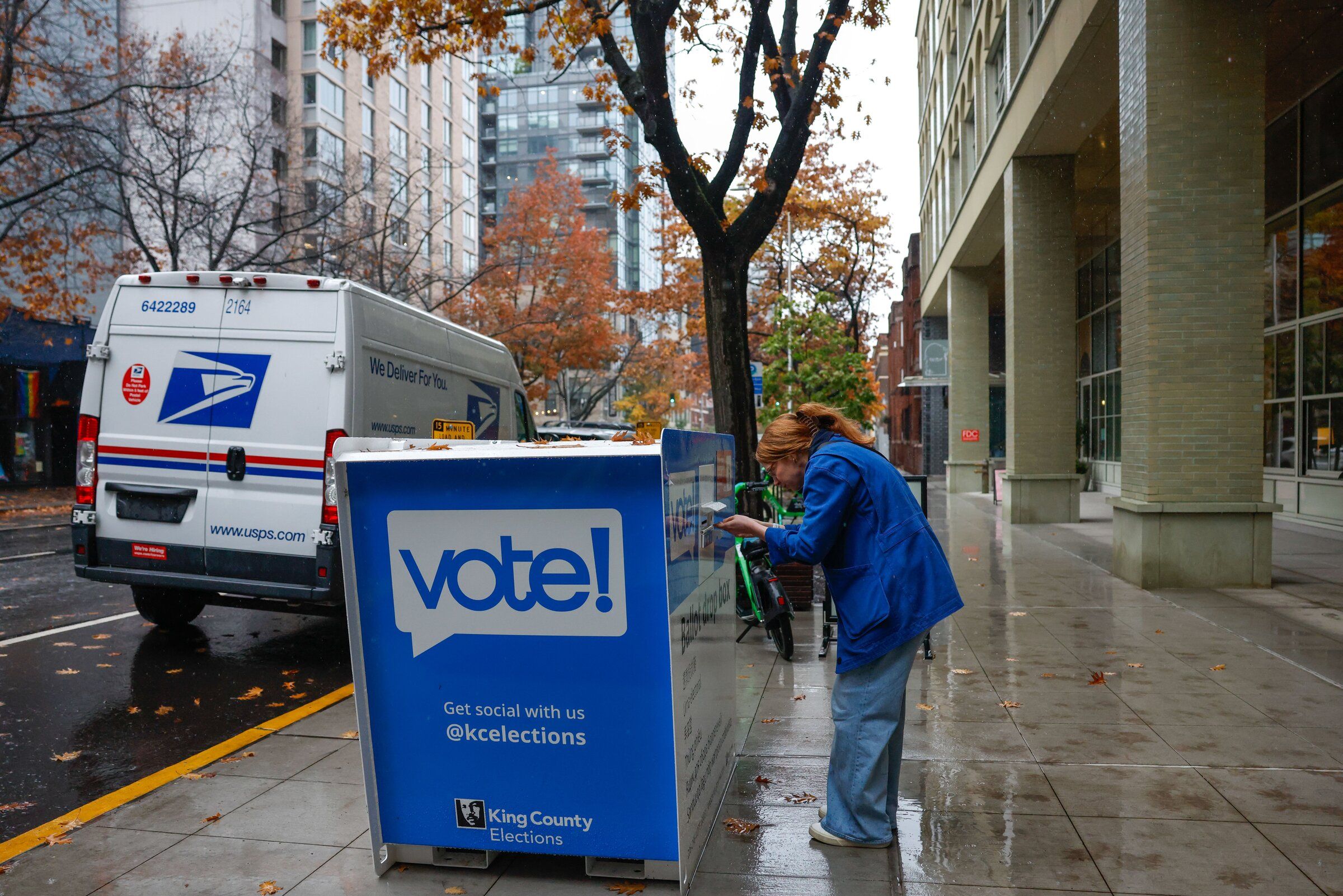
The dispute is unfolding in a state where voting has long been a quiet, at-home process: ballots are mailed to all active registered voters, after which counties verify the signatures on the envelopes and count the votes. But in recent days, this familiar system has become the focus of a nationwide campaign by the Trump administration, which says it is trying to prevent noncitizens from voting. Local officials and voting-rights advocates, meanwhile, see the administration’s actions as an attempt to cast doubt on the election after ballots have already been mailed.
The letter to Olympia is dated October 26. It was signed by Neil Floyd, acting U.S. attorney for the Western District of Washington, and Pete Serrano, first assistant U.S. attorney for the Eastern District of Washington. They said they had identified 405 people who, according to federal agencies, “are or were noncitizens,” and linked them to about 1,500 votes in past elections. The prosecutors acknowledged, however, that some of these people may have since naturalized—that is, obtained citizenship and the legal right to vote.
Federal authorities demanded that counties refrain from verifying signatures or counting ballots on the list until each person’s citizenship had been established. The secretary of state was given 48 hours to respond; prosecutors also warned they could send more names before November 3. At a press conference in Seattle, Floyd called the 405 records merely “the tip of the iceberg,” explaining that his office has limited access to confidential state voter-registration data.
Hobbs’s response, sent on October 28, was unusually sharp for correspondence between two levels of government. He noted that the list had been sent as a printed PDF without addresses or voter identification numbers needed to match records reliably, and that it contained duplicates. The federal letter also gave the wrong election date: November 2 instead of November 3. Hobbs said even a preliminary cross-check found U.S. citizens among those whose ballots Washington had been told not to count.
The secretary of state also pointed to the main legal obstacle: federal law prohibits officials from knowingly refusing to count the vote of a qualified voter. State law, in turn, requires applicants to affirm their citizenship under penalty of perjury, and voters attest to it again by signing their ballot envelopes. Washington has procedures for challenging registrations and investigating possible violations, but, Hobbs emphasized, those procedures require evidence—not matches in databases.
The plaintiffs are OneAmerica Votes, which works with immigrant and refugee communities; the Latino Community Fund of Washington State; and the United Food and Commercial Workers International Union (UFCW). Their lawsuit alleges that the administration is unlawfully intimidating both voters—particularly naturalized citizens—and election workers. The organizations are asking the court to declare the actions of the White House, the Department of Justice and the Department of Homeland Security unlawful, and to bar them from demanding that ballots cast by registered state residents be set aside, segregated or left unverified.
The Washington case is not an isolated one. In October, the Department of Justice gave California a much larger list—about 20,000 people it said were potentially noncitizens—and sought to have their mail-in ballots segregated. A federal court declined to grant the request immediately, and an appeals court declined to intervene before the election. In Alaska, the administration also filed a lawsuit affecting the process for certifying the results of a Senate race. In all three states, seats that could affect control of Congress are at stake.
The Department of Justice has not yet filed a separate lawsuit against Washington state, and ballots continue to be processed under the usual rules. For thousands of county election workers, the coming days will mean matching signatures, opening envelopes and counting votes; for the federal court in Seattle, they will bring a broader question: where does Washington’s authority to run its own elections end, and where does the federal government’s power to investigate possible crimes begin?


Based on: Trump administration sued over federal efforts to set aside WA ballots