
Lake City, in northeast Seattle, has long existed in a strange space between hope and neglect: housing is being built, organizations serving immigrants and refugees are at work, and cultural venues are opening, yet the main street remains a high-speed corridor, while the loss of shops and pharmacies makes everyday life increasingly difficult. After Fred Meyer closed in the fall of 2025, the neighborhood lost its last full-service supermarket with a pharmacy, and a long-running conversation about a forgotten outlying neighborhood became a question of whether residents could hold on to the most ordinary features of city life.
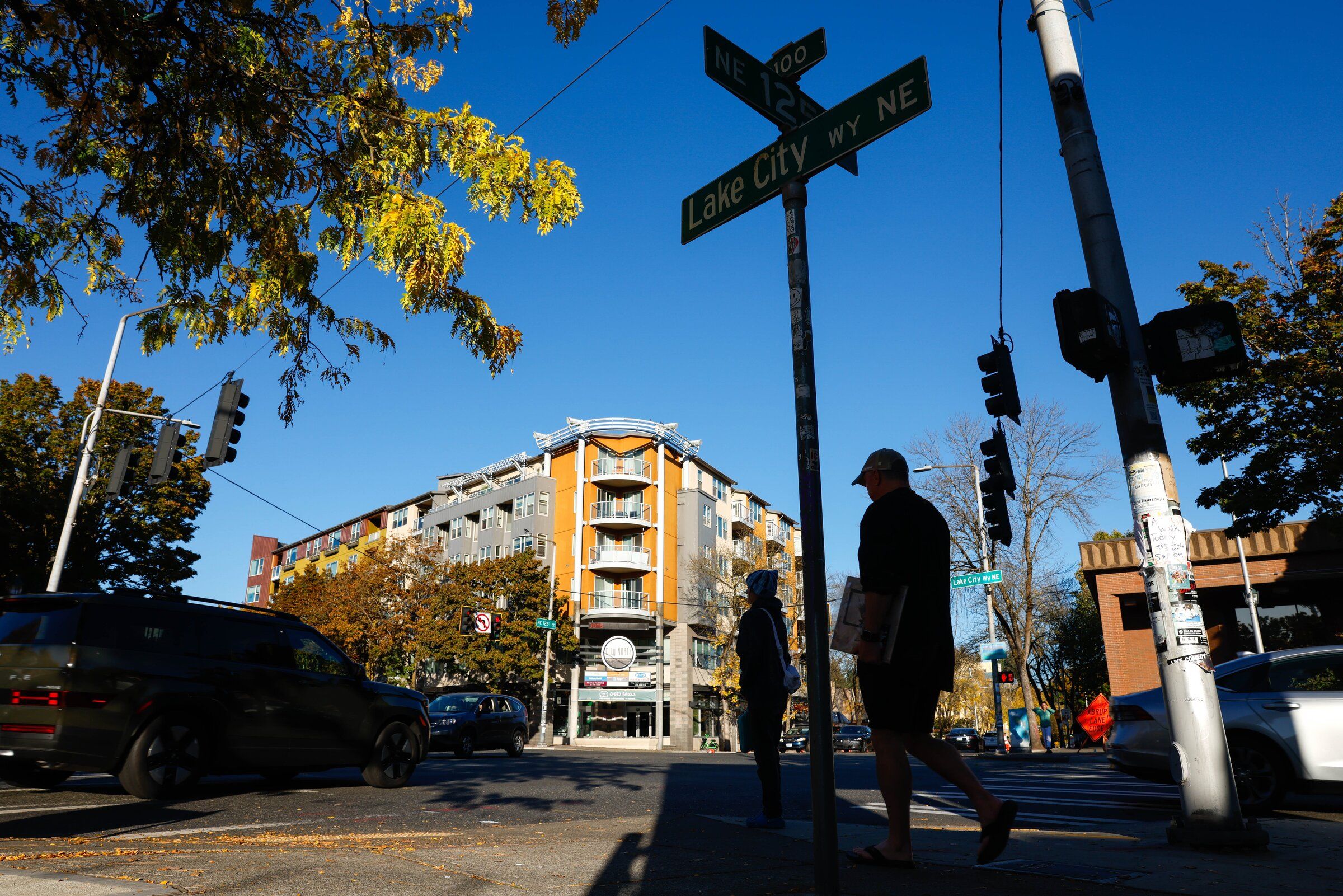
Lake City Way, which carries State Route 522, divides the neighborhood almost literally: cars and buses rush past storefronts, parking lots and apartment buildings, while pedestrians must constantly remember that the street was designed first and foremost for through traffic. For years, city documents have promised to make it a safer, more welcoming boulevard, ease its divisive effect, and connect shops, housing and public spaces. But even the goal itself points to the scale of the long-standing problem: Lake City has become part of Seattle that is convenient to drive through, but not always convenient to live in.
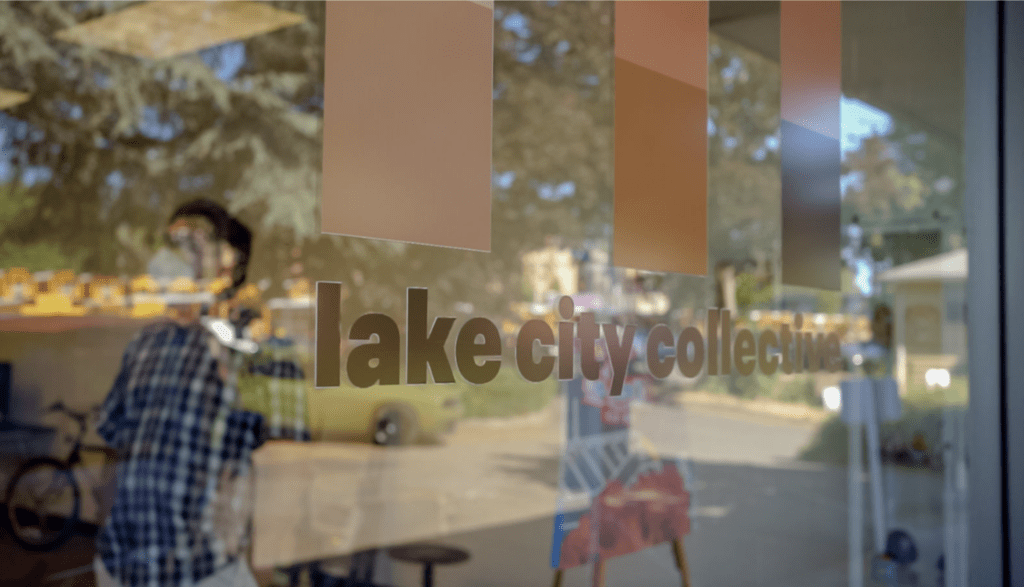
That contradiction is one César García, co-founder of the community organization Lake City Collective, has long emphasized. To him, Lake City is not an outlying area doomed to serve as cheap housing and roadside retail, but one of the last Seattle neighborhoods where low-income families, newly arrived immigrants, refugees and small-business owners can still put down roots. Lake City Collective supports entrepreneurs, especially those who struggle to navigate city bureaucracy and do business in English, and works to ensure that neighborhood planning does not happen without its residents.
The community has its own anchors, not always visible from a car window. Former commercial spaces house organizations that teach children the arts and provide jobs for immigrant women; the North Helpline food bank serves older adults, low-income families and new diaspora communities. Little Brook Park recalls the creek that runs mostly hidden beneath the pavement. For García and his allies, the creek has become an almost exact metaphor for the neighborhood: life here has not disappeared, but too often it flows beneath the surface, out of sight of those who allocate funds and set city priorities.
A fire at the Lake City community center in April 2023 brought another challenge. The building was later demolished, and the city selected the nonprofit Mercy Housing to lead a new project on the site. The plan calls for a new community center and 112 affordable rental apartments, including two-, three- and four-bedroom family units. The homes are designed to be affordable to households earning, on average, about 49 percent of the area median income. The project matters not only for the number of apartments: it will give the neighborhood back a place where people can meet not as customers, patients or aid recipients, but as neighbors.
But in the fall of 2025, Lake City took a blow that is difficult to make up for with construction alone. Kroger closed the local Fred Meyer, the neighborhood’s main supermarket and last pharmacy. The nearest full-service store with a pharmacy was more than a mile away; for someone without a car, with limited mobility or with young children, that mile means not a walk but an extra transfer, added expense and lost time. North Helpline had already reported hundreds of new households seeking help each month, and Fred Meyer had previously donated about 20,000 pounds of food to the food bank every year.
The company cited rising theft and costs as reasons for the closure, while UFCW 3000, the union representing store employees, attributed the decision to underinvestment and chronic understaffing. To residents, this dispute over corporate balance sheets felt almost abstract: they had lost a place where they could buy vegetables, pick up medication and see a familiar pharmacist all in one trip. In October 2025, the Seattle City Council unanimously adopted a temporary rule banning restrictive covenants that could prevent a new supermarket or pharmacy from occupying the former store. It did not reopen the store, but it was intended to keep the site from being left commercially unusable because of the previous owner’s terms.
Lake City’s future now depends on whether city promises can become part of daily life: from a new grocery store and pharmacy services to safe crossings, affordable housing and functioning public spaces. The neighborhood needs neither a cosmetic “revitalization” nor another wave of expensive development, but the basic infrastructure of dignity—the ability to buy food, pick up a prescription, walk to a park and return home without feeling that the city has already given up on you. In this sense, Lake City residents are fighting not only for one northern Seattle neighborhood, but also for an answer to a broader question: who is still allowed to stay put in a rapidly changing city?

Based on: As Lake City edges toward the brink, residents fight to pull it back