
In the race for artificial intelligence, Amazon and other tech giants are securing electricity for their data centers in advance. Their rapidly growing demand is already affecting wholesale markets, especially PJM in the eastern United States, where many data centers are concentrated. A Reuters/Ipsos poll found that 77% of Americans worry that the development of AI will lead to higher electricity bills.
PJM is the largest regional grid operator and wholesale electricity market in the United States. It coordinates the power system across roughly 13 states and the District of Columbia, bringing together numerous power plants and major consumers. The operator sets hourly electricity prices and holds separate auctions for reserve capacity. This model makes it easier to connect data centers to a large shared grid, but it also intensifies competition for available resources and can drive up prices.
Large companies are better protected against price spikes than households and small businesses. Amazon signed multibillion-dollar agreements before energy prices rose, locking in terms for years or decades. In July, the company reported an unrealized gain of $599 million — the amount it estimated that the value of some long-term energy contracts had increased during the first six months of the year.
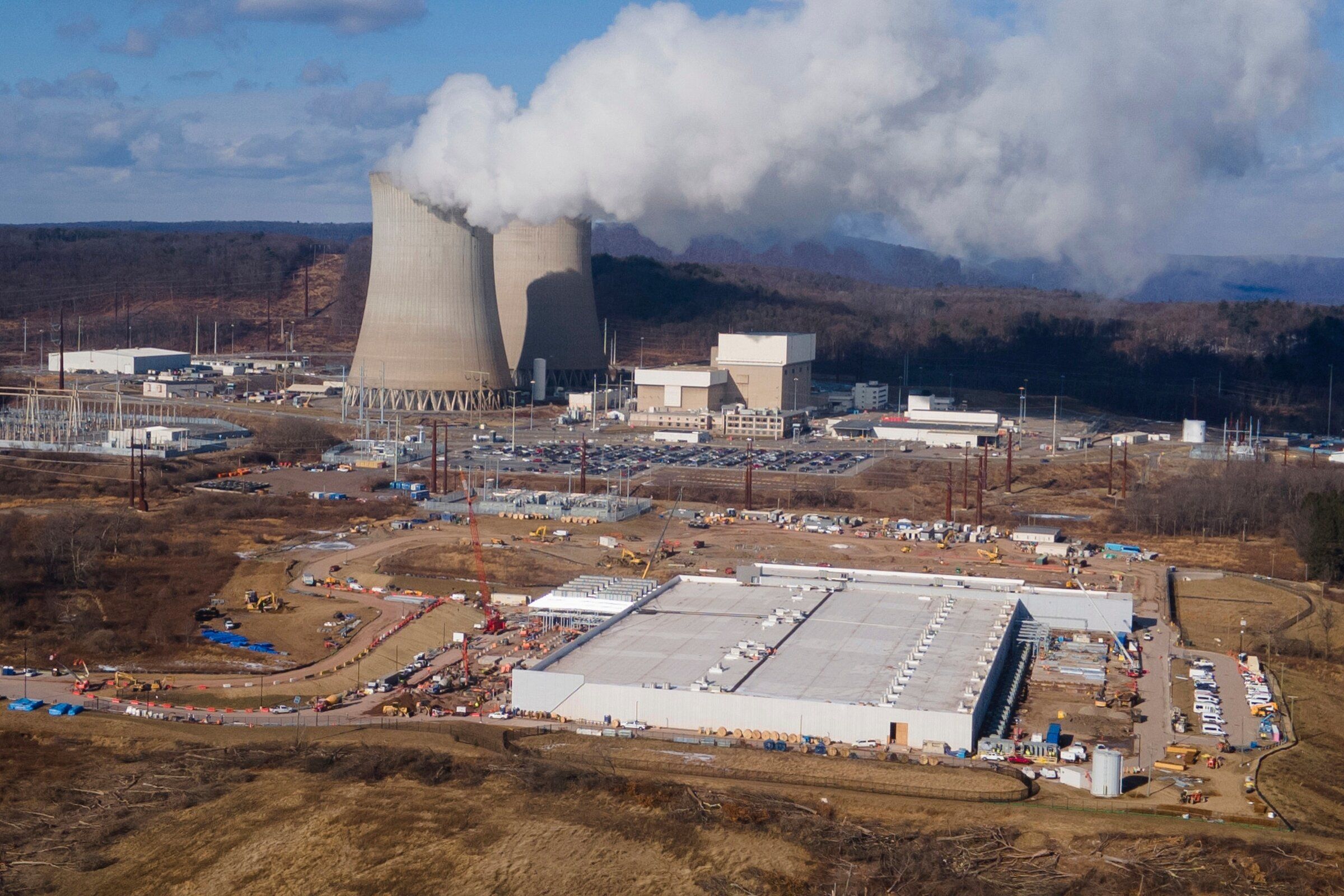
One key example is Amazon’s 17-year, $18 billion agreement with Talen Energy. It allows the company to receive up to 75% of the electricity generated by the Susquehanna nuclear power plant in Pennsylvania and gradually develop up to 1,920 megawatts of data-center capacity. That represents more than 1% of the entire PJM system’s peak demand. The plant previously sold its electricity on the wholesale market, so Amazon’s contract effectively removed a significant amount of power from other potential buyers.
Experts warn that data centers can raise prices even when they pay the direct costs of connecting to the grid. In PJM, demand is forecast to grow by about 20% from 2024 to 2030, primarily because of data centers, while power plants are being retired faster than new ones are built. Forward energy prices at one node in the system rose by roughly 25% in just one year. Building generators, turbines, transformers and transmission lines will take years.
For Amazon, the long-term contracts became especially valuable after market prices surged. Talen initially described the deal’s terms as “premium,” meaning they were more expensive than the market at the time. Later, prices in PJM approached or even exceeded those terms. Amazon emphasizes that the $599 million is only an accounting estimate, not money it has received: If prices fall, the gain could disappear or turn into a loss. Economists describe the deal as ordinary insurance against future spikes that happened to prove a successful bet.
The effects are also being felt in the northwestern United States, including Washington state. Unlike PJM, the region does not have a fully comparable unified wholesale market. Its power system is divided among several utilities and is part of the broader Western Interconnection market, where trading has historically been less centralized, though it is now being reformed.
Puget Sound Energy lost a competitive contest with Amazon for a major solar-and-storage project. Utility officials are concerned that they must compete for resources with companies that have far greater financial means. In Grant County, data centers already consumed about 37% of the electricity.
Grant County Public Utility District, a municipal nonprofit utility, supplies the county’s electricity, receiving inexpensive hydropower primarily from Priest Rapids Dam on the Columbia River. Data centers consume electricity around the clock and in large volumes, so a substantial portion of the capacity that could previously have been sold to other utilities or on the wholesale market is now committed to them. Serving them also requires new substations, transmission lines and reserve capacity. During periods of shortage, this could force the utility to purchase more expensive electricity.
Researchers estimate that data centers have already added about $4 to the cost of a megawatt-hour on the Northwest wholesale market. Under the most aggressive expansion scenario, prices nationwide could rise by as much as 50% by 2028. Lawrence Berkeley National Laboratory forecasts that data centers will consume between 9.5% and 15.3% of all U.S. electricity by 2030.
Who will pay for new power plants, storage facilities and transmission lines depends largely on regulation and connection terms. The Washington Utilities and Transportation Commission oversees investor-owned utilities, including Puget Sound Energy, and reviews their rates and investment plans. It can allow some costs to be included in rates paid by all customers if it determines that the projects are necessary for system reliability and the public interest. Alternatively, it can require costs caused by a specific large customer to be charged to that customer.
Puget Sound Energy may enter into special contracts, charge connection fees and require financial guarantees, but it operates under the commission’s oversight. Municipal utilities such as Grant County PUD are not directly subject to the commission: Their rates and investments are overseen by locally elected officials. They are nevertheless subject to state-law requirements, power-system planning rules and interconnection conditions. Ultimately, how costs are divided between Amazon and ordinary consumers depends on the contracts, the rate methodology and whether a particular project is considered systemwide or primarily intended for a data center.
Amazon says it entered into an agreement in Indiana under which it will finance new capacity itself, potentially reducing other customers’ bills by about $1 billion over 15 years. But in Washington and other regions, the company is still largely buying power on the shared market, intensifying competition for limited resources.
Based on: How rising electricity prices helped Amazon book $599M unrealized gain