
A group of nine hikers helped a 36-year-old woman from eastern Washington state who became ill on the Enchantments trail, a challenging route about 18 miles long in the Okanogan-Wenatchee National Forest. After her blood sugar dropped, she grew weak and cold and could barely see or stand. She asked not to be identified.
The Enchantments is a remote, high-altitude area in the central Cascades, with steep slopes and significant elevation gain. Snow and sudden weather changes can persist there even when conditions are milder on lower, more popular trails. The altitude, wind, cloud cover and lack of suitable landing sites limit helicopter access: an aerial evacuation is not always possible or safe.
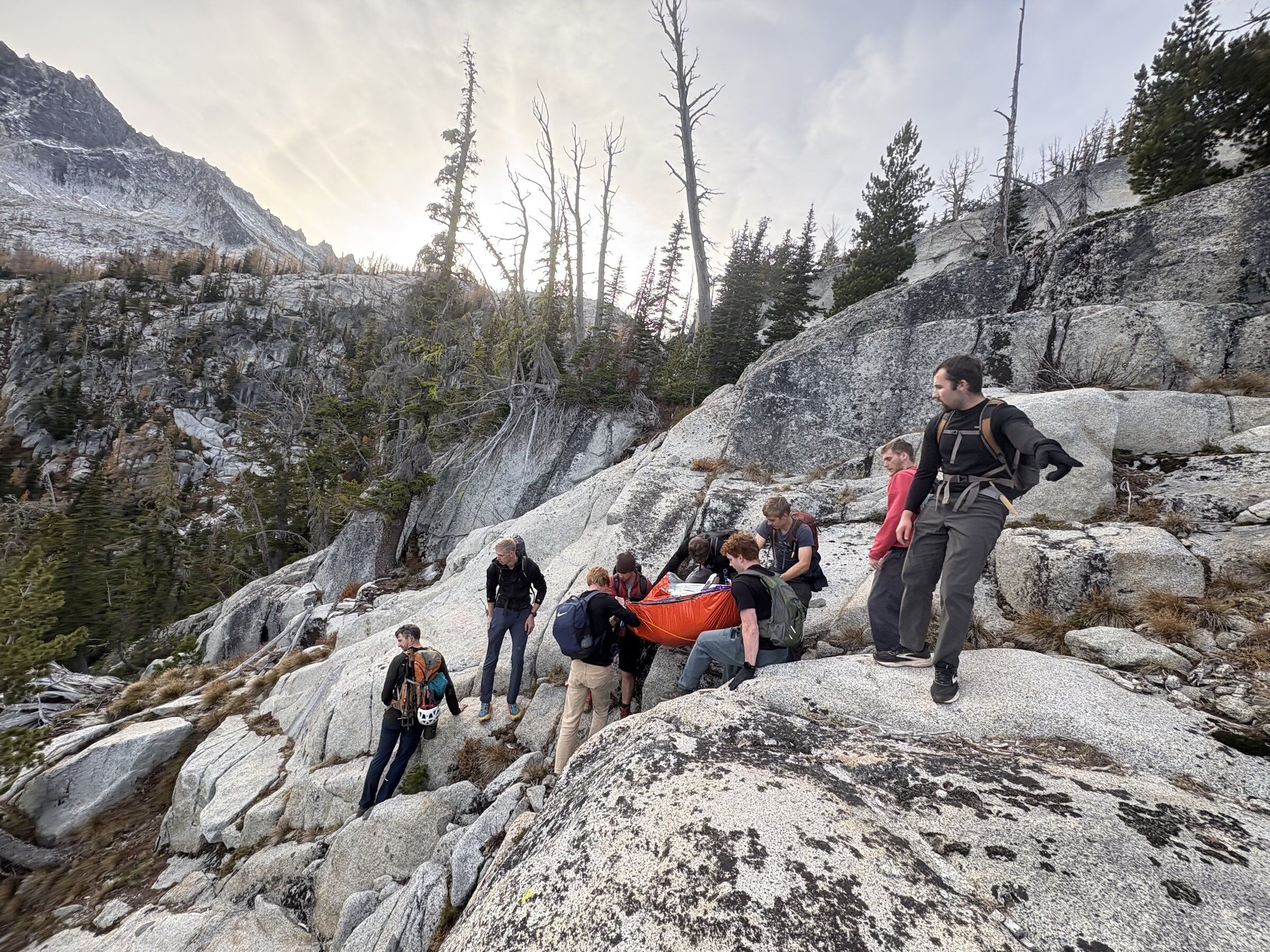
The hikers, including students from Whitworth University, had lost their way and happened to spot the woman sitting by a tree off the trail. She said she had been sitting there for about 20 to 30 minutes. One member of the group, a firefighter trained in rope rescue, helped organize the evacuation.
The hikers first gave the woman water and salt and sent a distress signal using a satellite device. Then they made a litter from trekking poles, weather shelters and ropes and carried her downhill. A satellite emergency beacon, which the woman plans to get after the incident, transmits coordinates and a distress signal but usually does not let users exchange messages with rescuers. A satellite communicator, by contrast, supports two-way messaging and helps clarify what happened and the condition of the person in need. Both devices depend on a clear view of the sky and a good signal.
Rescuers contacted the group and asked them to wait for help higher up. But the hikers feared that the cold would make it take too long for medical help to reach them, so they continued downhill to Snow Lake, one of the lakes in the area where a helicopter could land. The route crossed rocky slopes with steep drop-offs and climbs. Other hikers they met along the way helped the group negotiate hazardous sections.
Search-and-rescue operations in Chelan County are usually coordinated by the sheriff’s office. In national forests, the U.S. Forest Service can provide information about the terrain and help with resources, but local coordination remains the county’s responsibility. Depending on the situation, firefighters, volunteer rescue teams and other specialists may join the operation to search, provide first aid and evacuate people.
The woman eventually managed to stand and walk the final three miles on her own. A helicopter, law enforcement officers and medics met her at the lake; her husband was waiting there.
A spokesperson for the Chelan County Sheriff’s Office advises people who need help in the mountains to stay put if possible and choose a spot accessible to a helicopter. In areas without cell service, it is better to use a satellite device than to try calling or texting 911. The recent death of an Oklahoma hiker after a sudden snowstorm is a reminder of how quickly mountain conditions can become dangerous.
The Washington Trails Association recommends checking the weather forecast and trail conditions in advance and bringing water, food, navigation tools, warm and rainproof clothing, a first-aid kit, a flashlight and an emergency shelter. Those hiking alone should tell someone their route and expected return time and avoid pushing beyond their abilities.
The rescued woman has recovered and plans to return to the trail in the spring. She will now carry a satellite emergency beacon.
Based on: How hikers rescued WA woman in the Enchantments