A roundup of Seattle news: meteorologists warn of another wave of heat and smoke, the Mariners suffer a lopsided loss to Tampa Bay, and we look back at Phil Bradley’s historic home run that stunned fans 40 years ago.
Smoke and Heat Return: Seattle and Eastern Washington Forecast for the Second Week of August
After several unsuccessful attempts, cool marine air has finally pushed smoke out of Western Washington and slightly improved air quality in the state’s central areas. Residents in the western part of the state can breathe easier—for now, at least, through midweek. However, meteorologist Scott Sistek, author of the Emerald City Weather blog, warns that the long-range forecast is troubling again: heat is expected to return by the weekend, along with possible wildfire smoke.
Over the next few days, western parts of the state, including Seattle, will enjoy classic summer weather. Westerly winds will bring clean ocean air, with possible morning cloud cover that will give way to sunshine during the day. Temperatures are expected to reach 77–81 degrees Fahrenheit, while air quality should remain acceptable. Outdoor plans should be fine, although residents should remember that fires are still burning in the Cascades.
Eastern Washington remains under heightened fire danger at least through Saturday evening, while the warning in the Chelan and Wenatchee areas is in effect until Sunday morning. The cause is gusty winds of up to 25–30 mph and humidity below 20 percent, creating ideal conditions for fire to spread. Winds will ease overnight and conditions should stabilize somewhat, but with parched soil and high temperatures, new fires could break out at any time. Smoke will continue moving from west to east, and air quality will remain poor in areas downwind of active fires. Conditions in Wenatchee and Yakima, however, should be better thanks to improved ventilation.
Wednesday and Thursday will bring a new threat: possible thunderstorms. A weak system moving through British Columbia and Alberta could affect northern parts of central and eastern Washington. It will not bring rain, but it could trigger lightning in the northern Cascades and the Okanogan Range. Any lightning is highly undesirable right now, although forecasts call for storms to be weak and localized. The episode will be insignificant for Western Washington, perhaps bringing only a slight increase in the marine breeze and a temperature drop of a few degrees.
The main concern is the forecast for next Friday and Saturday. The European ensemble model, which includes 50 forecast scenarios, shows Seattle reaching 84–86 degrees in 30 of them, while temperatures exceed 90 degrees in eight cases. The average forecast is around 86 degrees. Winds could shift to the northeast, potentially bringing smoke from fires in British Columbia, although it may remain confined to the upper atmosphere. If the hottest scenarios materialize, easterly winds could return, as they did last week, putting Seattle under smoke once again. The only consolation is that such heat, if it arrives, will not last long. But once it subsides, stronger westerly winds and critical fire danger in the eastern part of the state are likely.
Sistek reluctantly acknowledges that this cycle—heat, smoke, temporary improvement, then more heat—may become a reality for the rest of the summer. The rainy season is still two months away, while a strengthening El Niño is contributing to dry conditions across the Pacific Northwest. As long as the region experiences any wind that is not from the west, it will remain vulnerable to smoke. The meteorologist jokingly asks readers to share their magic spells for a rainy September, but for now, people have to rely on forecasts and hope for the best.
Rays Light Up Seattle in Sweep of Mariners
Sunday’s game at Seattle’s T-Mobile Park concluded a series that left local fans with a bitter aftertaste. The Tampa Bay Rays, the American League’s winningest team, demonstrated their strength by defeating the Seattle Mariners 4–1 and completing a three-game sweep. The result did more than add another loss to the home team’s record. It exposed deep problems with the Mariners’ offense and starting rotation—problems becoming critical as the regular season enters its final stretch.
The game’s opening did not suggest such a disappointing outcome for the Mariners. The first inning was nearly perfect for Seattle: Taylor Ward hit a triple, and Cole Young, a young infielder making an increasingly forceful case for a regular starting role, drove him in with a single. Dominic Canzone also recorded a hit, and Seattle took a 1–0 lead. It appeared the team had finally found the key to the opposing pitching. But the surge was brief. Tampa pitcher Ian Seymour, not someone many experts would have picked before the game, quickly settled down after his difficult start. After allowing three hits in the first inning, he delivered a genuine master class, allowing the Mariners only two hits over the remaining five innings of his outing. Seymour finished with an impressive seven strikeouts and just two walks, earning his ninth win of the season. His confidence spread throughout the team, and the Rays gradually took control.
Yandy Díaz tied the game in the fourth inning with a single that scored Cedric Mullins. In the fifth, Mullins became the hero, hitting an RBI single off Emerson Hancock to put Tampa ahead. Hancock, who worked 4⅔ innings and allowed nine hits, looked unconvincing, and his removal was only a matter of time. The decisive blow came in the sixth inning, when Seattle reliever José Ferrer failed to withstand the pressure. With two runners on base, Liam Hicks crushed a double down the left-field line, driving in two decisive runs and establishing the final score at 4–1. Notably, the Rays finished with 14 hits, while the Mariners were unable to build on their early success and displayed near-total impotence against Tampa’s well-organized pitching.
For Seattle, the loss was its fourth straight and fifth in its last six games, clearly pointing to a crisis at the most important stage of the season. Fans can only hope that the upcoming road trip to New York, where the Mariners will face the Yankees, will help the team reset. Bryan Woo, scheduled to take the mound Tuesday, has a mediocre 4.31 ERA, and his matchup with New York’s Ryan Weathers looks extremely difficult. Tampa Bay, meanwhile, continues its confident march forward, and its next game against the Athletics appears to be an excellent opportunity to extend its winning streak.
In the broader context, the Rays’ success is no accident. Their pitcher-development system, which enables players such as Seymour to reach a high level, remains a model for the entire league. For the Mariners, the current series is a warning sign. Despite having talented young players, the team is clearly suffering from offensive inconsistency and relies too often on rare bursts of production. A lack of rotation depth is also becoming apparent when starting pitchers cannot work deep into games, placing an excessive burden on the bullpen. As Seattle considers its mistakes, its division rivals are not standing still, and each setback could prove decisive in the race for a postseason berth.
Phil Bradley’s “Ultimate” Grand Slam Sent Mariners Fans Into a Frenzy
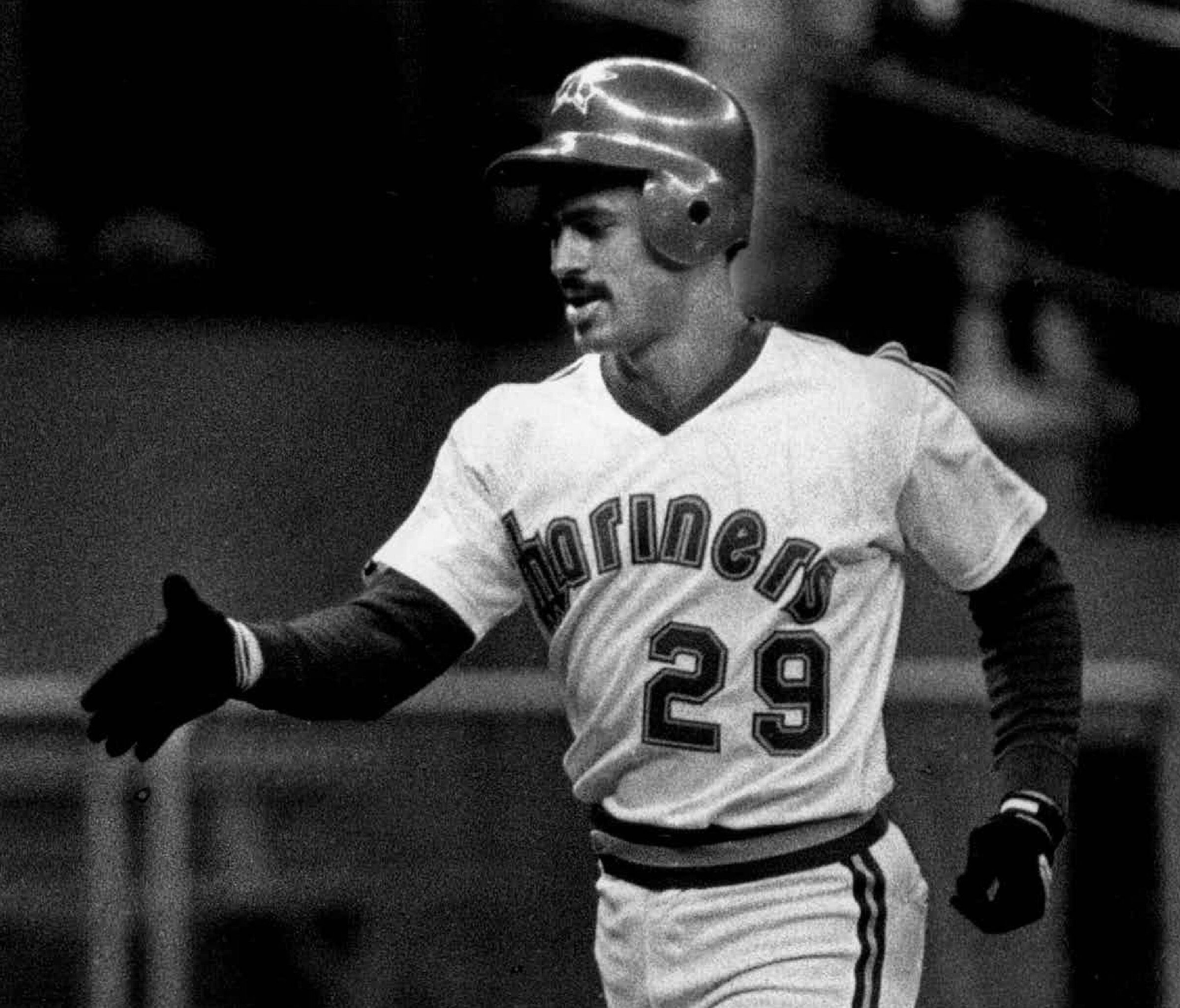
As the Seattle Mariners prepare to celebrate their 50th anniversary, it is an ideal time to remember one of the brightest players in the team’s history: Phil Bradley. His career is an extraordinary story of transformation. He began as a singles-and-stolen-bases specialist and ended a season with 26 home runs and star status. But the most memorable moment of his time in Seattle came in April 1985, when he did something no one had done before or since in franchise history: hit an “ultimate” grand slam that gave the team an incredible victory. Bradley, now 67, still works for the MLB Players Association and fondly remembers the days when the Mariners were fighting for survival rather than championships.
Bradley’s story began long before the era of launch angle—the modern concept of hitting the ball at a higher angle to increase its distance. In his first 147 games with the Mariners, he did not hit a single home run, and he admits he does not remember hitting one in the minor leagues either. Instead, Bradley relied on speed and contact, as his instructors had taught him: hit the ball on the ground and run. But everything changed when new hitting coach Deron Johnson arrived. Johnson saw the potential for a power hitter in Bradley’s 6-foot, 185-pound frame. They spent the entire spring-training camp rebuilding his swing, incorporating principles once promoted by the legendary Ted Williams—an easy uppercut designed to match the trajectory of the pitcher’s throw. Bradley calls it a “fundamental change in thinking” and emphasizes that he owes his breakthrough to Johnson. He notes that these were the same principles that later became the foundation of modern analytics, but without the extremes characteristic of today’s game.
The results came quickly. In the Mariners’ third game of the 1985 season, Bradley hit the first home run of his career. Two days later, on April 13, history was made. The game against the Minnesota Twins had gone badly: entering the ninth inning, the Mariners trailed 7–4, with one final chance—two outs and the bases loaded. Bradley stepped to the plate without looking at the score and, on the very first pitch from Ron Davis, sent the ball over the Kingdome’s left-field wall. It was an “ultimate” grand slam—a bases-loaded home run hit when a team is down by three runs and the batter puts his team ahead. There have been only 35 such moments in MLB history, including Cody Clemens’ recent example in July of this year. For the Mariners, Bradley’s blast was the first—and likely the only—one in franchise history.
The stands erupted. The 24,676 spectators were swept up in a frenzy that lasted roughly six minutes. Bradley had to come out of the clubhouse to salute fans, who continued chanting his name even after he had left the field. Legendary Seattle Times columnist Bob Finnigan wrote that long after the hit, fans’ cries could still be heard beneath the stands. Bradley, now ranked among the top 50 players in franchise history, says he had the best years of his career in Seattle and considers that a great honor. The irony is that the “ultimate” slam was merely a preview of a magnificent season: Bradley finished with 26 home runs, 33 doubles, eight triples, 88 RBIs and 22 stolen bases, along with a .300 batting average. He was named an All-Star, and his season is still regarded as the best by a Mariners left fielder in terms of WAR, at 4.8, ahead of players such as Tom Paciorek and Raúl Ibañez. In franchise history, he ranks fourth in batting average (.301) among players with at least 2,000 at-bats.
The success of 1985 did not change the team’s overall fortunes in those years. Bradley recalls that the Mariners were not respected around the league, and there was even a joke about which former Seattle player would leave and start playing well in the postseason for another team. After Seattle, Bradley played for Philadelphia, Baltimore and the Chicago White Sox, ending his career after eight MLB seasons. He has now worked for the players’ union for 27 years, helping organize special events such as the Field of Dreams game between the Phillies and Twins in Iowa. His story is more than a memory of a spectacular moment. It is a reminder that proper instruction and persistence can radically transform a career, even if today such ideas are packaged in fashionable terminology and analytical models. Read more in the original article on The Seattle Times website.