
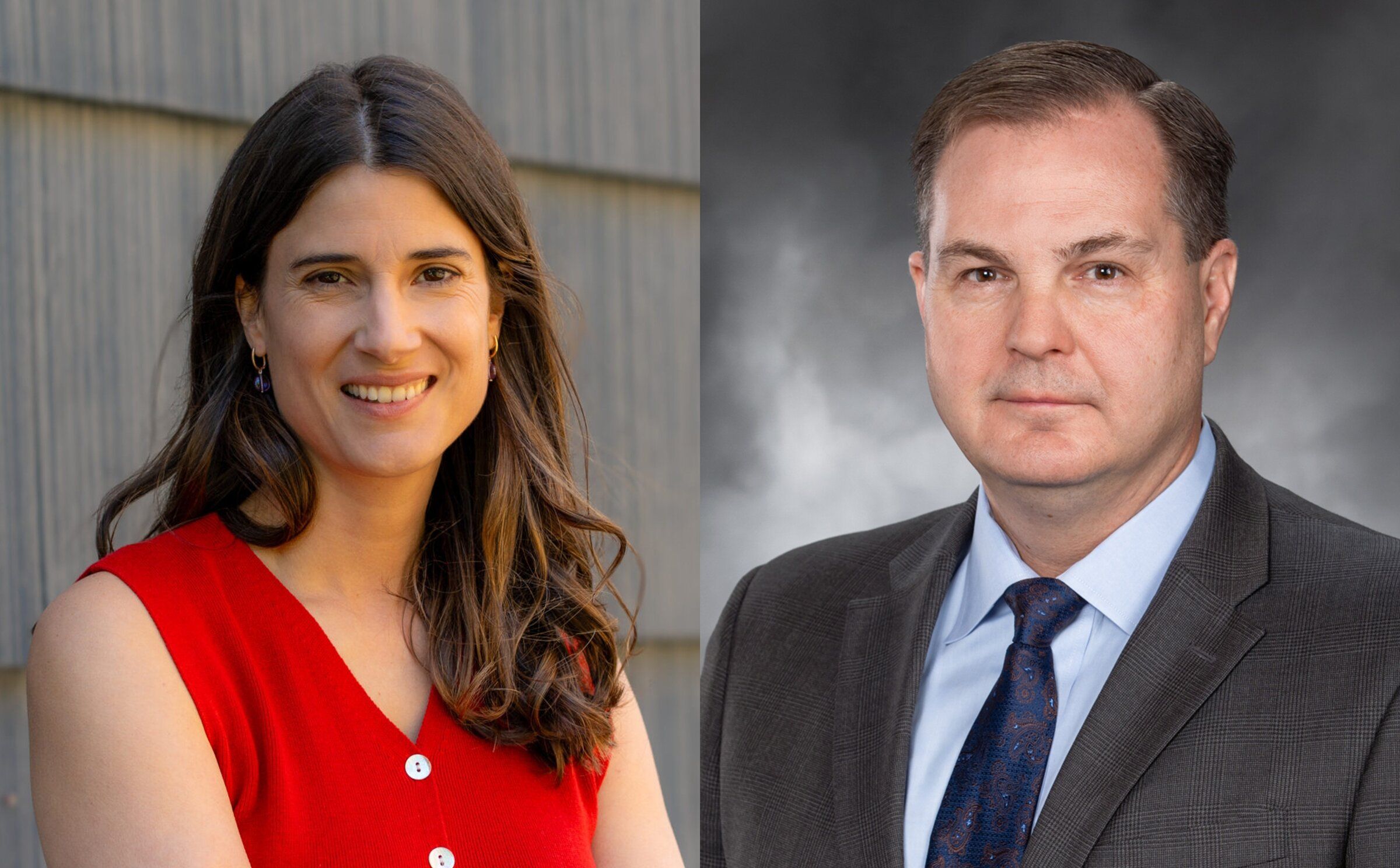
In the first debate ahead of the U.S. House election, Democratic incumbent Rep. Marie Gluesenkamp Perez faced Republican state Sen. John Braun. They are competing for the seat representing Washington’s 3rd District in the southwestern part of the state, one of the most competitive districts in the country. Gluesenkamp Perez, who won the district four years ago, is seeking a third term and emphasizing her independence, while Braun argues that a Republican majority in Congress would work more effectively.
One of the main points of contention involved an artificial-intelligence and child-protection bill. Gluesenkamp Perez said Braun was one of the few state senators who voted against banning AI companies from providing sexually explicit content to children. The vote concerned a bill passed in March that required chatbot operators to prevent such material and to curb the development of emotional dependence among minors. Braun initially said no such vote or bill existed, but his campaign acknowledged the vote the following day and attributed his position to constitutional and practical concerns.
Gluesenkamp Perez also accused Braun of authoring the largest property-tax increase in state history. Braun did support the 2017 tax reform adopted after the Washington Supreme Court’s ruling in the McCleary case. In 2012, the court ruled that the state was failing to meet its constitutional obligation to adequately fund public schools. In response, lawmakers increased the state’s share of education funding, raised and redistributed tax revenue, and limited the role of local school-district levies.
The reform increased the state property tax for education and reduced local levies, but its effects varied by region. In urban areas, larger tax bases and populations often helped districts offset the changes and benefit from additional state funding. Rural districts, by contrast, faced smaller tax bases, greater distances and higher per-student costs. For some of them, the new formula meant funding shortfalls or less flexibility in using local revenue. The bill also had bipartisan support, making it inaccurate to attribute it solely to Braun.
Braun, in turn, said the sweeping federal One Big Beautiful Bill does not cut spending on Medicare and Medicaid but merely slows its growth. Fact-checkers found that claim misleading: the law calls for roughly $1 trillion in Medicaid cuts over 10 years, along with new work requirements and additional reporting. Estimates indicate that by the end of 2027, hundreds of thousands of Washington residents could lose Apple Health coverage, the state’s Medicaid program. Some immigrants who are lawfully present in the country have already lost eligibility.
Apple Health is government-funded health insurance for low-income residents, children, pregnant people, people with disabilities, older adults and several other groups. The program is jointly funded by the state and federal governments, so reductions in federal support could lead not only to fewer recipients but also to lower payments to medical providers and fewer available services.
Southwestern parts of the state, including rural areas and counties along the Oregon border, are especially vulnerable. These areas have lower incomes, larger rural populations and shortages of doctors, while small hospitals and clinics depend more heavily on Medicaid payments. Changes in federal funding could make medical care harder to access for residents and place additional pressure on local providers.
Braun also claimed that during her two terms, Gluesenkamp Perez had passed only one law—a bill renaming a post office. Although such a bill was indeed enacted, the criticism oversimplifies how Congress works: many initiatives are incorporated into larger legislative packages or advanced through committees. Gluesenkamp Perez participated in housing reform, sought funding for research into pain relief during miscarriages, included her initiative in an agriculture bill and defended the investigation budget for the Longview disaster.
Both campaigns are also receiving significant outside support. A pro-president committee reserved about $1.7 million for advertising, while liberal and labor groups spent approximately $110,000 supporting Gluesenkamp Perez.
Based on: Gluesenkamp Perez, Braun stretch each others’ records in 3rd District debate