A look at the day’s events: thefts and assaults in West Seattle, Indiana volleyball routing Washington, and the Reign losing consistency because of constant lineup rotation.
A “Revolution” Without Consistency: Why Endless Lineup Rotation Could Cost the Reign the Season
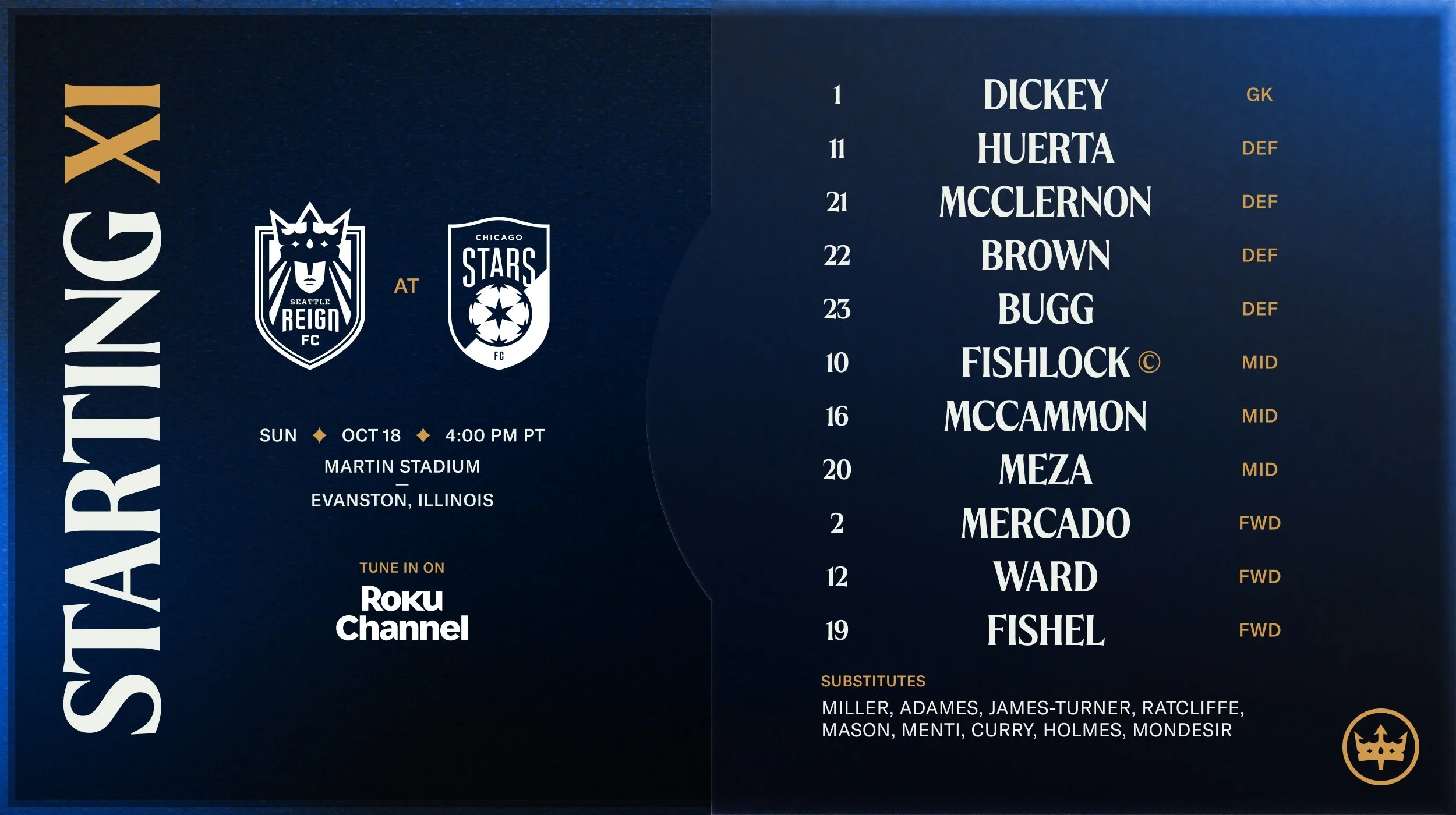
Seattle Reign head into their away match against Chicago Stars with yet another experimental lineup—and this detail, buried in the club’s official press release, says more than any pre-match prediction. Head coach Laura Harvey announced a starting XI that became the latest new combination of players this season. Since the beginning of the 2026 campaign, she has used 22 unique starting lineups in 28 matches. Put simply, a new combination takes the field in almost every game—and that is no longer flexibility so much as a worrying symptom.
When you look at what lies behind the dry statistics, the picture becomes even more interesting. “Twenty-two different lineups in 28 matches” means the coaching staff has not once fielded the same combination of players from the opening whistle more than a few times in a row. In soccer, this is almost always the result of several factors at once: injuries, fatigue after a congested schedule, a search for the optimal connections between lines, or, worse, the absence of a clearly defined core. Which of these factors is dominant in Seattle is not clear from the brief club press release, but the fact itself points to instability. In the NWSL, where every dropped point affects a team’s playoff prospects, that can prove to be an expensive luxury.
The only change from the previous match—October 2’s 1–0 defeat to North Carolina Courage—deserves particular attention. Holly Ward returns to the starting lineup in place of Maddie Dallien. The important context is that Dallien was placed on the season-ending injury list the day before. This is not simply rotation to keep players fresh—it is a forced restructuring of the attack, coming at a time when the team is already struggling to score, as the narrow defeat demonstrated. Losing a player for the remainder of the season is a serious blow for any club. In the NWSL, where most teams have limited roster depth because of the salary cap, replacing an unavailable player on a like-for-like basis is nearly impossible.
Two points are worth explaining for readers who do not closely follow women’s soccer. The NWSL is the National Women’s Soccer League of the United States, one of the strongest women’s competitions in the world. Its season runs from spring through fall, while the density of matches and coast-to-coast travel places considerable strain on players. The season-ending injury list is an official league mechanism: a player placed on it frees up a roster spot, but the club loses her for the rest of the season and may sometimes be allowed to sign a replacement outside the salary-cap rules. In other words, the decision concerning Dallien is not only medical but also a roster-management matter.
The key takeaway from this brief preview is that the Reign are entering the decisive part of the season without an established playing identity. Constant changes to the starting lineup are a double-edged sword. On the one hand, they give a wider range of players a chance to prove themselves and make it harder for opponents to prepare. On the other, they prevent players from developing automatic connections, especially in defense and in the final phase of attacks, where understanding is more important than individual skill. The trip to Chicago Stars will be another test of whether this “team assembled piece by piece” can come together as a single machine. If it cannot, the kaleidoscope of 22 lineups will later be cited as the main reason for the points the team let slip away.
West Seattle Crime Report: A Wave of Thefts, Carjackings and Armed Attacks Amid Seasonal Escalation
The incident roundup published by Westside Seattle covers roughly a month and a half—from late July to mid-October 2026—and paints a troubling picture of southwest Seattle, Burien and unincorporated White Center. This is not a police analytical report but a compilation of incident summaries: each entry includes a case number, date and time, location, severity level—from low to critical—and the current status of the investigation. The most striking feature is that the overwhelming majority of crimes are property offenses, committed either at night or in broad daylight with brazen speed: suspects act within minutes and flee in waiting vehicles. At the same time, the data includes several violent episodes—armed robberies, shootings, knife attacks and the brutal assault of a woman in the Junction—that go beyond ordinary street crime and require separate attention.
Broadly speaking, the report can be divided into two layers. The first consists of “routine” property crimes: catalytic-converter thefts, smashed car windows, package thefts from porches, break-ins at commercial storefronts and attempts to crack open safes. The second involves more serious incidents: armed store robberies, street assaults, shootings with and without injuries, and carjackings involving force. The geography is also fairly clear: Westwood Village, the Junction, Alki, Morgan Junction, Roxbury and White Center are hotspots where the same types of crime recur with alarming regularity.
One of the clearest patterns is catalytic-converter theft. It appears in the roundup at least six times: on 15th Avenue in Mid-White Center, in North Delridge, Morgan Junction, Boulevard Park, North Admiral and the Chelsea area. The suspects follow the same formula: two figures in dark hoodies, cordless reciprocating saws, and a dark sedan or crossover waiting nearby. The entire operation takes only a few minutes. In one North Delridge incident, residents woke to the sound of saws, and when one of them shouted from a balcony, the thieves threatened him. Cut exhaust pipes and used saw blades were left behind. The reason for the trend is simple: the platinum, palladium and rhodium inside catalytic converters command high prices on the black market, while removal takes less time than a police response. Hybrids such as the Toyota Prius are especially vulnerable because their converters contain more precious metals and are easier to access.
A second persistent pattern is the “smash-and-grab” attack in commercial districts. The Junction—the area around California Avenue—was hit repeatedly. A restaurant in Alki was broken into in early August, followed by a series of break-ins at bakeries and electronics stores in September and October. The scenario is repeated: a heavy object—a concrete block, paving stone or sledgehammer—is thrown through a glass door; the suspect enters, tries to open a safe or take cash drawers, and flees as soon as the alarm sounds. In one October incident at Junction Cafe, an unknown suspect threw a patio paver—a heavy garden tile—through the storefront, broke down the office door and tried to pry open a floor safe. Crime-scene investigators collected tool-mark impressions and surveillance footage showing a hooded figure. In several cases, owners and employees manage to scare the suspects away. At Addy’s Pet Shop, an operator watching the cameras in real time shouted through the speaker, causing the burglar, who had already raised a piece of lumber, to drop it and run.
The third layer consists of violent crimes. One particularly notable incident occurred in the Junction on September 24. A 51-year-old woman returning to her car in the parking lot between QFC and Maharaja restaurant on 42nd Avenue was surrounded by five young men. One shouted, “Hey, that’s my phone!” The woman was knocked to the ground, beaten with objects, kicked and stomped on the head and body. The attackers then took her blue iPhone and fled in a white Honda Accord with no license plates, driven by a fifth accomplice who had been waiting behind the wheel. The victim was taken to Harborview Medical Center with broken ribs, a collapsed lung and multiple lacerations to her head requiring numerous stitches. Passersby recorded the attack on their phones. Case No. 26-285630 is being handled by the violent-crimes unit, but no arrests have been reported. The case is important not only in itself: it shows how quickly an everyday phone theft can turn into a group beating, and how vulnerable people remain in parking lots during evening hours.
Armed robberies are also recurring with alarming frequency. The 76 gas station on 1st Avenue in Burien was robbed at gunpoint at least three times in three weeks—a pattern that suggests a deliberate choice of target rather than coincidence. The roundup also includes other incidents: a grocery-store robbery on SW Roxbury Street, where a man in a black balaclava produced a semiautomatic pistol; a robbery at a financial kiosk in Westwood Village, where the suspect “implied” that he had a weapon in his jacket pocket; an attempted armed carjacking on 16th Avenue, when the driver managed to lock himself inside a store; and an armed ATM robbery in Fontleroy, where two masked teenagers with pistols demanded money but fled after learning that the victim had only a check. In every case, the same logic is apparent: minimum time, maximum cash, and an escape on foot into an alley or in a waiting vehicle.
The shootings also deserve separate mention. In High Point on the night of October 7, unknown suspects fired several rounds near 35th Avenue and SW Raymond Street. Nine-millimeter shell casings were found on the road, and a parked car had a bullet hole in the passenger door. No one was injured. Similar incidents were recorded near Greenbridge—seven shell casings, a damaged radiator and windshield—on Roxbury, where six shell casings were found and shutters were damaged; near a children’s center on SW 98th Street, where windows were broken and four laptops stolen; in Roxhill Park, where a 40-year-old man suffered multiple gunshot wounds and was hospitalized in serious condition; and near Luna Park, where bullets pierced the window of a residential building. In the Riverview shooting, a 39-year-old man who confronted suspected drug dealers was sprayed with pepper spray and responded by firing at a pickup truck. The driver later tried to seal the bullet holes with tape. Such incidents show how thin the line can be between an everyday dispute and a shootout in these neighborhoods.
The roundup also includes incidents that usually remain in the background of crime reports but are important for understanding the overall situation. One was an attempted child abduction near the playground fence at Alki Elementary School. An unknown woman offered three first-graders a toy crown and items from her car, but the children refused, ran to staff on duty and reported what had happened. The school notified the district security service and police, patrols in the area were increased, and the case was assigned number 26-292903. It is a reminder that incidents involving children require no less of a response than armed robberies. Another notable case involved a phone-scam warning: fraudsters spoofed the numbers of the King County Sheriff’s Office, posed as deputies and demanded payment of a “bail fee for failing to appear for jury duty” via mobile payment or cryptocurrency. The sheriff emphasized that his employees never call demanding payment.
“Hoosiers” in Seattle: Indiana Dismantles No. 20 in Three Sets
The Indiana University volleyball team produced one of its best performances of the season—and did so with maximum speed and efficiency. On Sunday, October 18, at Alaska Airlines Arena in Seattle, the Hoosiers defeated the nation’s No. 20 team, Washington, in three straight sets: 25–22, 25–18 and 25–21. It was their second win over a top-20 opponent this season and an important sign that the Bloomington team has learned to handle the pressure of major road matches. Details of the match were provided in the official Indiana University Athletics report.
Defense was once again the key to victory. After recording 16 team blocks against Oregon, the Hoosiers registered 10 blocks in just three sets—a figure that, in modern women’s volleyball, speaks to discipline at the net and the ability to read an opponent’s play. Washington was held to a .149 hitting percentage, and midway through the match the home coaching staff was forced to switch to a 6–2 system—that is, a formation with two setters, normally used to create more attacking options and disrupt the opposing block’s rhythm. The fact that Washington had to abandon its own system during the match says a great deal about how uncomfortable Indiana’s defense made the Huskies.
A fifth-year opposite led the way, adding six blocks to her offensive contribution, while the middle blockers recorded five successful net actions each. But the biggest development was the return to full strength of a third-year outside hitter, whose intelligent shot selection set the tone for the entire attack. She led all players with 12 kills and a .455 hitting percentage, an outstanding figure for an outside hitter. The other outside hitter supported her with 10 kills. Together, the three pin attackers produced 31 kills with only seven attacking errors—in other words, nearly 82 percent of their attacking actions either ended in points or at least did not give points to the opponent.
The match’s other defining feature was the long rallies. This season, the Hoosiers have often lost extended exchanges, but in Seattle the pattern was reversed: the team made 38 digs, 10 of them by a second-year setter who recorded her ninth career double-double—that is, double-digit figures in two statistical categories, usually assists and digs. Five different players combined for seven aces from the service line. In other words, Indiana won not because of one outstanding performer but because of its depth and consistency in every phase.
The victory ended a three-match losing streak midway through conference play and became the program’s seventh win over a top-20 Big Ten opponent. Three of those wins have come in the past two years. Moreover, for the first time since the 1998–99 season, Indiana has defeated ranked opponents in two consecutive seasons. The Hoosiers are now 11–6 overall, 4–4 in conference play and 6–2 against West Coast programs over the past two seasons. For a program that has historically not been among the Big Ten elite, this is more than a line on a stat sheet—it is evidence of a systemic shift. The coaching staff is building a team capable of imposing its style on top opponents on the road and maintaining concentration late in sets. If this level of defense and attacking efficiency continues, the second half of the Big Ten season could be far more interesting for the Hoosiers than many expected before the campaign began.