
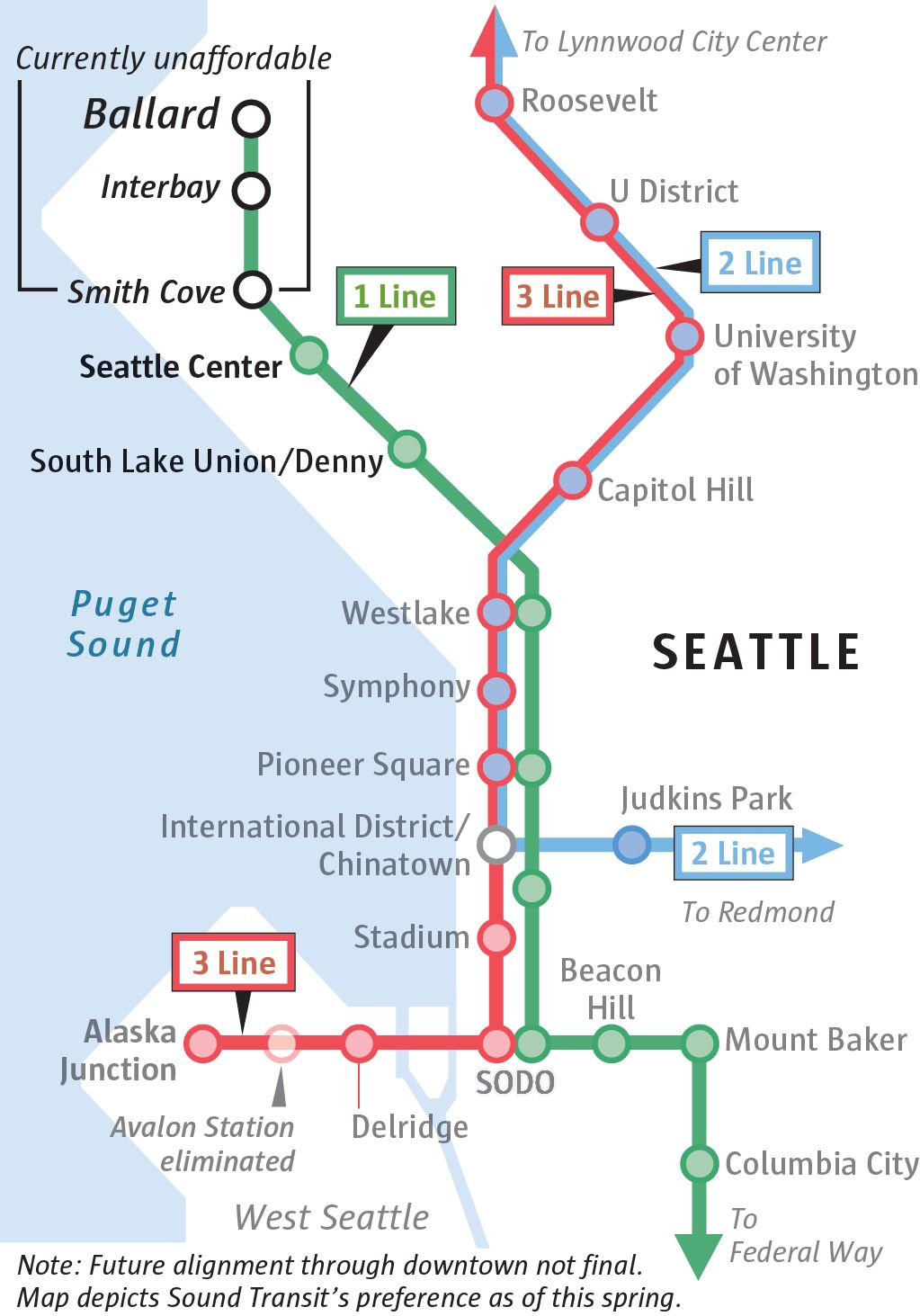
Sound Transit said extending the light-rail line to Ballard will require about $10 billion in additional funding. The figure includes federal and local funding, financial measures and engineering solutions intended to reduce the cost of future stations. In the best-case scenario, the project would be completed by 2042 — seven years later than the original promise made to voters.
The cost increase is linked to design refinements, inflation, higher labor and material costs, and more complex engineering requirements. The line would pass through dense urban development, waterways and industrial areas. Long, deep tunnels, complex stations and measures to protect against groundwater and weak soils will likely be necessary. Additional costs will come from property acquisitions, utility relocations, compensation for property owners and the construction of transit hubs. Designers will also have to account for seismic risk, narrow streets and the need to keep traffic moving during construction.
If funding cannot be secured, the Smith Cove, Interbay and Ballard stations may not open until 2060. In May, the Sound Transit regional board acknowledged that building them was too expensive, but allocated $300 million to continue designing the route and stations. At the same time, the agency considers it realistic to build a tunnel from the Sodo neighborhood through downtown to Seattle Center by 2042 for approximately $18 billion.
Extending the line to busy Northwest Market Street in Ballard would require about $1 billion to purchase land by 2030. Another $7–9 billion would be needed by 2033 to finalize construction contracts. These costs would be added to the already increased property, sales and vehicle-registration taxes approved by voters a decade ago.
Sound Transit oversees the regional transportation system, including Link, Sounder commuter trains and express buses. The agency plans and funds projects through a board representing the cities and counties in the region, while most of its revenue comes from local taxes approved by voters. Seattle determines city priorities, land-use, permitting and street-use matters, but does not control Sound Transit’s budget. King, Pierce and Snohomish counties participate in governing and funding the system within their tax districts. Daily bus service, however, is provided by separate agencies — King County Metro, Community Transit and Pierce Transit — so major projects require constant coordination.
The situation in Ballard reflects Sound Transit’s broader financial crisis: the agency’s long-term shortfall is estimated at $35 billion. Its leadership is postponing deadlines for many projects, dropping some parking facilities and commuter-rail expansions, and considering loans with terms of more than 40 years. The current 58-mile system carries about 165,000 passengers a day, while annual tax revenue totals approximately $2.4 billion.
The Ballard Link line is considered one of the most important future routes. Ballard’s densely populated neighborhoods continue to develop rapidly, while initial forecasts projected as many as 70,000 daily trips between Ballard and downtown Seattle. Ballard is also far from the existing rapid-transit network, and Interbay is a narrow corridor between the bay, railroad tracks, industrial areas and steep hillsides. This makes building a rail line particularly difficult and expensive.
Bus rapid transit could serve as a temporary alternative. It could be launched much faster and at lower cost by using existing streets, dedicated lanes, traffic-signal priority and convenient transfers. Such a route would not provide the same capacity and reliability as a subway, but it could improve connections between Ballard, downtown and other neighborhoods while Ballard Link undergoes design, environmental review and construction.
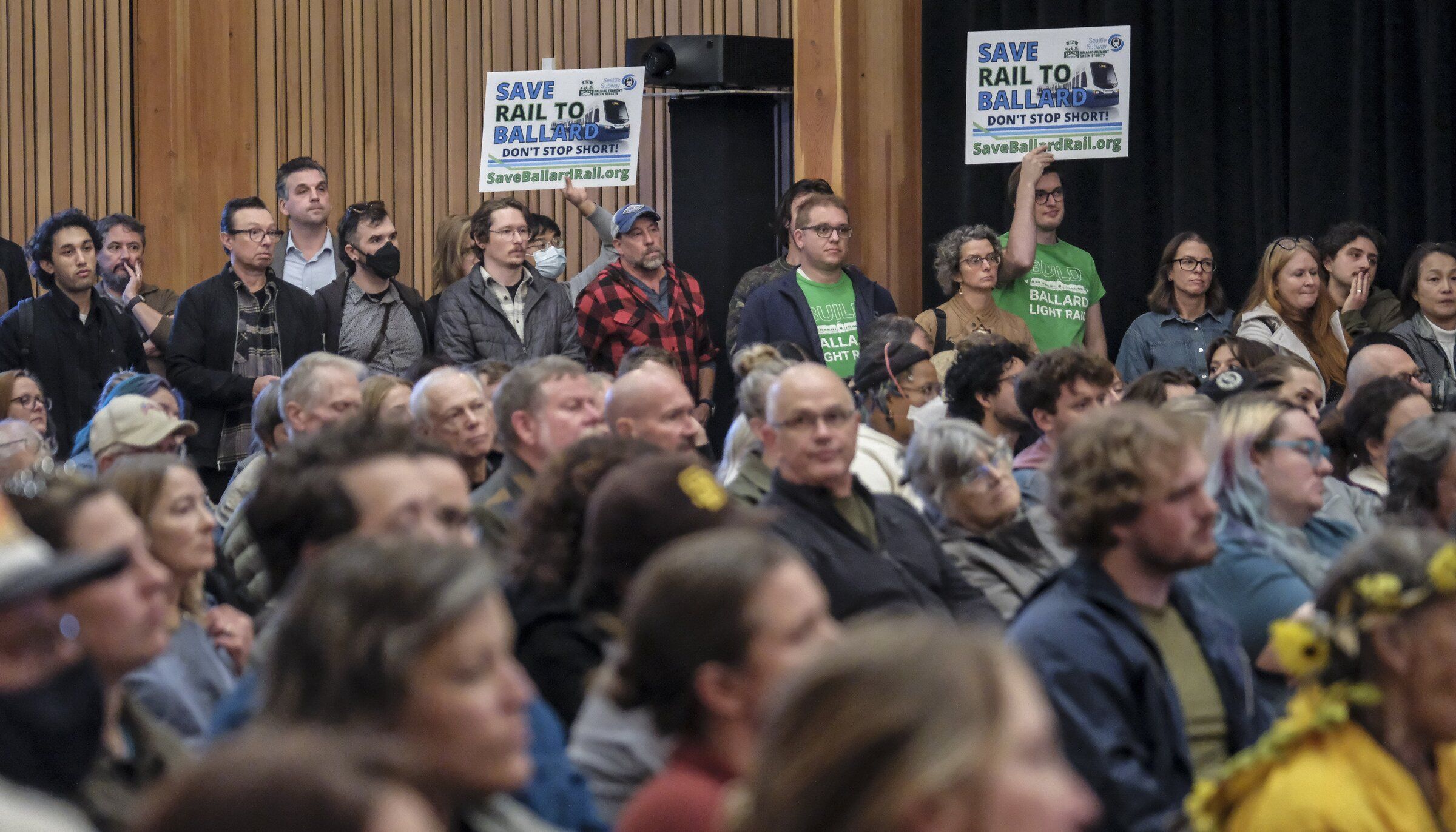
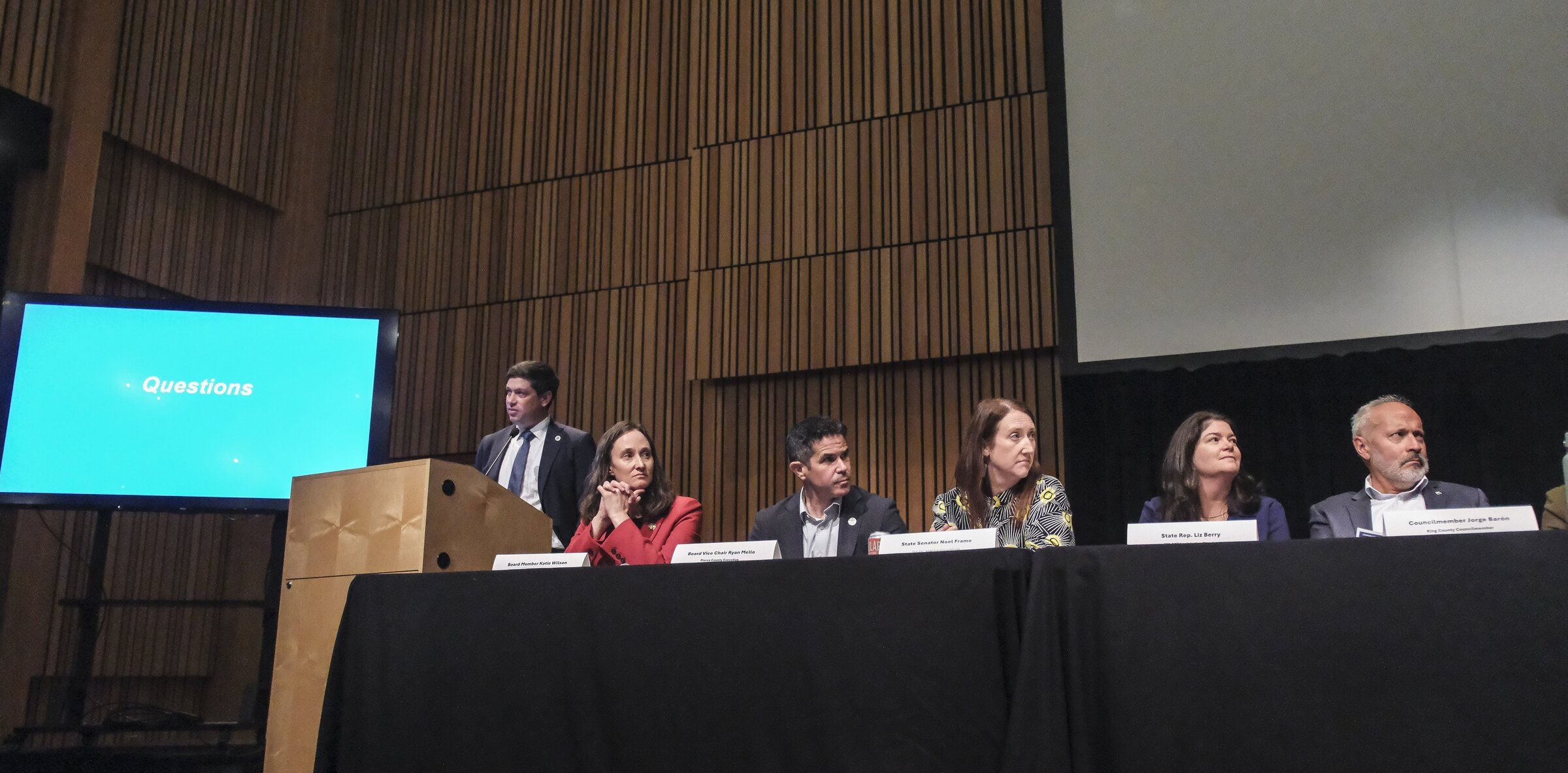
At a meeting at the National Nordic Museum, residents and politicians demanded that the project not be abandoned. Ballard City Council representative Dan Strauss said failure was unacceptable, while meeting participants called for the restoration of bus rapid-transit routes.
The project’s success depends heavily on federal policy and the outcome of congressional elections. Sound Transit expects to receive up to 35% of the funding from the federal government, but the administration of Donald Trump has so far awarded very few grants for major transportation projects. The agency hopes to reduce costs through more compact stations and phased construction, and to secure the necessary funds in the early 2030s. Ballard representatives and county leaders remain optimistic, but acknowledge that the neighborhood has already faced broken transportation promises more than once.
Based on: Ballard light rail could be revived for $10 billion, Sound Transit says