Amtrak opened a $250 million maintenance center for Airo trains in Seattle, completing it on time and $50 million under budget; 92 undelivered ballots were found in a park, but verification safeguards prevent fraud; City Attorney Erika Evans unveiled Connection Court and HiPRO, a new approach to minor offenses.
Amtrak opens Seattle maintenance center for Airo trains: $50 million under budget and on time
Amtrak and its partners have officially opened a new $250 million train maintenance and inspection complex in Seattle. The project came in $50 million under budget and was completed exactly on schedule—a rare combination for infrastructure projects of this scale. The center is designed to service Amtrak’s next-generation Airo trains, which began operating on the Amtrak Cascades route linking cities across the Pacific Northwest just a month ago. The facility is scheduled to open in stages through the end of 2026.
Covering nearly 100,000 square feet (about 9,300 square meters), the building is the first maintenance facility of its kind in Amtrak’s history. Its main feature is three parallel tracks under one roof, allowing an entire train to be inspected, serviced and overhauled at once, without uncoupling the cars or moving them in sections. Previously, this work had to be divided among several sites, costing time in logistics. Now, the entire maintenance cycle for one trainset—the complete train, including its locomotive and cars—can take place within a single facility.
Amtrak Executive Vice President of Capital Construction Laura Mason spoke to the project’s significance. The new facility, she said, represents a major step forward for the company and the region’s passengers: its modern tools and space make it possible to service an entire Airo trainset in one visit, work more efficiently, and remain committed to safe, reliable and comfortable travel for the next generation of Cascades customers. Oregon Department of Transportation (ODOT) Intercity Passenger Rail Program Manager Katie Holmes added that the facility sends a message to the public and the country: investments are being made in quality at every level—in equipment, people and the passenger experience. She noted that Oregon set a record for September ridership, and said the new center would help ensure Cascades continues to operate safely and reliably throughout the Pacific Northwest.
Washington State Department of Transportation (WSDOT) Senior Director of External Relations Allison Krutsinger linked the opening to the recent arrival of eight new Cascades trainsets and two locomotives. Together, the facility and the new rolling stock represent a half-billion-dollar investment in the region’s passenger rail service, she said, ushering in “a new era of rail travel in the Pacific Northwest.” Jim Mathews, president and CEO of the Rail Passengers Association, highlighted the project’s national significance: the Seattle center is the first of six major new facilities that will support Airo trains across the country, built by American workers with suppliers from multiple states.
A few terms are worth clarifying. Airo is Amtrak’s new generation of passenger trains, gradually replacing aging equipment on regional routes. They combine locomotive power with modern cars and are designed to offer greater efficiency and comfort. A trainset is a configured train of a locomotive and cars that is serviced as a single unit. Heavy maintenance involves more than routine inspections: it means major repairs requiring lifts, specialized equipment and sufficient time. The ability to carry out all this under one roof, on three tracks, makes the facility a vital part of operating the new fleet.
The key takeaway is that Amtrak has demonstrated it can deliver infrastructure projects with discipline: coming in $50 million under budget while meeting the deadline is a strong argument to taxpayers and the Congress that funds railways. Second, the link between “new trains and a new depot” is clear: without a modern maintenance base, bringing Airo trains into service could have led to downtime and disruptions; the new facility now provides the necessary technical support. Third, officials in Oregon and Washington directly connect investment with rising ridership. Oregon’s September record shows that demand for Cascades is real and that reliability needs to grow along with it. Finally, the six planned facilities nationwide show that the Seattle center is not an isolated success, but part of a broader program to modernize U.S. passenger rail service, as described in Amtrak’s press release. For passengers, this could eventually mean fewer cancellations and delays; for the region, it means preserving and creating jobs; and for the industry, it offers a model that can be replicated on other routes.
Ballots in a dumpster: dozens of undelivered ballots found in Seattle
Ahead of the U.S. midterm elections, an incident in Seattle has once again drawn attention to the security of mail-in voting. Dozens of undelivered ballots were found among discarded mail in a dumpster at Golden Gardens Park. Although this kind of incident is not unique in American elections, it sparked widespread attention and prompted King County election officials to explain how the system is designed to guard against such problems.
Kendall Hodson, chief of staff at King County Elections (KCE), said an individual voter reported the discovery to law enforcement after calling the agency’s hotline. KCE staff went to Golden Gardens Park, where they found two mail containers in a dumpster holding 92 ballots. The U.S. Postal Service (USPS) was immediately notified so it could investigate. Hodson said the ballots had already been reissued and sent to the affected voters.
In a statement, postal officials emphasized that USPS is “fully committed to the safe and timely delivery of the nation’s election mail” and confirmed that the Seattle incident is being handled by the USPS Office of Inspector General. Hodson, for her part, noted that mail theft unfortunately happens and does not let up during election season: “We typically hear about a few incidents where ballots are discarded after mail theft at every major election. But we consistently hear from our law enforcement partners—and the fact that the ballots were left behind supports this—that ballots are generally not the target when mail is stolen.” In other words, the thieves were likely looking for something more valuable in the containers—bank cards, checks or documents with personal information—and the ballots were merely a byproduct of the theft.
Still, the fact that ballots ended up in a dumpster requires an explanation from an election-security perspective. The key principle of the U.S. mail-in voting system is that security is ensured not at the delivery stage, but during verification. Hodson stated plainly: “One thing that’s important to know is that the security that ensures only the registered voter votes their ballot is on the back end, when we verify the voter’s signature and that they haven’t already returned a ballot.” This means that even if a ballot is stolen and discarded, a thief cannot use it: without the registered voter’s signature, it will not be accepted, and if the voter has already cast a ballot, a second attempt will be blocked.
KCE employee Hailey Watkins provided further details about the safeguards: “Every voter has a voter ID, and every individual ballot also has its own ballot ID. We can only accept one ballot ID and only one ballot per voter. We verify every signature on every ballot to make sure that you are the person who voted and returned your ballot.” Election workers receive signature-verification training from the Washington State Patrol. There is also a clear procedure for cases of doubt: if staff have questions about a signature, the ballot is held from being counted while the voter is asked to confirm their identity. Voters have until the day before the official certification date to resolve the issue. During that period, election officials send them a letter or contact them by email or phone if they have voluntarily provided those details.
This incident is more than an odd story about lost mail. It illustrates a broader problem facing U.S. elections: mail-in voting, which became especially popular during the pandemic and continues to account for a substantial share of ballots, inevitably faces delivery and logistics risks. But a multilayered verification system—signature checks, unique voter and ballot IDs, and a ban on voting more than once—is intended to limit the consequences of such failures. As Hodson noted, voters who have not received a ballot can call 206-296-8683. Anyone who finds ballots in an inappropriate location is encouraged to email elections@kingcounty.gov or call 206-296-VOTE, including a photo and details of where they were found.
Bottom line: the 92 ballots discarded in a Seattle park did not lead to—and could not have led to—election fraud. They were reissued, and the system of signature and ID checks reliably blocks attempts at fraud. But the theft of mail ahead of an election underscores that election infrastructure remains vulnerable to criminal activity unrelated to politics, and that informing voters how to contact election officials remains critical. As Hodson explained in comments to KOMO News, mail theft does not let up during election season, but ballots are usually not the target—and that is perhaps the main takeaway from the incident.
Connection Court: Seattle tries a new approach to minor offenses
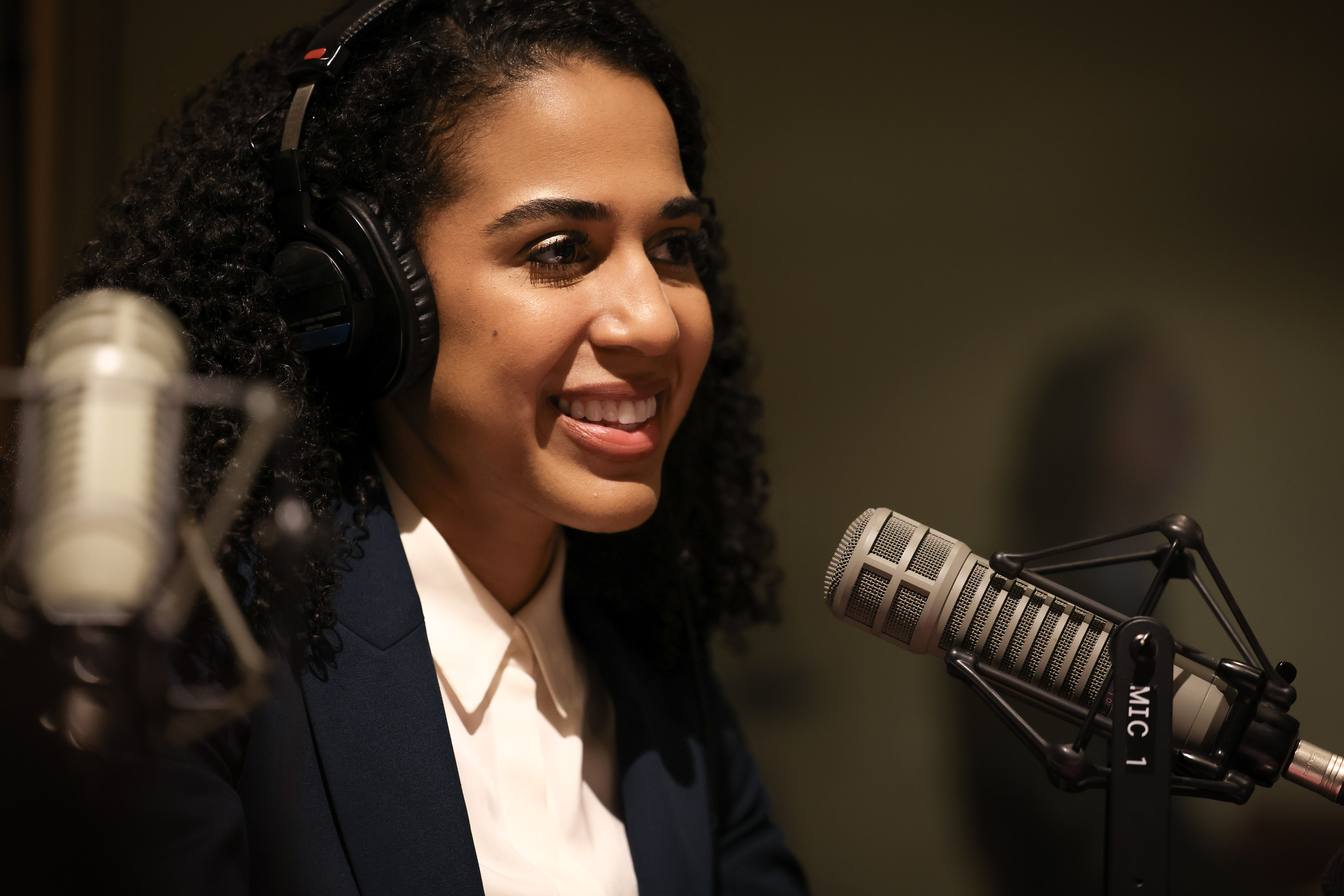
Seattle City Attorney Erika Evans has introduced a new alternative-justice program called Connection Court. It is aimed at people accused of minor, nonviolent offenses and offers them a connection to social services—addiction treatment, peer counseling and housing assistance—instead of prosecution. Essentially, it is an attempt to revive and rethink the community court model, which Evans’s predecessor, Ann Davison, had shut down. In an interview with KUOW’s Soundside, Evans explained the reasoning behind the initiative: “There is an absolute need to do everything we can to give people in nonviolent cases what they need. And if someone is not going to take advantage of that opportunity, we will hold you accountable.” The key difference from the previous model is a requirement to demonstrate 90 days of “law-abiding behavior”: only those who meet it avoid prosecution.
The political context matters as much as the legal one. Evans criticized Davison’s decision to close the community court during her election campaign and also opposed her High Utilizer Initiative. That program identified people with 12 minor offenses over five years, including at least one in the previous eight months. Those on the list received increased attention from prosecutors and lost access to community court. The new administration is taking a different approach: instead of looking at a person’s record over several years, it assesses their behavior over a short period.
The second program announced, High Priority Repeat Offenses, or HiPRO, is based on this principle. It covers people who commit three offenses in three months or six in six months. These individuals are barred from Connection Court and other diversion options, and the prosecutor will recommend longer periods of detention to the court. “The difference is that we’re looking at a three- or six-month window,” Evans explained. “And that’s the period we’re focused on to make sure that people who are committing crimes back-to-back have already had the opportunity to access services and aren’t taking advantage of them. You know what? We’re going to try something different, because we have to keep the people of Seattle safe and hold accountable those who aren’t yet ready to take advantage of opportunities to get things back on track.” In other words, the administration is creating a kind of funnel: first a chance to access services, then a tougher response for those who do not take it.
Another issue is Aurora Avenue, one of the city’s most troubled corridors, where street prostitution and human trafficking have been reported. Evans described the limits of her authority while also finding a way to expand it. “Traditionally, the city attorney handles misdemeanors, and as far as sex trafficking goes, that means prosecuting sex buyers. Trafficking charges have traditionally always been handled by King County; they’re felonies, and that’s not our job,” she said. “What I started doing on my first day in January was meeting with City Councilmember Debora Juarez, and what we did was create an entirely new position: my office will have a prosecutor who is cross-deputized with King County, so we’ll have an additional prosecutor who investigates, charges and handles trafficking cases and other crimes that occur in our city, specifically on Aurora.”
A few concepts help explain the details. A misdemeanor is an offense of moderate severity under U.S. law, falling between civil infractions and felonies, or serious crimes; misdemeanors make up most of a city attorney’s caseload. A community court is a model in which minor cases are handled through a streamlined process focused on services rather than punishment. In the legal context, “diversion” does not mean sabotage; it means redirecting a defendant from the criminal process to rehabilitation or social-service programs. Finally, “cross-deputization” means that the same prosecutor is officially authorized to handle cases on behalf of both the city and the county, easing the traditional division of jurisdiction.
A broader trend in American urban justice is visible here: a move away from rigid lists of frequent offenders toward shorter time windows and expectations placed on participants themselves. Evans’s program attempts to address two political demands at once: a more humane response to street poverty and voters’ desire for public safety. The risk is that the requirement to demonstrate 90 days of law-abiding behavior may be difficult for people without housing or stable support, while HiPRO could reproduce the logic of the previous High Utilizer Initiative, which Evans herself criticized, albeit over a shorter assessment period. Success will depend on whether addiction-treatment and housing services have enough capacity, and on how consistently prosecutors apply both programs. Details of the programs are available in Erika Evans’s interview with KUOW’s Soundside.