Venezuelan publications view U.S. policy under Donald Trump as an attempt to strengthen Washington’s influence in the Western Hemisphere. Particular attention is focused on the possible deployment of U.S. troops in Colombia and on political changes in South America, which are presented through the lens of Washington’s policy. At the center of the discussion is concern among countries in the region and close attention to the risks of a new phase of U.S. intervention in security matters. The material is based on publications by Noticiaspia.com and AmCham Colombia (Venezuela).
U.S. Strengthens Military Presence in Latin America
Plans by the United States to send troops to Panama, Colombia, and Honduras are prompting the region to raise not only questions about combating drug trafficking, but also concerns about a new phase of U.S. intervention in Latin American affairs. As the Venezuelan publication Noticias PIA writes, the possible deployment should be viewed in the context of the Donald Trump administration’s drive to restore Washington’s political and military influence in the Western Hemisphere.
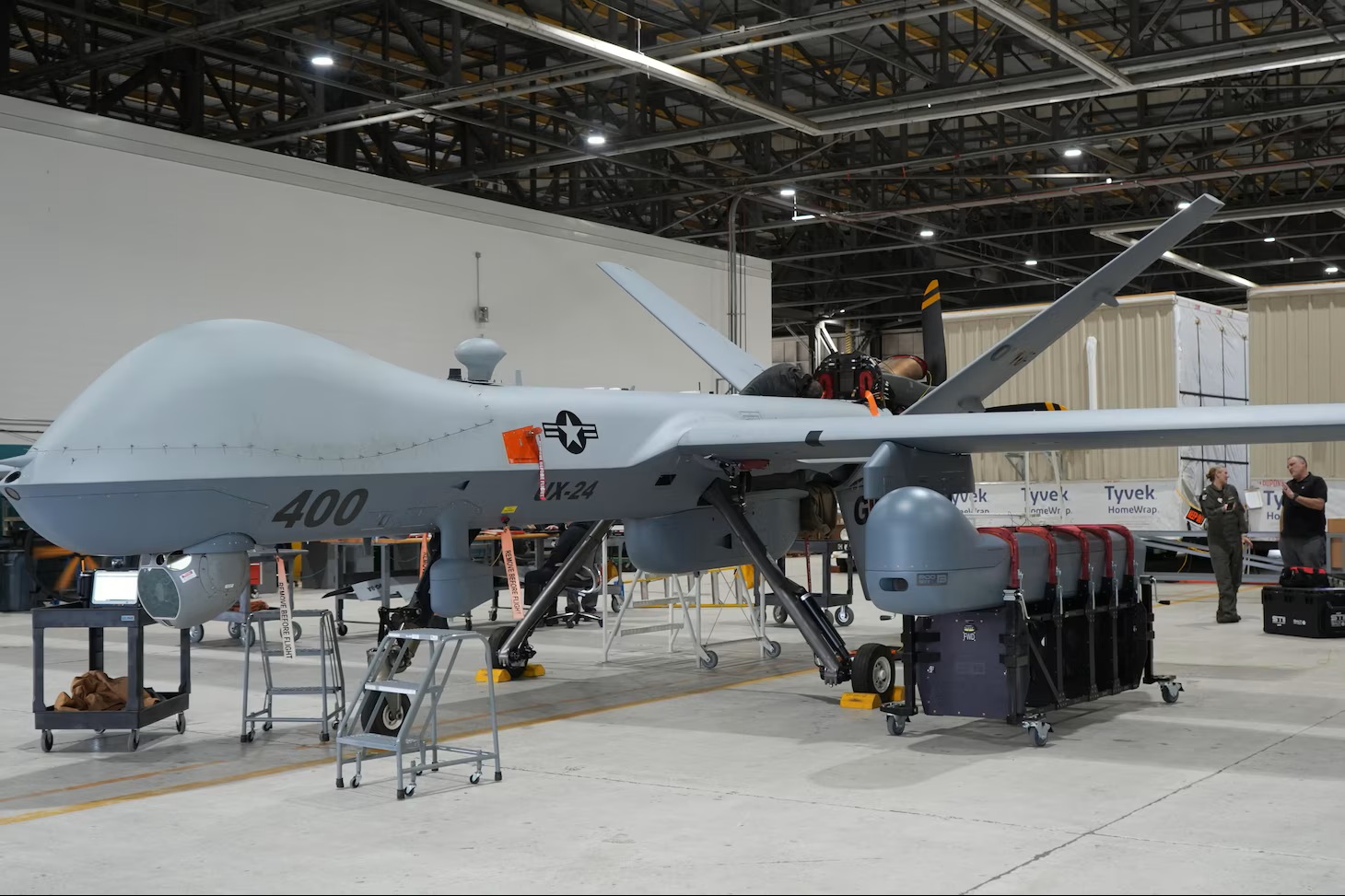
According to the publication, up to 600 troops from the U.S. 10th Mountain Division could pass through a new training center in Panama. They are expected to take part in jungle training, followed by the Southern Vanguard exercises in Colombia and drills in Honduras. The article also mentions plans to deploy MQ-9 Reaper drones to Colombia and Ecuador, reinforce the command responsible for operations in the Western Hemisphere and based in Miami, and provide $52 million in military aid.
For a Venezuelan audience, the political significance of these steps is more important than the number of troops involved. The author uses the term “Donroe doctrine”—a combination of Trump’s name and the Monroe Doctrine—implying that the United States is seeking to regain a “preeminent position” in Latin America. In this context, the publication notes, the new U.S. National Security Strategy suggests that Washington intends to “reassert and apply the Monroe Doctrine” in order to restore its primacy in the region.
Adam Isacson, director of defense oversight at WOLA’s Washington office, called the possible deployment unusual by regional standards. “I can’t recall other deployments of U.S. troops in the region approaching 600 personnel, except in emergencies such as invasions or natural disasters,” he said. In Noticias PIA’s interpretation, this assessment argues against portraying the operation as a routine military cooperation program.
A separate concern is that the counter-narcotics campaign could become a pretext for expanding the U.S. military presence. Admiral Francis L. Donovan, head of the U.S. Southern Command, has raised the possibility of shifting operations from the sea to land. The Venezuelan publication interprets this as a signal that U.S. forces may move beyond intercepting vessels in the Caribbean and Pacific.
The article also sharply assesses the humanitarian consequences of counter-narcotics operations. The killing of dozens of fishermen accused of drug trafficking is described as “extrajudicial executions.” Ecuador is cited as an example: a court acquitted 32 crew members of a detained vessel because there was no evidence of their involvement in a crime. The authors also refer to the experience of Plan Colombia: according to the Truth Commission, U.S. service members sexually assaulted 53 14-year-old girls between 2003 and 2007, while diplomatic immunity prevented them from being prosecuted in Colombia.
The issue is particularly sensitive for Venezuela because it shares a border with Colombia. In Caracas, the expansion of the U.S. military presence in Colombia, the deployment of forces to Panama and Honduras, and the use of drones in Colombia and Ecuador may be perceived as the creation of a dense military-political infrastructure around countries in the region that are not always aligned with Washington. From this perspective, the discussion of combating drug trafficking is linked to questions of sovereignty, external pressure, and the historical memory of previous U.S. operations in Latin America.
At the same time, not all information related to U.S. policy in the region reflects an immediate Venezuelan reaction. For example, the AmCham Colombia article, whose headline refers to Trump, a political shift in South America, and support for President De la Espriella, is in fact a program for a conference scheduled for April 23 at the Hilton hotel. The text contains no statements by Donald Trump, Venezuelan assessments, or a reaction from Caracas.
The program for the Colombian event demonstrates which issues concern the country’s business and political circles in their relations with the United States: trade, investment, security, migration, the fight against drug trafficking, the risk of U.S. protectionism, and the possibility that Washington could “decertify” Colombia. Other listed topics include Trump’s tariff policy, economic nationalism, nearshoring, market diversification, and the prospects for U.S. investment.
According to the program, the conference is to be attended by Colombian ministers Pedro Sánchez and Ángela Buitrago, former President Juan Manuel Santos, members of Congress, representatives of the U.S. diplomatic service, the embassies of China and Mexico, and trade associations. No Venezuelan officials, experts, or organizations are among the announced participants. Therefore, this document cannot be considered evidence of Venezuela’s position: it only indirectly shows that security, migration, and U.S.-Colombian relations remain important factors for the entire border area, including the Venezuelan direction.