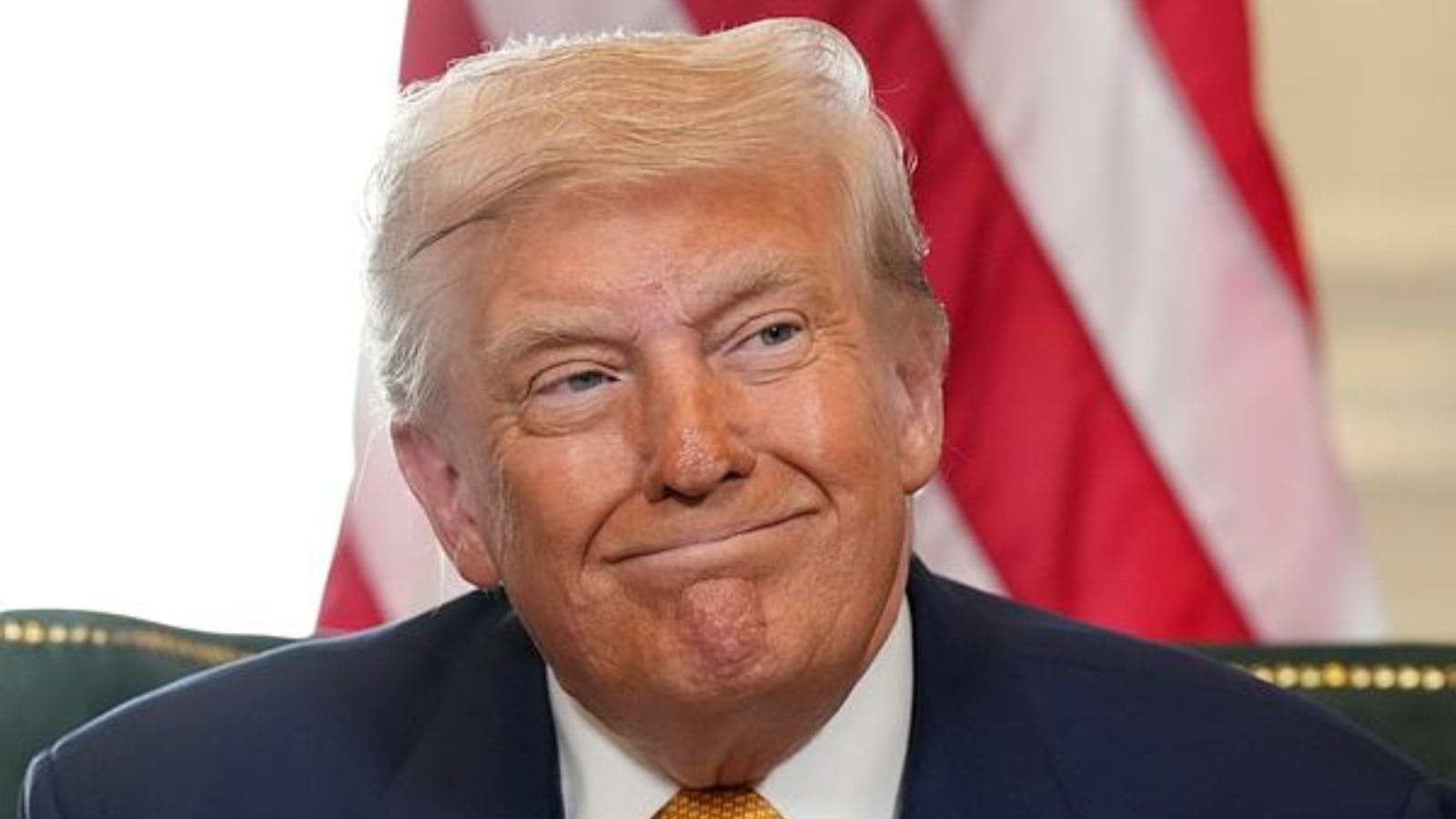
Over the past two days, July 30–31, 2025, the main story in the United States for India, Ukraine and Brazil has been not merely Donald Trump’s trade policy, but its transformation into a tool of direct political pressure. Washington has simultaneously announced a 25% tariff on Indian goods—with an additional, as yet unspecified penalty for purchases of Russian oil and weapons—and imposed a 50% tariff on Brazil, openly linking it to the country’s domestic politics and the case against former president Jair Bolsonaro. For Ukraine, meanwhile, these measures have become part of another, vital story: Trump shortened Moscow’s deadline to agree to a ceasefire to 10–12 days and once again spoke of sanctions against buyers of Russian energy. (kommersant.ru)
Together, these three countries offer a particularly clear view of America’s new international image: less an ally or trading partner than a power that ties access to its market to political loyalty, energy choices and even the structure of other countries’ democratic institutions. But the reactions differ. In Kyiv, many see America’s hard line as a long-awaited attempt to deprive Russia of oil revenues. In New Delhi, it is seen as a dangerous precedent: the energy security interests of a country of 1.4 billion people are being declared contrary to US priorities. In Brasília, it is viewed as interference in national sovereignty under the cover of trade policy.
India’s debate centers on a question far broader than the dispute over a 25% tariff: can India preserve its strategic autonomy if the United States is effectively demanding that it reconsider its relations with Russia? In an editorial, The Indian Express describes the tariff blow as a risk to exports, supply chains, employment and economic growth, with potential losses estimated at up to $30 billion. But the authors stress that the underlying problem is not simply access for US goods to the Indian market: Washington is angered by India’s purchases of Russian oil and New Delhi’s defense ties with Moscow. (indianexpress.com)
For Indian audiences, the logic of punishing the country for buying Russian oil is especially troubling. Since the full-scale war began, Russia has sold crude at a substantial discount, and the share of Russian oil in India’s imports rose from around 2% in the 2021–22 fiscal year to 36% in 2024–25. From India’s perspective, this is not an ideological choice in favor of the Kremlin, but a pragmatic effort to protect its domestic market from expensive energy. The US demand is therefore seen as an attempt to make India pay for someone else’s geopolitical strategy—with no guarantee that Washington will treat it as an equal partner. (indianexpress.com)
At the same time, India’s establishment is not calling for a dramatic break. The same The Indian Express editorial board views New Delhi’s restrained response as a pragmatic reaction to pressure, while urging it to continue negotiating a trade agreement. This position reflects India’s foreign-policy tradition: not to choose definitively between the United States and Russia, but to preserve room to bargain with both. India is prepared to discuss specific concessions, but not to accept that Washington should determine its energy policy. (indianexpress.com)
Ukraine, by contrast, views pressure on buyers of Russian oil through the lens of war. Ukrainian commentators see Trump’s shortened ultimatum to Moscow as a sign that the White House is finally beginning to recognize the futility of endless attempts to reach an agreement with Vladimir Putin. Political scientist Andreas Umland writes in a column for Ukrainska Pravda that Trump’s rhetorical shift is more likely linked to his realization that his previous approach has failed than to any fundamental change in his views on Russia. Ukraine’s key caveat is crucial: words of resolve matter only if they are followed by weapons, sanctions and predictable policy—not another deal at Kyiv’s expense. (pravda.com.ua)
Ukrainian foreign-policy expert Liudmyla Pokrovshchuk, commenting on the prospect of secondary tariffs against Russia’s trading partners, said on the FREEДОМ channel that once the deadline expires, Trump could impose the promised 100% tariffs while increasing military supplies to Ukraine. For Kyiv, this marks an important shift: Russian oil is viewed not merely as a commodity, but as the financial foundation of Russia’s ability to continue the war. (uatv.ua)
Ukraine’s response, however, is not simply optimistic. There is an understanding that secondary tariffs on India or other major buyers of Russian oil can be an effective lever only if applied consistently. If the threats remain a bargaining chip, Moscow will gain time, while US partners will have an incentive to find ways around the restrictions. That is why the Indian tariff is read in Ukraine in two ways: as a potentially useful blow to Russian revenues, but also as a test of whether Trump can pursue a long-term strategy rather than simply make high-profile political gestures.
Brazil finds itself in an even more unusual situation: here, the tariff is not a means of applying pressure over Russia or a trade imbalance, but a lever for intervening in a domestic political and legal conflict. An order signed by Trump on July 30 added 40 percentage points to the existing 10% rate, bringing the total tariff to 50%. The document explicitly mentions Bolsonaro, who is facing a case in Brazil over an alleged attempt to prevent the transfer of power after the 2022 election. Folha de S.Paulo notes that the measure appears to be motivated primarily by politics rather than economics. (www1.folha.uol.com.br)
For Brazilians, it is particularly telling that the United States did not impose an equally damaging regime on all trade. Nearly 700 product categories were exempted, including certain types of aircraft, energy products and orange juice. The American Chamber of Commerce in Brazil calculated that the exemptions covered 43.4% of the value of Brazilian exports to the United States. This softened the immediate economic blow but did not dispel political outrage: Washington showed that it could punish a country while simultaneously protecting the sectors of the US economy that need Brazilian goods. (noticias.uol.com.br)
Brazilian political analyst Rafael Favetti, commenting for UOL, voiced a suspicion common in the local debate: the exemptions were most likely concessions not to Brasília, but to American businesses. In other words, this is not Trump backing away from an attempt to influence Brazilian politics, but a targeted adjustment of the punitive measure. (noticias.uol.com.br)
This highlights an important difference between Brazilian and Ukrainian perceptions of US pressure. For Ukraine, secondary measures against Russian oil may be justified because they are intended to end the war and restrict the aggressor’s resources. For Brazil, tariffs linked to Bolsonaro’s fate look like a dangerous assertion of the US right to judge the work of Brazilian courts and influence criminal proceedings in another democracy. Thomas Shannon, a former US ambassador to Brazil, called it the first instance of Trump using the threat of tariffs for a political purpose, directly intervening in another country’s institutions, in an interview with Folha. (www1.folha.uol.com.br)
The common thread linking India, Ukraine and Brazil is not anti-Americanism as such. All three countries need the United States, but each is now being forced to weigh the cost of that dependence. India sees that its partnership with Washington may be made conditional on giving up discounted Russian oil. Ukraine hopes that US tariff power will finally be used against the sources financing Russia’s war, but fears inconsistency. Brazil is discovering that access to the US market may be tied to how its own courts handle a case involving a Trump ally.
The most unexpected conclusion from these distinct reactions is that the United States is pushing the countries in different ways toward greater self-reliance. In India, the case for multi-aligned diplomacy and market diversification is gaining ground. In Brazil, there is a growing incentive to seek alternative export markets and make the defense of sovereignty a unifying domestic slogan. In Ukraine, by contrast, the conviction is strengthening that American power remains indispensable—but only if it is applied systematically, rather than through a series of deals. Trump’s tariffs are thus more than an economic measure: in Delhi, they are read as a test of autonomy; in Kyiv, as a potential instrument of war and peace; and in Brasília, as a test of democratic sovereignty.