In the days before the U.S. midterm elections on November 3, 2026, discussions in Brazil, India and Japan are focused less on the outcome of America’s domestic political battle itself than on its consequences abroad. The common thread is a sense that under Donald Trump, Washington has turned foreign policy into an extension of the election campaign: tariffs, sanctions, oil, immigration rules and even relations with allies can now shift quickly in response to gas prices, approval ratings and the battle for Congress. But while in Japan this raises concerns about the alliance’s predictability, in India it fuels demands for equal terms, and in Brazil U.S. policy is already seen as a matter of national sovereignty and the legitimacy of the country’s own elections. (www1.folha.uol.com.br)
The most prominent theme connecting these discussions is the extent to which U.S. foreign policy depends on the cost of living at home. Japanese researchers at the Japan Institute of International Affairs, in their analysis of the 2026 election, note that rising oil and gasoline prices amid the war with Iran have fueled discontent among American voters and weakened the Republicans’ position. For Tokyo, this is not an abstract American issue: expensive energy immediately worsens Japan’s trade balance and puts pressure on the yen. From Japan’s perspective, the question is not simply whether Democrats will take control of the House of Representatives. Whatever the outcome, America is likely to turn further inward, with the White House increasingly focused on the 2028 presidential election. That is why economist Nobuhiko Kiuchi of NRI, in his October 29 commentary, advises Japan to strengthen its lines of communication with both the administration and Congress—rather than assume that the alliance’s long-standing traditions will guarantee stability.
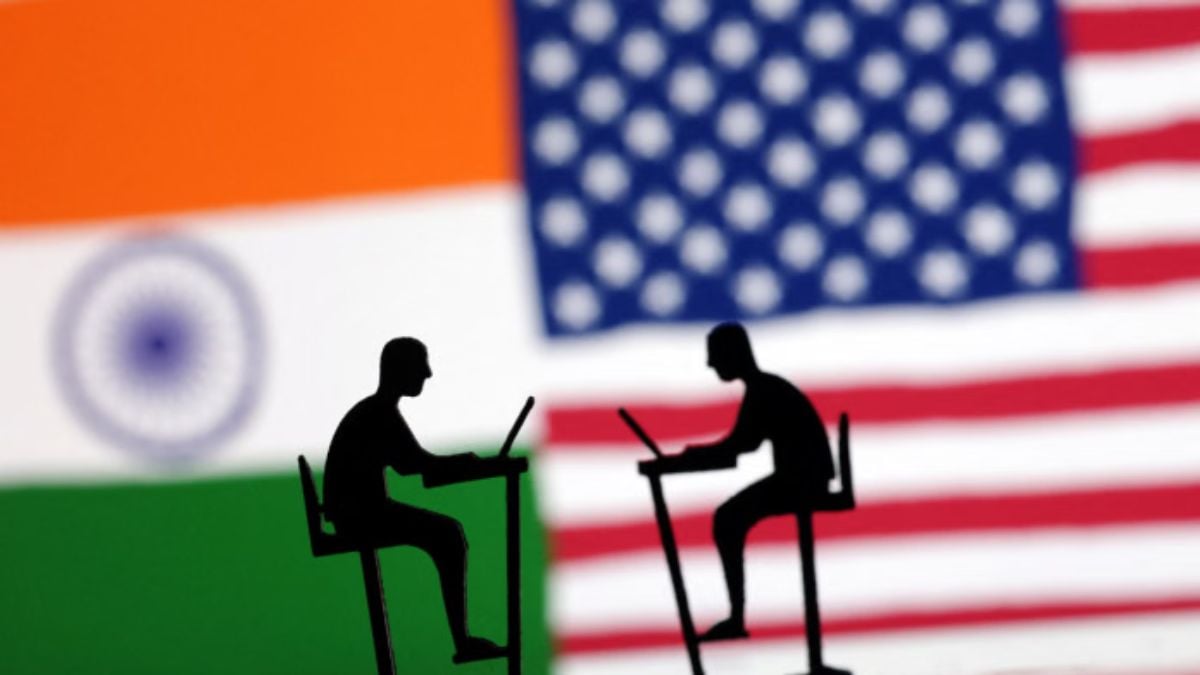
India’s debate is sharper: New Delhi sees American volatility not only as a risk but also as a reason not to give ground. Talks on a bilateral trade agreement have effectively stalled. Washington is demanding broader access to the Indian market, fewer barriers and reduced purchases of Russian oil. India, meanwhile, is unwilling to open sensitive agricultural sectors—rice, wheat, dairy and poultry—on which the livelihoods of vast numbers of small farmers depend. In a column for ThePrint, political commentator Seshadri Chari sums up the local mood plainly: Washington wants concessions “on trade and Russia,” but India should negotiate “without fear.” This is not a rejection of partnership with the United States, but a refusal to treat American terms as inevitable.
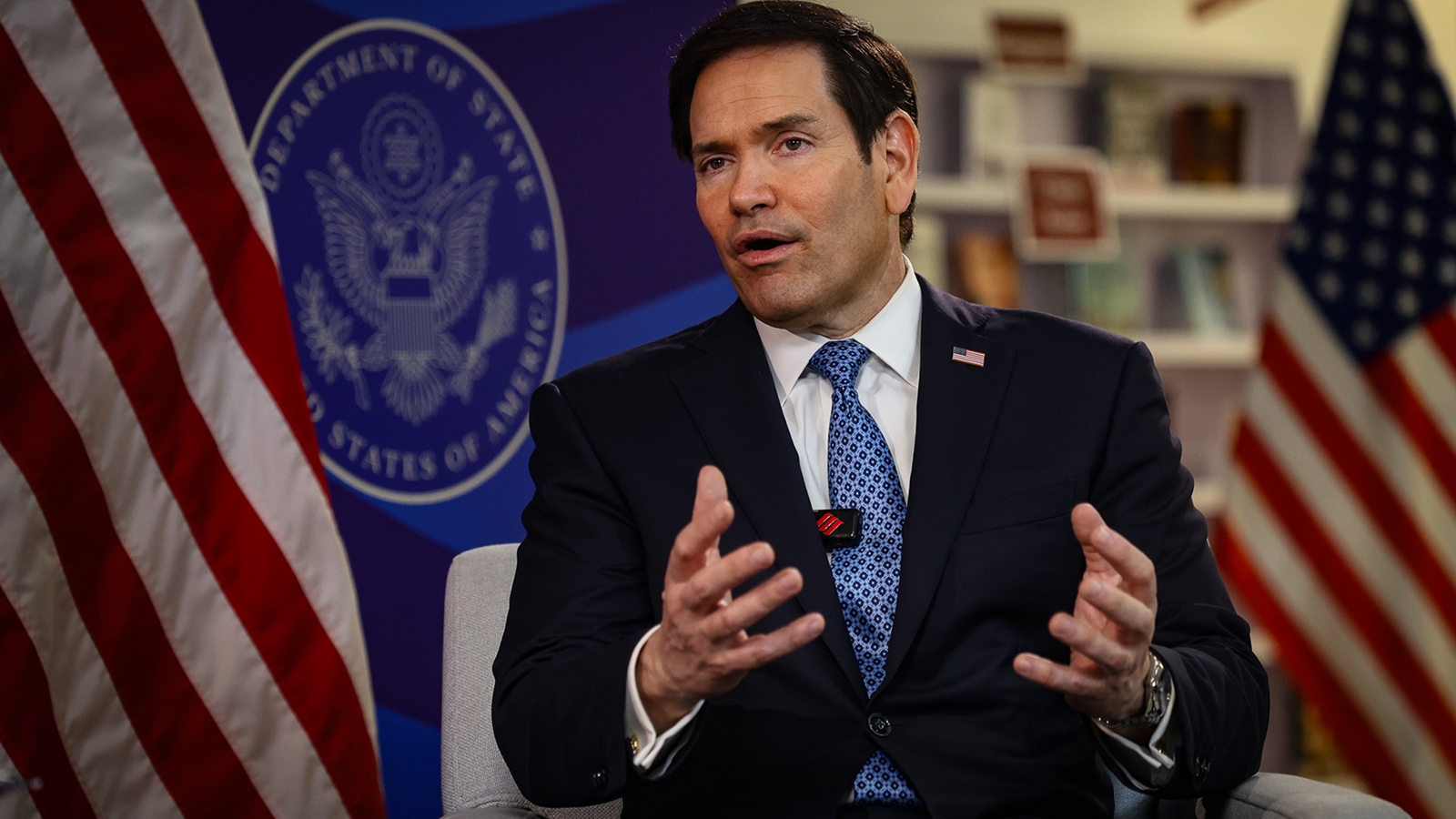
The way India links oil, sanctions and the war in the Middle East is particularly revealing. After the Trump administration temporarily suspended enforcement of a law that could have imposed tariffs of up to 100% on the largest buyers of Russian energy, the Indian press did not see the move as a generous gesture, but as confirmation of an American pressure tactic: first issue a threat, then make a partner respond, and finally offer partial relief as a bargaining chip. Shifali Goyal and Debashis Chakraborty write in The Indian Express that Marco Rubio’s visit to Mumbai left India with not clarity but new sources of potential dependence—on American and Venezuelan oil—while uncertainty over Russian supplies persists. From India’s perspective, the United States is offering not so much a strategic partnership as management of energy flows in exchange for political loyalty. (indianexpress.com)
This points to an important aspect of India’s response that is not always apparent in American media: irritation does not rule out pragmatism. Even critical commentators acknowledge that ties in technology, defense and investment continue to expand. An IndiaUSDefenceTechMonitor review highlights the paradox: tariff disputes, visa restrictions and threats of sanctions have not halted partnerships in semiconductors, manufacturing and defense technology. India’s formula today is to cooperate with America where it serves its interests, without letting Washington dictate where India buys its oil, what it protects in its domestic market or the pace of its development.
In Brazil, American unpredictability is seen not as a backdrop to negotiations but as direct interference in the country’s political life. Following Luiz Inácio Lula da Silva’s victory in the October 25 election, the question of Trump’s response became central. A Folha de S.Paulo report says the U.S. Embassy called the result “definitive,” while Trump himself publicly avoided clearly recognizing the winner’s legitimacy and criticized the electoral process. For Brazilians, this is especially painful not only because of the diplomatic tone: previous tariffs, contacts between Bolsonaro’s allies and Washington, and pressure on domestic institutions have come together in the public mind as a single picture of foreign interference. (www1.folha.uol.com.br)
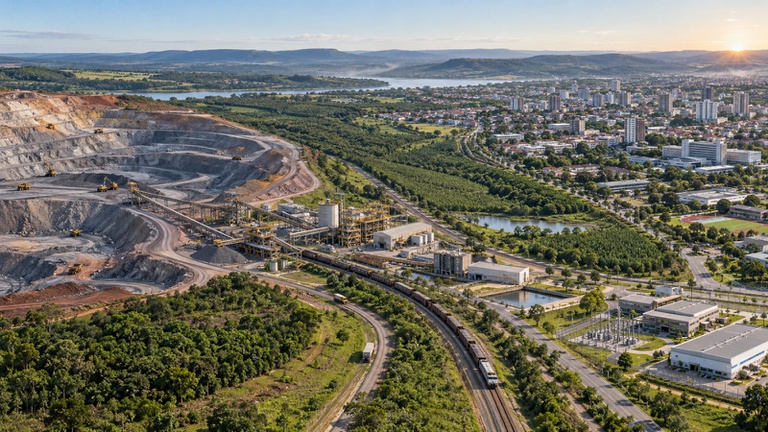
Brazil’s response is therefore built around the word “sovereignty” [soberania]. Lula made it one of the themes of his campaign, and after his reelection he intends to combine dialogue with Washington with a refusal to make concessions on matters of principle. As Folha de S.Paulo writes, U.S. tariffs and critical minerals remain central to the agenda. For Brazil, the issue is not simply the price of access to the U.S. market: the country fears becoming a raw-materials warehouse for America’s technological rivalry with China. Brazil’s new national policy on critical and strategic minerals is explicitly focused on processing, technological development and job creation at home—not simply selling ore abroad. (gov.br)
This is where Brazil’s most unexpected view of America comes into focus: disputes with Washington are linked into a single chain involving the digital payment system Pix, rare earths, data and elections. In an article for Le Monde diplomatique Brasil, researchers Letícia Teixeira and Isabela Rocha-Dasíševa describe this as a struggle for “technological sovereignty.” In rare earths, Brazil risks remaining a raw-materials supplier, but Pix shows that it can build its own public infrastructure. As a result, U.S. objections to Brazil’s trade and digital policies are seen not as a technical dispute over market rules but as an attempt to limit an independent development model. (diplomatique.org.br)
Japan views the same America through the lens of security. In a report by the Japan Research Institute, analyst Tomohisa Ishikawa warns that deepening political divisions in the United States could weaken its ability to conduct foreign policy and make it more inclined to focus on domestic problems. For a country whose security has relied on the U.S. presence in Asia for decades, the concern is not a possible conflict with Washington but a lack of attention from it. Ishikawa proposes that Japan both ease tensions with its neighbors and demonstrate to the United States that it is indispensable—through its role in semiconductor and rare-earth supply chains. In other words, Tokyo is responding to American instability not with public resistance, as Brazil does, or a push for autonomy through bargaining, as India does, but by trying to become such a useful ally that America would find it too costly to step away. (jri.co.jp)
Japanese commentators, however, have no illusions that a Democratic victory would automatically restore the old order. A Japan Research Institute study emphasizes that the main issue in the election was affordability, and that after the vote, polarization between Democrats’ support for market intervention and the Republicans’ “America First” agenda may only intensify. For Japanese businesses, this means uncertainty in AI, defense, energy and tariffs; for the government, it means the risk that decisions by its most important ally will become less durable.
Brazil, India and Japan thus differ in tone but share the same conclusion. America remains too important to distance themselves from, but has become too volatile for them to base policy on trust in its promises. Brazil responds in the language of democracy and sovereignty; India, in the language of strategic autonomy and hard bargaining; Japan, in the language of hedging against an American retreat and demonstrating its own indispensability. In all three cases, the United States no longer appears to be a neutral guarantor of the rules. It is seen as a powerful and necessary, but increasingly transactional, partner whose domestic concerns—from fuel prices to midterm elections—quickly become problems for the entire world.