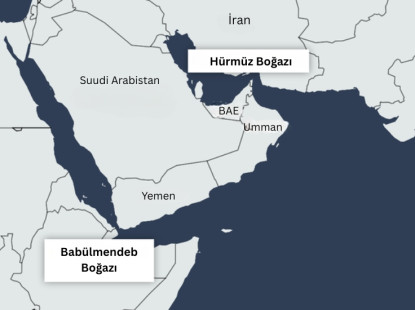
The main issue through which the United States is currently being discussed in Turkey, Saudi Arabia, and Russia is not American domestic politics as such, but Washington’s ability to manage the war with Iran, the crisis in the Strait of Hormuz, and the conflict’s consequences for Eurasian energy as a whole. After attacks on vessels became more frequent again in September–October 2026, while U.S.–Iranian contacts through Qatar failed to produce a political breakthrough, commentators in all three countries have converged on one conclusion: U.S. military superiority does not in itself mean that Washington can impose a durable order. But the meaning of this conclusion differs from country to country. For Turkey, it is primarily a question of regional security and preserving Iran as a manageable neighbor; for Saudi Arabia, it concerns protecting infrastructure and investment, as well as the Kingdom’s status as a pillar of Gulf security; for Russia, it is an argument supporting the claim that the American strategy of pressure is in crisis.
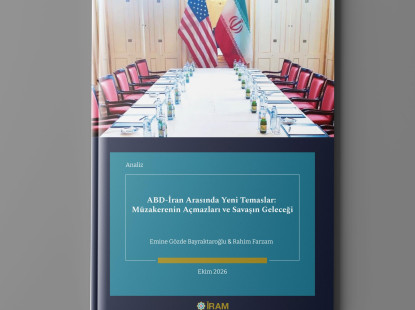
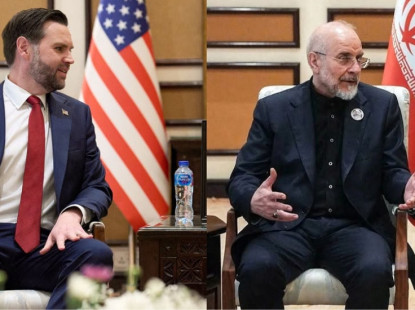
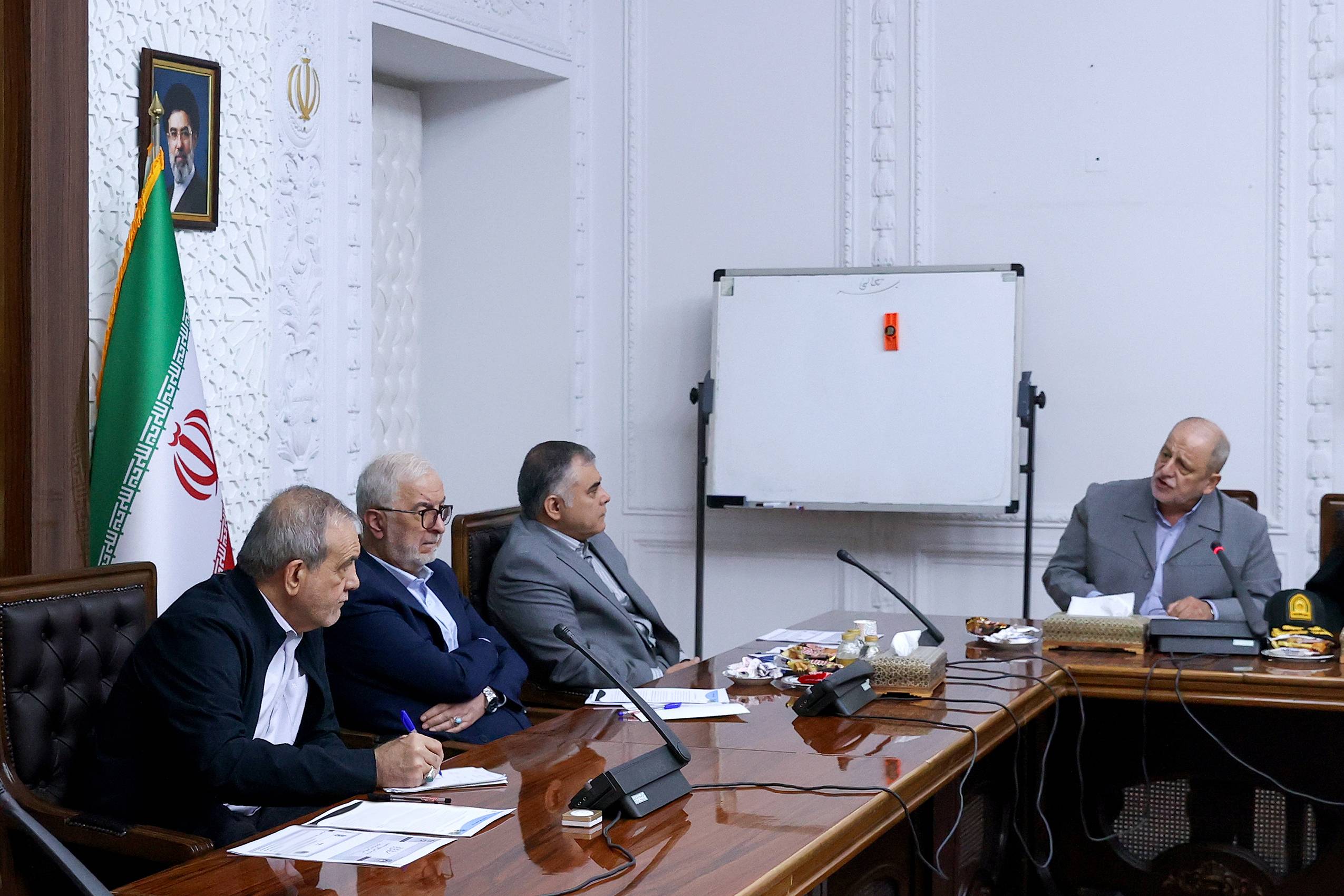
The Turkish debate is particularly notable because it views the war not as merely an episode in the confrontation between Washington and Tehran, but as a process capable of reshaping the land and maritime links around Turkey. In an analysis by Istanbul’s Center for Iranian Studies, Rahim Farzam and Emine Gözde Bayraktaroğlu note that Tehran’s proposal, conveyed through Qatar, to open the Strait of Hormuz within seven days was rejected by Donald Trump, although indirect contacts did not cease. The authors identify Iran’s effort to return to a formula of mutual concessions rather than a capitulation agreement: President Masoud Pezeshkian stated that any deal should be based on a “win-win” strategy. In the Turkish reading, this matters not because Ankara unconditionally accepts Iran’s position, but because the collapse of negotiations threatens it with trade disruptions, an influx of instability across its eastern borders, and the strengthening of separatist groups. This is discussed in a recent İRAM analysis. (iramcenter.org)
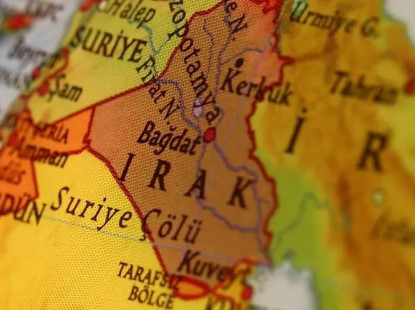
Turkish experts also see a key contradiction in the American approach: Washington is trying simultaneously to economically strangle Iran, control maritime routes, and keep the diplomatic door ajar. Serhan Afacan, president of İRAM, writes that after the April ceasefire, the conflict effectively turned from a U.S.–Israeli operation into a direct U.S.–Iranian war, allowing Israel to move into the background while Washington began paying the main price for the pressure campaign. His conclusion is cautious but telling: another major war is not inevitable, but “uncertainty” itself has become a permanent condition of the region. For Ankara, this means relying on mediation and containment rather than choosing sides. A Turkish analysis separately emphasizes that the attempt to replace maritime transport with Iranian overland transit through Turkey, Pakistan, Afghanistan, and Turkmenistan is already causing congestion at the borders and cannot become a full-fledged alternative to sea routes. (iramcenter.org)
The Saudi perspective is noticeably less ideological and more practical. In Riyadh, America is judged by two criteria: does it guarantee the Kingdom’s physical security, and does it help restore predictability to the energy market? Saudi political analyst Fayez al-Shahri made an important point in a column for Al-Riyadh: American military superiority has not brought about Iran’s “political submission,” but Iran’s ability to disrupt traffic through Hormuz has not become a strategic victory either. In other words, both sides are capable of inflicting damage, but neither has yet been able to turn a tactical asset into an acceptable political settlement. (alriyadh.com)
In the Saudi press, Hormuz is increasingly described not as a disputed strait but as the nerve center of a new security model. In an Arab News article, analyst Zaid M. Belbagi writes that Vision 2030 and economic diversification require investors to feel that the Persian Gulf is a reliable place for long-term investment. Therefore, strengthening defense cooperation with the United States is viewed in Riyadh as a necessity rather than a geopolitical luxury: the issue involves protecting oil facilities, countering Houthi attacks, and maintaining export routes that bypass Hormuz. But this is also where the Saudi caveat becomes apparent: executive promises from the White House are not the same as treaty guarantees approved by U.S. institutions. (arabnews.com)
This duality distinguishes the Saudi view from the Turkish one. Ankara fears that the United States may go too far and destroy the fragile balance along its borders. Riyadh, by contrast, wants a more reliable American shield, but fears that American inconsistency will leave it alone to deal with the consequences of the war. Even in Saudi publications critical of Iran, there is visible irritation that negotiations and displays of force continually replace one another without creating stable rules for the passage of vessels. Asharq Al-Awsat directly links Trump’s sharp shifts in position to the difficulties of mediation and uncertainty surrounding sanctions relief. (aawsat.com)
Russian observers view the same picture through the prism of the strategic failure of pressure. For them, the failure to agree on terms concerning Hormuz is evidence not only of Iran’s intransigence, but also of the United States’ inability to reconcile three incompatible objectives: freedom of navigation, maximally painful sanctions against Tehran, and the preservation of its right to expand the military campaign at any moment. In a Vedomosti article, experts point to the disappearance of trust: Tehran views negotiations as a possible “smokescreen,” since military operations have already resumed amid diplomatic contacts. (vedomosti.ru)
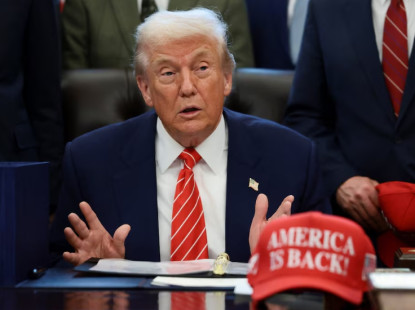
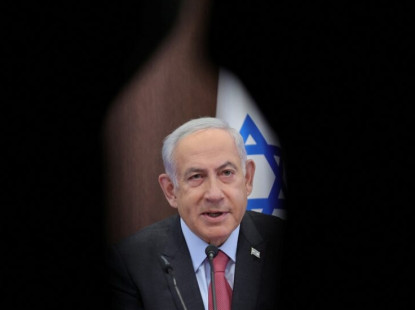
The Russian debate links the Middle Eastern war even more sharply to the American domestic political calendar and the oil market. In a commentary for Kommersant, Iran expert Lana Ravandi-Fadai emphasizes that Iran is prepared to discuss restoring freedom of navigation, but “not as a defeated party.” Energy expert Igor Yushkov offers a more cynical explanation of the American approach: in his assessment, Trump uses the Hormuz factor to influence the oil and gas market—calming it with talk of a deal when prices are too high and increasing anxiety with statements about possible strikes when that is politically advantageous. This does not necessarily mean that Moscow believes the United States consciously seeks endless war; rather, in the Russian analysis, Washington appears to be a power for which controlled instability has become an instrument of competition in the energy market. (kommersant.ru)
The most unexpected point of agreement among the three countries is that none of them describes America as an all-powerful arbiter. Turkey sees the United States as a source of dangerous strategic uncertainty, Saudi Arabia as an indispensable but institutionally not entirely reliable guarantor, and Russia as a powerful player unable to convert military pressure into a political result. Another conclusion is also shared: Hormuz has ceased to be merely a waterway. It has become a measure of whether America in the 21st century can provide global order without destroying the economic and diplomatic environment on which that order depends.