Today, outside the United States, discussions are not about one or two headline episodes but about a knot of issues in which Washington has become both indispensable and problematic. In Germany, there is debate over whether and how to “unlearn” reliance on America without undermining national security. In Ukraine, the United States continues to be viewed as key to survival and victory, even as confidence in American decisions has been noticeably shaken. In Japan, the dominant concern is how to preserve the American “nuclear umbrella” while preparing for a world in which Washington increasingly behaves unpredictably. Behind all these storylines lies one common theme: the world is trying to learn to live with Trump’s America — and without the former certainty in American leadership.
The central nerve of these discussions remains Russia’s war against Ukraine and the role of the United States in its continuation and possible resolution. In Ukrainian discourse there is clear irritation over the fact that Washington is at once vital and prone to “fatigue” over the conflict. Ukrainian analysts and journalists examine in detail how painful the cuts and delays in American aid have been, stressing that even with sizable support packages, uncertainty about 2026 remains high: some programs have been cut, and humanitarian and reconstruction projects depend on decisions from Congress and the White House that are delayed or being reconsidered for domestic political reasons. One analytical review prepared for Ukrainian humanitarian organizations notes that cuts in U.S. funding have already forced many projects to shift to European and multilateral sources at the risk of timing and scale failures, and emphasizes that “настрої втоми в США посилюють вразливість України та знижують передбачуваність планування відбудови” (a detailed analysis is presented, for example, in the ACAPS report on the consequences of U.S. aid cuts for Ukraine’s humanitarian sector, published in early 2026; the Ukrainian summary is available via the ACAPS website: https://www.acaps.org/fileadmin/DataProduct/Additionalresources/20253112UkraineOneyearontheimplicationsofUSforeignaidcutsonhumanitariandevelopmentUKRtranslation.pdf).
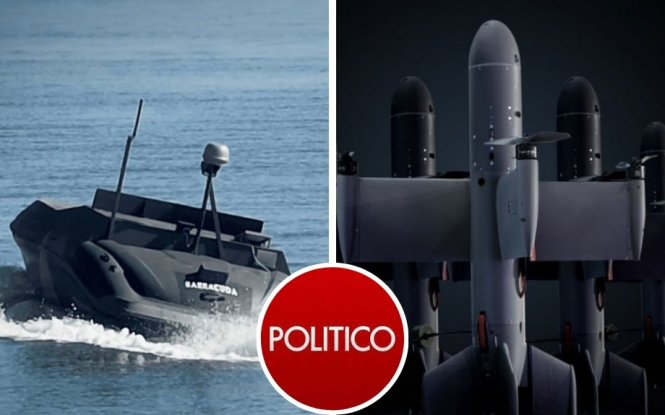
However, the paradox is that on the battlefield Kyiv’s situation now looks better than at any time since 2022. Ukrainian media, relaying a Politico piece on Ukraine’s “paradoxical position ahead of the G7 summit,” highlight that Ukrainian forces are, for the first time in a long time, gaining more territory than they lose, and that a large-scale “drone war” is systematically hitting Russian supply lines. At the same time, the country faces an acute shortage of interceptor missiles and suffers from heavily damaged energy infrastructure, while the peace negotiations have reached an impasse — in part because Washington is distracted by the conflict with Iran and other crises. Ukrainian retellings of the article explicitly call for “convincing Trump,” stressing that without a political decision in Washington this combination of tactical successes and strategic vulnerability cannot be resolved (see the Ukrainian analysis of the Politico piece on the iPress.ua portal, available as “Україна перемагає у дроновій війні. Тепер їй треба переконати Трампа,” which describes the paradox of battlefield gains and interceptor shortages: https://ipress.ua/news/ukrainaperemagaieudronoviyviyniteperiytrebaperekonatytrampapolitico386790.html).
Ukrainian public opinion, judging by expert press reviews and social media debates, swings between grateful dependence and growing mistrust. The information-bibliographic bulletin “Україна у відгуках зарубіжної преси” for April 2026 extensively quotes Western authors who argue that supporting Ukraine is an “investment in the security of the United States itself,” because Kyiv’s defeat would undermine the whole system of American alliances, and who remind readers that the U.S.’s adversaries are carefully studying the lessons of the war. Ukrainian commentators use these arguments as an internal counternarrative: yes, Ukraine needs Washington, but America equally needs the Ukrainian front not to fall, so the conversation should be framed not as one about “handouts” but as mutual insurance of security. The same bulletin cites an article by Ukraine’s ambassador to NATO saying it is time to “rethink NATO” and restructure the alliance to reflect a reality in which unilateral U.S. decisions can clash with both European and Ukrainian interests; the review is available as a PDF on the Ukrainian National Library site in the April 1–30, 2026 issue: https://nbuviap.gov.ua/images/informaciynividanya/ukruvidgukah/2026/2026Ukraina_04.pdf.
On a popular level the debate often sounds even sharper. In prominent Ukrainian online communities people openly discuss “how much Ukraine needs U.S. assistance” and what price the country has already paid for pauses or restrictions. In one such Reddit thread a participant criticizes the myth that Washington supposedly imposes the maximum level of sanctions on Russia, reminding readers that under Trump restrictions on the oil sector were partial and sometimes eased, and that the current proposed trade-political “deal” with Moscow sounds like a businessman’s deal rather than a guarantor of international law. At the same time the same participant concedes that without American intelligence and high-tech aid Ukraine cannot cover critical needs, and points to the recent “Ukraine Support Act for $9 billion” as an example that even amid isolationist moods part of the American establishment still understands the strategic cost of Kyiv’s defeat; a discussion with these formulations and a link to the bill can be found in the thread “Наскільки сильно Україні потрібна допомога США?” on the r/uamind subreddit, preserved in part at https://www.reddit.com/r/uamind/comments/1tzaswu/%D0%BD%D0%B0%D1%81%D0%BA%D1%96%D0%BB%D1%8C%D0%BA%D0%B8_%D1%81%D0%B8%D0%BB%D1%8C%D0%BD%D0%BE_%D1%83%D0%BA%D1%80%D0%B0%D1%97%D0%BD%D1%96_%D0%BF%D0%BE%D1%82%D1%80%D1%96%D0%B1%D0%BD%D0%B0_%D0%B4%D0%BE%D0%BF%D0%BE%D0%BC%D0%BE%D0%B3%D0%B0_%D1%81%D1%88%D0%B0/).
In Germany the focus shifts from the Ukrainian front to a broader question: what should Europe do about American hegemony if the White House has become a source of risk almost equal to its role as guarantor of security. German commentators frequently write about the sharp deterioration of the U.S. image following the attacks on Venezuela and Iran in 2026, and about the diplomatic rupture between Washington and the Vatican over the positions of the new Pope Leo XIV. The German-language Wikipedia, which largely reflects expert consensus, specifically emphasizes the link: U.S. military actions in Venezuela and Iran, criticism of the Pope, and a general decline in freedom indicators within America under Trump’s second administration. An article on the president’s second term states that, according to Freedom House data, the U.S. freedom index in 2025–2026 fell to its lowest point in half a century. A German author cites the organization’s findings on “dysfunction of the legislative branch,” “dominance of the executive,” increased pressure on freedom of speech, and efforts by the administration to undermine anti-corruption mechanisms, hinting that Europeans are dealing not merely with a difficult partner but with a system whose democratic foundations are seriously weakened; this set of grievances is collected and structured in the article “Zweite Präsidentschaft von Donald Trump” on the German Wikipedia, widely cited by German political blogs: https://de.wikipedia.org/wiki/ZweitePr%C3%A4sidentschaftvonDonaldTrump.
Particularly interesting are German economists’ discussions of the idea to “sell America” — that is, to sharply divest dollar assets and reduce dependence on the U.S. — against this backdrop of political turbulence. In a comment from the German Institute for Economic Research (DIW Berlin) titled “Europa kann Amerika nicht ‚verkaufen‘, aber sich unabhängiger machen,” the author warns against the lure of a sudden “Sell America” trade. He argues that the illusion Europe can simply “dump” American assets to strengthen its position is dangerous for both the European economy and global financial stability. Such a maneuver, the piece stresses, is not only unrealistic in the short term but also fails to reduce Europe’s vulnerability to the U.S.; instead, the author calls for gradual building of strategic autonomy — from defense industry to energy and technological infrastructure. The comment was published in DIW Wochenbericht 14/15 / 2026 and is available on the institute’s website: https://www.diw-berlin.de/de/diw01.c.1004084.de/publikationen/wochenberichte/2026143/europakannamerikanichtverkaufenabersichunabhaengigermachen__kommentar.html.
The political dimension of this push for autonomy is visible in reactions to Chancellor Friedrich Merz’s government statements. In his June government declaration to the Bundestag, devoted to war abroad and domestic social reforms, the leitmotif was the formation of a “new world order” in which Europe “finds its strong place” and must become “capable of defense” not only by relying on the American nuclear umbrella. Critical left‑wing commentators, such as a World Socialist Web Site columnist, point out that behind Merz’s talk of strengthening defense lies not only a desire to hedge against potential American unreliability but also an elite push for social “counterrevolution” — reallocating resources in favor of the military-industrial complex and security forces. Nevertheless, the very fact that the German chancellor in a programmatic speech speaks about the need for such a level of autonomy is seen by experts as an admission: the era of almost unconditional reliance on the U.S. is over. An extensive retelling of Merz’s speech and a critical analysis of its content were published in “Merz’s government statement: War abroad, social counterrevolution at home” on WSWS, accompanied by a photo of the chancellor at a Berlin aerospace exhibition: https://www.wsws.org/en/articles/2026/06/12/merz-j12.html.
At the level of public debate Germany is experiencing its own “American moment.” In a popular Reddit thread headlined “Deutschland verkommt immer mehr zu den USA,” the author laments that the country “is increasingly becoming like the U.S.,” referring to rising social inequality, commercialization of the healthcare system, and growing media polarization. Comments repeatedly return to the comparison: “we want U.S. security but not their society,” and ask whether one can have one without the other. Such discussions, where the American model simultaneously fascinates and frightens, appear in the German-language subreddit r/heissemeinung, referenced by the post “Deutschland verkommt immer mehr zu den USA,” accessible for example via the Reddit archive: https://www.reddit.com/r/heissemeinung/comments/1s6oeuk/deutschlandverkommtimmermehrzudenusa/.
In Japan the focus on the United States looks different: the key question is not how to “break free” from Washington but how to live under the American umbrella while knowing its owner can change the rules at any moment. One of the most important policy pieces in recent months was published in The Japan Times on the need for “hardened engagement” with America. The author, a Japanese international relations expert, argues that Japan cannot sever the alliance with the U.S. nor treat it with the old naive trust. Instead, Japan must simultaneously build up its own military strength, pursue active regional diplomacy, and be able in some areas to diverge from Washington without breaking the alliance. The piece, titled “The case for ‘hardened engagement’ with America,” directly points to the risk that U.S. electoral cycles and domestic conflicts will regularly undermine the predictability of American commitments in Asia; it was published on April 16, 2026 in The Japan Times commentary section: https://www.japantimes.co.jp/commentary/2026/04/16/world/case-american-engagement.
This line of thinking is reinforced at the official level as well. In an analytical Stimson Center piece on the outcomes of the February Extended Deterrence Dialogue in Washington, the report details how American and Japanese officials reaffirmed that the U.S. is prepared to defend Japan “using the full spectrum of capabilities, including nuclear.” For Tokyo, such statements are both a guarantee and a source of anxiety: domestic debate increasingly asks what will happen to this “nuclear umbrella” if isolationist lines or new foreign-policy adventures take hold in the White House and erode trust in American strategic calculations. The report emphasizes that Japan is, judging by its language, insisting on institutionalizing these guarantees — creating mechanisms that will outlast changes in specific U.S. administrations; the analysis is available in “When Denuclearization Fades, Japan Holds the Line” on the Stimson Center website, which records the dialogue on extended deterrence and the position on the “full range of capabilities, including nuclear” for Japan: https://www.stimson.org/2026/when-denuclearization-fades-japan-holds-the-line.
At the same time Japanese domestic politics feel direct pressure from Washington. During the 2026 campaign for the lower house, U.S. President Trump publicly expressed support for several right‑conservative Japanese candidates, provoking a sharp reaction in local media. In an editorial the Nihon Keizai Shimbun — the country’s largest business newspaper — called this intervention “inappropriate” and a violation of the principle of non‑interference in domestic affairs. Observers noted Japan’s historical sensitivity to foreign interference given the postwar occupation experience and ongoing territorial disputes — so even formally “friendly” support from Washington is seen as a dangerous precedent. The content of this editorial and the subsequent debates were discussed in an English-language Reddit thread, which points out that Nikkei invoked the Nicaragua precedent at the International Court of Justice as an argument against normalizing such interference; a summary reproducing the main theses of the Japanese editorial and its legal context was posted by user GeoKaw2020 under “日経[社説]トランプ氏の干渉は不適切だ” on Reddit: https://www.reddit.com/r/uGeoKaw2020/comments/1qyy3ov/%E8%A1%86%E8%AD%B0%E9%99%A2%E9%81%B8%E6%8C%992026%E6%97%A5%E7%B5%8C%E7%A4%BE%E8%AA%AC%E3%83%88%E3%83%A9%E3%83%B3%E3%83%97%E6%B0%8F%E3%81%AE%E5%B9%B2%E6%B8%89%E3%81%AF%E4%B8%8D%E9%81%A9%E5%88%87%E3%81%A02026%E5%B9%B42%E6%9C%886%E6%97%A51930/).
Beyond immediate scandals, Japanese experts are watching a long-term trend: the formation of a de facto “G2” — a U.S.–China duopoly in which Japan risks being disadvantaged. In an analytical essay “アメリカの風 米中並び立つ世界 ― 2026年を占う,” prepared by former Washington correspondent Sugita Hiroki for the Japan Organization for Investment (JOI) magazine, the author argues that 2026 may be a turning point for the emergence of a stable U.S.–China two‑pillar system in which others must navigate between the two powers. He notes that across key domains — from Taiwan to human rights — Japan begins from an unfavorable position: it is heavily dependent on American security while simultaneously vulnerable to Chinese economic pressure. The essay stresses that Trump’s America, prone to abrupt tariffs and unilateral decisions, is the least trusted by Japanese society, and calls for preparedness for an era in which the alliance with the U.S. will rest not on “faith” but on continuous pragmatic reassessment; the full essay was published in the January issue of the magazine and is available as a PDF on the JOI site: https://www.joi.or.jp/wp-content/uploads/2026/01/Mag20260110_seriesUSsugita.pdf.
Looking at these three national perspectives together, it becomes clear that the conversation about America is no longer reducible to a simple dichotomy of “leader–hegemon” or “friend–enemy.” Ukraine speaks of the U.S. as a force without which it cannot endure and win, but also as a partner whose inconsistency and bargaining over security principles leave scars and force the search for alternatives. Germany balances fear of losing the American umbrella with the recognition that continued dependence on Washington makes Europe hostage not only to Russian missiles but also to the American electorate. Japan, living in the shadow of China’s rise and North Korean missiles, paints the most sober portrait: preserve the alliance with America, but treat it as a source of risk and build additional layers of protection and autonomy.
These three countries share another important trait: they are not abandoning the United States, but they are ceasing to see it as the only center of the world. Ukrainian reconstruction plans are increasingly being built around consortia of the EU, Britain, Canada, and regional partners; German economists and politicians call for development of European defense and financial sovereignty — albeit without illusions about a sudden “divorce” from the dollar; Japanese strategists talk about deepening ties concurrently with India, Australia, and Southeast Asian countries. America in these conversations remains a giant — but no longer “infallible” or the sole one. That is why today’s international debate about the United States is so tense and contradictory: the world is learning to live in a reality where American power still determines the outcome of wars and crises, but trust in American predictability can no longer be taken for granted.