By October 9, 2026, the image of the United States in foreign debates is taking shape not around a single news story, but around a broader impression: Washington’s decisions are increasingly being determined by domestic political drama, electoral advantage and displays of force. In France, this is discussed through concern about the state of American democracy and the politicization of punishment; in Israel, through the question of whether the country’s security can depend on the date of the U.S. midterm elections; and in South Africa, through resistance to U.S. pressure on international institutions and on its own foreign-policy choices.
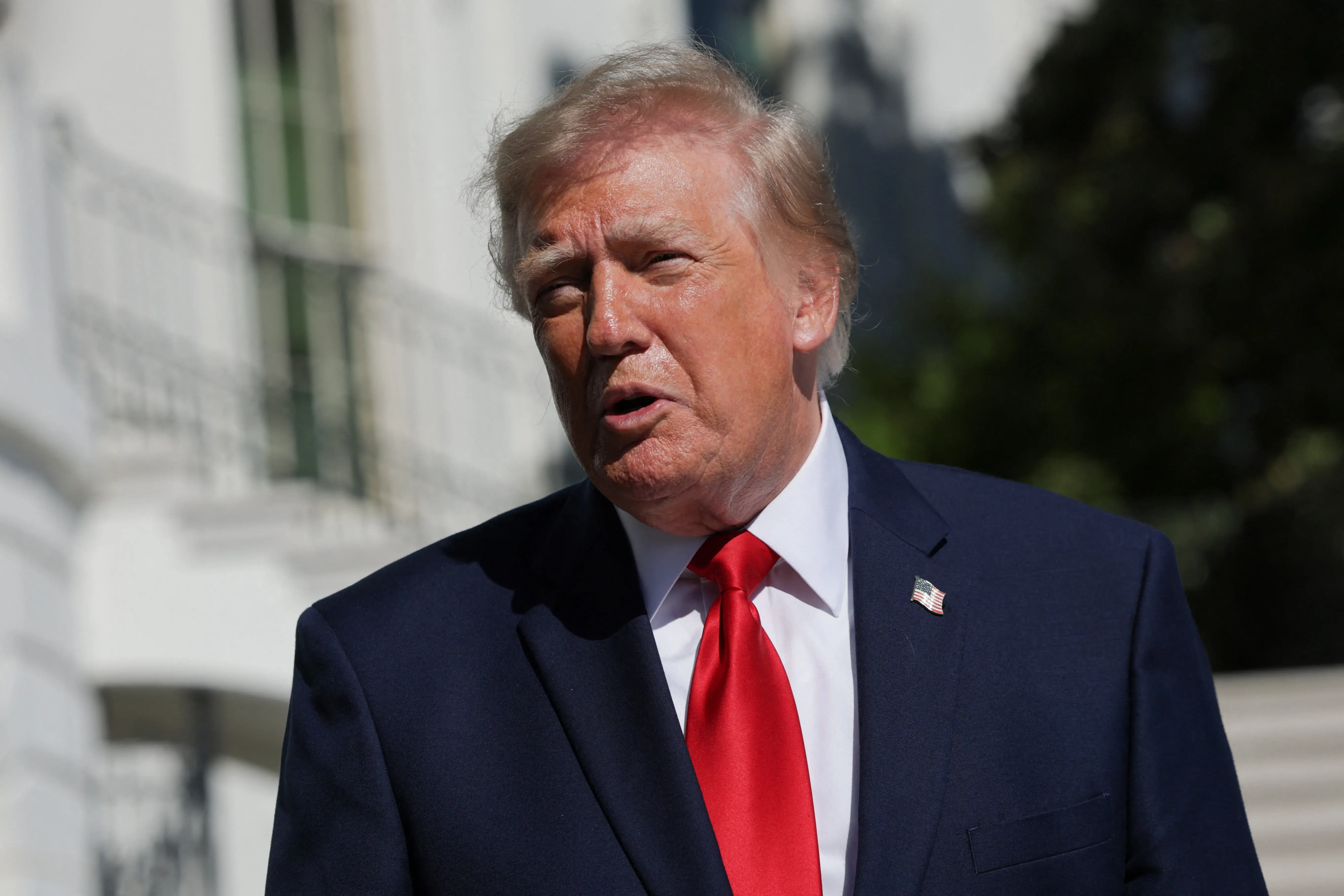
The Israeli response most literally links American policy to clocks and dates. Donald Trump said that the United States would not strike Iran before the November 3 midterm elections, although, in his words, talks with Tehran remain “productive” and the blockade is still in place. In a Walla report, this formula is accompanied by an almost opposite reality: the U.S. Embassy in Jerusalem is warning citizens of the possibility of a rapid escalation, the closure of airspace and disruptions to transportation. For Israel, this means that a public promise not to go to war does not amount to a reduction in the threat. (walla.co.il)
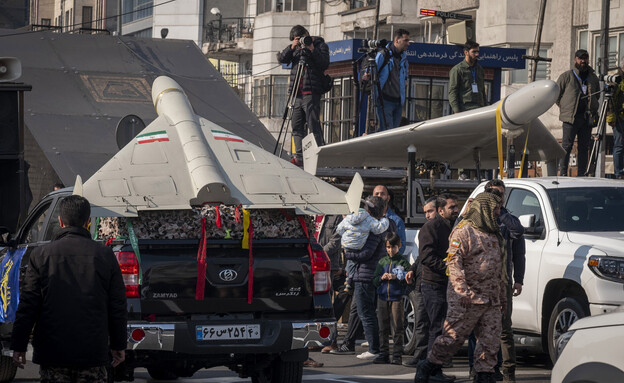
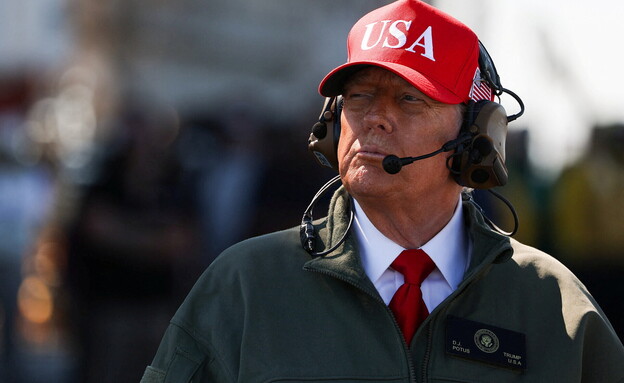
This duality is expressed even more sharply in an Israeli N12 report: according to the report, the Pentagon has already prepared a scenario for a short but intense three-day campaign against Iran’s missile, drone, energy and military facilities. U.S. forces in the region are being increased to an unprecedented level; by the end of October, three aircraft carriers and more than 20,000 sailors and Marines could be stationed there. In the Israeli reading, therefore, the main question is not whether a military option exists, but when Trump will decide that it is politically convenient. N12 sources suggest that the decision could be postponed not only until the U.S. elections, but also until Israel’s vote on October 27. Israel’s security is thus being placed within two electoral cycles at once. (mako.co.il)
The French perspective views the same America differently: not through the threat of a missile strike, but through concern that political power is turning the law, the army and public cruelty into campaign tools. Le Monde describes the decision to execute Nidal Hasan by firing squad as a return to the United States of 90 years ago—particularly because of the intention to broadcast the execution online. The French correspondent emphasizes not only the death penalty itself, but also the carefully designed symbolism: Hasan is to be shot at precisely 1:30 p.m., the minute when the 2009 massacre at Fort Hood began. For the French newspaper, this blurs the line between justice and revenge. Even Republican Tom Tillis called the public broadcast “disgusting,” noting that such practices are associated with repressive dictatorships rather than with America. (lemonde.fr)
This leads to a broader French conclusion: the November 3 midterm elections are seen not as an ordinary course correction, but as a test of whether the United States can preserve institutional constraints on executive power. In a Le Monde editorial, the paper discusses the risk that Trump will not accept defeat, recalls January 6, 2021, and criticizes the manipulation of electoral districts. This is an important European feature of the perception: France is concerned not simply by the unpredictability of U.S. foreign policy, but by the fact that its source is seen in the internal erosion of American democratic norms. (lemonde.fr)
South Africa, by contrast, translates its dispute with the United States into the language of sovereignty, trade and international law. A symbolic coincidence was the awarding of the Nobel Peace Prize to South African lawyer Navanethem “Navi” Pillay, a former judge of the International Criminal Court and former UN High Commissioner for Human Rights. As Daily Maverick emphasizes, the prize was awarded for defending peace and international law at a moment when those institutions are under intense pressure. For Pretoria, this is inevitably read in the context of the American campaign against the ICC: Washington has already imposed sanctions on its staff and is discussing further measures over cases involving Israeli leaders. Pillay’s Nobel is therefore perceived not simply as a source of national pride, but as moral confirmation of the country’s position that the law must not yield to the “politics of force.” (dailymaverick.co.za)
However, South Africa’s response is far from simple anti-Americanism. In an official account of his remarks, Minister of International Relations Ronald Lamola both rejected the American narrative of a “white genocide” as fake and called the United States an important strategic partner. His position is highly pragmatic: Pretoria wants to preserve U.S. investment, access to the American market through the AGOA program and cooperation on critical minerals—but not at the cost of abandoning non-alignment, constitutional autonomy or the right to speak on behalf of Africa in the G20. “We are a founding state of the G20 and have every right to be there,” Lamola said in response to a question about South Africa’s de facto exclusion from the U.S. presidency. (sanews.gov.za)
This is where the common thread in the French, Israeli and South African reactions emerges. In Israel, there is concern that the American strategy toward Iran is subordinate to electoral calculations. In France, observers see the domestic struggle for power changing the language of punishment, the military and democracy. In South Africa, U.S. pressure on international institutions and bilateral relations demands not capitulation, but a difficult balance between principles and economic necessity. These are not three versions of the old question of whether America is powerful. They are three versions of a new question: how reliable is a superpower if its foreign policy, legal position and even use of force are increasingly perceived abroad as extensions of its domestic campaign?