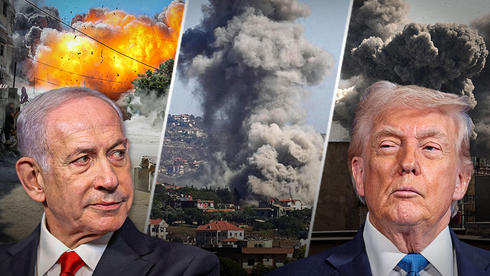
In China, Israel and India, the United States is currently being discussed not as a unified superpower confidently setting the rules, but as a country whose foreign policy is increasingly subordinated to its domestic political calendar. The focus is on the war between the United States and Israel and Iran, the risk of another surge in energy prices, the U.S. midterm elections on November 3, and a temporary stabilization in U.S.-China trade. The common view in all three countries is this: the White House still possesses enormous military and financial power, but its decisions have become harder to predict because they depend on the price of gasoline, Donald Trump’s approval ratings, and the Republicans’ prospects of retaining control of Congress.
The most acute issue is Iran. Chinese commentators interpret the pause in escalation primarily as an electoral calculation. Diao Daming, a professor at Renmin University of China, explained in a comment for China Radio International that the contradictory signals from the White House and the Pentagon stem from the administration’s simultaneous attempts to maintain military pressure on Tehran while preventing it from becoming a political liability ahead of the vote. In other words, the Chinese interpretation is not that Washington has abandoned force, but that force is now being calibrated with voters in mind. This logic is expressed even more bluntly in another Chinese analysis: the conflict’s central question is “who will hold out longer”—Iran under attack, or Trump in the face of the economic and political backlash from American society. (news.cri.cn)
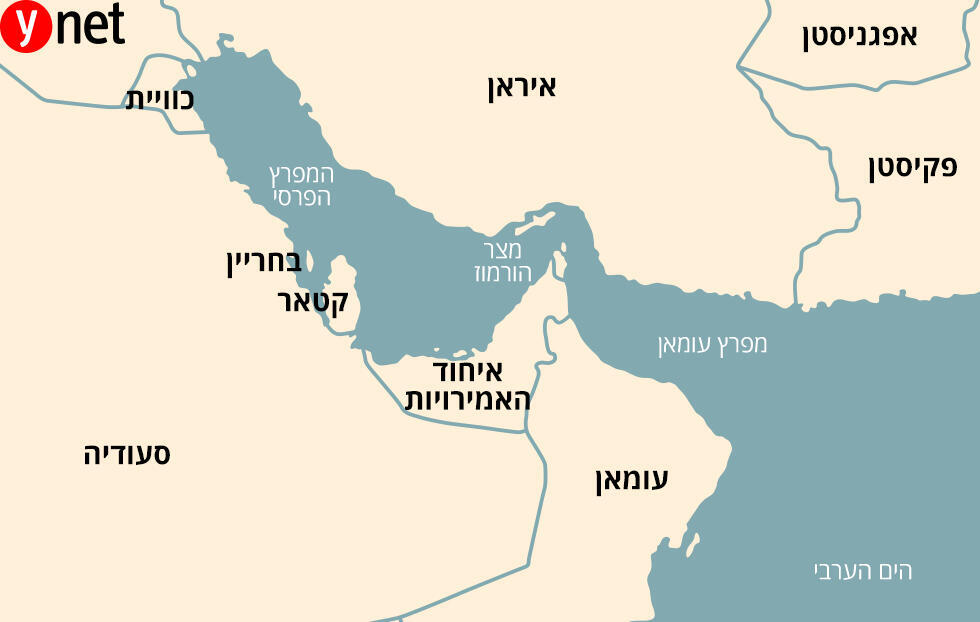
For Israeli writers, such a pause looks less comfortable. In an analysis by Ron Ben-Yishai for Ynet, it is argued that Trump has chosen to temporarily “keep a low profile” on the conflict: not resume large-scale combat operations until the end of November, while continuing economic pressure and the naval blockade of Iran. According to this view, Israel is quietly accepting the American approach because it understands its political logic and shares the assessment that a rapid diplomatic breakthrough is unlikely. But the Israeli debate is filled with anxiety: waiting does not mean the problem has been solved. Another Ynet article emphasizes that airstrikes alone will not bring down the Iranian regime, while the White House fears both American military casualties and another rise in fuel prices. For Israel, this means that its security is increasingly tied not only to American aircraft carriers and weapons deliveries, but also to how willing Trump is to take risks before November 3. (ynet.co.il)
Indian observers view the same conflict through a broader question: is a protracted war becoming a factor that will make America a less reliable partner in every other region? Vivek Mishra, deputy head of the strategic studies program at the Observer Research Foundation, calls the Iranian campaign a potential political burden for Trump in a column for The Indian Express: the war is gradually feeding into American prices and could therefore affect the election more strongly than international events usually do. For India, however, he writes, what matters more is not the outcome of the vote itself, but what follows it. This is an important distinction: in New Delhi, the question is less who will win control of Congress than whether Washington will be freer to escalate after the election—or, conversely, be forced to seek a way out of the conflict.
India’s response is particularly sensitive to the financial side of American policy. Economic columnist T. N. Ninan warns in a comment for ThePrint Hindi that Trump’s trade war may have been only the first stage of a larger struggle for capital. His argument is highly practical: capital outflows, a weakening rupee and expensive energy are already hurting India, while turbulence in American finance could intensify the impact. In Chinese publications, the same theme appears as a question about the resilience of the dollar-based order. Qian Jing, writing for The Paper, interprets the Federal Reserve’s September rate hike not simply as a monetary decision, but as a rare example of institutional limits on presidential power: in his assessment, Trump may influence the war and the personnel hierarchy, but he cannot order an independent central bank to cut interest rates. (hindi.theprint.in)
There is a particularly revealing nuance in this Chinese view. America’s problem is described not only as Trump’s weakness or the cost of war, but as a test of the entire system of checks and balances. Chinese analysts are watching to see whether the Fed can withstand pressure from the White House, because the answer will affect confidence in the dollar, U.S. Treasury bonds and, consequently, the global financial architecture. Israelis primarily measure American reliability by its readiness to stop Iran; Indians by the United States’ ability not to export inflation and financial instability; and the Chinese by whether America’s political polarization is undermining the foundation of Washington’s global influence. Yet all three perspectives converge on one point: domestic instability in the United States has become an international problem.
Against this backdrop, China’s response to the extension of the trade détente with Washington stands out. The pause in reciprocal tariff increases has been extended until January 10, 2027, while the sides agreed to establish a trade and investment council, partially reduce tariffs on one another, open a dialogue on artificial intelligence and expand selected economic contacts. Chinese Ambassador to the United States Xie Feng discussed this in detail in an interview published by the Chinese embassy. Economist Wei Shangjin describes the extension in an article for China-US Focus as an important but limited achievement: there is no major agreement, while export controls, tariffs and technological rivalry remain in place. (us.china-embassy.gov.cn)
The Indian and Israeli perspectives make this deal even more interesting. For India, the U.S.-China respite is both an opportunity and a warning. It is an opportunity because reduced tensions between the world’s two largest economies lower risks for trade and markets. It is a warning because India is counting on the relocation of production and capital from China, and any new U.S.-China agreement could alter that strategic calculus. For Israel, Washington’s trade policy matters indirectly: it shows that even during a war and amid harsh rhetoric, Trump can shift to pragmatic bargaining when demanded by prices, agricultural states or the domestic political climate. This creates mixed feelings: flexibility may open the way to deals in the Middle East, but it also means that U.S. commitments can be revised as quickly as a tariff rate.
The most unexpected common conclusion emerging from local debates is that America is no longer viewed as a country that first develops a strategy and then makes its domestic policy serve it. Instead, China, Israel and India see a state where elections, inflation, gasoline prices and disputes with the Federal Reserve shape foreign policy almost as much as geopolitical objectives do. For Beijing, this opens room for more equal bargaining; for Jerusalem, it creates the risk that the war with Iran will be governed by the American political cycle; for New Delhi, it means preparing for the waves that American policy creates in markets, energy and the security architecture. America remains an indispensable power, but its allies, partners and rivals are studying not only its aircraft carriers and sanctions, but also its electoral calendar.