In discussions in India, Germany and Turkey, the United States is now perceived not simply as a superpower that sets the rules, but as a source of simultaneous risks and opportunities. The main irritants are Washington’s policy toward the conflict with Iran, the use of sanctions and tariffs as instruments of pressure, and the increasingly conditional nature of allied guarantees. Yet the local reaction is not reducible to anti-American sentiment. In all three countries, a different, more pragmatic impulse is evident: to preserve access to American power, markets and technology while restructuring relations so that dependence on Washington does not become a strategic vulnerability.
The most painful issue remains Iran and the security of maritime routes. The Indian debate views the crisis not through the familiar Western prism of the nuclear program or regime change, but through the price of oil, the fate of sailors and the viability of India’s trade routes. An editorial in The Indian Express described the situation as a trap between “Iranian blackmail and Trump’s bullying.” The balance in this formulation is important: Tehran is accused of turning the Strait of Hormuz into an instrument of pressure, but America’s unilateral policy—including threats to impose transit fees—is also seen not as a solution, but as an accelerant of the crisis. For India, this is not an abstract dispute between great powers: the publication recalls the Indian crew members killed or missing after tanker strikes and the risks to energy supplies. (indianexpress.com)
In Turkey, the same conflict prompts a different reaction. Ankara sees it as a threat directly on its borders, but also as an opportunity to reassert itself as an indispensable mediator between the West, Iran, the Arab states and Russia. Serhan Afacan, president of the Iranian Research Center, writes in an analysis for Anadolu Ajansı that Turkish efforts could open blocked channels between the United States and Iran if talks begin with the nuclear issue and are given a genuine diplomatic chance. His logic is noteworthy: Turkey is not proposing that either side be chosen, but seeks to establish itself as the state without which even adversaries cannot communicate. (mobile.aa.com.tr)
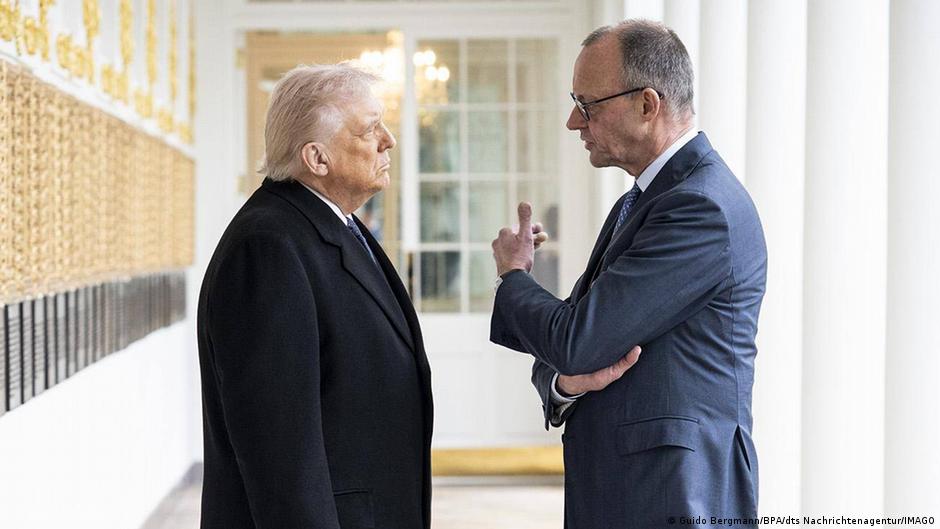
The German reaction to the Iranian issue is more anxious and less focused on mediation. In Berlin, the American war is perceived primarily as a test of the reliability of NATO’s architecture itself. After Chancellor Friedrich Merz criticized the absence of a clear U.S. strategy toward Iran, Washington announced plans to withdraw 5,000 troops from Germany and cast doubt on the deployment of the promised medium-range systems. Carlo Masala, an expert at the Bundeswehr University, warned in a Deutsche Welle report that this would create a significant gap in deterring Russia—one that European weapons could fill only later. Germany’s problem, therefore, is not only its disagreement with the United States over Iran: it is that a public dispute with the White House could immediately result in military punishment. (amp.dw.com)
This gives rise to a common theme for all three countries: Washington is increasingly perceived as a partner that demands political loyalty but does not guarantee equal treatment. In India, particular attention is being paid to U.S. sanctions against buyers of Russian and Iranian energy. The Indian Express called this policy “reckless and blunt,” stressing that India created neither the Ukrainian nor the Middle Eastern conflicts, yet must pay for their consequences through risks to its own energy security. In India’s foreign-policy vocabulary, this is linked to the principle of “strategic autonomy”: New Delhi does not want to belong either to an anti-American camp or to America’s junior-partner camp. (indianexpress.com)
Moreover, Indian commentators are increasingly questioning the very emotional basis of rapprochement with the United States. Samir Saran, president of the Observer Research Foundation, put it plainly in a column for The Indian Express: Washington poorly understands the word “equal,” and India should conduct diplomacy through “open-eyed diplomacy, not open-hearted sentiment.” This is not a call for a break: the author is confident that the partnership will outlast the current administration. But he insists that its maturity depends on the United States’ ability to recognize India as an independent center of power, rather than a useful tool in its confrontation with China. (indianexpress.com)
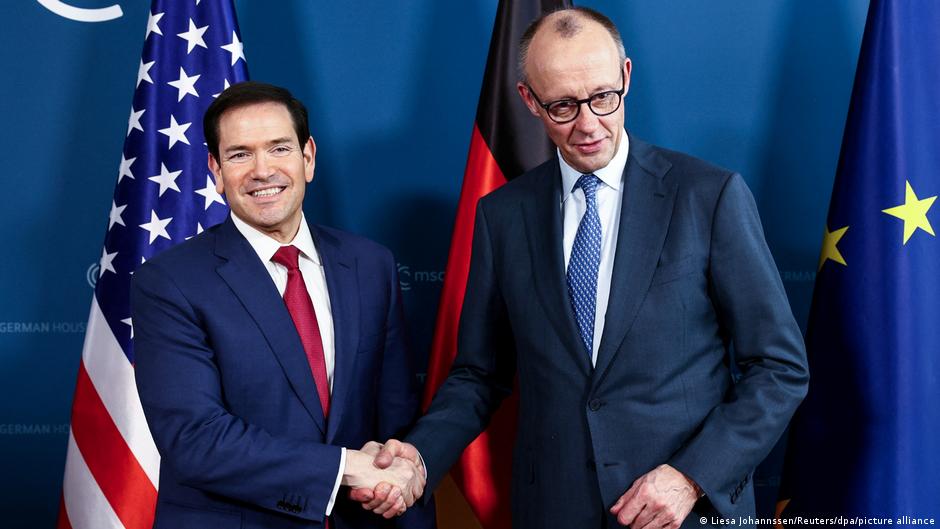
In Germany, a similar conclusion takes the form of a demand for European independence. At the Munich Security Conference, Merz said that “the cultural war of the MAGA movement is not ours,” contrasting Europe’s commitment to free trade with American protectionism. At the same time, he is not proposing that the transatlantic alliance be dismantled: Germany’s response is to turn it into a partnership of equals through higher defense spending, its own military capabilities and Europe’s ability to defend its own interests even when Washington chooses a different course. This approach, reflected in a Deutsche Welle analysis, highlights an important German duality: America remains necessary, but faith in its automatic reliability has disappeared. (amp.dw.com)
Turkey, by contrast, is seeking to turn American transactionalism to practical advantage. Turkish analytical pieces show particular hope that the new circumstances will allow restrictions imposed after the purchase of Russian S-400 systems to be lifted and the question of F-35s to be revisited. An Anadolu Ajansı report quotes Recep Tayyip Erdoğan as saying: “It is time to remove all obstacles in the defense industry.” For Ankara, this is not merely a dispute over aircraft. It is a test of whether America is prepared to recognize Turkey as a full-fledged NATO ally, even if Turkey maintains its own relations with Russia and pursues an independent regional policy. (aa.com.tr)
The most unexpected common conclusion from the Indian, German and Turkish reactions is that none of these countries is shaping its policy around expectations that the old America will return. India is preparing to diversify its trade and energy supplies; Germany is accelerating European defense autonomy; and Turkey is turning its geographic position and negotiating channels into sources of influence. Their interests and tones differ, but their key perception is the same: the United States remains too powerful to ignore and too unpredictable to rely on unconditionally.